Our sins still haunt us.
In his poem, “Epitaph on a Tyrant,” W. H. Auden provides a chillingly clinical description of the cultivated but heartless man of power:
Perfection, of a kind, was what he was after,
And the poetry he invented was easy to understand;
He knew human folly like the back of his hand,
And was greatly interested in armies and fleets;
When he laughed, respectable senators burst with laughter,
And when he cried the little children died in the streets.
Everything the tyrant does is about control. “Perfection”—the implementation of his vision—means the crushing of dissent. His “poetry” is propaganda, simple tropes to deceive and inflame the masses. His intimate knowledge of human folly powers his manipulative designs, backed when necessary by “armies and fleets.” His enablers laugh at his jokes and massage his ego. But in the final line, Auden’s succinct representation of a type all too familiar when he wrote it in 1939—and equally familiar today—delivers a shock:
And when he cried the little children died in the streets.
This line can be interpreted in various ways. If the tyrant is sentimental, perhaps the death of children resulting from his actions bring a few genuine tears, but no sincere regret. If he is cynical or hypocritical, the tears are just for show. But in Auden’s phrasing, the tears do not come in the wake of the deaths. They precede them, as if they are the cause.
Auden’s jarring word order could simply mean that when the tyrant is unhappy or frustrated, he lashes out, and the death of children becomes collateral damage for his specific act. But Auden’s final line has always struck me as suggesting something more ontological. The tyrant, in serving death rather than life, becomes an embodiment of oblivion. He cries; children die. It is not a matter of cause and effect, something he could choose not to do. He himself has become the carrier of a contagious negation. Wherever he lives and moves and has his being, death happens—whether he cries about it or not.
I’m not making a psychological, ethical or theological argument here. I’m just trying, imperfectly, to frame a poetic response to the mysterious tension of that final line. I first heard the poem during the Vietnam War, in a sung version by Tom Rapp and his group, Pearls Before Swine. It felt true then, and still does. Leaders still put on their sad masks; people still die in their wars.
Auden’s poem came to mind most recently at the end of a lecture given this month given by Condoleezza Rice, former National Security Advisor, then Secretary of State, under President George W. Bush. Rice, who currently teaches at Stanford and serves as director of the Hoover Institution think-tank, had been invited to speak to alumni of the Class of 1966 at Stanford’s Reunion Weekend.
As a member of that class, I objected to that invitation due to Rice’s association with torture during the Bush years. The class reunion committee didn’t want to hear that. Few Americans do. Our nation’s acts of torture under Bush, as well as Rice’s own complicity with that shameful practice, have mostly been swept under the rug. The country moved on without honestly confessing its sins, and Rice, whose many accomplishments and talents have earned high praise over the years, remains an honored and well-liked member of the Stanford community. But forgetting without repentance fails to expel the toxins in the system.
Our forgetfulness stalks us,
walks the earth behind us,
leaving a trail of … wasted blood.— Joy Harjo [i]
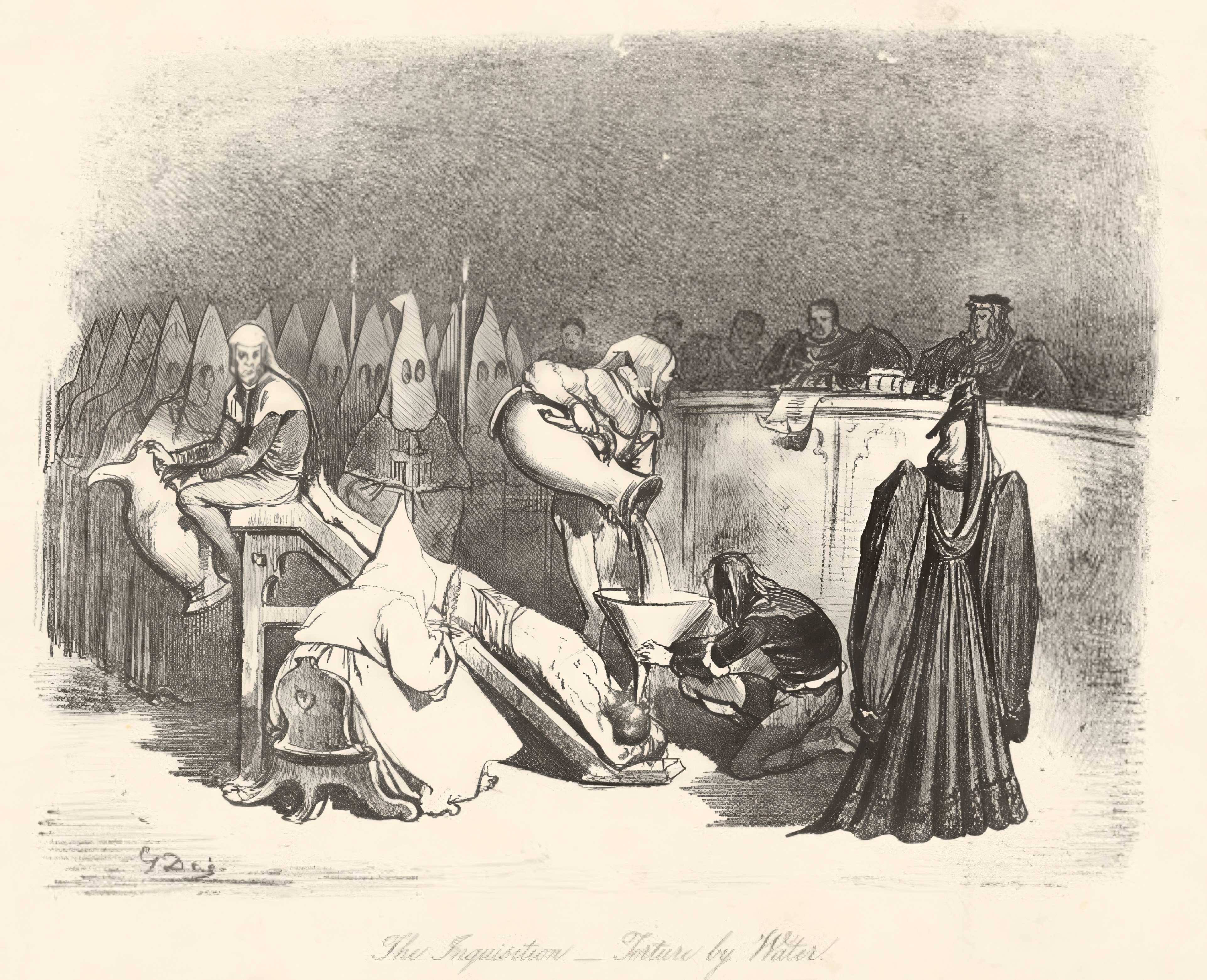
In brief, this is my understanding of the record. In 2002, National Security Director Rice conveyed the President’s authorization of waterboarding to the CIA director. Waterboarding, or as the Spanish Inquisition called it, “tortura del agua,” is a form of controlled drowning. It may not leave a mark, but it is terrifying and painful. According to her own written testimony to the Senate Armed Services Committee, Rice subsequently attended meetings where ongoing CIA torture practices were discussed, but as far as I know she has remained vague about the details.
When confronted by a Stanford student in 2009, Rice denied any responsibility for the torture. “I didn’t authorize anything,” she said. “I conveyed the authorization of the administration to the agency that they had policy authorization, subject to the Justice Department’s clearance. That’s what I did.” She also said, “We were told nothing that violates our obligations under the Convention Against Torture. And so, by definition, if it was authorized by the president, it did not violate our obligations under the Conventions Against Torture.” [ii]
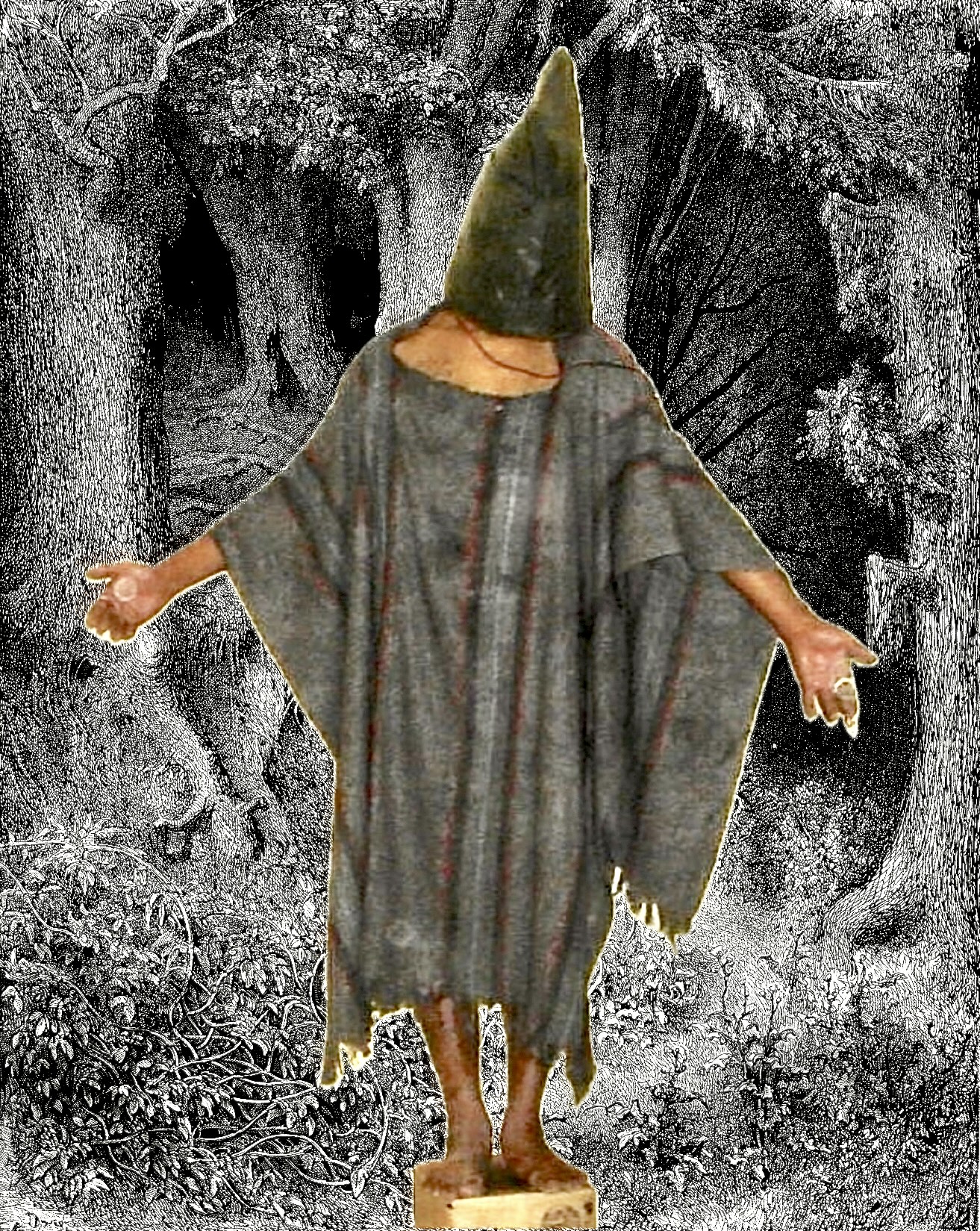
Rice’s other defense has been that waterboarding, sleep deprivation, stress positions and confinement in small boxes are not really “torture.” As legal scholar John Yoo put it in his infamous “Torture Memos” of 2002, “Physical pain amounting to torture must be equivalent in intensity to the pain accompanying serious physical injury, such as organ failure, impairment of bodily function, or even death.” [iii] In other words, just try not to leave a mark.
Torture’s defenders claim that breaking prisoners through brutal means produces useful intelligence and saves lives. Even if it takes America itself to the “dark side,”[iv] it is worth it, they say. That claim has been challenged by many experts on legal, moral and practical grounds (for more detail on the Bush torture program, read “Faces of Guantánamo: Torture” by the Center for Constitutional Rights).
With all this in mind, I had the following exchange with Secretary Rice on October 16, during the Q & A following her speech at my college reunion:
JF: You’ve been talking about human values and how the powers-that-be might practice them, but I have to wonder, given your experience in the Bush administration, when the torture of human bodies was authorized at the highest level of government, where was the humanity in that? And have your values evolved since then?
CR: Yeah, it’s very rare that you actually have a set of values that’s overcome by, you know, if it’s at least against your values, not doing some of them. You most often have competing values. So I ask you this: the competing value of having another 3000 people jump out of windows versus tough techniques—although, by the way, under the President’s authority and under our law and, I would argue, under our values. Have you ever looked at how well people were treated at Guantanamo? Pretty well.
JF: That’s debatable.
CR: Yeah, well, you can debate …
JF: People screamed in terror and pain.
CR: Would you like me to answer the question?
JF: Well, you’re giving us false information.
CR: Excuse me?
JF: You’ve made excuses for torture in the past.
CR: I’m not making excuses; I’m explaining to you—this is the problem: when people can’t listen to people with whom they disagree. It’s not very good modeling for your kids. Now would you like me to answer the question? You’re usually dealing with competing values, and so, when you are dealing with an attack that killed thousands of people, you’re going to find a way to try to avoid that in the future.
JF: So we became terrorists ourselves.
CR: Sir, I don’t have anything more to say to you.
JF: I know you don’t.
CR: You do have a problem. You can’t listen. And so, let’s go to the next question.
JF: I listen to the screams of the people who were tortured.
Why did Auden’s poem come to mind after that exchange? Suspected terrorists are not innocent children, and the National Security Advisor did not have the same degree of agency as the poem’s “tyrant.” I suppose it was the coldness of her response that struck me, the absence of human feeling for the horror of it all—not only what we did to human bodies in the Bush era, but also what we did to our own souls by becoming a nation that tortures. “Tough techniques,” Rice’s euphemism for torture, degrade the practitioner as well as the victim. She argues that those “techniques” were an expression of “our values.” Is she right?
[i] Joy Harjo, “A Map to the Next World,” in Harold Bloom, ed., American Religious Poems (New York: Library of America, 2006), 527.
[ii] Glenn Kessler, “Rice Defends Use of Enhanced Techniques,” The Washington Post, May 1, 2009, p. 4.
[iii] Quoted in “Faces of Guantanamo: Torture,” Center for Constitutional Rights, p. 4: https://ccrjustice.org/files/FOG_torture.pdf
[iv] The Star Wars reference was made by Vice President Dick Cheney after 9/11: https://www.pbs.org/wgbh/frontline/article/bush-administration-9-11-cheney-tenet-cia-dark-side-documentary/

