O Emmanuel (Dec. 23)

Climate March, Seattle (Eastertide, 2017).

O Emmanuel, 
you show us the face of divinity,
you reveal the fullness of our humanity.

Come: enable us to become who we are.

As Advent draws to a close, we speak the most impossible of divine names: Emmanuel––God with us. “How can this be?” wondered the young woman chosen to be the Mother of God. How can human flesh contain the Infinite? It is the profoundest of mysteries, and the how of it is beyond our grasp. But this much we are meant to know: Incarnation doesn’t just happen to God. It happens to us as well. 

In the Nativity, our humanity became a place where God chooses to dwell. We may still be works in progress, but we are bound for glory. As St. Paul put it, “all of us, with our unveiled faces like mirrors reflecting the glory of the Lord, are being transformed into the image that we reflect in brighter and brighter glory” (II Cor. 3:18). Imagine that!

“It is a glorious destiny to be a member of the human race,” said Thomas Merton, “though it is a race dedicated to many absurdities and one which makes many mistakes: yet, with all that, [God’s own self] glorified in becoming a member of the human race. 

“I have the immense joy of being [a human person],” he continued, “a member of a race in which [God’s own self] became incarnate. As if the sorrows and stupidities of the human condition could overwhelm me, now I realize what we all are. And if only everybody could realize this! But it cannot be explained. There is no way of telling people that they are all walking around shining like the sun.”

Confirmands at Saint-Sulpice (Paris, Eve of Pentecost, 2012).

O Rex Gentium (Dec. 22)

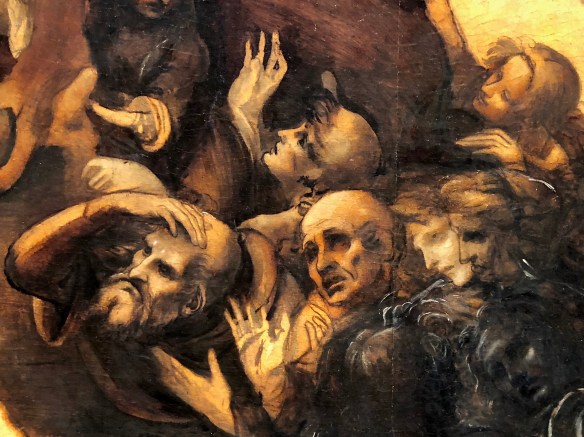
Leonardo da Vinci, Adoration of the Magi (detail, c. 1481-2, Uffizi Gallery, Florence).

O Desire 
of all nations and people,
you are the strong force
that draws us toward you,
the pattern which choreographs creation
to Love’s bright music.


Come: teach us the steps
that we may dance with you.

The sixth Antiphon goes to the heart of the Advent mystery: we are made of longing, born with a core of desire, an unquenchable thirst, for something we lack. Advent invites us to remember our longing and identify our deepest desire.

Some people think that Christianity is about the eradication of desire. Not so. Faith is the education of desire, weaning it from false objects and inadequate attainments, and directing it toward its true and ultimate end, the divine communion of the holy and undivided Trinity, the ceaseless dance of love which we are invited to share. 

Thomas Traherne, 17th-century Anglican poet, said, “Be sensible of your wants, that you may be sensible of your treasures.” What he meant was, if we want to know who we are, and why we are here, we need to pay attention to our deepest hunger, our deepest longing. What do we really want? What do we long for above all else?

When you figure that out––that is where you’ll find God: in the place where your desire is strongest. It doesn’t matter what name it goes by. Pay attention. Dig deeper. God is there.

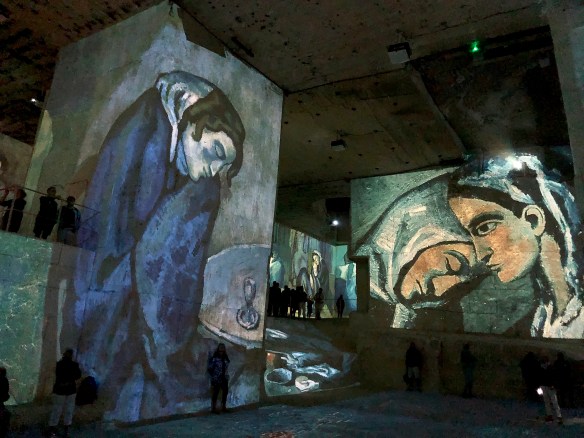
Projections of Picasso’s art on the surfaces of a limestone cave (Carrieres des Lumieres, Les Baux de Provence, 2018).

O Oriens (Dec. 21)

Dawn on the Camino de Santiago (Maundy Thursday, 2014).

O Rising Dawn, 
bright splendor of the light eternal,
illumining all things with Love’s radiance.

Come: enlighten those who sit in darkness,
who dwell in the shadow of death.

At the beginning of the longest night, this antiphon is preoccupied with light: the eternal radiance of God and the way it penetrates the darkest shadows of history and the human soul. What else is Advent but waiting for the dawn? 

For mystics and theologians, the image of God as light is more than an analogy drawn from physical experience. Splendor and glory are inherent to the very essence of divinity. But for those who sit in darkness––and who has not, at one time or another?––the light of heaven may be eclipsed: hidden from our eyes, absent from our hearts. As songwriter Bruce Cockburn testifies, “Sometimes you have to kick the darkness until it bleeds daylight.”

The poet Kathleen Raine describes the time of trial when “the curtain is down, the veil drawn” over the world’s deep radiance. “Nothing means or is,” she says. But that is not where God leaves her:

Yet I saw once
The woven light of which all [things] are made . . .
To have seen
Is to know always.

The Bainbridge Island ferry sails into the dawn (Puget Sound, 2014).

O Clavis David (Dec. 20)

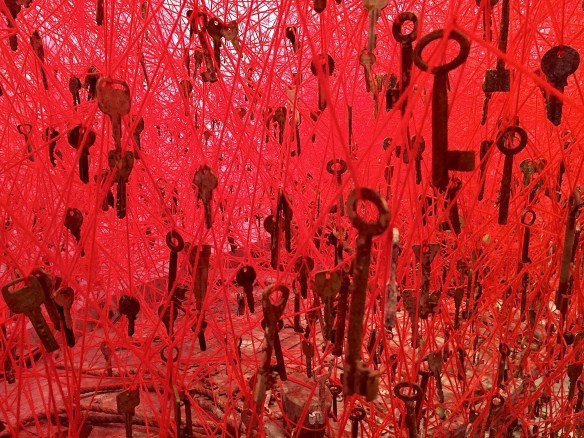
Chiharu Shiota, Keys in the Hand (Venice Biennale 2015).

O Key of David, 
you open, and none can shut;
you shut, and none can open.

Come, lead us out of the prisons
that oppress body, mind and soul;
welcome us into the open space of possibility;
let us breathe again.

This antiphon begins, O Clavis David (“O key of David). The Latin word for “key” was a favorite pun among medieval preachers. Clavis means “key,” but clavus means “nail.” The key that opens the door for us is the nail of Calvary, where Christ died to conquer death and sin.

Jesus, and the divine way of self-diffusive love which he embodied, is the key that unlocks every human prison, from the metal cages on our southern border to the oppressive interior confines of fear, guilt, sin, despair. 

Has you ever been in some kind of prison? Do you remember what you felt when you found the key? What was it like when the door swung open and you walked through it? Perhaps some who read this are still waiting for this key. 

O Clavis, come and lead those who sit in darkness, who live in the shadow of death––or grief, or fear, or addiction. Deliver us all into the place of light and joy and freedom.

Be the key that sets us free.
Open the door and welcome us home.

In Brighton, UK, an alternative worship group, Beyond, turned 24 beach huts into an Advent calendar. Every evening a different hut was opened to reveal an art installation about the coming of Christ. This hut was opened on Christmas Eve, radiating “love’s pure light” into the December night.

O Adonai (Dec. 18)

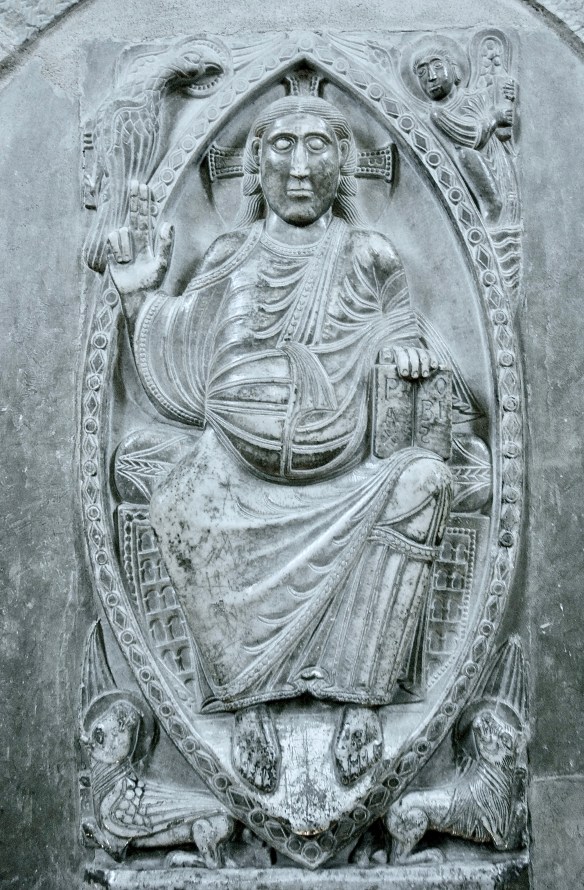
Christ in Majesty, Basilica of Saint-Sernin, Toulouse, France (12th century).

O Adonai, 
ruler of time and history,
manifestation of divine dominion
to your chosen people,
may your presence be our burning bush.

Come: bring justice to the poor,
food to the hungry, shelter to the homeless
protection to the vulnerable
,
freedom to the prisoner.

For the ancient Jews, the divine name revealed to Moses at the burning bush was too holy to be spoken, so they substituted the word Adonai (“my Lord”) when addressing God in their worship. This became Kyrios in the Greek translation of the Hebrew Scriptures. We still pray Kyrie eleison (“Lord have mercy”) in Christian ritual.

Will Campbell, the Baptist preacher who wrote The Cotton Patch Gospels, once asked, “What’s the biggest lie told in America?” The answer he gave was: “Jesus is Lord.” What would our lives––and our neighborhoods, our nation, our economy, our politics––look like if we really believed that the Lord of love and justice, the divine defender of the poor and vulnerable, is in fact the ultimate ruler of time and history? 

Adonai, bring that day closer!

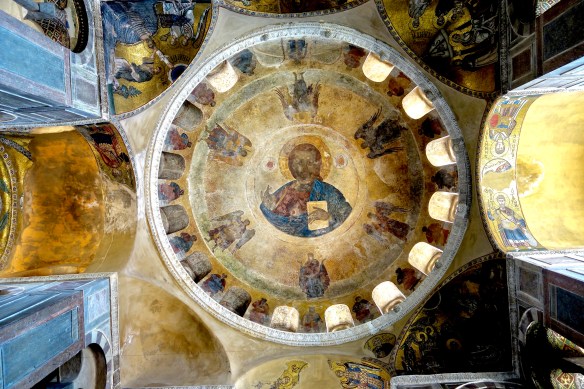
Christ as Pantocrator (ruler of the universe) on the dome of the Katholikon, Hosios Loukas monastery, Greece.

O Sapientia (Dec. 17)

One of the joys of Advent’s final days is the praying of the O Antiphons, seven eloquent prayers based on biblical images suggesting attributes of the divine. Liturgically, they begin and end the Magnificat at Vespers from December 17th to December 23rd, but they are also a rich resource for personal prayer as Christmas draws near. Each antiphon is both a greeting and a supplication, awakening our attention and shaping our intention.

Over the next seven evenings, I will post a brief reflection on the Antiphon for the coming day.
As you journey to Bethlehem, may you walk in beauty.

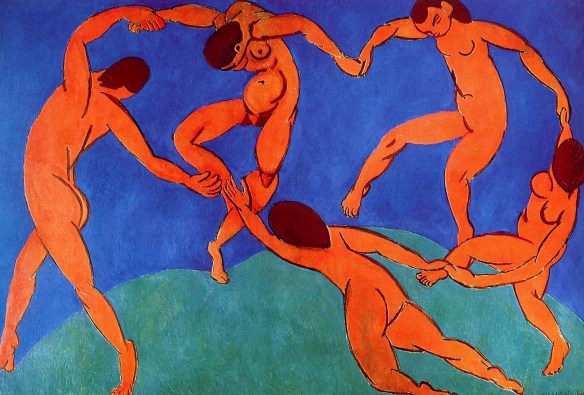
Henri Matisse, Dance (1909-1910).

O Sophia,
you are the truth of harmonious form,
the pattern of existence, the shapeliness of love.

Come: illumine us, enable us, empower us
to live in your Wisdom, your Torah, your Way.

The life of faith is not an invention of our own. Rather, we are invented by the Creator, invented by Love. There is a pattern that preexists us, a pattern born of divine love and woven into the structure of the universe. Sophia (wisdom), Torah (teaching), and Tao (principle) are ancient words for this pattern. 

Holy Wisdom is like a dance. If we are attentive to the music, and surrender ourselves to its rhythms, we will be caught up in the divine choreography. It is what we were made for. If we fight the pattern, we get out of step, and our bodies, our souls, and our societies become awkward and clumsy. 

But do not be discouraged. Sophia is a patient and gentle teacher. Call upon her, and she will guide your feet into the way of peace. 

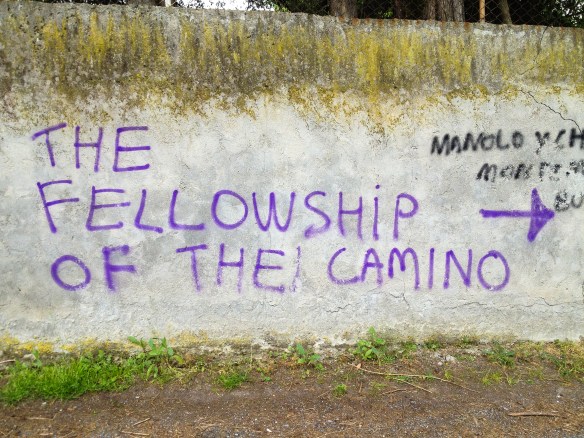
Blessed are those who walk in the Way (Camino de Santiago, May 2014).

The Virgin of Guadalupe

The welcoming Virgin above the portal of Our Lady of the Angels, Los Angeles (sculpture by Robert Graham).

She is reaching out her arms tonight;
Lord, my poverty is real:
I pray roses shall rain down again
from Guadalupe on her hill.

Who am I to doubt these mysteries,
cured in centuries of blood and candle smoke?
I am the least of all your pilgrims here,
but I am most in need of hope.

 –– Tom Russell, “Guadalupe”


We entered the old adobe mission by starlight, hours before dawn. The church was packed with countless worshippers, celebrating mass for the Feast of the Virgin of Guadalupe. After the final blessing, we all kept our places, anticipating the mystery play to come––an Advent tradition performed by El Teatro Campesino, an acting troupe whose roots go back to the fields of central California. Founded by Luis Valdez (“Zoot Suit”) in the 1960s, they performed guerilla theater during protests by Cesar Chavez and the United Farm Workers, and over the years they have continued to develop community-based theater. Now, in the 18th-century church of San Juan Bautista, they were about to perform La Virgen del Tepeyac.

It began with a thunder of drums. Dozens of players in Aztec regalia danced up the aisle, casting huge shadows on the walls of the nave. But their celebration would soon give way to a darker theme: the subjugation of Mexico’s indigenous people by Spanish conquistadores and friars. Aztec costumes were replaced by peasant garb, Franciscan robes and Spanish armor, and the native people were baptized into a new faith––submitting to the grievous inequities of the culture that imposed it. As the play proceeded, the audience took the side of the oppressed, and waited anxiously for God to do the same.

Countless millions throughout the Americas know what happened next. In December of 1531, on a barren hill in a place called Guadalupe, the Virgin Mary appeared to Juan Diego, an Aztec Christian convert. Speaking in his native language, she told him to deliver a message to the bishop: He must build a church not for the rich and powerful, but for the poor and the oppressed.

Juan Diego managed to get an audience with the prelate, but it did not go well. The message was absurd, and the messenger even more so. Would God choose a lowly peasant for divine revelation? Mary’s humble ambassador was quickly shown the exit. Nevertheless, spurred on by more visitations from the Virgin, Juan Diego pressed the message entrusted to him. Exasperated, the bishop demanded a miraculous proof, thinking that would end the matter.

In her final appearance, Mary told Juan Diego to return to that hill one more time. When he reached the summit, he found the barren ground covered with roses––in December! He gathered as many as his cloak could hold, and took them to the episcopal palace. When he poured the roses out at the feet of the astonished bishop, the Virgin’s image was revealed, imprinted on Juan Diego’s cloak.

The roses and the image were the stuff of miracles, but even more miraculous was the dignity accorded Juan Diego and all the indigenous poor by the Queen of Heaven. The story quickly spread, and the Virgin of Guadalupe became the patron saint of the Americas. The famous image of the brown-skinned mother of Jesus has become a ubiquitous sign of the God who raises up the poor and lowly, who works miracles in unexpected places.

On this feast day of the Virgin of Guadalupe, so many people in the Americas continue to suffer from the horrific cruelties of ruthless oppressors and unjust systems. Tragically, the United States government, polluted by white nationalism, has become one of the more notorious offenders. Juan Diego’s successors once again sit in darkness and the shadow of death. Let us pray that Guadalupe’s roses may rain down again upon the barren hills of a heartless world.

I saw El Teatro Campesino’s play twenty years ago, but its conclusion offered an image of grace which has never left me. When the play was over, the whole cast processed down the aisle, singing together as they walked. Actors who had played the oppressors went arm in arm with those who had played the peasants. The people who had been on opposite sides––the lions and lambs of a tragic history––now shared a joyful song, as if they were marching together into God’s redemptive future.

The great doors of the church swung open, and the light of the rising sun flooded into the dark interior like water through a bursting dam. Just outside, the cast turned and stopped, forming a corridor for the audience to pass through. As we made our way into the brilliance of morning, it seemed like the gate of heaven––all those shining brown faces, blessing us with smiles and singing.

And I thought: This is how history will end. Neither a bang nor a whimper, but a song.


Here is one of the Virgin’s appearances to Juan Diego in El Teatro Campesino’s La Virgen del Tepeyac.

Blinded by the Light –– An Advent Meditation

spectra III, an installation by Ryoji Ikeda at Venice Biennale 2019: “a blinding excess, rendering the space itself almost invisible.” (Photo by Jim Friedrich)

Orthodox theologian David Bentley Hart describes atheism as “a fundamentally irrational view of reality, which can be sustained only by a tragic absence of curiosity or a fervently resolute will to believe the absurd. . . [T]rue philosophical atheism,” he says, “must be regarded as a superstition, often nurtured by an infantile wish to live in a world proportionate to one’s own hopes or conceptual limitations.”[1]

For the people of Advent, “a world proportionate to our own hopes” is too mean a thing. The mystery of the world and the destiny of mortals are too deep, too immense, to be contained by language or thought. They exceed everything we can ask or imagine. They explode our limited notions of what is real and what is possible.

Not for the people of Advent that “tragic absence of curiosity” so common in a complacent secular culture too busy amusing itself to consider the deepest questions of human existence. Advent people want to know who we are, why we’re here, where we’re going, and how long we’ve got. Most of all, we want to know whether we matter, and whether we are loved.

But are such questions answerable? Our thoughts and concepts only take us so far, like a compass pointing north. “North” is a pretty useful guide––until you reach the North Pole, where the very concept of north loses its meaning. Just so, the closer our thoughts take us toward the divine center, the less they are able to tell us.

At the end of The Divine Comedy, when Dante beholds the presence of God unveiled at last, words fail him:

What then I saw is more than tongue can say.
Our human speech is dark before the vision.
The ravished memory swoons and falls away. [2]

The mystery we call God is always beyond us. Beyond our grasp, beyond our language, beyond our sight. The mystics and great spiritual teachers sometime use the word darkness to convey their experience in close encounters with the divine.

But what they call the darkness of God is not so much a matter of cognitive deprivation, where divinity simply hides its incommunicable essence from finite minds and hearts unprepared to receive it. No, they say, the darkness of God is not deprivation, but saturation. It is not an absence of light, but an excess of glory, that makes our eyes become so dim to divine presence.

It sounds paradoxical––to be blinded by the light of God––but only paradox has the wings to carry us beyond the prosaic into the heavenly place where all contraries are reconciled. The metaphysical poets of the seventeenth century, like John Donne and George Herbert, reveled in such holy paradox. Henry Vaughan, for example, wrote that

There is in God (some say)
A deep, but dazzling darkness; As men here
Say it is late and dusky, because they
See not all clear;
O for that night! where I in him
Might live invisible and dim. [3]

Was Vaughan just playing with words, or was he on to something? At this year’s Venice Biennale, I had a very literal experience of being blinded by the light in an installation by Japanese artist Ryoji Ikeda. What happened to me there is perfectly described by the text posted at the entrance:

“spectra III” consists of a corridor of bright fluorescent tubes. This all-encompassing installation bathes the visitor in light so bright it is difficult to see. Akin to a blizzard of data, the experience short-circuits our ability to process what we are seeing, and results paradoxically in a sensory wipe-out. Ryoji Ikeda sees this state of overload as opening the door to an experience of the sublime––a landscape of light too complex to comprehend. The installation functions in parallel to the experience of total darkness, yet inverts this experience. We are similarly disoriented but instead of an absence of light by which to see, there is a blinding excess, rendering the space itself almost invisible.

That’s exactly what happened to me in that corridor. I had never before experienced such a literal analogue to the blinding luminosity described by the mystics. It was truly a “deep and dazzling darkness.” Almost painful, to tell the truth. Certainly too much for my mortal eyes to take in.

It may seem paradoxical to speak of the darkness of God at the beginning of Advent, when we light candles against the lengthening nights, and pray for the “grace to cast away the works of darkness, and put on the armor of light,” as if the soul’s journey were a straightforward itinerary from deepest midnight to eternal day. But as the mystics and poets insist, God-talk must be paradoxical to be useful and true. “God draws straight with crooked lines,” they say. God is the burning bush and the cloud of unknowing. You can’t have one without the other.

“God goes belonging to every riven thing,” says the poet Christian Wiman.

He’s made
the things that bring him near,
made the mind that makes him go.
A part of what man knows,
apart from what man knows,
 
God goes belonging to every riven thing he’s made. [4]

God is “apart” from what we know, transcendent to our empirical minds––minds which themselves keep God at a distance through our forgetfulness, idolatry, and egoism. And yet God wants to be near, wants to be known. God “goes belonging” to every riven thing: the broken, the wounded, the lost. God goes belonging to us all. And in so doing God’s own self is riven into the contraries of darkness and light, near and far, infinite and incarnate, present and absent, visible and invisible.

Advent’s great themes are seeking and waiting, hoping and expecting, longing and desiring. We go looking for God, searching for signs of God’s appearing.

Sometimes, in our search, we seem only to find darkness, silence, or absence, because we are looking in the wrong place, or in the wrong way. Or we are simply looking for the wrong thing, and need to be denied the fulfillment of inadequate expectations because they are too small or ill-proportioned to fit the immeasurable desire of God. For example, we might expect a well-armed conqueror instead of a servant and sufferer. Or we might expect an irresistible righter of wrongs instead of a helpless refugee child lying in a manger­­––or, these days, lying in a cage.

We were made to be in union with God, and our desire for that union is the deepest truth within us. We feel incomplete and unfinished without it. But our desire often goes astray and misses its mark, attaching itself to something well short of God. If our desire gets stuck on anything less than God, we will waste our lives worshipping the wrong thing,

In a 1967 film by Jean-Luc Godard, a well-dressed couple in a sporty convertible pick up a hitchhiker who tells them he is God. They are very excited to meet him. “Can you do miracles?” asks the man, “Can you make me richer?” His wife adds her own requests: “Can you make me young and beautiful?” And “God” replies, “Really? Is that all you want? I don’t do miracles for idiots like you!” [5]

One of the reasons that Christians worship together and pray together and learn together is to train our desire, so we don’t wait for the wrong thing, or hope for the wrong thing, or love the wrong thing, but always keep our eyes on the prize. Admittedly, God isn’t all that easy, and God is certainly not tame. As Emily Dickinson said, the divine “invites––appalls––endows–– / Flits––glimmers––proves––dissolves–– / Returns––suggests––convicts––enchants / Then––flings in Paradise––“[6]

Still, we are not deterred. Still, we cry Maranatha! Come, Lord, come! At least some of us do. There are those who don’t, for they think God is too invisible or too impossible to take into account. But isn’t that the point? Nothing we can see can save us. Nothing that is possible can rescue us. Paradox, paradox…

The human condition, suspended somewhere between the finite and the infinite, is a complicated puzzle, a question with no clear answer. As for the times we live in, Humphrey Bogart summed it up nicely in the film Beat the Devil:

“What’ve you got to worry about? We’re only adrift on an open sea with a drunken captain and an engine that’s likely to explode any moment.”

Is God coming to save us? As we know, that question is often answered by delay. Or worse, silence. We peer toward an uncertain horizon, looking for the One who comes with clouds descending, or at least for the comforting glow of dawn. But the horizon is hidden by what Nicholas of Cusa, a fifteenth-century German theologian, called “that obscuring haze of impossibility.”

And the darker and more impossible that obscuring haze of impossibility is known to be, the more truly the Necessity shines forth and the less veiledly it draws near and is present… I give You thanks, my God, because… You have shown me that You cannot be seen elsewhere than where impossibility appears and faces me.” [7]

I love Nicholas’ name for God: “the Necessity.” And I love his image of divine revelation as the moment when “impossibility appears and faces me.” The impossibility, the beyondness of God––beyond all knowing, beyond all saying, beyond all seeing––abolishes our limiting notions of what is possible, making a way where there is no way. O for that Night! where I in him may live invisible and dim.

All this talk of the darkness of God, the hiddenness of God, the elusiveness of God, may seem to run counter to the more affirmative language we usually employ in the liturgy as well as in the conversations we have together as people of faith.

We call ourselves God’s friends. We experience God’s closeness in times of gratitude and times of need. We see God’s hand in works of justice and mercy, and feel God’s Spirit in the reconciling and sacrificial love of human relationships. We meet God in Scripture, in community, in nature, and in beauty. We meet God in the poor, the vulnerable, and the dispossessed.

But sometimes God is hard to find or hard to perceive, and in those times we must speak the Advent language of not-exactly, not-here, and not-yet. That’s why the gospel for the First Sunday of Advent always has Jesus warning us to be on the ready. “Out with the old and in with the new! The world of the past is falling down, falling down. Whatever is going to happen next, expect the unexpected.”

Faced with the collapse of old ways and familiar certainties, where shall we look for God in the brave new world?

There’s a story about a man who dreams he is wandering among the labyrinthine stacks of the immense Clementine library in Prague. A librarian wearing dark glasses approaches him to ask, “What are you looking for?”

“I am looking for God,” he says.

“Ah,” said the librarian. “God is one of the letters on one of the pages of one of the four hundred thousand volumes in the Clementine Library. My parents and my parents’ parents searched for that letter. I myself have gone blind searching for it.” [8]

We’re all searching for that word, that moment, that appearing. It may bring the holy blindness of the mystics, or it may bathe you in the gentler glow of illumination. God only knows. Either way, you will not be left comfortless. God goes belonging to every riven heart.

In this season of Advent, I invite you to contemplate the paradoxical depths of the divine, to immerse yourselves in periods of wordless prayer within God’s luminous darkness. Set aside your concepts and your dogmas, and wait in the stillness of unknowing for the Word to speak. The God who is beyond all language and beyond all knowing wants to disclose Godself to us, wants to give Godself to us. That is the divine desire––the siege of God at the gates of our heart.

Stay awake. Pray for grace. Do not lose faith. As Jackson Browne exhorts us in his great Advent song, “For a Dancer”:

Keep a fire burning in your eye,
and pay attention to the open sky––
you never know what will be coming down.

One last thing.

Paul Celan was a Romanian Jewish poet who survived the Holocaust. It has been said that his difficult poetry “is not willed obscurity” but “comes out of lived experience and is ‘born dark.’” [9]  Celan knew the darkness of hell, but he also knew another kind of darkness, a darkness which paradoxically contains the seeds of light.

His poem called “The Narrowing” [10] includes a stanza of four short lines that express the spirit of Advent people––the people who sit in darkness without losing faith in the light to come. In just 16 words, the verb “came” is spoken 5 times, like an incantation in response to our beseeching prayer, “O come, O come, Emmanuel.” What comes, comes in the dark, but it brings a desire for light:

Came, came.
Came a word, came,
came through the night,
wanted to glow, wanted to glow.


This post was delivered as a sermon on the First Sunday of Advent, 2019, at St. Barnabas Episcopal Church, Bainbridge Island, WA 98110.

For links to other Advent resources: How Long? Not Long!––The Advent Collection


[1] David Bentley Hart, The Experience of God: Being, Consciousness, Bliss (New Haven: Yale University Press, 2013), 16.

[2] Dante Alighieri, Paradiso xxxiii: 55, trans. John Ciardi.

[3] Henry Vaughan, “The Night,” cited in Peter O’Leary, Thick and Dazzling Darkness: Religious Poetry in a Secular Age (New York: Columbia University Press, 2018), 85.

[4] Christian Wiman, “Every Riven Thing,” in Every Riven Thing (New York: Farrar, Strauss & Giroux, 2011).

[5] Jean-Luc Godard, Weekend (1967).

[6] Emily Dickinson, “The Love a Life can show Below.”

[7] Cited in Didier Maleuvre, The Horizon: A History of Our Infinite Longing (Berkeley: University of California Press, 2011), 143.

[8] From “The Secret Miracle,” a story by Jorge Luis Borges.

[9] From Shoshana Olidort’s Chicago Tribune review of Breathturn into Timestead: The Collected Later Poetry of Paul Celan, cited on the Poetry Foundation website: https://www.poetryfoundation.org/poets/paul-celan

[10] The original German title is “Engführung.”
“Here, right matters.”

Riding upward on Fortune’s wheel (Paolo Manucci, pavement of Siena cathedral, 1504-1506)

“. . . their motives escape us like rites of an unknown religion.”

––– Gilles Deleuze [1]


At the end of the eighteenth century, the President of the United States, supported by the religious right and a wealthy elite, began to round up dissidents and throw journalists in jail. He garnered support for this assault upon civil liberties by stirring up fears about war and foreign enemies while dividing the country along the fault lines of self-interest and resentment.

The Vice President, deeply disturbed by this mockery of America’s founding ideals of liberty and the common good, tried to summon hope.

“A little patience,” he said, “and we shall see the reign of witches pass over, their spells dissolved, and the people recovering their true sight, restoring their government to its true principles. It is true, that in the meantime, we are suffering deeply in spirit, and incurring the horrors of a war, and long oppressions of enormous public debt. … If the game runs sometimes against us at home, we must have patience till luck turns, and then we shall have an opportunity of winning back the principles we have lost. For this is a game where principles are the stake.” [2]

So wrote Thomas Jefferson to a friend in 1798.

After watching this week’s Congressional impeachment hearings, I am trying hard to “have patience till luck turns,” but whether our nation can ever truly recover “the principles we have lost” remains an undecided question. The lawlessness of crimes, corruption and coverup appears to be more than a match for constitutional processes, at least so far.

“This is America,” insists Lt. Col. Alexander Vindman. “Here, right matters”[3]  But the President and his allies are doing their worst to prove him wrong. It’s become so difficult to stay ethically focused in the blizzard of bad acts that is the Trump administration, with its distracting whack-a-mole of endless evils.[4] Words and actions which would have scandalized prior generations have been normalized into the banality of daily, sometimes hourly, experience. But during the past week, the House Intelligence Committee has extracted one particular crime out of the ceaseless flow, enabling millions of Americans to examine it in depth.

In the face of a mountain of damning evidence, Congressional Republicans cover their ears and shut their eyes. Their posturing at the hearings has been shamelessly mendacious and painfully childish. Whether their behavior is driven by fear, ambition, or blindness, they act under a malignant spell which not even a clear and present danger to Constitution and country can dissolve. Their motives escape us like rites of an unknown religion. They sleepwalk toward the abyss, dragging America with them.

“We are better than that!” cried Elijah Cummings earlier this year. And Adam Schiff, the chair of this week’s hearings, chose his late colleague’s passionate plea to be the final words of yesterday’s concluding session. So now we must ask: Are we? Are we better than that?

A foundational American myth has been the story of rebirth and renewal. Unburdened by the weight of the past, perpetually empowered to reinvent ourselves, we want to believe in our own agency, the chance to start afresh in every moment. No Old World fatalism shall deter our capacity to act. If there’s a problem, we’ll solve it. If there’s an obstacle, we’ll overcome it. “I know if we come together, there’s nothing we can’t do,” says presidential candidate Joe Biden, expressing a mandatory trope of American rhetoric.

Writing about American cinema, Gilles Deleuze says that it “constantly shoots and reshoots a single fundamental film, which is the birth of a nation-civilization.”[5] And in that sense our politics are like our movies. We watch in order to rediscover America. But, as Deleuze cautions,

 “. . . we do not perceive the thing or the image in its entirety, we always perceive less of it, we perceive only what we are interested in perceiving, or rather what it is in our interest to perceive, by virtue of our economic interests, ideological beliefs and psychological demands. We therefore normally perceive only clichés.[6]

Epistemology––the study of what we know and how we know it––is not just the domain of philosophical reflection. When 30-40% of Americans now perceive the world as a place where monstrous and murderous acts are somehow acceptable, epistemology is a political problem. Trump will be gone, sooner or later, but the toxicity of unknowing will take decades to dispel, assuming we manage to survive this perilous time with our democracy intact.

In yesterday’s impeachment testimony, foreign affairs specialist Fiona Hill warned Americans about the Russian strategy to destabilize western democracies:

“When we are consumed by partisan rancor, we cannot combat these external forces as they seek to divide us against each other, degrade our institutions, and destroy the faith of the American people in our democracy.”

Hill went on to say, “Russia’s security services and their proxies have geared up to repeat their interference in the 2020 election. We are running out of time to stop them. In the course of this investigation, I would ask that you please not promote politically driven falsehoods that so clearly advance Russian interests.”[7]

In other words, if America lives by the lie, it will die by the lie. If a deluded public loses the ability to distinguish what is imaginary from what is real, we are lost. The false narratives of others will be substituted for our own freedom of thought. Who, then, will rescue us from this “body of death?”[8]

This week, in addition to missing three days of rare and precious Northwest November sunshine while staying inside to watch the hearings, I curated a conversation about St. Paul at the Episcopal church of St. Barnabas on Bainbridge Island, Washington. We began with a pivotal passage from his letter to the church at Philippi:

“Let this mind be in you which was also in Christ Jesus.” (Phil. 2:5)

These words were inscribed in large letters on the wall of the assembly hall in my boyhood school, and for six formative years, from seventh through twelfth grade, they were before my eyes at every morning assembly. Ever since, Paul’s invitation to a radically new kind of perception has continued to challenge my ethical complacency and disturb my spiritual sleep.

To have the mind of Christ, I believe, isn’t asking us to do a little better, but to be radically different, to make our center not the ego or all the assumptions and biases implanted by nature and culture, but something transcending our limited (and limiting) personal standpoint.

As Episcopal theologian Mark McIntosh puts it, faith becomes “a new cognitive framework . . . restructuring the mind and prying it open to the infinite, deathless reality of God.”[9] With the mind of Christ, we see with the eyes of the Compassionate One, the Merciful One, not only desiring what God desires, but becoming the very means of actualizing divine desire in the mending of the world.

In the seventh century, Maximus the Confessor said that “to have the mind of Christ is, in my opinion, to think in his wayand of him in all situations.”[10] In other words, when we “put on Christ” (to use another Pauline image), the question of “what would Jesus do?” becomes existential: What would we do? What will we do? It’s not simply a way of thinking. It is a way of acting and being.

St. Paul was an itinerant pastor to some pretty wayward and quarrelsome congregations, who, he worried, only “bite and devour one another” (Gal. 5:15). He repeatedly exhorted them to renounce partisan rancor and fearful self-indulgence, to let Christ’s mind be in them, manifesting itself in the way they live with each other, and in the way they exist to invite everyone else into Love’s dance.

Let love be genuine; hate what is evil, hold fast to what is good; love one another with mutual affection; outdo one another in showing honor. Do not lag in zeal, be ardent in spirit, serve the Lord. Rejoice in hope, be patient in suffering, persevere in prayer. Contribute to the needs of the saints; extend hospitality to strangers. Bless those who persecute you; bless and do not curse them. Rejoice with those who rejoice, weep with those who weep. Live in harmony with one another; do not be haughty, but associate with the lowly; do not claim to be wiser than you are. Do not repay anyone evil for evil, but take thought for what is noble in the sight of all. If is it possible, so far as it depends on you, live peaceably with all (Romans 12:9-18).

The gap between Paul’s exalted vision of communal life and the present reality of America’s broken public could not be greater. You don’t have to be a Christian, or conflate church and country, to see the wisdom of Paul’s words for our common life as citizens and neighbors. Our refusal to love cannot stand. Paul’s warning to his congregations is aimed at America as well:

Take care, lest you be consumed by one another. (Gal. 5:15).


I recently photographed the 16th-century pavement image of Fortune’s wheel in the cathedral of Siena in Italy. There are 4 figures riding the wheel; one at the top, one at the bottom, one going down, and one riding upward. I chose the latter for this post as sign of hope.

[1] Gilles Deleuze, Cinema 2: The Time-Image (Minneapolis: University of Minnesota Press, 1989), p. 94. Deleuze was describing the wealthy characters in the films of Luchino Visconti, but it seems an apt image for the inexplicable behavior of Trump’s political allies.

[2] Thomas Jefferson, letter to John Taylor, June 4, 1798.

[3] Testimony before the House Intelligence Committee, Nov. 20, 2019.

[4] This does not seem hyperbole to me. My post before the 2016 election, Ten Reasons to Stop Trump Now, has proved all too accurate as far as it goes, but who then could have predicted children in cages, the pardoning of war criminals, the betrayal of Kurdish allies, etc. etc.? Just today I read that almost 10,000 premature deaths per year can be attributed to Trump’s gutting of EPA rules. As I said, endless evils.

[5] Deleuze, Cinema 1: The Movement-Image (Minneapolis: University of Minnesota Press, 1986), 148.

[6] Deleuze, Cinema 2, p. 21.

[7] Fiona Hill, testimony before the House Intelligence Committee, Nov. 21, 2019.

[8] “Wretched man that I am! Who will rescue me from this body of death?” (Romans 7:24)

[9] Mark McIntosh, “Faith, Reason, and the Mind of Christ,” in Paul J. Griffiths & Richard Hutter, eds., Reason and the Reasons of Faith (New York/London: T&T Clark, 2005), 141.

[10] Maximus the Confessor (580-662), Chapters on Knowledge, II, 83, cited in McIntosh, 121.

“I Once Was Lost”: Rethinking Jesus’ Most Beloved Parable

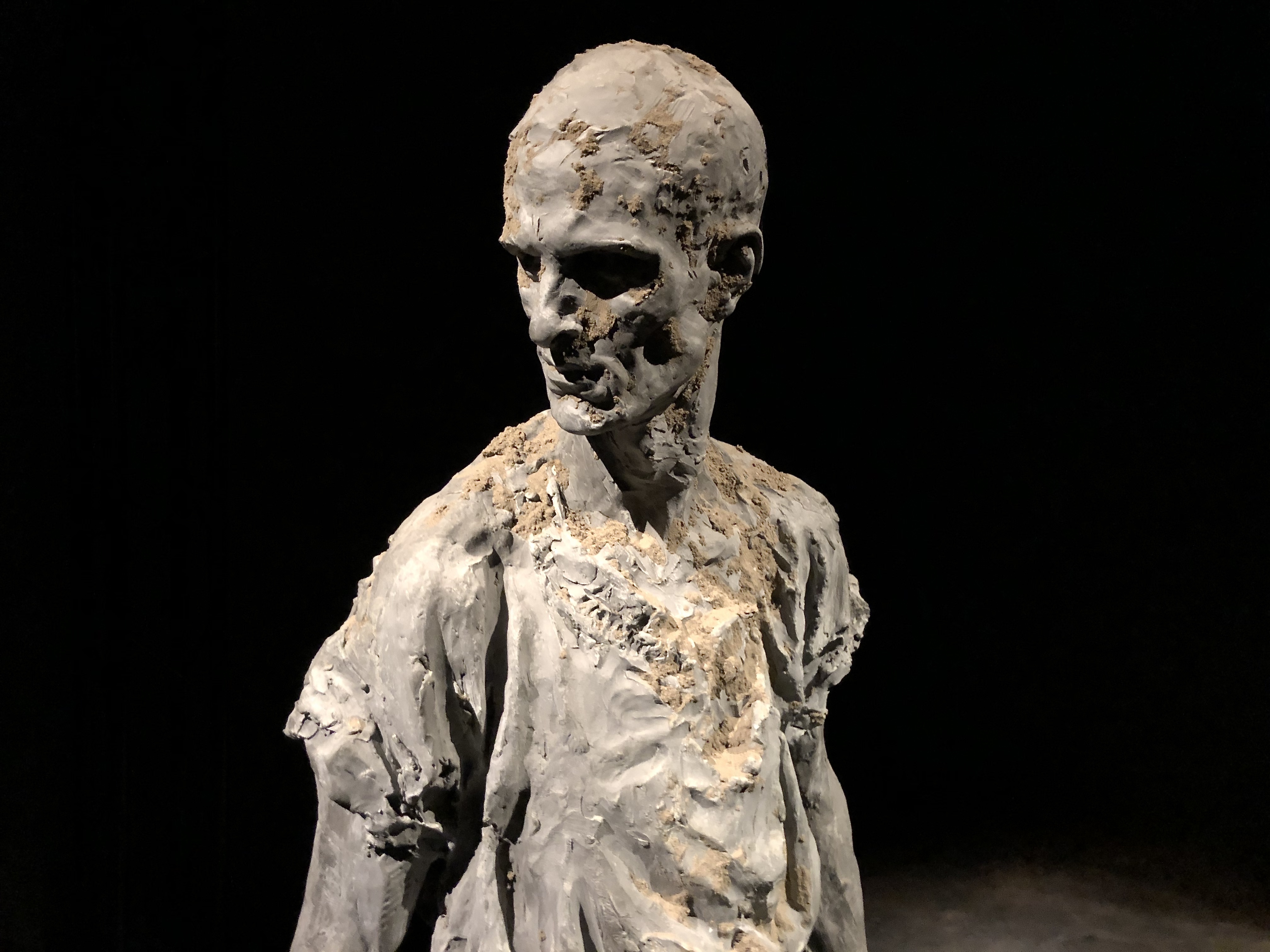
Alexander Sokurov, “Lc. 15:11-32” (Prodigal Son installation, 2019). Sculptures by Vladimir Brodarsky & Katya Pilnikova.

 Life is a dialectic of dwelling and wayfaring, in the world yet not of it.

––– Erazim Kohák

I once was lost, but now I’m found.

––– John Newton


Jesus’ parable of the Prodigal Son is the Bible’s preeminent tale of forgiveness and reconciliation. The welcoming father’s embrace of his foolish and errant son is a vividly concise summary of the gospel message: We can never be so lost that we cannot be found. We can never be so wrong that we cannot be loved.

Rembrandt’s celebrated painting, The Return of the Prodigal Son, would be one of his final works. He was bankrupt, his style no longer in vogue. His wife and three of their children were long dead, and he would have to sell his wife’s grave to pay his debts. His only surviving son Titus, age 27, died of the plague even as the parable’s “lost son” was taking form on canvas. As Rembrandt struggled with his own sadness and despair, he created the most indelible image of mercy in the history of art.

Rembrandt van Rijn, “The Return of the Prodigal Son” (c. 1167-1669).

Father and son emerge from a world of shadows, for compassion is the light of the world which no darkness can comprehend. The arch formed by the father’s welcoming arms is echoed by the arched doorway in the background, showing love to be the true way home. And unlike most other artistic depictions of this scene, there is no happy glance between the reunited pair. The prodigal’s repentant posture delays the moment when their eyes will meet.

Kierkegaard wrote at length about the “infinite qualitative abyss” between God and humanity, a condition due not only to the uncrossable difference between finite and infinite, but also to the profound estrangement from the holy wrought by human sin. Given the magnitude of the gulf between ourselves and the divine, how could we ever be in relation with One who is so totally other? “The danger,” said Kierkegaard, “is that God becomes so dreadfully and irreconcilably Other to the self that one is swallowed up by the horror of this infinite qualitative abyss.” [1]

The modern solution to the gulf between human and divine has been to ignore (or forget entirely) the Holy Other and concentrate on the human situation in solely human terms, permanently severing the problem of earthly existence from the problem of God. How well that works is a matter of some debate, but for the faithful, such a strategy omits far too much of value. Exiling God from the world is not a solution for our own condition of exile.

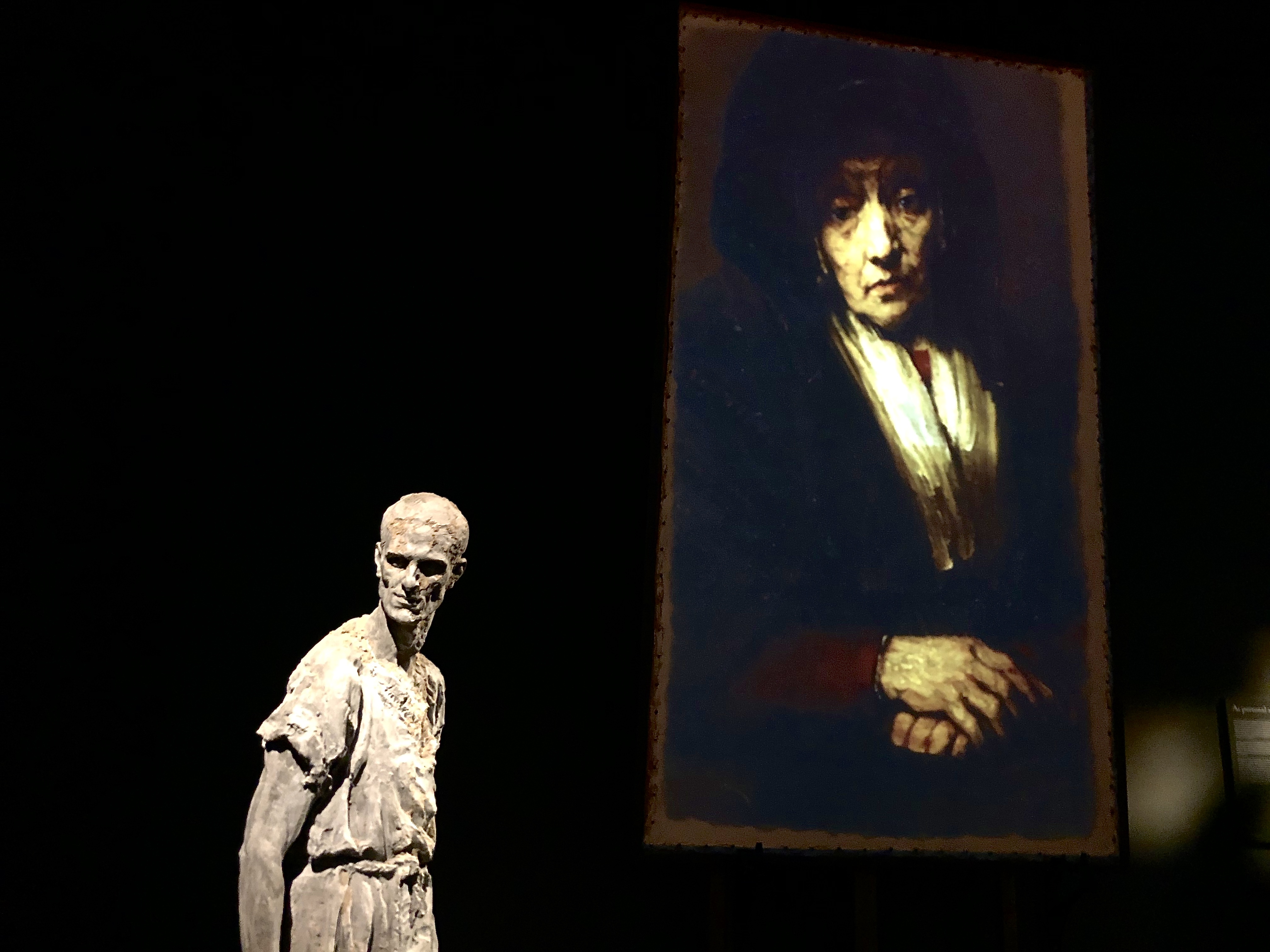
The Prodigal Son under the melancholy gaze of Rembrandt’s “Portrait of an Old Woman” (1654) in Sokurov’s installation.

We all long to go home, to find the place where we are loved and known and welcomed, the place where all wanderings cease, and we can finally know what it means to dwell. But with the longing comes doubt. Is there such a place? Can we ever get there? And how will the journey change us?

For the unbeliever, human life concludes with annihilation. After our last breath––nothing. But the future of the believer may also be described as a kind of annihilation. As we draw near the absolute center of all that is, the egocentric self can no longer maintain its pretentious fictions. The really Real exposes our own unreality. The gaze of God is fatal to our illusions.

When Moses asked to see God’s face, God told him that “no human may look upon Me and live” (Exodus 33:20). This crucial Hebrew text reflects an ancient fear of direct contact with the divine, whose infinite voltage could fry the circuits of finite beings. But the biblical God posed an additional, even greater threat: the penetrating gaze which sees us for what we are.

Day of wrath! . . .
What a great tremor there will be,
when the Judge is to come,
who will examine all things strictly  . . .
I groan, as if accused;
my face blushes because of my fault . . . [2]

Who among us is ready to have every story told, every failure examined, every blemish known? Therapeutic honesty is hard and painful work. Kierkegaard wrote in his Journal that “to see yourself is to die, to die to all illusions and all hypocrisy––it takes great courage to look at yourself.” And, he added, this “can only take place in the mirror of the Word.” [3]

The Christian goals of illumination and divine union must be preceded by confession and purgation. “If we say we have no sin, we deceive ourselves, and the truth is not in us” (I John 1:8). Even the saints are not exempt; the best of them are brutally honest about their own incompleteness. St. John of the Cross, speaking from personal experience, said that the journey of faith “does not consist in consolations, delights, and spiritual feelings, but in the living death of the cross, sensory and spiritual, exterior and interior.” [4]

This annihilation of self––“the living death of the cross”––is not morbid self-hatred (fixating on my sin is just another form of ego), but the abandonment of everything false or misshapen as the necessary prelude to profound transformation. The death of self becomes the beginning of Self.

I abandoned and forgot myself,
laying my face on my Beloved;
all things ceased;
I went out from myself,
leaving my cares
forgotten among the lilies. [5]

In Rembrandt’s painting, the Prodigal Son presses his face against his father’s comforting body. He is still in the confessional stage, kneeling with downcast eyes, not yet daring to stand face-to-face with the one he has hurt so deeply. But consciousness of his fault is overcome by grace––the leap of faith which accepts the “impossible possibility” of being forgiven. Only by knowing ourselves as sinners needing mercy can we become aware of forgiveness. The eyes which were cast down by shame will soon be raised up to see the welcoming father face-to-face. “By surrendering its despair before God, the self becomes open to forgiveness: the gift from the divine which is the impossible possibility of coming to know oneself as one is known by God.” [6]

The Kierkegaardian surrender of existential despair in order to receive the gift of mercy applies perfectly to Rembrandt’s painting:

“Justice looks judgingly at a person, and the sinner cannot endure its gaze; but love, when it looks at him––yes, even if he avoids its gaze, looks down, he nevertheless does perceive that it is looking at him, because love penetrates far more inwardly into life, deep inside life, in there where life emanates, than justice does, which repellingly establishes a chiasmic abyss between the sinner and itself, whereas love is on his side, does not accuse, does not judge, but pardons and forgives.” [7]

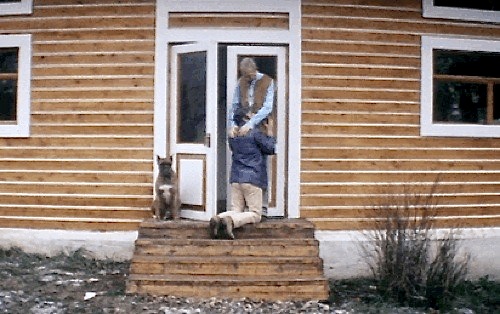
The Return of the Prodigal Son, acquired by St. Petersburg’s Hermitage Museum over 250 years ago, has long haunted the imagination of Russian visual artists. In his metaphysical sci-fi film Solaris (1972), Andrei Tarkovsky returns his cosmonaut protagonist from the “far country” of outer space to the door of his childhood house, where he is embraced like Rembrandt’s prodigal. But his father, we have learned, is deceased, and his son remains somewhere out in space, light years from earth. Tarkovsky’s moving image of ultimate reunion with both parent and planet earth turns out to be only memory or dream. It is in fact “impossible”––which only deepens the desire to make it so.

The son returns home (in his imagination), from the closing scene of Andrei Tarkovsky’s “Solaris” (1972).

Another Russian filmmaker, Alexander Sokurov, included Rembrandt’s actual painting in Russian Ark (2002), a meditation on Russia’s troubled history filmed entirely inside the Hermitage in a single 87-minute shot, with the camera moving through the galleries to encounter both paintings and people from different centuries. The pensive French aristocrat we follow from room to room stops for a long time in front of Rembrandt’s great canvas, silently paying homage to its power. For the Russian Pavilion at this year’s Venice Biennale, Sokurov himself returns to the painting, rethinking its themes with sculpture, video, music, lighting, a mirror, and various objects from an artist’s studio. His installation is called “Lc. 15:11-32,” after the biblical citation for Luke’s telling of the parable.

The sorrowful father in the first room of Alexander Sokurov’s installation, “Lc. 15:11-32.”

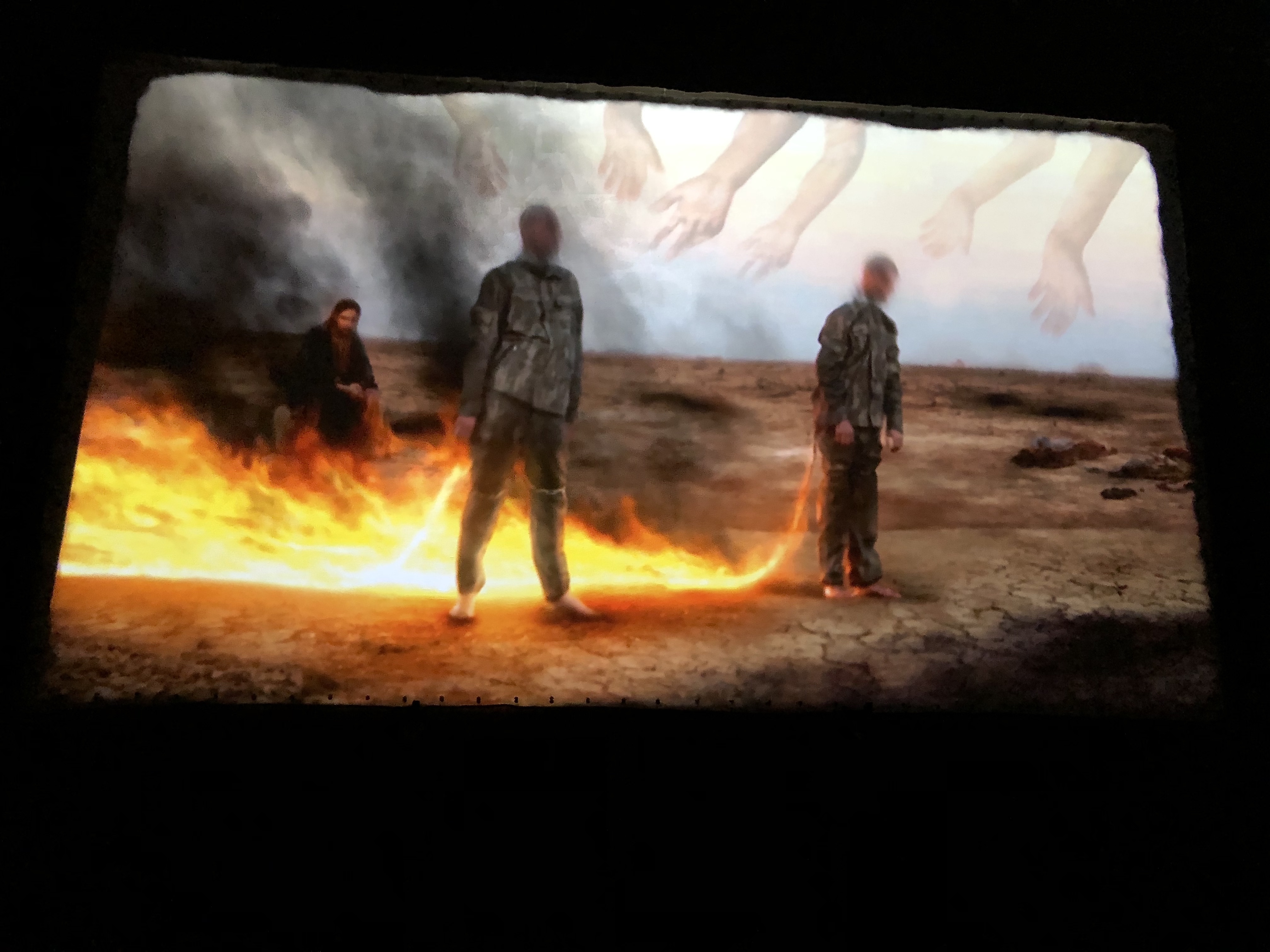
In the first of two dark rooms, father and son stand far apart in the gloom. It is not clear whether they even see each other across the black abyss that separates them. Behind the father are two large video projections representing a world gone wrong. One shows a blurred image of a city dissolving in flames, like an apocalypse by Hieronymus Bosch. The other shows Christ sitting in a desert as soldiers enter with flame throwers to fill the screen with fire and smoke. We realize that not just the son, but the whole world has gone astray. Not even a divine father can fix it. Grace and redemption remain an impossibility in this terrifying darkness.

Ivan Nikolaevich Kromskoy, “Christ in the Wilderness” (1872).

The Christ in the video image is taken from a nineteenth-century Russian painting, Christ in the Wilderness (1872), by Ivan Nikolaevich Kromskoy, whose humanized Jesus, unlike the serenely transcendent Savior of Orthodox iconography, reflected the revolutionary and questioning mood of the painter’s generation. In an age of religious doubt, traditional understandings seemed out of touch with experience. For Kromskoy, a self-assured Christ radiant with divinity was too detached from human suffering. “My God––Christ––is the greatest of atheists,” he said, “a person who has destroyed God in the universe and shifted him directly to the center of the human spirit and who, therefore, goes calmly to his death.” [8]

One of the video projections in the first room of Alexander Sokurov’s installation, “Lc. 15:11-32.”.

But how calm can such a Christ really be, sitting now, according to Sokurov, amid the flames and smoke of our endless desert wars? He may be the “fellow sufferer who understands,”[9] but he appears to be as lost as the Prodigal Son, exiled to the far country of human sin. His inheritance of divine power has been squandered by incarnation. He may share our griefs––does he also share our helplessness?

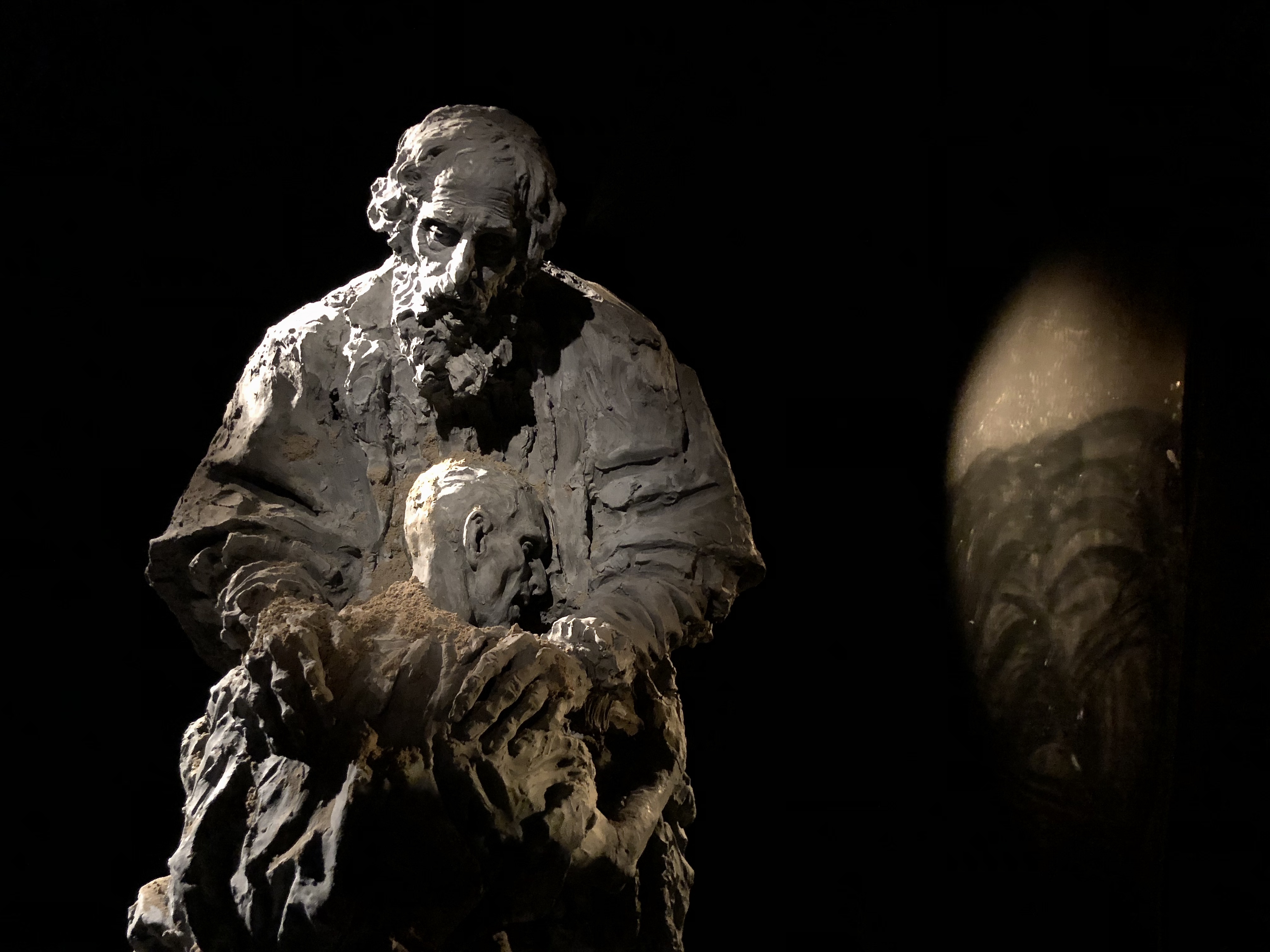
In the vast first room of Sokurov’s installation, estrangement is absolute and unchanging. But beyond it lies a second room, like a small cave, where the abyss of sin and separation is overcome at last. In a sculpted restaging of Rembrandt’s painting, the lost son comes home to the father’s compassionate embrace.

In the second room of Sokurov’s installation, father and son are reunited.

Behind the figures there is a large mirror, whose reflected image repeats the scene, reminding us that every retelling of the parable is but a version of an original which cannot be grasped directly, but only experienced in the second-hand reflections of Luke, Rembrandt, Sokurov, and all the rest of us who engage Jesus’ story. The mirror’s surface is slightly wavy, and it sways slowly back and forth, producing a continuously distorted image, suggesting the instability and uncertainty of every interpretation.

The figures are reflected in a distorting mirror.

The mirror also includes the viewer, allowing each of us to know ourselves as witnesses to the impossible mystery of divine mercy. But such seeing does not always come naturally. While I stood transfixed in this cave of revelation, two young women entered. After a brief glance at the sculpture, they became absorbed with photographing their own misshapen reflections in the mirror, giggling at the funhouse gag.

In my mind, I judged their heedless frivolity, and the moment I did so I became equally blind to the meaning of The Return. I forgot my own prodigal culpability, my own need to kneel with downcast eyes. I forgot the unconditional nature of the father’s embrace. I had become the elder brother.

No matter, says the parable. The prodigal, the proud, the penitent, the foolish––we’ll all be gathered in eventually. And the conclusion of all our wandering stories will be a home of abiding welcome. The door is open. The feast is ready. Love is waiting. Come.


Related Posts:

The Return of the Prodigal Son

Venice Biennale 2019: “A wound in a dance with love”


[1] Søren Kierkegaard, Without Authority, cited in Simon D. Podmore, Kierkegaard and the Self Before God: Anatomy of the Abyss (Bloomington, IN: Indiana University Press, 2011), 8.

[2] Dies Irae (“Day of Wrath”), a thirteenth-century Latin poem about the Last Judgment and our collective plea for forgiveness. It became a traditional part of requiem masses, but its vivid images of doom and “wrath” sound jarring to modern ears accustomed to a kinder and gentler eschatology. However, when we consider the moral and apocalyptic implications of climate change, the notion of a “day of reckoning” when “nothing will remain unpunished” and “even the just can scarcely be secure” seems uncomfortably apt, as does the poem’s anguished cry for rescue and “the gift of forgiveness.”

[3] Kierkegaard Journal, cited in Podmore, 155.

[4] John of the Cross, cited in Hans Boersma, The Beatific Vision in Christian Tradition (Grand Rapids, MI: Eerdmans, 2018), 184.

[5] John of the Cross, “The Dark Night,” cited in Boersma, 178.

[6] Podmore, 179.

[7] Kierkegaard, Without Authority, cited in Podmore, 173-174.

[8] Ivan Kromskoy in a letter to a friend, quoted in Walther K. Lang, “The ‘Atheism’ of Jesus in Russian Art: Representations of Christ by Ivan Kromskoy, Vasily Polenov, and Nikolai Ghe,” I recommend the entire article for those interested in art and faith. It is found on the website Nineteenth-Century Art Worldwide: http://www.19thc-artworldwide.org/autumn03/272-the-qatheismq-of-jesus-in-russian-art-representations-of-christ-by-ivan-nikolevich-kramskoy-vasily-polenov-and-nikolai-ghe

[9] Alfred North Whitehead’s famous description of God has provided a moving and influential image of a divinity deeply affected by human suffering, a God who takes our pain into Godself. Critics of such theology wonder whether too much divine power has been relinquished. Can a vulnerable God still save us?