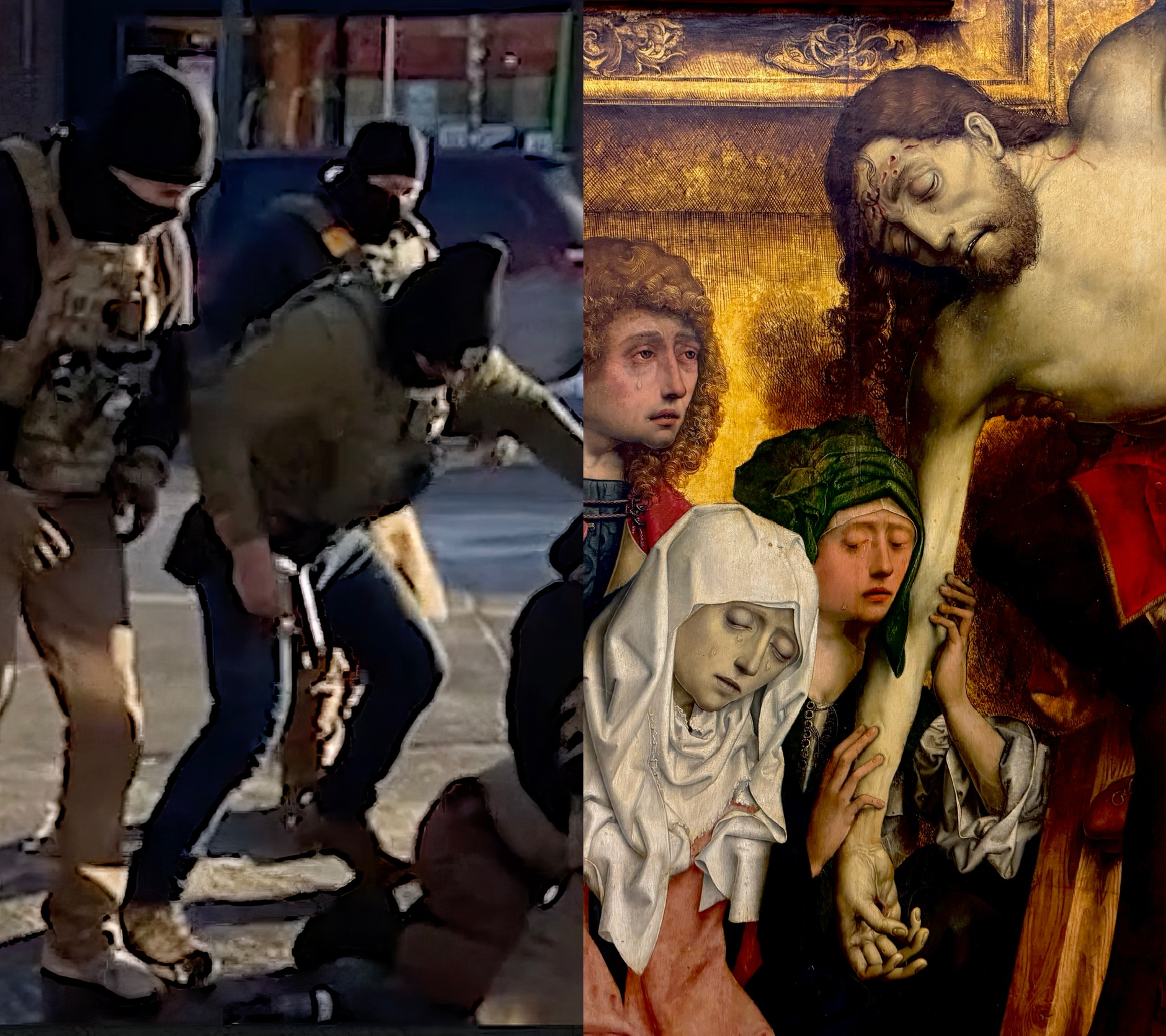
Minneapolis Diptych: ICE killers (anon. 2026) and Descent from the Cross (anon. 15th century)
There is no suffering which in the history of the world is not God’s suffering, no death which has not been God’s death in the history on Golgotha.
— Jürgen Moltmann
Jesus will be in agony even to the end of the world. We must not sleep during that time.
— Blaise Pascal
It is not okay to be silent anymore.
— Jeanelle Austin
In the face of the barbaric cruelty and violence by the lawless agents of a rogue administration, the voices of resistance, justice and love are crying “No!” That cry is taking many forms, and as a Christian I am thankful that so many people of all faiths are making their voices heard and putting their bodies—and their belief—on the line. I know that many passionate voices were raised in pulpits across the land last Sunday, one day after Alex Pretti was killed by ICE. Let me share with you one particular example from St. John the Evangelist Episcopal Church in Saint Paul, Minnesota.
January 25 was the Third Sunday after the Epiphany, whose Scripture readings included Isaiah’s “The people who walked in darkness have seen a great light,” and Jesus’ call to “Follow me.” The guest preacher was the Rev. Mike Kinman who, like many other clergy, had come from afar to join the mass protests in the Minneapolis streets. In an apostolic spirit, he told the rest of us what he had witnessed there: crucifixion, yes, but also resurrection—and the stirrings of the Spirit—in the solidarity of the people.
I encourage you to listen to Kinman’s urgent and inspired words in the 22-minute video below, and to keep the conversation going wherever you are as you continue to forge your own godly response to these harrowing times. Be yourself God’s candle in the darkness.
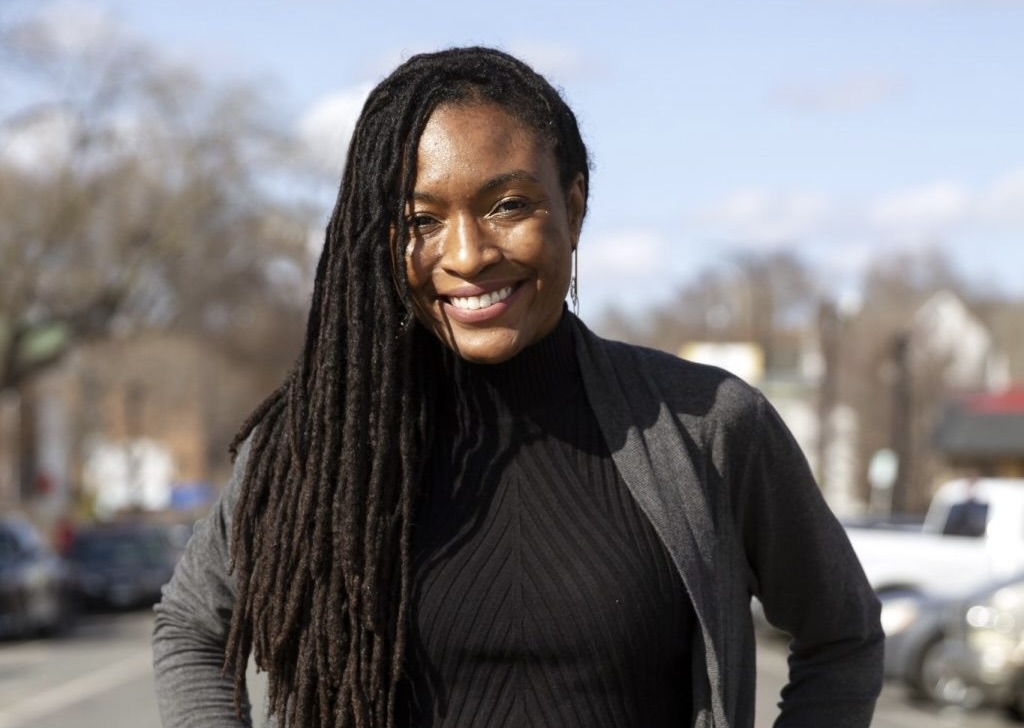
And don’t miss the sermon’s stunning ending, when the preacher exits the pulpit, leaving the final word to Jeanelle Austin, a theologically trained activist for racial justice in Minneapolis. She herself was not physically present. Her prophetic plea for justice, recorded a day earlier on Nicollet Avenue where Pretti died, was played through the church’s sound system.
Jeanelle Austin, Executive Director, George Floyd Global Memorial.
This sermon’s striking final image—an empty pulpit as we hear Austin’s words ring out—strikes me as a compelling analogue of divine speech: a message delivered by a human voice, but coming from a transcendent source beyond our sight—not just from Nicollet Avenue, but from the heart of the crucified God.
The Rev. Mike Kinman preaches at St. John the Evangelist Episcopal Church in St. Paul, MN), on January 25, 2026, one day after Alex Pretti was killed by federal agents.
Caravaggio, The Calling of St. Matthew (1599-1600)
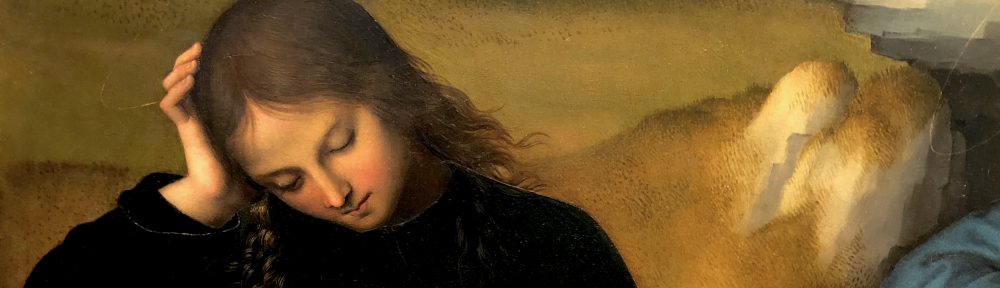
Any number of things can happen when we encounter Jesus. We might be comforted—or we might be uncomfortable. We might be healed—or we might be wounded. We might be instructed—or we might be turned upside down. Jesus is a difference maker. For better or worse, he comes to interrupt—and disrupt—our lives.
Sometimes Jesus speaks to our heart. Sometimes he speaks to our mind. But every time, he speaks to our will, as he puts the crucial question:
Will you come and follow me if I but call your name? Will you go where you don’t know and never be the same? Will you let my love be shown? Will you let my Name be known? Will you let my life be grown in you and you in me? [i]
We can always say no, of course. Many people have; many people do. Or we may profess our unreadiness or our inadequacy. “Are you kidding me?” said Moses at the Burning Bush. “Who am I to go and talk to Pharoah? I am slow of speech and slow of tongue.” In the same way, the prophet Jeremiah also resisted his call: “No way, Lord! Don’t ask me to be a prophet. I don’t know how to speak. I’m only a child.” God has heard all the excuses, but the Divine Intention is not easily dissuaded. “Just do it,” God says.
When Jesus tries to recruit a few followers in Luke 9:51-62, he hears plenty of excuses. “Lord, let me first go home and bury my father,” says one. This sounds reasonable enough, if he’s talking about a corpse back at the house that needs some prompt attention. But this line can also be understood to mean, “I can’t go anywhere as long as my parents are still living. Family obligations come first.”
Another makes a similar excuse: “I will follow you, Lord, but first I must go home to take my leave. I need to get permission from my family before I can come with you. And that may take some time.”
I don’t think Luke’s gospel is telling us to walk out of important relationships. Rather, it is prompting us to ask ourselves: What is so important in my life that I need its permission before I can follow Jesus? My true master might be something as big as the security of having somewhere comfortable to lay my head at night, or as trivial as my habitual routines. I’d love to follow you, Jesus, but let me check my calendar first.
The excuses in Luke’s passage suggest a world of expectations, obligations, and best-laid plans that prevent us from running away to join the Jesus circus. Today we may enjoy far more social mobility than a first-century Middle-Easterner, but we each have our own version of situations and circumstances that delay and distract us. Some things just won’t let us go. It might be something lingering from our past, like unhealed anger or grief. Or it might be a present concern, like a steady income, emotional needs, or personal ambition.
Jesus says: If you want to follow me, nothing can have more authority over you than the will of God. As for the things that hold you back, just let them go. Let the dead bury the dead. It’s time to move on, deeper and deeper into God. Seek ye first the kingdom of God. And once you’ve put your hand to the gospel plow, don’t look back. Keep your eyes on the prize, hold on!
The call to be a follower of Jesus may arrive unexpectedly. It may seem inconvenient, or even impossible. But as the saints all tell us, it’s what we are made for. To borrow a line from songwriter Bob Franke,
I can’t really say it’s the thing I do best, but it’s the best thing that I do. [ii]
True vocation is not so much surrender to an outside force as it is the recognition of an internal capacity. In his book, Let Your Life Speak, Parker Palmer makes this point beautifully. “Vocation does not come from a voice ‘out there’ calling me to be something I am not,” he writes. “It comes from a voice ‘in here’ calling me to be the person I was born to be, to fulfill the original selfhood given me at birth by God.”
“Vocation does not come from willfulness. It comes from listening. I must listen to my life and try to understand what it is truly about—quite apart from what I would like it to be about.… The word vocation … is rooted in the Latin for “voice.” Vocation does not mean a goal that I pursue. It means a calling that I hear. Before I can tell my life what I want to do with it, I must listen to my life telling me who I am.” [iii]
When Jesus calls me, it is, as it were, “my life telling me who I am.” And Jesus has many voices. You may hear him in the Scriptures or the liturgy, or when you enter the prayerful state of “absolute unmixed attention.”[iv] He will speak through the need of your neighbor, or in your deepest longing. His voice may come as dissatisfaction with the old, or as the intuition of fresh possibility. It may proceed from the mouth of friend and stranger. It may thunder like the transcendent Other, or whisper like the intimate inward presence who has known you all your life.
However Jesus may call us, what happens if we say yes? How do we put our hands to the plow, keep our eyes on the prize, and not look back?When we decide to follow Jesus, when we consent to lose our old lives in the Paschal Mystery of dying and rising, we are born again into a new way of being. No turning back, no turning back. But what will that new being look like? How will we be different? How will we make a difference?
St. Paul gives us a good list to start with in his letter to the Galatians (5:1, 13-25). Everything that binds, enslaves, and weighs you down, forget it. Instead of indulging yourselves, start loving one another. Say goodbye to enmities, strife, jealousy, anger, quarrels, dissensions, factions, envy and licentiousness. Practice love, joy, peace, patience, kindness, generosity, faithfulness, gentleness, and self-control. Let the Spirit dance in you.
Paul’s advice seems radically countercultural in an America so sickened by hatred, division, malice, and fear—a contagion which has spread to a degree unimaginable just five years ago. As Judge Michael Luttig recently lamented in his testimony before the January 6th Select Committee, “In the moral, catatonic stupor America finds itself in today, it is only disagreement we seek, and the more virulent that disagreement, the better.” [v]
In such a country, such a world, such a time, what is a disciple to do? Well, there’s no easy answer, no single method or path. We must figure it out as we go, the way the saints of old did amid crumbling empires, or as Dietrich Bonhoeffer did in 1930s Germany, or as Martin Luther King did in a Birmingham jail. It will certainly require steadfast faith and boundless love, but perhaps it is courageous hope we will need most of all.
In the worst of times, hope is the engine of persistence and the antidote for despair. Never forget: God makes a way where there is no way, and as God’s friends we are called to shine with that truth every day, “planting the seeds of resurrection amid the blind sufferings of history.” [vi]
[i] “The Summons,” a song from the Iona Community in Scotland (GIA Publications, 1987).
[ii] Bob Franke, “Boomerang Pancakes” (Telephone Pole Music, 1986).
[iii] Parker J. Palmer, Let Your Life Speak: Listening for the Voice of Vocation (San Francisco: Jossey-Bass, 2000), 10, 4.

 The religious imagineer