With the exit of Tom Stoppard, the world has lost a brilliant voice who, as King Charles III put it, “wore his genius lightly.” He was most widely known for his Oscar-winning screenplay, “Shakespeare in Love,” but the news of his death took me back to 1968, when I popped down to New York from seminary in Cambridge to catch the premiere run of “Rosencrantz and Guildenstern Are Dead” on Broadway.
The innovative and philosophical play made an indelible impression on my twenty-something self. As in much of his subsequent work, Stoppard’s boundless wit was often tinged with an existential melancholy. His biographer Hermione Lee said of the people in his plays: “History comes at them … They turn up, they don’t know why they’re there, they don’t know whether they can get home again.”
In 2002 I had the immense pleasure of experiencing Stoppard’s dazzling 9-hour trilogy, “The Coast of Utopia,” in a single day at London’s National Theatre.” With its 70 historical characters embodying the intellectual and political ferment of pre-revolutionary Russia, the epic drama explores, as the “Guardian” noted at the time, “the mystery of existence, the anguish of the human heart and the strange fact that it is our apprehension of death that gives joy and intensity to life.”
In the trilogy’s key speech, Alexander Herzen addresses the challenge of accepting our temporal nature: “Because a child grows up, we think a child’s purpose is to grow up. But a child’s purpose is to be a child. Nature doesn’t disdain what lives only for a day. It pours the whole of itself into every moment. We don’t value the lily less for not being made of flint and built to last. Life’s bounty is in its flow—later is too late. Where is the song when it’s been sung? The dance when it’s been danced.”
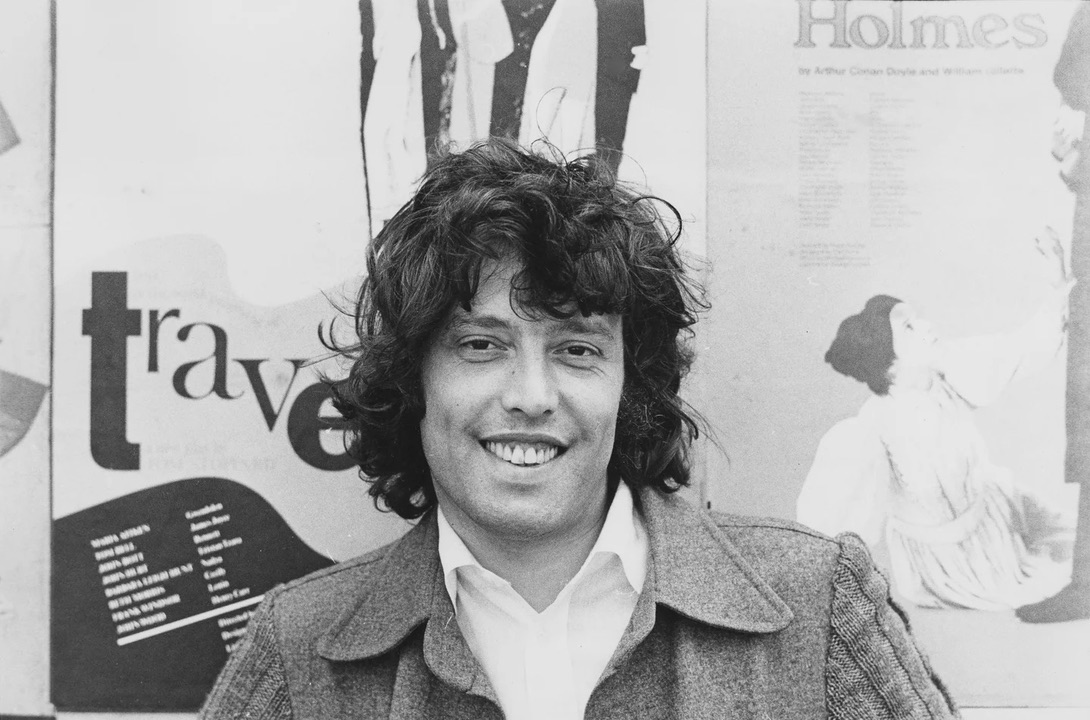
Stoppard was 88. This photo above was taken in July 1974 (the month I turned 30). The pastness of this image repeats Herzen’s questions in its own way.
 The religious imagineer