“Let’s do it for the story”: A Farewell to Angela Lloyd

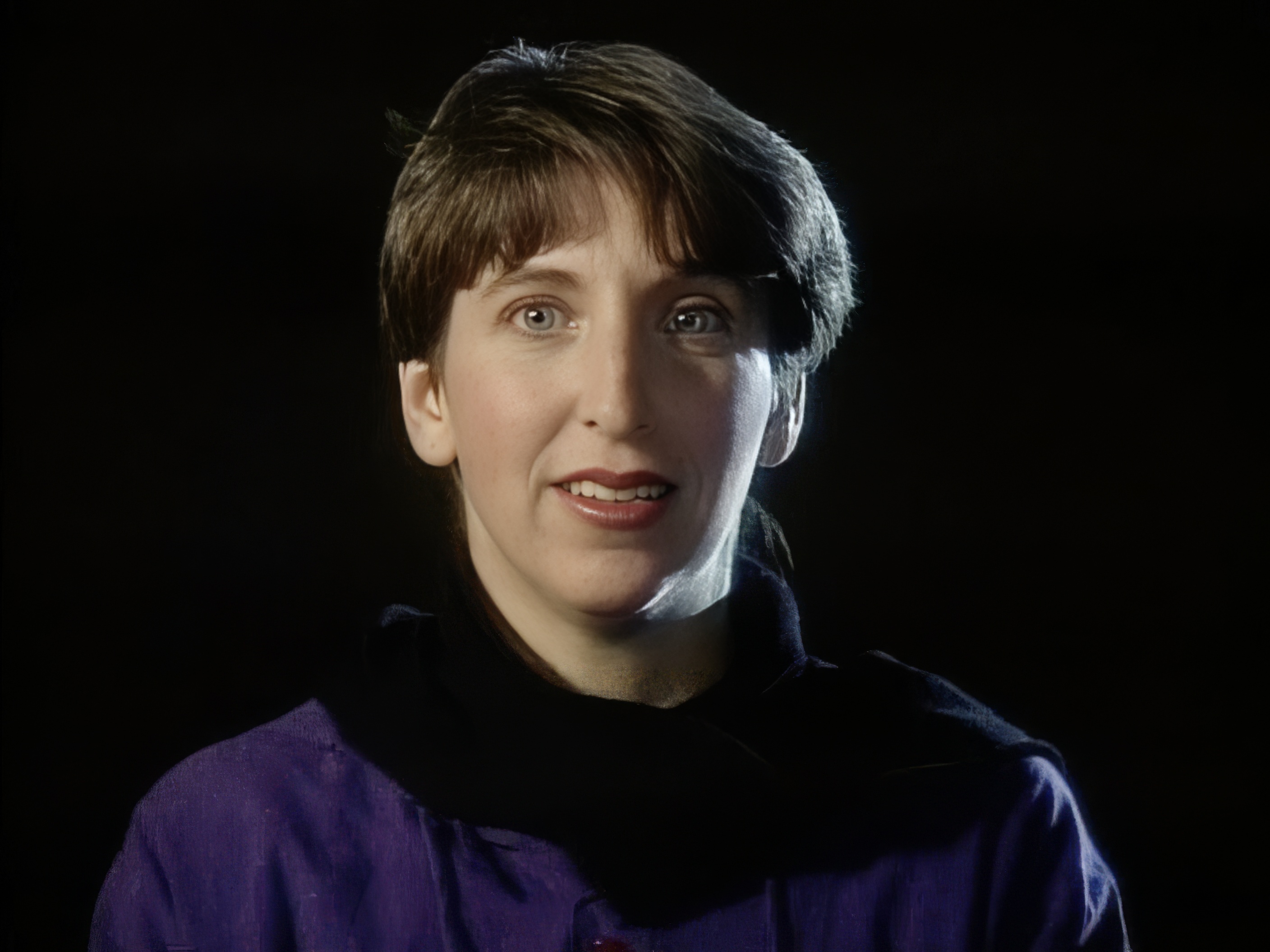
Storyteller Angela Lloyd

Once upon a time, a brilliant storyteller came into the world to touch countless hearts with tales of wisdom and wonder, losing and finding, tears and laughter. She scattered her life-giving stories far and wide, and encouraged others to do the same. She knew the power of stories to bind us together, ground us in communal wisdom, and help us imagine better futures. Hers was a serious vocation in a world so forgetful of the stories we need, the stories that nourish, the stories that save. But she always lived out her calling with levity and lightness. Everyone who has known her remembers her laughter, her joy, her delight in daily blessings, her generous and irrepressible spirit. As she liked to put it, she was “subject to bursts of enthusiasm.”

Desert dawn at Angela’s house (December 17, 2024): Looking west, looking east.

A week before Christmas, master storyteller Angela Lloyd was up at dawn, photographing the beauty of the California desert sky. She posted two photos with a greeting to her friends: “Good morning. The view from here: looking west, looking east.” She loved sharing the beauty of her desert home. But sometime after that glorious morning she was taken ill, and not long after, on the twelfth day of Christmas, Angela departed this life. When I got the news today, the world felt suddenly washed with grey, bereft of her bright presence.

I came to know Angela nearly 40 years ago, when we worked together on creative retellings of Old Testament stories for the Easter Vigils at Christ Church, an Episcopal parish in Ontario, California. We both believed that God is not known through ink so much as through breath. Without the breath of a spirited teller, our sacred stories may lie dormant and listless.

After a few years we made a film of the stories, The Electronic Campfire: New Storytelling from Scripture. Angela took some of the parts (including that of God), while I took the rest. We shot the scenes in various southern California locations.

When I heard that Angela had died, I wanted to celebrate her giftedness by sharing her work in this film. While throughout her life she told many different kinds of stories from a variety of sources and traditions, our biblical collaborations do convey, I believe, a lively sense of the engaging spirit she brought to everything she did. I offer these clips in her memory.
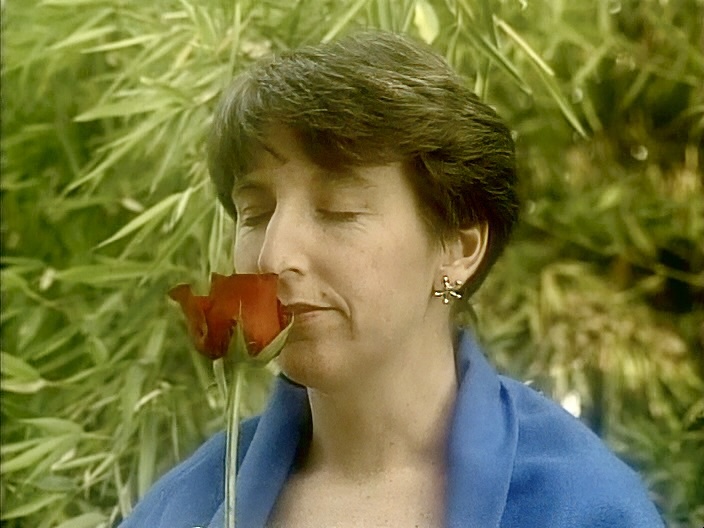
On the third day of Creation, God creates plants and trees.

The first is the Creation story from the first chapter of Genesis. Instead of speaking the divine words for each of the seven days (“Let there be light,” etc.), God performs an action, since in the Bible God’s word is not just description of an action, but the action itself. For God, to say is the same as to do.

The Creation Story from The Electronic Campfire

Angela’s other stories in the film were the Red Sea and the Valley of the Dry Bones. In the first story, I play the Israelites, so you’ll see a bit of that as a lead-in to Angela’s performance of both Yahweh (God) and Miriam (Moses’ sister). The Dry Bones story is all Angela, including some of her riffs on the washboard. She improvised a line the Exodus tale which, in retrospect, sums up her life: “Let’s do it for the story.”

Red Sea & Dry Bones from The Electronic Campfire

At the Easter Vigil, there is a bidding to prayer after each story. Here are the words which follow the story of the Divine Breath that ceaselessly enlivens our “dry bones”—in this world and the next:

Dear People of God:
There are those who tell our story
as a history of defeats and diminishments,
a narrative of dashed hopes and inconsolable griefs.
But tonight we tell a different story,
a story that inhales God’s own breath
and sings alleluia even at the grave …

The sixth day: “Let us make humankind in our image.”

We did a number of Easter Vigils together, and Angela would always surprise me with a new variation. One time, playing an Israelite in the Exodus, she pulled out a postcard. “I was planning to mail this when we got to the Promised Land,” she said, “but something tells me I should mail it now. It may be a while before we get there. Besides, I’m starting to think that maybe anywhere can be the Promised Land, that even in this wilderness I am standing on holy ground.”

Thank you, dear Angela, for your marvelous stories, your enthusiasm, your joy, and so much more. There’s an old song by Jane Voss that salutes absent friends, and what the song says, that is what I say:

Wherever you may be tonight,
I hope this finds your burdens light,
Your purpose high, your spirit strong,
I hope that you have got along—
My song was lost and gone, if not for you.  

What Will You Wish You Had Said?

Listening to voices from the end of life at Spoken/Unspoken.(Photo by Jim Friedrich)

At the end of your life, what will you wish you had said?

 This question is the premise for “Spoken / Unspoken: Stories of Living and Dying,” a moving audio installation at California’s Santa Cruz Museum of Art and History. In a room of warm and cheerful colors, the visitor hears a succession of voices responding to the question. Each speaker is a person near the end of his or her life, recorded at Hospice of Santa Cruz County. Their words are also supplied in written form.

“I wanna say it’s not the destination, it’s the journey. . . I want to say everything. Everything I feel. Everything I experienced. . . I’m finding answers all the time and I’m finding more questions too. . . I’m letting it happen, I’m not running after it. If it comes I’ll latch onto it.”

 “I wish I could say I’m sorry to the people who I have offended in my life in different ways.”

 “I don’t understand myself. One of these days I’ll find out what’s going on.”

 “I cannot believe the speed of light that takes place toward your end days. What happened from 50 on was unbelievable. Time goes by so quickly. It’s just unimaginable. You can’t do anything about it.”

 “I’ve often been afraid [to get closer to people]. I don’t know why I’m afraid. There’s times that I think I’ve had answers to a problem a person has told me about and I haven’t shared what I thought the answer was, and I feel like I missed the point. I missed the time of being God’s handyman. They are not so much words of wisdom, but they are feelings that I have. I didn’t tell them that I loved them enough. I didn’t show that love enough.”

“I want to say, may this be a good day for you and that you’re enjoying . . . thinking of the creative things in you that God has given you to do––and go do one of them someday.”

Every voice is accompanied by its own unique musical score, created by composer and sound artist Lanier Sammons. The peaceful ambient music reflects not only the emotional content of the various interviews but also the particular tone, tempo and manner of each individual speaker. The result is a quality of presence which is more than whatever is being said.

I was especially taken by the man who broke into a rendition of “Some Enchanted Evening.” His singing was melodious and full of warmth. You may see a stranger across a crowded room. And somehow you know. It’s all about desire. As the theologians and novelists tell us, every story begins with a lack, and longing is at the heart of who we are.

We all know that words can suggest but never exhaust the complexity of our stories or the mystery of our being. But what is unique about the voices in this installation is their location––at life’s most critical boundary. Whether we think of it as “the end” or understand it to be the door between worlds, death invites retrospective reckonings. What has been the meaning of my story? Did I make a difference? Is there something I wish I had done, or said?

Spoken / Unspoken works at many levels. The attentive acts of listening by the hospice staff, the sound artist, and the museum curators have honored the beauty and value of dying elders, who are too often marginalized by a society uncomfortable with aging and death. The various voices convey both the uniqueness of every individual and the universality of our shared human condition. And it creates a sacred space where we can experience community not only with the specific people who share something of themselves in the recordings, but with every soul on pilgrimage into life’s unknown futures.

The installation also prompts visitors to perform a couple of actions.  Stationery and pencils are provided so we can communicate by letter something that needs to be said to a friend or loved one. A text encourages us: “Don’t wait, say it now.” There is also an adjacent recording booth, where you can make your own response to the question, “What do you wish you had said?” Sammons will then take your story, weave it together with other voices, and set it all to music. A week later you can hear the result on headphones as part of the installation.

What have I myself left unsaid after so many years on this earth? I’ve been wondering about that ever since experiencing the Santa Cruz installation a couple of weeks ago. I’m also dreaming about the adaptation of this sound installation concept for religious communities. I have led church retreats where we practice storytelling and storylistening––beginning with our communal sacred stories and moving into the treasuries of our personal stories. And people are usually surprised to discover how much there is to know about the life stories and spiritual experiences of their companions in faith. Even in communities where we profess the sacredness of every person as God’s beloved, so much is left unsaid between us.

So here’s an idea. What if communities of faith spent some time recording members’ responses to the big questions––about God, humanity, faith, hope, love, transformation, etc.––or provided a sound booth (a technological confessional?), where people can walk in and record what matters most to them? Then let some music and sound artists create an audio mix from the gathered material, and play it back in a church space where drop-ins can linger and listen to a living “cloud of witnesses.”

If any of this sparks your own creativity or exploration, I’d love to hear about it.