
Extra! Extra! Read all about it.
SUN GOES OUT!
STARS FALL FROM HEAVEN!
THOUSANDS FAINT FROM FEAR!
On the first day of the Christian Year, do we break out the champagne and shout “Happy New Year.” No we do not. What we say is, “The end is near!”
We don’t get all Fundamentalist about it. We don’t walk around wearing signboard warnings. We don’t declare a fixed date for the end of history. We prefer to keep our end time theology more metaphorical than literal. Worlds end all the time. Personal worlds. Public worlds.
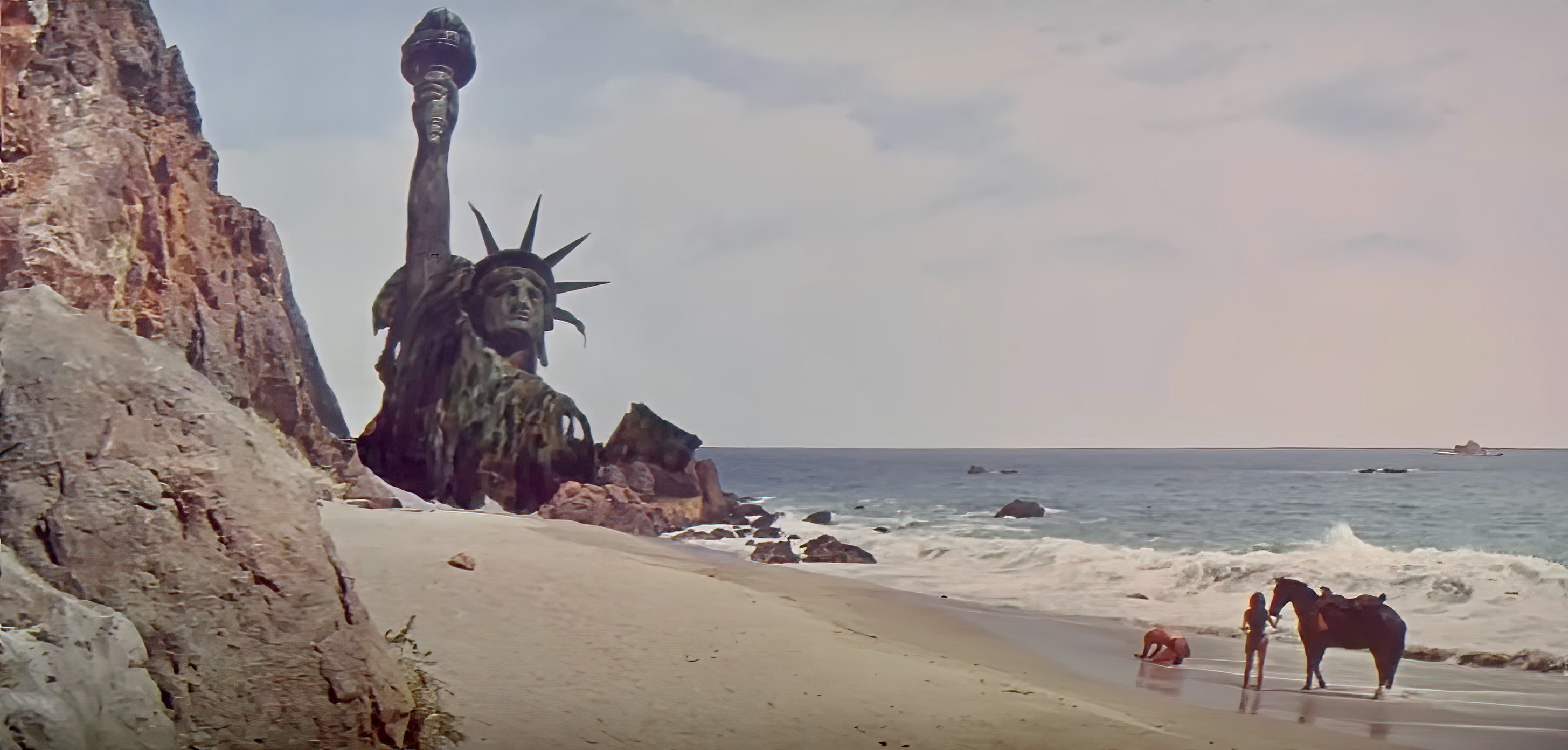
Still, this year, from Gaza and Ukraine to Washington, D.C., the end of the world feels closer to being literal than any other time in my 80 years on the planet. To borrow some lines from W. H. Auden’s Good Friday poems, lately it feels as if the world we know has been “wrecked, / Blown up, burnt down, cracked open, / Felled, sawn in two, hacked through, [and] torn apart.”
For Christians, the end of the world should not come as a total surprise. Every gospel on the First Sunday of Advent includes a forecast of the apocalypse—the end of the world as we know it. It’s not that uncommon, actually. Who has not experienced apocalypse on a personal level—the exit from childhood, the loss of a job or a loved one, a scary diagnosis? And throughout history, apocalyptic episodes have periodically disrupted the stability of humanity’s collective life: the fall of empires, economic crashes, military invasions, revolutions, authoritarian nightmares, environmental crises, and the like.
In the Humphrey Bogart movie, Beat the Devil, a ship is floundering on a stormy sea. In his typical wise-cracking manner, Bogie says to a panicky passenger, “What have you got to worry about? We’re only adrift on an open sea with a drunken captain and an engine that’s liable to explode at any moment!”
A crewman chimes in: “Perfectly ordinary situation. It happens every day.”
Like it or not, we’re all on board that sinking ship at the close of 2024, praying desperately with the Psalmist, “Save me, O God! The water has risen up to my neck; I’m sinking into the mire” (Psalm 69:1-2) Perfectly ordinary situation. It happens every day.

When I was younger, I had a crushing experience of my personal world coming undone. A spiritual director summed up my situation as being washed overboard into a wild sea, where I’m flailing to keep my head above water.” “Sounds about right,” I said mournfully. “Well, congratulations!” he told me. “You’re exactly where you need to be.” I had to laugh at the aptness of his metaphor. My apocalypse had indeed revealed the unsustainability of my former state, even as it hurled me into the formless chaos from which my new world would be born.

Apocalypse can be an unwelcome judgment on the way things are. It weighs the world in the scales of justice and finds it wanting. The judgment is not punitive, simply accurate. As a 14th-century English poem on the end of the world put it, the apocalypse judges “without revenge or pity.” It just tells it like it is. Still, it’s a hard thing to face the truth about our flawed condition. However, the end of an old reality can also be life-giving, freeing us to discover a better version of self and world.
But where can we put our feet when the ground is crumbling beneath us? We stand on God’s word, God’s promise, God’s hope. “Heaven and earth will pass away,” Jesus says, “but my words will not pass away.” Let the Savior’s words guide us. Let them encourage us. As he told his disciples,
“When the chaos comes, keep your heads high and stand your ground. Your liberation is on its way. Don’t be distracted by thoughtless living, or get weighed down with worry,” he says. “Be alert at all times, and pray that you’ll have the strength to get through all this craziness.” [i]
This is my 55th year of preaching in Advent. It’s my favorite season, so rich with resonant and stirring themes: endings and beginnings, light and darkness, waiting and preparing, watching and hoping, expectation and, in the end, marvelous birth. But this year Advent feels decidedly more urgent and more serious to me than ever before. We aren’t just reading about a people who sit in darkness. We are those people.
We could weep and moan about being stuck in this particular moment in history. But what if the Lord of history is telling us, “Congratulations! You are just where you need to be—in the wild baptismal sea of rebirth. Come, take up your cross. Following me is about to get really real and really intense. Costly? Yes. Suffering? Yes. Dying? Yes. Rising? Yes! Start to live the risen life like you mean it!
Okay, Lord. But what exactly is that going to entail? This question came up when I ran into friend from church on the ferry last week. “What are we supposed do if they begin to round up the most vulnerable in our midst?” she asked. “Join hands to block their way with our bodies?” The strangeness of such a hypothetical even being asked in our peaceful corner of the world prompted a helpless shrug.
Seeking some guidance from my library, I pulled out a book published a few years ago: The Year of Our Lord 1943: Christian Humanism in an Age of Crisis. The author, Alan Jacobs, examins the responses of Christian intellectuals to the violent chaos of the Second World War. What did some of the most articulate of God’s friends have to say about being faithful in a dark and dangerous time?
When the war broke out in 1939, Anglican poet W. H. Auden put the case bluntly: We must love one another or die. A year later, he wrote New Year Letter (January 1, 1940), a long poem considering “what is possible and what is not” in such a time.
Most of the poem is addressed to Elizabeth Mayer, a supportive maternal figure who was a key source of peace and happiness in Auden’s life.
We fall down in the dance,” he wrote. “We make
The old ridiculous mistake,
But always there are such as you
Forgiving, helping what we do.
O every day in sleep and labour
Our life and death are with our neighbor.
In other words, we are all in this together. The end of New Year Letter is addressed to God, asking for divine help in making a better world, since we humans are too muddled to do it on our own.
“Send strength sufficient for our day,” he wrote. “And point our knowledge on its way.”[ii]
His friend C. S. Lewis worried about the Church endorsing the violence in its prayers. On September 10, 1940, he wrote to his brother, “In the litany this morning we had some extra petitions, one of which was ‘Prosper, O Lord, our righteous cause.’ I ventured to protest against the audacity of informing God that our cause was righteous—a point on which He may have His own view.” [iii]
Lewis preferred the wartime collect of Thomas Cranmer, the Archbishop of Canterbury who made the first Book of Common Prayer. During hostilities with Scotland in 1548, Cranmer wrote this extraordinary collect:
“Most merciful God, the Granter of all peace and quietness, the Giver of all good gifts, the Defender of all nations, who hast willed all men to be accounted as our neighbours, and commanded us to love them as ourself, and not to hate our enemies, but rather to wish them, yea and also to do them good if we can: … Give to all us desire of peace, unity, and quietness, and a speedy wearisomeness of all war, hostility, and enmity to all them that be our enemies; that we and they may, in one heart and charitable agreement, praise thy most holy name, and reform our lives to thy godly commandments.” [iv]
In other words, in times of conflict, Christians must take care not to mirror the violence we oppose. We must find a way toward peace and reconciliation. But what if there are no good choices available?
The German theologian Dietrich Bonhoeffer knew how bitter conflict corrodes the human heart. In a 1942 letter to fellow members of the German resistance, he wrote:
“Unbearable conflicts have worn us down or even made us cynical. Are we still of any use? We will not need geniuses, cynics, people who have contempt for others, or cunning tacticians, but simple, uncomplicated and honest human beings.” [v]
In the desperate hope of derailing the Nazi horror, Bonhoeffer reluctantly joined a conspiracy to assassinate Hitler. The plot failed and he was executed for his role in it. A new film about him depicts him going to the gallows confident in his own purity of heart, but the fact is he never stopped feeling guilty for his participation the way of violence. He felt corrupted by the whole milieu of bloody conflict: shooting, wrecking, bombing—none of it is untainted by evil.
Simone Weil, French philosopher and activist, agreed that everyone is a victim of war. No one involved in the application of force escapes its toxicity. “To the same degree,” she said, “though in different fashions, those who use it and those who endure it are turned to stone.” When the Second World War started, Weil warned that
“We should not think that because we are less brutal, less violent, less inhuman than those we are confronting, we will prevail.” We must find a way, she insisted, to exercise the opposing virtues.
In late 1942, when Weil was working in the London office of the French Resistance, she proposed a plan to parachute hundreds of white-uniformed nurses onto battlefields, not only to tend to the wounded but also to provide an image of self-sacrificial goodness in the midst of cruelty and violence. She herself wanted to be in the first wave of this non-violent invasion. In submitting her plan to the Free French authorities, she made a visionary argument:
A small group of women exerting day after day a courage of this kind would be a spectacle so new, so significant, and charged with such obvious meaning, that it would strike the imagination more than any of Hitler’s conceptions have done.” [vi]
Charles de Gaulle thought her quite mad, and her plan of course went nowhere. But her saintly resistance to the application of force was a bright candle in the wind of war.
I am moved by all the stories of faithful people trying to follow the light in an age of shadows. Their wsdom can guide us. Their endurance can encourage us.
Now saintly virtues may not be the way of the world, but as Thomas Merton liked to say, we are not called to be successful. We are called to be faithful. “Perfect hope,” he wrote, “is achieved on the brink of despair when, instead of falling over the edge, we find ourselves walking on air.” [vii]
Remember those old Sherlock Holmes movies with Basil Rathbone> In 1942, when the outcome of the war was still uncertain, Universal Studios modernized Holmes, recruiting the Victorian detective for the war effort in Sherlock Holmes and the Voice of Terror. After a successful takedown of Nazi spies, Holmes and Watson walk to edge of Dover’s cliffs to gaze across the English Channel. Watson begins the conversation that concludes the film:
—“It’s a lovely morning, Holmes.”
—“There’s an east wind coming, Watson.”
—“Oh, I don’t think so. It looks like another warm day.”
—“Good old Watson. The one fixed point in a changing age. There’s an east wind coming, all the same. Such a wind as never blew in England yet. It will be cold and bitter, Watson. And a good many of us may wither before its blast. But it’s God’s own wind, none the less. And a greener, better, stronger land will lie in the sunshine when the storm has cleared.”
That bit of wartime propaganda, pep talk for a battered nation, came to mind as I pondered on today’s apocalyptic theme. “A cold and bitter wind … many of us may wither before its blast.” An accurate forecast. But beyond that, a glorious spring, when a “greener, better, stronger land will lie in the sunshine.”
God, bring that day closer. In the meantime, we pray with Emily Dickinson (#131):
Grant me, O Lord, a sunny mind—
Thy windy will to bear!
So—How exactly do we cultivate a sunny mind in a gloomy time? We’ve all been working that problem this fall. Over the past month, I’ve found myself focusing on three spiritual practices: Do not let your hearts be troubled … Don’t get lost in the dark … Remember beauty.
First thing: Do not let your hearts be troubled. Step away from the screen. Don’t obsess on worst case scenarios, fretting over every potential bad outcome. There are too many to count, and it will only discourage and exhaust you. Sufficient unto the day is the evil thereof.
As Palestinian-American poet Naomi Shihab Nye reminds us, we must “Break the Worry Cocoon”—
To live with what we are given—
graciously, as if our windows open wide as our
neighbors’, as if there weren’t insult at every turn.
How did you do that? …
How did you survive so much hurt and remain gracious,
… how did you believe,
then and forever, breaking out
of the endless worry cocoon,
something better might come your people’s way? [viii]
Second thing: Don’t get lost in the dark. Don’t get mesmerized by the horror. Evil is like Medusa’s face. Gaze too long and you turn to stone. How do we hate hate without becoming hateful ourselves? The rage provoked by repugnant beliefs, bad behavior and delusional assertions can become addictive. It feels good to denounce the deplorable scoundrels. It’s even entertaining to watch others do it. We think we are resisting evil, but our hate only serves to feed the beast.
Third thing: Remember beauty.
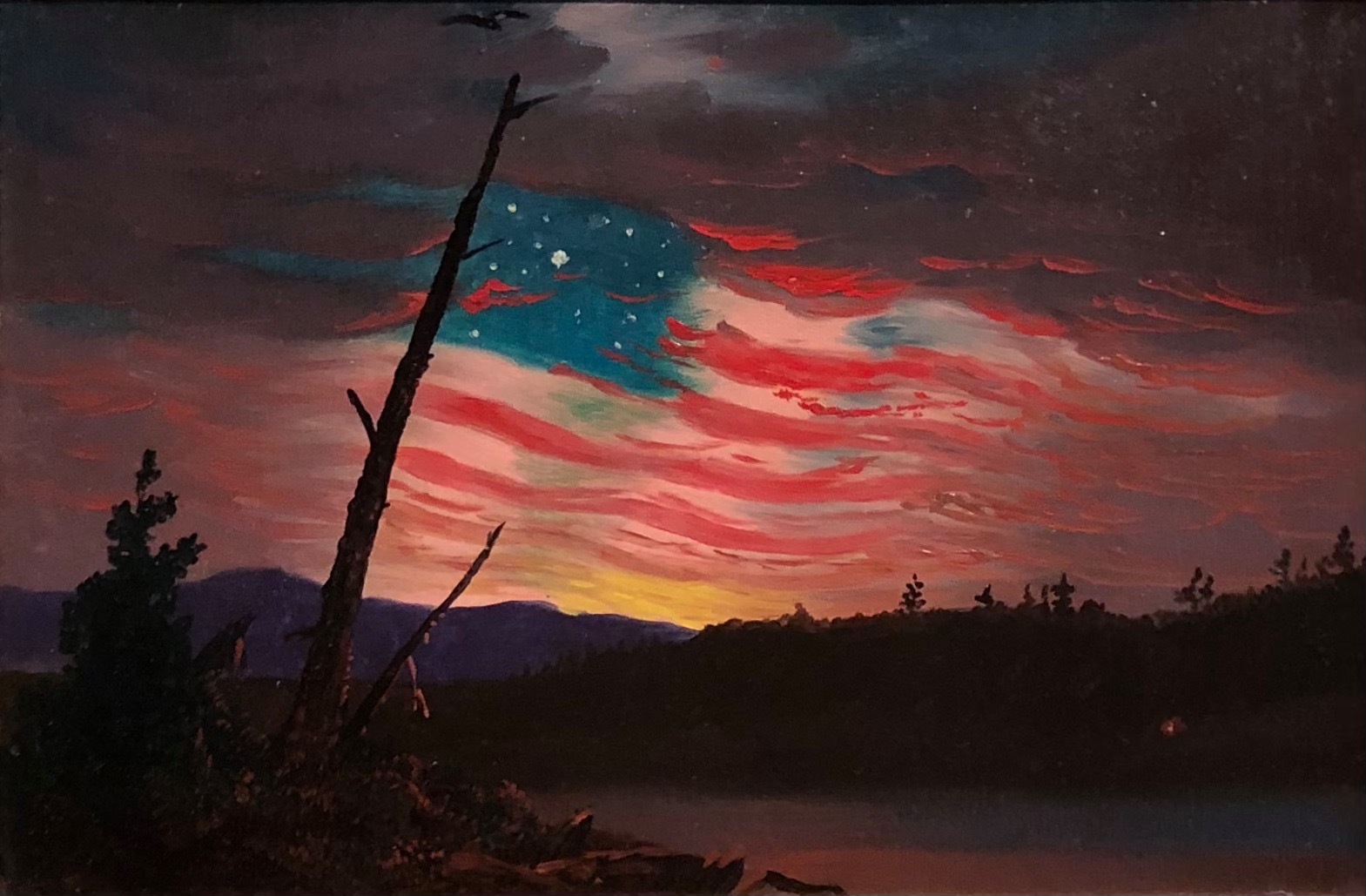
During the American Civil War, landscape painting was very popular. It offered tranquil scenes of an American Eden, unspoiled by the tragedies of history. There wasn’t the slightest hint of the violence raging in the land. When I was looking through reproductions of those works the other day, I was particularly struck by Alfred Thompson Brecher’s “Up the Hudson.” The broad river is absolutely still. The misty atmosphere glows with amber light. One tiny figure drifts quietly in his canoe. It is a picture of absolute calm and peace. I was taken by its beauty, but what really hit me was the year it was painted: 1864, the same year the painter’s brother died in one of the war’s bloodiest battles.

And I wondered: Did Brecher paint it before or after he got the terrible news? I’d like to think it was after, as if the artist were resisting despair by pledging his allegiance to the harmonizing beauty of God’s creation, a beauty that transcends every evil.
Remember beauty. In October, 1967, 100,000 people gathered at the Lincoln Memorial in the nation’s capital for the first national demonstration against the war in Vietnam. I was there with a number of fellow seminarians. There were speeches and songs during the day, but around sunset about half the crowd marched across the Potomac to the Pentagon, which was surrounded by soldiers in gas masks holding rifles with fixed bayonets. They stood frozen like statues when young women stuck flowers in their gun barrels. I had a camera, and took some dramatic closeups of the soldiers.

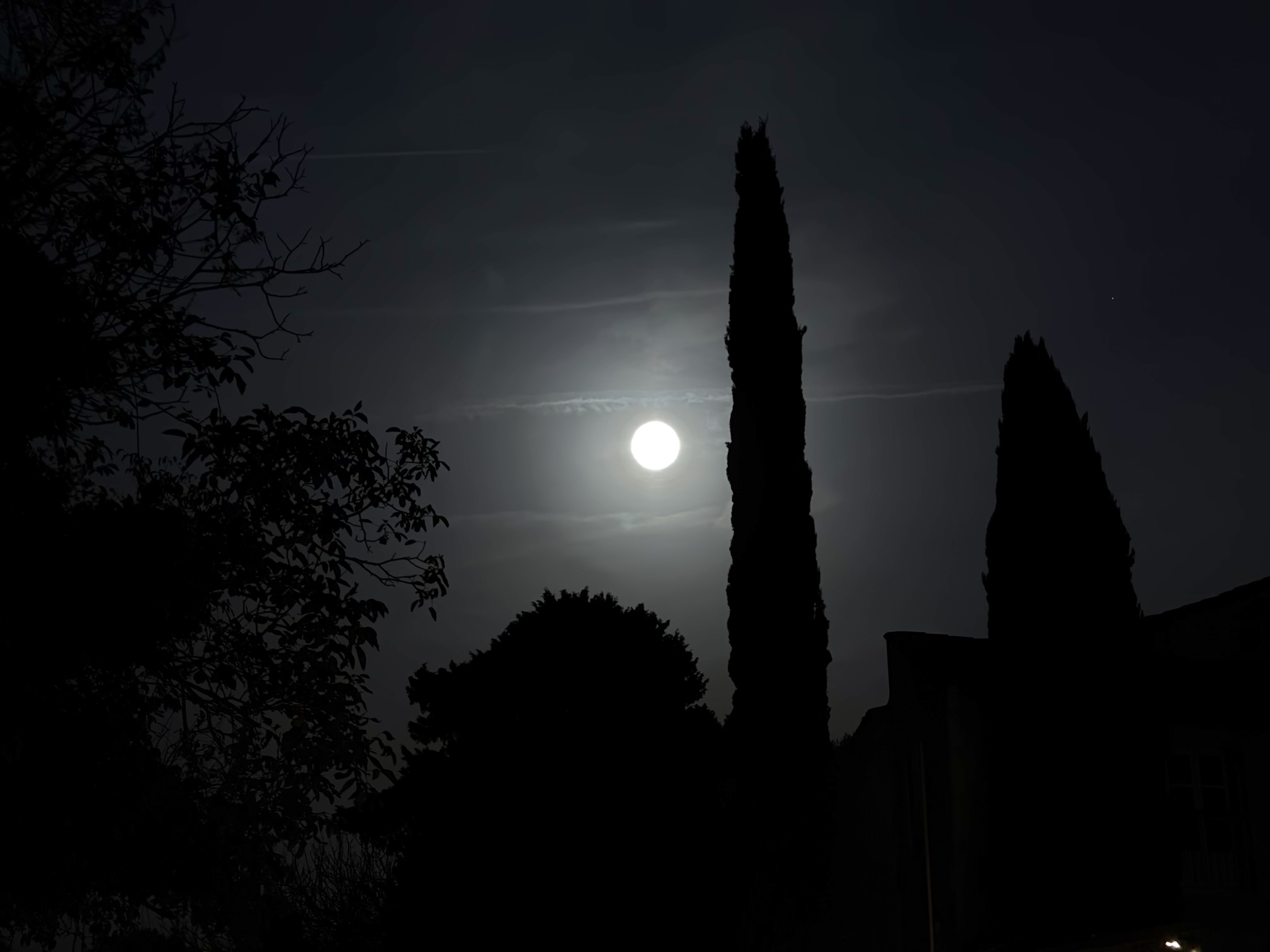
As the evening progressed, tensions grew, and a riot broke out, with lots of tear gas and hundreds of arrests. But I missed all that violence, because I had left early in order see the full moonrise over the reflecting pool in the National Mall. It was absolutely beautiful. I still have the photograph.

On that day I had done my part in a public witness for peace; but when night came, the very best thing I could do was to notice the beauty of the moonrise. I like to think that both those things got recorded in the Book of Life. Come, labor on; but don’t forget the Sabbath moments.
Dear friends in Christ, let us cast away the works of darkness and put on the armor of light. Keep the faith. Fear not. Embody hope. Love one another. Trust divine intention. This is the holy work God has given us to do.
A few hundred years ago, Turlough O’Carolan, the blind harper and last of the Irish bards, was sitting in a tavern with his friend, the poet Charles McCabe. McCabe said, “Your music, sir, is grand and lovely stuff, but too light-hearted. This is a dark time we live in, Mr. Carolan, and our songs should reflect that.”
And the harper replied, “Tell me something, McCabe. Tell me this: Which do you think is harder—to make dark songs in the darkness, or to make brilliant ones that shine through the gloom?” [ix]
A homily for the First Sunday of Adven at Saint Barnabas Episcopal Church, Bainbridge Island, Washington.
The images of the Apocalypse are from the Tapestry of the Apocalypse in Angers, France. Originally 140 meters long, over time it has been reduced by a third. Woven in the late 14th century, it offers spectacular illustrations of the Book of Revelation.
[i] My free translation of Luke 21:28, 34-36.
[ii] W. H. Auden, New Year Letter (January 1, 1940).
[iii] q. in Alan Jacobs, The Year of Our Lord 1943: Christian Humanism in an Age of Crisis (Oxford: Oxford University Press, 2018), 10.
[iv] Ibid., 11.
[v] Dietrich Bonhoeffer, “After Ten Years” in Letters and Papers from Prison (Minneapolis: Fortress Press, 2010). Translated by Barbara and Martin Rumscheidt.
[vi] Simone Weil, quoted in Robert Zaretsky, The Subversive Simone Weil: A Life in Five Ideas (Chicago: University of Chicago Press, 2021), 155.
[vii] Thomas Merton, No Man Is an Island (206), q. in The Thomas Merton Encyclopedia (Maryknoll, NY: Orbis Books, 2002), 213.
[viii] Naomi Shihab Nye, “Break the Worry Cocoon,” Voices in the Air: Poems for Listeners (New York: Greenwillow Books, 2022), 96-97.
[ix] From the play, O’Carolan’s Farewell to Music by Patrick Ball and Peter Glazer, on the California Revels CD, Christmas in an Irish Castle (2001).





 The religious imagineer