My 10 favorite Jesus movie moments

My father, the Rev. James K. Friedrich, with Joanne Dru on the set of "Day of Triumph" (1954).

My father, the Rev. James K. Friedrich, with Joanne Dru on the set of “Day of Triumph” (1954).

In my last post, I listed my “ten best Jesus movies.” Here now are my ten favorite moments, scenes which not only succeed cinematically but also provide fresh and resonant images of the Christ who, as the Jesuit poet said, “plays in ten thousand places.” But my ultimate criterion is that each of these scenes, after countless viewings, never fails to engage and move me.

No single image can capture the mystery of the Word made flesh. No actor will make you think he has become the perfect movie Jesus. But whenever the gospel story is retold and re-experienced, we may yet see something we had previously missed. We may even partake of a new revelation that has been waiting all these years to be received.

1927: The little blind girl (The King of Kings)

Most of the Jesus films invent dialogue to fill the gaps, but the incidents involving Jesus remain mostly Scriptural. But this scene, performed with silent cinema’s eloquent language of faces and gestures, is entirely invented. And it’s marvelous. A boy just healed by Jesus wants to share his blessing with a blind girl. “Take my hand – let me lead thee to him.” He guides her to a window and gives her a boost. Inside, the mother of Jesus gently receives the girl, who feels Mary’s face with her hands. “Please, I have come to find Jesus.” In the original score, the string section plays “Fairest Lord Jesus” here, imploring every sentiment. Mary takes the girl to stand before her son, who has not yet appeared on screen. “Lord, I have never seen the flowers nor the light. Wilt thou open my eyes?” The pleadingly expressive girl (played unforgettably by Muriel McCormack) stands in for all of us who long to see the Light of the world. The air around her grows luminous, and then, through her own eyes, we see a blurry glow gradually become the loving face of Christ, whom we, like her, now see for the first time. It perhaps the grandest entrance in the genre, and the perfect metaphor for a medium trying to bring the reality of Christ to light.

1954: The Lost Sheep (Day of Triumph)

I admit special affection for this film because my father produced it and I got out of school for a week to play an extra (who ended up on the cutting room floor). And this sequence, employing the traditional (though unbiblical) conflation of Mary Magdalene with repentant female sinners, has moved me ever since I first saw it as a child. Magdalene, a wealthy courtesan (played by the beautiful Joanne Dru), happens to hear Jesus teaching in Jerusalem. When he tells the parable of the Lost Sheep, he looks pointedly at her. Back in her house, she asks her servant – an early follower – what she knows about Jesus, masking her spiritual longing as idle curiosity. As the conversation unfolds, something in Magdalene breaks, and we cut to a Pharisee’s house, where Jesus has been invited to dine. A repentant Magdalene, now in humble attire, arrives to wash Jesus’ feet with her tears. The Pharisee is shocked, the disciples bewildered. When Jesus speaks the words of forgiveness over her, we get the first close-up of Mary Magdalene’s tear-stained face. Every close-up in effect isolates the face from the external particularities of body, environment and social context, conveying something both universal and purely inward. For me, this intimate view of Mary’s magnified face as she raises her downcast eyes toward Jesus evokes salvation history in a single glance.

1965: The Annunciation to Joseph (The Gospel According to St. Matthew)

How do you tell the story of Joseph coming to terms with Mary’s pregnancy when you are restricted to Matthew’s actual text, which provides neither dialogue nor psychological description? Pasolini begins his film with a close-up of Mary, then of Joseph, each face suggesting an unresolved tension between them. After two more awkward close-ups, we finally see a full shot of a pregnant Mary (full of dis-grace) and the problem becomes clear. The scene moves toward resolution through entirely visual means, like silent cinema, omitting even Matthew’s sparse narration. When speech (the angel’s “annunciation” to Joseph) finally does intrude into this silent world, it feels like the shock of the transcendent. In the beginning was the Word.

1969: Jesus the teacher (Son of Man)

The Jesus in this rarely seen British television production is neither meek nor mild. In his Sermon on the Mount, he moves energetically among the crowd, prodding and challenging them to think in new and uncomfortable ways. First he invites them to embrace the kinfolk around them as a sign of love. “That’s nice, isn’t it?” he says, noting how easy it is to love those who love you. It’s nothing extraordinary. “Do you want me to congratulate you for that?” Then he delivers the kicker: “Love your enemy!” As he lists specific examples of the enemies they should love, the crowd begins to murmur its dissent, to which Jesus responds emphatically: “Did I come to tell you easy things? Do you want me to tell you easy things?”

1973: Resurrection? (Godspell)

The dead Jesus is taken down from the chain link fence where he hangs suspended. As his followers carry his body through the strangely empty streets of New York, their song turns from sorrow to joy. Some begin to dance while they process, as if Jesus has risen anew in the bodies of his disciples. As for the body which had once called “Jesus,” it is taken around a corner, out of our sight. When the camera itself finally rounds that corner, the disciples and the body they carried are gone. Instead, we see hundreds of people walking toward us – the people you would see any day on a busy city street. The body we knew has “ascended” out of our sight, and Jesus returns in the form of everyone.

1977: The Prodigal Son (Jesus of Nazareth)

Jesus invites himself to a party at Matthew’s house. The disciples are shocked that he would dine with sinners. Peter, who really hates the “blood-sucking” tax collector, tries to stay away entirely, but curiosity finally brings him to stand just outside the door. When Jesus spots him peering in, he decides to tell a parable about two sons. Not only is this scene cinema’s best example of Jesus as storyteller, it makes the parable contextual, aimed directly at Peter (the “elder brother”) and Matthew (the “prodigal”). Both get the point; both are changed by it. The whole scene is perhaps the most moving “resurrection story” in the entire genre.

1988: Christ before Pilate (The Last Temptation of Christ)

David Bowie plays a blasé, sardonic Pilate in his interrogation of Jesus, whom he dismisses as just another Jewish troublemaker. This is not a conflicted, timorous official afraid of the crowd or hesitant to condemn an innocent man, but a cold-eyed realist who knows how the world works. When Jesus explains that he wants to bring change through love, not violence, Pilate recites the creed of the status quo: “Killing or loving, it doesn’t matter how you want to change things. We don’t want them changed.”

1998: Jesus returns (The Book of Life)

The only Jesus movie about the Second Coming begins with a shabbily dressed man outside a New York airport terminal, speaking in a loud voice to no one in particular: “Forgive me, Jesus, for I have sinned. Have mercy on us now and at the hour of our death.” Over and over he cries out in the flat, mechanical tone of a mind in disarray. Passersby give him a wide berth. Suddenly a man in a nice suit enters the frame to put a hand on the vagrant’s shoulder, silencing his repetitive plea with a touch and a look. This healing stranger turns out to be Jesus, who has just flown in – on New Year’s Eve, 1999 – to judge the living and the dead (though it later turns out he just wants to forgive everyone). Then Jesus moves on to catch a taxi, followed by Mary Magdalene, who in passing reassures the stunned vagrant. “It’s OK,” she says, before hurrying on to the apocalypse.

2004: The Agony in the Garden (The Passion of the Christ)

While many find this film unwatchable for its excessive violence and uncritical use of Passion Play caricatures, it begins with a memorably haunting Gethsemane sequence. Dimly lit in the olive grove, Jesus shows real agony. “I’ve never seen him like this,” whispers a worried disciple. The horror movie tropes – full moon, deep shadows, the anxious expectancy of a camera in motion – contribute to the sense of something beyond the ordinary taking place, as though we are in a supernatural thriller. And when Jesus falls to the ground to beg the cup of suffering to pass him by, we see Satan watching him closely. Together they enact a mythic prologue to the Passion narrative: Gethsemane becomes the Garden of Eden, but this time the human will not fall to the demonic. The snake will be crushed beneath the Savior’s foot. When Satan leans down over the anguished Jesus praying to his Father, he asks him, “Who is your Father?” This seems less like a taunt than a perfect expression of evil’s blindness. Not only is it unable to see the good; it is unable even to conceive it.

2006: The Annunciation (Son of Man)

This South African film’s prologue is a Temptation scene where Jesus rebukes Satan by saying, “This is my world.” “No!” Satan replies, “This is my world.” As if to prove Satan’s point, the film cuts to a 21st-century African country torn by violent civil strife. In a small town, armed guerillas are killing everyone in sight. A young woman, fleeing the violence, hides in a schoolroom, where she is horrified to find a pile of murdered students. She lies down among them to play dead until the killers pass by. When she finally opens her eyes, there is the angel Gabriel (a shirtless boy adorned with white feathers), announcing the birth of the Savior. Mary responds with the Magnificat, sung in a powerful South African idiom. Here is the gospel absolutely in the present tense.

The ten best Jesus movies

Enrique Irazoqui and Pier Paolo Pasolini on location for "The Gospel According to St. Matthew"

Enrique Irazoqui and Pier Paolo Pasolini on location for “The Gospel According to St. Matthew”

The Feast of the Epiphany, recalling the journey of the Magi to adore the Christ child, ultimately celebrates the “showing” of Christ to the world. It seems the perfect day to post my list of the “ten best” Jesus movies, a genre which has fascinated me ever since I was a child extra in my father’s production of “Day of Triumph.” Surprisingly, that independent film by an Episcopal priest was the only Jesus film produced in the 1950’s, a decade packed with every other kind of biblical film.

For the last twenty-five years, I have taught “Jesus and the Movies” in seminaries, churches and retreat centers. I use clips from 19 feature films made between 1912 and 2014. The films always provoke rich conversations about biblical studies, Christology, religious art and film studies. Perennial issues of representation and interpretation are both repeated and transformed by the film medium, and the Jesus films, for all their limitations and imperfections, ask each viewer: “Who do you say that I am?” Even you don’t like a particular movie Jesus, you are compelled to think about the Jesus movie in your own head, your own heart. How does it differ from (or resonate with) what is on the screen?

As I noted in a prior post on the ten best religious films, top ten lists are subjective, revisable and always questionable, which is what makes them fun. And the Jesus film genre, burdened by religious expectations, commercial considerations, artistic pretensions and cultural controversies, has not produced any completely great films (each has its flaws, and the gospels themselves resist translation into perfect narratives), but it has given us many great scenes. I’ll list my favorite scenes in another post, but for now, in chronological order, here are my ten recommendations for your Epiphany binge-watching.

King of Kings (1961) Nicholas Ray’s uneven, studio-butchered epic was savaged by reviewers (“Incontestably the corniest, phoniest, ickiest and most monstrously vulgar of all the big Bible stories,” thundered Time Magazine). Blue-eyed fan-mag cover boy Jeffrey Hunter, although 33 years old, was dismissed as the “teenage Jesus,” though other saw echoes of JFK, inspiring and youthful, or “James Dean without the delinquency” (Ray had also made Rebel Without a Cause). And religious critics found too much humanity, not enough divinity. So what’s it doing on my list? Well, Ray was a terrific director, and the film is very watchable. It is also a prime example of cultural context shaping both the making and the reception of a Jesus film. Released at a time when both the biblical epic and the dominant Protestant metanarrative were on the wane in America, it failed for interesting reasons. At the same time, a Jesus constantly preaching “peace and love” reflected the ongoing anxieties of the Cold War era. And where else can you get narration by Orson Welles, a marvelous epic score by Miklos Rozsa (of Ben Hur fame), and the longest traveling shot in film history (160 feet of track on a steep Spanish hillside)?

The Gospel According to St. Matthew (1965) Pasolini’s black & white, hand-held, documentary “you are there” style, the rough-hewn faces of Italian non-actors, and the first dark-eyed Jewish Jesus all created an illusion of realism that instantly overthrew the conventions of biblical cinema. It is the first Jesus movie not to blend all four gospels or invent new dialogue and narration, though it significantly edits Matthew’s text (apocalyptic sayings, the Transfiguration, and some miracles are omitted). The director treats Jesus as a “revolutionary whirlwind” sweeping through Palestine. For some the protagonist is too strident, humorless and emotionally remote, but his relentless otherness nicely resists our domestication.

Jesus Christ Superstar/Godspell (1973) Permit me to link the Jesus musicals together: they came out in the same year, each is dated in its own way (singing and dancing on top of the World Trade Center, for example), and both remain strangely affecting, at least for persons of a certain age. In breaking the conventions of literal treatments, they not only opened new options for the genre, but influenced a rising generation of liturgists who brought street theater, comic play and contemporary music into the churches. Some critics glowered from the other side of a generational divide (“Jesus is just a teeny-bopper stoned on himself”), but there were more substantial controversies as well (in Superstar, a black Judas, an erotic Magdalene, Jewish villains caricatured as vultures, and a doubting Jesus). But each film provides a lively retelling with some very moving scenes.

Jesus of Nazareth (1977) Franco Zefferelli’s beautiful 6-hour miniseries on NBC, while shunning the artificial grandeur of Hollywood sets for a humbler, dustier Palestine, is suffused with its own pictorial conventions: Catholic iconography and Italian painting. Robert Powell’s engaging and self-assured Jesus, whose divine nature is clearly on display in key scenes, gives one of the most popular portrayals, though the film has been criticized for an overly interior spirituality that leaves the sociopolitical world untouched. Rather than trying to make Powell carry the entire burden of his character’s significance, Jesus of Nazareth focuses on the faces, reactions and emotions of his followers. Peter and Mary Magdalene, standing in for all of us who hear and follow, are unforgettable.

The Last Temptation of Christ (1988) The most controversial film of the genre prior to Mel Gibson’s Passion, Scorcese’s energetic, visceral take on the Kazanzakis novel is really a mashup of three bible characters: Jonah (the reluctant prophet resisting his inevitable vocation), Jesus of the gospels (creatively retold with a few quirky additions), and the Prodigal Son (who leaves the cross for the “far country” of a long, ordinary life, only to return “home” to Calvary at the end). This flawed but fascinating film has many firsts: the interior thoughts of Jesus, New York accents, sexuality, a restless camera always on the move, Peter Gabriel’s world music soundtrack, women at the Last Supper, and a novelistic source that exacerbates the confusions of fact and fiction.

Jesus of Montreal (1989) Denys Arcand’s postmodern play within a play furthered the transformation of a genre freeing itself from the restrictive conventions of piety and/or box-office caution. A group of contemporary actors, invited to reinvigorate a staid annual Passion Play, do so in wonderfully imaginative ways. At the same time, they find their personal lives starting to embody the characters they play. Earnest, clever and compelling, the film asks us to consider what it might mean to “play” Jesus in our own place and time.

Jesus (1999) This 4-hour television special offers a Jesus who seems quite modern in manner, speech and outlook. Jeremy Sisto is a “California slacker” type whose identity quest seems very American. This is often effective in putting us in the story, as if it’s something that could happen to us. But does it also reflect our own cultural selves so much that we can no longer believe we are seeing anything resembling history? An unprecedented use of special effects for the miraculous and mythic elements of the gospels is visually interesting, but it does create significant questions about what we are being asked to believe, since a special effect is transparently fictional, undermining the real but unseen content of faith.

The Miracle Maker (2000) Fresh, creative and often moving, this film uses claymation figures by Russian orthodox artists. Parables, dreams and inner experience are contrastingly rendered in two-dimensional animation. The engaging script, written by an Anglican, tells the Jesus story through the eyes of a child. The clay Jesus, resembling an eastern Christian icon (but with a ready smile) is more charismatic than many of his live-action brethren. The voice of Ralph Fiennes is part of the reason, but the animation itself engages us directly with the story in a way that real human faces do not. A dramatic film is always both a scripted fiction and also a kind of documentary about what the actors themselves are doing while the camera is rolling. With animation, you see only the story, not the actors, and that works beautifully here.

The Gospel of John (2003) This film gave itself a uniquely challenging task. Most Jesus movies invent dialogue to fill gaps in the narrative or articulate meanings left unsaid in gospel texts, but such a strategy is renounced here. The script uses only the words of the Fourth Gospel (in modern translation), forcing ingenious, if occasionally labored, strategies to keep the story moving and the viewer involved. The long speeches of the “Farewell Discourses” (John 13-17) are the supreme example. Ian Cusick’s Jesus is warm and passionate. You may never again hear “I am the bread of life” without seeing his smile.

Son of Man (2006) Produced in South Africa, it sets the Jesus story within a fictional 21st century African country beset by the horrendous legacy of colonialism, corporate exploitation, and factionalism. The first black movie Jesus is deeply embedded in contemporary times, teaching nonviolence to his disciples while speaking out against corrupt and evil powers. But we never lose sight of the original gospel story. The stunning depictions of Annunciation, Pieta and Resurrection will knock you flat. And the singing! So exhilarating. Here is a film where you really “meet Jesus again for the first time.”

The Angel of Possibility

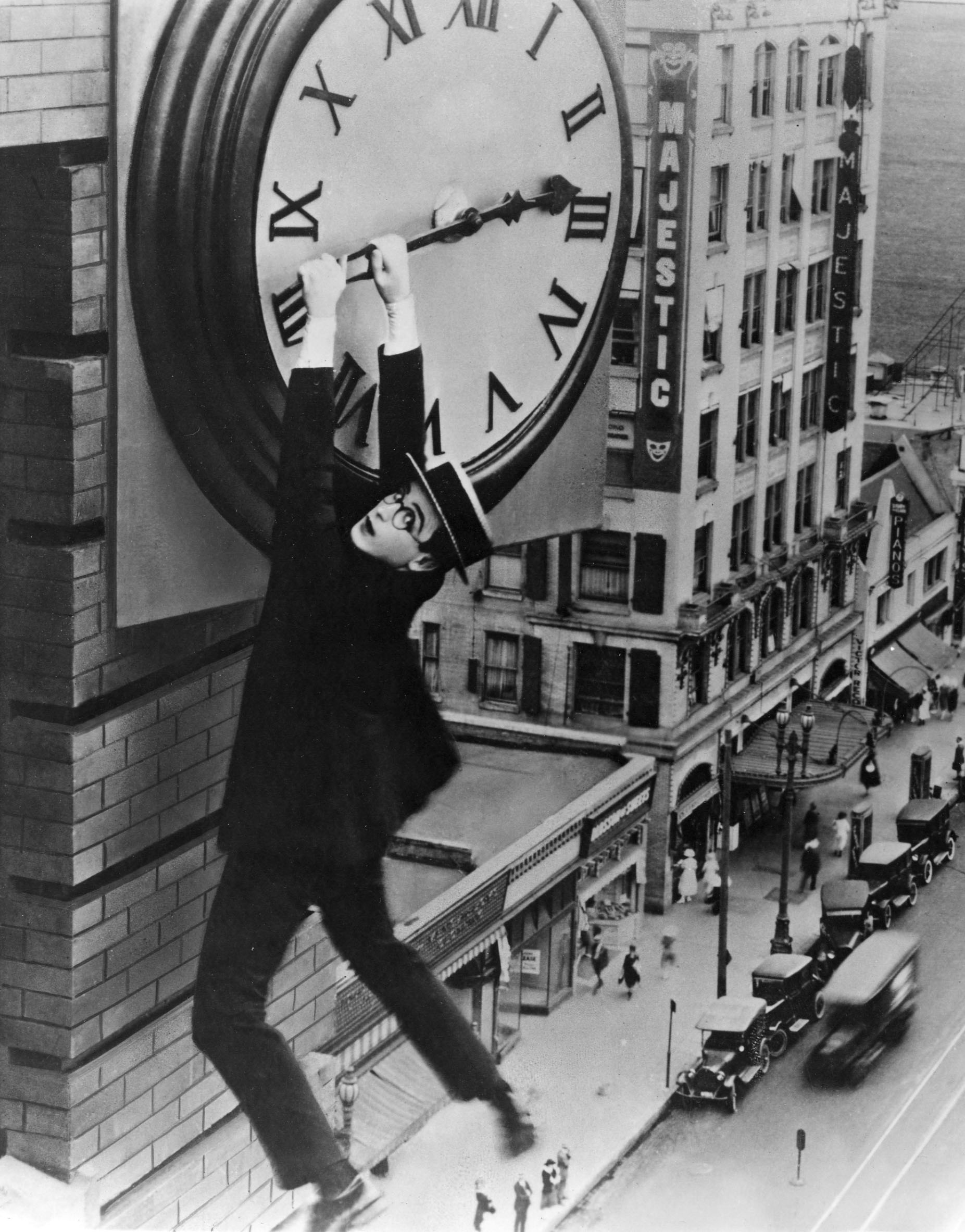
Harold Lloyd clock

My times are in your hand; deliver me.  (Psalm 31:15)

“Let me be the first to wish you a happy and blessed 1984.” This first salutation of the New Year was given, two minutes after midnight, by Bishop Desmond Tutu to several hundred Episcopal college students and campus ministers gathered at a snowy retreat center in the Rocky Mountains. He was preaching at a eucharist begun in the final moments of 1983. The gospel reading, spanning the stroke of midnight, accompanied our entry into the year of Orwellian dread, 1984. Then the bishop’s genial greeting at the start of his homily broke the fatalistic spell cast by the 1949 novel. Orwell’s terrible future had not come to pass. Instead, a man stood before us speaking eloquently and authentically about hope and possibility. A few weeks later he would win the Nobel Peace Prize. The God of history is yet capable of surprise.

But it remains an act of faith to believe this in earnest. Walter Benjamin, a German thinker in the darkest of times, gave a chilling description in 1940 of the “angel of history,” who can see nothing but the terrible past as he is swept backward into the future:

His eyes are staring, his mouth is open, his wings are spread. This is how one pictures the angel of history. His face is turned toward the past. Where we perceive a chain of events, he sees one single catastrophe, which keeps piling wreckage upon wreckage and hurls it in front of his feet. The angel would like to stay, awaken the dead, and make whole what has been smashed. But a storm is blowing from Paradise; it has got caught in his wings with such violence that the angel can no longer close them. This storm irresistibly propels him into the future to which his back is turned, while the pile of debris before him grows skyward. This storm is what we call progress. [i]

As we contemplate the wreckage of 2014, we might well share Benjamin’s despair. But there is another angel, the angel of possibility, who knows better. This angel says: Do not be afraid. Whatever twists and turns the story may take, it is in the end a story of life, not death.

And every New Year’s Eve, we ritually renew our faith in that story. There is an element of carnival this night, as we throw off the tyranny of good order for a bit of wild excess, declaring independence from the way things are in the name of things to come. But the night’s underlying theme is not chaos but renewal, as expressed in the traditional English carol:

The old year now away is fled, the new year it is entered…
Now, like the snake, your skin cast off… and so let the year begin.

This festival of rebirth, ringing out the old, ringing in the new, reflects an abiding human rhythm. Whether it’s every morning or every December 31st, we bid farewell to our flawed efforts and bad habits, resolving to do better this time around. Taken in isolation, New Year’s Eve has a whiff of doubt if not desperation. We know that the midnight noise and kisses will soon fade into the hangovers and broken resolutions of January’s new morning.

But New Year’s Day is also the eighth day of Christmas, the festival of Incarnation. What wants to be born is not a project of our own making, doomed to wither in the wintry blast of time. The Babe of Bethlehem is not the cartoon baby draped in the banner of “2015,” deposing the old man of “2014” in a melancholy preview of its own ultimate fate 365 days hence.

The holy Child is the Lord of the Dance “that will never, never die.” Yes, this new person will share our mortal condition; he will live and die as one of us. But in so doing he will accomplish what we can never do on our own. He will make our own stories part of the divine Dance. He will guide our own steps into the way of peace.

People often fuss about whether Christmas is pagan or Christian, secular or sacred. But the whole point of Christmas is that it is now impossible to tell the two apart. Ever since “the great angel-blinding Light” shrank “His blaze, to shine in a poor shepherd’s eye,”[ii] what George Herbert termed “Heaven in ordinarie”[iii] is the way this Dance goes. When the Christmas festival fades like Scrooge’s transformative dream, we will all return to habitual place and ordinary time. But if we have paid any attention at all, nothing will be quite the same again: neither ourselves, nor the world, nor the flow of time.

God with us. This changes everything.

On this last day of the year I rose early and went outside to see the stars. Orion, winter’s dominant constellation, had already left the stage. Leo, who rules the western sky on spring evenings, now roared in his place. To gaze on the night sky before dawn is to behold the future. Standing in the cold of winter, I looked upon the constellations of spring. And to complicate the metaphor, the starlight itself was a message from the distant past.

Time is a mysterious gift. Past, present and future keep changing partners in the everlasting whirl of the Dance. Breathless, we do our best to keep up. As W. H. Auden put it, “if there when grace dances, I should dance.”[iv]

The poet also wrote perhaps the best New Year’s Eve line of all, which I commend to you with my wishes for a most happy and blessed 2015:

Time is our choice
of How to love
and Why.[v]

[i] Walter Benjamin, Theses on the Philosophy of History, q. in Hugh Rayment Pickard, The Myths of Time: From Saint Augustine to American Beauty (London: Darton, Longman and Todd Ltd, 2004), 75

[ii] Richard Crashaw, “Satan’s Sight of the Nativity,” in The Roads From Bethlehem: Christmas Literature from Writers Ancient and Modern, ed. Pegram Johnson III and Edna M. Troiano (Louisville, KY: Westminster/John Knox Press, 1993) 148

[iii] George Herbert, “Prayer I”, George Herbert: The Country Parson & The Temple, ed. John N. Wall, Jr. (Mahwah, NJ: Paulist Press, 1981)

[iv] W.H. Auden, “Whitsunday in Kirchstetten,” Collected Poems, ed. Edward Mendelson (New York: Random House, 1976), 559

[v] “For the Time Being: A Christmas Oratorio,” Collected Poems p. 297. This remarkable work, a must-read for the Christmas season, was performed live before the New Year’s Eve eucharist mentioned at the beginning of this post. Auden reminds us that, once we have seen the Child of Incarnation, our challenge is to redeem the “Time Being” from insignificance.

How can this be?

Cathedral Films producer James K. Friedrich on the set of Child of Bethlehem (1940)

Cathedral Films producer James K. Friedrich on the set of Child of Bethlehem (1940)

My mother Elaine, pregnant with her firstborn child Marilyn, rode to Bethlehem on a donkey (in 1936 around Jerusalem, cars weren’t safe – they attracted gunfire). My father, the Rev. James K. Friedrich, made biblical films, including several on the birth of Jesus. In Holy Night (1949), I was a shepherd boy at the manger, with a stupefied look on my face from the blinding lights behind the camera. But no one could top my sister Martha, who played the baby Jesus in Child of Bethlehem (1940). You could say the Nativity story runs in our family. Even the Episcopal parish church of my childhood was a converted stable.

The thing about Christmas, though, is that everyone gets to be in it. By virtue of the Incarnation, our human nature, our human stories, have become the place where God chooses to dwell. Meister Eckhart put this claim most vividly in the fourteenth century:

“There is only one birth – and this birth takes place in the being and in the ground and core of the soul…Not only is the Son of the heavenly Creator born in this darkness – but you too are born there as a child of the same heavenly Creator. and the Creator extends this same power to you out of the divine maternity bed located in the Godhead to eternally give birth.”

Of course I have been reminded by women friends that only a male could find the sublime in a labor lasting for eternity. But Eckhart’s image makes us uneasy in other ways, for in these disturbing times it may be hard to imagine ourselves as worthy vessels for divinity. Everywhere we turn, we see human life devalued and held in contempt. The poor, the weak, the wounded are marginalized and forgotten. Abuse, violence, cruelty and self-loathing are rampant. Overt racism is making a comeback. Even torture has its shameless defenders.

But Christmas tells a counter-story, about a God who remembers the glory for which we were made, who yearns to speak the word of Love in the vocabulary of human flesh. The seventeenth-century metaphysical poet Henry Vaughan expressed his astonishment at this fact in a memorable line:

Brave worms, and Earth! that thus could have
A God enclosed within your Cell…

Oh, we are brave worms indeed, to believe our frail flesh made for the Incarnation, for the union of time and eternity, finite and infinite, flesh and Word. “God became human,” said St. Athanasius, “in order that humans might become godlike.” And St. Paul told the Corinthians that “all of us, with our unveiled faces like mirrors reflecting the glory of the Lord, are being transformed into the image we reflect in brighter and brighter glory.” (II Cor. 3:18)

In the face of such a wonder, we find ourselves repeating Mary’s old question: “How can this be?” And the best answer I know was given by the medieval mystic, Mechthild of Magdeburg: “Insofar as we love compassion and practice it steadfastly, to that extent do we resemble the heavenly Creator who practices these things ceaselessly in us.”

As we kneel before the Mystery this night, may we know how beloved of God we mortals are, and how very much the Glory wants to be born in us.

To you, dear readers, I wish the merriest and holiest of Christmastides.
God bless us every one!

Praying the O Antiphons

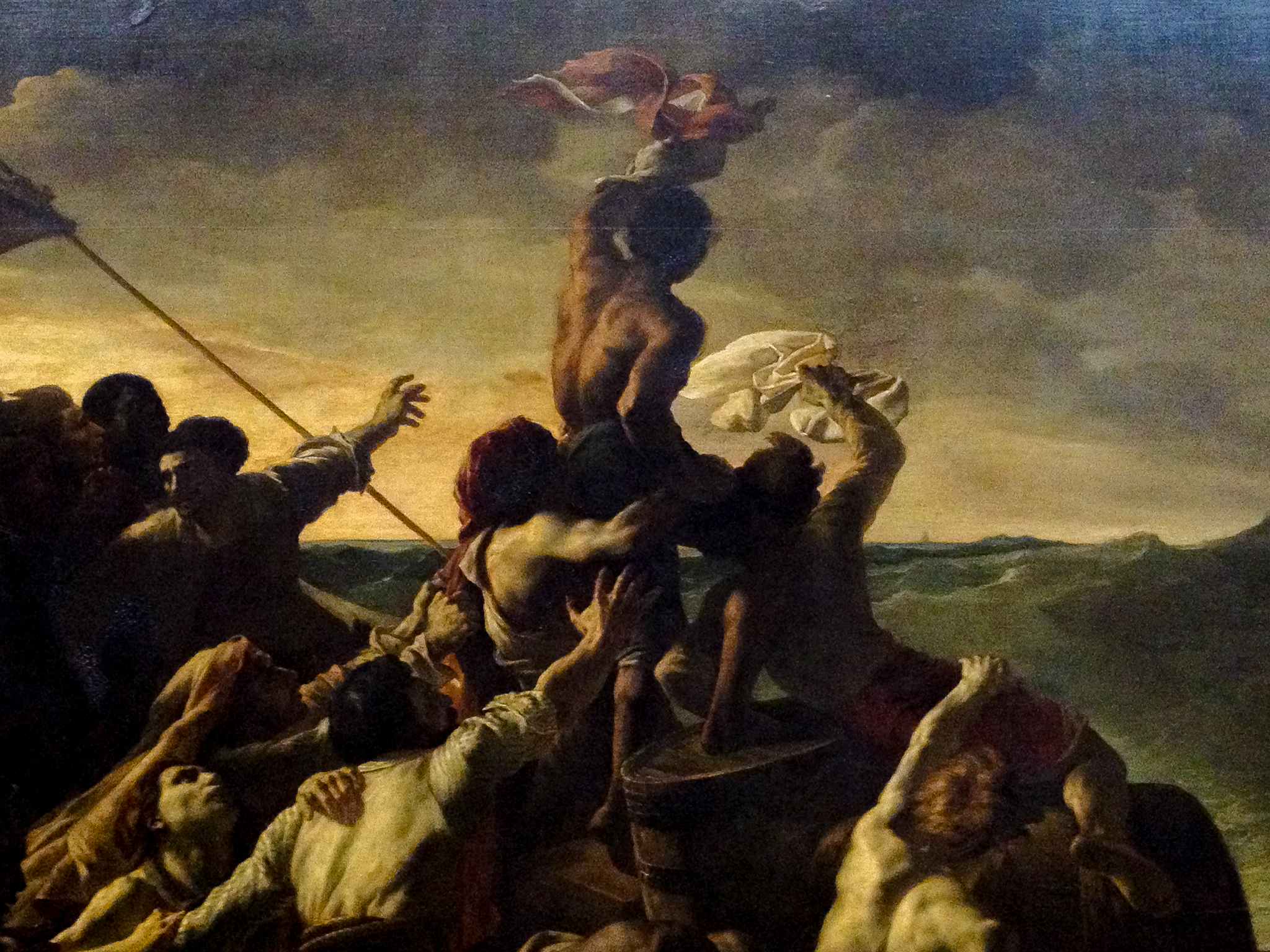
Théodore Géricault, The Raft of the Medusa (1818-19). Paris, Musée du Louvre.

Théodore Géricault, The Raft of the Medusa (1818-19). Paris, Musée du Louvre.

Today the O Antiphons begin. Part of the Church’s Advent prayer for at least12 centuries, they employ seven images from the prophet Isaiah to engage us with the names and attributes of the Holy One whose coming (‘Advent’) we await. Originally sung before and after the Magnifcat at Vespers, I find them to be a marvelous way to pray during these final days before Christmas.

There is one antiphon for each day from December 17 to December 23. Copy them on seven slips of paper, and put each day’s antiphon on a mirror, refrigerator, dashboard, screen or bedpost. Carry it with you during the day. Pray it at dawn, noon, sunset and night, in the midst of activity and the midst of quiet, in solitude and in the company of others.

Each antiphon is both greeting and supplication to the God who comes to save us:

O Sapientia, O Adonai, O Radix Jesse, O Clavis David,
O Oriens, O Rex Gentium, O Emmanuel … O … O … O …

O is such an evocative word. We use it when we come upon something outside ourselves, often unexpected; something that engages us face to face.

  • “O” can be an inhalation, a gasp, the cry of astonishment at the heart of every encounter with the Holy. If our place of prayer were suddenly filled with smoke and angels, or if the Holy called to us out of a burning bush, our first response might well be “O!”
  • There is also the O of understanding, or recognition: O, now I see, now I get it. Or even: O, it’s you!
  • And then there is the ecstatic O, expressing delight, wonder, the sigh of surrender: Ohhhhhhhh!

Each of these is a fitting response when we meet the divine:

Astonishment
Recognition
Surrender

You can find both the original Latin texts and English translations online. The best known paraphrase of the Antiphons is the hymn, “O come, O come, Emmanuel.” The following are my own variations. Use whatever version suits you best, or write your own.

(Dec. 17)          O Sophia, you are the truth of harmonious form, the pattern of existence, the shapeliness of love. Come: illumine us, enable us, empower us to live in your Wisdom, your Torah, your Way.

(Dec. 18)         O Adonai, ruler of time and history, manifestation of divine purpose to your chosen people, may your presence be our burning bush. Come: bring justice to the poor, food to the hungry, shelter to the homeless, protection to the vulnerable, freedom to the prisoner.

(Dec. 19)         O Root of Jesse, coming to flower in Jesus, who in turn bears fruit in all who  are grafted into the royal line of God’s family. Come: let us never be severed from the roots and branches that nourish us in every moment.

(Dec. 20)         O Key of David, you open, and none can shut; you shut, and none can open. Come: lead us out of the prisons that oppress body, mind and soul; welcome us into the open space of possibility; let us breathe again.

(Dec. 21)         O Rising Dawn, bright splendor of the light eternal, illumining all things with Love’s radiance. Come: enlighten those who sit in darkness, who dwell in the shadow of death.

(Dec. 22)         O Desire of all nations and peoples, you are the strong force that draws us toward you, the pattern which choreographs creation to Love’s bright music. Come: teach us the steps that we may dance with you.

(Dec. 23)         O Emmanuel, you show us the face of divinity; you reveal the fullness of our humanity. Come: enable us to become who we are.

Ten ways to keep a holy Advent

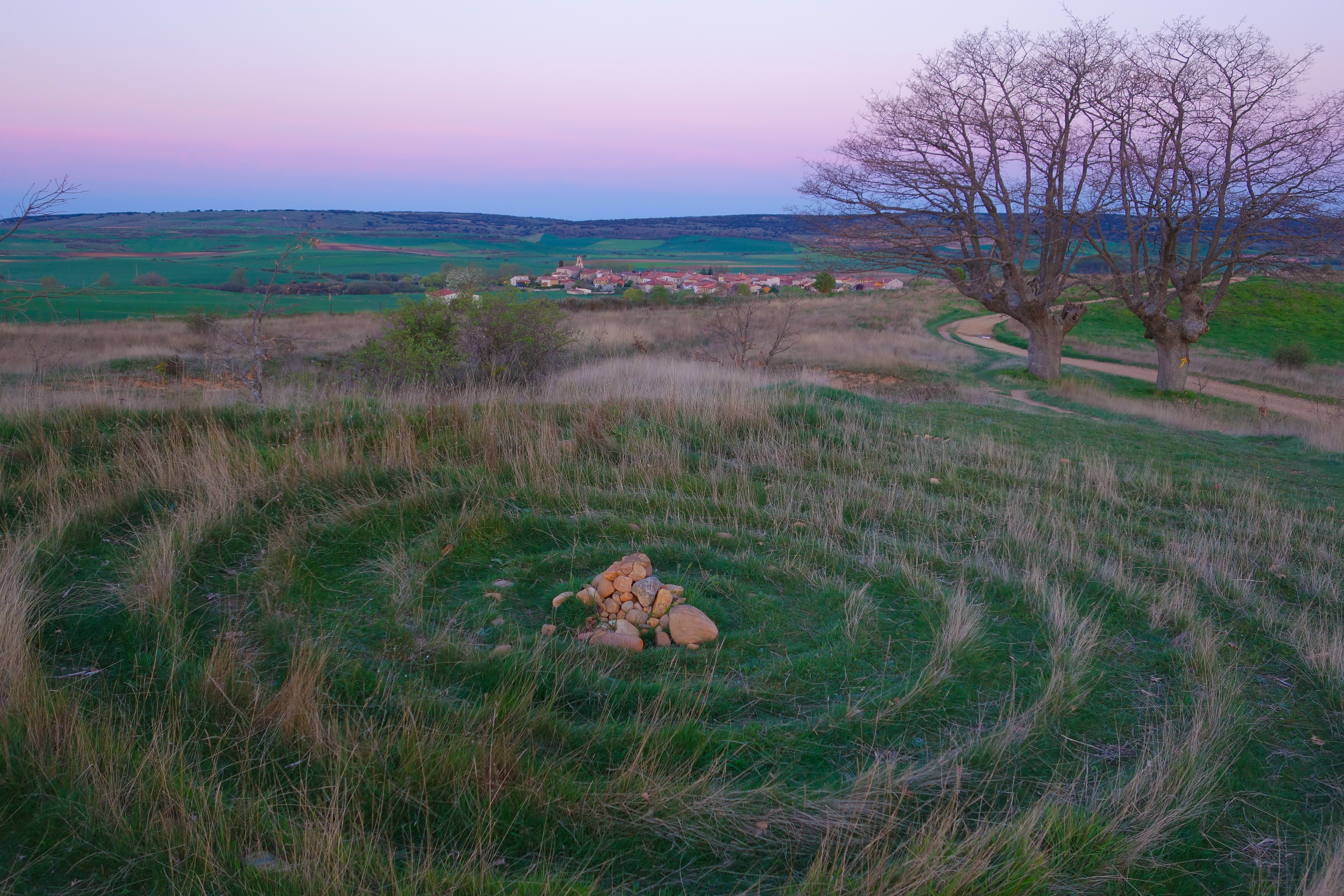
Camino de Santiago near Atapuerca

Camino de Santiago near Atapuerca

Advent is a time to keep watch for the unexpected comings of God, to prepare our own hearts to make room for the Blessed One, and to be ourselves signs to the world around us of divine compassion and justice.

Here is a list of ten general practices, each with some specific suggestions for the keeping of this holy season.

In a month that is already far too busy and rushed, these are not offered as one more to-do list to work through, but as ways to slow down, take a breath, pay attention, and make room in our lives for the birth of the Holy. These practices do not begin to exhaust the possibilities, but I hope they may stimulate your own thoughtful and prayerful responses. If anything here speaks to you, or prompts your own variation, try it out – for a minute, an hour, a day, and leave the rest to God.

Let every heart prepare him/her room.

1) Interrupting

Breaking the flow of habitual patterns can prompt new kinds of noticing and stimulate awareness. Once a week, or once a day, practice difference, welcome surprise.

Take a route to work/school/errands you have never used before. What do you see?

Take a walk in a place or a time that is not customary, and pay attention, trying to notice details of color, movement, and shape before words and labels start to fill your head.

Wear your watch on the “wrong” wrist, or not at all. Every time you look at the time and feel the interruption of automatic behavior, turn your attention to God’s presence in the here and now.

2) Silencing

Schedule a fixed time each day (between 1 and 10 minutes) for wordless silence in the presence of God.

Unplug yourself from all media one day a week, or at least for an evening. Pay attention to how your soul wants to use that quiet time.

Spend one whole evening during Advent, or at least one hour, in total stillness and silence. Turn everything off, light a candle or a fire, abstain from books and music, stop talking in your head. Listen. Who is knocking at the door of your heart? What does your deepest desire want to tell you?

3) Waiting

Make every experience of waiting in daily life a time of prayerful attention to the hope and desire within you. What are all the things your are waiting for? But what are you really waiting for?

Practice attentive and patient waiting. Sit or lie by a window where you can see only the sky. Wait for something to pass by: a cloud, a plane, a bird, an angel…

Wait for the full moon to rise (tonight). Wait for the first star to appear on Christmas Eve.

4) Listening

When you are out in the world, pause and close your eyes sometimes. What do you hear? Make those sounds the subject of a prayer.

Spend some time each day in a place of stillness where you can listen to your heart, and listen for God.

In conversations with friends, family, spiritual director, or stranger, listen for what wants to be heard.

Spend some time each day with music that awakens your heart and evokes the beauty of holiness for you.

5) Watching

Rise early one morning to watch night turn to day. Fit your prayer to the slow rhythm of dawning.

Pick a day to watch both the sunrise and the sunset, from a viewpoint that is unusual for you.

Notice the faces of strangers. Can you see in them icons of the holy?

Take a photograph of something that catches your prayerful eye. Write an Advent reflection, poem or haiku to go with it, and post on social media.

Watch a film that focuses your attention on the traces of God in our world or in our lives.

6) Praying

For at least part of one day each week, every time you enter a new space or begin a new activity, say this prayer: “Maranatha, come Lord Jesus.”

Four times a day (rising, midday, evening, bedtime), face the horizon and pray, “Maranatha, come Lord Jesus.”

Four times a day (rising, midday, evening, bedtime) say the Collect-prayer for the week from the Sunday liturgy.

Cultivate a daily prayer practice, at a set time if possible, and keep it faithfully, even when (or especially when) you are pressed or distracted.

7) Reflecting

Select a book for daily spiritual reading. Don’t skip a single day.

Meditate on the daily readings for Advent (Year 2) provided in lectionaries, Advent books, or online sources.

Journal at least a few times each week. Try beginning with “I am waiting for…” or “I am longing for…” and write what comes to mind.

8) Loving

Visit the sick, the lonely, the sad, the prisoner.

Practice random acts of kindness. Pray that you may be a sign of Christ to everyone you meet.

Pray every day for the person who is hardest for you.

Whenever you are in public space, spend some time praying for everyone you see around you.

For one day, or at least one hour, make a conscious act of seeing Christ in every face.

9) Giving

Do an act of volunteering which you have never done before.
Do something to make more justice and peace.
Send money to a good cause.
Take something to a food bank.

Make a change in your own way of living that will be a vote for “a new heaven and a new earth.”

Pick one social concern that engages your energetic attention, and pray every day that God’s will be done. You don’t have to list possible solutions – they are usually beyond our own imagining. Just entrust the object of your concern to God’s mercy and God’s imagination.

Give yourself to deep conversation with family and friends about the Advent season, the feelings it brings, the action it inspires.

10) Receiving

Pay attention.
Stay awake.
Be ready.

Open the door of your heart
to welcome
the Stranger who knows you by heart.

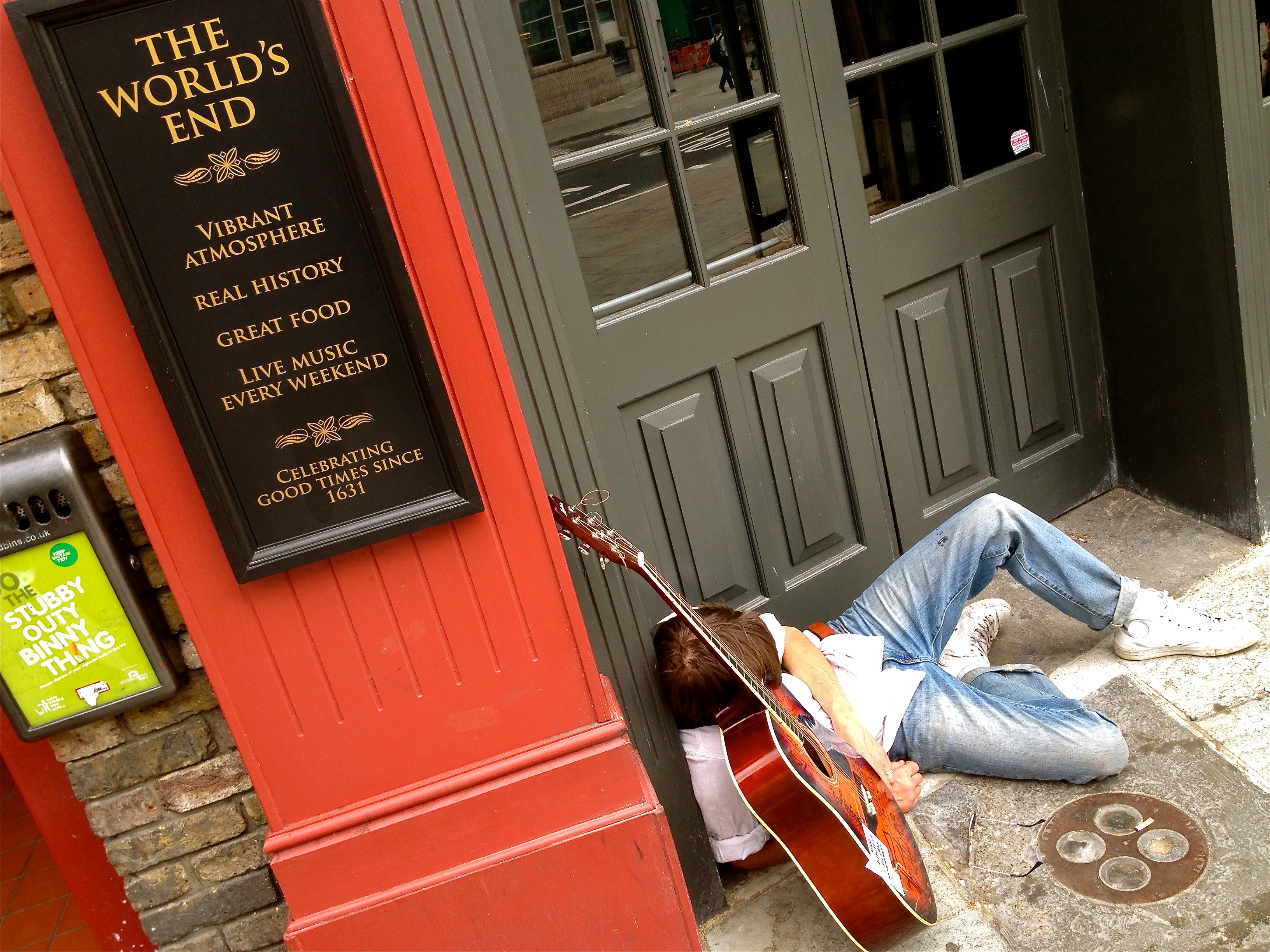
The World’s End

The World's End

When I was 8 years old, I read in LIFE magazine that in so many millions of years, the sun would burn out and life on earth would cease. This worried me, so I asked my parents, “If the world is going to end, how come we say “world without end” when we pray?” And they told me what the Bible says, that heaven and earth may pass away, but God remains. That relieved some of my anxiety, but I still wasn’t sure I liked the idea of the world ending, even if God was in charge.

Of course the world ends all the time. When I moved from California to Puget Sound in the 1990’s, my first Northwest winter felt like today’s gospel: the sun was darkened and the moon gave no light.

Who among us has not seen their world end? Adolescents exiled from childhood. Black teenagers robbed of their future. Elders deprived of their health. Unemployment …retirement …divorce … the death of a parent, a spouse, a child — in every one of these, a world comes to an end.

For anyone who has known serious loss, this is more than metaphor. The experience of grief can be so total and unrelenting that you can’t see anything beyond it. You can’t imagine the future. It feels like the end of the world.

The stars are not wanted now: put out every one;
Pack up the moon and dismantle the sun;
Pour away the ocean and sweep up the wood;
For nothing now can ever come to any good. [i]

W.H. Auden was invoking apocalyptic metaphors to express personal loss, but shared, public worlds also come to an end. As in 1789, or 1914. The Holocaust. Hiroshima. 9/11. My Lord, what a morning, when the stars begin to fall.

But why bring up such dreary stuff on this first day of the new Christian year? Shouldn’t we be breaking out the party hats, blowing horns and shouting “Happy New Year?” The wisdom of the Advent season is that it never begins with “A Holy Trinity Production,” or “The Creator of the World Presents.” No, it always opens with “The End.” Advent knows that every beginning involves some kind of ending. In this season’s Scripture, preaching and prayers, the present arrangements of collective and personal life are judged and found wanting. God’s imagination is far too rich and fertile to settle for our barren and diminished versions of human possibility.

Selfishness, greed, consumerism? Fear, racism and violence? Poverty, militarism, war, environmental degradation? That’s the best we can do? Really? God must be saying, “Come on, people. I made you a little lower than the angels, and this is what you came up with?”

George Eliot said “it is never too late to become what you might have been.” But to get to that “might have been” requires an Exodus into the wilderness beyond the way things are; an Exodus beyond even the best we can imagine for ourselves, into a place of unknowing, where only God possesses the language to speak our future into being.

So much of what we hear and pray and sing in Advent is profoundly disruptive. Bob Franke’s great Advent song, “Stir up your power,” gets right to it in the first line: This world may no longer stand. We are meant to be unsettled, to be driven beyond our narrow boundaries, our constricted realities, toward a beckoning horizon. The Christian life is a perpetual series of departures for a better place.

The world as it is – the world of racial hatred and toxic violence and economic injustice and perpetual war and addictive consumerism and pollution for profit and all the other evils which poison our common life – this world has no future in the emergent Kingdom of God. This world may no longer stand.

But the story doesn’t stop there. In my end is my beginning.[ii] Even when we have gone far astray, even when our story seems over, God remains deeply present in the processes of creation, tenderly leading and luring us into newness of life, making a way where there is no way, opening doors that none can shut.

Advent people do not just wring their hands or shake their heads over the latest news from Ferguson or the Middle East. We work and pray for something better. What we can do on our own is limited, but when we offer our priorities and energies to the larger purposes of God, Love will have its way with us.

As the Christian mystic Hadewijch put it in the thirteenth century:

Since I gave myself to Love’s service,
Whether I lose or win,
I am resolved:
I will always give her thanks,
Whether I lose or win;
I will stand in her power. [iii]

It is not always easy to stand in Love’s power and keep the faith. In some situations it is almost unimaginable. Forty years ago the African-American author James Baldwin wrote:

To be an Afro-American, or an American black, is to be in the situation, intolerably exaggerated, of all those who have ever found themselves part of a civilization which they could in no wise honorably defend – which they were compelled, indeed, endlessly to attack and condemn – and who yet spoke out of the most passionate love, hoping to make the kingdom new, to make it honorable and worthy of life. [iv]

This passionate mixture of protest and love sounds a lot like the Old Testament prophets who permeate our Advent lectionary. The very first reading of the season begins with a prophetic plea for history to be broken open by divine justice:

O that you would tear open the heavens and come down …
to make your name known to those who resist you,
so that the nations might tremble at your presence! [v]

Advent is not just a season of quiet waiting. It is also a time of protest and vision. Advent announces an insurgency against the way things are, a revolution to scatter the proud, cast down the mighty, raise the lowly, gather the lost, free the captive, and bind up the brokenhearted. Advent re-imagines the world as paradise restored, a new heaven and new earth suffused with the peace of God.

this is the day of broken sky
this is the space of conflagration-breath
speaking border-trespass
this is the feathered swoop of heaven
on the wing of now …
forking lightning into language …
breaking god into prison …
breaking the truth from jail! …

This is the fire-tongued fork of holy-ghost howl
making love on the tongue …
spitting flames of reconciliation
in the sky of war
making messiah-praise out of the air itself!

this is pentecost in your head
like becoming what you never dared
for the first time and forever

This ecstatic prophecy is from a poem by Jim Perkinson. [vi] He was talking about Pentecost, but his theme fits Advent as well:

“the day of broken sky”
the earth in conflagration
God breaking into the prisons
the truth being set loose at last
and “the fire-tongued fork of holy-ghost howl
making love on the tongue …
making messiah-praise out of the air itself!”

And each of us, all of us, becoming what we never dared.

When Jesus tells us to stay awake, he is warning us not to sleep through the day of God’s coming. Stay alert. Pay attention. Don’t miss it! Become what you never dared. Shake off the sleep of complacency, the sleep of complicity, the sleep of despair. Awake and greet the new dawn.

Jan Richardson describes this dawning reality in her beautiful poem, “Drawing Near.” [vii]

It is difficult to see it from here,
I know,
but trust me when I say
this blessing is inscribed
on the horizon.
Is written on
that far point
you can hardly see…

Richardson accurately expresses the sense of distant horizon that prevents the dominant reality of the moment from closing in on us and locking us in. That reality wants to be believed as fixed and final, permanent and stable. But the horizon calls every finality into question, disrupting its stability with the boundlessness of divine possibility. The horizon draws our attention from what is given to what may yet be. Keeping our eye on the horizon, feeling its pull, is the spiritual practice of Advent. Richardson’s poem expresses the deep longing produced by the distance between the already and the not-yet.

And then the poet discovers what every pilgrim knows: the goal of our long journey is something that has already been inscribed deep within us even before our journey began. Even before the day we were born, we were marked as God’s own forever.

And that is where Advent ultimately leaves us – finding that the thing we have been seeking so long has been with us all the time – within us, and all around us. While we have been walking our Camino to the Promised land, our feet have already been on holy ground, every step of the way. And the God of the far horizon turns out to be the path as well, keeping us company as we stride deeper and deeper into the world.

So when Advent people talk about the end of the world, we are speaking about end in the sense of purpose rather than termination. The word “apocalypse” means “unveiling,” and the apocalypse in our future will not be an annihilation, but a revealing of the world’s ultimate purpose and destiny.

Yes, all the inadequate, incomplete versions of world will come to an end (some of them kicking and screaming!), but creation as it was intended will be restored, not discarded. Like a poet who creates a new language out of old words, Love will remake the ruins and recover the lost. And the Holy One who is the mystery of the world will be its light and its life forever.

This Advent faith is expressed memorably in a short story by British writer Carol Lake, “The Day of Judgment.” On the Last Day of the world, God sails into England aboard a new Ark. But instead of bringing history to a close and pronouncing judgment on everyone, God leaves the Ark to enter the city of Derby. Heading for the run-down inner city neighborhood of Rosehill, he joins the crowd at a local pub, a multi-ethnic mix of the working poor and the unemployed. And there God gets so caught up in being with these people that he loses track of time, and the Ark sails away without him, heading off for the horizon of eternity. As the story describes it:

The Ark is on the edge of the horizon now, its destination the heartlessness of perfection. Most of the inmates already know what they are going to find – endless fruit, endless harmony, endless entropy, endless endless compassion, black and white in endless inane tableaux of equality. It sails off to a perfect world; the sky has turned into rich primary colors and in the distance the Ark bobs about on a bright blue sea.” [viii]

Meanwhile, God is still in that Rosehill pub, in the very heart of imperfection. If you had walked in there, you would have had a hard time picking him out. He blended right in. But if you were paying attention, you might notice that there was now something different about Rosehill. The old non-descript streets and dilapidated buildings had taken on a strange beauty. Maybe it was the warm slant of afternoon light, but people were beginning to see their neighborhood in a new way. And their own faces, too, seemed to glow with an inner radiance, as if they were carrying a wonderful secret, tacitly shared with everyone around them, as if they suddenly knew there was more to life than meets the eye.

They were still poor, the world was still a mess, but something new was in the air, a spirit of change was awakening. And from that day on, the people of Rosehill found themselves becoming what they’d never dared, for the first time and forever.

[i] W.H. Auden, “Twelve Songs (ix)”, Collected Poems, ed. Edward Mendelson (NY: Random House, 1976), 120

[ii] T.S. Eliot, “East Coker,” Collected Poems 1909-1962 (London: Faber and Faber Ltd, 1974), 191

[iii] Hadewijch: The Complete Works, trans. Mother Columba Hart, Classics of Western Spirituality (Mahwah, NJ: Paulist Press, 1980), 213

[iv] James Baldwin, No Name in the Street (NY: Dell, 1972), 194

[v] Isaiah 64:1-2

[vi] Jim Perkinson, “tongues-talk,” q. in Catherine Keller, On the Mystery: Discerning God in Process (Minneapolis: Fortress Press, 2008), 157-8

[vii] Jan Richardson, “Drawing Near” (http://adventdoor.com/2012/11/25/advent-1-drawing-near)

[viii] Carol Lake, Rosehill: Portraits from a Midlands City (London: Bloomsbury, 1989), 119

Two hours in heaven

Musicians in the Pôrtico de la Gloria (12th century), cathedral of Santiago de Compostela

Musicians in the Pôrtico de la Gloria (12th century), cathedral of Santiago de Compostela

Belief is hard – at least when you dwell within the bubble of secular modernity, where reality seems to function well enough without invoking divinity as a causal mechanism. As long as there is money in the bank and a storm hasn’t knocked down the local power lines, as long as I am healthy and not spending any time in foxholes, it might slip my mind that life is a gift rather than a possession. God doesn’t make it any easier by being invisible or in disguise, and preferring to be subtle when it comes to manifesting presence.

In The Poetic Imagination: An Anglican Spiritual Tradition, William Countryman sees the ebb and flow of divine presence as “the central rhythm of Anglican spirituality.” Like the elusive behavior of waves and particles, the Holy seems to leap unpredictably between available and unavailable, known and unknown, intimate and distant, withheld and given. This can be hard on believers.

Oh that thou shouldst give dust a tongue
To cry to thee,
And then not hear it crying! all day long
My heart was in my knee,
But no hearing.
Therefore my soul lay out of sight,
Untun’d, unstrung:
My feeble spirit, unable to look right,
Like a nipt blossom, hung
Discontented.

– George Herbert (“Denial”)

There is no other sound
In the darkness but the sound of a man
Breathing, testing his faith
On emptiness, nailing his questions
One by one to an untenanted cross.

– R. S. Thomas (“In Church”)

When Herbert or Thomas felt God’s absence, they still remained in relationship with divinity. They missed its nearness. They longed for an intimacy lost. For the totally secularized, God is not merely absent. God is not even missed. The sense of longing inherent to the human condition has been transferred to more tangible, less ultimate objects. For those who do not reside within the practices and discourses of a faith community, is a relationship with the transcendent recoverable? The arts have been proposed as a substitute for religion. But instead of replacing God, the arts often seem to incarnate the divine, even for those who would never think to describe their experience theologically.

In A Natural History of the Arts: Imprint of the Spirit, Anthony Monti cites Sir Thomas Browne on the way music restores us to a spiritual mode of awareness:

There is something in it of Divinity more than the ear discovers: it is an Hieroglyphical and shadowed lesson of the whole World, and creatures of God; such a melody to the ear, as the whole World, well understood, would afford the understanding. In brief, it is a sensible fit of that harmony which intellectually sounds in the ear of God.[i]

In more contemporary language, Frank Burch Brown writes that the Sanctus of Bach’s Mass in B Minor “so shines and overflows with the musical manifestation of divine plenitude that in the experience of many a listener heaven and earth seem to converge, revealing the ultimate reality of their ecstatic union/communion.” [ii]

Image Journal, an exquisitely produced quarterly exploring the intersection of “art, faith and mystery,” employs both beauty and thought to counter the modernist dogma of belief’s imminent extinction. And at last weekend’s Seattle concert in celebration of the magazine’s 25th anniversary, I experienced the “musical manifestation of divine plenitude.” For two glorious hours, four choirs and a reader of poems pushed back the veil of doubt and distance so that a fortunate crowd of listeners could dwell – effortlessly, ecstatically – in the radiance of holy presence.

The design of the program had a litugical structure. There were seven sections – a sacred number – conducting us through the stages of spiritual journey: Cloud of Unknowing, After Paradise, The Contemplative Life, Longing for the Messiah, Mothering God, Blessed Are Those Who Mourn, and From Darkness into Light. Each section’s theme was introduced by a contemporary poem wrestling with the presence/absence of what Denise Levertov calls “the Other, the known / Unknown, unknowable.” [iii] And each poem was followed by a triptych of choral pieces from medieval to modern, from Hildegard and Palestrina to Arvo Pärt and John Tavener. Seattle Pro Musica, Opus 7 Vocal Ensemble, the Medieval Women’s Choir, and the Women of St. James Schola took turns lifting their voices in the resonant space of St. James Cathedral.

Sometimes the presence entered gently, as in the lyric by Jeanne Murray Walker: “Listen! Already God descends, waking us, / with his new breath, from sleep, / … like a mother.” [iv] Sometimes it clapped like thunder, as when the supplicating harmonies of Tavener’s “God is with us” were met with the sudden roar of the organ in heaven’s unambiguous reply.

The most stunning moment for me came at the end of James MacMillan’s Christus Vincit. The triumphant text – “Christ conquers, Christ is King, Christ is Lord of All” – started quietly with the sopranos, joined by the basses rumbling a rhythmic plainsong like breaking waves. The interplay of high and low, feminine and masculine, was punctuated by generous silences, allowing us to savor the fading reverberations. Then a single soprano began to rise above the other voices, with melismatic ornaments resembling the grace notes of Celtic song. Alleluia, she sang, over and over, her voice rising in a vocal mimesis of the ascending Christ. The other singers fell away as she soared on: Alleluia! Alleluia! And then, reaching a high B that seemed beyond the reach of mortals, she sang “All-le – “, but instead of the final syllables, there was sudden silence, as if she had vanished into eternity before the word could be finished.

In such an atmosphere, it was unbelief that became impossible. No more weeping by the rivers of exile, no hiding of faces from an alien Creator, no wandering in the wilderness of doubt and loss. We were home at last. God was not a dubious idea, but an immediate experience.

Alas, we are never permitted to linger long around the throne of presence. Once the vision fades, we must go forth to redeem the time being from insignificance.[v] But those two blessed hours provided a rich and lasting sustenance for those of us who continue along the pilgrim way.

[i] Anthony Monti, A Natural Theology of the Arts: Imprint of the Spirit (Burlington, VT: Ashgate Publishing Company, 2003) 121

[ii] Ibid., 122

[iii] Denise Levertov, “Sanctus,” from concert program

[iv] Jeanne Murray Walker, “And He Shall Dwell With Them,” from concert program

[v] W.H. Auden, For the Time Being: A Christmas Oratorio in Collected Poems, ed. Edward Mendelson (New York: Random House, 1976) 308