A medieval hortus conclusus: The Little Garden of Paradise, Upper Rhenish Master (c. 1410).
Outside, the mountains have been drawn into the garden, becoming a part of it. Aritomo was a master of shakkei, the art of Borrowed Scenery, taking elements and views from outside a garden and making them integral to his creation.
The Rev. James Bramston, an eighteenth-century English cleric, was known for his satirical verses. One of his targets was Archibald Campbell (Lord Islay), who wanted to improve his extensive gardens by removing some of the trees blocking his view of the world beyond his private Eden.
Old Islay, to show his fine delicate taste, In improving his gardens purloin’d from the waste, Bade his gard’ner one day to open his views, By cutting a couple of grand avenues; No particular prospect his lordship intended, But left it to chance how his walks should be ended.
With transport and joy he beheld his first view end In a favorite prospect — a church that was ruin’d — But also! what a sight did the next cut exhibit! At the end of his walk hung a rogue on a gibbet! He beheld it and wept, for it caus’d him to muse on Full many a Campbell that died with his shoes on. All amazed and aghast at the ominous scene, He order’d it quick to be clos’d up again With a clump of Scotch firs, that served for a Screen. [ii]
In those days, landscape design cultivated the idea of the “Picturesque,” in which a visual environment is composed like a painting. In a picturesque scene, whether discovered or constructed, every element presenting itself to the eye of the beholder plays a part in summoning a feeling, stimulating reflection, or creating a mood. “Views were created resembling paintings or recalling events from myth or literature with the aim of producing desired states of feeling in the observer.” [iii]
One of the more unusual elements of the Picturesque was the ruin. A decaying church or temple, a weathered pagan statue, a partially collapsed arch or a broken column—traces of human pastness amidst the greenness of the natural world—aroused “la douce mélancolie qui parle à l’âme sensible” (“the sweet melancholy which speaks to the sensitive soul.”) [iv] Since authentic ruins were few and far between, it became the fashion to build new ones, in either classical or medieval styles, fabricated to appear like ancient remnants. In 1767, Diderot described the intellectual and emotional effect this way:
“The ideas aroused in me by ruins are lofty. Everything vanishes, everything perishes, everything passes away; the world alone remains, time alone continues. How old this world is! I walk between these two eternities … What is my ephemeral existence compared to that of crumbling stone?” [v]
When the poem’s Lord Islay told his gardeners to “open his views” by cutting a couple of wide avenues in the woods around his estate, he was reaching for the Picturesque, though rather by chance than careful design. In the first instance he succeeded wonderfully. At the end of the first avenue, perfectly framed, was a ruined church, promising many pleasurable ruminations on time, history, and divinity in the days to come.
But when more trees were felled to make the second avenue, the results were less agreeable. Lord Islay’s eyes were met with a ruin of the worst kind: a human corpse hanging on a gallows. “Amazed and aghast,” he quickly closed off the terrible vista with a planting of tall firs.
I recently came across Bramston’s poem in Roy Strong’s marvelous anthology, A Celebration of Gardens. While I can’t vouch for the factuality of the story, it struck me as a vivid image of the challenge for spirituality in this troubled and suffering world. How can we enjoy our gardens—the necessary environments and practices for emotional and spiritual health—and yet remain vulnerable and responsive to the cries of distress from near and far?
Isaac Walton window, Winchester Cathedral (1914).
From the Garden of Eden to the medieval cloister, the hortus conclusus (enclosed garden), a tranquil space of beauty and calm, walled off from the outside world, has been a significant image of the interior life. We all need the kinds of spaces, both physical and spiritual, where we can shelter from the storm, sink into the depths of holy Presence, and “study to be quiet.” [vi]
But we are long past the innocence of the first Eden. We know, all too well, of the terrors and horrors raging beyond the protecting walls which nurture our peace and shield our joy. We may, like Lord Islay, be aghast at the sudden glimpse of the victim on the gallows—or the cross—but we are long past surprise. A row of tall firs cannot protect us. The knowledge remains. How do we live with it—and act in response to it—and still guard our heart in its hortus conclusus?
Tan Twan Eng’s deeply moving novel, The Garden of Evening Mists, suggests a way. The Japanese gardening practice, shakkei, is described (see the epigraph above) as “the art of Borrowed Scenery.” Sometime after the Second World War, Aritomo, a Japanese master gardener living in Malaya, agrees to teach his art to the Malaysian narrator, Yun Ling. But their collaborative garden project does not enjoy the innocence of Eden. Yun Ling’s sister had suffered abuse and death in a Japanese internment camp during the war, and she wants to create a memorial garden for her lost sibling. Years later, she returns to the garden while investigating war crimes by the occupying forces. Aritomo, who had participated in that occupation, carries his own secret burdens and sorrows.
Aritomo and Yun Ling are not insulated from pain, guilt, grief and loss. Even from their beautiful garden, they can glimpse the gallows. And yet, the garden’s beauty—and the spirituality it engenders—is not diminished by the pain outside its sacred enclosure. Yes, look just beyond the garden, and you will see immense suffering. But look further, beyond the gallows. Can you borrow what lies in the greater distance? Can you make the Transcendent an integral part of your view?
Are the mists, too, an element of shakkei incorporated by Aritomo? I wonder. To use not only the mountains, but the wind, the clouds, the ever-changing light? Did he borrow from heaven itself? [vii]
The rose garden in Portland, Oregon, “borrows” distant Mt. Hood for this view.
[i] Tan Twan Eng, The Garden of Evening Mists, (New York: Weinstein Books, 2012), 25.
[ii] Cited in Roy Strong, A Celebration of Gardens (Portland, OR: Sagapress/Timber Press, 1992), 105-106.
[iii] Diana Ketchum, Le Desért de Retz: A Late Eighteenth-Century French Folly Garden (Cambridge, MA: MIT Press, 1997), cited in Susan Stewart, The Ruins Lesson: Meaning and Material in Western Culture (Chicago: University of Chicago Press, 2020), 224.
[iv] Christopher Woodward, In Ruins (New York: Pantheon Books, 2001), 158.
Balthasar van Cortbemde, The Good Samaritan (1647).
Jesus’ parable of the Good Samaritan (Luke 10:29-37) is usually heard as a reminder to care for the needs of others, including strangers or even enemies. That’s why some hospitals have taken their name from the protagonist. I myself was born in the Episcopal Hospital of the Good Samaritan in Los Angeles and, four days before my 22nd birthday, my father died in the Intensive Care Unit of the same “Good Sam.” So this parable carries some special meanings for me.
We all hope to be like the Good Samaritan, but the late Doug Adams, an extraordinary friend and professor of Religion and Art at the Pacific School of Religion in Berkeley, proposed an alternative reading of the parable. Instead of asking us to identify with the Good Samaritan, he wondered, what if Jesus wants us to identify with the man in the ditch?
The Samaritan is the person with all the power in the situation. He has a donkey, oil and wine, enough extra clothing to make bandages, the strength to lift the wounded man onto the donkey, and money to pay for the man’s medical care. He gives, most admirably, out of his own abundance.
But the naked, beaten, half-dead man in the ditch has no power. He has no capacity or ability to help himself. He is entirely dependent on the kindness of strangers. And who is the one who stops to help him? Not the priest, not the Levite, not one of his own kind, but a Samaritan. For a Jew, including everyone in Jesus’s original audience, a Samaritan was a bad person, a despised enemy.
Now you don’t need to understand the history of the cultural and religious enmity between Jews and Samaritans to grasp Jesus’ point here. Think of anyone of whom you disapprove, or someone you have a difficult history with. If you are lying helpless in the ditch, you don’t get to be selective about your rescuer. You have to accept their help, even if they happen to be your worst enemy. And that would mean you’d have to change your mind about them and, like it or not, be in relation with them.
Remember the question that prompted Jesus to tell this parable: “Who is my neighbor?” And the answer turns out to be: Everybody! In God’s alternative version of reality (which the gospels call the Kingdom), everyone—even my enemy—is my neighbor.
When I first heard Doug talk about this parable, it was during the first Gulf War. “Imagine you are lying helpless in that ditch,” he said, “and down the road comes Saddam Hussein. When he sees you, he bends down, offers his hand and says, “Can I help you out of the ditch, brother?”
Today we might substitute Vladimir Putin for the Samaritan to experience the same radical discomfort that Jesus’ first listeners must have felt when they heard the parable. Or suppose the person in the ditch is a white supremacist, and the Samaritan is a person of color? What if the victim is homophobic, and the rescuer is gay? What if a misogynist is the helpless one, and a woman comes by? What if it’s a Progressive in that ditch, and along comes a Proud Boy?
Do you find any of these scenarios unsettling? Parables are meant to be hard. They are meant to break us open.
And as I listen to this parable in the Year of Our Lord 2022, it strikes me that America itself is in the ditch, wounded by its sins, torn by its conflicts, half-dead from innumerable unaddressed ills. White supremacists and so-called “Christian” nationalists seek a cure in the subjugation or even the elimination of those they consider to be “other”—that is, those who are “not our kind,” whether that be people of color, the LGBTQ community, empowered women, Muslims, Central American refugees, nonwhite immigrants, or whomever. That way lies madness and death.
If we are ever to be delivered from the ditch of our own national folly and sin, we desperately need the help of the “other”—the ones whose race, religion, class, gender and life experiences are different from our own. We need to listen to their voices, their perspectives, their pain, their anger, their sorrows, their hopes, their dreams. We need not only to learn from them and be taught by them; we need to receive their stories into our hearts. Otherwise, we’re just going to stay stuck in that ditch.
Caravaggio, The Calling of St. Matthew (1599-1600)
Any number of things can happen when we encounter Jesus. We might be comforted—or we might be uncomfortable. We might be healed—or we might be wounded. We might be instructed—or we might be turned upside down. Jesus is a difference maker. For better or worse, he comes to interrupt—and disrupt—our lives.
Sometimes Jesus speaks to our heart. Sometimes he speaks to our mind. But every time, he speaks to our will, as he puts the crucial question:
Will you come and follow me if I but call your name? Will you go where you don’t know and never be the same? Will you let my love be shown? Will you let my Name be known? Will you let my life be grown in you and you in me? [i]
We can always say no, of course. Many people have; many people do. Or we may profess our unreadiness or our inadequacy. “Are you kidding me?” said Moses at the Burning Bush. “Who am I to go and talk to Pharoah? I am slow of speech and slow of tongue.” In the same way, the prophet Jeremiah also resisted his call: “No way, Lord! Don’t ask me to be a prophet. I don’t know how to speak. I’m only a child.” God has heard all the excuses, but the Divine Intention is not easily dissuaded. “Just do it,” God says.
When Jesus tries to recruit a few followers in Luke 9:51-62, he hears plenty of excuses. “Lord, let me first go home and bury my father,” says one. This sounds reasonable enough, if he’s talking about a corpse back at the house that needs some prompt attention. But this line can also be understood to mean, “I can’t go anywhere as long as my parents are still living. Family obligations come first.”
Another makes a similar excuse: “I will follow you, Lord, but first I must go home to take my leave. I need to get permission from my family before I can come with you. And that may take some time.”
I don’t think Luke’s gospel is telling us to walk out of important relationships. Rather, it is prompting us to ask ourselves: What is so important in my life that I need its permission before I can follow Jesus? My true master might be something as big as the security of having somewhere comfortable to lay my head at night, or as trivial as my habitual routines. I’d love to follow you, Jesus, but let me check my calendar first.
The excuses in Luke’s passage suggest a world of expectations, obligations, and best-laid plans that prevent us from running away to join the Jesus circus. Today we may enjoy far more social mobility than a first-century Middle-Easterner, but we each have our own version of situations and circumstances that delay and distract us. Some things just won’t let us go. It might be something lingering from our past, like unhealed anger or grief. Or it might be a present concern, like a steady income, emotional needs, or personal ambition.
Jesus says: If you want to follow me, nothing can have more authority over you than the will of God. As for the things that hold you back, just let them go. Let the dead bury the dead. It’s time to move on, deeper and deeper into God. Seek ye first the kingdom of God. And once you’ve put your hand to the gospel plow, don’t look back. Keep your eyes on the prize, hold on!
The call to be a follower of Jesus may arrive unexpectedly. It may seem inconvenient, or even impossible. But as the saints all tell us, it’s what we are made for. To borrow a line from songwriter Bob Franke,
I can’t really say it’s the thing I do best, but it’s the best thing that I do. [ii]
True vocation is not so much surrender to an outside force as it is the recognition of an internal capacity. In his book, Let Your Life Speak, Parker Palmer makes this point beautifully. “Vocation does not come from a voice ‘out there’ calling me to be something I am not,” he writes. “It comes from a voice ‘in here’ calling me to be the person I was born to be, to fulfill the original selfhood given me at birth by God.”
“Vocation does not come from willfulness. It comes from listening. I must listen to my life and try to understand what it is truly about—quite apart from what I would like it to be about.… The word vocation … is rooted in the Latin for “voice.” Vocation does not mean a goal that I pursue. It means a calling that I hear. Before I can tell my life what I want to do with it, I must listen to my life telling me who I am.” [iii]
When Jesus calls me, it is, as it were, “my life telling me who I am.” And Jesus has many voices. You may hear him in the Scriptures or the liturgy, or when you enter the prayerful state of “absolute unmixed attention.”[iv] He will speak through the need of your neighbor, or in your deepest longing. His voice may come as dissatisfaction with the old, or as the intuition of fresh possibility. It may proceed from the mouth of friend and stranger. It may thunder like the transcendent Other, or whisper like the intimate inward presence who has known you all your life.
However Jesus may call us, what happens if we say yes? How do we put our hands to the plow, keep our eyes on the prize, and not look back?When we decide to follow Jesus, when we consent to lose our old lives in the Paschal Mystery of dying and rising, we are born again into a new way of being. No turning back, no turning back. But what will that new being look like? How will we be different? How will we make a difference?
St. Paul gives us a good list to start with in his letter to the Galatians (5:1, 13-25). Everything that binds, enslaves, and weighs you down, forget it. Instead of indulging yourselves, start loving one another. Say goodbye to enmities, strife, jealousy, anger, quarrels, dissensions, factions, envy and licentiousness. Practice love, joy, peace, patience, kindness, generosity, faithfulness, gentleness, and self-control. Let the Spirit dance in you.
Paul’s advice seems radically countercultural in an America so sickened by hatred, division, malice, and fear—a contagion which has spread to a degree unimaginable just five years ago. As Judge Michael Luttig recently lamented in his testimony before the January 6th Select Committee, “In the moral, catatonic stupor America finds itself in today, it is only disagreement we seek, and the more virulent that disagreement, the better.” [v]
In such a country, such a world, such a time, what is a disciple to do? Well, there’s no easy answer, no single method or path. We must figure it out as we go, the way the saints of old did amid crumbling empires, or as Dietrich Bonhoeffer did in 1930s Germany, or as Martin Luther King did in a Birmingham jail. It will certainly require steadfast faith and boundless love, but perhaps it is courageous hope we will need most of all.
In the worst of times, hope is the engine of persistence and the antidote for despair. Never forget: God makes a way where there is no way, and as God’s friends we are called to shine with that truth every day, “planting the seeds of resurrection amid the blind sufferings of history.” [vi]
[i] “The Summons,” a song from the Iona Community in Scotland (GIA Publications, 1987).
[ii] Bob Franke, “Boomerang Pancakes” (Telephone Pole Music, 1986).
[iii] Parker J. Palmer, Let Your Life Speak: Listening for the Voice of Vocation (San Francisco: Jossey-Bass, 2000), 10, 4.
“Hope does not disappoint us, because God’s love has been poured into our hearts through the Holy Spirit which has been given to us.
— Romans 5.5
— What do you believe? — “I believe in everything.” — “You make it sound almost easy.” — “It’s hard as hell.”
— Frederick Buechner, The Book of Bebb
Hope is hard to come by these days. Overwhelmed by climate apocalypse, exhausted by COVID, horrified by mass shootings, outraged by war crimes, saddened by the evisceration of democracy, savaged by racism, maddened by tribalism, sickened by political insanity, many of us have grown increasingly dispirited. Are we just going from bad to worse, or is hope still a viable practice? On this Pentecost, the Feast of the Holy Spirit, I choose hope, no question. But I have to admit, it’s hard as hell.
My hope does not rest in any existing social mechanism or political ideology. As an American embedded in this historical moment, I will continue to support political efforts and movements to bend our political, economic, and social order toward justice and human flourishing. But recent years have left me with few illusions about the capacity of our frail and broken system to deliver us from crisis. Although the stupidest man in Congress complained last week that “you can’t even lie to Congress or lie to an FBI agent or they’re coming after you,” the safeguards aren’t what they used to be.[i] And the prospect of America becoming a dystopian “Gilead” is no longer inconceivable.[ii]
But despite the heretical and dangerous claims of America’s “Christian nationalists,” God’s friends do not rest their faith in any nation-state, which by its nature has no theological aim or sense of ultimate purpose (telos). “The Church as a community transcends every political order because it is animated by the Holy Spirit and has as its telos and aim friendship with God and neighbor.… What distinguishes the community that is the body of Christ is not only its redirection to humanity’s proper telos, but also the regeneration of the heart that makes redirection toward the pursuit of this telos possible.… As such, it stands in contrast to every other polis [communal society] insofar as no other shares its narrative (the Scriptures) or is the site for the Spirit’s regenerative, sacramental, and sanctifying presence.” [iii]
Is it realistic to expect communities of faith, consisting of flawed human beings, to be sites of the Spirit’s sanctifying and renewing presence? Many of us have encountered spiritless churches in our own day, and through the centuries far too many Christian communities have managed to extinguish the Pentecostal flame. But for God’s friends, “people of the Spirit” is who we must be. In the 17th century, Anglican bishop Lancelot Andrewes used a memorable image to preach the centrality of the Spirit to Christian identity:
“The Holy Ghost is a Dove” he said, “and He makes Christ’s Spouse, the Church, a Dove … No Dove, no Church.” Noting that the dove is a symbol of peace and blessing, innocence and gentleness, he warned against all who “seek and do all that is in them to chase away this Dove, the Holy Ghost.” In its place they would have a monster of their own making, with “the beak and claws of a vulture.” Instead of an olive branch, this terrible creature would “have a match-light in her beak or a bloody knife.” [iv] (“Christians” who love your guns more than children, I’m looking at you!)
We may not always make the best Spirit-people, but that is our only true vocation—to receive the Holy Spirit into our hearts and our communities, not hoarding it for ourselves, but distributing its gifts for the repair of the world and the flourishing of humankind.
Edwin Hatch, a nineteenth-century Oxford scholar who wrote the famous Spirit hymn, “Breathe on me, breath of God,” said that “the fellowship of the Divine Spirit is a sharing in [its] Divine activity, in an unresisting and untiring life, always moving, because motion and not rest is the essence of [the Spirit’s] nature—always moving with a blessing.” In other words, the Holy Spirit is a gift, and gifts exist to be shared—passed around freely in perpetual circulation. As Jesus exhorted us, let your light so shine, that all the world may see and know Divine blessing. Or as Hatch put it:
“The blessing of God, if it be within us, must shine forth from us. No one can see God face to face without [their] own face shining.” [v]
The gifts of the Spirit are many, but hope is my subject today, so I’ll stick with that. As divine gift, hope isn’t a mood that comes and goes. Nor is it something we work hard to produce out of our own psyches, willing it with all our might against all odds. Rather, it comes from beyond ourselves, as a gift from God, not to be grasped in blindness or indifference to the chaos and sufferings of history, but as an enduring disposition, a habit of being, practiced daily in confident fidelity to the divine future which “broods over the world warm breast and with ah! bright wings.” [vi]
I will close with two compelling affirmations of the nature of hope. May they be an encouragement to your own practice of life in the Spirit. The first is by theologian John Cobb:
In spite of all the destructive forces [we] let loose against life on this planet, the Spirit of Life is at work in ever new and unforeseeable ways, countering and circumventing the obstacles [we] put in its path. In spite of my strong tendencies to complacency and despair, I experience the Spirit in myself as calling forth the realistic hope apart from which there is no hope, and I am confident that what I find in myself is occurring in others also.… what makes for life and love and hope is not simply the decision of one individual or another, but a Spirit that moves us all.” [vii]
And from the inimitable Frederick Buechner:
But the worst isn’t the last thing about the world. It’s the next to last thing. The last thing is the best. It’s the power from on high that comes into the world, that wells up from the rock-bottom worst of the world like a hidden spring. Can you believe it? The last, best thing is the laughing deep in the hearts of the saints, sometimes our hearts even. Yes. You are terribly loved and forgiven. Yes. You are healed. All is well. [viii]
[i] Louis Gohmert, a Republican representative from Texas, made this sadly revealing remark in an interview on right-wing media on June 3, 2022.
[ii] Gilead is the name of the scary theocratic American state in Margaret Atwood’s The Handmaid’s Tale (1985). If you don’t have HBO, just watch the latest news from Texas and Florida.
[iii] James K. A. Smith, Introducing Radical Orthodoxy: Mapping a Post-secular Theology (Grand Rapids, MI: Baker Academic, 2004), 237, 239.
[iv]Love’s Redeeming Work: The Anglican Quest for Holiness, eds. Geoffrey Rowell, Kenneth Stevenson, Rowan Williams (Oxford: Oxford University Press, 2001), 118.
[vi] The full line from Gerard Manley Hopkins’ poem, “God’s Grandeur,” is: Because the Holy Ghost over the bent / World broods with warm breast and ah! bright wings.” The gift of the Holy Spirit is the gift of God’s future, nurturing the new creation into being, even as the Spirit brooded creatively over the waters at the beginning of time.
[vii] John B. Cobb, Jr., Is It Too Late? A Theology of Ecology (Beverly Hills, CA: Bruce, 1971), cited in Marjorie Hewitt Suchoki, “Spirit in and through the World,” in Trinity in Process: A Relational Theory of God (New York: Continuum, 1997), 180.
[viii] Dale Brown, The Book of Buechner: A Journey Through His Writings (Louisville, KY: Westminster John Knox Press, 2006), 124.
Comet Falls, Mt. Rainier National Park (July 29, 2005).
The tables outside the cantina were full of beautiful laughing men and women.… Everyone who sat there looked on display, the women in their lovely summer dresses, the men with their hair oiled back on their heads, their tanned bare feet resting proprietorially on top of their Gucci loafers. One wanted to applaud them for presenting such a successful vision of life: you could almost believe they had lived their whole lives, had been reared and groomed from birth, for this one particular night: that this was the pinnacle, this golden summery evening they had all reached simultaneously.
Yet it made me a little sad to see them there, laughing and drinking champagne, for you knew it was all downhill from here.[i]
— Peter Cameron, Andorra
The narrator in Cameron’s novel experiences the “golden summery evening” at the cantina through the lens of his own unhappiness. He has fled a failed life in America for a Mediterranean idyll, but joy continues to elude him. This apparently happy scene of shared human pleasure only deepens his alienation. Unable to join the fun, he judges the beautiful, laughing people for their complacency, their privilege, and their shallow indifference to mortality.
In Michael Cunningham’s The Hours, Clarissa Vaughan recalls her own close encounter with happiness, when she made the mistake of thinking it would last.
It had seemed like the beginning of happiness, and Clarissa is still somewhat shocked, more than thirty years later, to realize that it was happiness.… What lives undimmed in Clarissa’s mind more than three decades later is a kiss at dusk on a patch of dead grass, and a walk around a pond as mosquitoes droned in the darkening air. There is still that singular perfection, and it’s perfect in part because it seemed, at the time, so clearly to promise more. Now she knows: That was the moment, right there. There has been no other. [ii]
What is happiness? It can be pursued, but can it be possessed? The word is derived from “hap,” an Old English term for fortune or chance—something that happens to us, for good or ill. But “happy” and “happiness” have come to denote only the good things, without the mishaps.
If asked to recall our happiest moments, a multitude of memories would rise to the surface. But if asked whether we are happy now, or living happy lives, how would we answer? The University of Pennsylvania is conducting an online Authentic Happiness Survey, with twenty-four groups of five statements each to measure the presence or absence of happiness. Group 24, for example, offers the following choices:
My life is a bad one.
My life is an OK one.
My life is a good one.
My life is a very good one.
My life is a wonderful one.
The #1 statement in a group is always pretty dismal (I’m usually in a bad mood … I’m pessimistic … I am unhappy with myself … I feel like a failure, etc.) The #5 statement sounds way too good to be true (My life is filled with pleasure … If I were keeping score in life, I would be far ahead … I always get what I want … My life is filled with joy … I could not be happier with myself, etc.).
The majority of my own answers landed in the middle (#3), reflecting a pretty typical mix of highs and lows. I had no #1s, a couple of #2s, six #4s (three due to privilege, three due to personality), and two #5s (“I truly love my work” and “Most of the time I am fascinated by what I am doing”—both of these reflecting a mixture of privilege, personality, and the good fortune of getting to do what I love). My authentic happiness score was 3.46 out of 5. That seems about right for a privileged white male occasionally beset by the minor melancholies of disappointed hopes, both personal and generational.
It was an interesting survey, one of many attempts to grapple with the unhappiness of our times. Currently, the most popular course at Yale is “Psychology and the Good Life,” created by Professor Laurie Santos in response to the mental health crisis among college students, who, she says, are “much more overwhelmed, much more stressed, much more anxious, and much more depressed than they’ve ever been.”
In a survey of Yale students taken before the pandemic, 60% said they had felt “overwhelmingly anxious” sometime during the last year. And 50% reported feeling “completely overwhelmed” in the past week. For many college students, and for Americans in general, “happiness feels increasingly out of reach.” The pandemic, climate change, and the politics of fear and hate have multiplied our sorrows and anxieties almost beyond measure.
According to University of California (Irvine) professor Sonia Lyubomirski, author of The How of Happiness, 50% of one’s happiness is determined by genes, while 40% flows from our thoughts, actions, and attitudes. That leaves only 10% attributable to circumstances, although many people believe that circumstance is the key factor in personal happiness. If I change my job, my home, my partner, I will be happier. Lyubomirski’s numbers assume, of course, that one’s basic needs are being met. For a war zone Ukrainian, a Central American refugee, or a long Covid sufferer, circumstance weighs far more heavily.
Santos’ course, and her ongoing podcast, The Happiness Lab, seek to help people address the more significant 40% factors: thoughts, actions, and attitudes. I’ve only listened to the first episode, but many have testified to the value of her efforts.[iii]
Happiness is a subject of supreme interest. Everyone wants it, but for many it seems in short supply. It’s also hard to define. A century ago, Vita Sackville-West questioned its usefulness as an index for life.
But what was happiness? Had she been happy? That was a strange, clicking word to have coined—meaning something definite to the whole English-speaking race—a strange clicking word with its short vowel and its spitting double p’s, and its pert tip-tilted y at the end, to express in two syllables a whole summary of life. Happy. But one was happy at one moment, unhappy two minutes later, and neither for any good reason; so what did it mean? … Certainly, there had been moments of which one could say: Then, I was happy; and with greater certainty: Then, I was unhappy—when little Robert had lain in his coffin, for instance, strewn with rose petals by his sobbing Syrian nurse—but whole regions had intervened, which were just existence. Absurd to ask of those, had she been happy or unhappy? … No, that was not the question to ask her—not the question to ask anybody. Things were not so simple as all that. [iv]
Well then. Am I happy or unhappy? I have had moments and days when it was indeed bliss to be alive. But what should I say about those intervening regions where the evidence is mixed? Is happiness only an occasional oasis in the desert of ordinary time, or can happiness reside in the barren places as well?
“Small things go a long way,” says Zadie Smith. “All day long I can look forward to a Popsicle. The persistent anxiety that fills the rest of my life is calmed for as long as I have the flavor of something good in my mouth,” [v] Rebecca Solnit, arrested for demonstrating at a nuclear test site in the Nevada desert, said that “even when you’re in handcuffs, the sunset is still beautiful.” [vi]
In The Spiritual Meadow, John Moschos’ seventh-century collection of tales about desert monastics, an elder warns a wayward disciple, “Brother, pay attention to your own soul, for death awaits you and the road to punishment.” The disciple took little heed, and when he died, the elder continued to worry about his fate.
The elder fell to his prayers and said, “Lord Jesus Christ, reveal to me the state of the brother’s soul.” He went into a trance and saw a river of fire with a multitude of people in the fire itself. Right in the middle was the brother, submerged up to his neck. The elder said to him, “Didn’t I warn you to look after your own soul, my child?” And the brother answered, “I thank God, father, that at least my head is spared from the fire. Thanks to your prayers, I am standing on the head of a bishop.” [vii]
Even in hell, small things go a long way! And happiness can turn up anywhere, as poet Jane Kenyon reminds us:
There’s just no accounting for happiness … It comes to the monk in his cell. It comes to the woman sweeping the street with a birch broom, to the child whose mother has passed out from drink. It comes to the lover, to the dog chewing a sock, to the pusher, to the basket maker, and to the clerk stacking cans of carrots in the night. [viii]
We are grateful when it comes, and for the memory it leaves. But happiness is more than the occasional perfect moment. It is a practice, a way of being, a fullness of life which transcends the inevitable fluctuations of fortune. Such a practice might be summarized in two words: authenticity and love.
At my ordination to the priesthood (September 17, 1970).
Authenticity is fidelity to your truest self: becoming more and more like the person you have been created and called to be. Sometimes the way is rough and steep. Sometimes you get lost or delayed. But by God’s grace, you embrace the journey. Parker Palmer describes this process as a matter of vocation:
Our deepest calling is to grow into our own authentic selfhood, whether or not it conforms to some image of who we ought to be. As we do so, we will not only find the joy that every human being seeks—we will also find our path of authentic service in the world. True vocation joins self and service, as Frederick Buechner asserts when he defines vocation as “the place where your deep gladness meets the world’s deep need.” [ix]
Authenticity, then, finds its greatest expression in acts of love. Becoming our truest self takes us beyond our individuality, into the interdependent communion of the Divine Whole. My own happiness cannot be sustainably severed from collective well-being. Happiness, as it turns out, is not a private affair. It is the way of self-diffusive, self-offering love. And until justice and human flourishing are universally shared, the way of love will include suffering. Self-sacrifice for love’s sake can be costly and painful, as Jesus and the saints have shown. Happiness accepts the truth of that. No justice, no peace. But it is also true, as Catherine of Siena said, that “all the way to heaven is heaven.” You don’t have to wait until the end of time for happiness to show up.
“Do not look for rest in any pleasure,” said Thomas Merton, “because you were not created for pleasure; you were created for JOY.” [x] Happy are those with a hungry heart. Happy are those who give themselves away. Happy are those who do not mistake crumbs for the feast. Happy are those who know it’s not just about them. Happy are those who say yes to the gift. Happy are those who yearn for the Divine Beloved. Happy are those who don’t count the cost. Happy are those who love their story.
On the summit of Mount Sinai (May, 1989). Blessed is the way up. Blessed is the way down. The trail is beautiful. Be still.
We think of Saint Francis of Assisi as a joyful saint, but he was also pierced by the stigmata, the wounds of Christ. And he taught that the most perfect joy is to be found neither in worldly things nor in spiritual enjoyments. Nor is perfect joy simply a matter of pleasure, contentment, or delight. This was bewildering and counterintuitive for his brothers, so he explained it this way:
“Imagine coming home to the monastery on a stormy night. We knock on the door, but it is so dark that the surly porter mistakes us for tramps. ‘Go away!’ he shouts. And if we continue to knock and the porter comes out and drives us away with curses and hard blows— and if we bear it patiently and take the insults with joy and love in our hearts. Oh Brother Leo, write down that that is perfect joy! Above all the graces and gifts of the Holy Spirit which Christ gives to his friends is that of conquering oneself and willingly enduring sufferings, insults, humiliations and hardships for the love of Christ.” [xi]
Saint Francis wouldn’t have sold many self-help books, but he knew that happiness unacquainted with suffering and sorrow isn’t the real deal. “If it be sweet, if it be not sweet,” [xii] my story is what I was made for. My story is why I’m here. Happiness is saying yes to the story’s gift with a thankful heart.
The late Joseph Golowka, one of my most beloved elders, still roughing it in Baja at 86 (Sept. 24, 2005).
When I go back to earth And all my joyous body Puts off the red and white That once had been so proud, If men should pass above With false and feeble pity, My dust will find a voice To answer them aloud:
“Be still, I am content, Take back your poor compassion!— Joy was a flame in me Too steady to destroy. Lithe as a bending reed Loving the storm that sways her— I found more joy in sorrow Than you could find in joy.” [xiii]
— Sara Teasdale, “The Answer”
[i] Peter Cameron, Andorra (New York: Farrar, Straus and Giroux, 1997), 149-150.
[ii] Michael Cunningham, The Hours (New York: Farrar, Strauss and Giroux, 1988), 98.
[iii] The statistics and quotes from Santos and Lyubomirsky are found in Adam Sternbergh, “The Case for New York Face,” in Lapham’s Quarterly, Vol. XII, No. 3 (Summer 2019), 81-85. Four times a year, Lapham’s Quarterly presents a marvelous and stimulating collection of writings and images from many periods and sources on a given topic. This issue’s subject is “Happiness.” Sternbergh’s article was originally published in New York Magazine in 2018. Additional quotes from Santos were taken from her podcast, The Happiness Lab, Season 1, Episode 1 (“You Can Change”): https://www.happinesslab.fm
[iv] This excerpt from Sackville-West’s novel, All Passion Spent (1931), is also in the “Happiness” issue of Lapham’s Quarterly, p. 139.
[v] Ibid., 134. Smith’s excerpt is from her essay “Joy” (New York Review of Books, Jan. 10, 2013).
[vi] Rebecca Solnit, Storming the Gates of Paradise: Landscapes for Politics (Berkeley: University of California Press, 2007).
[vii] John Moschos, The Spiritual Meadow (written c. 600), trans. John Wortley (Collegeville, MN: Cistercian Publications, 1992/2008), 35.
[ix] Parker Palmer, Let Your Life Speak: Listening for the Voice of Vocation (San Francisco: Jossey-Bass, 2000), 16.
[x] Thomas Merton, Seeds of Contemplation (1949), p. 172. Cited in William H. Shannon, Christine M. Bochen, Patrick F. O’Connell, eds., The Thomas Merton Encyclopedia (Maryknoll, NY: Orbis Books, 2002), 231.
[xi] Adapted from The Little Flowers of St. Francis, 53 chapters on the life of Francis of Assisi written at the end of the 14th century.
[xii] Anne Sexton, “Rowing.” “As the African says, / This is my tale which I have told,/ If it be sweet, if it be not sweet,”/ Take somewhere else and let some return to me.…”
[xiii] Sara Teasdale, “The Answer,” in Christian Wiman, ed., Joy: 100 Poems (New Haven: Yale University Press, 2017), 138.
Christ on the Cross (Auvergne, 12th century), Cluny Museum, Paris.
A sermon preached on Good Friday at St. Barnabas Episcopal Church, Bainbridge Island, WA
I’m going to ask you some questions, and the answer you will give is, “I am here”.
Judas, slave of jealousy, where are you?… Peter, slave of fear, where are you?… Thomas, slave of doubt, where are you?… Men and women of Jerusalem, enslaved by mob violence, where are you?… Pilate, slave of expediency, where are you?…
You’re all here, then. Good. Because the crucified God has something to say to you:
Mercy.
Let us pray.
God, we pray you, look upon your family for whom our Lord Jesus Christ was willing to undergo the torture of the cross. Amen.
I find this opening Collect for Good Friday so moving, because it doesn’t make any requests for particular outcomes. It simply asks God to look at us—just look at us—with the loving gaze of mercy. In the middle of a terrible war, with a million dead from COVID in this country alone, and a pandemic of hate and racism and sheer folly leaving us dispirited and exhausted: Lord, have mercy. That’s our prayer at the foot of the cross. Lord, have mercy.
In the 1965 Jesus movie, The Greatest Story Ever Told, the Holy Family is returning from Egypt after the death of Herod. And when they’re back in their own country, on their way home, they come up over a rise, and there before them are dozens of crosses along the road, with a man dying on every one—human billboards advertising Roman justice and the cruel fate awaiting anyone who might trouble the tranquility of the empire. In those days, it was an all too common sight.
The camera gives us a good look at those suffering victims, anonymous in their pain, and then cuts to a closeup of the two-year-old Jesus, riding on a donkey in his mother’s arms, looking at those crosses with wide and wondering eyes.
Thirty years later, another donkey would bring Jesus toward his own cross, and there he would be cradled one last time in the arms of his grieving mother.
Can’t we have a better story? Why couldn’t the people have been transformed and the authorities converted and the Anointed Son of God lived to a ripe old age teaching and healing and wisely overseeing the first generation of God’s Kingdom on earth as it is in heaven?
That’s what the disciples expected of the Messiah. Of course, you and I know better. We expect the good to die young. We’ve seen enough of it in our own day. As someone says in an A.S. Byatt novel: “There will always be people who will slash open the other cheek when it is turned to them. In this life love will not overcome, it will not, it will go to waste and it is no good to preach anything else.”
But it could have been otherwise. Everyone had choices. That was the problem, of course. God let everybody choose, and God’s own choices were limited by the choices that his creatures made. When Jesus fell upon the ground and begged for an alternative to the cross, God remained silent. There was no reversing the choices already made by Judas and the clergy and the police who were already closing in on the garden.
But God never stopped working to bring good out of the situation, to accomplish the purpose for which Christ was sent into the world. An illuminating perspective on this can be found in that notable theological work, The Joy of Cooking, In its advice to the host of a party, it says,
“Satisfy yourself that you have anticipated every possible emergency…Then relax and enjoy your guests….If, at the last minute, something does happen to upset your well-laid plans, rise to the occasion. The mishap may be the making of your party…[As the Roman poet] Horace observed, ‘ A host is like a general: it takes a mishap to reveal genius.”
The mishap of sin revealed God’s genius. O felix culpa, as Augustine said. O happy fault. God never gave up on the party we call the Kingdom. But since God refused to control others’ free will, God had to improvise, to work with whatever hand God was dealt by the choices made by human beings. And the hand God was dealt was the cross. But God said, “The cross will not foil my plan. In fact, I will make of it the cornerstone of salvation.” And so it was that Jesus could say with his dying breath: “It is accomplished.”
A century ago, Russian theologian Sergei Bulgakov described the accomplishment of the cross this way:
God tells His creation: you are created by My hands. You are my work, and you would not exist if I did not will it. And, since I am responsible for you, I take upon Myself the responsibility for your guilt. I forgive you; I return your glory to you, for I take your sin upon Myself; I redeem it with My suffering.[i]
There are those who recoil at the idea that the death of one innocent man somehow atones for humanity’s collective guilt. But the death of Jesus was not a crude transaction where Jesus just picks up the check for our feast of follies when we prove unable to pay the debt ourselves. Admittedly, there is some language in our tradition which might prompt such a misreading of the cross. For example, in the beautiful Easter Vigil chant, the Exultet, there is the line,
“O blessed iniquity, for whose redemption such a price was paid by such a Savior.”
That may be true poetically, but not theologically. There’s plenty of guilt to atone for, no doubt. Just watch the news. And by ourselves we can never hope to set it right. But redemption has nothing to do with accounting. It has to do with love. For God so loved the world, and there is no love without vulnerability—and sacrifice. Anyone who has ever suffered because of their love for another knows the truth of this.
Christ’s death didn’t just happen on Golgotha. It took place in God’s own heart. And the salvation wrought on the cross wasn’t because somebody named Jesus got punished for our crimes, but because love proved greater than sin and death.
The powers of hell have done their worst to God this day, but Christ their legions hath dispersed. The victory didn’t have to wait for Easter. Love wins today—on the cross—because it absorbs every evil without returning the violence, and it refuses to give up on any of us—not even the killers who know not what they do.
David Bentley Hart, a contemporary Orthodox theologian, sums this up beautifully:
“The only true answer to the scandal of this blood-soaked cosmos is the restoration of the very One who was destroyed … the only horizon of hope is that of the humanly impossible; and the only peace for which [we] can now properly long is not that which can be bought by a victim’s blood, which is a plentifully available coin, but that which can be given solely by that One who has borne the consequences of human violence and falsehood all the way to the end and then miraculously returned, still able and willing to forgive …”[ii]
Therefore, kind Jesus, since I cannot pay thee, I do adore thee, and will ever pray thee, Think on thy pity, and thy love unswerving, Not my deserving.[iii]
One of my Facebook friends, an Episcopal priest in Delaware, posted a story this week about a young woman, a newcomer to her parish, who asked her, “What are the qualifications to carry the cross in church? Because, you know, well, see? I was homeless for about five years. Yeah, and you know, see? I did some things I’m not proud of, but it was really the best choice between some really bad choices. So, I’m kinda embarrassed and I don’t want a lot of people asking a lot of questions so, you know, am I qualified?”
“Oh, sweetheart,” said the priest, “I don’t know anyone in this congregation who is more qualified than you are to carry the cross. I have no doubt that you will be one of the best-qualified crucifers in the history of crucifers in The Episcopal Church.”
“Well, I don’t know about that,” she said. “But thank you. Just one more question: Do I get to wear white gloves?”
“Absolutely, my friend. Let’s go find you a pair.”[iv]
That’s such a perfect story because Jesus made his own cross an act of solidarity with people just like her—with the outcast, the homeless, the powerless, and the survivors of bad choices. He shared their condition and he suffered their pain. He bore their griefs and carried their sorrows. He made the sin, alienation, and brokenness of the world his own, so that no human experience would ever be alien to God.
As a Franciscan scholar has written:
“The Crucified is the diffusing center of God’s love in the world whereby he reaches down to that which is furthest from [God] to draw all into [the divine] goodness and thus into the love of the Trinity.” [v]
And an Anglican theologian puts it this way:
“In [God’s] own Trinitarian history of suffering, God opens [Godself] to include the uproar of all human history; oppressed and forsaken people can find themselves within the situation of a suffering God, and so can also share in [God’s] history of glorification.”[vi]
I love the image of that young woman carrying the cross as she herself, I would say, is being drawn into the divine goodness and sharing in the history of Christ’s glorification. And it being an Episcopal church, she got to do it with white gloves!
So here we are on God’s Friday, at the foot of the holy cross, puzzling over its multiple meanings. Why did Jesus have to die? How exactly has that death broken the power of sin and death? What does the cross tell us about God’s love for us?
These are all profound questions, but I will let the liturgy’s hymns and prayers speak to those questions rather than my trying to reduce the mystery of Good Friday to a few paragraphs. Just open your heart and the liturgy will speak the word you need to hear today. It may come in a hymn, or when you venerate the cross, or receive Sacrament. But it will come.
So rather than explore what we make of the cross, I will conclude with a few thoughts about what the cross wants to make of us.
On Palm Sunday, we heard St. Paul urge us to “Let the same mind be in you that was in Christ Jesus … who humbled himself and became obedient to death—even death on a cross” (Philippians 2:8). This isn’t telling us to try harder, but to see differently, or as Paul says in Romans, “be transformed by the renewing of your minds so that you may discern what is the will of God—what is good and acceptable and perfect” (Romans 12:2).
When we start to put on the mind of Christ Jesus, when we begin to think God’s thoughts instead of our own, not only will the world become different, but we will begin to live differently—not in fear of death, despairing over the uproar of the times, or retreating into our fortress egos—but in self-diffusive love, offering all that we have and all that we are for the sake of others, as we move deeper and deeper into the holy communion with God and one another that is our destiny. The cross proves that Jesus lived that way until his last breath. And the cross invites us to do the same.
The gospels never tell us what’s going on in the mind of Christ. They simply show us what kind of life that mind produced. But if I were to venture a glimpse into Christ’s mind, I might choose a passage from The Brothers Karamazov, where young Alyosha, the most saintly of those memorable siblings, is out looking at the stars when he is suddenly seized, as it were, by the mind of Christ:
The silence of the earth seemed to merge with the silence of the heavens, the mystery of the earth touched the mystery of the stars. . . Alyosha stood gazing and suddenly, as if he had been cut down, threw himself to the earth.
He did not know why he was embracing it, he did not try to understand why he longed so irresistibly to kiss it, to kiss all of it, but he was kissing it, weeping, sobbing, and watering it with his tears, and he vowed ecstatically to love it, to love it unto ages of ages. “Water the earth with the tears of your joy, and love those tears. . . ,” rang in his soul.
What was he weeping for? Oh, in his rapture he wept even for the stars that shone on him from the abyss, and “he was not ashamed of this ecstasy.” It was as if threads from all those innumerable worlds of God all came together in his soul, and it was trembling all over, “touching other worlds.” He wanted to forgive everyone and for everything, and to ask forgiveness, oh, not for himself! but for all and for everything. . .[vii]
[i] Sergius Bulgakov, The Lamb of God (Grand Rapids, MI: Eerdmans, 2008), 364.
[ii] David Bentley Hart, Theological Territories: A David Bentley Hart Digest (Notre Dame, IN: Notre Dame University Press, 2020), 23.
[iii] “Ah, holy Jesus,” verse 5, text by Johann Herrmann, tr. Robert Seymour Bridges.
[iv] Thanks to the Rev. Elizabeth Kaeton for letting me use her story.
[v] Ilia Delio, Crucified Love: Bonaventure’s Mysticism of the Crucified Christ (Fransciscan Media, 1999), 165.
[vi] Paul Fiddes, The Creative Suffering of God (Oxford: Oxford University Press, 1988), 151.
[vii] Fyodor Dostoevsky, The Brothers Karamazov, tr. Richard Pevear & Larissa Volokhonsky (New York, Vintage Classics, 1990), 362.
The Last Supper, Cloister of Moissac (12th century).
If this were the last night of your life, what would you do? On his last night, Jesus gathered at table with his friends.
Jesus loved tables. He spent a lot of time sitting at tables. At a table, Jesus ate and drank with sinners, so that you and I would know we are always welcome at God’s feast. At a table a woman became a teacher to the apostles when she anointed Jesus with oil. At a table Jesus presented a startling image of God as slave and servant of all, when he washed his disciples’ feet. At a table our Lord gave us, in bread and wine, the means of tasting his sweetness forever.
I think Jesus liked tables because they are places of intimacy. Everyone is close together— it’s a place to let your guard down. Jesus probably did more teaching quietly around a table than he did shouting from boats or mountaintops to vast multitudes.
And I don’t think Jesus just walked into a room and started telling people about God. I think he sat down with them, and learned their names, and listened to their stories. And after a while, they would open up to him, sharing their broken dreams and broken hearts, their longings and their demons. And it was there, responding to their particular stories, that he would bring God to them, casting out their demons, unbinding them with forgiveness, empowering them to stand up and walk through that open door into God’s story, proclaiming them—even the most prodigal sinner—the beloved children of God.
Tables also got Jesus into deep trouble. In the Temple of Jerusalem, he overturned the tables of the old paradigm, the tables of the smug and comfortable religionists who can’t see the fault lines running through their ecclesiastical constructions and their lifeless pieties. He overturned the tables where some are in and some are out, where some are welcome and some are not.
“This isn’t what God wants!” said the carpenter from Nazareth, and he made a new table, a table where all divisions and discriminations are put aside,
where enemies are embraced, where outcasts and fools are honored as our wisest teachers, where the abundant life of God’s future is as close as the food you see before you tonight.
The world was not ready to sit at such a table – the world didn’t even want to know there was such a table. So it stretched its maker upon another piece of wood, hoping to bury the dream before it could infect the general population.
But the table survived, and we sit round it tonight. How costly and precious it is! Gathered around Christ’s table, we will do simple things—wash feet, share a meal, tell stories.
And as we do, we will begin, as St. Augustine says, to say Amen to the mystery we have become.
The Footwashing, Cloister of St. Trophime, Arles (12th century).
Kate Dibiasky (Jennifer Lawrence) and Dr. Randall Mindy (Leonardo DeCaprio) discover a comet in Don’t Look Up. (Niko Tavernise/Netflix)
Human narcissism and all that it has wrought, including the destruction of nature, will finally be our downfall. In the end, McKay isn’t doing much more in this movie than yelling at us, but then, we do deserve it.
God is our refuge and our strength, a very present help in trouble. Therefore we will not fear, though the earth be moved, and though the mountains be toppled Into the depths of the sea.
— Psalm 46:1-2
Spoiler alert: If you want to see Don’t Look Up with innocent eyes, watch the movie before reading this. It is currently streaming on Netflix.
Kierkegaard once told a parable about the human capacity for denial. A fire broke out backstage in a crowded theater before the performance. With the curtains still drawn, the audience was unaware of the danger, so one of the actors stepped out to warn them. But he was dressed as a clown, and the people thought his cries of alarm must be some kind of joke. The louder he shouted “YOU’RE ALL GOING TO DIE!”, the more they laughed and cheered. By the time they realized the peril for themselves, it was too late.
“I think,” said the Danish philosopher, “that’s just how the world will end—to general applause.” [ii]
One of the most popular current films, Don’t Look Up, is a farce about the extinction of life on our planet. It dresses its message of disaster and death in a comic premise: most of humanity is either too witless, deluded, or self-absorbed to acknowledge the threat. The more ridiculously the characters behave, the more we laugh—at least until the (literally) bitter end.
Like Kierkegaard’s clown, director and co-writer Adam McKay has serious intentions. “I’ve been really terrified about the climate, the collapse of the livable atmosphere,” he told an interviewer. “It seems to be getting faster and faster. Yet for some reason, it’s not penetrating our culture.”[iii] Since climate change is a gradual process stretching far beyond our attention span, McKay has substituted a more instantaneous disaster for our consideration. In the movie, an immense comet is headed straight for planet Earth. In six months, all living things will be destroyed.
An astronomy professor at Michigan State, Dr. Randall Mindy (Leonardo DiCaprio), and his protégé, Kate Dibiasky (Jennifer Lawrence), discover the comet and try to warn the White House and the world. But their pleas for action go largely unheeded, and things go merrily downhill from there. As Manohla Dargis writes, Don’t Look Up is “a very angry, deeply anguished comedy freakout about how we are blowing it, hurtling toward oblivion. He’s sweetened the bummer setup with plenty of yuks — good, bad, indifferent — but if you weep, it may not be from laughing.” [iv]
In the Oval Office, Randall and Kate try to get the attention of a distracted President, played by Meryl Streep. (Niko Tavernise/Netflix)
During preproduction, the world was struck by a different disaster—the pandemic. The mismanaged Trumpian response, followed by the deadly denialism of the anti-vaxxers, added fuel to the satirical fire. McKay’s parable became as much about COVID as it is about climate change. It was hard to keep the fictional script ahead of the times. McKay said they had to make the film “20% crazier, because reality had played out crazier than the script.” [v]
In most disaster movies, human ingenuity and determination win out in the end, and the world manages to survive. But Don’t Look Up is not so forgiving. Human folly and sin guarantee global extinction. And no matter how much we have been entertained by the stellar cast and amusing scenarios, we are meant to come away unsettled. Complacency is not an option. The theater of Nature is on fire. This is not a drill.
The film has been embraced by the viewing public as well as activists, but many critics have been not only dismissive but contemptuous: “… it’s one joke, told over and over and over again”[vi] … “the attempts at mockery are broad, puerile, and obvious, unintentionally trivializing the issues it seeks to highlight”[vii] … “drowns in its own smugness”[viii] … “its simplistic anger-stoking and pathos-wringing mask the movie’s fundamental position of getting itself talked about while utterly eliding any real sense of politics or political confrontation.”[ix]
David Fear of Rolling Stone is particularly brutal: “… a righteous two-hour lecture masquerading as a satire .… So caught up in its own hysterical shrieking that it drowns out any laughs, or sense of poignancy, or points it might be trying to make … it’s never able to find a way to crawl out of the tarpit of its own bone-deep despair … it doesn’t mean that one man’s wake-up-sheeple howl into the abyss is funny, or insightful, or even watchable. It’s a disaster movie in more ways than one. Should you indeed look up, you may be surprised to find one A-list bomb of a movie, all inchoate rage and flailing limbs, falling right on top of you.”[x]
There have been more measured critiques. Some find Don’t Look Up heavy-handed and misanthropic. Most of the characters, they say, are too cartoonishly stupid or corrupt to make us care deeply about their fate. Some think the filmmaker is too cynical about our collective capacity to counteract moral blindness and systemic evil, leaving us discouraged rather than empowered. Others, weighing the effectiveness of the relentlessly over-the-top caricatures, ponder “the question of whether our culture has become too depressing, too absurd, too lamentable to satirize.” [xi]
In a lengthy and sober analysis, Eric Levitz judges the comet scenario to be a misleading metaphor for climate change:
“In the film’s populist, polemical account of the ecological crisis, there is … no need for Americans to tolerate significant disruptions to their existing way of life, no vexing question of global redistribution, no compelling benefits from ongoing carbon-intensive growth, and thus no rational or uncorrupted opponent of timely climate action. Don’t Look Up casts the conflict between minimizing climate risk and maximizing near-term economic growth as one pitting the interests of billionaires against those of everyone else.” [xii]
What I find missing in all this criticism is a sense of genre. The lack of political nuance, psychological depth, or aesthetic rigor is beside the point. This film embraces the method of the Italian Commedia dell’Arte, where stock characters “make sport of human foibles and universal complaints while burlesquing the most socially or politically prominent members of a given community.” [xiii]
In the early 20th century, the Commedia model was adapted by Russian “agitprop” theater, “noted for its cardboard characters of perfect virtue and complete evil, and its coarse ridicule.”[xiv] Agitprop’s aim was not to create great art, but to inspire collective action. In the American 1960s, groups like the San Francisco Mime Troupe practiced a similar “guerilla theater,” whose purpose, as stated in a 1967 manifesto by R. G. Davis, was to criticize “prevailing conditions … expressing what you (as a community) all know but no one is saying … truth that may be shocking and honesty that is vulgar to the aesthete … There is a vision in this theater, and … it is to continue … presenting moral plays and to confront hypocrisy in the society.” [xv]
It’s a playful form of politics, using laughter to dethrone the powers of this world by undermining their pretensions to ultimacy. As the Psalmist says, “God is laughing at them; the Lord has them in derision” (Psalm 2:4). Prophetic mockery is the genesis of revolution. It’s liberating and cathartic. But if it remains merely a way to blow off steam, or a refreshing but temporary lightening of spirit, that is not enough. Action must follow. We must become the change we seek.
Kate and Randall on a mission to warn the world. (Niko Tavernise/Netflix)
Millions of people have seen Don’t Look Up. Its content and aims are being widely and passionately discussed. Is it a good movie? How accurate is its central metaphor? Which actors stand out? Is it funny? Given the film’s vast global reach and the urgency of the crisis, these become secondary questions. What I want to know is: Does it make a difference? Can it provoke repentance? Will it produce change?
Every preacher and every liturgist wonders the same things. How do our sermons, images, rituals and stories contribute to the transformational mix? In a podcast conversation about the film, Atlantic writer Spencer Kornhaber addresses this issue:
“I think this quest for movies to deliver a message that changes people’s minds is maybe quixotic. There aren’t a ton of works in history like that. But what they do do is give you a set of images and characters and metaphors and clichés that, when they work, become absorbed into our language. They help us talk about the world in ways that are hopefully progressing our discourse and society.” [xvi]
Of course, a film about global annihilation is a hard sell (and released at Christmas, no less!). The prospect of unimaginable loss opens the door to nihilism and despair. Why bother? Why go on? The director himself describes his film as a place where “absurdist, ridiculous comedy lives right next to sadness … so the trickiest part of the movie was to ramp down that tone in the last 20 minutes.” During a script conference before shooting started, one of the producers asked McKay, “Where’s faith in this movie?” And the director, whose mother was a born-again evangelical, exclaimed, “Oh, you’re right. You’re right!” [xvii]
The last supper in Michigan. (Niko Tavernise/Netflix)
As the comet nears its collision with earth, we see people facing extinction in various ways. Some are praying, some are partying, some are weeping, some are just staring at the sky in disbelief, fear, or hopeless resignation. But in a dining room in East Lansing, Michigan, a small group of friends and family have gathered around a table for a communal last supper. Among them are Randall and Kate. For six months they had tried and failed to awaken humanity to effective action. Now they are back home, choosing neither anger nor despair for their final moments on earth, but gratitude and communion.
As the food is shared, each of them names something they are grateful for. Then Randall says, “Well, we’re not the most religious here in the Mindy household, but, um, maybe we should say ‘amen?’ Should we do that?”
Most of them are unpracticed in prayer, so this suggestion creates an awkward pause. But Yule, a young Christian skateboarder (Timothée Chalamet), speaks up. “I’ve got this,” he says. Everyone joins hands around the table, and Yule begins to pray:
“Dearest Father, Almighty Creator, we ask for your grace tonight, despite our pride; your forgiveness, despite our doubt. Most of all, Lord, we ask for your love, to soothe us through these dark times. May we face whatever is to come in your divine will with courage and open hearts of acceptance. Amen.”
Somewhere across the globe, the comet strikes, and an immense tsunami begins to swallow planetary life like the biblical flood. Yes, there is a parodic ark, reserved for the billionaires, bearing them to a justly ironic fate in a galaxy far, far away. But the true ark of the righteous remnant is that Michigan dining room.
In their final minute on earth, the men and women around the table discuss small, ordinary blessings like the store-bought apple pie and the delicious home-brewed coffee. In an inspired ad-lib that had occurred to DiCaprio between takes, Dr. Mindy speaks his last words:
“Thing of it is, we really did have everything, didn’t we? I mean, when you think about it.”
The simple human beauty of this last supper, more than the script’s many earnest pleadings, makes the film’s best case for preserving the world. It seems no accident that the one who sets the spiritual tone is named Yule, an old word for Christmas. Even at history’s last moment, Love is being made flesh.
Then, as the walls around them begin to disintegrate, the screen goes suddenly dark. The circle of human love has vanished into the Divine Mystery.
After watching Don’t Look Up, I came across a poem by John Hollander which articulates for me the feeling of this moving finale. “At the New Year” is about the new beginnings that emerge from all the endings—those moments when we feel “every door in the world shutting at once.” Then the poet prays, “let it come at a time like this, not at winter’s / Night,” but “at a golden / Moment just on the edge of harvesting, ‘Yes. Now.’ / … as we go / Quietly on with what we shall be doing, and sing / Thanks for being enabled, again, to begin this instant.” [xviii]
So the apocalypse ends not with a bang, but with a softly spoken thanks for everything. Even when the worst arrives, the answering word is Yes, and the circle of love goes “quietly on with what we shall be doing,” and singing our thanks. Every moment, even the last one, is a gift to be savored. May our own precious moments on this earth be hallowed with gratitude, acceptance, and trust, now and at the hour of our death.
[xviii] John Hollander (1929-2013), “At the New Year,” in American Religious Poems: An Anthology by Harold Bloom, eds. Harold Bloom & Jesse Zuba (New York: Library of America, 2006), 442-443.
Little Nemo dreams about the New Year (Winsor McCay, Dec. 27, 1908).
My times are in your hand; deliver me.
— Psalm 31:15
Time is our choice of how to love and why.
— W. H. Auden
The turning of the year is the only ritual observance shared universally by humankind. Each religion has its own sacred days scattered across the months, but tonight everyone on earth will join in one great procession, time zone by time zone, into the New Year. We pause a moment to look back, with a mixture of gratitude and regret; then we turn our faces toward the unwritten future. We usually do this with gleeful clamor and warm embraces, welcoming the New with our brightest hopes. The arrival of 2022 may strike a more tentative note.
In my seven years of blogging, I have written a reflection every New Year’s Eve. Most of those posts have been about hope. On the eve of 2017, with my country “teetering on the brink of insanity and ruin,” I hoped that we would “not to be mesmerized by the abyss,” but rather be on the watch for the divine ingenuity “already and always at work amid the blind sufferings of history.”
Three years later, with the flag of hope tattered and torn by endless battles, I drew inspiration from Thoreau, who continued his quiet work of studying the natural world even as the Civil War ravaged the American consciousness. We must, he argued, refuse the hypnotic spell of the chaos which seeks to seduce our gaze. The refusal to take our eye from the transcendent goodness and beauty at the heart of things is “the only fatal weapon you can direct against evil.”
At the end of 2021, such spiritual poise feels elusive, if not unimaginable. This was supposed to be the year we returned to normal. With COVID now raging like the fires and storms of climate change, and our body politic critically ill with malice and madness, normal is no longer on the itinerary.
Didier Maleuvre, a specialist in the study of Western culture, describes hope as an inherently perilous task: “So long as one hopes, one puts oneself at the mercy of the future.” Isn’t that where we find ourselves on the eve of 2022—at the mercy of the future? It is an unnerving time for sure, and few of us will be stepping so bravely into the New Year tonight.
Yet we must, now more than ever, light our candles in this dark and declare our fidelity to the dawn, whenever and however it may come. God desires a better world. However our follies may frustrate and obstruct divine hope, God is wiser than despair. “Behold,” says the Holy One, “I make all things new.”[i] May we all heed the summons to embody that great redemptive labor in our own stories, whether it be in small acts of kindness or collective works of social and spiritual transformation.
The world as we know it is passing away. But death is never the final meaning, only the portal to new birth. Can we embrace this moment in time as an invitation to radical transformation? The Indian writer Arundhati Roy expresses such a hope:
“What is this thing that has happened to us? It’s a virus, yes. In and of itself it holds no moral brief. But it is definitely more than a virus … It has made the mighty kneel and brought the world to a halt like nothing else could. Our minds are still racing back and forth, longing for a return to ‘normality,’ trying to stitch our future to our past and refusing to acknowledge the rupture. But the rupture exists. And in the midst of this terrible despair, it offers us a chance to rethink the doomsday machine we have built for ourselves. Nothing could be worse than a return to normality. Historically, pandemics have forced humans to break with the past and imagine their world anew. This one is no different. It is a portal, a gateway between one world and the next. We can choose to walk through it, dragging the carcasses of our prejudice and hatred, our avarice, our data banks and dead ideas, our dead rivers and smoky skies behind us. Or we can walk through lightly, with little luggage, ready to imagine another world. And ready to fight for it.”[ii]
Imagine a better world and walk toward it.
Dear reader, I believe that our faith and our love, as well as our hope, will be severely tested in the coming year. When the demons of weariness and discouragement do their worst, remember the Paschal Mystery: The way down is the way up.
When Dante’s descent into the abyss of Hell reached its deepest point, his downward trajectory ceased. Once the poet passed through the nadir—the center of the earth—his motion became, without a change in direction, an ascent back toward the surface. His journey taught him that even the “lightless way,” if you take it far enough, is bound for glory.
… we climbed the dark until we reached the point where a round opening brought in sight the blest
and beauteous shining of the Heavenly cars. And we walked out once more beneath the Stars. [iii]
Virgil leads Dante out of Hell (14c MS).
Dear readers, thank you for engaging with my posts over the last year. I am especially grateful when your own thinking is stirred or your soul is fed by what you find here. My work is to pass on whatever comes to me in reading, experience and the occasional inspiration, planting what seeds I can in the community garden. It is a labor of love. To all who take the time to write a comment or share a post with others, thank you for valuing and extending the conversation.
I wish for you both courage and joy in the New Year. Keep tending the fires of hope!
For summaries and links for previous New Year’s Eve posts, click here.
[ii] Arundhati Roy, “The Pandemic is a Portal,” in Freedom. Fascism. Fiction, (New York: Penguin, 2020). This quote has been widely posted on the Internet, and you can see her read the full text on YouTube: https://youtu.be/7hgQFaeaeo0
[iii] Dante Alighieri, Inferno xxxiv.140-143. John Ciardi translation.
Simone di Filippi, Nativity (c. 1380, Uffizi Gallery, Florence).
That glorious Form, that Light unsufferable, And that far-beaming blaze of Majesty, Wherewith he wont at Heav’n’s high council-table, To sit the midst of Trinal Unity, He laid aside, and here with us to be, Forsook the courts of everlasting day, And chose with us a darksome house of mortal clay.
— John Milton, “Ode on the Morning of Christ’s Nativity”
What on earth happened last night—at that little stable on the edge of town? It was all so strange, so unbelievable. Some of us are still sleeping it off. Some of us didn’t get any sleep at all, or maybe we were asleep the whole time and it was all just a dream.
There was a really bright star, and then the sky started singing: Gloria in excelsis Deo! It was angels, someone said. I don’t know about that, but it was so beautiful, as if music were being invented for the very first time.
And suddenly, we all started running, don’t ask me why, until we came to this cave––it was a stable with a cow and a couple of donkeys––and in the back there was a woman lying down on some hay, and a man kneeling beside her. And between them there was a little baby, just a few hours old, I’d say. What a place to begin your life! They must have been pretty desperate to end up there. Maybe they were refugees. Or undocumented. I don’t know. But they didn’t look scared or out of place. They seemed to belong there. And you know, I had the feeling that I belonged there too. We all did.
I can’t really explain it, but I got this feeling that everything in my life before that had just been waiting around for this moment, as if after a long and pointless journey I had finally come home.
And I know it sounds weird, but I swear that little baby looked right at me, as if he knew who I was––or who I was going to be, because when I left that stable I knew––I knew!––that my life was never going to be the same. Pretty crazy, right? Part of me hopes it was just a dream, because if it’s not, I have no idea what happens next. But I have to admit I’m a little nervous about where all this is going to take me.[i]
That’s how I imagine the “morning after” speech of a Bethlehem shepherd. After such a vision, he’s intoxicated by wonder, struggling to make sense of it, and feeling both curious and anxious about what happens now, after this wondrous birth. What will happen now—to me, to you, to the whole wide world? A change gonna come, yes it will.[ii] Yes it will, because what happens in Bethlehem doesn’t stay in Bethlehem. It goes home with us, it gets in our blood, it becomes part of our story. Nothing in the world will ever be the same again. Nothing in our lives will ever be the same again.
And that is why, on the morning after, we listen to St. John’s grand prologue to the Fourth Gospel. Its cosmic perspective on the birth of Christ reminds us how vast and consequential was that humble birth in a lowly stable.
In the beginning was the Word, and the Word was with God, and the Word was God. He was in the beginning with God. All things came into being through him, and without him not one thing came into being. . . And this divine Word became flesh and lived among us (John 1:1-14).
In other words, God was not content to remain purely within the confines of the divine self. God desired to go beyond the inner life of the divine, to enter the confines of time and space and history, to become incarnate as the mortal subject of a human life and experience the human condition from the inside. The Word was made flesh and dwelt among us.
What a fantastic thought: God wants to be with us—not just love us at a distance but to be intimate with us. Joy to the world, the Lord is come … let every heart prepare him room. But perhaps we have some doubts about our capacity to receive such a guest.
I’ve been reading a couple of 17th-century poets who expressed their own doubts our capacity to host divinity. Matthew Hale (1609-1676) in a poem titled “Christmas Day” (1659), said:
I have a room ‘Tis poor, but ‘tis my best, if thou wilt come Within so small a cell, where I would fain [willingly] Mine and the world’s Redeemer entertain …
Here he’s speaking about his heart as the place he would entertain the Redeemer. He goes on to describe sweeping up the dust and cleaning up the mess, just as we would if we expected an important houseguest. The poet even attempts to wash this “room”—with his own penitent tears.
And when ‘tis swept and washed, I then will go, And with Thy leave, I’ll fetch some flowers that grow In Thine own garden [i.e., the flowers of faith and love]; With those I’ll dress it up … yet when my best Is done, the room’s [still] not fit for such a Guest.
Well, if we can’t make our hearts fit dwellings to house the divine, who can? Only God can make us so:
Thy presence, Lord, alone Will make a stall a court, a cratch [manger] a throne.
The poet/priest George Herbert, in his own “Christmas” poem (1633), expresses the same need for divine assistance:
O thou, whose glorious, yet contracted light, Wrapt in nights mantle, stole into a manger; Since my dark soul and brutish is thy right, To Man of all beasts be not thou a stranger:
Herbert’s poetry is always resonant with Scriptural references. “Beasts” recalls Psalm 49:12—prideful humans are like “the beasts that perish”—while “a stranger” evokes Ephesians 2:12—without Christ, we remain “strangers to the covenants of promise.”
Then Herbert, like Hale, calls upon God as the only one who can complete his moral and spiritual remodeling project:
Furnish & deck my soul, that thou mayst have A better lodging, than a rack, or grave.
“Rack” is another word for a manger, but it can also mean an instrument of torture, suggesting the cross. In other words, the first time Christ came, humanity provided him the cross and the grave. The poet prays that next time Christ comes to us, we may give him better lodging—a newly furnished soul, adorned with God’s grace.
Both of these poets were saying: Let every heart prepare him room. But they were also confessing that such preparation is more than we can do by ourselves. However, with God’s help, we may yet become fit lodging for divine presence.
In the 20th century, whose atrocities left our confidence in human potential badly shaken, the Catholic contemplative Thomas Merton could still claim that we “exist solely for this, to be the place God has chosen for the divine Presence. The real value of our own self is the sign of God in our being, the signature of God upon our being.”
Merton wrote this after a life-changing experience at the corner of Fourth and Walnut in downtown Louisville. As he was studying all the faces of the milling crowd, he suddenly felt an overwhelming love for all of them, even though they were all strangers to him. It was like what the shepherds experienced in the Bethlehem stable, where, as W. H. Auden said in his own Christmas poem, “everything became a You and nothing was an It.” [iii] Merton would later put his street-corner epiphany at into words.
“It is a glorious destiny to be a member of the human race, though it is a race dedicated to many absurdities and one which makes many mistakes: yet, with all that, [God’s own self] glorified in becoming a member of the human race.
“I have the immense joy of being [a human person], a member of a race in which [God’s own self] became incarnate. As if the sorrows and stupidities of the human condition could overwhelm me, now I realize what we all are. And if only everybody could realize this! But it cannot be explained. There is no way of telling people that they are all walking around shining like the sun.” [iv]
Just so, on that wondrous Christmas night in Bethlehem, our human nature was lifted up as the place where God chooses to dwell. We are still works in progress no doubt, but we are bound for glory. St. Paul believed this when he said that “all of us, with our unveiled faces like mirrors reflecting the glory of the Lord, are being transformed into the image that we reflect in brighter and brighter glory” (II Cor. 3:18).
A thousand years later, St. Symeon the New Theologian echoed Paul’s luminous text: “As they who behold the light are within the light and partake of its brightness, so they who behold God are within God, partaking of God’s brightness.”
They who behold the light are within the light and partake of its brightness. Our pale mirrors are made to contain the most impossible brilliance. And even when we turn away from the Light, the Light comes looking for us. No matter how shadowy the path we have taken, the Light will find us, and fill us with divine radiance. That is our destiny, says the Child in the manger.
What happens in Bethlehem does not stay in Bethlehem.
Nativity (12th century), Cloister of St. Trophime, Arles, France.
Bethlehem is not a dream fading away into the past. It is the human future. And Christmas Day is not the morning after. It is the first day of the rest of our journey deeper and deeper into God. And whether we know it or not, as we walk that pilgrim road, we are all shining like the sun.
As we used to say back in the day, “Can you dig it?” Can you embrace the wonder of the holy birth: the immensity of heaven cloistered in one small room, be it the Virgin’s womb, the Bethlehem stable, the human heart, or whatever place you’re in right now? Can you embrace the wonder? Will you?
The world wants you to believe far less. But why would you want to do so?
In a novel by the Anglican writer Charles Williams, a young woman goes to church with her aunt on Christmas morning. She is a seeker, not quite a believer, but she finds herself touched by a carol they are singing:
Christians, awake, salute the happy morn Whereon the Savior of the world was born; Rise to adore the mystery of love, Which hosts of angels chanted from above.
The young woman leans over and whispers to her aunt, “Is it true?” Her aunt, one of those quiet saints who has spent her life submitting to divine love, turns to her niece with a smile and says simply, “Try it, darling.”[v]
[i] It’s a risky thing to follow Jesus. At the end of the Fourth Gospel, Jesus tells Peter that “someone else will put a belt around you and take you where you would rather not go” (John 21:18).
[ii] Sam Cooke’s prophetic cry for social transformation was influenced by Martin Luther King’s “I have a dream” speech and Bob Dylan’s “Blowin’ in the Wind.” Cooke said the song came to it in a dream. Listen to it and imagine a shepherd singing it after the Nativity: https://youtu.be/fPr3yvkHYsE
[iii] W. H. Auden, For the Time Being: A Christmas Oratorio. The line is from the Narrator’s concluding speech. Auden’s marvelous poetic dramatization of the Nativity, written during the dark days of World War II, is imbued with hope. Alan Jacobs’ helpful annotated edition is highly recommended (Princeton University Press, 2015).
[iv] Thomas Merton, Conjectures of a Guilty Bystander (1966).
[v] Charles Williams’ Christmas novel is The Greater Trumps (1932).
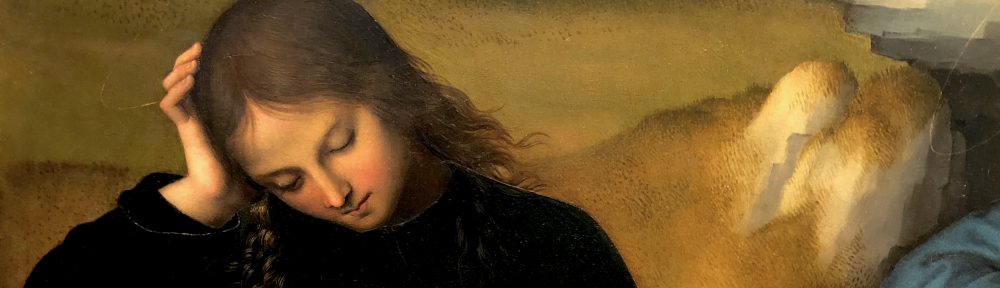


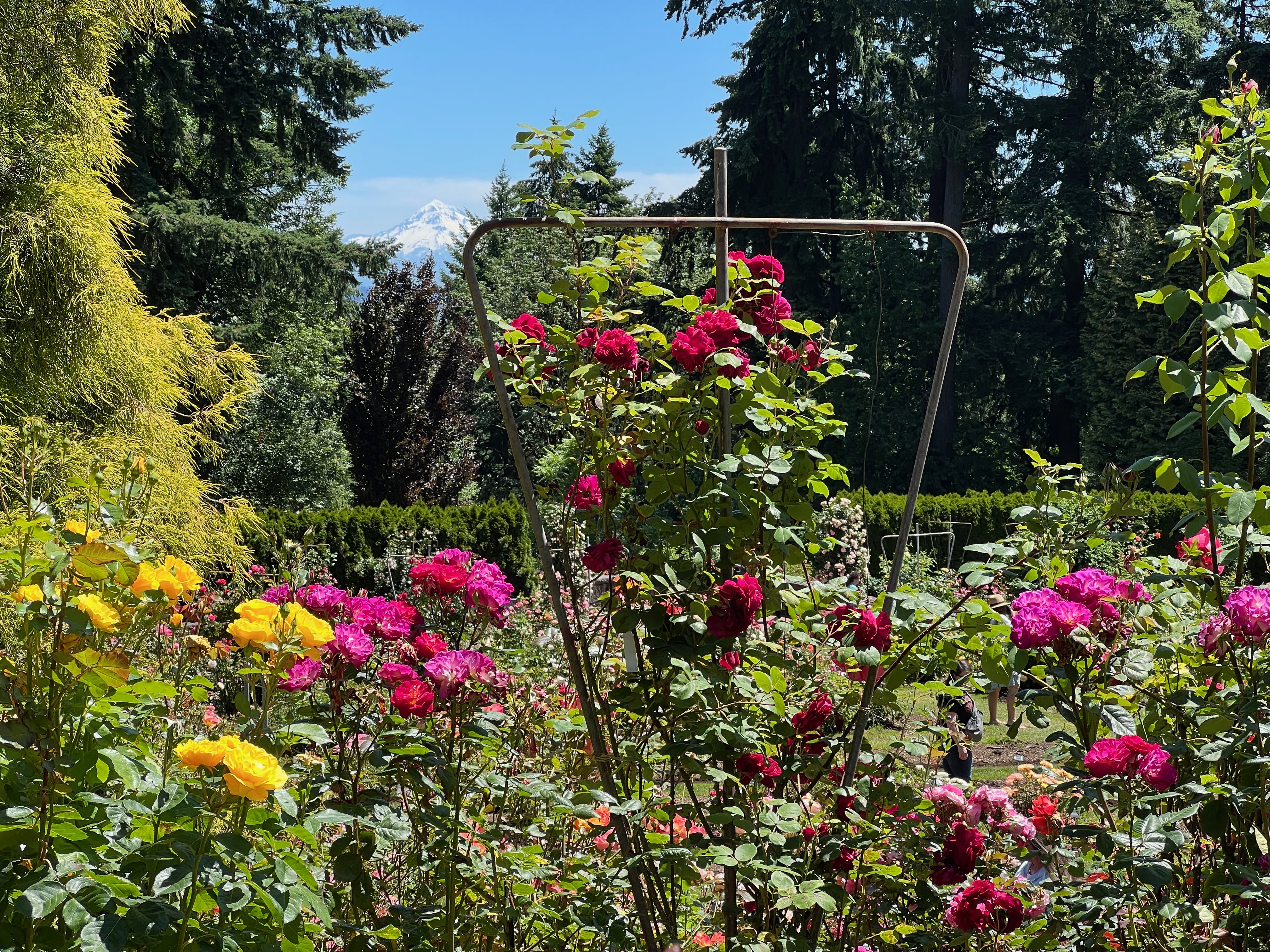



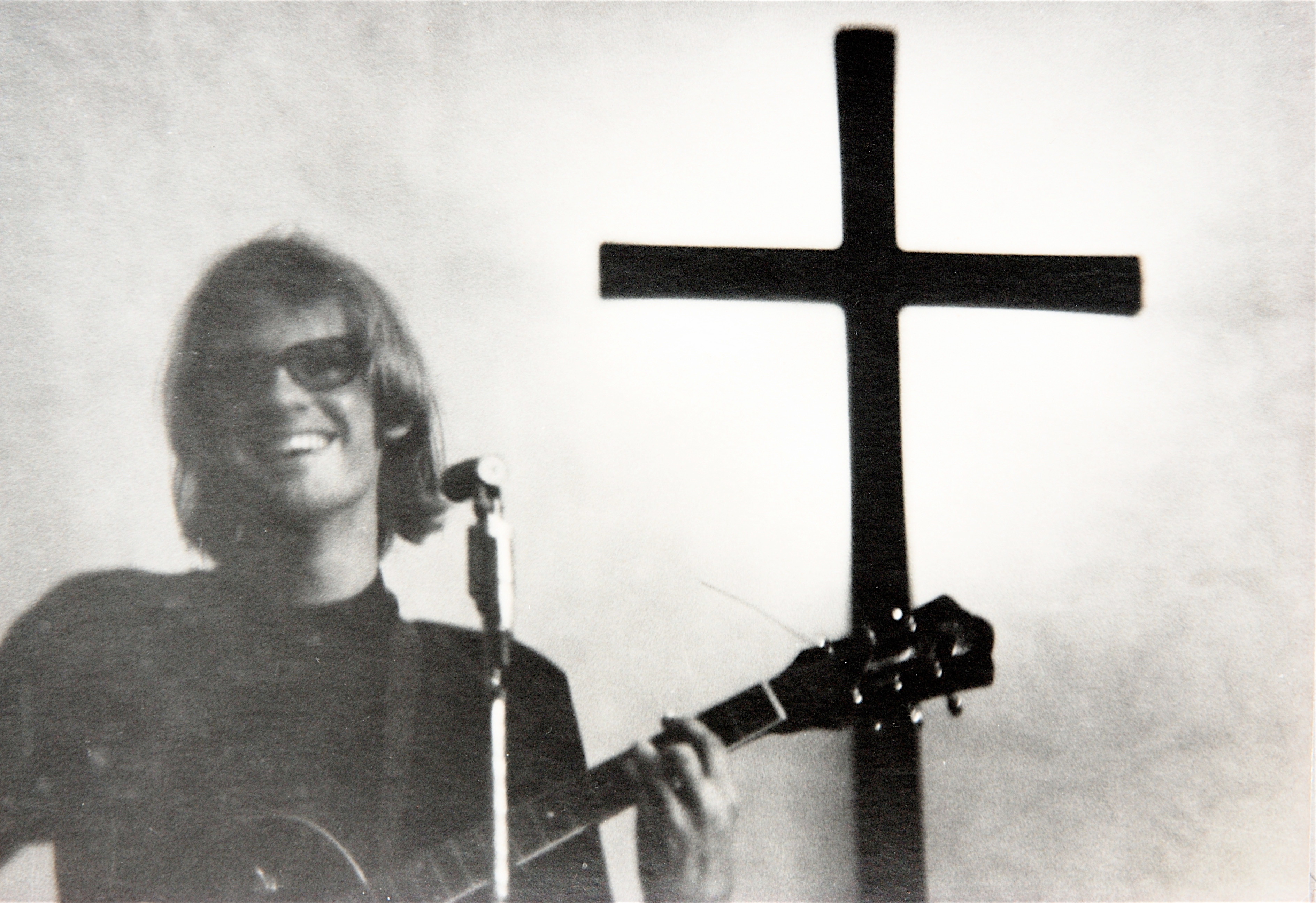


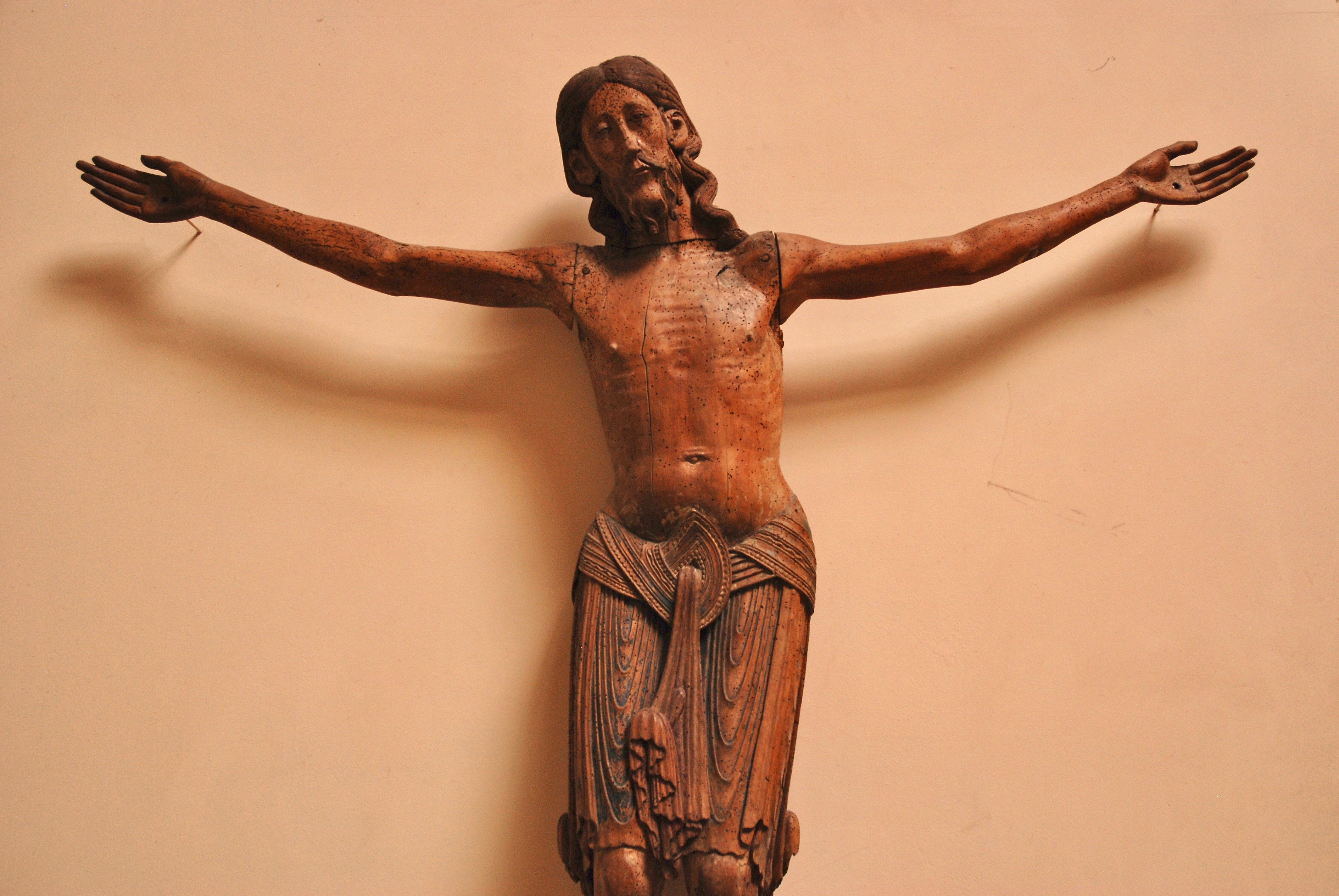
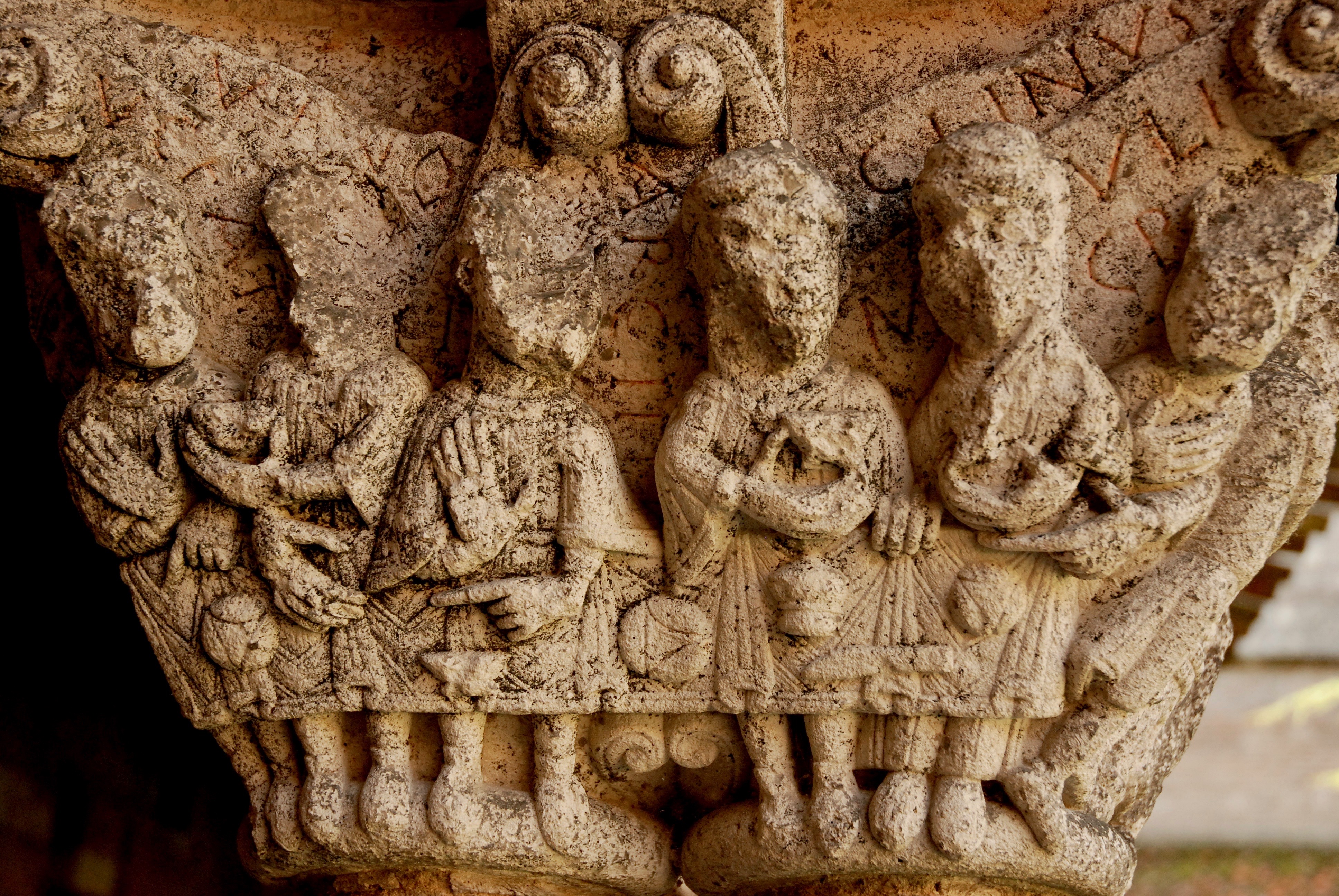



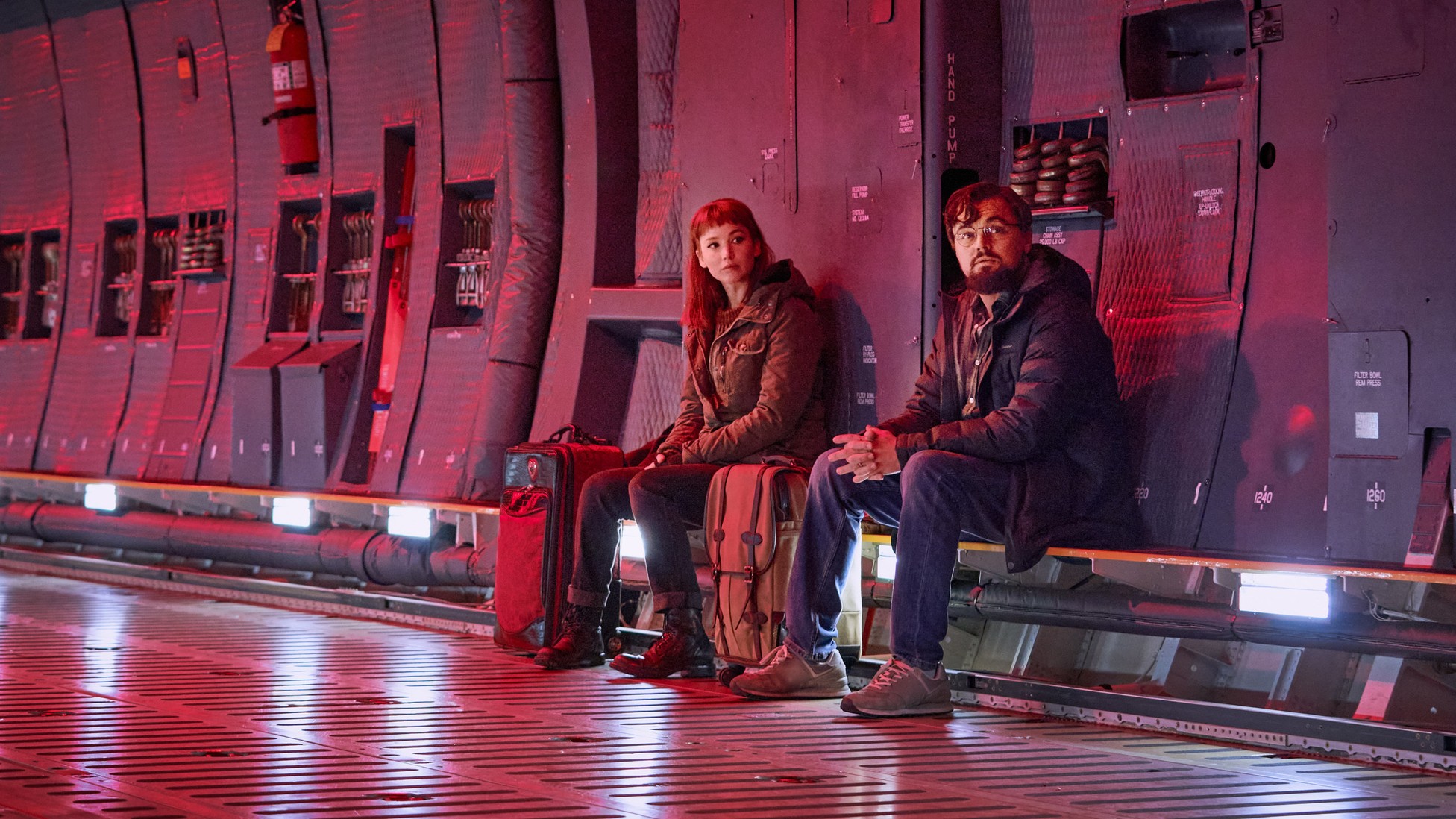


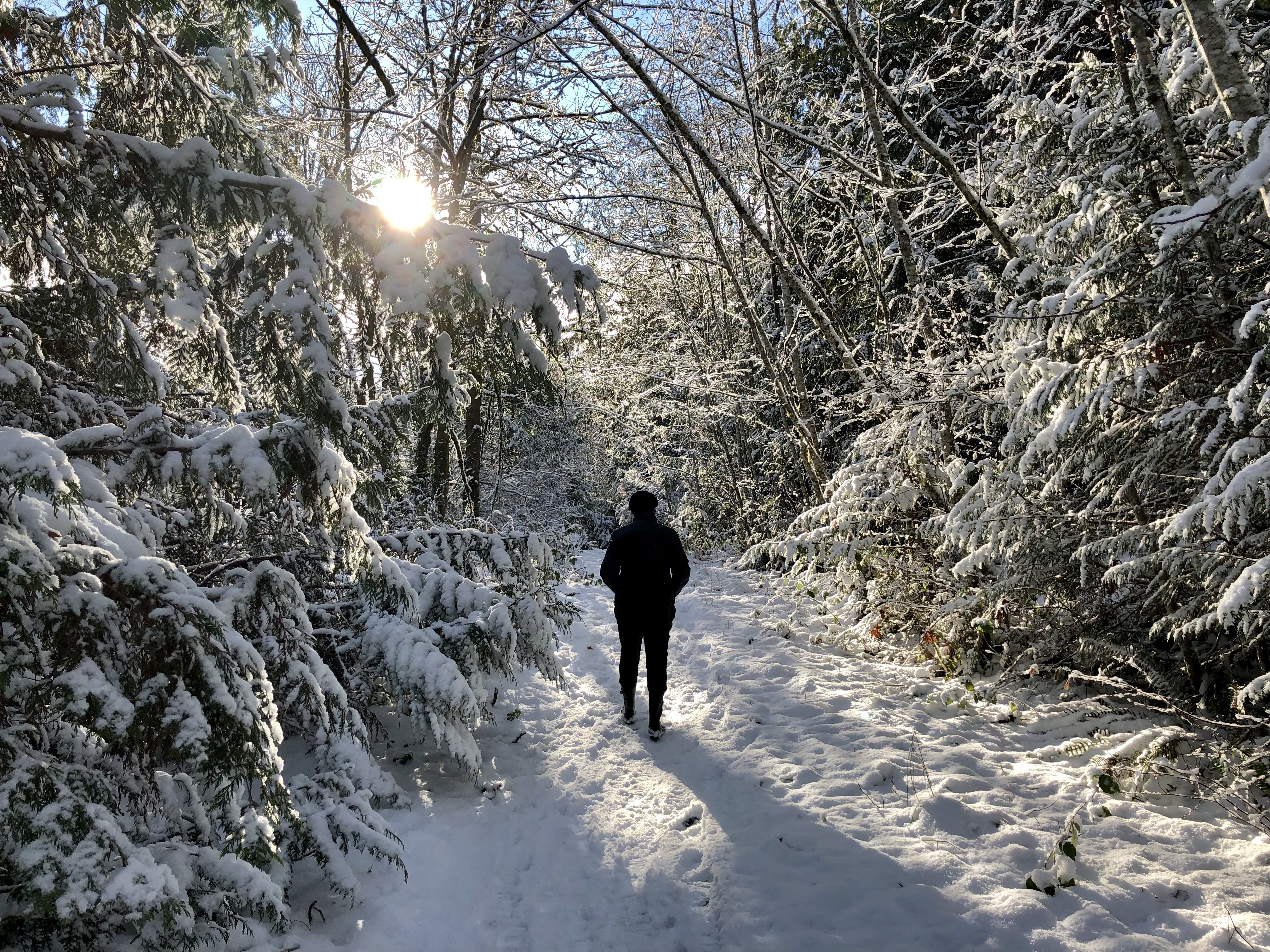

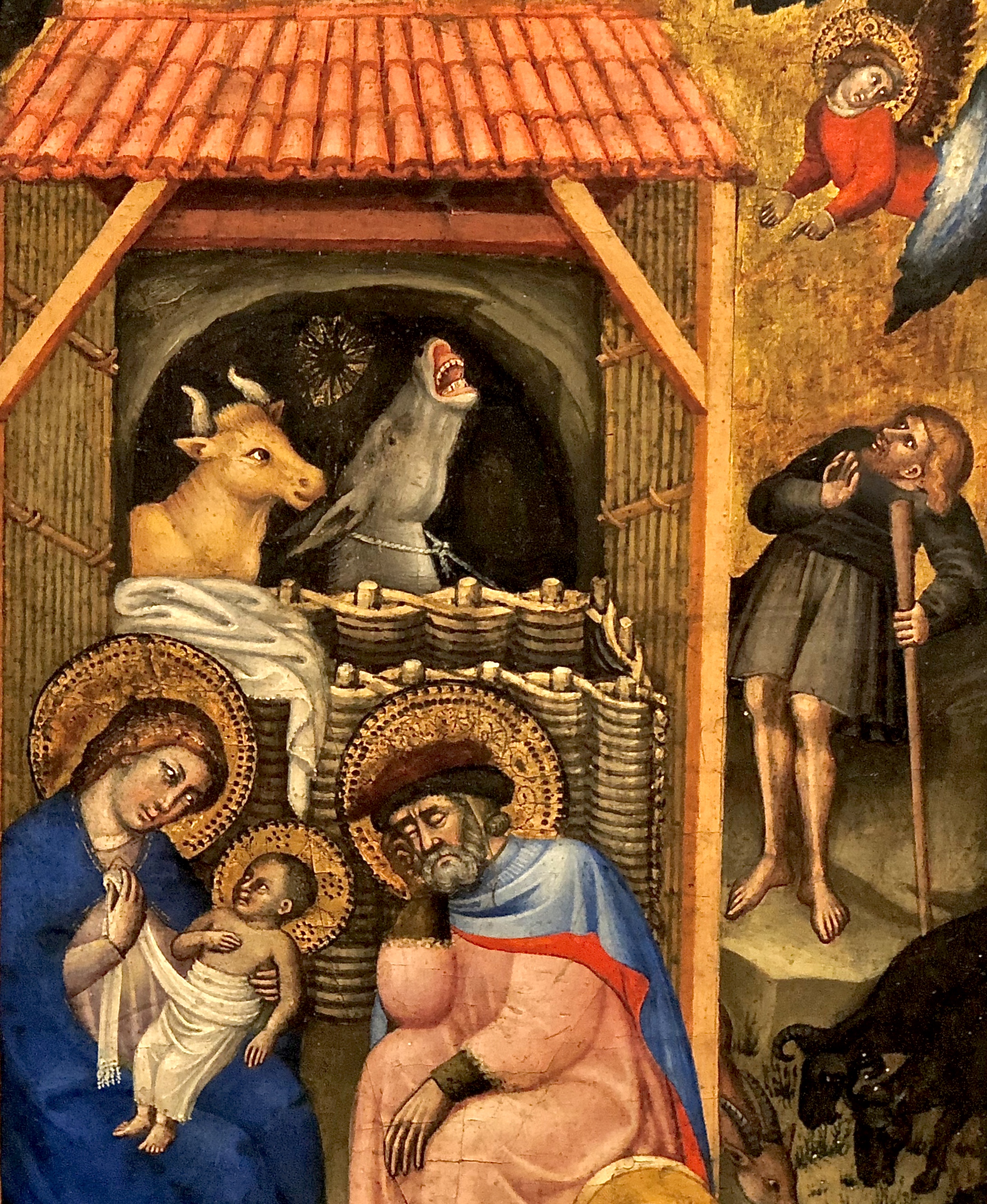
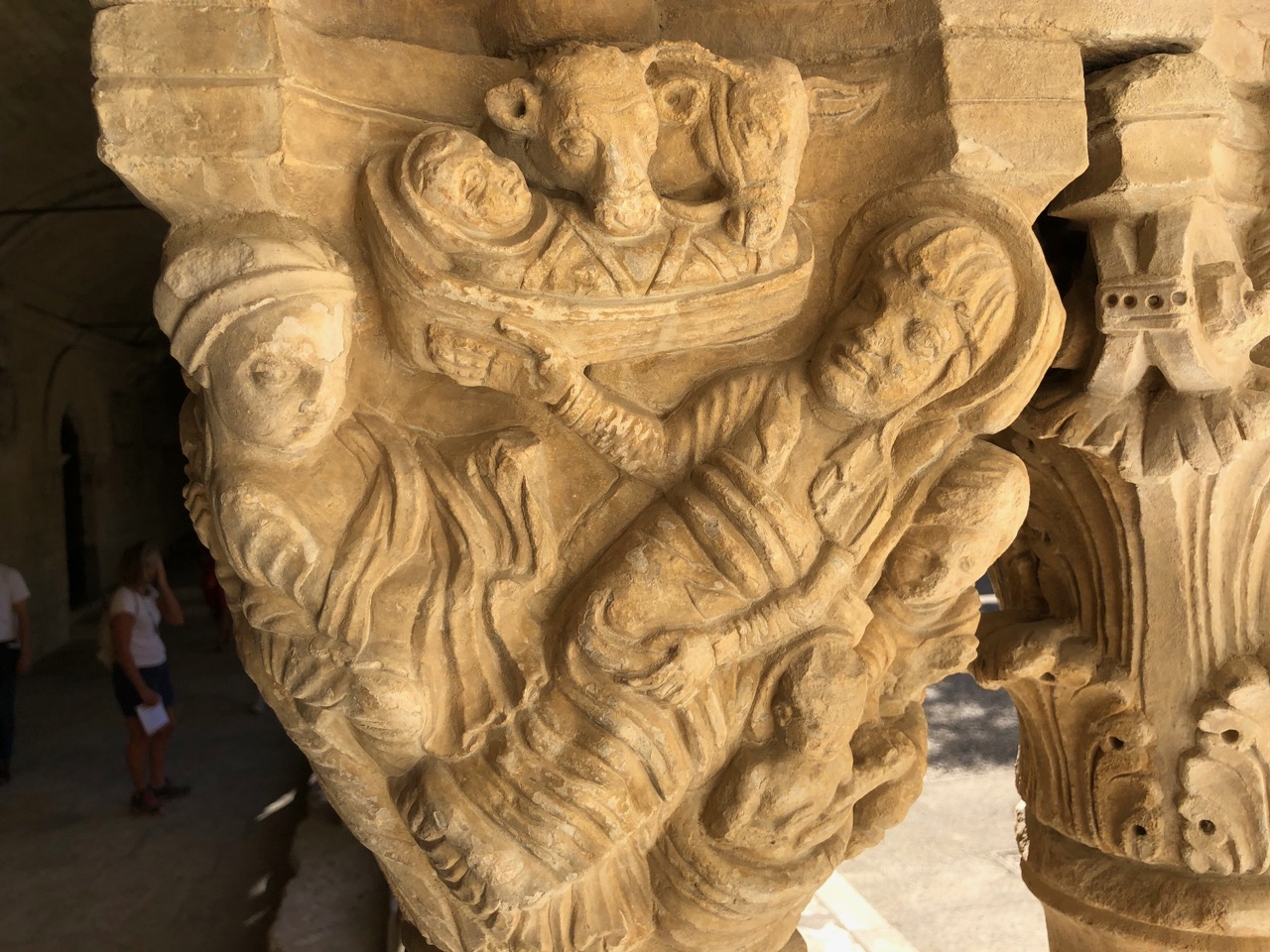
 The religious imagineer