“It’s fine, dude, I’m not mad at you.” According to video allegedly taken by ICE agent Jonathan Ross, those were Renee Nicole Good’s last words, addressed directly to him, with a smile. Seconds later, Ross shot her in the face. Three times.
Ross didn’t murder her because his own life was being threatened. All the video evidence available so far contradicts that lie. Perhaps a serious investigation—if there ever is one—will uncover the details of his personal role in Renee Good’s death. But he did not act alone. The White House gave him the gun and, through its policies and its rhetoric, encouraged him to pull the trigger.
The fact that the murder of an American citizen was immediately condoned by the highest levels of government—and continues to be defended, without the slightest trace of remorse, as the right thing to have done—should be a Pearl Harbor or 9/11 moment for our country. If it isn’t, if it just further normalizes our national descent into evil and madness, then God help us.
Matteo di Giovanni, Slaughter of the Innocents (c. 1480s), Siena Cathedral.
The shocking brutality of Good’s murder is not the work of a single bad actor. It is the expression of national policy under Donald Trump, whose murderous cruelty, by his own admission, knows no bounds. As he made clear in a recent New York Times interview, he is accountable not to Congress, the courts, international law, common decency, or any other norms or considerations beyond the seething cauldron of impulse and rage going by the name of Donald Trump. His only limitation, he claims, is “my own morality, my own mind. Nothing else can stop me.”
Such malignant and dangerous narcissism invites comparison with C. S. Lewis’ chilling description of Satan:
“[He is] no longer a person of corrupted will,” but “corruption itself, to which will was attached only as an instrument. Ages ago it had been a Person; but the ruins of personality now survived in it only as weapons at the disposal of a furious self-exiled negation.” [i]
Evil is contagious, and the toxicity level among the ruling powers has become so high that it never seems enough for Trump, or his collaborators and enablers, merely to initiate, condone and encourage acts of hatred and violence. They also have an insatiable compulsion to smear and assault their victims with absurd lies and vicious abuse.
Vice President J.D. Vance, a nominal Catholic who cares little for his church’s teachings, provides one of the most egregious examples of this shameless evacuation of human decency. He shed no tears for Renee Good, preferring to revel in making vicious and unfounded attacks. He congratulated her killer and warned the rest of us, in effect, that we too must obey or die.
Religious journalist John Grosso wrote a scathing rebuke to Vance’s despicable rhetoric in the National Catholic Reporter:
“The vice president’s comments justifying the death of Renee Good are a moral stain on the collective witness of our Catholic faith. His repeated attempts to blame Good for her own death are fundamentally incompatible with the Gospel.” [ii]
Dominant predators devour a helpless lamb (Abbey Sainte-Marie-de-Souillac, France, 12th century).
The violence done to Renee Good in Minneapolis is part of a virulent malignancy raging throughout our body politic, in both domestic concerns and our foreign policy. In defense of Trump’s imperial fantasies about Venezuela and Greenland, a Republican congressman epitomizd our sickness when he boasted that “the U.S. is the dominant predator … in the Western hemisphere.”[iii] In other words, it is the right of the rich and powerful to devour the poor, the weak, and the vulnerable. Resistance is futile, and punishable by death.
Well, we may not be quite there yet, but every day of silence or passivity moves us closer to a fascist nightmare. It is time to take on the urgency of the biblical prophets, as in the alarm sounded long ago by Joel in a text still read in the penitential rites of Ash Wednesday:
Sound the trumpet in Zion; consecrate a fast; call a solemn assembly; gather the people. Consecrate the congregation; assemble the aged; gather the children, even infants at the breast. Let the bridegroom leave his room and the bride her canopy.
Between the vestibule and the altar, let the priests, the ministers of the Lord, weep. Let them say, “Spare your people, O Lord.” (Joel 2:15-17)
Visiting an Episcopal church in California this past Sunday, I heard that same urgency in the Prayers of the People. After the formally composed intercessions from the Book of Common Prayer, the priest read handwritten petitions and thanksgivings submitted that morning by the assembly. There were lists of those who sought healing, compassionate pleas for those in need, and general longings for peace and justice. But there was also a notable number of prayers addressing the current outbreak of hatred and brutality.
We pray for all those unlawfully detained by ICE … for the family of Renee Good, and for the repose of her soul … for grace and healing in our nation, … for our children and grandchildren as they see our country changing … for all citizens and immigrants … and we give thanks for brave witnesses, and for the renewal of hope that loving acts inspire.
I was particularly struck by a petition asking our prayers for certain individuals with Hispanic names, followed by “and for all those who fear us.” That simple prayer made a bridge, however slight, across the void between “us” and “them.” And for one precious moment, its explicit hope for an end to fear and the beginning of reconciliation filled the church with the sweet fragrance of possibility
Prayer is a refusal to consent to an unredeemed world, and for people of faith it is foundational for an ethical existence. What St. Paul said about love applies equally to prayer. It “bears all things, believes all things, hopes all things, endures all things” (I Cor. 13:7). It breaks the silence, awakens the passive, and cultivates action, both human and divine.
So don’t despair, or give in, or give up. Look for the ones who are called into the righteous flow of prayer and action.
Police clear demonstrators from a freeway during the right wing occupation of Los Angeles in June 2025.
Survivors of the twentieth century, we are all nostalgic for a time when we were not nostalgic. But there seems to be no way back. — Svetlana Boym
In the Second World War, Paris was spared the physical destruction suffered by so many other cities. It surrendered without a fight to the Germans, some of whom cherished fond memories of living there as students before the war. And the Nazi government, believing itself to be the future of Europe, had no desire to smash such a cultural icon into rubble. It coveted the prestige of the City of Light for itself.
Hitler’s entourage in Paris (June 28, 1940). He was gone the next day, and never saw the city again.
The example of a city physically unchanged while suffering the invasive presence of a hostile power may have something to teach Americans, whose own cities face threats of military occupation by the dictatorial regime in Washington, D.C.. When I read Ronald C. Rosbottom’s riveting study, When Paris Went Dark: The City of Light Under German Occupation, 1940-1944, I could not help noticing some striking parallels to our own “les annes noires” (the dark years).
The radical right in the United States likes to dismiss any comparisons between Nazis and themselves as hyperbolic and slanderous, and it is fair to argue that their own movement may never go as far as the Nazis did. It’s too early to tell. But they’ve made a good start: terrorizing the vulnerable with the ICE-capades of masked thugs, demonizing and disappearing “aliens” and “enemies,” attacking the judicial system, vitiating the free press, purging opposition in the military and civil service, compelling the complicity of corporate leaders, seducing gullible and idolatrous evangelicals, and corrupting everything they touch. Fueling it all is their ceaseless stream of lies and propaganda. As Hannah Arendt warned in the aftermath of World War II:
“If everybody always lies to you, the consequence is not that you believe the lies, but, rather, that nobody believes anything any longer. And the people that no longer can believe anything cannot make up its mind. It is deprived not only of its capacity to act, but also of its capacity to think and to judge. And with such people, you can then do what you please.” [1]
Parisians tried to look the other way, but the invaders were everywhere (Photo by André Zucca for Signal, a German propoganda magazine).
Much more could be said about that, but for now our subject is the occupation of Paris. When the Germans entered the French capital in June, 1940, they encountered no resistance. Parisians were disheartened by the swift collapse of the French army and unhappy to see so many German soldiers and officials suddenly walking their streets and filling their cafés, but what could they do? Many fled Paris before the troops arrived, but most of those returned when they saw how “normal” things seemed. Daily life was not radically affected at first, and few thought the occupation would last such a long time. There was shame in defeat, certainly, and resentment of a foreign presence, but for a time passivity and resignation kept the anger of many Parisians’ turned inward.
German soldiers at the Arc de Triomphe. The Occupation produced an invasion of unwanted tourists (Photo by André Zucca for Signal, a German propoganda magazine).
There was a degree of make-believe on both sides. German soldiers were instructed to be polite. If someone drops a package on the sidewalk, pick it up for them. Parisians tried not to reciprocate any such acts of kindness, but to practice what they called Paris sans regard (“Paris without looking”). As much as possible, pretend the Germans don’t exist. Over time, this depersonalization would create a great sense of loneliness among the occupiers. As for Parisians, the make-believe minuet with the occupiers was both wearying and fragile. As one young man wrote in his journal,
“In spite of oneself, one dreams, laughs, and then falls back into reality, or even into excessive pessimism, making the situation more painful.” [2]
A month after the Germans arrived, “Tips for the Occupied,” a mimeographed flyer, began to appear in apartment mailboxes. “Don’t be fooled,” it warned. “They are not tourists … If one of them addresses you in German, act confused and continue on your way … Show an elegant indifference, but don’t let your anger diminish. It will eventually come in handy …” [3]
The sense of normality didn’t last. The restaurants, cabarets and cinemas remained crowded, but when audiences began to boo and jeer at Nazi newsreels, the houselights would be turned up. People lost their courage when they could be easily spotted. Parisians also learned to be careful about saying the wrong thing in a café. Neighbors began to denounce each other to the authorities. Singing “The Marseillaise” in public became a punishable crime.
As the Occupation dragged on, the sense of dépaysement (“not feeling at home”) began to wear on the soul. Historian Jean-Paul Cointet describes the condition in his 2001 study of wartime Paris:
“The Parisian now knows the condition of being ‘occupied’ in a city that does not belong to him anymore and that offers him the schizophrenic images of an environment suddenly foreign to his gaze. Constraints and humiliations, restrictions and punishments accompany this disorientation and the upending of daily routine.” [4]
Troops at a federal detention center in Los Angeles (Ted Soqui for Cal Matters, June 8, 2025).
The narrowing of space—both physical and psychological—became increasingly oppressive, as Rosbottom notes:
“Whether because of the sight of German uniforms, the closed-off streets, the insufficient nourishment, the cold winters, crowded transportation, long lines—or just the suffocating feeling of being suspicious of one’s acquaintances, neighbors, or even family—the city seemed to be contracting, closing in on Parisian lives, as the Occupation dragged on.” [5]
By the bitterly cold winter of 1941, life just got harder. Shortages of food and coal brought malnutrition and sickness, especially among the lower classes. French police, willing agents of Nazi oppression, started to raid neighborhoods known for Jewish or immigrant populations. At first, Parisians in uninvaded neighborhoods could close their eyes and swallow the lie that the authorities were simply trying to control immigration and prevent terrorism.
“Leave us in peace!” A German propaganda poster show Vichy France threatened by its perceived enemies: Freemasons, Jews, de Gaulle, and “lies.”
However, by mid-1942, rumors of the “final solution” began to reach Paris, and the mass roundups of Jews in France became impossible to ignore. “[Most Parisians] certainly did not know of the plans to deport them to their deaths,” writes Rosbottom, “but to their deaths they went: the last, sad convoy to carry children, three hundred of them, left Drancy for Auschwitz on July 31, 1944 … The final transport of adult deportees left on August 17, a week before Paris would be liberated.” [6]
Ernst Jünger, a cultured writer serving as a captain in the occupying Wehrmacht, kept a journal of the Occupation. In July 1942 he wrote:
“Yesterday some Jews were arrested here in order to be deported—first they separated parents from their children, so firmly that one could hear their distressed cries in the streets. At no moment must I forget that I am surrounded by unhappy people, humans experiencing the most profound suffering. If I forgot, what sort of man or soldier would I be?” [7]
Jünger may have shed a tear, but he continued to serve as a loyal employee of the Nazi death industry, whose business, as Hannah Arendt so bluntly noted, was “the mass production of corpses.” [8]
Hélène Berr also kept a diary, from Spring, 1942 until Spring, 1944. As a young Jewish woman, she tried to keep terror at bay by imagining herself in a Paris magically untouched by the darkness. A student at the Sorbonne, she copied out verses of Keats to calm her soul, and took refuge in her friendships. She made frequent walking tours of the city she loved, as if to reclaim possession of Paris from the occupiers who made her wear a yellow star, the mark of social exile.
In April of 1943, Hélène wrote:
“I’ve a mad desire to throw it all over. I am fed up with not being normal. I am fed up with no longer feeling free as air, as I did last year. It seems that I have become attached to something invisible and that I cannot move away from it as I wish to, and it makes me hate this thing and deform it … I am obliged to act a part … As time passes, the gulf between inside and outside grows ever deeper.” [9]
As Rosbottom notes, personal accounts of the period recall “the sound of police—French police—beating on the door” as their “most vivid aural memory.” [10] In March 1944, that percussive death knell sounded in the Berr’s apartment. Hélène, along with her parents, was arrested, but she managed to slip her journal to their cook before the police barged in. Three weeks later the Berrs were on a train to Auschwitz. They never returned. Hélène’s beloved Paris would be liberated five months later.
Illustration for a collection of French Resistance poetry.
There were many forms of active resistance to the Nazis in France, but the number of French patriots who risked their own lives was relatively small—less than 2% of the population. The threat of death and brutal reprisals was too daunting for most. For a visceral immersion in the anxious milieu of the French Resistance, watch Jean-Pierre Melville’s haunting film, Army of Shadows. Critic Amy Taubin’s summary of the film feels descriptive of wartime Paris: “Elegant, brutal, anxiety-provoking, and overwhelmingly sad.” [11] One resister recounted his experience in an interview decades after the war:
“Fear never abated; fear for oneself; fear of being denounced, fear of being followed without knowing it, fear that it will be ‘them’ when, at dawn, one hears, or thinks one hears, a door slam shut or someone coming up the stairs. Fear, too, for one’s family, from whom, having no address, we received no news and who perhaps had been betrayed and were taken hostage. Fear, finally, of being afraid and of not being able to surmount it.” [12]
A prewar fresco of modern martyrs who refused to bow to anyone but Christ (Église du Saint-Esprit, Paris, 1930s).
As I read Paris in the Dark, I had to wonder: Is this America’s future? For many of us (to borrow a line from Bob Dylan), “It’s not dark yet—but it’s getting there.” Daily life —for now, at least—goes on pretty much as usual. But for some of our neighbors, the darkness has definitely arrived. The military occupation of cities. The terrifying knock on the door. The roundups, disappearances, and concentration camps. The shamelessly gleeful cruelty. Demonization, bigotry and hate. The repression of customary freedoms. The criminalization of dissent. The collapse of legal safeguards. The willing complicity of the powerful with the enemies of life.
Citizens try to block an ICE roundup of immigrants at the Ambiance Apparel factory, downtown Los Angeles (J.W. Hendricks for CalMatters, June 6, 2025).
I am not without hope. Seven million protesters took to the streets on No Kings Day. Then large majorities voted against America’s reign of madness. And regardless of any political swings of the pendulum, I believe that resurrection continues to plant its seeds among the blind sufferings of history. But the oligarchs and fascists won’t go quietly. On the day after the recent election, the Episcopal Daily Office included this timely verse from the Book of Revelation:
Woe to the earth and the sea, for the devil has come down to you in a great rage, because he knows that his time is short. (Rev. 12:12)
The Beast and Satan rage, but their time is short (Apocalypse Tapestries, Angers, France, 1373-1382).
This Scripture feels ripped from the headlines. We know that satanic rage all too well. It has sickened our country, and we struggle to keep it out of our own hearts. May its time be short. In the meantime, the woes are not done. God’s friends have their work cut out for them. Believe. Resist. Endure.
And guard your heart against the demons of dejection and despair. After Trump’s election in 2016, I suggested seven spiritual practices for the time of trial: pray, fast, repent, prophesy, love, serve, hope. Click the link for the details. Nine years later, these practices are more necessary than ever, and I encourage you to share the link as a small act of resistance.
Pharoah sent his troops to round up the Israelites, but the forces of violence ended up sleeping with the fishes (13th-century window, Sainte-Chappelle, Paris).
Finally, don’t be in love with outcomes. Divine intention takes mysterious forms, and should not be confused with our own plans. Let us heed the counsel of two twentieth-century saints who were deeply committed to holy resistance and well acquainted with its challenges and ambiguities. Dietrich Bonhoeffer, martyred in a Nazi prison in 1945, believed that we must always act with deep humility, shedding our presumptions about the part we play or the difference we make. Don’t fret about your success. Just be faithful to Love’s command:
“No one has the responsibility of turning the world into the kingdom of God … The task is not to turn the world upside down but in a given place to do what, from the perspective of reality, is necessary objectively, and to really carry it out.” [13]
And Thomas Merton, who forged a delicate balance between contemplation and activism, taught that right action is not a tactic but a persistent way of being, grounded in something deeper and more enduring than any of our consequences:
“The message of Christians is not that the kingdom ‘might come, that peace might be established, but that the kingdom is come, and that there will be peace for those who seek it.’” [14]
No Kings Day on Bainbridge Island, Washington (Photo by the author, October 18, 2025).
[1] Hannah Arendt, quoted in the PBS documentary, Hannah Arendt: Facing Tyranny (American Masters, 2025).
[2] Ronald C. Rosbottom, When Paris Went Dark: The City of Light Under German Occupation, 1940-1944 (New York: Back Bay Books, 2014), 106.
[3] Ibid., 196-197. The flyer was produced by Jean Texcier.
[11] Amy Taubin, ”Out of the Shadows,” Criterion booklet for their 2010 Blu-ray release of Melville’s 1969 film.
[12] Rosbottom, 223, quoted from interviews with WWII resisters published in 2012.
[13] Dietrich Bonhoeffer, q. in Christiane Tietz, Theologian of Resistance: The Life and Thought of Dietrich Bonhoeffer (Minneapolis, MN: Fortress Press), 121.
[14] Thomas Merton, Turning Toward the World: The Journals of Thomas Merton, Volume Four, 1960-1963 (New York: Harper Collins, 1996), 188.
A century ago, American poet Vachel LIndsay’s poem put it perfectly:
This is the sin against the Holy Ghost: — To speak of bloody power as right divine, And call on God to guard each vile chief’s house, And for such chiefs, turn men to wolves and swine:—
To go forth killing in White Mercy’s name, Making the trenches stink with spattered brains, Tearing the nerves and arteries apart, Sowing with flesh the unreaped golden plains.
In any Church’s name, to sack fair towns, And turn each home into a screaming sty, To make the little children fugitive, And have their mothers for a quick death cry,—
This is the sin against the Holy Ghost: This is the sin no purging can atone:— To send forth rapine in the name of Christ:— To set the face, and make the heart a stone.
In 1776, the fourth of July became “No Kings Day.” In my lifetime, that central meaning has been largely ceremonial and festive, but in the annus horribilis of 2025 it has become profoundly existential. The crisis which provoked the Declaration of Independence is back with a vengeance. But the abuses of King George can’t hold a candle to the malignant and murderous cruelty of our current tyrants.
In the Episcopal lectionary for daily prayer, we are currently following the saga of early Israel from the First Book of Samuel, where the whole idea of kingship is up for debate. As my country rushes headlong toward the extinction of the common good, these biblical texts have felt quite timely. I am particularly struck by the eighth chapter of I Samuel as a parable of our own collective folly. [i]
In the biblical narrative, Israel’s early days in the “Promised Land” were marked by political instability. Leadership was provided by a series of charismatic figures who governed with varying degrees of cunning and force. In the ideal, the leader would be touched by the spirit of the Lord, giving the “judge” an aura of power and purpose the people could not fail to recognize. In practice, such a system of leadership was often sustained through bloodshed. As Robert Alter points out, “survival through violence, without a coherent and stable political framework, cannot be sustained, and runs the danger of turning into sheer destruction.” [ii] Indeed, the disheartening Book of Judges ends in civil war and anarchy:
In those days there was no king in Israel. Every man did what was right in his own eyes (Judges 21:25).
When I Samuel, the next book after Judges in the Hebrew Bible, takes up the narrative, the prophet Samuel is born and raised as a divinely chosen instrument for the guidance of God’s people. As it turns out, he is far from perfect, prone to anger, rigidity and ambition. But his dream of creating a prophetic dynasty out of his descendants is thwarted by the blatant corruption of his sons, who “took bribes and twisted justice” (I Samuel 8:3).
So when Samuel’s old age raises questions about succession, the elders of Israel demand a new kind of governance. “Give us a king to rule over us, just like all the other nations.” But Samuel resists their plea. No doubt he dislikes the idea of surrendering his own authority, or admitting his dream of a prophetic dynasty is doomed. But he is also clinging to the venerable idea that ancient Israel is not like any other nation. Its only king, its only absolute ruler, is God, who rules through the direct inspiration of human agents.
Then Samuel prays, laying his dilemma before the Holy One, whose answer is surprising. “Listen to the voice of the people,” God says. “And don’t take it personally. It’s my governance they are rejecting, not yours. They’ve been rejecting and ignoring me from the very first day I delivered them from Egypt.” But even while expressing disappointment over human waywardness, God seems to accept the historical situation. Forgetting the Holy One, their Creator and Savior, is what humans do. “So give them what they ask for,” God tells Samuel. “But be sure to make it clear what they’ll be getting. Remind them what kings do: abuse power, rule with violence, steal your wealth, and turn you into slaves.”
When Samuel delivers God’s warning, he adds a dismal prophecy of the endgame: “The day will come when you will cry out before your king whom you chose for yourselves; and on that day the Lord will not answer you.”
But the people refuse to heed Samuel’s voice. “WE DON’T CARE!” they cry. “We want a king to rule us!”
When Samuel returns to his prayers to report the people’s response, God replies, perhaps with a sigh of resignation, “Heed their voice and make them a king.” And so it goes.
That’s how the conversation concludes. But I can’t help imagining God adding one more thing to the biblical text as it speaks to us across the centuries:
“Let them see for themselves what kings are like. FAFO.”
[i] I use the word “parable” here not to deny the foundation of the text in historical events, but to highlight a significance for us that does not depend on our knowing exactly how things happened in the murky past. The text of Samuel is a creative fusion of diverse sources. As Robert Alter notes in his translation of the Hebrew Bible, “What matters is that the anonymous Hebrew writer, drawing on what he knew or thought he knew of the portentous historical events, has created this most searching story of men and women in the rapid and dangerous current of history that still speaks to us, floundering in history and the dilemmas of political life, three thousand years later.” Robert Alter, The Hebrew Bible: A Translation with Commentary—Volume Two: Prophets (New York: W. W. Norton & Company, 2019), 176.
Anonymous, The Descent from the Cross (detail), German c. 1500.
The evil and the armed draw near; The weather smells of their hate And the houses smell of our fear.
— W. H. Auden, For the Time Being
“ … because all you of Earth are idiots!”
— Plan 9 from Outer Space (Ed Wood, 1957)
How bad is it, anyway? In the first hours of the new Amerika last Tuesday, the original Planet of the Apes (1968) came to mind. Finding a half-buried Statue of Liberty on a deserted beach, space-and-time traveler Charlton Heston realizes he has not landed on some distant planet, but on his own earthly home, where humanity has evidently committed nuclear suicide. Literally pounding the sand, he cries out to his long-vanished fellow mortals, “You really, finally, did it! You maniacs! You blew it up! Damn you! God damn you all to hell!”
A ruined earh: The final image of Planet of the Apes (1968).
In the Year of our Lord 2024, a decisive majority of Americans have chosen to blow up democracy, the rule of law, the common good, civil liberty, women’s rights, health care, international stability, public sanity, and our last hopes of staving off climate apocalypse. Did they know what they were doing? I confess to zero interest in their motivation at this point. Their decision, measured by its inevitable consequences, was neither rational nor moral. The harm it will do is immeasurable. Even if they thought they were trying to make a point about their personal economic pain, the mad embrace of a fascistic, unstable sociopath and the MAGA dream of demolishing the American experiment—not to mention the livability of our planet—will impose a price none of us can afford.
The American minority, meanwhile, has spent the past week trying to cope with the shock and the horror of the Antichrist’s second coming (I use that name not in a mythical sense, but in a moral one, describing the Trump who in every respect is against the way of Jesus).
Some have engaged in second-guessing the Democratic campaign, as if putting the argument differently could have penetrated the thick shields of delusion and hate erected by right-wing propagandists and their carefully crafted algorithms. Some have sought comfort in the long view, looking toward the distant horizon where hope and history will someday rhyme. Some see the moment as a sobering diagnosis of our national maladies, putting an end to further denial. There’s no use pretending we’re still healthy. Some are tuning out, or contemplating flight to saner climes. Some, sadder and wiser, are vowing to carry on the fight for the common good. God help them.
Marc Chagall, Adam and Eve Expelled from Paradise (detail), 1961.
Many people have been passing poems around on social media, lighting candles of gentleness and peace for one another in this dark night. I have taken comfort in these tender gestures, offered like balm in Gilead for the sin-sick soul. But I also have found myself browsing post-WWII poems that register the shock of brutal conflict. “The Last War” by Kingsley Amis (1948) touched a chord in me with its opening line: “The first country to die was normal in the evening.” By morning it was disfigured and dead
The poem narrates a kind of Agatha Christie murder story in a country house. No one, in the end, survives the weekend. When the sun (the light of Reason? the eye of God?) shows up to survey the damage and “tidy up,” he is unable to separate “the assassins from the victims.” Sickened by the folly and horror of human self-destruction, the sun goes back to bed. The last two stanzas begin with the sound of gunfire and end with a deathly quiet:
Homicide, pacifist, crusader, tyrant, adventurer, boor Staggered about moaning, shooting into the dark. Next day, to tidy up as usual, the sun came in When they and their ammunition were all finished, And found himself alone.
Upset, he looked them over, to separate, if he could, The assassins from the victims, but every face Had taken on the flat anonymity of pain; And soon they’ll all smell alike, he thought, and felt sick, And went to bed at noon.
The sense of recognition I felt in reading the poem oddly eased my post-election malaise. Though I dwell in the valley of the shadow, I’m not alone. Like Dante in hell, I’ve got a good poet for company.
Virgil and Dante in the 8th Circle of Hell The Roman poet would guide Dante through the infernal regions until they found the way out.
Well, what now? If there were ever a time demanding religious imagination—the ability to see resurrection light even on Good Friday—this is it. Such envisioning will be one of the ongoing tasks of The Religious Imagineer. But we can’t just leap into Easter. We must first do our time at the foot of the cross, living in solidarity—and risk?—with the victims and the vulnerable, tuning our hearts to the bells that toll for every human tear:
Tolling for the luckless, the abandoned and forsaked, Tolling for the outcast, burning constantly at stake … Tolling for the aching ones whose wounds cannot be nursed, For the countless confused, accused, misused, strung-out ones and worse, And for every hung-up person in the whole wide universe. [1]
St. Barnabas Episcopal Church, Bainbridge Island, Washington. Prayers silent and aloud were offered here the night before and the night after the election.
I feel blessed to be in Christian community during this time of trial. It is better to hold hands than clench fists. It restores the soul to share our griefs and voice our hopes in sacred discourse and common prayer. Preachers are encouraging our renewed commitment to the Baptismal Covenant: to persevere in resisting evil; seek and serve Christ in all persons; strive for justice and peace among all people; and respect the dignity of every human being.[2] Pastors, meanwhile, are reminding us to love those who voted against most of those things.
(I confess to my own struggle with the Christly precept of loving the haters. Yes, we all fall short, but the so-called Christians cheering the triumph of our basest impulses are, IMHO, falling short with unseemly enthusiasm. As Henry James noted, “when you hate you want to triumph.”) [3]
Tom Tomorrow always nails it: MAGA House of Horror (October 28, 2024).
Many of us, like the desert monks of Late Antiquity, are feeling the need to go on retreat from the public square, to hush the noise and attend the still small voice of holy wisdom. Our spiritual practices seem more necessary than ever.
For me over the past week, that has taken the form of Daily Offices, running, watching the birds in the garden, reading Henry James, a Monteverdi concert, and a splendid evening of Balanchine works by the Pacific Northwest Ballet. I have also been fasting from political news, limiting myself to a small amount of reflective commentary from trusted sources. Such self-care through withdrawal from the fray is “meet and right so to do.” But unless we are contemplatives whose job is to provide for the rest of us what Jesuit activist Dan Berrigan called “large reserves of available sanity,” we can’t stay in the desert forever.
Old Testament scholar Walter Brueggemann has responded to the election with a fine reflection on Elijah’s flight from the danger and exhaustion of public justice-making to the solitude and safety of the holy mountain. After a while, God tracks him down to ask, “What are you doing here, Elijah?”
“Go back to your proper place; you can linger here in self-pity only so long and then you must remember your call and perform your responsibility.” So Elijah is freshly dispatched back to his dangerous work. He is dispatched by the one who has lordly authority for him. The only assurance he is offered is that there are others—7000—who stand alongside in solidarity.[4]
We are not alone. God is with us. The night after the election, some of our local parish church gathered for Evening Prayer, with generous pauses for quiet resting in the Divine Presence. When words fail, let silence speak. Afterward, we had a deep and earnest conversation about the effect of the election on our hearts, minds, and bodies. The empowering richness of that exchange, a gift of the Holy Spirit, raised us from the depths to remember our vocation as God’s friends: to plant the seeds of resurrection amid the blind sufferings of history.
Henri Matisse, The Rosary Chapel in Vence, French Riviera.
Let me close with an encouraging story from the desert monks.
The disciple of a great old man was once attacked by the demons within him. The old man, seeing it in his prayer, said to him, ‘Do you want me to ask God to relieve you of this battle?’ The other said, ‘Abba, I see that I am afflicted, but I also see that this affliction is producing fruit in me; therefore ask God to give me endurance to bear it.’ And his Abba said to him, ‘Today I know you surpass me in perfection.’” [5]
Throughout this time of trial and affliction, God grant each of us, and our communities, the endurance to bear what we must bear, and do what we must do, that our lives may prove both faithful and fruitful in due season.
[1] Bob Dylan, “Chimes of Freedom,” from Another Side of Bob Dylan (Columbia Records, 1964).
[2] From the Baptismal Covenant, Episcopal Book of Common Prayer (1979).
[3] Henry James, The Ambassadors (New York: Modern Library, 2011), 427.
Picasso’s turbulent etching from the eve of the Spanish Civil War seems a timely image of my own country in this harrowing election season. The monstrous beast towers over his victim—the wounded female matador lying unconscious on the back of her tormented horse. From a high window, two other women, with doves of peace, witness the predator’s violence with both anger and sorrow. The cowardly male fleeing up the ladder takes no side, offers no resistance. Only the brave young girl, with her candle and flowers, stands firm against the Minotaur, whose hand tries to block the light of truth. Her calm and steady presence is unperturbed by the monster’s agressive rage. She knows something he will never understand. Even in the darkest hour, there is a light which refuses to be extinguished.
Here’s to the truth-tellers, activists, organizers, public servants, door-knockers, and phone-bankers whose candles shine so brightly in these challenging days. And for my own candle on Election Eve, let me offer the words of Abraham Lincoln, who summoned our better angels in his 1862 address to a divided nation:
“Can we do better?” The dogmas of the quiet past are inadequate to the stormy present. The occasion is piled high with difficulty, and we must rise with the occasion. As our case is new, so we must think anew and act anew. We must disenthrall ourselves, and then we shall save our country.
Fellow-citizens, we can not escape history. We of this Congress and this Administration will be remembered in spite of ourselves. No personal significance or insignificance can spare one or another of us. The fiery trial through which we pass will light us down in honor or dishonor to the latest generation … We shall nobly save or meanly lose the last best hope of earth.
Frederic Edwin Church, Our Banner in the Sky (1861), painted at the outbreak of the American Civil War.
On November 5th, Guy Fawkes Day, the citizens of Great Britain will celebrate the defeat of a conspiracy to overthrow the political order in 1605. Thirty-six barrels of gunpowder hidden beneath the House of Lords were discovered before they could blow King and Parliament to kingdom come, and the plotters were brought to justice.
Also on November 5th, the citizens of the United States will vote whether to thwart or assist the overthrow of their own political order. Democracy itself is on the ballot, and the party of insurrection is determined to blow it up. If the latest polls are accurate, they have a fair chance of success.
Seventeenth-century England and twenty-first century America are dissimilar in countless ways, but the Gunpowder Plot of 1605 and the Presidential election of 2024 have one crucial thing in common: the toxic social effect of equivocation.
When the seventeenth century began, “equivocation” was a neutral, rarely used term for statements deemed ambiguous. But in the aftermath of the Gunpowder Plot, it became a widespread byword for deceitful speech. The term’s sudden prominence was triggered by the discovery of the plotters’ handbook, A Treatise of Equivocation, which detailed various ways for persecuted Roman Catholics to lie under oath without endangering their conscience.
When Catholic worship and practice were being suppressed after the English Reformation, the Roman faithful needed to conceal from the authorities the presence of priests and the saying of masses in their private homes. If asked, they could equivocate: give ambiguous or incomplete answers, or practice “mental reservation”—speaking aloud partial truths, while retaining in their minds any bits which might get them into trouble. As long as you speak the whole truth in your mind, where God can hear it, leaving your inquisitor in the dark is not a sin. In other words, the Treatise argued, it is possible to lie without guilt.
In a time when Roman priests were being hunted down and threatened with prison or the gallows, such equivocation was understandable. We do not fault the Dutch family who lied about Anne Frank hiding in their secret annex. But as the Gunpowder Plot made clear, social stability was not a given in the early days of King James’s reign. However, neither factions, plots, religious difference or the clash of ideas seemed the greatest threat to common life in Britain. The greatest threat was thought to be equivocation, the solvent of bad faith which dissolves communal trust. As an English court put it a few years after the insurrection was foiled:
“The commonwealth cannot possibly stand if this wicked doctrine be not beaten down and suppressed, for if it once take root in the hearts of people, in a short time there will be no faith, no truth, no trust … and all civil societies will break and be dissolved.” [2]
The Earl of Salisbury, responding to A Treatise of Equivocation with a book of his own, An Answer to Certain Scandalous Papers, warned against “that most strange and gross doctrine of equivocation,” which would “tear in sunder all the bonds of human conversation.” [3]
A similar anathema was issued from a London pulpit:
“He that lyeth doth deprive himself of all credit among men (for they will also suspect him to be a liar), so that he that once deceiveth his neighbor by equivocation, shall always be suspected to equivocate … If deceit by equivocation be used, then all covenants and contracts between man and man must cease, and have an end, because all men will be suspicious of one another … So, no commonwealth can stand, no civil society can be maintained.” [4]
The nightmarish world of Shakespeare’s Macbeth, written just after the Gunpowder Plot, dramatizes the dread of social disintegration, as even the more admirable characters find themselves “unspeaking” truth. “Fair is foul and foul is fair,” cry the weird sisters at their cauldron of deconstruction. Once language begins to mean anything and nothing, civil discourse is mortally wounded, and it is not just Macbeth who begins “to doubt th’ equivocation of the fiend / That lies like truth.” [5]
Shakespearean scholar James Shapiro notes that the moral chaos of the play is draining not just for the characters but for the audience as well:
“Equivocation makes following Macbeth’s dialogue a mentally exhausting experience, for playgoers—much like those conversing with equivocators—must decide whether a claim should be accepted at face value, and, if not, must struggle to construct what may be suppressed through mental reservation. But with equivocators, one never knows what, if anything, is left unspoken.” [6]
In the American election of 2024, we are well acquainted with the fiend that lies like truth. “Fair is foul, and foul is fair,” cry the weird brothers Trump and Vance, poisoning our national speech and our common life like there’s no tomorrow. The lying is in their natures—it’s who they are: hollow men without principles, shapeless hulks of impulse and ambition. But their lying, a weapon as destructive as gunpowder, is also an instrument of power. If truth and trust can be blown to bits, the weird brothers will be free to soar beyond accountability into a realm of naked, unfettered tyranny.
It will not go well for them. As Dante assures us, the lowest place in Hell is reserved for the fraudulent, because fraud is the polar opposite of love. Love nurtures community. Fraud disintegrates it. Dorothy Sayers’ eloquent notes on Dante’s Inferno describe the bleak endgame for the ones who are only in it for themselves:
“Beneath the clamor, beneath the monotonous circlings, beneath the fires of Hell, here at the center of the lost soul and the lost city, lie the silence and the rigidity and the eternal frozen cold. It is perhaps the greatest image in the whole Inferno … A cold and cruel egotism, gradually striking inward till even the lingering passion of hatred and destruction are frozen into immobility—that is the final state of sin.” [7]
Gustave Doré, Dis frozen in the lake of ice (1861). Immobilized in the pit of hell, the prince of lies is trapped in wordless solitude, dis-connected from every form of relation.
The evils of Trumpworld have multiplied ceaselessly over the years: tens of thousands of unnecessary Covid deaths, families torn apart at the border, political violence, the abuse of immigrants and women, the corruption of the Supreme Court, the stoking of anger, racism and hate, the relentless erosion of social bonds, the corrosive degradation of the rule of law, et cetera, et cetera. And so much lying. J. D. Vance’s gleeful admission that he invented the terrible stories about immigrants eating pets is just the latest example of a shamelessly destructive addiction to untruth. These people don’t care how many people they hurt.
It’s exhausting. That too is part of the Trump/Vance strategy. We’re supposed to grow weary and discouraged in the face of their unrelenting and senseless chaos. I find an apt metaphor for this moment of American politics in Washington Irving’s account of a transatlantic voyage in the early nineteenth century. Traveling by land, he said, keeps us connected with a sense of where we are and where we’ve come from.
“But a wide sea voyage severs us at once. It makes us conscious of being cast loose from the secure anchorage of settled life, and sent adrift upon a doubtful world. It interposes a gulf not entirely imaginary, but real, between us and our homes—a gulf subjected to tempest and fear and uncertainty, rendering distance palpable, and return precarious.” [8]
Winslow Homer, The Gulf Stream (1899/1906).
Irving’s harrowing journey took about as many weeks as we have left until the election. Sail on, friends, sail on. It is my hope that come November 5th, we will anchor once again in safe harbor, put the chaos behind us, and begin to mend the torn fabric of our common life.
In the meantime, citizens, we all have some serious work to do.
[1] Dante Alighieri, Inferno xxxi, 55-57, translated by Mary Jo Bang. Dante is explaining why the Creator made large creatures like elephants and whales, but abandoned the making of giants. Intelligence, granted too much size and power, could do great damage if corrupted.
[2] James Shapiro, The Year of Lear: Shakespeare in 1606 (New York: Simon & Schuster, 2015), 158.
[7] Dorothy Sayers, commentary on her translation of Inferno, quoted in Helen Luke, Dark Wood to White Rose: Journey and Transformation in Dante’s Divine Comedy (New York, Parabola Books, 1989), 41.
[8] Washington Irving, The Sketch Book of Geoffrey Crayon (1819-1820), quoted in David McCullough, The Greater Journey: Americans in Paris (New York: Simon & Schuster, 2011), 12.
Timothy H. O’Sullivan, Harvest of Death (Gettysburg, July 1863: the bloodiest battle of the American Civil War).
“War is cruelty, and you cannot refine it; and those who brought war into our Country deserve all the curses and maledictions a people can pour out.”
— William Tecumseh Sherman, 1864
“I confess, without shame, that I am sick and tired of fighting—its glory is all moonshine; even success the most brilliant is over dead and mangled bodies, with the anguish and lamentations of distant families, appealing to me … for sons, husbands, and fathers … it is only those who never heard a shot, never heard the shriek and groans of wounded and lacerated … that cry aloud for more blood, more vengeance, more desolation.”
— William Tecumseh Sherman, 1865
When General Sherman’s troops pillaged and burned their way across Georgia in the American Civil War, they ignored the conventions of traditional warfare. It wasn’t enough to defeat their counterparts in battle. The enemy’s support system had to be destroyed as well. Infrastructure, manufacturing, and food supply were all fair game. Regrettably, many civilians would have to pay the price of such “total war,” but breaking the popular will through suffering was seen as a critical means for hastening surrender. According to this heartless logic, the crueler the war, the sooner the peace.
Sherman wrote “war is cruelty” in a letter to the Mayor and Councilmen of Atlanta, insisting that the city be evacuated in advance of its wholesale destruction by federal troops. “You might as well appeal against the thunder-storm as against these terrible hardships of war,” he told them. “They are inevitable, and the only way the people of Atlanta can hope once more to live in peace and quiet at home, is to stop the war, which can only be done by admitting that it began in error and is perpetuated in pride.” [i]
Sherman’s cruelties helped end the Civil War. But a few months after the Confederate surrender, he seemed to be haunted by the memory of all those “dead and mangled bodies” strewn across the American landscape. Though the guns of war had been silenced, “the shriek and groans” of the fallen still echoed in his head.
The current war in Gaza is rooted in its own particular history of grievance, wounding, hate, and revenge, and it’s happening in a time and a culture very different from Sherman’s America. Nevertheless, when novelist Stephen Crane described Civil War battles as an impersonal force, a mechanism operating independently of human will, he could have been describing Gaza. War is like “the grinding of an immense and terrible machine,” he wrote in 1895. “Its complexities and powers, its grim processes” have one end: to “produce corpses.”
The Gaza war, in its first 40 days, has produced over 13,000 corpses, most of which were civilian non-combatants, including thousands of women and children. The ratio of Palestinian deaths to Israeli deaths is 10 to 1. Ten eyes for an eye. How many deaths will it take till we know that too many people have died?[ii]
For the extremists on both sides, military victory is not enough. Their opponents need to be “disappeared” from history. Instead of seeking peace by implementing just relations between the contending parties, they would rather remove the “other” from the equation altogether. End of story.
Time’s up for war criminal Franz Kindler (Orson Welles) in The Stranger (1946).
The terrible finality of such a goal calls to mind a scene in The Stranger, a 1946 film noir directed by Orson Welles, who plays Franz Kindler, a Nazi war criminal fleeing his past by posing as Professor Charles Rankin at a New England college after the war. During a dinner party with his new bride Mary (Loretta Young), Wilson (Edward G. Robinson, playing a government agent with suspicions about Rankin’s true identity), and several academic colleagues discuss Germany’s postwar future,
“Charles” argues that “the German” is incapable of peace. “He still follows his warrior gods, marching to Wagnerian strains, his eye still fixed on the fiery sword of Siegfried … The world is waiting for the Messiah, but for the German, the Messiah is not the Prince of Peace.” His words are a pretense—he himself is German—but as the conversation continues, his mask slips just enough to give a brief glimpse of his genocidal worldview.
“But my dear Charles,” says one of his colleagues, “if we concede your argument, there is no solution.
Kindler/Rankin: Well, sir, once again I differ.
Wilson: Well, what is it, then?
Kindler/Rankin: Annihilation—down to the last babe in arms.
Mary: Oh Charles, I can’t imagine you’re advocating a Carthaginian peace.
Kindler/Rankin: Well, as an historian, I must remind you that the world hasn’t had much trouble from Carthage in the past two thousand years. [iii]
Annihilation of the other is not only supremely evil, it is strategically stupid. The more you kill, the more enemies you create. Violence, whether by terrorists or armies, will never bring lasting peace for Israelis and Palestinians. It can only perpetuate the futile Punch and Judy show of hit and hit back. Time for a new story. Can we get a rewrite?
Bartolo di Fredi,The House of Job Falls on his Children (Duomo, San Gimignano, 14th century). The collapsing building calls to mind the bombing of Gaza.
In the fifth century B.C.E., the community of Israelites returned to Judah from a century of exile in Babylon. They set out to rebuild the ruined temple in Jerusalem and renew their identity as God’s people, dwelling in their promised homeland. The biblical books of Ezra and Nehemiah record this challenging process. As Robert Alter notes in his celebrated translation of the Hebrew Scriptures,
“The community of returned exiles found itself in sharp conflict with other groups in the country, and the ideology promoted by both Ezra and Nehemiah was stringently separatist. Those who had remained in the land and claimed to be part of the people of Israel—in particular, the Samaritans—were regarded as inauthentic claimants to membership in the nation and were to have no role in the project of rebuilding.” [iv]
In a first-person account, Ezra reports his shock at finding that some Israelites, instead of keeping separate from the locals, had taken “foreign” wives for themselves and their children. “When I heard this thing,” he says, “I rent my garment and my cloak and I tore out hair from my head and my beard and I sat desolate” (Ezra 9:3) Why is he so upset? It’s because, as he put it, “the holy seed has mingled with the peoples of the lands.” As Alter explains,
“The traditional reason for avoiding intermarrying was to keep apart from pagan practices. Although Ezra has this rationale in mind, here he adds what amounts to a racist view: the people of Israel are a ‘holy seed’ and hence should avoid contamination by alien genetic stock.” [v]
The desire to preserve identity in the face of diversity has been around as long as humans have lived in communities, but separatist ideologies that devalue or demonize the “other” have terrible consequences. Sooner or later, they “produce corpses.”
It’s not just a problem for the Middle East. Just last week, in a chilling echo of Mein Kampf, the leading American fascist said that immigrants are “poisoning the blood of our country.” And, he added, they—along with anyone who dares oppose him—are “vermin.” Such dehumanization, as history has repeatedly shown, opens the door to the Carthaginian solution: annihilation.
Not everyone in ancient Israel bought into the separatism of Ezra and Nehemiah. Another biblical book, written in the same post-exilic period, proposes an alternative way of being. It is the story of Ruth, a Moabite “foreigner.” Moab was a perennial enemy of Israel. Any interaction with Moabites was forbidden in the Torah. Despite this, an Israelite who happens to live in Moab takes Ruth as his wife. When he dies, her mother-in-law Naomi decides to return to her hometown of Bethlehem. Although she expects Ruth to remain with her own people, Ruth has other ideas. She is unwilling to break the bonds of devotion between herself and Naomi:
Wherever you go, I will go with you. And wherever you lodge, I will lodge. Your people is my people, and your god is my god (Ruth 1:16).
Once in Bethlehem, she meets Boaz, her future husband. Like her first spouse, he’s an Israelite. In this story, intermarriage is not a problem. Not only is Ruth given one of the few happy endings in the Bible, that Moabite woman becomes the honored ancestor of King David. Cultural difference turns out to be a gift! This charming story challenges the dominant separatist ideology by picturing a much better world. As Alter explains,
“Unlike the narratives from Genesis to Kings, where even pastoral settings are riven with tensions and often punctuated by violence, the world of Ruth is a placid, bucolic world, where landowners and workers greet each other decorously with blessings in the name of the Lord … In the earlier biblical narratives, character is repeatedly seen to be fraught with inner conflict and moral ambiguity. Even such presumably exemplary figures in the national history such as Jacob, Joseph, David and Solomon exhibit serious weaknesses, sometimes behaving in the most morally questionable ways. In Ruth, by contrast, there are no bad people.” [vi]
Jean-François Millet, Harvesters Resting (Ruth and Boaz) (1850-53).
Is the Book of Ruth only a fairy tale? Or is the promise of a diverse humanity living in peace a dream worth inhabiting? In a region where political success is so rare that people can’t even imagine progress; where mutual trust is on life support and intransigence rules; where existing leadership is part of the problem; where everyone is too busy killing, dying or grieving to think clearly about a viable future, such a dream may seem absurd. Nevertheless, considering the present alternative, perhaps a dream is required to supply the faith to advance, step by step, toward the world God intends for us.
It will be a long and arduous journey—risky, too, but not as risky as remaining stuck in Deathville. It’s best to start soon—and to travel light. Let go of things that won’t be needed in the better story that lies ahead: mistrust, fear, and vengeance; discouragement, despair, and hopelessness; terror, settlements, and apartheid; despots, crooks, and liars. Along the way, plant seeds of peace, justice, patience, gentleness, kindness, humility, generosity, forgiveness, love and mercy wherever you can.
It’s been said that sin is the “refusal to be touched by the pain of others.” [vii] And the antidote, says Cynthia Bourgeault, is kenosis: the self-emptying whose name is Love:
“When surrounded by fear, contradiction, betrayal; when the ‘fight or flight’ alarm bells are going off in your head and everything inside you wants to brace and defend itself, the infallible way to extricate yourself and reclaim your home in that sheltering kingdom is simply to release whatever you are holding onto—including, if it comes to this, life itself.” [viii]
[i] Letter from W.T. Sherman to James M. Calhoun, E.E. Rawson, and S.C. Wells, September 12, 1864.
[ii] The line is borrowed from Bob Dylan. In Israel and Gaza, the answer is still blowin’ in the wind.
[iii] The screenplay for RKO’s The Stranger was written by Anthony Veiller, with uncredited contributions from John Huston and Orson Welles. The term “Carthaginian Peace” comes from Rome’s brutal subjugation of Carthage after years of warfare. In 146 B.C.E., the Romans burned Carthage to the ground and slaughtered most of its inhabitants.
[iv] Robert Alter, The Hebrew Bible, Vol. 3: The Writings (New York: W.W. Norton, 2019), 804.
Palestinian Christian girl in Ramallah (May 1989). I photographed her on Easter Monday 34 years ago. Does she have children? Are they safe? If we could see every face as an icon of God, peace would come.
“[A] contemplative politics will be one that is capable (as seems so unthinkable in public life at the moment) of recognizing and naming our own failure, the hurt done as well as received, and the perpetual slippage toward violence.”
“It is not easy / To believe in unknowable justice / Or pray in the name of a love / Whose name one’s forgotten: / … spare / Us in the youngest day when all are / Shaken awake, facts are facts, / (And I shall know exactly what happened / Today between noon and three) …”
After the unspeakable savagery of October 7, how can anyone think? The violence is too visceral, the wound too deep. Dispassionate discourse on causes and solutions risks sounding cold and inhuman amid our “tears of rage, tears of grief.” Susan Sontag tried it after 9/11: “Let’s by all means grieve together,” she wrote in The New Yorker. “But let’s not be stupid together. A few shreds of historical awareness might help us understand what’s happened.” [iii] Sontag’s cool detachment was widely criticized for being tone deaf to the moment. I will try not to be; forgive me if I fail. I have wept and prayed over this violence, but here I want to reach toward lucidity. And hope.
I’m admittedly no expert on the complex region and its conflicts. I was in the “Holy Land” for 40 days and 40 nights in 1989 and for 3 weeks in 1991, primarily on pilgrimage. But I spent some memorable time with Palestinians, and had an illuminating day with human rights advocates in Gaza—it looked like a war zone even then, with overturned trucks and ruined buildings. The Anglican Al Ahli Arab Hospital had performed 79 surgeries in a single day that month. But the day I visited the number was only 4: two for gunshots, two for beatings. I still can’t imagine the effect of living with so much death and violence year after year.
My only personal intifada moment came when I was videotaping a burning tire in an empty square in Ramallah. Two armed soldiers appeared out of nowhere, demanding to see what I’d shot, in case I’d caught the protesters on tape. Fortunately, my footage only showed the tire. I did not want to be the cause of anyone’s arrest.
President Biden called Hamas’ sadistic violence “an act of sheer evil.” Only the heartless could disagree. The question now is: What do we—Israel, the United States, the Arab states, the whole human race—do about it? South Carolina Senator Lindsey Graham said, “Level the place” (meaning Gaza). He might as well have said, “Let’s be stupid together.” There are two million inhabitants in Gaza (half of them are children), and the indiscriminate mass slaughter of innocent and guilty alike would not eliminate terror, but only metastasize it. For terrorists, the blood of the “martyrs” is the seed of future violence.
Sabir was 12 years old when I photographed him in 1989 at the Anglican Al-Ahli Arab Hospital in Gaza. He had a plastic bullet in his chest, but his spirit was strong, perhaps defiant. He would be 46 now. Was he destined to become a warrior, or did he find another path?
Many of us think of terrorism as an interruption of a normally peaceful world. Terrorists see conflict as a perpetual condition, and insist that their violence, whatever its methods and goals, is in response to something they didn’t start. For a very long time, the Middle East has suffered a seemingly endless cycle of violence and vengeance. To call the attack of October 7 “unprovoked” or “out of the blue” is a case of willful ignorance. It is in fact a particularly monstrous continuation of the cycle. Recognizing historical context in no way justifies the sickening barbarism of specific cruelties, but if we want to find a way forward we need to do better than just point fingers. As the Bible warns, “If we say we have no sin we deceive ourselves” (I John 1:8).
The human rights consensus is that Netanyahu’s years-long blockade of Gaza has been a form of apartheid, an attempt to confine Hamas, whose declared aim is the destruction of Israel, within the Gaza Strip’s narrow boundaries. Tareq Baconi, president of the board of a Palestinian think-tank, believes that October 7 has undermined any illusions about the sustainability of that approach:
“The scale of the offensive and its success, from Hamas’s perspective, mean that we’re actually in a new paradigm, in which Hamas’s attacks are not restricted to renegotiating a new reality in the Gaza Strip, but, rather, are capable of fundamentally undermining Israel’s belief that it can maintain a regime of apartheid against Palestinians, interminably, with no cost to its population.” [iv]
Ruth Ben-Ghiat, an expert on authoritarianism, sees the malign ineptness of Netanyahu’s “strongman” regime as playing its own part in the crisis by oppressing Palestinians and weakening Israeli consensus. Many Israelis wish him gone. The Prime Minister, she writes,
“did not seem to care that empowering his far-right extremist partners (his Minister of National Security, Itamar Ben-Givr, has been convicted of supporting terrorism) to try and realize their fantasies of a Jewish ethno-state and West Bank annexation could have dangerous consequences for the nation.
“With a two-state solution off the table for Netanyahu, repression of Palestinian human and political rights has been the default solution, along with giving Palestinians some limited economic benefits. That this was not tenable did not interest him. That typical authoritarian rigidity and hubris is why former Shin Bet head Ami Ayalon told Le Figaro that Netanyahu’s government bears ‘a large part of the responsibility’ for creating a climate that Hamas judged propitious for an attack.” [v]
Rob Rogers, “Innocent Civilians” (TinyView.com, Oct. 12, 2023)
Israel, of course, is not alone in its need to reassess the policies and paradigms of power for the sake of justice and lasting peace. As former Archbishop of Canterbury Rowan Williams says, we all need to come to terms with“our own failure, the hurt done as well as received, and the perpetual slippage toward violence.” Or as Auden put it, we need to be “shaken awake” and forced to face facts. It is simply not possible to unremember “what happened between noon and three” (the Crucifixion) and what will happen again and again until we choose a better way.
During last week’s terror, the latest issue of the New York Review of Books arrived in my mailbox. The first article I saw, Suzy Hansen’s discussion of writer Phil Klay, opened with a paragraph that seemed made for the moment:
“The act of killing people was once taken so seriously, Phil Klay writes in Uncertain Ground: Citizenship in an Age of Endless, Invisible War, that after the Battle of Hastings in 1066, a Penitential Ordinance was imposed on Norman knights: ‘Anyone who knows that he killed a man in the great battle must do penance for one year for each man that he killed.’ Klay, a forty-year-old veteran of the war in Iraq, considers such rituals beneficial not only for the psychological health of soldiers but also for their communities, because after a war the traumatized perpetrators ‘must reconstruct a view of faith, society, and ethics that will not merely collapse into the emptiness of the evil they have faced.’ A nation left flailing in the emptiness of evil becomes one in which that evil never ends.”
Whether we are Israelis, Palestinians, Ukrainians, Russians, or citizens of the American empire, we are implicated, directly or by proxy, in perpetual global conflict, where the only true winner is the technology of violence—along with the few who profit by it. In Hansen’s words, the rest of us are “prisoners of that global technological warship that is always on the move.”
How do we say no? How do we jump that warship? As Hansen reminds us,
“The war on terror devastated entire countries, caused the deaths of millions of people, and turned tens of millions into refugees; countless more people were imprisoned, maimed, tortured, or impoverished.”
We might add to that distressing number the 30,177 American soldiers and veterans of the war on terror who have committed suicide over the last 20 years. A soldier quoted in Klay’s Uncertain Ground suggests a cause for such despair when he wonders, “Have I done an evil thing?” [vi]
Are the policy-makers and war-makers similarly troubled? Do they ever have PTSD after the harm they do? Auden’s “Epitaph on a Tyrant” is doubtful on this point. The poem’s last line exemplifies the fatal disconnect between the performative emotions of the powerful and the suffering they either cause or ignore. Whether or not the tyrant weeps, the children go on dying.
Perfection, of a kind, was what he was after, And the poetry he invented was easy to understand; He knew human folly like the back of his hand, And was greatly interested in armies and fleets; When he laughed, respectable senators burst with laughter, And when he cried the little children died in the streets. [vii]
Matteo di Giovanni, The Slaughter of the Innocents (Siena Cathedral floor,1481)
In recent days, thousands of bombs have been dropped on Gaza, which is under a state of siege. The severing of access to food, water and electricity is in itself a death sentence for many, especially those in hospitals. Al Ahli Arab Hospital, where I photographed 12-year-old Sabir in 1989, was struck by a bomb as I was writing this. It has been sheltering people displaced by the war, and the number of dead is thought to be around 500.
Israeli forces are preparing for a bloody invasion of Gaza, but there is a glimmer of hope in recent diplomatic moves to secure humanitarian aid and evacuation of civilians, and to win release for hostages. Even so, many more innocents are going to die, along with countless combatants. This war will win nothing but more rage and more tears.
Pete Seeger once said, “We must learn to forget revenge.” In a New York Times op-ed last Sunday, “What Does Destroying Gaza Solve?”, Nicholas Kristof told of meeting “a woman named Sumud Abu-Ajwa, whose home had been damaged by bombing in 2014 and whose husband had been injured and whose children were hungry.
“Do you want Israeli mothers to suffer like you?” I asked.
“Of course not,” she answered. “I hope God won’t let anyone taste our suffering.” [viii]
Jacopo Pontormo, The Deposition from the Cross (Santa Felicita, Florence, 1528). “The Christian’s response to the pain of another is as instinctive and non-negotiable as the mother’s involvement in the child’s suffering. And in this light, sin becomes a refusal to be touched by the pain of others.” — Rowan Williams
Nothing but evil can come from feasting on revenge. Any further slaughter of the innocents will only produce more rage, more retaliation. So what to do? In the short term, work to free the hostages and aid the desperate. For the long term, practice justice, renounce oppression, and work for peace. Make space for one another. Trade tribalism for human solidarity. See God in every face.
As we approach All Hallows (November 1), the creative folly of saints comes to mind. Keeping their eyes on the prize, they refused the well-worn schemes of a death-haunted world in favor of practices shaped by divine love: self-forgetting and self-offering. Take St. Francis, for example, who went to Palestine during the Crusades. Making his way to the war zone, he crossed the battle line, unarmed, to seek out the Muslim leader, Malek el-Kamil. The sultan received him courteously, they had a friendly conversation about God and, it is said, Francis took time to say prayers in a mosque. “God is everywhere,” he told the sultan.
I wish I could say that the example of St. Francis so moved the hearts of the adversaries that they laid down their swords and shields to live happily ever after. Alas, not so. But we still treasure that story for the day when the world might actually be ready for such holy wisdom.
During World War II, when the Christian intellectual and activist Simone Weil was working in the London office of the French Resistance, she proposed a plan to parachute hundreds of white-uniformed nurses onto battlefields, not only to tend to the wounded but also to provide an image of self-sacrificial goodness in the midst of cruelty and violence. She herself wanted to be in the first wave of this non-violent invasion. In submitting her plan to the Free French authorities, she made a visionary argument:
“There could be no better symbol of our inspiration than the corps of women suggested here. The mere persistence of a few humane services in the very center of the battle, the climax of inhumanity, would be a signal defiance of the inhumanity which the enemy has chosen for himself and which he compels us also to practice … A small group of women exerting day after day a courage of this kind would be a spectacle so new, so significant, and charged with such obvious meaning, that it would strike the imagination more than any of Hitler’s conceptions have done.” [ix]
Charles de Gaulle thought her quite mad, and her plan of course went nowhere. What would happen if we tried such a thing in Gaza? God only knows.
Yes, I can imagine what you’re thinking. But if I haven’t lost you by now, let me offer one final example of holy folly.
In the 1990s, a community of eight French Catholic monks lived in the mountains of Algeria in a time of civil war and terrorist violence. Their monastery was at the edge of a poor Muslim village, where they lived in harmony with their neighbors, providing the only accessible health care. As the surrounding political violence escalated, the monks were warned by the government to leave the country. But they felt called to remain among the people they served, despite the high probability of martyrdom. Despite their own fears.
Their abbot, Dom Christian, wrote a letter to his family in Advent, 1993, two years before he and his brother monks were beheaded by terrorists. Anticipating his own martyrdom, he insists to his loved ones that he is not exceptional, since so many others in that land were also at risk.
“My life,” he wrote, “is not worth more than any other — not less, not more. Nor am I an innocent child. I have lived long enough to know that I, too, am an accomplice of the evil that seems to prevail in the world around, even that which might lash out blindly at me. If the moment comes, I would hope to have the presence of mind, and the time, to ask for God’s pardon … and, at the same time, to pardon in all sincerity him who would attack me…”
What an extraordinary thing to say: Here is a good and humble and holy man confessing his own complicity in the evils of the world. And what does he hope for? He hopes for the presence of mind, in the very moment of being murdered, to ask forgiveness. Forgiveness not only for himself, but for his killer as well.
The end of his letter is addressed not to his family, his loved ones, but to the stranger who will one day kill him, the stranger whom he calls “my friend of the last moment.”
“And to you, too, my friend of the last moment, who will not know what you are doing. Yes, for you, too, I wish this thank-you, this “A-Dieu,” whose image is in you also, that we may meet in heaven, like happy thieves, if it pleases God, our common Father.” [x]
Dear reader, imagine that!
Palestinian Christian girl, Ramallah (May 1989). “The Lord is my light and my salvation; whom then shall I fear?” (Psalm 27:1)
[i] Rowan Williams, Looking East in Winter: Contemporary Thought and the Eastern Christian Tradition (London: Bloomsbury Publishing, 2021), 194. Williams, former Archbishop of Canterbury, goes on to say that “we can perhaps begin to understand why Evagrios can say that apatheia, our liberation from defensive and aggressive instinct, is the gateway to love—as well as to a justice that has some claim to be a little more transparent to the just vision that God has for the creation.”
[ii] From “Compline,” the penultimate poem of Auden’s Horae Canonicae (the Canonical Hours, which take us through successive portions of one particular day: Good Friday).
[iii] Susan Sontag, The New Yorker, September 24, 2001.
[iv] Bariq’s organization is Al-Shabaka, the Palestinian Policy Network. He was interviewed for The New Yorker by Isaac Chotiner: “Where the Palestinian Political Project Goes from Here” (Oct. 11, 2023):
[vi] Suzy Hansen, “Twenty Years of Outsourced War,” New York Review of Books (October 19, 2023), 26-28.
[vii] Auden’s “Epitaph on a Tyrant” is rendered in a plaintively sung version by Tom Rapp under the title “Footnote” (Pearls Before Swine, These Things Too). That’s where I first discovered it 50 years ago, and that last line still haunts me.
[viii] Nicholas Kristof, “What Does Destroying Gaza Solve?”, New York Times (Oct. 15, 2023)
[x] The full story and its texts may be found in Bernard Olivera, How Far to Follow? The Martyrs of Atlas (Petersham, MA: St. Bede’s Publications, 1997). The story is also beautifully and movingly told in the film, Of Gods and Men (2010), directed by Xavier Beauvois.
It’s a scary time. Vote as if your life depends on it.
“Noncooperation with evil is as much a moral obligation as is cooperation with the good.”
— Martin Luther King, Jr.
At the end of World War II, there were 8 million Nazis in Germany, about 10 percent of the population. Millions more, whether from fear, ignorance, or true belief, had also given their consent to the evils of the Third Reich. Of those who had chosen noncooperation, most were either dead or gone, and the occupying Allied authorities believed that a program of “denazification” was necessary to awaken Germany from Hitler’s bad dream.
One of the Allied strategies was to make people attend documentary films before they could receive their food ration cards. The hope was to reshape indoctrinated minds with the facts. Years later, a German writer recalled the experience of sitting through death camp footage in a Frankfurt cinema:
“In the half-light of the projector, I could see that most people turned their faces away after the beginning of the film and stayed that way until the film was over. Today I think that that turned-away face was indeed the attitude of many millions; … The unfortunate people to which I belonged was … not interested in being shaken by events, in any ‘know thyself.’” [i]
That postwar Frankfurt screening could be a sad parable for my own country, where tens of millions continue to turn their faces away from reality. Forty percent of Americans still approve of Donald Trump. Sixty percent of Republicans believe his “big lie” that the 2020 election was stolen. And 345 Republican candidates for federal or statewide office continue to push the big lie despite zero evidence. At least 58% of them are expected to win.[ii]
In his absolutely indispensable handbook, On Tyranny, Timothy Snyder notes that many of the democracies founded in the wake of two world wars collapsed when authoritarians (mis)used the electoral system to seize power and eliminate opposition. The relatively long history of American democracy suggests stability, but the future of our democracy suddenly seems terribly uncertain. As Snyder observes:
“Some of the Germans who voted for the Nazi Party in 1932 no doubt understood that this might be the last meaningful free election for some time, but most did not.… No doubt the Russians who voted in 1990 did not think that this would be the last free and fair election in their country’s history, which (thus far) it has been. Any election can be the last, or at least the last in the lifetime of the person casting the vote.” [iii]
Democracy is on the ballot next week, they say. But since it is hard for most Americans to conceive an absence before it happens, or grasp the immensity of the threat, I would state the emergency in more urgent terms: Tyranny is on the ballot! The barbarians are at our gates! Democracy is burning! The end is near.
If we act as if this were a normal election, where we choose between ordinary political parties based on habit, tribal preference, or the issue of the moment, then I tremble for my country. The GOP is no longer a mainstream party. It has become the vehicle of choice for racists, white supremacists, liars, thugs and criminals. It is trying to dismantle democracy by any means necessary.
Many traditional Republicans who have not yet left the party are surely uncomfortable with where the far-right has taken them, but the voices of conscience and truth remain disappointingly silent. Adam Kinzinger, one of the few Congressional Republicans to speak out, says it’s simply his duty to put country over party:
“By the way,” he said recently, “Liz [Cheney] and I are not courageous. There’s no strength in this. We’re just surrounded by cowards.”
I know we must be careful about throwing the word “Nazi” around. Although American neo-Nazis have a love affair with Trump, and some 50 current Republican candidates have been advertising on a website frequented by Nazi sympathizers, it would be inaccurate, unhistorical, and inflammatory to apply the term directly to Republicans.[iv] However, I do find some chilling affinities, which in a sane world would disqualify the GOP, in its current state, from any voter’s serious consideration. Let me offer a florilegium of various sources to make my point.
Charismatic leader
For those who wonder why people surrender their wills to charismatic leaders, Stephen Jaeger describes the “mindset of the followers that enables them to dream the master’s dreams, to create or acknowledge a higher world in which he lives, to be deaf to criticism, resist with aggression any attempt to undermine the idol, and long to live in that world themselves. It is a condition in which the mind is under a spell and in the grip of an uncritical awe that extends to selfless devotion and beyond, to self-sacrifice.”
We may be puzzled by the ardent devotion that attaches itself to demagogues and tyrants—even the repulsive ones—but Jaeger says the rewards seem worth it to their uncritical followers:
“Through him the troubles of the world will end; he will redeem from its dreariness a world threatened by disenchantment. He embodies renewal. He awakens extravagant hopes in the devotee, visions of happiness, heroism, divinity, the restoration of the spirit, and the realization of fantasies. The charismatic and the followers create and share a world in which the boundaries of reality become unclear. Dreams and impossible or unlikely enterprises appear realizable, the deepest hopes and desires appear attainable.” [v]
The Big Lie
Trump and his enablers have shown the effectiveness of the shameless lie told over and over. Say it enough times, and people will come to believe it. Hitler provided the cynical playbook for all his successors:
“All propaganda must be popular and its intellectual level must be adjusted to the most limited intelligence among those it is addressed to. Consequently, the greater the mass it is intended to reach, the lower its purely intellectual level will have to be.… The receptivity of the great masses is very limited, their intelligence is small, but their power of forgetting is enormous. In consequence of these facts, all effective propaganda must be limited to a very few points and must harp on those in slogans until the last member of the public understands what you want him to understand by your slogan.” (Mein Kampf, 1925) [vi]
“Above all one must get rid of the idea that ideological concepts can satisfy the crowd. For the masses, knowledge is an unstable basis. What is stable is feeling, hatred.… What the masses need to feel is triumph in their own vigor.” (1926 speech) [vii]
Imagine what Hitler could have done with Twitter.
Contempt for Democracy
Once the Nazis were in power, Minister of Propaganda Joseph Goebbels explained how easy it was to use “the stupidity of democracy” for undemocratic ends. “It will always remain one of democracy’s best jokes,” he said, “that it provided its deadly enemies with the means by which it was destroyed.” [viii]
Republicans hope to seize total control of the voting process across the United States, through gerrymandering, limited eligibility and access for voters, partisan supervision of vote counts, and the empowering of state legislatures to override unfavorable results. The Republican candidate for governor in Wisconsin said it out loud last week: “Republicans will never lose another election in Wisconsin after I’m elected governor.” [ix]
Political Violence
Authoritarian movements need to amputate dissenters from the body. This can be done through rhetorical dehumanization of opponents, physical intimidation of critics, imprisonment, or even murder. Right-wing violence in America is nowhere near its heyday under the Nazis, but it is real and it is growing. Threats against political office-holders and anyone “not like us” has increased alarmingly since Trump took control of the Republican party. Timothy Snyder says that this is a matter of cause and effect:
“What was novel in 2016 was a candidate who ordered a private security detail to clear opponents from rallies and encouraged the audience itself to remove people who expressed different opinions. A protestor would first be greeted with boos, then with frenetic cries of ‘USA,’ and then be forced to leave the rally. At one campaign rally the candidate said, ‘There’s a remnant left over. Maybe get the remnant out. Get the remnant out.’ The crowd, taking its cue, then tried to root out other people who might be dissenters, all the while crying ‘USA.’ The candidate interjected, ‘Isn’t this more fun than a regular boring rally? To me, it’s fun.’ This kind of mob violence was meant to transform the political atmosphere, and it did.” [x]
In January, 1933, a German girl named Melita Maschmann was taken by her parents to watch a Nazi torchlight parade. Suddenly one of the marchers attacked a bystander, who apparently had shouted a criticism of the Nazis. The man fell to the ground, where his bloody face turned the snow red. Maschmann later recalled her excited reaction:
“The horror it inspired in me was almost imperceptibly spiced with an intoxicating joy. ‘We want to die for the flag,’ the torch-bearers had sung.… I was overcome with a burning desire to belong to these people for whom it was a matter of death and life.… I wanted to escape from my childish, narrow life and I wanted to attach myself to something that was great and fundamental.” [xi]
In 1933, the Nazi leaders were still making some effort to appear respectable, stoking political violence with their rhetoric while distancing themselves from the consequences. They needed to consolidate their power before showing their darkest colors. We have seen that in America as well, most recently in the brutal attack on Paul Pelosi, husband of Nancy Pelosi, the third person in line for the Presidency. After years of dehumanizing and sometimes violent rhetoric against Speaker Pelosi, most Republicans have indignantly denied any responsibility for the consequences of their words. A deplorable few found the violence to be humorous.
Kari Lake, Republican candidate for governor of Arizona, joked about the attack in a campaign appearance while 82-year-old Paul Pelosi was lying in the hospital with a skull fractured by his assailant’s hammer. Lake’s audience burst into laughter, and she did nothing to stop them in the name of human decency. When criticized for her tasteless insensitivity (I’m being kind here), she doubled down, claiming that her remark was taken out of context by “creative editing” which ignored her other remarks about security blah blah blah. “I never made light of the attack,” she insisted.
Well, you can judge for yourself. The following clip isolates her remark and the laughter it provoked. Whatever was said before and after cannot disguise the callousness of what she said, or the inhuman, howling amusement of her crowd. And yes, I did some “creative editing,” repeating, and finally slowing, the clip, giving us sufficient time, as the political mask slips for an instant, to contemplate the true face of democracy’s destroyers.
[i] Tony Judt, Postwar: A History of Europe Since 1945 (New York: Penguin Books, 2006), 57.
[iii] Timothy Snyder, On Tyranny: Twenty Lessons from the Twentieth Century (New York: Crown, 2017), 28-29. This little book is a must-read for our times!
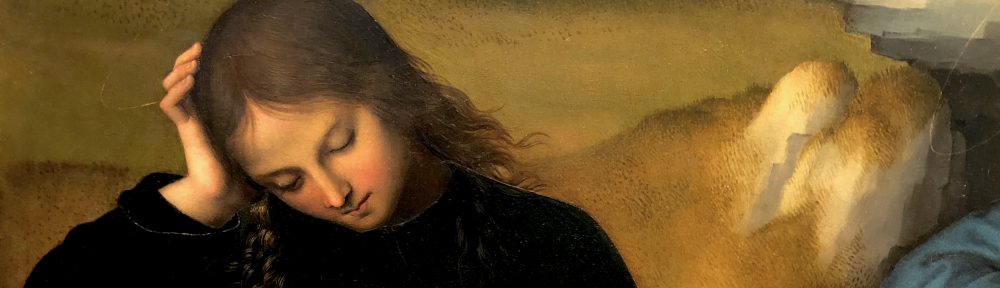
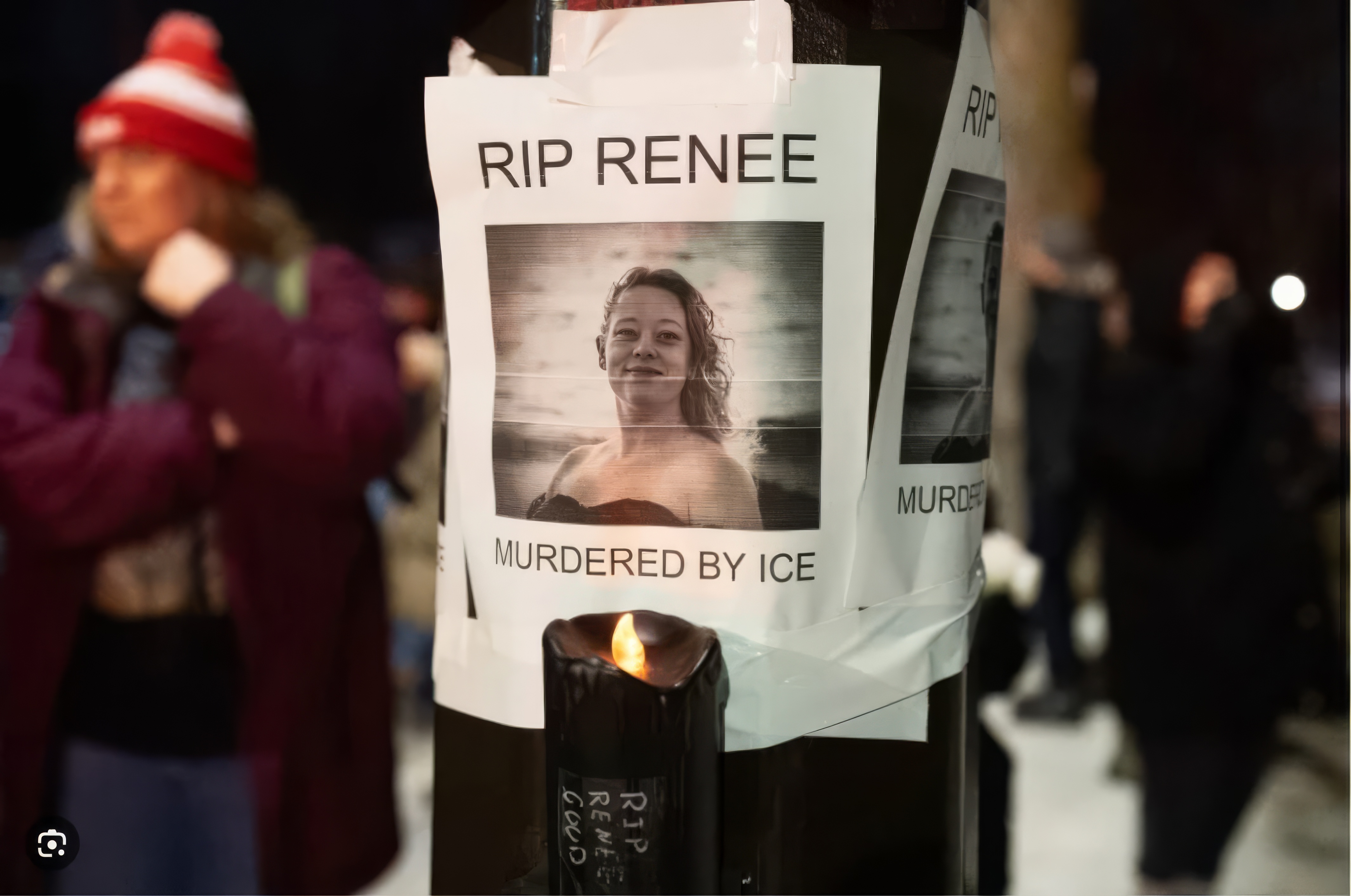
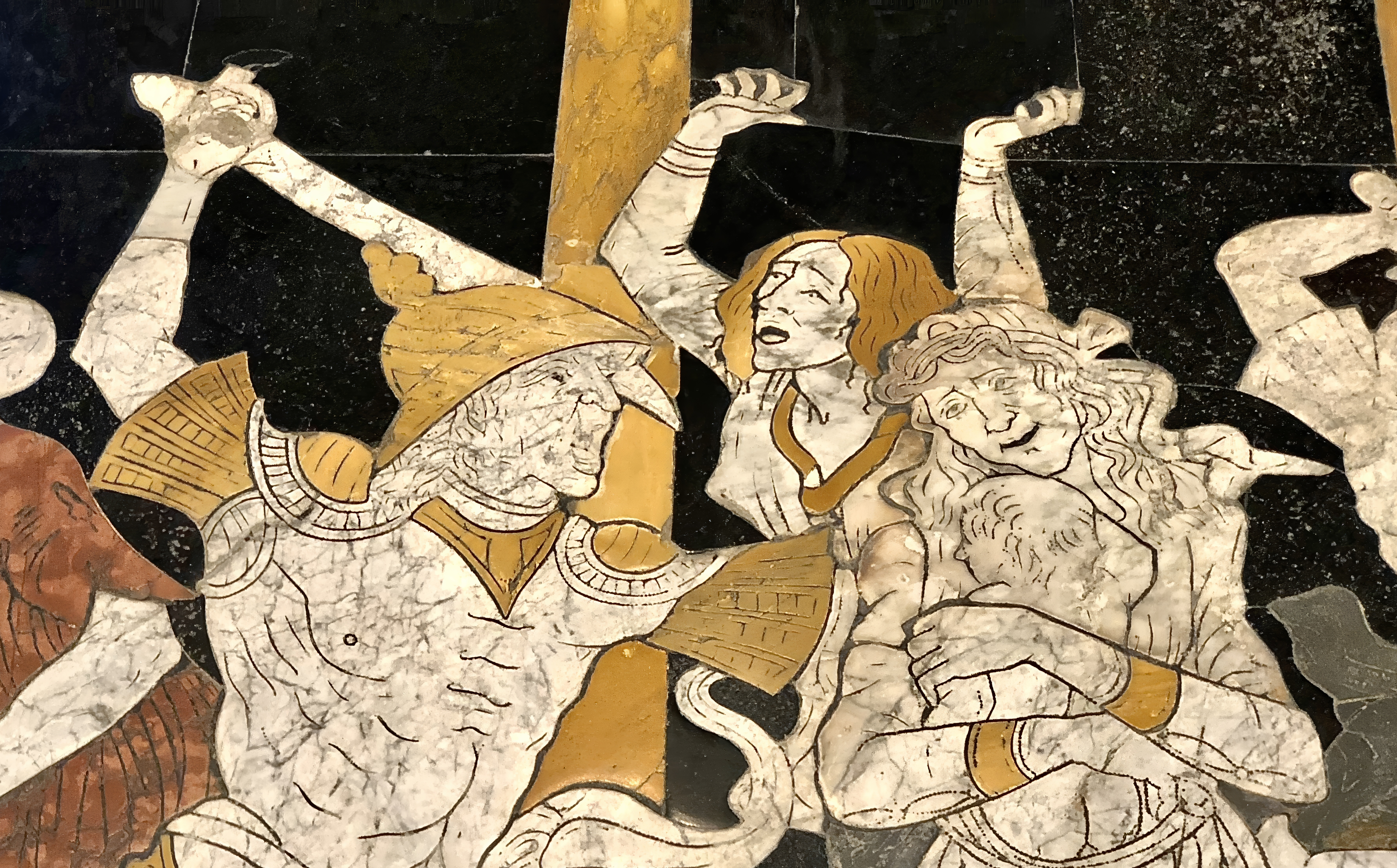

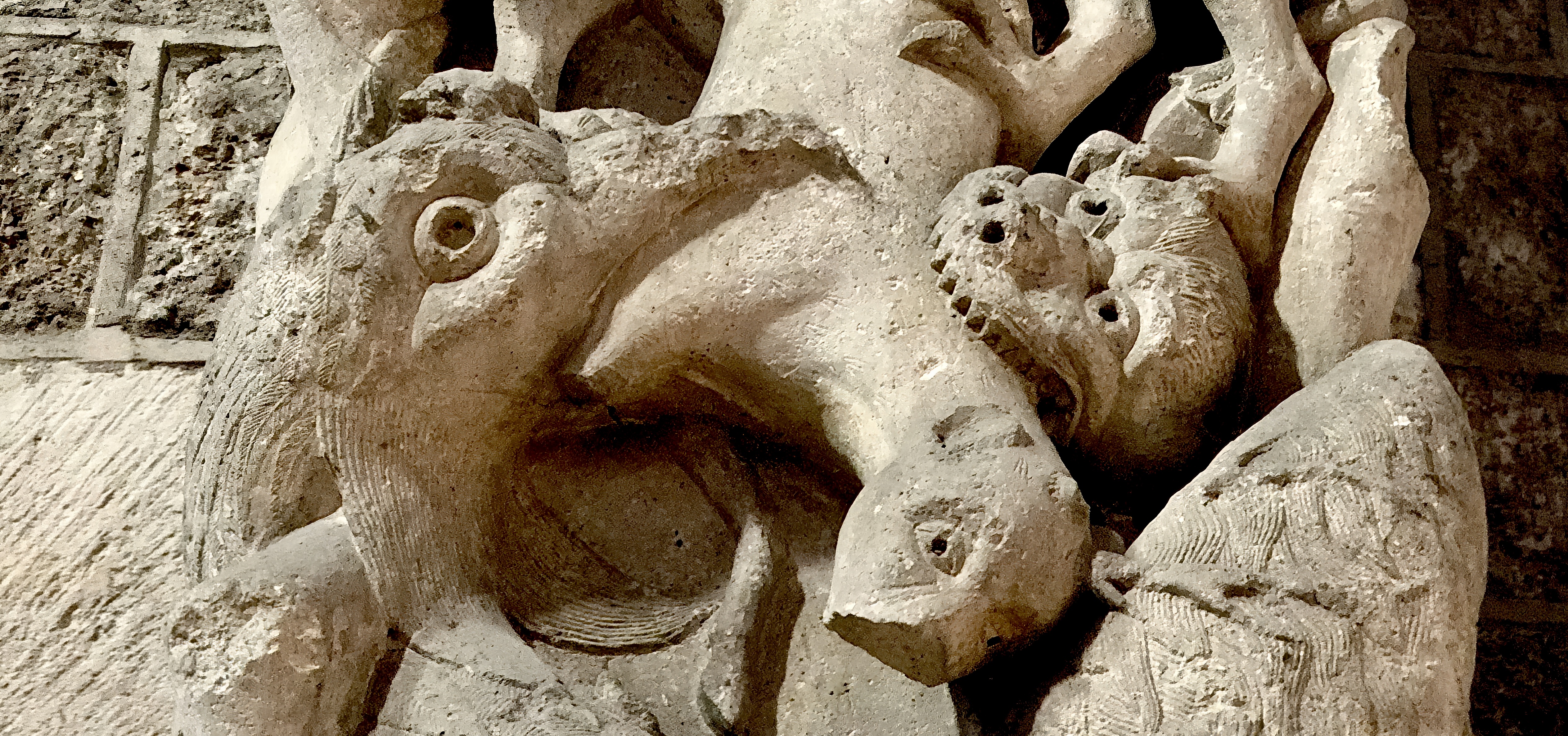
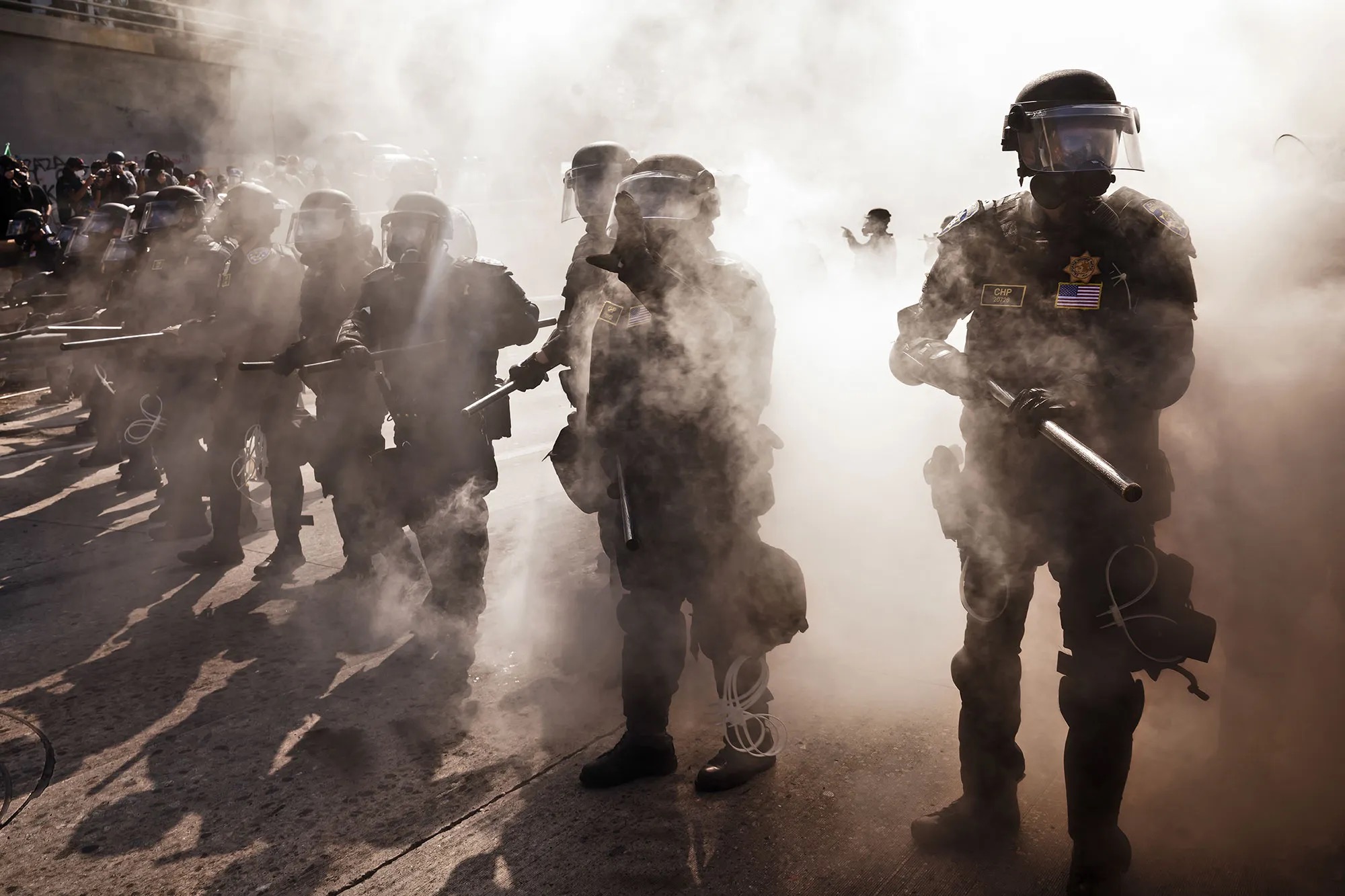
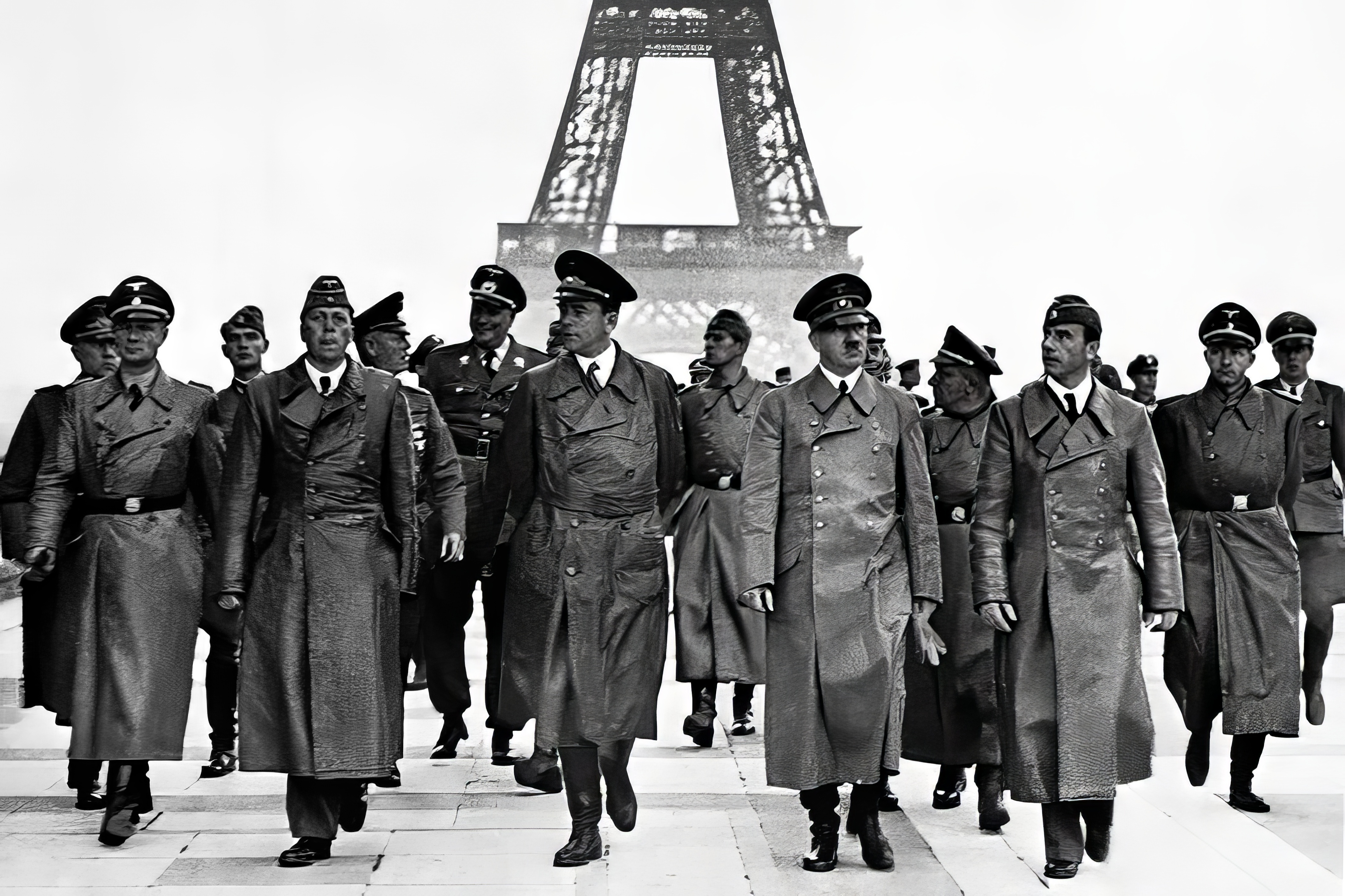

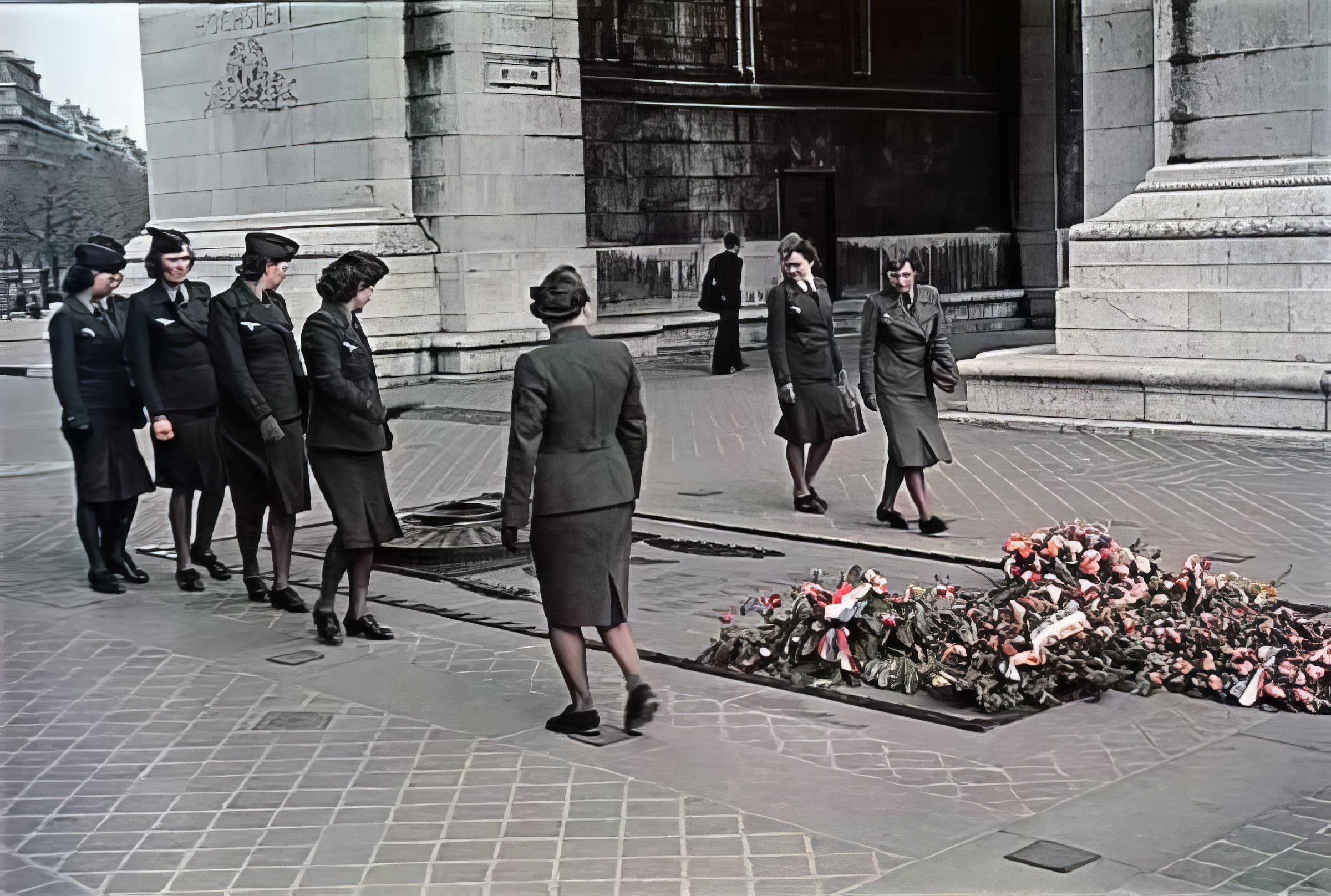
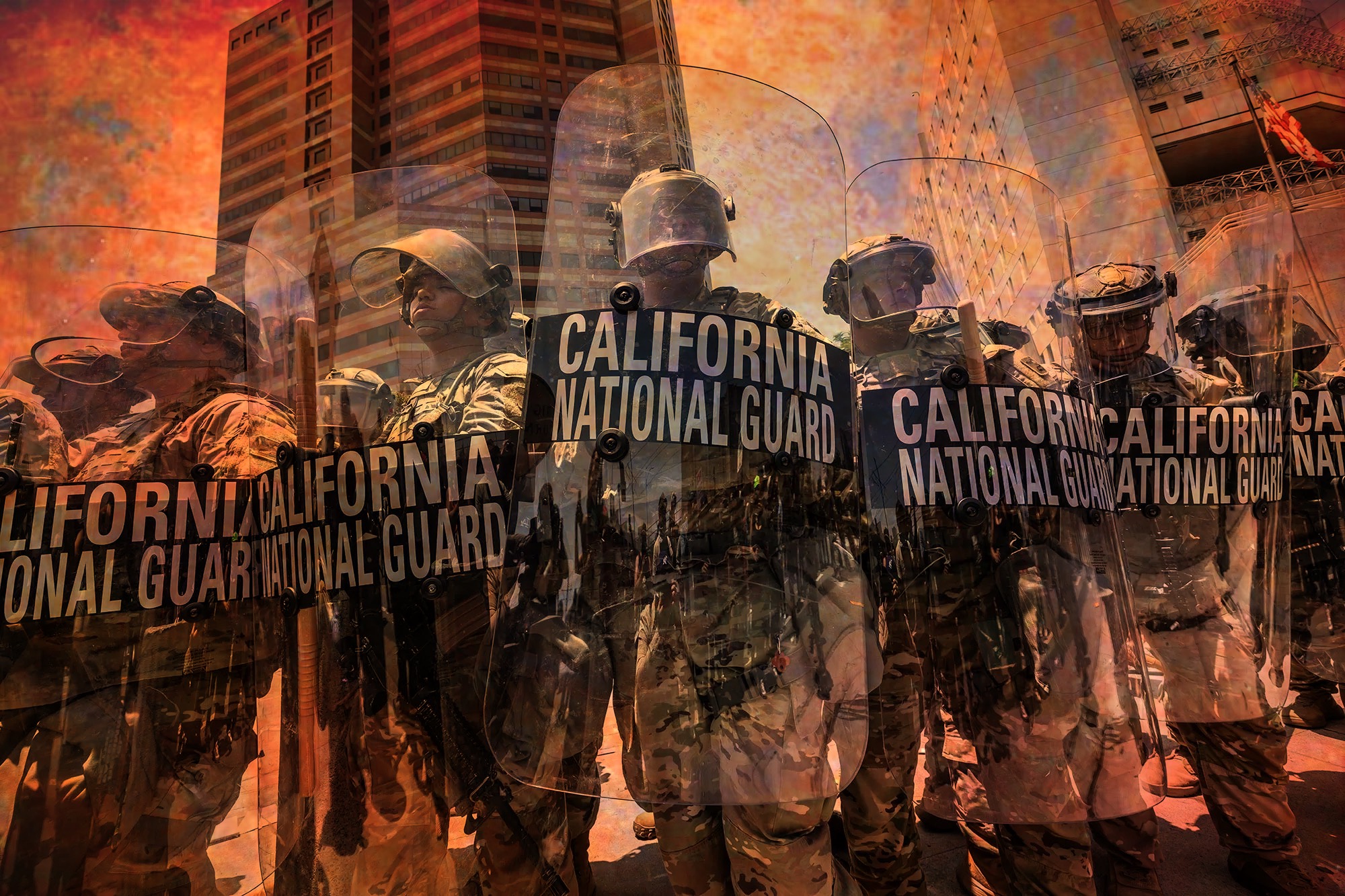
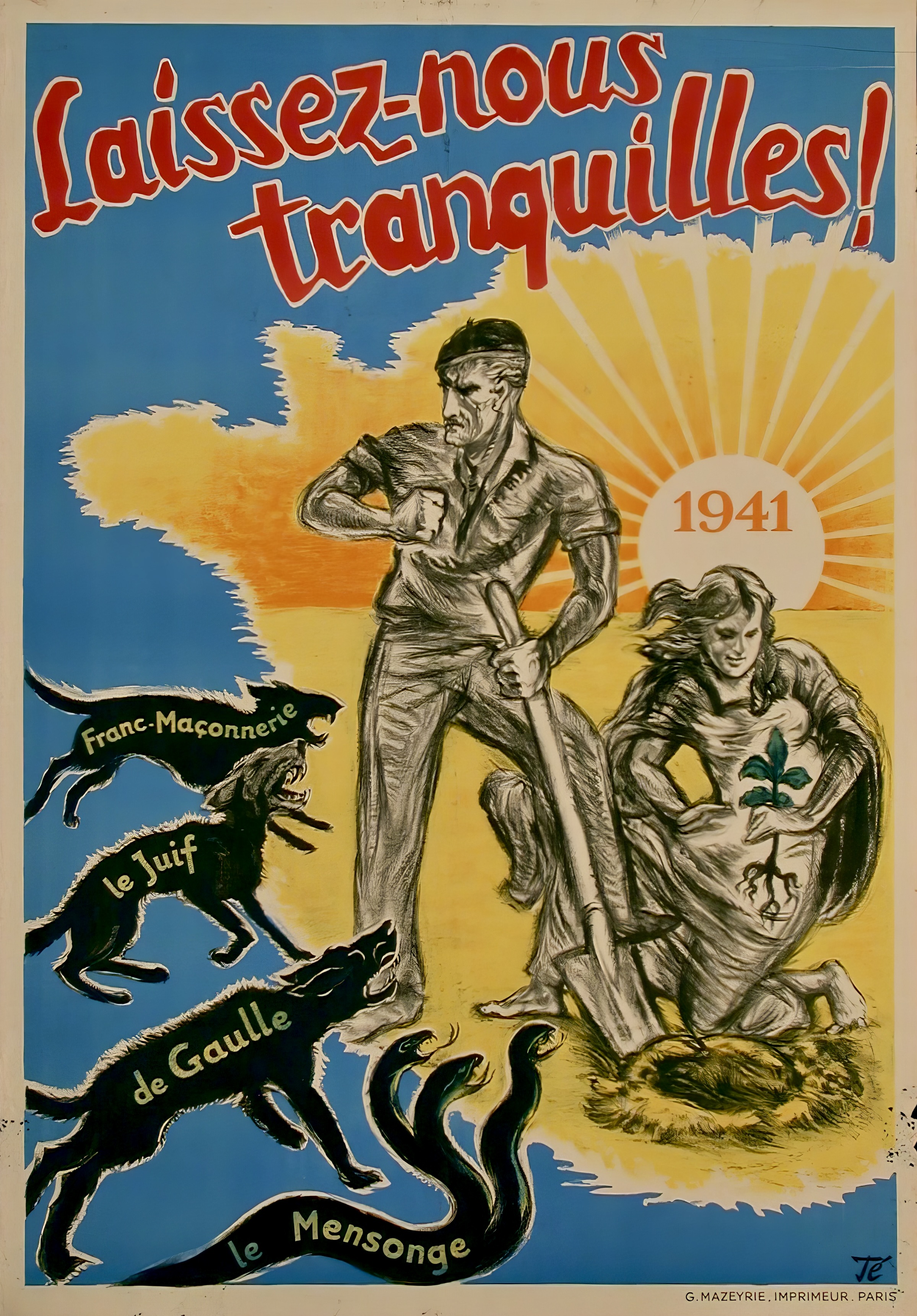
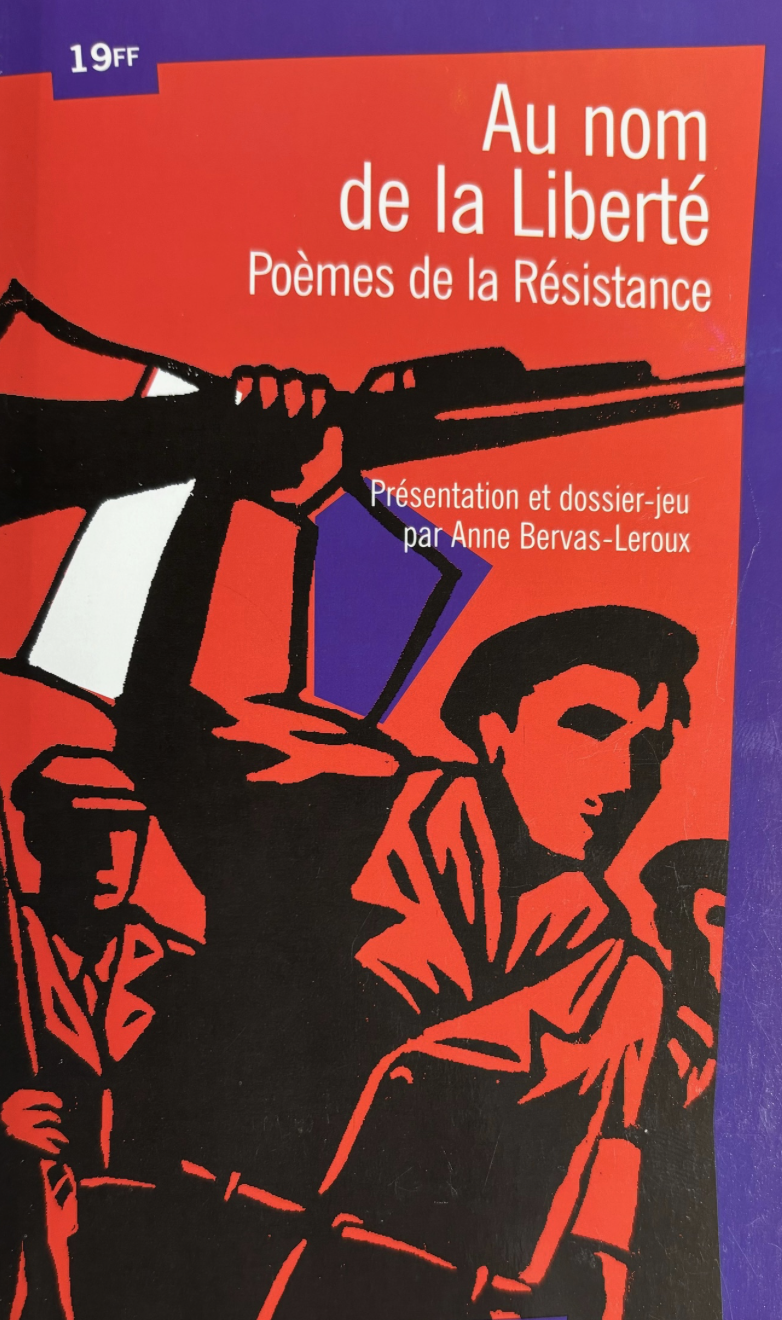
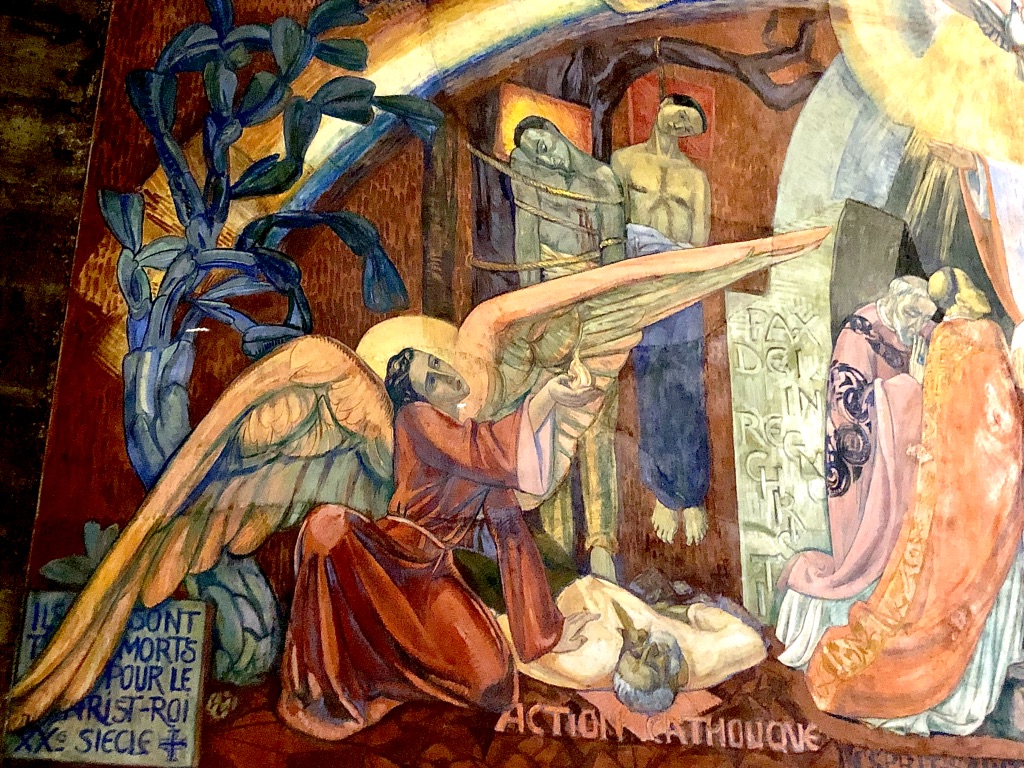
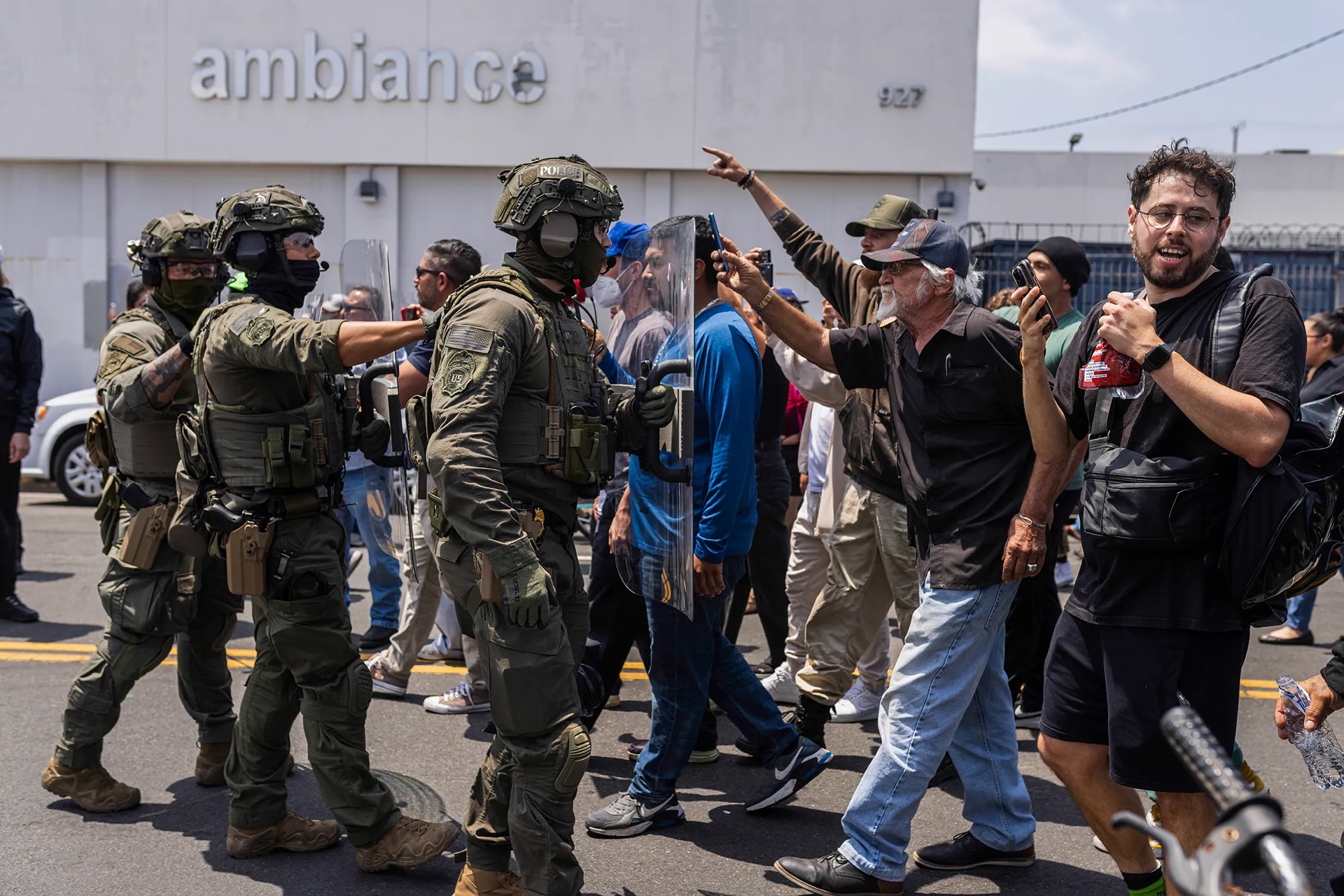
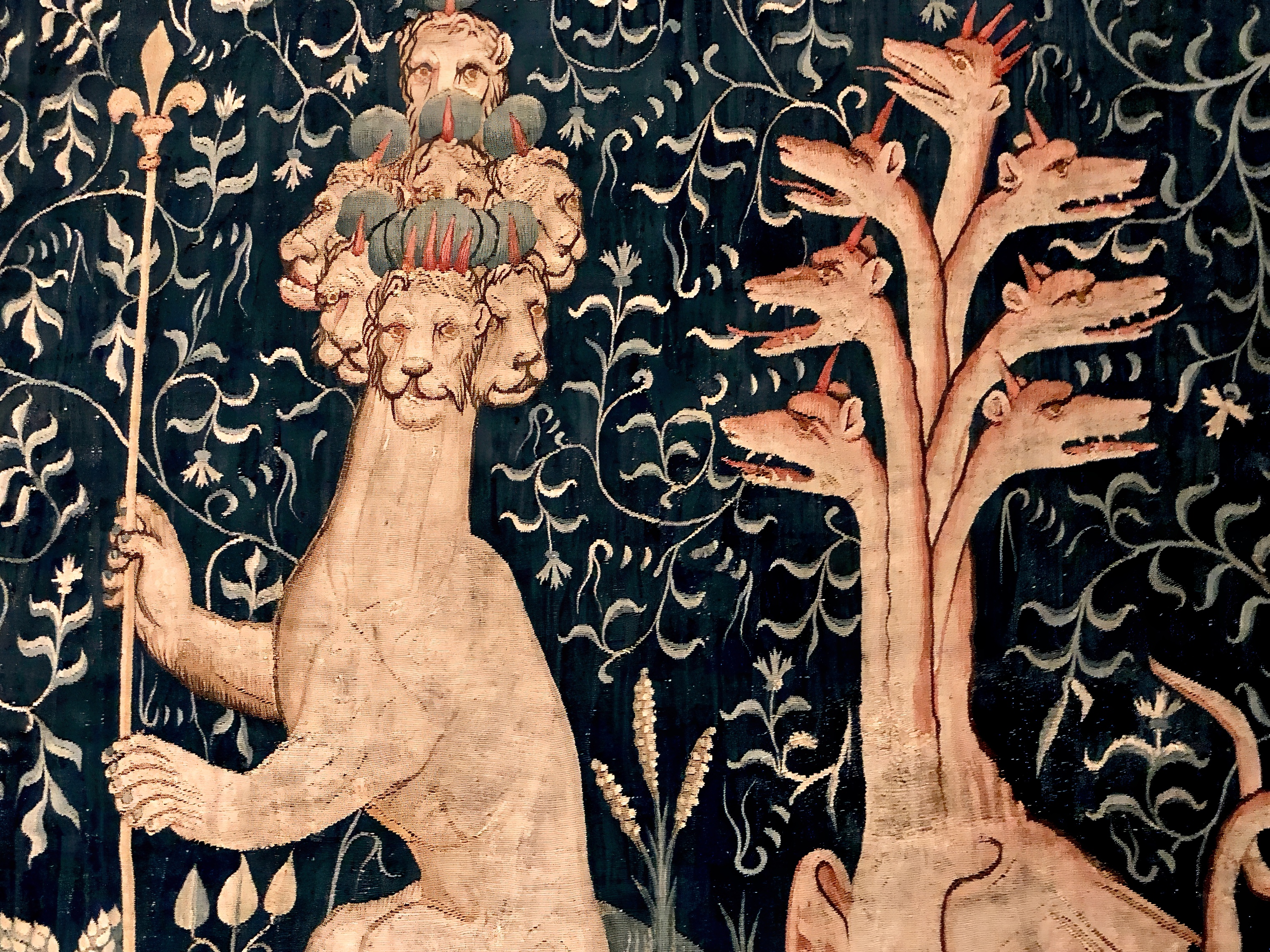
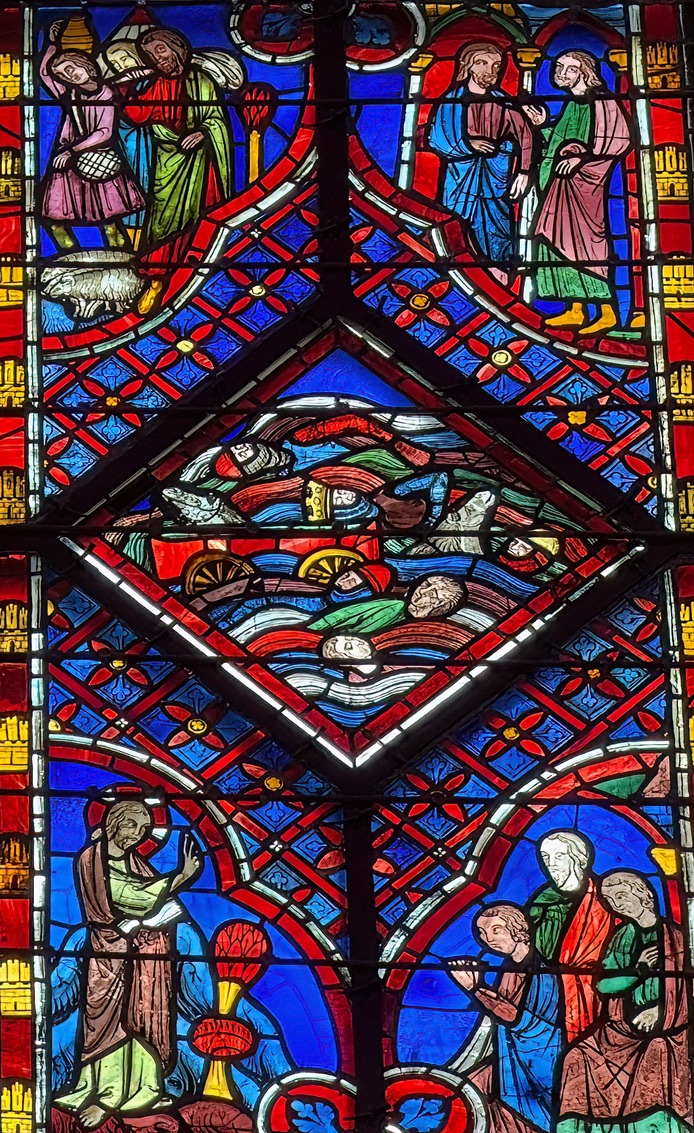
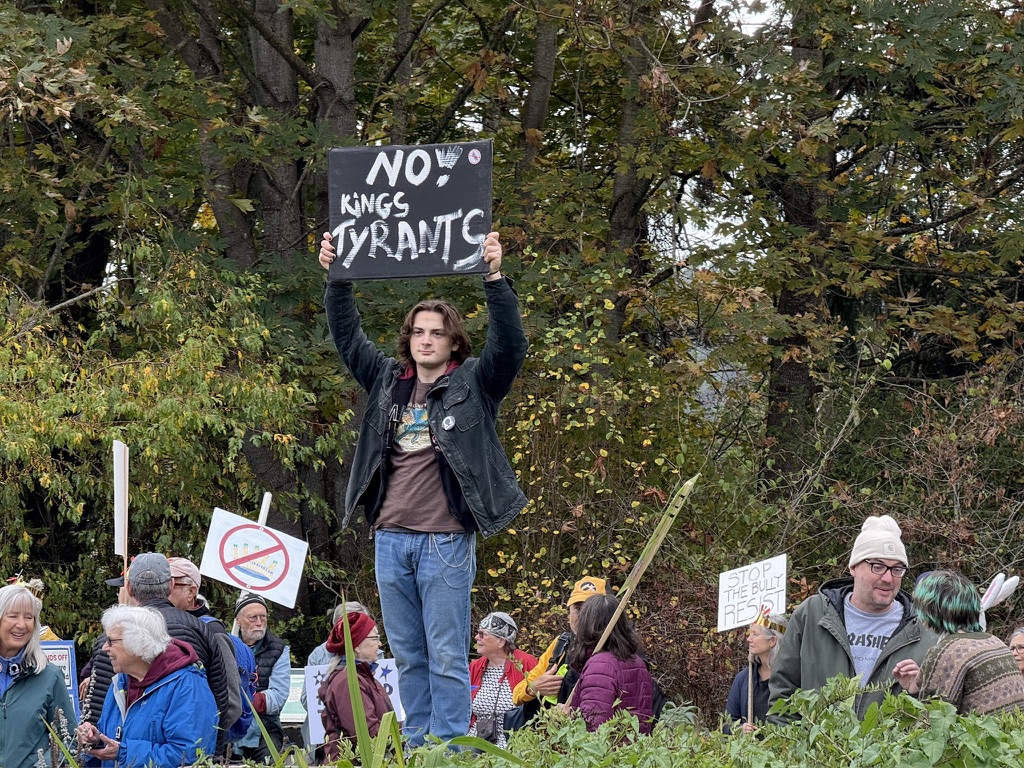



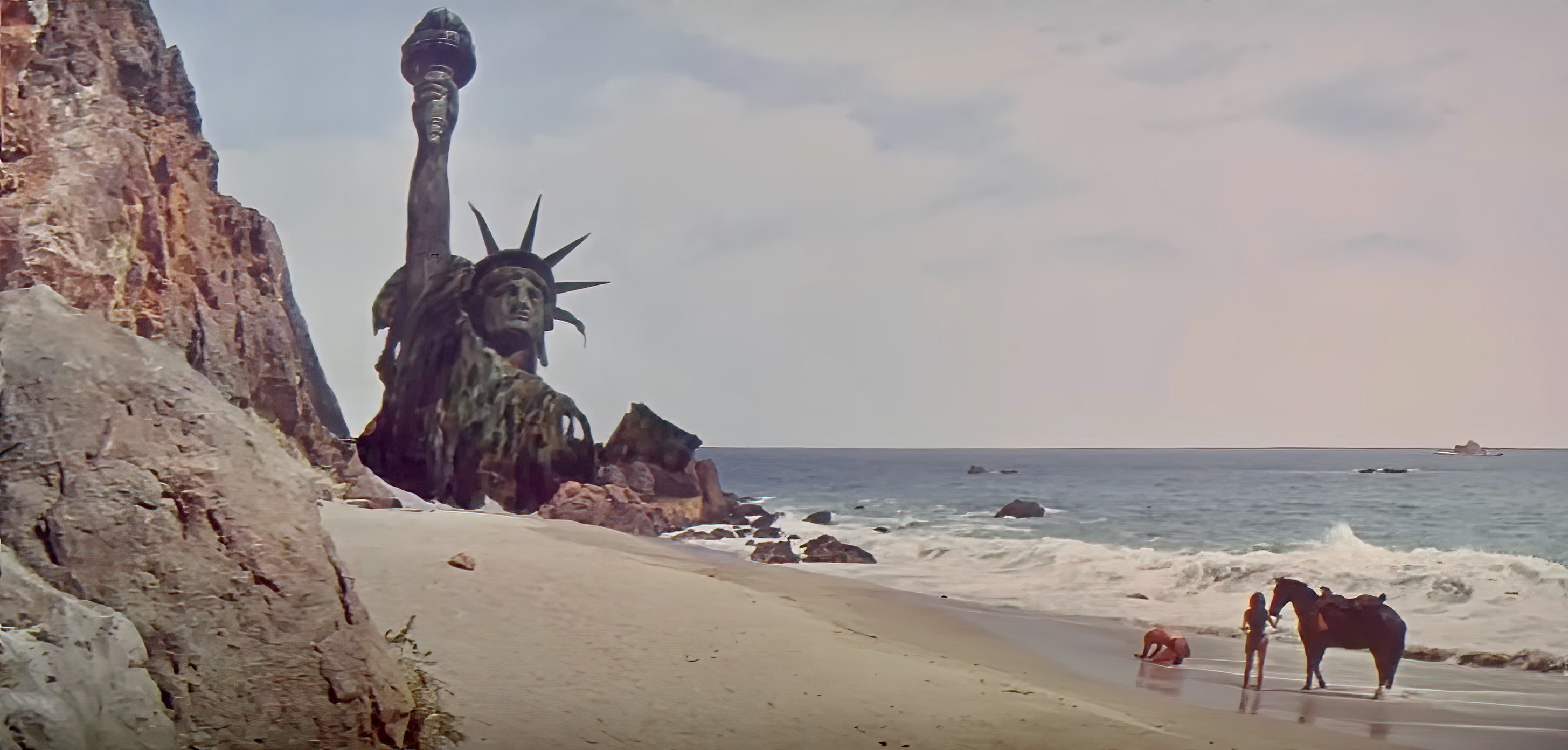


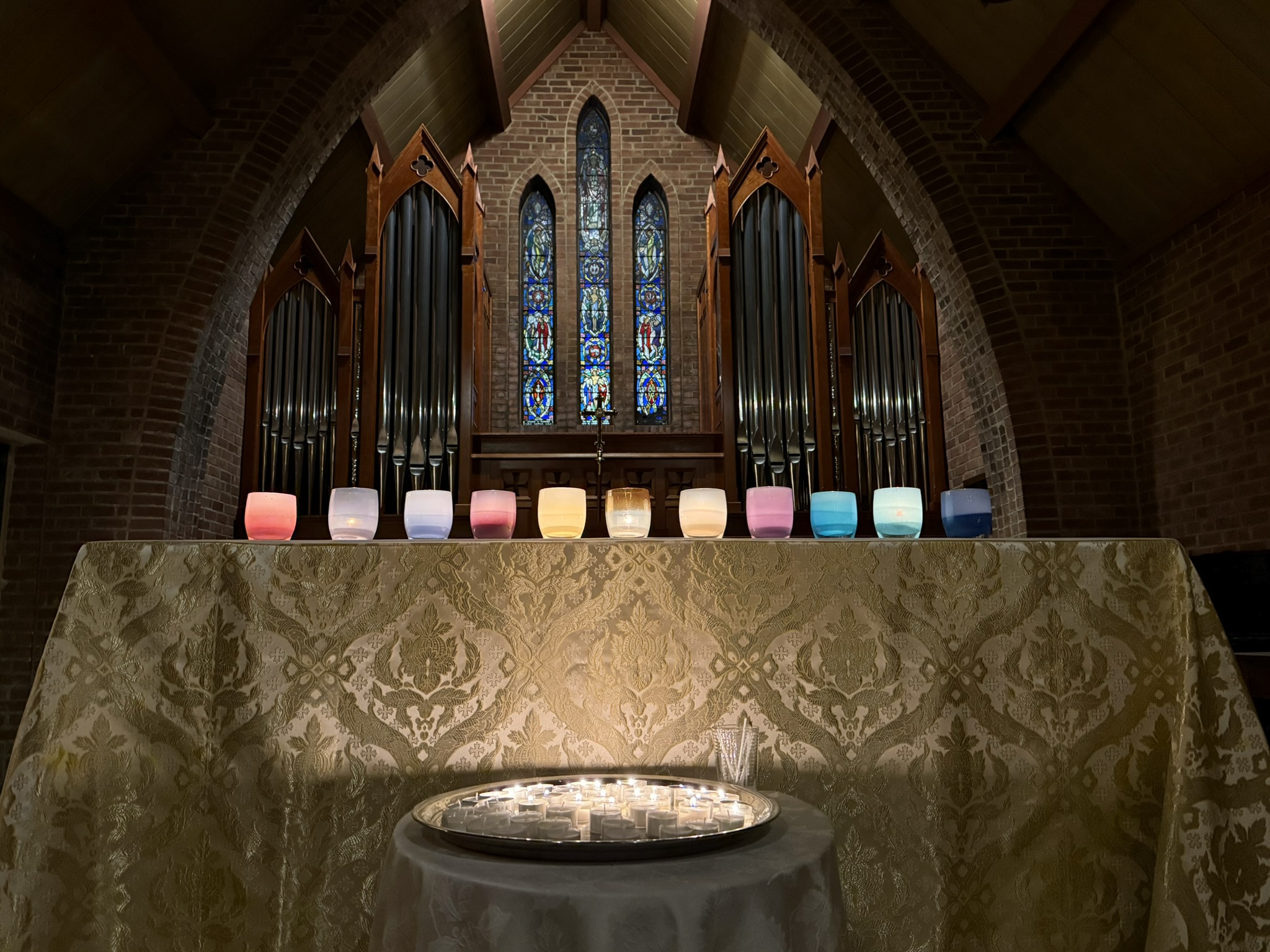


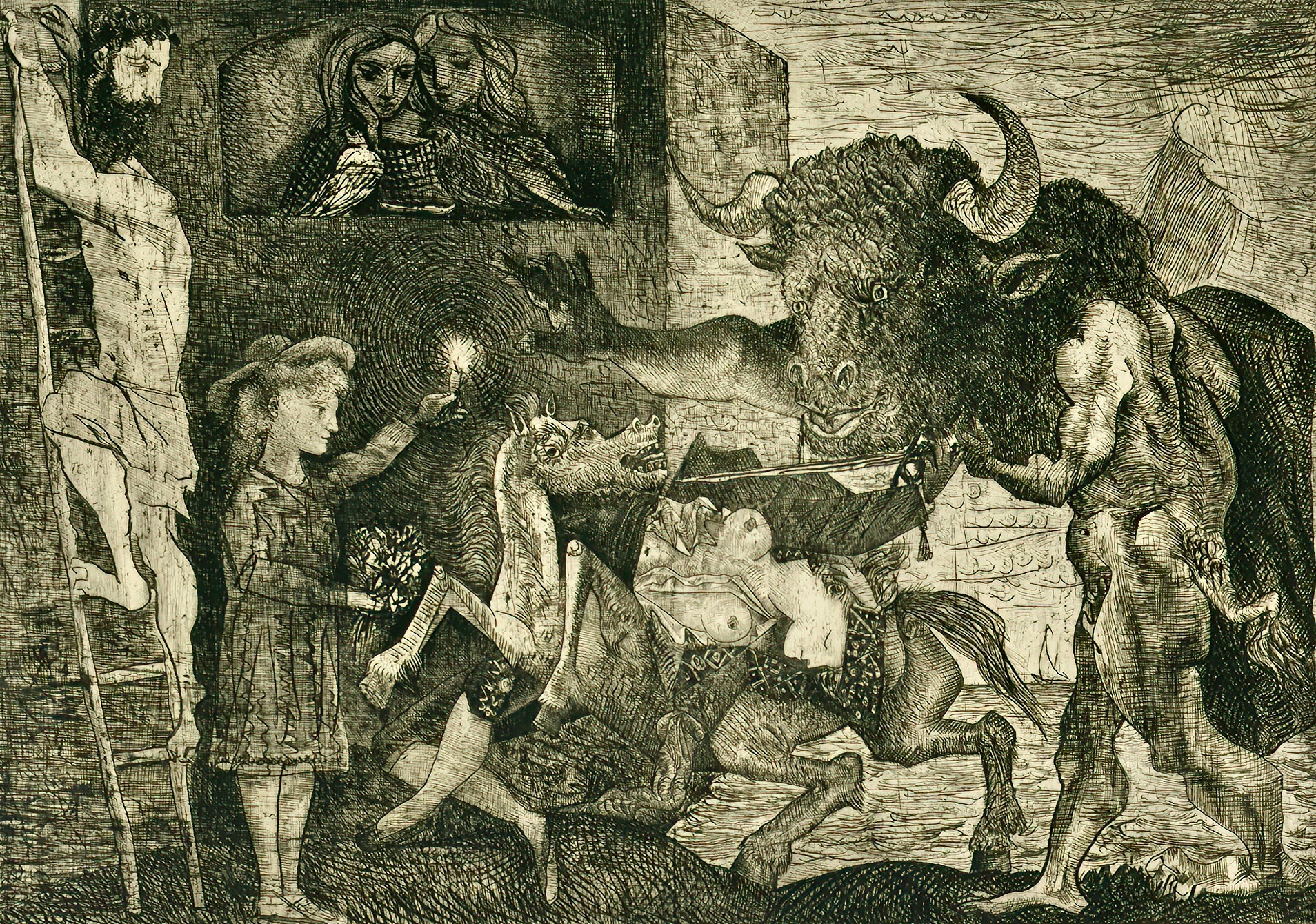
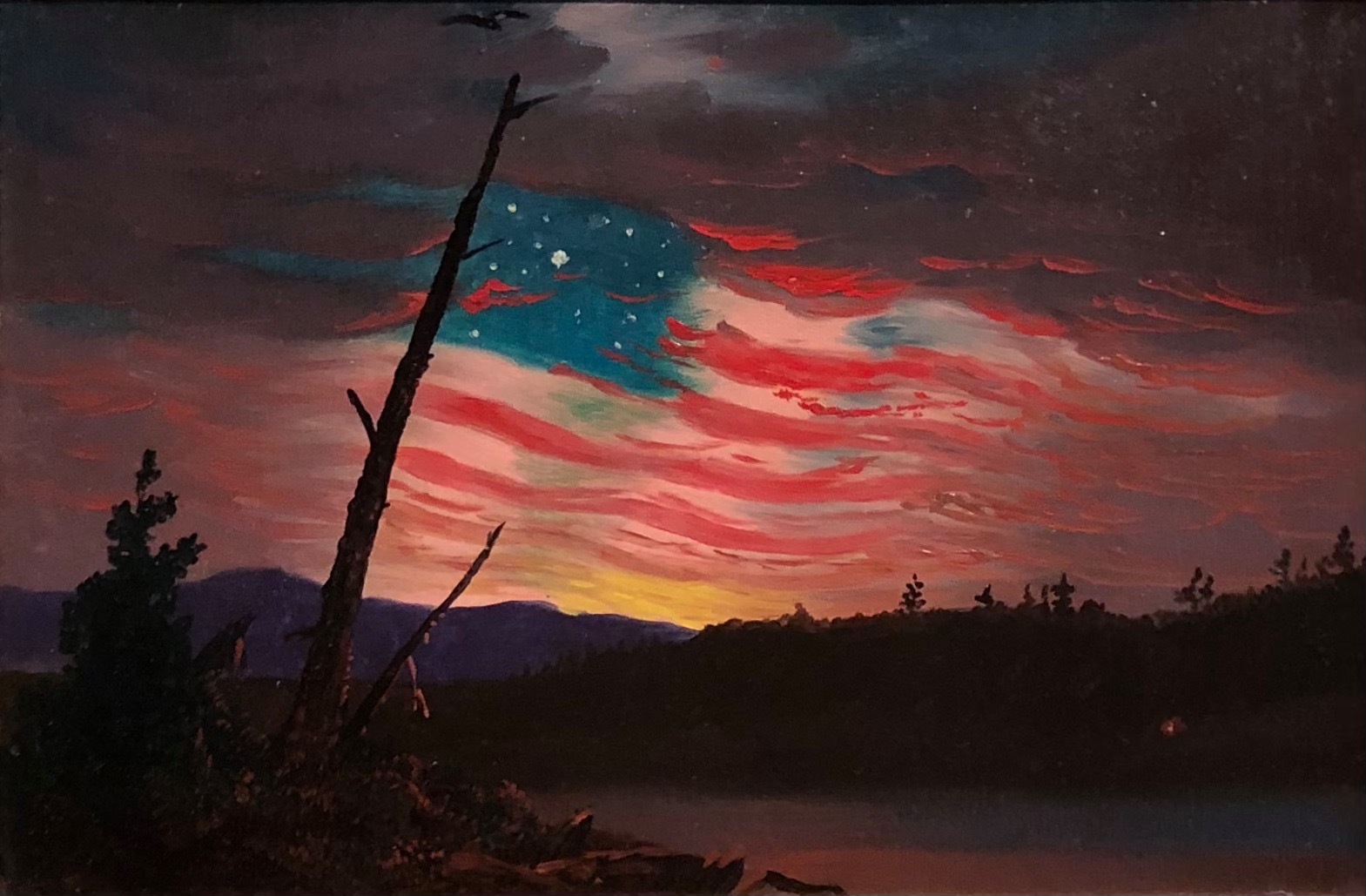
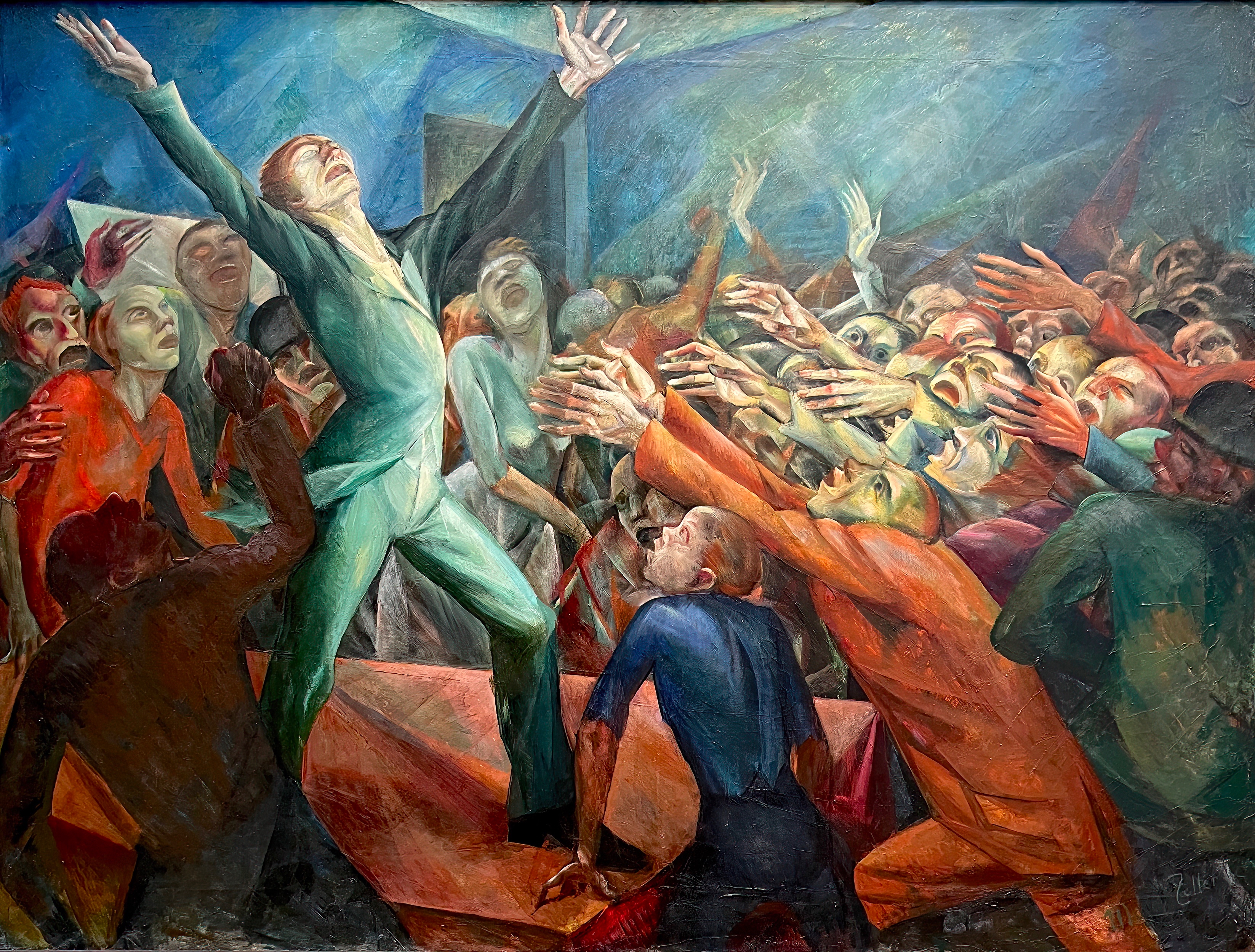


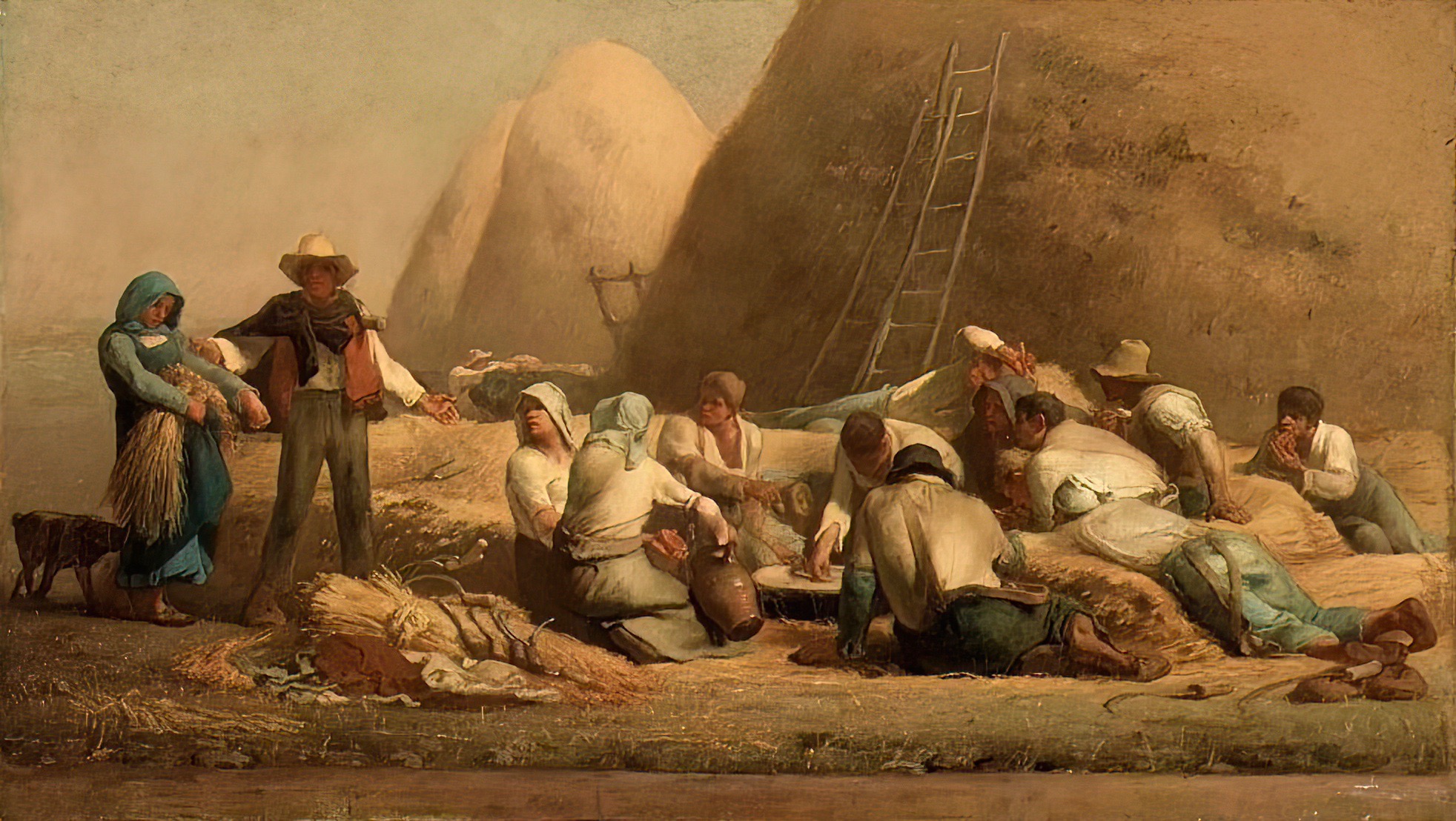


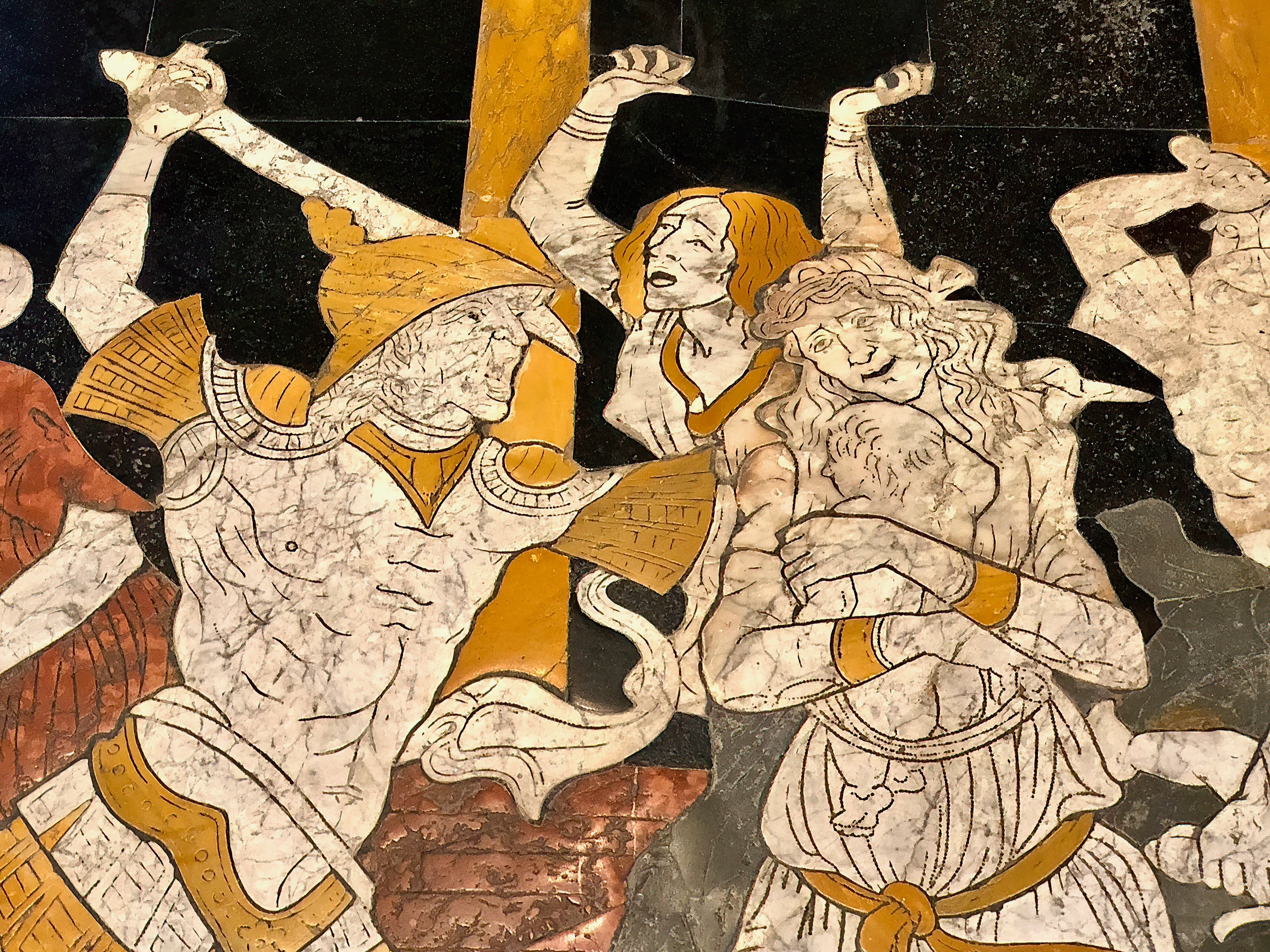




 The religious imagineer