
we sing your praises, O God.
(Book of Common Prayer)
Piglet noticed that even though he had a Very Small Heart,
it could hold a rather large amount of Gratitude.
— A. A. Milne
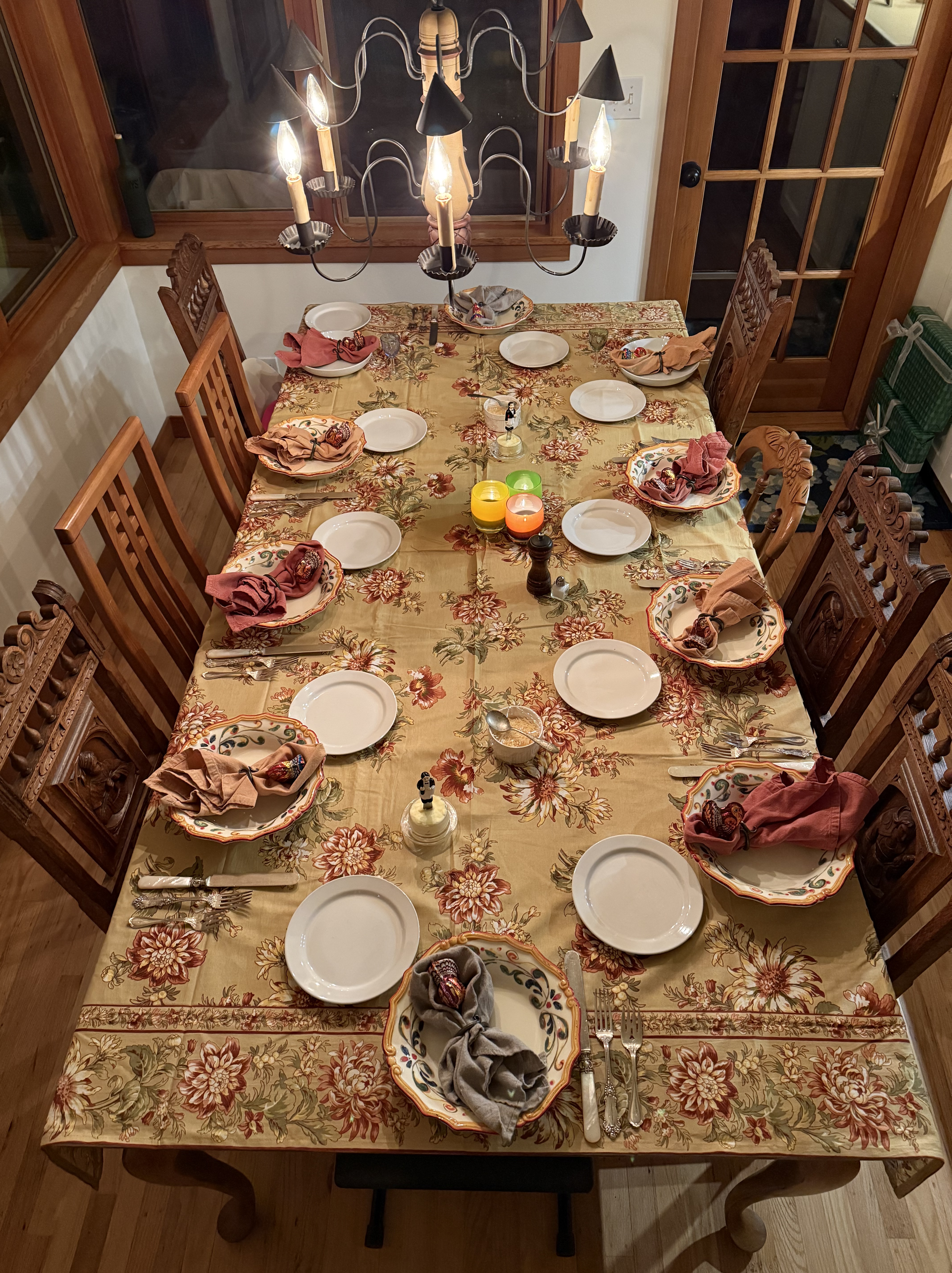
Gratitude calls us to sit together, to imagine the world as a table of hospitality. To feed one another. To feast, to dance in the streets. To know and celebrate abundance.
— Diana Butler Bass
Are not praises the very end for which the world was created? … Praises are the breathings of interior love, the marks and symptoms of a happy life, overflowing gratitude, returning benefits, an oblation of the soul, and the heart ascending upon the wings of divine affection to the Throne of God.
— Thomas Traherne
1500 years ago, the Rule of Benedict noted the toxic effects of grumbling on both community and the soul. Monastics “should bless God and not grumble. Above all else we admonish them to refrain from grumbling.”[i] Above all else? We may not count grumbling among the most destructive sins, but we have seen it nurture bitterness and despair in people we know. And in our common life, the political manipulation of dissatisfaction in recent years has been like an arsonist’s match.
The antidote to grumbling, rage and despair, say our wisest guides, is quite simple: gratitude. As many studies have shown, gratitude “drives out toxic emotions of resentment, anger and envy.”[ii] It fosters contentment, balance, well-being and, some say, longevity. And it strengthens the health of communities as well. As researcher Robert Emmons explains, “Gratitude takes us outside ourselves, where we see ourselves as part of a larger, intricate network of sustaining relationships, relationships that are mutually reciprocal.”[iii]
In her richly woven book on the subject, Grateful: The Transformative Power of Giving Thanks, Diana Butler Bass explores the foundational dynamic of gift and response. “The first act of being human,” she writes, “is receiving the gift of breath, and as we go through life we continually receive. We sit at a table of gifts; we pass gifts on to others … to pass on gifts, to live gratefully, is to liberate ourselves and humanity from the slavery of payback and debt, of entitlement, privilege, and superiority.”[iv]
We continually receive. Everything is gift. And our response to every gift should be threefold. We need to notice the gift; give thanks for it; and pass it on.
Noticing requires being awake and alive to whatever is given. Don’t take anything for granted. Pay attention to “the music of what happens.”[v]
Thankfulness isn’t just a feeling, it’s a practice, a disposition, a way of being. As St. Paul encouraged us, “Rejoice always, pray without ceasing, give thanks in all circumstances” (I Thessalonians 5:16-18).
Passing it on is an essential part of the gift economy. It’s not a matter of obligation and debt (you give me something, so I have to give you something back). It is a circulation system where giving and receiving flow continuously and in every direction, freely and unearned. It is the nature of gifts to keep moving, taking ever new forms to manifest the divine self-giving that began the universe and continues to uphold it. As Lewis Hyde describes the process in his seminal book on the subject, gratitude is a “labor undertaken by the soul to effect the transformation after a gift has been received … Passing the gift along is the act of gratitude that finishes the labor.”[vi]
What about the hard things, the dark times? Can we still be grateful when the road is rough and steep? Ask the ones who have suffered most. Elie Wiesel, a concentration camp survivor, told an interviewer,
“Right after the war, I went around telling people, ‘Thank you for just living, for being human … For me, every hour is grace.”[vii]
Henri Nouwen, a theologian who experienced his own dark night of the soul, admitted that being grateful for everything our lives give us is hard spiritual work. “Still,” he said, “we are only truly grateful people when we can say thank you to all that has brought us to the present moment.”[viii]
Anne Lamott says there are three kinds of prayer: Help! Thanks! and Wow! When “Help!” predominates, don’t forget the others. As the Anglican writer Charles Williams advised, look for God in every situation. Even in the times of trial say this:
“This also is Thou.”
In retrospect, I would say those very words about a morning when death, not so kindly, almost stopped for me. On the day before Thanksgiving nearly 60 years ago, somewhere on the New York State Thruway, I was sleeping in the back of a Volkswagen bus, with Gary Baldwin, a university student at the wheel. He had offered to help me drive to get a free ride from Michigan to Boston.
We had been driving all night from Ann Arbor, where I was doing campus ministry, to get to Massachusetts for Thanksgiving. Having graduated from the Episcopal Theological School in Cambridge the previous spring, I wanted to spend the holiday with the good friends I had left behind.
Did Gary doze off behind the wheel? Or was there a strong gust of crosswind? All I know is that a sudden and violent swerve at 65 miles an hour threw us into a wild spin. The bus rolled over and over—six times—until it finally came to rest, upside down on the grassy highway median. If we had gone the other direction, into a treacherous ravine, I wouldn’t be writing this.
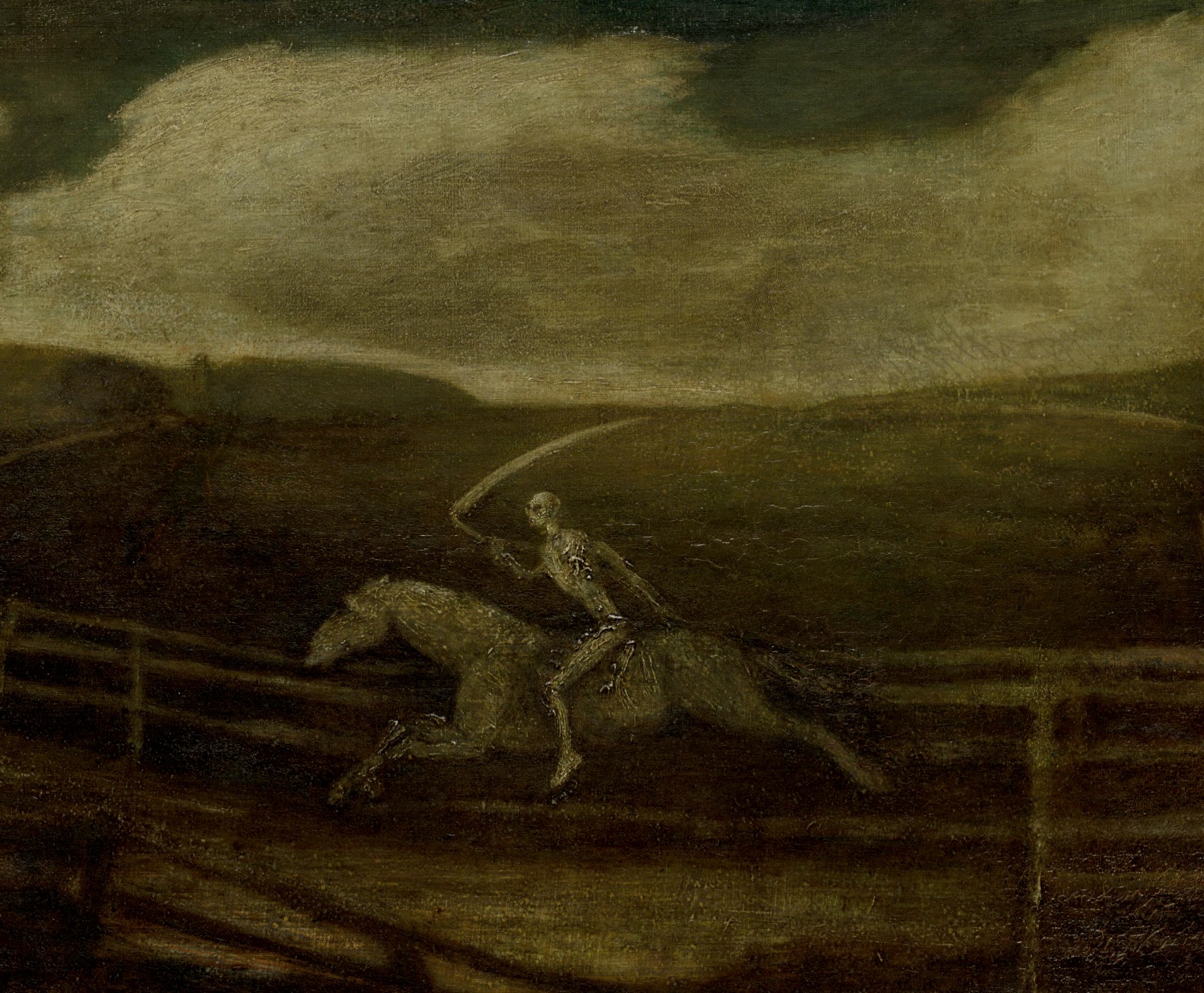
Those six rolls took forever. My mind, shocked from sleep into high alert, threw everything into slow motion, allowing a Proustian attention to detail, as guitars, suitcases—even some croquet balls and mallets (I’d planned a holiday game on a Cambridge lawn)—began to fly out of the dislodged windows and sunroof and my strangely passive body rose up and slipped back, rose up and slipped back, just the way it had in the giant revolving barrel at the amusement park funhouse of my childhood. I recall no sense of panic. I observed all this chaos with a kind of curiosity. So this is how an automobile accident feels. So this is what it’s like to face death.
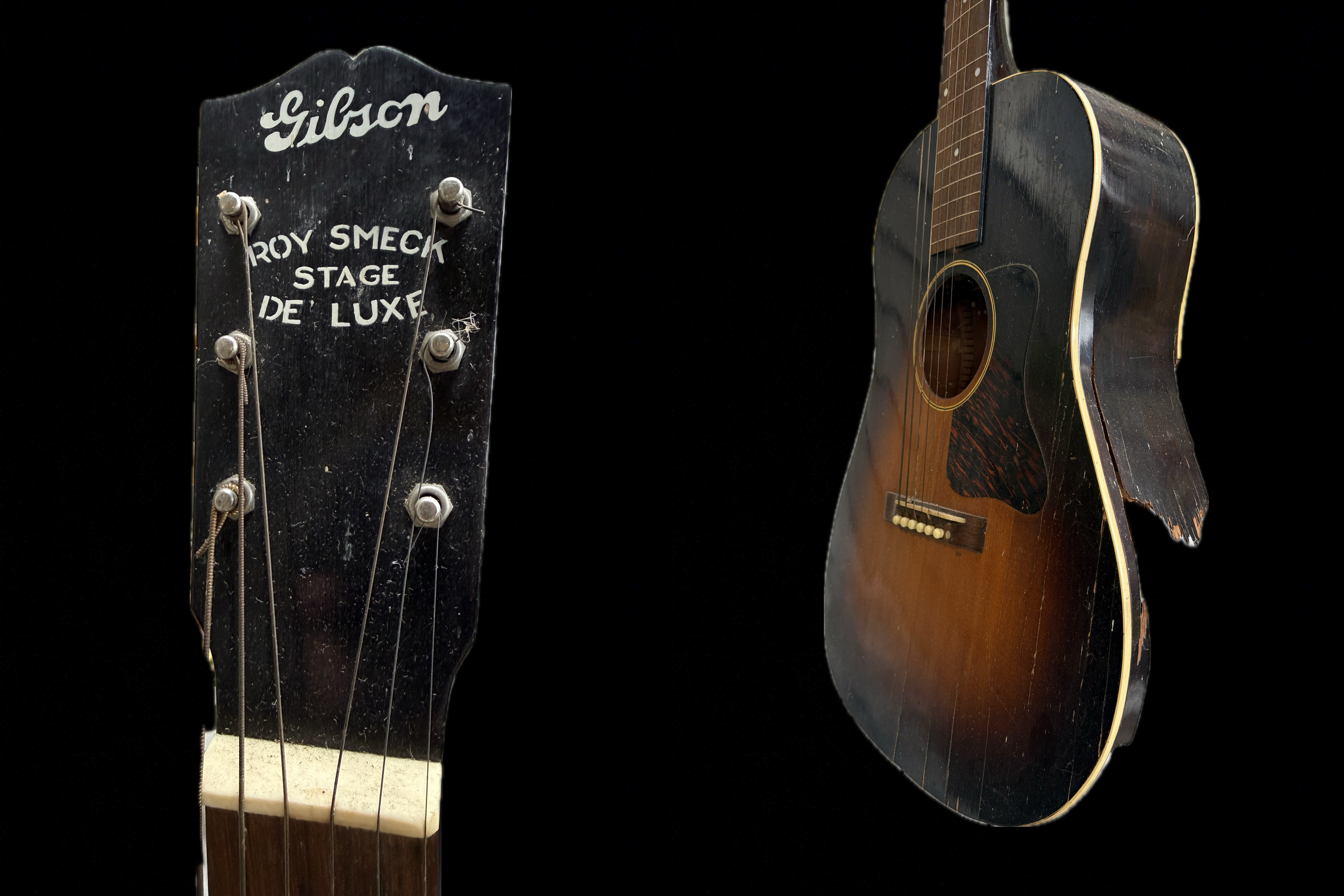
Its remains now hang in our garage as a memento mori.
I may have blacked out by the time we came to a stop. I was revived by the voices of witnesses who had stopped their cars and run over to see if we were still alive. Evidently our tumbling bus had made an alarming spectacle. “Are you all right?” someone asked. I was lying face down, motionless, on the ceiling of the overturned bus. Was I, in fact, all right? I felt a reluctance—a fear, really—to find the answer. What if I were too broken to move?
I couldn’t just go on lying there. It wouldn’t be polite to keep those people in suspense. So I moved my hands, then my arms, then my legs. I sat up. I was, thanks be to God, all right. And so was my companion. Nothing broken. Only the bus was beyond mending. Halfway to Boston at that point, we caught a Greyhound the rest of the way, and the next day I experienced the most grateful Thanksgiving of my life.
I kept the feast with a few dear friends, Emily, Ed and Anne, in Henry Wadsworth Longfellow’s old house next door to my seminary. Emily, a descendent of the famous poet, was living there at the time. During the siege of Boston in the American Revolution, it had been George Washington’s headquarters. It’s now part of the National Park Service.

Our gathering at Longfellow House had all the lovely qualities we hope for in a holiday feast with the ones we love. But my narrow brush with death had intensified my awareness of life’s utter givenness, bathing those precious hours with a transcendent glow of gratitude and wonder and indescribable joy. Thanksgiving Day 1969 was, in a strikingly literal way, the first day of the rest of my life, and my gratitude for the gifts of aliveness and friendship and grace was focused and deepened and perfected as never before—and perhaps never again.
After our meal, we adjourned to the parlor as the late sun cast its parting rays through the wavy glass of Georgian windows. I remember that light as golden. Anne sat at the grand piano and began to play a Chopin Nocturne. We fell into a companionable silence to let the music carry us away. And within.
I may not have died; but I had gone to heaven.
[i] Joan Chittister OSB, The Rule of Benedict: A Spirituality for the 21st Century (New York: Crossroad, 1992/2010), 190.
[ii] Robert Emmons, q. in Diana Butler Bass, Grateful: The Transformative Power of Giving Thanks (New York: Harper One, 2018), 29.
[iii] Ibid., 97.
[iv] Bass, ibid., 186.
[v] In an Old Irish tale, a chieftain is asked to name the finest music in the world. “The music of what happens, that is the finest music in the world,” he says. Cited in John Burnside, The Music of Time: Poetry in the Twentieth Century (Princeton, NJ: Princeton University Press, 2020), 12.
[vi] Lewis Hyde, The Gift: Imagination and the Erotic Life of Property (New York: Vintage, 1979). This classic is a must-read. It has influenced many liturgists, artists and theologians.
[vii] Quoted in Bass, 44.
[viii] Ibid., 39-40.

