Christmas Carols: Shining Through the Gloom

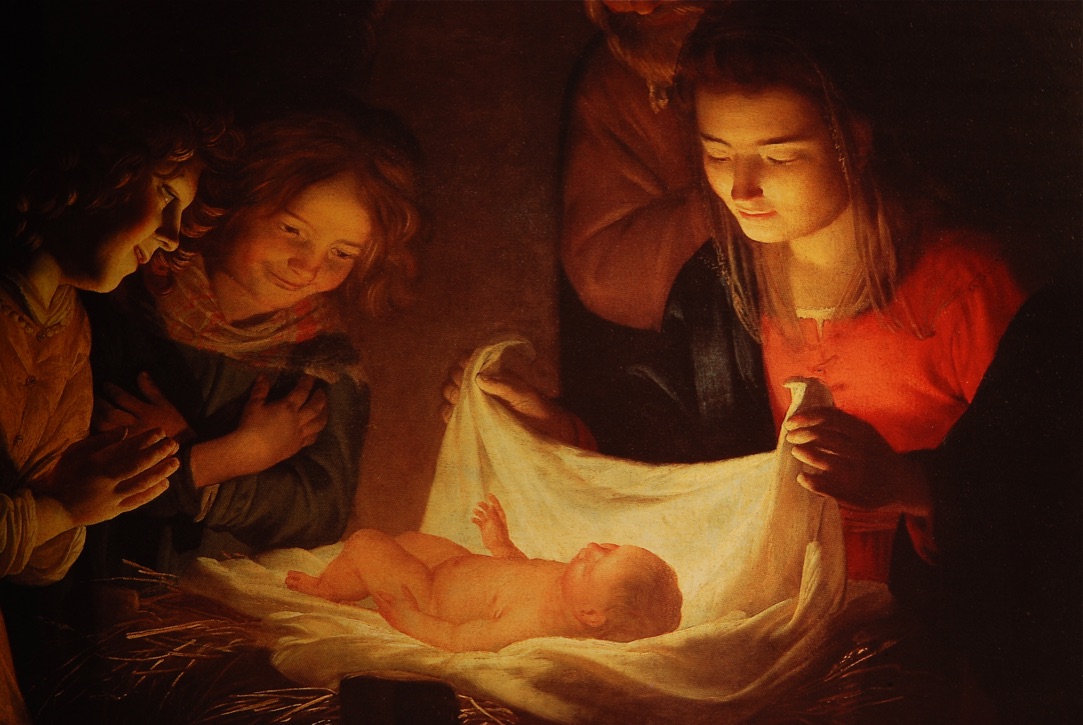
Adoration of the Christ Child, Gerrit van Honthorst (1619-20)

There within a stable, the baby drew a breath:
There began a life that put an end to death.


— Bob Franke, “Straw Against the Chill”[i]

In the dark days of 1943, Hugh Martin and Ralph Blane wrote the most melancholy Christmas song I know, “Have Yourself a Merry Little Christmas.” It made its debut in the 1944 film, Meet Me in St. Louis, when Judy Garland sang it to cheer up her little sister. Their father had taken a job in New York, and the world they knew was about to end. The fact that it was Christmas—their last Christmas in St. Louis—only intensified their sense of loss. As the sisters gaze down from an upstairs window at the family of moonlit snow figures in the front yard, Garland, her moistened eyes seen in gorgeous Technicolor close-ups, delivers the song.

The film’s director, Vincente Minnelli (who would marry Garland the next year), thought the original lyrics too depressing, so he told the writers to make some changes. The line, “It may be your last / Next year we may all be living in the past,” became “Let your heart be light / Next year all our troubles will be out of sight.” But that did little to stop the tears of homesick soldiers viewing the film in distant war zones. In 1957, Frank Sinatra requested another change when he included the song on his holiday album, A Jolly Christmas. He asked Hugh Martin if he could “jolly up” the lyrics a bit more. Thus “until then we’ll have to muddle through somehow,” became “hang a shining star upon the highest bough.” Even so, the tune’s slow pace and moody melody have continued to suffuse the song with the seasonal melancholy which for some is the shadow side of Christmas cheer. If you’re feeling alone, sad, lost, anxious, or afraid, it’s hard to share in the holiday spirit. When your personal world—or our public world—lies in darkness, how do you “let your heart be light?”

A few centuries ago, Turlough O’Carolan, the blind harper and last of the Irish bards, was sitting in a tavern with his friend, the poet Charles McCabe, who said, “Your music, sir, is grand and lovely stuff; but it’s too light-hearted. This is a dark time we live in, Mr. Carolan, and our songs should reflect that.” The harper replied, “Tell me something, McCabe. Tell me this: Which do you think is harder—to make dark songs in the darkness, or to make brilliant ones that shine through the gloom?” [ii] 
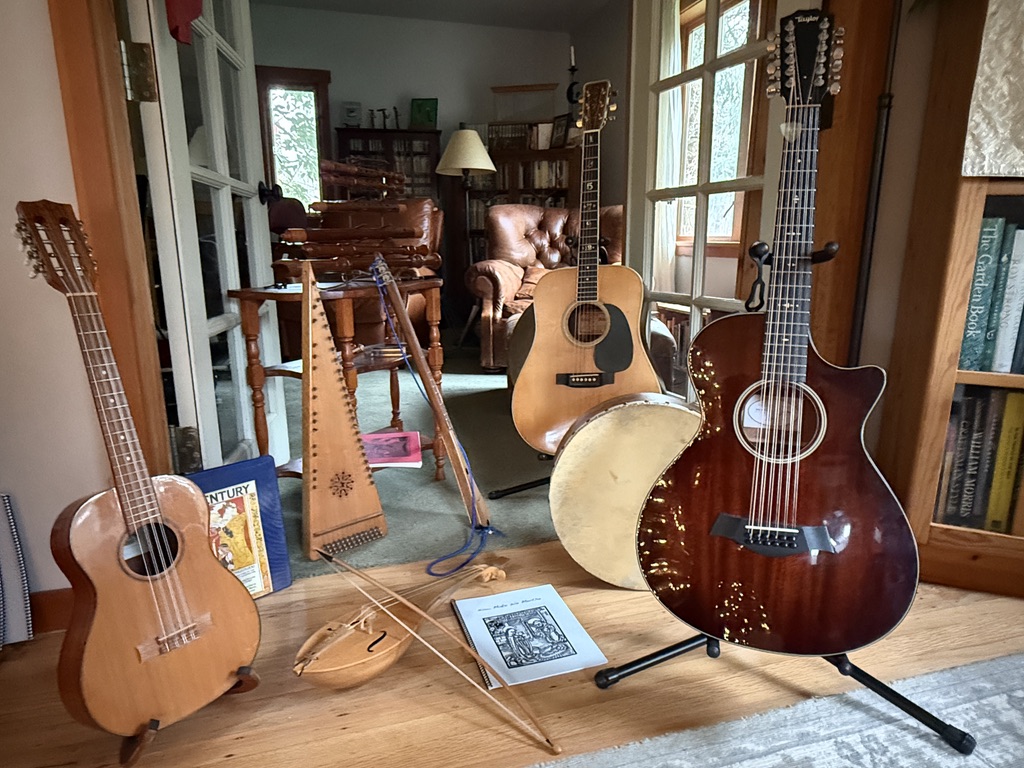
Some of the instruments from our caroling party.

This time of the yeare
Is spent in good cheare;
Kind neighbors together meet
To sit by the fire
With friendly desire
Each other in love to greet;
Old grudges, forgot,
Are put in the pot,
All sorrowes aside they lay;
The old and the yong
Doth carol their song
To drive the cold winter away.

Christmas is come in
And no folk should be sad.

Of course, no one should, but many are. Even in the best of times, there’s going to be some sadness in the room. As Henry Nouwen said, “No one escapes being wounded.” So we don’t sing our carols expecting present reality to be suddenly freed from every sorrow. But singing touches and heals the mind and heart, offering relief and comfort to “those who sit in darkness, and in the shadow of death” (Luke 1:79). As Robert Burton insisted in The Anatomy of Melancholy (1621), music is “the sovereign remedy against despair and melancholy … a “tonick to the saddened soul.” And W.E.B. DuBois, writing in the last century about “The Sorrow Songs” of African-American spirituals, said that “they grope toward some unseen power and sigh for rest in the End.” In other words, even laments can be agents of hope. As DuBois put it,

“Through all the sorrow of the Sorrow Songs there breathes a hope—a faith in the ultimate justice of things. The minor cadences of despair change often to triumph and calm confidence.” [iii]

Compared with the emotional and social realism of black spirituals, what can we say about Christmas carols? Do they have a similar healing power? Or is their bright spirit in denial of the “two thousand years of wrong” which have followed the miraculous “midnight clear” in Bethlehem? Can we who dwell in the shadow of death still sing about joy and peace with whole-hearted conviction? As the Psalmist wondered, “How can we sing the Lord’s song in a strange land?” And yet, we sing. We sing because carols gladden the heart and bring us together. And we sing because carols are eschatological anticipations of God’s unfolding future. They don’t put an end to our troubles, but they give us a foretaste of glory, reminding us that we belong not to what is dying, but to what is being born.

Gabriel’s message does away
Satan’s curse and Satan’s sway;
Out of darkness brings our Day:
So behold,
All the gates of heav’n unfold.

“O radiant dawn, bright splendor of the light eternal.” (8th century ‘O Antiphon’ for December 21).

In my Los Angeles days, I’d rise at 4 a.m. at the Winter Solstice, toward the end of the longest night, and drive to a peak above the ocean in the Santa Monica Mountains, where I could see the newborn sun rise over desert peaks 100 miles to the east. But in the Northwest where I live now, a winter sunrise can be a rare sight. This December’s relentless stretch of rain and thick clouds seemed to doom my chances. Still, I awoke at sunrise out of habit, and when I glimpsed the Douglas firs on a hilltop ablaze with fiery light. I jumped in my car and raced to the edge of the island to see the gloom on the run. It was the perfect Advent sign: The people who have lived in darkness, and in the shadow of death (umbra mortis, as the 8th-century O antiphons put it), have seen a great light.

Did it matter that by the end of the day the sun had vanished and rain was pouring down? Not at all. I had received the gift of light as an eloquent sign: Don’t forget what you have seen. Remember hope.

Sunrise after the year’s longest night (Puget Sound, Washington).

Dear reader, I wish you a most blessed and merry Christmas. Let your heart be light!


[i] Bob Franke’s “Straw Against the Chill” (Telephone Pole Music) is a beautiful contemporary carol. I recently posted a tribute to Bob’s legacy. You can listen to the song here:https://youtu.be/N-VXxACc4U4?si=Xn2O1qZgr01O5ckr

[ii] I heard this story in the California Revels CD, Christmas in an Irish Castle (2001).

[iii] The Nouwen, Burton, and DuBois quotes are from Kay Redfield Jamison’s powerful and moving book, Fires in the Dark: Healing the Unquiet Mind (New York: Alfred A. Knopf, 2003). It is a fascinatingly documented and beautifully written treatise on the spiritual and imaginative dimensions of healing body and soul.

How long? Not Long! – The Advent Collection (2023 Revision)

Oregon dawn (Photo by Jim Friedrich)

Yet saints their watch are keeping,
their cry goes up, “How long?”
and soon the night of weeping
shall be the morn of song.

–– Samuel John Stone

Of all the seasons, Advent is the one I love the best. Its flavors are so richly complex: prophetic shouts and angelic whispers, deepest dark and magical light, wintry cold and warming hearts, the end of the world and the birth of the new. And its symphonic progression, from the eschatological thunder of its opening movement to the midnight hush in the shepherds’ field, sounds the profoundest depths of the cosmos and the soul.

I fell in love with Advent as a child, when I knew no distinction between sacred and profane. The glow of colored lights on almost every house, our family prayers around the Advent wreath, the search for the perfect tree, the interminable wait for presents to be opened, the smell of baking cookies shaped like stars and Santas, the glorious texts of Isaiah and Luke on Sunday mornings, and hearty renditions of “O come, O come, Emmanuel” and “Come, thou long-expected Jesus”––they were all about the same thing: the wonder of a world where magic is afoot and Love’s gifts are never exhausted.

Over the years, as I have grown more acquainted with the sorrow, pain and injustice of mortal life and human history, the meanings of Advent have only deepened. And in today’s evil times, the practice of hope is more necessary than ever.

I have written more posts about Advent than any other season, and I gather all the links together here. Wander through them as you will. Try the practices. Share whatever you like. And may your own Advent bring you blessing, joy, and the nearness of holy Presence.

Practices

Ten Ways to Keep a Holy Advent –– This has been my most popular Advent post, with simple practices to deepen our experience of the season. “In a month that is already far too busy and rushed, these are not offered as one more to-do list to work through, but as ways to slow down, take a breath, pay attention, and make room in our lives for the birth of the Holy.” The 10 ways are: Interrupting, Silencing, Waiting, Listening, Watching, Praying, Reflecting, Loving, Giving, Receiving. (Dec. 6, 2014)

Praying the O Antiphons –– These sublime antiphons (best known in the hymn, “O come, O come, Emmanuel”) are a beautiful way to pray during Advent. This post includes my contemporary variations on the ancient texts. On each of the seven days before Christmas, put the appropriate antiphon on your mirror or refrigerator, and pray without ceasing. (Dec. 17, 2014)

The O Antiphons: Drenched in the Speech of God –– Further reflections on what the antiphons have to tell us. “God is not a hypothesis to be tested or a puzzle to be solved by detached observers, but an experience to be encountered by receptive participants, those who know how to say ‘O!’” (Dec. 17, 2015)

Short Meditations on the O Antiphons —The link will take you to December, 2019. Daily meditations are posted from Dec.16-23..

Prayers for the Advent Season — Intercessions for use in the liturgies of Advent. (Nov. 30, 2018)

Theology

Dancing with Time: An Advent Prelude –– A meditation on time, a major preoccupation of the season. As W. H. Auden said, “Time is our choice of How to love and Why.” (Dec. 1, 2017)

The World’s End (An Advent Manifesto) –– Worlds end all the time. Neither personal worlds nor public worlds last forever. That may bring sadness, but it is also the foundation of hope’s possiblities. “Yes, all the inadequate, incomplete versions of world will come to an end (some of them kicking and screaming!), but creation as it was intended will be restored, not discarded. Like a poet who creates a new language out of old words, Love will remake the ruins and recover the lost. And the Holy One who is the mystery of the world will be its light and its life forever.” (Nov. 25, 2016)

Blinded by the Light: An Advent Meditation — The mystery we call God is always beyond us. Beyond our grasp, beyond our language, beyond our sight. The mystics and great spiritual teachers sometime use the word darkness to convey their experience in close encounters with the divine. But what they call the darkness of God is not so much a matter of cognitive deprivation, where divinity simply hides its incommunicable essence from finite minds and hearts unprepared to receive it. No, they say, the darkness of God is not deprivation, but saturation. It is not an absence of light, but an excess of glory, that makes our eyes become so dim to divine presence. (Dec. 2, 2019)

“Hopes that pointed to the clouds”: A Sermon for Advent 1 — How do we sustain hope in apocalyptic times, when the “signs of ending” are all around us and we are discouraged by failed expectations? Jesus and the poets—William Wordsworth, W. H. Auden, and Anne Sexton—help us to take heart in challenging times. (Nov. 28, 2020)

“God Isn’t Fixing This” –– For an Advent liturgy, I constructed an enormous wall, made of newspapers with distressing headlines, and set it as a veil between the congregation and the beauty of the sanctuary. In the course of the liturgy, the wall was torn down, symbolizing God’s grace breaking into our troubled history. As I wrote in this post (after yet another American gun massacre): “What if an unexpected future is breaking through the walls of our self-made prison? The Advent message is to embrace this hope, as we take off the garments of sorrow and affliction to welcome the God of joy into our midst.” (Dec. 15, 2015)

“God is alive, surprising us everywhere” –– “God is alive, surprising us everywhere. The message of a dream, intimating something more real than language. But what? Not an idea in my mind. A feeling in my body. I tried briefly to give it words. Nearness. Urgency. Strength. Presence. Then I let the words go, and rested in whatever it was. In times so dark and dangerous, it felt––consoling. Heaven and earth may pass away, but this Presence will not. We are not alone. Perhaps, even loved. In the deep gloom after the presidential election, I was given the grace of three small revelations. One came during a concert, one in a dream, and one from the mouth of a homeless woman. (Dec. 13, 2016)

I Say Rejoice: A Homily for Advent 3 (Year C) —People of faith abide in a different story, a story where death does not have the last word, a story where Love wins. To say that God will save us is to belong to that story, and to live accordingly. And what are the fruits of faith’s life-shaping story?––trust, confidence, hope, and the kind of invincible joy which St. Paul proclaims with such passion. “Rejoice! Again I say, rejoice!” (Dec. 15, 2018)

Gaudete! — The Advent Dance of Honesty and Hope — The 3rd Sunday of Advent sounds a note of rejoicing to dispute the wintry gloom. It doesn’t deny the darkness, but it also refuses to accept the black hole of unredeemed history as an inescapable fate. “Stir up your power,” we pray, “and with great might come among us.” God’s power will never compel us to rejoice, or to hope, or to love, but it will always seek to persuade us, until the end of time. (Dec. 10, 2022)

Say Yes: A Homily for Advent 4 (Year C) — When Mary said “Yes” to the angel of the Annunciation, it was neither the first nor the last time she would do so. Her whole life up to that point had been a series of consents that would prepare her to receive the Holy One into herself. And in the years that followed, she never renounced her acceptance of the story that would one day take her weeping to the foot of the cross. It is no light thing to say Yes to such a story. (Dec. 18, 2021)

Worship

Advent Adventures in Worship (Part 1: The Electric Eschaton) –– “As the liturgical season when the old is judged and found wanting and the new is never quite what anyone expects, Advent seems particularly suited to a disruption of routine and the intrusion of novelty into the worship experience.” In the apocalyptic year of 1968, I curated a multi-media Advent mash-up of sounds and images from films, rock and roll, poetry, political documentaries and other diverse sources to evoke two Advent themes: “Break on through to the other side” and “Please don’t be long.” This post includes an unusual 20-minute audio collage which, 49 years later, remains a unique artifact in the history of preaching. Wear headphones and turn it up! (Dec. 13, 2014)

Advent Adventures in Worship (Part 2: Homecoming) –– In a pioneering example of a worship “installation,” people journeyed in small groups through a series of multi-sensory experiences. “The journey was a dying (baptismal figure, narrowing of space, sounds and images of a yearning world, an unknown way, darkness) and a rising (emergence into an open, “transcendent” space, and being gathered into the community of the eucharist). It was a losing (leaving the original assembly and the main space) and a finding (rediscovering the community and the original space).” (Dec. 20, 2014)

Unsilent Night: An Advent Revelation –– In an annual December art experience by musician Phil Kline in cities across America, participants collectively create a river of sound moving through the streets––a striking instance of Advent surprise and wonder. “If God is more of a situation than an object, then the community, relationality, mystery, beauty, wonder, delight, and communion produced by the event seemed apt expressions of divinity taking ‘place,’ or ‘being here now.’ You didn’t have to name it to live it.” (Dec. 21, 2015)

O Emmanuel (Dec. 23)

Climate March, Seattle (Eastertide, 2017).

O Emmanuel, 
you show us the face of divinity,
you reveal the fullness of our humanity.

Come: enable us to become who we are.

As Advent draws to a close, we speak the most impossible of divine names: Emmanuel––God with us. “How can this be?” wondered the young woman chosen to be the Mother of God. How can human flesh contain the Infinite? It is the profoundest of mysteries, and the how of it is beyond our grasp. But this much we are meant to know: Incarnation doesn’t just happen to God. It happens to us as well. 

In the Nativity, our humanity became a place where God chooses to dwell. We may still be works in progress, but we are bound for glory. As St. Paul put it, “all of us, with our unveiled faces like mirrors reflecting the glory of the Lord, are being transformed into the image that we reflect in brighter and brighter glory” (II Cor. 3:18). Imagine that!

“It is a glorious destiny to be a member of the human race,” said Thomas Merton, “though it is a race dedicated to many absurdities and one which makes many mistakes: yet, with all that, [God’s own self] glorified in becoming a member of the human race. 

“I have the immense joy of being [a human person],” he continued, “a member of a race in which [God’s own self] became incarnate. As if the sorrows and stupidities of the human condition could overwhelm me, now I realize what we all are. And if only everybody could realize this! But it cannot be explained. There is no way of telling people that they are all walking around shining like the sun.”

Confirmands at Saint-Sulpice (Paris, Eve of Pentecost, 2012).

O Rex Gentium (Dec. 22)

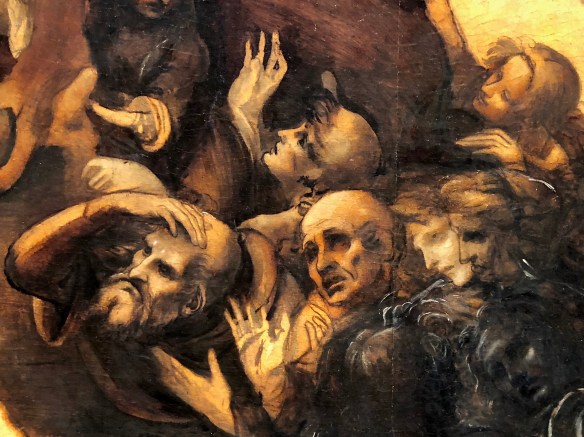
Leonardo da Vinci, Adoration of the Magi (detail, c. 1481-2, Uffizi Gallery, Florence).

O Desire 
of all nations and people,
you are the strong force
that draws us toward you,
the pattern which choreographs creation
to Love’s bright music.


Come: teach us the steps
that we may dance with you.

The sixth Antiphon goes to the heart of the Advent mystery: we are made of longing, born with a core of desire, an unquenchable thirst, for something we lack. Advent invites us to remember our longing and identify our deepest desire.

Some people think that Christianity is about the eradication of desire. Not so. Faith is the education of desire, weaning it from false objects and inadequate attainments, and directing it toward its true and ultimate end, the divine communion of the holy and undivided Trinity, the ceaseless dance of love which we are invited to share. 

Thomas Traherne, 17th-century Anglican poet, said, “Be sensible of your wants, that you may be sensible of your treasures.” What he meant was, if we want to know who we are, and why we are here, we need to pay attention to our deepest hunger, our deepest longing. What do we really want? What do we long for above all else?

When you figure that out––that is where you’ll find God: in the place where your desire is strongest. It doesn’t matter what name it goes by. Pay attention. Dig deeper. God is there.

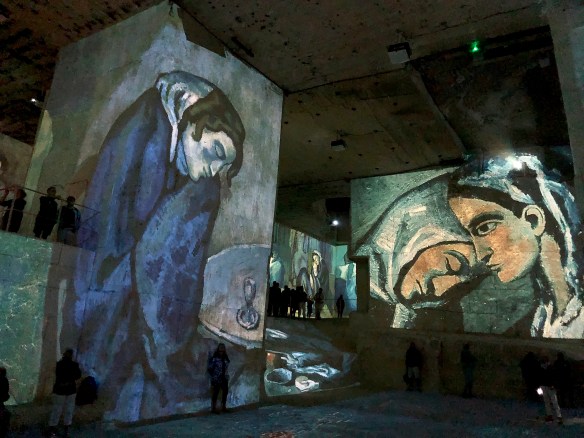
Projections of Picasso’s art on the surfaces of a limestone cave (Carrieres des Lumieres, Les Baux de Provence, 2018).

O Oriens (Dec. 21)

Dawn on the Camino de Santiago (Maundy Thursday, 2014).

O Rising Dawn, 
bright splendor of the light eternal,
illumining all things with Love’s radiance.

Come: enlighten those who sit in darkness,
who dwell in the shadow of death.

At the beginning of the longest night, this antiphon is preoccupied with light: the eternal radiance of God and the way it penetrates the darkest shadows of history and the human soul. What else is Advent but waiting for the dawn? 

For mystics and theologians, the image of God as light is more than an analogy drawn from physical experience. Splendor and glory are inherent to the very essence of divinity. But for those who sit in darkness––and who has not, at one time or another?––the light of heaven may be eclipsed: hidden from our eyes, absent from our hearts. As songwriter Bruce Cockburn testifies, “Sometimes you have to kick the darkness until it bleeds daylight.”

The poet Kathleen Raine describes the time of trial when “the curtain is down, the veil drawn” over the world’s deep radiance. “Nothing means or is,” she says. But that is not where God leaves her:

Yet I saw once
The woven light of which all [things] are made . . .
To have seen
Is to know always.

The Bainbridge Island ferry sails into the dawn (Puget Sound, 2014).

O Clavis David (Dec. 20)

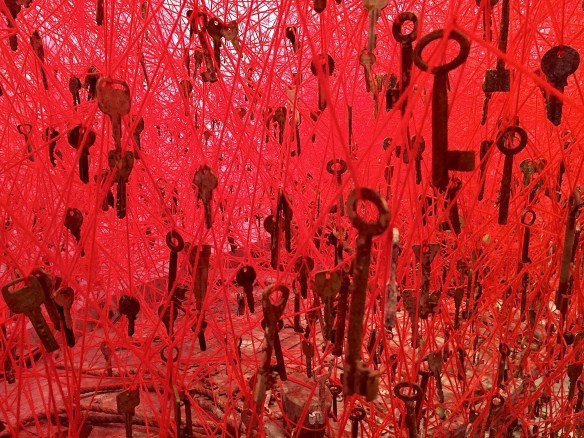
Chiharu Shiota, Keys in the Hand (Venice Biennale 2015).

O Key of David, 
you open, and none can shut;
you shut, and none can open.

Come, lead us out of the prisons
that oppress body, mind and soul;
welcome us into the open space of possibility;
let us breathe again.

This antiphon begins, O Clavis David (“O key of David). The Latin word for “key” was a favorite pun among medieval preachers. Clavis means “key,” but clavus means “nail.” The key that opens the door for us is the nail of Calvary, where Christ died to conquer death and sin.

Jesus, and the divine way of self-diffusive love which he embodied, is the key that unlocks every human prison, from the metal cages on our southern border to the oppressive interior confines of fear, guilt, sin, despair. 

Has you ever been in some kind of prison? Do you remember what you felt when you found the key? What was it like when the door swung open and you walked through it? Perhaps some who read this are still waiting for this key. 

O Clavis, come and lead those who sit in darkness, who live in the shadow of death––or grief, or fear, or addiction. Deliver us all into the place of light and joy and freedom.

Be the key that sets us free.
Open the door and welcome us home.

In Brighton, UK, an alternative worship group, Beyond, turned 24 beach huts into an Advent calendar. Every evening a different hut was opened to reveal an art installation about the coming of Christ. This hut was opened on Christmas Eve, radiating “love’s pure light” into the December night.

O Radix Jesse (Dec. 19)

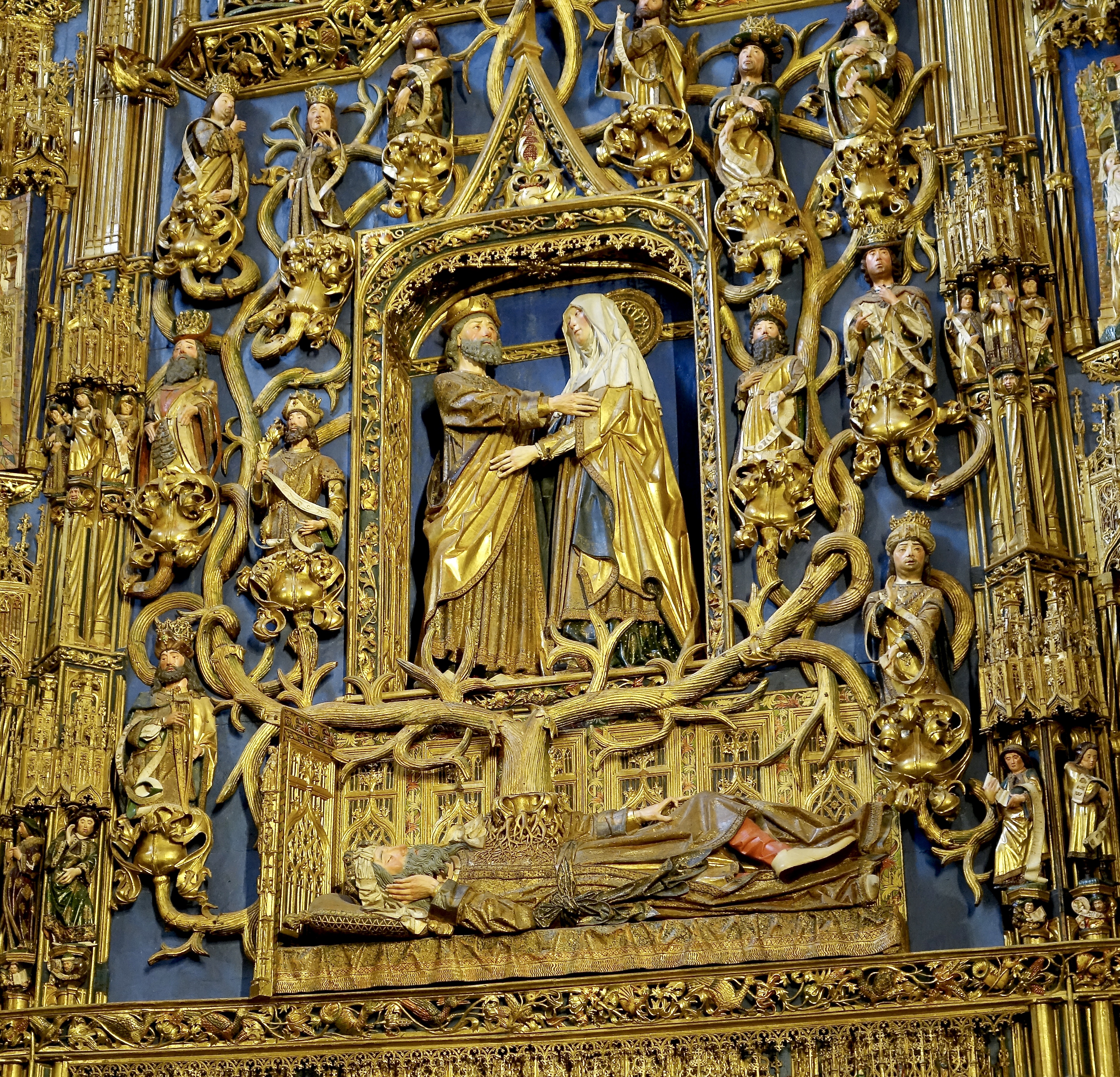
Gil de Siloé, Tree of Jesse (detail) on the altar retablo in the Chapel of St. Anne, Burgos Cathedral, Spain (c. 1498). The family tree of Jesus grows from the body of King David’s father.

O Root of Jesse, 
coming to flower in Jesus,
who in turn bears fruit
in all who are grafted
into the royal line of God’s family.

Come: let us never be severed
from the roots and branches
that nourish us in every moment.

The “Tree of Jesse,” a frequent motif in Christian art since the 11th century, is Jesus’ family tree, linking him to the Davidic line (Jesse of Bethlehem was David’s father). The genealogies of Jesus in Matthew and Luke span 28 and 43 generations respectively, but the number of figures shown on the tree is usually far less due to spatial constraints. 

The prophet Isaiah wrote, “A shoot shall come out from the stump of Jesse, and a branch shall grow out of his roots” (Isaiah 11:1), and most artists have provided a literal version of that image. The Tree of Jesse thus affirms Jesus’ pedigree as the heir of divine promises given to David, as well as Abraham and others before him. 

But the larger meaning of the root and branch image is that Jesus did not come out of nowhere, disconnected from the long course of human history. He was rooted in an ongoing spiritual evolution of humanity since the dawn of consciousness. His appearance, the product of nature and culture as instruments of the Holy Spirit, was the first flowering of creation’s immense journey toward union with its Creator. 

The New Testament says that Jesus is “the pioneer and perfecter of our faith”
(Hebrews 12:2). In the 20th century, the Jesuit Teilhard de Chardin expressed this developmental image in terms of a cosmic evolution: “the presence of something greater than ourselves moving forward within us and in our midst.” We are all destined to be blossoms and fruit on the Jesse Tree.

If we are all truly grafted into the royal line of God’s family, how shall we then live––and grow––accordingly? Let us never be severed from the roots and branches that nourish us in every moment. 

This is the third of seven in a daily series on the O Antiphons for the last week of Advent.

O Adonai (Dec. 18)

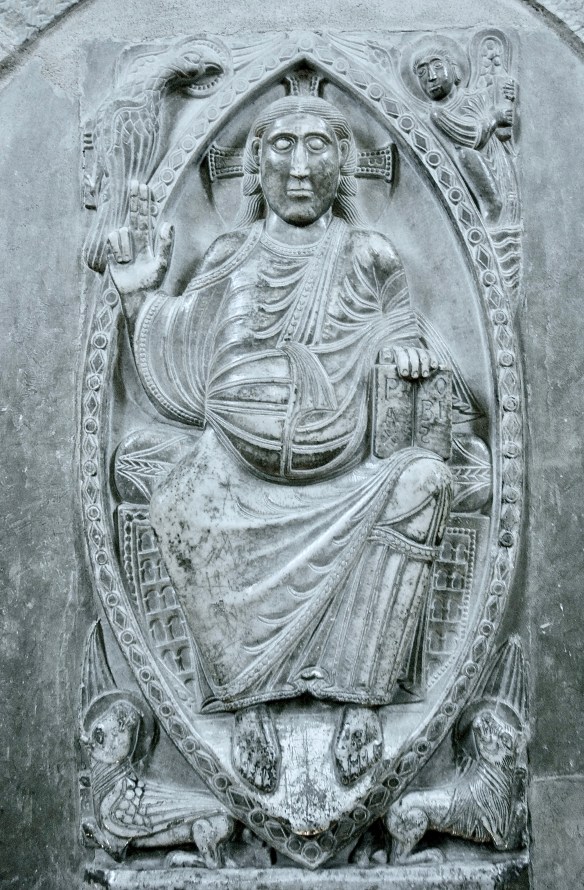
Christ in Majesty, Basilica of Saint-Sernin, Toulouse, France (12th century).

O Adonai, 
ruler of time and history,
manifestation of divine dominion
to your chosen people,
may your presence be our burning bush.

Come: bring justice to the poor,
food to the hungry, shelter to the homeless
protection to the vulnerable
,
freedom to the prisoner.

For the ancient Jews, the divine name revealed to Moses at the burning bush was too holy to be spoken, so they substituted the word Adonai (“my Lord”) when addressing God in their worship. This became Kyrios in the Greek translation of the Hebrew Scriptures. We still pray Kyrie eleison (“Lord have mercy”) in Christian ritual.

Will Campbell, the Baptist preacher who wrote The Cotton Patch Gospels, once asked, “What’s the biggest lie told in America?” The answer he gave was: “Jesus is Lord.” What would our lives––and our neighborhoods, our nation, our economy, our politics––look like if we really believed that the Lord of love and justice, the divine defender of the poor and vulnerable, is in fact the ultimate ruler of time and history? 

Adonai, bring that day closer!

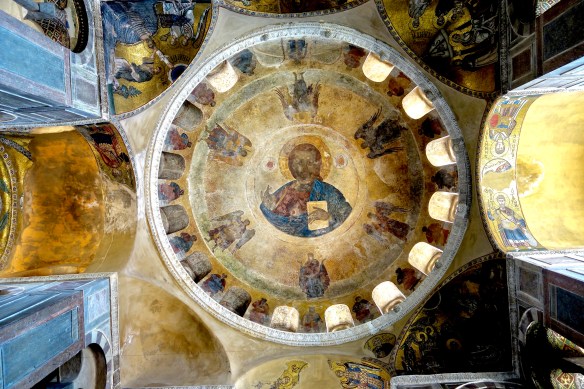
Christ as Pantocrator (ruler of the universe) on the dome of the Katholikon, Hosios Loukas monastery, Greece.

O Sapientia (Dec. 17)

One of the joys of Advent’s final days is the praying of the O Antiphons, seven eloquent prayers based on biblical images suggesting attributes of the divine. Liturgically, they begin and end the Magnificat at Vespers from December 17th to December 23rd, but they are also a rich resource for personal prayer as Christmas draws near. Each antiphon is both a greeting and a supplication, awakening our attention and shaping our intention.

Over the next seven evenings, I will post a brief reflection on the Antiphon for the coming day.
As you journey to Bethlehem, may you walk in beauty.

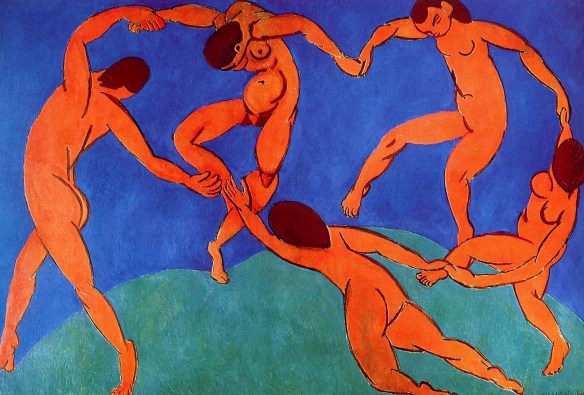
Henri Matisse, Dance (1909-1910).

O Sophia,
you are the truth of harmonious form,
the pattern of existence, the shapeliness of love.

Come: illumine us, enable us, empower us
to live in your Wisdom, your Torah, your Way.

The life of faith is not an invention of our own. Rather, we are invented by the Creator, invented by Love. There is a pattern that preexists us, a pattern born of divine love and woven into the structure of the universe. Sophia (wisdom), Torah (teaching), and Tao (principle) are ancient words for this pattern. 

Holy Wisdom is like a dance. If we are attentive to the music, and surrender ourselves to its rhythms, we will be caught up in the divine choreography. It is what we were made for. If we fight the pattern, we get out of step, and our bodies, our souls, and our societies become awkward and clumsy. 

But do not be discouraged. Sophia is a patient and gentle teacher. Call upon her, and she will guide your feet into the way of peace. 

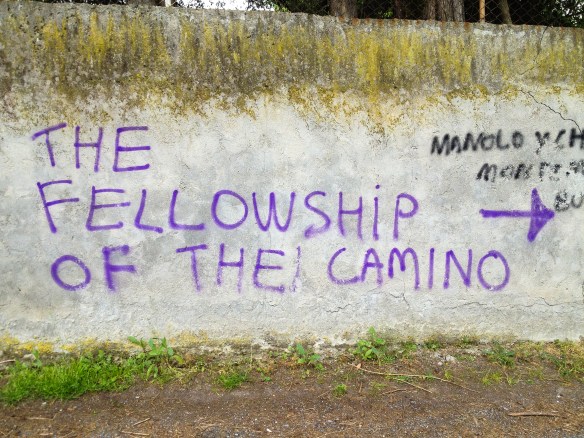
Blessed are those who walk in the Way (Camino de Santiago, May 2014).

Prayers for the Advent Season

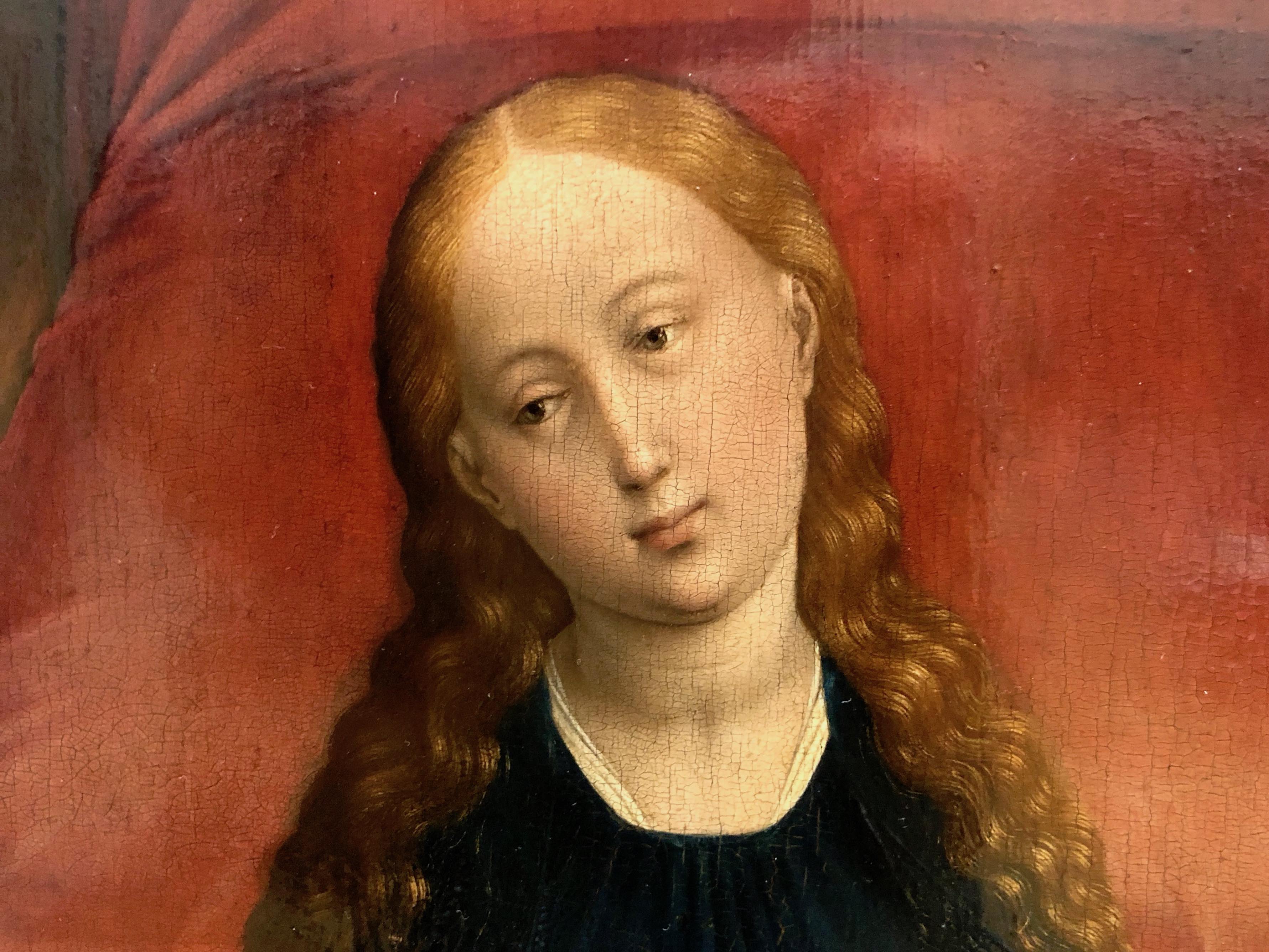
Annunciation (detail), Workshop of Rogier van der Weyden, c. 1440.

I’ve written more about Advent than any other season of the Christian year. It’s like a Mahler symphony, densely packed with vivid contrasts, complex themes, cosmic grandeur, dark abysses and sublime radiance. It begins with the cymbal crash of an exploding world, and concludes with the tender adagio of a baby’s first breaths. Advent haunts our complacency, stirs our longing, and lights a brave candle in the dark.

My ten previous Advent posts, divided into the categories of theology, worship and practice, can be linked directly from last year’s summary compilation, “How long? Not long!––The Advent Collection.”  Whether you love the season as I do, or are wondering what it’s all about, I hope you will find in those ten posts some words to connect with your own journey toward the dawn.

Meanwhile, here is something new: a set of intercessions I composed for this year’s Advent liturgies at St. Barnabas Episcopal Church on Bainbridge Island, the local parish where my wife Karen Haig is the rector. You may recognize specific borrowings from tradition, such as the ancient O Antiphons or the Book of Common Prayer, but it all comes from a lifetime of Advents, soaking up the language and embracing the themes of this transformative season.

I offer these prayers for both liturgical and private use. And if they prompt you to explore your own devotional language of longing and hope, so much the better.

Intercessory Prayers for Advent:

God of many names, God beyond all names; the beginning and the end of every story, the meaning of every life; infinite Mystery both hidden and revealed:

Hear us when we pray to You.

Blessed are You who join us together in the communion of Christ’s Body. Renew and energize your holy Church, in this parish and throughout the world, that we may be a resurrection people, manifesting your steadfast love in our common life of praise and service.

Hear us when we pray to You.

O perfect Wisdom, direct and rule the hearts of the leaders and shapers of society, raise up prophets of justice and peace, and empower your people for the holy vocation of repairing the world. May we entrust all our labors to the work of Providence.

Hear us when we pray to You.

O Deliverer, You unlock every door and make a way where there is no way. Set free all who are afflicted or distressed in body, mind or spirit. Resurrect their hope, grant them peace and refreshment, and restore their joy.

Hear us when we pray to You.

O compassionate One, hold us in your mercy: heal the sick, mend the broken, protect the vulnerable, shelter the refugee, strengthen the weary, rescue the lost, and give courage to all who struggle.

Hear us when we pray to You.

O Morning Star, bright splendor of the light eternal, illumining all things with your radiance: Come, enlighten all who sit in darkness, and those who dwell in the shadow of violence and death. Grant us your peace, and teach us to live in the dawn of your unfailing promise.

Hear us when we pray to you.

O Lover of souls, when we wander far away, lead us back to You; when we refuse your embrace, do not give up on us; when we forget You, do not forget us.

Hear us when we pray to You.

O Desire of every heart, the answer to every longing: You are the strong force that draws us into the mystery of love divine. Forgive us those things which distract and delay us, and lead us ever deeper into the Way, the Truth and the Life.

Hear us when we pray to You.

God who has come, God who does come, God who is yet to come: Make us an Advent people, ready and alert to welcome and receive You in the stranger’s face, the loving act, the moment of grace, the presence of healing, the birth of possibility, the gift of wonder. Let every heart prepare You room.

Hear us when we pray to You.

O Emmanuel, God-with-us, You show us the face of divinity and reveal the fullness of our humanity. Come: renew your creation, restore us all in Christ, and enable us to become who we are, your faithful and loving people. We pray in the name of Jesus. Amen.