Jesus Falls for the Third Time, Église Saint Laurent, Eygalières, France.
Ilia Malinin is by all accounts the best male figure skater in the world. The winner of the last two World Championships has broken new ground with his technical brilliance and exquisite artistry. He was the overwhelming favorite to win the gold medal last week at the Winter Olympics in Milan. But when he took the ice as the final skater, something went very wrong. In one of the biggest upsets in the history of the sport, Malinin grew hesitant, fell twice, and never regained the timing and composure he is known for. In a disastrous and heartbreaking four minutes, he tumbled from first to eighth.
In a post-race interview, Malinin said that “going into this competition, I felt really good this whole day. Feeling really solid. I just thought that all I needed to do was trust the process that I’ve always been doing.” But “the pressure and the nerves” hit hard. “So it was really just something that overwhelmed me and I just felt like I had no control.”
As the stunned spectators began to file out, the arena DJ put Coldplay’s “Viva la Vida” on the loudspeakers.
I used to rule the world Seas would rise when I gave the word Now in the morning, I sleep alone Sweep the streets I used to own
I used to roll the dice Feel the fear in my enemy’s eyes Listen as the crowd would sing
Now the old king is dead, long live the king One minute, I held the key Next the walls were closed on me And I discovered that my castles stand Upon pillars of salt and pillars of sand
That may have been a harsh choice for that particular moment, but it echoed the truthful reminder spoken to us every Ash Wednesday:
Remember that you are dust, and to dust you shall return.
The coincidence of Olympian failure and Ash Wednesday has happened before, and I believe that the falls touch us more deeply than the triumphs, summoning us to self-compassion in the dust and ashes of our own defeats. So in the light of this Olympics’ unfortunate example, I offer here the Ash Wednesday reflection I first posted ten years ago:
In the 1988 Winter Olympics, American speed skater Dan Jansen, the best in the world, was the consensus pick to win the 500 and 1000 meter events. On the morning of the 500 final, he learned his sister had just died from leukemia. With his focus clearly elsewhere, he fell on the first turn of his race and never finished. He would also fall and fail in the 1000 meters. At the 1992 Olympics, he again failed to win the medals expected of him. The 1994 Olympics offered him one last chance, and he came to the line of the 500 meter race as the clear favorite, the only skater ever to break 36 seconds, which he had done four times. But after one slight slip on the ice, he finished out of the medals yet again.
Ash Wednesday came just after that race, and during the liturgy I reflected on Jansen’s story in my homily. Although Jansen would finally win a gold medal a few days later (in the one race where he was an underdog), it was his “failures” that resonated with people. After the liturgy, a therapist in the congregation told me that many of her clients that week had talked with her about Jansen’s story, and how much it moved them. If the world’s greatest skater could fall, then maybe it was all right for them to fall as well. You don’t have to be a hero, only your own flawed and unfinished self.
In his youth, the poet David Whyte was hiking in the Himalayas when he came to a deep chasm. The only way across was a rickety old rope bridge with many missing slats. Although he was a confident, experienced mountaineer, he suddenly froze at the prospect of traversing the abyss on so treacherous a path. He sat down on the ground and stared at the bridge for hours, unable to proceed. “There are times when the hero has to sit down,” he said later. “At some bridges in life the part of you that always gets it done has to sit down.” Then an old Tibetan woman came along, gathering yak dung for fuel. She walked with a limp. “Namaste,” she said with a smile. Then she turned and limped across the bridge. Immediately, without thinking, he rose up and followed. Sometimes, he realized, it is “the old interior angel,” the unheroic, limping, unequipped part of ourselves, that gets us to the other side.
Remember that you are dust, and no hero. Whether your Lent will be a time of giving up, going deep, or reaching out, may it always be done with a generous measure of self-compassion.
Biblical stories can be retold in many ways with a variety of media. This is part of The Prodigal Son parable in an elaborate and moving installation by Alexander Sokurov at the Venice Biennale in 2019. (Photo by the author)
This is the third in a series of posts responding to the alarming events in Minneapolis. It may be the most arcane, of interest only to worship planners and storytellers. I usually try to write posts of more general interest, but my long experience as a liturgical creative and biblical storyteller impels me to set this down, for what it’s worth, as a small personal contribution to the ongoing efforts of the faithful to resist public malice and hold fast to the good with all the means at our disposal.
In evil times such as these, how can churches be faithful to the Baptismal Covenant to “persevere in resisting evil … seek and serve Christ in all persons … strive for justice and peace among all people, and respect the dignity of every human being”? In recent weeks, we have seen many clergy and laity adding their voices and bodies to the resistance against tyranny and cruelty in Minneapolis, and to the increasingly dangerous work of loving our neighbor and protecting the vulnerable.
As a longtime liturgist, I find myself wondering how—and to what degree—our worship gatherings, in addition to our witness in the public square, might themselves be responsive to what is happening around us—and inside us—during America’s current authoritarian nightmare. Prayer and preaching are two vital ways, and I have given some striking examples in my two previous posts, White House Brutality (prayer as a “refusal to consent to an unredeemed world … It breaks the silence, awakens the passive, and cultivates action, both human and divine.”) and Murder in Minneapolis (featuring one priest’s prophetic sermon, forged in the crucible of tyranny and protest).
Singing is also a powerful weapon against evil and its sad progeny—discouragement, fear and despair. It’s been said that the Civil Rights movement succeeded in part because it had a great soundtrack. Its stirring adaptations of black spirituals, sung not only in the marches but also in the jails, kept voices high and spirits strong. As they say, the people unitedwill never be defeated. And nothing unites like communal singing. The resistance to American fascism is taking this to heart as collective song becomes once again a vital part of public protests.
Prayer, preaching and singing are all powerful ways to say yes to God and no to evil. And to that list I would add the telling of our sacred stories. Creative engagement with Scripture deserves equal attention as a means to lift up our hearts and shine the light of hope against the darkness. Week after week, year after year, Christians tell formative stories of sin and redemption, strife and reconciliation, despair and hope, losing and finding, oppression and liberation, death and resurrection. Then the preacher strives to connect those biblical stories with our own lives and times. But what if we were to make those connections not just in our homiletic reflections following the stories, but in the storytelling act itself?
As a young priest in Los Angeles during the Vietnam War, I staged a dramatized version of Jesus’ parable of the Unforgiving Debtor for an experimental eucharist. The man whose debt was very small was a draft resister, thrown into prison by an angry creditor dressed as Uncle Sam. That creditor was then reminded of the immensity of his own debt, illustrated by projected images of the atrocious violence in Southeast Asia.
Such a pointed retelling of Scripture might be too edgy for typical Sunday worship, but there are times when biblical stories really want to be heard in fresh and compelling ways. Holy Week 2026 can be a great opportunity to do that. How might worship planners think creatively about the Paschal journey from death to life in the context of our current experience of state-sponsored hate and violence?
The next No Kings march is scheduled for March 28, the day before Palm Sunday. How will it feel to reenact Jesus’ provocative entry into Jerusalem after millions of us will have shouted our own hopeful hosannas in the streets of America? What will be in our hearts on Maundy Thursday when our beautiful feast of loving one another concludes with the arrest our Lord by armed thugs? And when we come to the foot of the cross, will we see the God who not only shares our present suffering but also transforms it, making a Way where there is no way?
I love the traditional Scriptural texts for the Holy Week rites which take us on the Paschal journey from death into life. As containers for all the thoughts and feelings we bring to that journey, especially in times of immense public distress, they need no inventive retelling. They will be heard in fresh ways simply by virtue of what is in our minds and in our hearts throughout Holy Week 2026.
But when the sun goes down on Holy Saturday, and the Great Vigil of Easter begins to transport us from the world of sin and death into the realm of light and life, the world of the past is gone, and it is time to let imagination flourish, that we may find our own struggles and hopes vividly enacted in the performance of biblical narratives.
At the Easter Vigil, which I take to be the molten core of Christian worship, it is critical to experience those stories as if they are happening to us. We need to feel ourselves delivered from the flood of chaos and liberated from bondage to the powers-that-be. The dry bones of our damaged hopes need to rise again and inhale the breath of the Spirit. As the ancient Exultet chant declares at the outset of the liturgy,
How holy is this night, when wickedness is put to flight, and sin is washed away. It restores innocence to the fallen, and joy to those who mourn. It casts out pride and hatred, and brings peace and concord.
What does it take to do the Vigil stories justice? Well, it takes time and effort, a creative team, prayerful engagement with the stories, and openness to the Holy Spirit. Before offering a few tips for your own Vigil storytelling, let me give some examples from a Vigil I curated last year, as described in my April 2025 blog post, “For God so loved our stories”—Tales from the Easter Vigil:
The author as one of the dancers in the Red Sea story at the Easter Vigil 2025.
The Red Sea: Noirish projected images (from Bela Tarr’s bleak film, Werckmeister Harmonies) show anonymous figures shuffling through an imprisoning corridor, while dancers on the stage express the experience of oppression with their bodies. An offstage narrator explains:
Three thousand years ago, in the land of Egypt, there were people who had no name. They were the faceless many, exploited by the powerful, forgotten by the privileged: slaves, immigrants, the poor, the homeless, the vulnerable, the invisible, the outcast.
Then dismissive terms for the oppressed appear on the screen in stark animated graphics: Not like us … worthless … horrible people … trash … less than human. More images of “the faceless many” are shown as the dancers continue, until an offstage choir sings a verse of “Go down, Moses.”
Suddenly, the divine breaks into this dark world: the screen flashes red, and we see the words from Psalm 68 that are always used in Orthodox Paschal liturgies:
Let God arise! Let the foes of Love be scattered! Let the friends of justice be joyful!
Then a song from the Civil Rights movement fills the room: “They say that freedom is a constant struggle … Oh Lord, we’ve struggled so long, we must be free.” The dancers’ bodies shift from oppression to liberation, while the screen shows powerful footage of crowds on the march for justice. As we hear a dub track with a repeated phrase by Martin Luther King, Jr.(“We cannot walk alone!”), the dancers begin their own march across the stage to the “Red Sea,” where they halt while the narrator declares:
This too is a creation story: On this day, God brought a new people into existence. On this day, God became known as the One who delivers the oppressed, the One who remembers the forgotten and saves the lost , the One who opens the Way through the Sea of Impossibility, leading us beyond the chaos and the darkness into the Light. When the world says No, the power of God is YES!
As the dancers, joined by a small crowd of others, begin to cross the Sea, the choir (offstage) sings Pepper Choplin’s moving anthem, “We are not alone, God is with us …” After the song, a bidding to prayer begins:
Pray now for the conscience and courage to renounce our own complicity in the workings of violence, privilege and oppression. Pray in solidarity with all who are despised, rejected, exploited, abused, and oppressed. Pray for the day of liberation and salvation.
The Fiery Furnace: This story from the Book of Daniel is borrowed from the Orthodox lectionary for the Paschal Vigil, and its humor (yes, the Bible can be funny) provides some comic relief after the Red Sea. The story’s mischievous mockery of a vain and cruel king, outwitted in the end by divine intention, feels quite timely. The idol shown on the screen is a golden iPhone, which will be destroyed by a cartoon explosion from Looney Tunes. The humorously tedious repetition of the instruments signaling everyone to bow is performed with the following (admittedly unbiblical) instruments: bodhran, bicycle horn, slide whistle, chimes, train whistle, and Chinese wind gong. The Song of the three “young men” in the furnace is recited by three women in an abbreviated rap version. At the end, the cast of twelve exit happily, singing the old Shape Note chorus, “Babylon is fallen, to rise no more!”
Then we give thanks “for the saints who refuse to bow down to the illusions and idolatries of this world” and pray for “the grace and courage to follow their example, resisting every evil, and entrusting our lives wholeheartedly to the Love who loves us.”
Valley of Dry Bones: Unlike the embellished retellings of the other stories, this one sticks closely to the biblical text, but is delivered in a storytelling mode by a single teller (me) in a spooky atmosphere of dim blue light. The voice of God is a college student on a high ladder. The sound of the bones joining together is made by an Indonesian unklung (8 bamboo rattles tuned to different pitches). When the story describes the breath coming into the lifeless figures sprawled across the valley, I get everyone in the assembly to inhale and exhale audibly a few times so that we can feel and hear the spirit-breath entering all of us. Then I move among them, bidding one after another to rise until everyone is standing, completing the story with their own bodies: the risen assembly itself becomes a visible sign of hope reborn.
Easter Vigil 2025 at St. Barnabas, Bainbridge Island, Washington.
Many churches don’t do the Easter Vigil, and of those that do, all too few give it proper attention as the richest and most luminous liturgy of the entire year. It requires a lot of preparation, effort and energy at the end of a very labor-intensive week. It also involves a long-term project of educating a congregation to understand the Vigil as the preeminent Easter rite.
You can celebrate the Resurrection gloriously on Sunday morning, but if you want to experience Resurrection in a kind of Christian dreamtime, come to the Vigil as well. And if you are in a community which already knows the unique power of the Vigil experience, I encourage you to explore the potential of its stories to empower our bodies and restore our souls in this dark and dangerous age.
If you are not part of a community that does the Easter Vigil, I thank you for reading this far anyway. But if you are in a position to shape a creative Vigil, here are some suggestions to get you started.
You may want to begin with just one or two stories. Find the creatives in your community and form a team to study the texts and discern what they are trying to say now. And think about the connections they make with our lives and our society. For example, footage from the Minneapolis protests could be part of the Red Sea saga, or the king’s ruffians throwing their victims into the fiery furnace could be dressed like ICE agents.
Decide for each story whether to use simple storytelling (one or more voices, scripted or retelling freely) or more theatrical means (scripts, actors, visual design, visual media, singing, musical score, sound effects, etc.). Think about ways to involve children (e.g., animals on the ark, or part of the Red Sea march to freedom) and even the whole assembly, through singing or collective reading, like a Greek chorus, of projected words on a screen. Involving as many people as possible in creating and performing the stories bolsters both attendance and enthusiasm. Play with ideas, images and words until the stories take shape. Then provide sufficient time for learning lines and rehearsals.
Ideally, the Story Space will be separate from the worship space. A parish hall is usually more flexible than a church interior in terms of seating and a stage area. If there is a screen or a large white wall, large images can be projected. Strings of party lights on a dimmer and LED spotlights with variable colors are easy ways to restrict light to the stage area and establish the mood for each story. The other advantage of a separate Story Space is that a liturgy conducted in a sequence of spatial locations underscores the Vigil as a journey—from the New Fire outside to the Story Space to the font to the altar and finally back into the world.
And let each story be followed by an appropriate song (I use both folk music and contemporary songwriters to fit the relaxed spirit of “tales around the sacred campfire,” in contrast to the chant and hymnody in the church portion of the liturgy). Then comes a bidding to prayer, summarizing the themes of the particular story.
Let me close with the bidding I wrote to follow The Valley of Dry Bones. It expresses everything I want to say about the liberating power of our stories to resist evil, proclaim hope, and lift up our hearts:
Dear People of God: There are those who tell our story as a history of defeats and diminishments, a narrative of dashed hopes and inconsolable griefs. But tonight we tell a different story, a story that inhales God’s own breath and sings alleluia even at the grave. By your baptism, you have been entrusted with this story, to live out its great YES against every cry of defeat.
Psalm 68:3, one of the texts projected in the background of the Red Sea story.
Minneapolis Diptych: ICE killers (anon. 2026) and Descent from the Cross (anon. 15th century)
There is no suffering which in the history of the world is not God’s suffering, no death which has not been God’s death in the history on Golgotha.
— Jürgen Moltmann
Jesus will be in agony even to the end of the world. We must not sleep during that time.
— Blaise Pascal
It is not okay to be silent anymore.
— Jeanelle Austin
In the face of the barbaric cruelty and violence by the lawless agents of a rogue administration, the voices of resistance, justice and love are crying “No!” That cry is taking many forms, and as a Christian I am thankful that so many people of all faiths are making their voices heard and putting their bodies—and their belief—on the line. I know that many passionate voices were raised in pulpits across the land last Sunday, one day after Alex Pretti was killed by ICE. Let me share with you one particular example from St. John the Evangelist Episcopal Church in Saint Paul, Minnesota.
January 25 was the Third Sunday after the Epiphany, whose Scripture readings included Isaiah’s “The people who walked in darkness have seen a great light,” and Jesus’ call to “Follow me.” The guest preacher was the Rev. Mike Kinman who, like many other clergy, had come from afar to join the mass protests in the Minneapolis streets. In an apostolic spirit, he told the rest of us what he had witnessed there: crucifixion, yes, but also resurrection—and the stirrings of the Spirit—in the solidarity of the people.
I encourage you to listen to Kinman’s urgent and inspired words in the 22-minute video below, and to keep the conversation going wherever you are as you continue to forge your own godly response to these harrowing times. Be yourself God’s candle in the darkness.
And don’t miss the sermon’s stunning ending, when the preacher exits the pulpit, leaving the final word to Jeanelle Austin, a theologically trained activist for racial justice in Minneapolis. She herself was not physically present. Her prophetic plea for justice, recorded a day earlier on Nicollet Avenue where Pretti died, was played through the church’s sound system.
Jeanelle Austin, Executive Director, George Floyd Global Memorial.
This sermon’s striking final image—an empty pulpit as we hear Austin’s words ring out—strikes me as a compelling analogue of divine speech: a message delivered by a human voice, but coming from a transcendent source beyond our sight—not just from Nicollet Avenue, but from the heart of the crucified God.
The Rev. Mike Kinman preaches at St. John the Evangelist Episcopal Church in St. Paul, MN), on January 25, 2026, one day after Alex Pretti was killed by federal agents.
“It’s fine, dude, I’m not mad at you.” According to video allegedly taken by ICE agent Jonathan Ross, those were Renee Nicole Good’s last words, addressed directly to him, with a smile. Seconds later, Ross shot her in the face. Three times.
Ross didn’t murder her because his own life was being threatened. All the video evidence available so far contradicts that lie. Perhaps a serious investigation—if there ever is one—will uncover the details of his personal role in Renee Good’s death. But he did not act alone. The White House gave him the gun and, through its policies and its rhetoric, encouraged him to pull the trigger.
The fact that the murder of an American citizen was immediately condoned by the highest levels of government—and continues to be defended, without the slightest trace of remorse, as the right thing to have done—should be a Pearl Harbor or 9/11 moment for our country. If it isn’t, if it just further normalizes our national descent into evil and madness, then God help us.
Matteo di Giovanni, Slaughter of the Innocents (c. 1480s), Siena Cathedral.
The shocking brutality of Good’s murder is not the work of a single bad actor. It is the expression of national policy under Donald Trump, whose murderous cruelty, by his own admission, knows no bounds. As he made clear in a recent New York Times interview, he is accountable not to Congress, the courts, international law, common decency, or any other norms or considerations beyond the seething cauldron of impulse and rage going by the name of Donald Trump. His only limitation, he claims, is “my own morality, my own mind. Nothing else can stop me.”
Such malignant and dangerous narcissism invites comparison with C. S. Lewis’ chilling description of Satan:
“[He is] no longer a person of corrupted will,” but “corruption itself, to which will was attached only as an instrument. Ages ago it had been a Person; but the ruins of personality now survived in it only as weapons at the disposal of a furious self-exiled negation.” [i]
Evil is contagious, and the toxicity level among the ruling powers has become so high that it never seems enough for Trump, or his collaborators and enablers, merely to initiate, condone and encourage acts of hatred and violence. They also have an insatiable compulsion to smear and assault their victims with absurd lies and vicious abuse.
Vice President J.D. Vance, a nominal Catholic who cares little for his church’s teachings, provides one of the most egregious examples of this shameless evacuation of human decency. He shed no tears for Renee Good, preferring to revel in making vicious and unfounded attacks. He congratulated her killer and warned the rest of us, in effect, that we too must obey or die.
Religious journalist John Grosso wrote a scathing rebuke to Vance’s despicable rhetoric in the National Catholic Reporter:
“The vice president’s comments justifying the death of Renee Good are a moral stain on the collective witness of our Catholic faith. His repeated attempts to blame Good for her own death are fundamentally incompatible with the Gospel.” [ii]
Dominant predators devour a helpless lamb (Abbey Sainte-Marie-de-Souillac, France, 12th century).
The violence done to Renee Good in Minneapolis is part of a virulent malignancy raging throughout our body politic, in both domestic concerns and our foreign policy. In defense of Trump’s imperial fantasies about Venezuela and Greenland, a Republican congressman epitomizd our sickness when he boasted that “the U.S. is the dominant predator … in the Western hemisphere.”[iii] In other words, it is the right of the rich and powerful to devour the poor, the weak, and the vulnerable. Resistance is futile, and punishable by death.
Well, we may not be quite there yet, but every day of silence or passivity moves us closer to a fascist nightmare. It is time to take on the urgency of the biblical prophets, as in the alarm sounded long ago by Joel in a text still read in the penitential rites of Ash Wednesday:
Sound the trumpet in Zion; consecrate a fast; call a solemn assembly; gather the people. Consecrate the congregation; assemble the aged; gather the children, even infants at the breast. Let the bridegroom leave his room and the bride her canopy.
Between the vestibule and the altar, let the priests, the ministers of the Lord, weep. Let them say, “Spare your people, O Lord.” (Joel 2:15-17)
Visiting an Episcopal church in California this past Sunday, I heard that same urgency in the Prayers of the People. After the formally composed intercessions from the Book of Common Prayer, the priest read handwritten petitions and thanksgivings submitted that morning by the assembly. There were lists of those who sought healing, compassionate pleas for those in need, and general longings for peace and justice. But there was also a notable number of prayers addressing the current outbreak of hatred and brutality.
We pray for all those unlawfully detained by ICE … for the family of Renee Good, and for the repose of her soul … for grace and healing in our nation, … for our children and grandchildren as they see our country changing … for all citizens and immigrants … and we give thanks for brave witnesses, and for the renewal of hope that loving acts inspire.
I was particularly struck by a petition asking our prayers for certain individuals with Hispanic names, followed by “and for all those who fear us.” That simple prayer made a bridge, however slight, across the void between “us” and “them.” And for one precious moment, its explicit hope for an end to fear and the beginning of reconciliation filled the church with the sweet fragrance of possibility
Prayer is a refusal to consent to an unredeemed world, and for people of faith it is foundational for an ethical existence. What St. Paul said about love applies equally to prayer. It “bears all things, believes all things, hopes all things, endures all things” (I Cor. 13:7). It breaks the silence, awakens the passive, and cultivates action, both human and divine.
So don’t despair, or give in, or give up. Look for the ones who are called into the righteous flow of prayer and action.
“[Humanity] is suspended in the present, between the past and the future, as if on a rock between two chasms. Behind and ahead, all is darkness.” — Chateaubriand
A year ago, on the eve of 2025, America and the world faced the prospect of evil times ahead. In my New Year’s Eve post of 2024, I tried to look beyond the imminent calamities to the luminous horizon of divine intention.
“The evils of the coming days will be phenomenal and accidental. Though they will hurt, they will never be quite solid or real or enduring in the way that the Love, Justice and Mercy of God are, now and forever. We shall not remain silent about the damage, or complacent about the consequences of those evils. But we must not give them the power and glory which are God’s alone.”
We all know how hard it has been to remain grounded and trusting in the carnival of cruelty and madness that was 2025. The way forward appears equally perilous. It is hard not to feel ourselves in Delacroix’s frail boat with Dante and Virgil, tossed by the turbulence of hell, struggling with outer demons and inner fears.
Eugène Delacroix, Dante and Virgil Cross the Lake of Hell (1822).
But on the eve of a New Year, I choose to dwell in a different image: Caspar David Friedrich’s Wanderer Above the Sea of Fog. The hiker has risen above the fray of history to stand on a lofty summit, surveying the world before him. We can’t see his facial expression or know his inner thoughts, but his body language conveys a state of contemplative stillness. He is not contorted by fear of what is, or what may come.
Caspar David Friedrich, Wanderer Above the Sea of Fog (c. 1817).
What is out there in the mist, hidden from his eyes and ours? If it’s the future, will it be better, or worse? Or more of the same? Whatever it may be, will we—can we—meet it with hope, courage, and love?
One of Friedrich’s contemporaries, the Romantic poet Joseph von Eichendorf, said that we can, and that doing so will make a difference in the outcome.
“There is a sleeping song in all endlessly dreaming things, and the world will begin to sing if you find the master word.”
Dear reader, in the New Year 2026 may you find that word, and make it your own.
I am so grateful for all of you who have stopped here to read and reflect in 2025, and for all the comments and sharing you do to keep the thoughts circulating. May the days to come bring you many graces and blessings. Happy New Year!
In the dark days of 1943, Hugh Martin and Ralph Blane wrote the most melancholy Christmas song I know, “Have Yourself a Merry Little Christmas.” It made its debut in the 1944 film, Meet Me in St. Louis, when Judy Garland sang it to cheer up her little sister. Their father had taken a job in New York, and the world they knew was about to end. The fact that it was Christmas—their last Christmas in St. Louis—only intensified their sense of loss. As the sisters gaze down from an upstairs window at the family of moonlit snow figures in the front yard, Garland, her moistened eyes seen in gorgeous Technicolor close-ups, delivers the song.
The film’s director, Vincente Minnelli (who would marry Garland the next year), thought the original lyrics too depressing, so he told the writers to make some changes. The line, “It may be your last / Next year we may all be living in the past,” became “Let your heart be light / Next year all our troubles will be out of sight.” But that did little to stop the tears of homesick soldiers viewing the film in distant war zones. In 1957, Frank Sinatra requested another change when he included the song on his holiday album, A Jolly Christmas. He asked Hugh Martin if he could “jolly up” the lyrics a bit more. Thus “until then we’ll have to muddle through somehow,” became “hang a shining star upon the highest bough.” Even so, the tune’s slow pace and moody melody have continued to suffuse the song with the seasonal melancholy which for some is the shadow side of Christmas cheer. If you’re feeling alone, sad, lost, anxious, or afraid, it’s hard to share in the holiday spirit. When your personal world—or our public world—lies in darkness, how do you “let your heart be light?”
A few centuries ago, Turlough O’Carolan, the blind harper and last of the Irish bards, was sitting in a tavern with his friend, the poet Charles McCabe, who said, “Your music, sir, is grand and lovely stuff; but it’s too light-hearted. This is a dark time we live in, Mr. Carolan, and our songs should reflect that.” The harper replied, “Tell me something, McCabe. Tell me this: Which do you think is harder—to make dark songs in the darkness, or to make brilliant ones that shine through the gloom?” [ii]
Some of the instruments from our caroling party.
For the last half-century, I have gathered instrumentalists, singers and friends to lighten up the long night with carols and wassails from seven centuries and a dozen countries. “The Praise of Christmas” sums up the spirit of these evenings:
This time of the yeare Is spent in good cheare; Kind neighbors together meet To sit by the fire With friendly desire Each other in love to greet; Old grudges, forgot, Are put in the pot, All sorrowes aside they lay; The old and the yong Doth carol their song To drive the cold winter away.
The old tune is appropriately vigorous, and the lyric by Thomas d’Urfey (1653-1723) is from his aptly titled songbook, Pills to Purge Melancholy. We do sing our share of quiet songs (“Hush! Hush! See how the child is sleeping.”), as well as wistful and mysterious carols in minor keys and medieval modes. But the predominant note is one of joy and wonder. As William Morris declared in his Victorian carol, “Masters in This Hall,”
Christmas is come in And no folk should be sad.
Of course, no one should, but many are. Even in the best of times, there’s going to be some sadness in the room. As Henry Nouwen said, “No one escapes being wounded.” So we don’t sing our carols expecting present reality to be suddenly freed from every sorrow. But singing touches and heals the mind and heart, offering relief and comfort to “those who sit in darkness, and in the shadow of death” (Luke 1:79). As Robert Burton insisted in The Anatomy of Melancholy (1621), music is “the sovereign remedy against despair and melancholy … a “tonick to the saddened soul.” And W.E.B. DuBois, writing in the last century about “The Sorrow Songs” of African-American spirituals, said that “they grope toward some unseen power and sigh for rest in the End.” In other words, even laments can be agents of hope. As DuBois put it,
“Through all the sorrow of the Sorrow Songs there breathes a hope—a faith in the ultimate justice of things. The minor cadences of despair change often to triumph and calm confidence.” [iii]
Compared with the emotional and social realism of black spirituals, what can we say about Christmas carols? Do they have a similar healing power? Or is their bright spirit in denial of the “two thousand years of wrong” which have followed the miraculous “midnight clear” in Bethlehem? Can we who dwell in the shadow of death still sing about joy and peace with whole-hearted conviction? As the Psalmist wondered, “How can we sing the Lord’s song in a strange land?” And yet, we sing. We sing because carols gladden the heart and bring us together. And we sing because carols are eschatological anticipations of God’s unfolding future. They don’t put an end to our troubles, but they give us a foretaste of glory, reminding us that we belong not to what is dying, but to what is being born.
Gabriel’s message does away Satan’s curse and Satan’s sway; Out of darkness brings our Day: So behold, All the gates of heav’n unfold.
“O radiant dawn, bright splendor of the light eternal.” (8th century ‘O Antiphon’ for December 21).
In my Los Angeles days, I’d rise at 4 a.m. at the Winter Solstice, toward the end of the longest night, and drive to a peak above the ocean in the Santa Monica Mountains, where I could see the newborn sun rise over desert peaks 100 miles to the east. But in the Northwest where I live now, a winter sunrise can be a rare sight. This December’s relentless stretch of rain and thick clouds seemed to doom my chances. Still, I awoke at sunrise out of habit, and when I glimpsed the Douglas firs on a hilltop ablaze with fiery light. I jumped in my car and raced to the edge of the island to see the gloom on the run. It was the perfect Advent sign: The people who have lived in darkness, and in the shadow of death (umbra mortis, as the 8th-century O antiphons put it), have seen a great light.
Did it matter that by the end of the day the sun had vanished and rain was pouring down? Not at all. I had received the gift of light as an eloquent sign: Don’t forget what you have seen. Remember hope.
Sunrise after the year’s longest night (Puget Sound, Washington).
Dear reader, I wish you a most blessed and merry Christmas. Let your heart be light!
[ii] I heard this story in the California Revels CD, Christmas in an Irish Castle (2001).
[iii] The Nouwen, Burton, and DuBois quotes are from Kay Redfield Jamison’s powerful and moving book, Fires in the Dark: Healing the Unquiet Mind (New York: Alfred A. Knopf, 2003). It is a fascinatingly documented and beautifully written treatise on the spiritual and imaginative dimensions of healing body and soul.
Police clear demonstrators from a freeway during the right wing occupation of Los Angeles in June 2025.
Survivors of the twentieth century, we are all nostalgic for a time when we were not nostalgic. But there seems to be no way back. — Svetlana Boym
In the Second World War, Paris was spared the physical destruction suffered by so many other cities. It surrendered without a fight to the Germans, some of whom cherished fond memories of living there as students before the war. And the Nazi government, believing itself to be the future of Europe, had no desire to smash such a cultural icon into rubble. It coveted the prestige of the City of Light for itself.
Hitler’s entourage in Paris (June 28, 1940). He was gone the next day, and never saw the city again.
The example of a city physically unchanged while suffering the invasive presence of a hostile power may have something to teach Americans, whose own cities face threats of military occupation by the dictatorial regime in Washington, D.C.. When I read Ronald C. Rosbottom’s riveting study, When Paris Went Dark: The City of Light Under German Occupation, 1940-1944, I could not help noticing some striking parallels to our own “les annes noires” (the dark years).
The radical right in the United States likes to dismiss any comparisons between Nazis and themselves as hyperbolic and slanderous, and it is fair to argue that their own movement may never go as far as the Nazis did. It’s too early to tell. But they’ve made a good start: terrorizing the vulnerable with the ICE-capades of masked thugs, demonizing and disappearing “aliens” and “enemies,” attacking the judicial system, vitiating the free press, purging opposition in the military and civil service, compelling the complicity of corporate leaders, seducing gullible and idolatrous evangelicals, and corrupting everything they touch. Fueling it all is their ceaseless stream of lies and propaganda. As Hannah Arendt warned in the aftermath of World War II:
“If everybody always lies to you, the consequence is not that you believe the lies, but, rather, that nobody believes anything any longer. And the people that no longer can believe anything cannot make up its mind. It is deprived not only of its capacity to act, but also of its capacity to think and to judge. And with such people, you can then do what you please.” [1]
Parisians tried to look the other way, but the invaders were everywhere (Photo by André Zucca for Signal, a German propoganda magazine).
Much more could be said about that, but for now our subject is the occupation of Paris. When the Germans entered the French capital in June, 1940, they encountered no resistance. Parisians were disheartened by the swift collapse of the French army and unhappy to see so many German soldiers and officials suddenly walking their streets and filling their cafés, but what could they do? Many fled Paris before the troops arrived, but most of those returned when they saw how “normal” things seemed. Daily life was not radically affected at first, and few thought the occupation would last such a long time. There was shame in defeat, certainly, and resentment of a foreign presence, but for a time passivity and resignation kept the anger of many Parisians’ turned inward.
German soldiers at the Arc de Triomphe. The Occupation produced an invasion of unwanted tourists (Photo by André Zucca for Signal, a German propoganda magazine).
There was a degree of make-believe on both sides. German soldiers were instructed to be polite. If someone drops a package on the sidewalk, pick it up for them. Parisians tried not to reciprocate any such acts of kindness, but to practice what they called Paris sans regard (“Paris without looking”). As much as possible, pretend the Germans don’t exist. Over time, this depersonalization would create a great sense of loneliness among the occupiers. As for Parisians, the make-believe minuet with the occupiers was both wearying and fragile. As one young man wrote in his journal,
“In spite of oneself, one dreams, laughs, and then falls back into reality, or even into excessive pessimism, making the situation more painful.” [2]
A month after the Germans arrived, “Tips for the Occupied,” a mimeographed flyer, began to appear in apartment mailboxes. “Don’t be fooled,” it warned. “They are not tourists … If one of them addresses you in German, act confused and continue on your way … Show an elegant indifference, but don’t let your anger diminish. It will eventually come in handy …” [3]
The sense of normality didn’t last. The restaurants, cabarets and cinemas remained crowded, but when audiences began to boo and jeer at Nazi newsreels, the houselights would be turned up. People lost their courage when they could be easily spotted. Parisians also learned to be careful about saying the wrong thing in a café. Neighbors began to denounce each other to the authorities. Singing “The Marseillaise” in public became a punishable crime.
As the Occupation dragged on, the sense of dépaysement (“not feeling at home”) began to wear on the soul. Historian Jean-Paul Cointet describes the condition in his 2001 study of wartime Paris:
“The Parisian now knows the condition of being ‘occupied’ in a city that does not belong to him anymore and that offers him the schizophrenic images of an environment suddenly foreign to his gaze. Constraints and humiliations, restrictions and punishments accompany this disorientation and the upending of daily routine.” [4]
Troops at a federal detention center in Los Angeles (Ted Soqui for Cal Matters, June 8, 2025).
The narrowing of space—both physical and psychological—became increasingly oppressive, as Rosbottom notes:
“Whether because of the sight of German uniforms, the closed-off streets, the insufficient nourishment, the cold winters, crowded transportation, long lines—or just the suffocating feeling of being suspicious of one’s acquaintances, neighbors, or even family—the city seemed to be contracting, closing in on Parisian lives, as the Occupation dragged on.” [5]
By the bitterly cold winter of 1941, life just got harder. Shortages of food and coal brought malnutrition and sickness, especially among the lower classes. French police, willing agents of Nazi oppression, started to raid neighborhoods known for Jewish or immigrant populations. At first, Parisians in uninvaded neighborhoods could close their eyes and swallow the lie that the authorities were simply trying to control immigration and prevent terrorism.
“Leave us in peace!” A German propaganda poster show Vichy France threatened by its perceived enemies: Freemasons, Jews, de Gaulle, and “lies.”
However, by mid-1942, rumors of the “final solution” began to reach Paris, and the mass roundups of Jews in France became impossible to ignore. “[Most Parisians] certainly did not know of the plans to deport them to their deaths,” writes Rosbottom, “but to their deaths they went: the last, sad convoy to carry children, three hundred of them, left Drancy for Auschwitz on July 31, 1944 … The final transport of adult deportees left on August 17, a week before Paris would be liberated.” [6]
Ernst Jünger, a cultured writer serving as a captain in the occupying Wehrmacht, kept a journal of the Occupation. In July 1942 he wrote:
“Yesterday some Jews were arrested here in order to be deported—first they separated parents from their children, so firmly that one could hear their distressed cries in the streets. At no moment must I forget that I am surrounded by unhappy people, humans experiencing the most profound suffering. If I forgot, what sort of man or soldier would I be?” [7]
Jünger may have shed a tear, but he continued to serve as a loyal employee of the Nazi death industry, whose business, as Hannah Arendt so bluntly noted, was “the mass production of corpses.” [8]
Hélène Berr also kept a diary, from Spring, 1942 until Spring, 1944. As a young Jewish woman, she tried to keep terror at bay by imagining herself in a Paris magically untouched by the darkness. A student at the Sorbonne, she copied out verses of Keats to calm her soul, and took refuge in her friendships. She made frequent walking tours of the city she loved, as if to reclaim possession of Paris from the occupiers who made her wear a yellow star, the mark of social exile.
In April of 1943, Hélène wrote:
“I’ve a mad desire to throw it all over. I am fed up with not being normal. I am fed up with no longer feeling free as air, as I did last year. It seems that I have become attached to something invisible and that I cannot move away from it as I wish to, and it makes me hate this thing and deform it … I am obliged to act a part … As time passes, the gulf between inside and outside grows ever deeper.” [9]
As Rosbottom notes, personal accounts of the period recall “the sound of police—French police—beating on the door” as their “most vivid aural memory.” [10] In March 1944, that percussive death knell sounded in the Berr’s apartment. Hélène, along with her parents, was arrested, but she managed to slip her journal to their cook before the police barged in. Three weeks later the Berrs were on a train to Auschwitz. They never returned. Hélène’s beloved Paris would be liberated five months later.
Illustration for a collection of French Resistance poetry.
There were many forms of active resistance to the Nazis in France, but the number of French patriots who risked their own lives was relatively small—less than 2% of the population. The threat of death and brutal reprisals was too daunting for most. For a visceral immersion in the anxious milieu of the French Resistance, watch Jean-Pierre Melville’s haunting film, Army of Shadows. Critic Amy Taubin’s summary of the film feels descriptive of wartime Paris: “Elegant, brutal, anxiety-provoking, and overwhelmingly sad.” [11] One resister recounted his experience in an interview decades after the war:
“Fear never abated; fear for oneself; fear of being denounced, fear of being followed without knowing it, fear that it will be ‘them’ when, at dawn, one hears, or thinks one hears, a door slam shut or someone coming up the stairs. Fear, too, for one’s family, from whom, having no address, we received no news and who perhaps had been betrayed and were taken hostage. Fear, finally, of being afraid and of not being able to surmount it.” [12]
A prewar fresco of modern martyrs who refused to bow to anyone but Christ (Église du Saint-Esprit, Paris, 1930s).
As I read Paris in the Dark, I had to wonder: Is this America’s future? For many of us (to borrow a line from Bob Dylan), “It’s not dark yet—but it’s getting there.” Daily life —for now, at least—goes on pretty much as usual. But for some of our neighbors, the darkness has definitely arrived. The military occupation of cities. The terrifying knock on the door. The roundups, disappearances, and concentration camps. The shamelessly gleeful cruelty. Demonization, bigotry and hate. The repression of customary freedoms. The criminalization of dissent. The collapse of legal safeguards. The willing complicity of the powerful with the enemies of life.
Citizens try to block an ICE roundup of immigrants at the Ambiance Apparel factory, downtown Los Angeles (J.W. Hendricks for CalMatters, June 6, 2025).
I am not without hope. Seven million protesters took to the streets on No Kings Day. Then large majorities voted against America’s reign of madness. And regardless of any political swings of the pendulum, I believe that resurrection continues to plant its seeds among the blind sufferings of history. But the oligarchs and fascists won’t go quietly. On the day after the recent election, the Episcopal Daily Office included this timely verse from the Book of Revelation:
Woe to the earth and the sea, for the devil has come down to you in a great rage, because he knows that his time is short. (Rev. 12:12)
The Beast and Satan rage, but their time is short (Apocalypse Tapestries, Angers, France, 1373-1382).
This Scripture feels ripped from the headlines. We know that satanic rage all too well. It has sickened our country, and we struggle to keep it out of our own hearts. May its time be short. In the meantime, the woes are not done. God’s friends have their work cut out for them. Believe. Resist. Endure.
And guard your heart against the demons of dejection and despair. After Trump’s election in 2016, I suggested seven spiritual practices for the time of trial: pray, fast, repent, prophesy, love, serve, hope. Click the link for the details. Nine years later, these practices are more necessary than ever, and I encourage you to share the link as a small act of resistance.
Pharoah sent his troops to round up the Israelites, but the forces of violence ended up sleeping with the fishes (13th-century window, Sainte-Chappelle, Paris).
Finally, don’t be in love with outcomes. Divine intention takes mysterious forms, and should not be confused with our own plans. Let us heed the counsel of two twentieth-century saints who were deeply committed to holy resistance and well acquainted with its challenges and ambiguities. Dietrich Bonhoeffer, martyred in a Nazi prison in 1945, believed that we must always act with deep humility, shedding our presumptions about the part we play or the difference we make. Don’t fret about your success. Just be faithful to Love’s command:
“No one has the responsibility of turning the world into the kingdom of God … The task is not to turn the world upside down but in a given place to do what, from the perspective of reality, is necessary objectively, and to really carry it out.” [13]
And Thomas Merton, who forged a delicate balance between contemplation and activism, taught that right action is not a tactic but a persistent way of being, grounded in something deeper and more enduring than any of our consequences:
“The message of Christians is not that the kingdom ‘might come, that peace might be established, but that the kingdom is come, and that there will be peace for those who seek it.’” [14]
No Kings Day on Bainbridge Island, Washington (Photo by the author, October 18, 2025).
[1] Hannah Arendt, quoted in the PBS documentary, Hannah Arendt: Facing Tyranny (American Masters, 2025).
[2] Ronald C. Rosbottom, When Paris Went Dark: The City of Light Under German Occupation, 1940-1944 (New York: Back Bay Books, 2014), 106.
[3] Ibid., 196-197. The flyer was produced by Jean Texcier.
[11] Amy Taubin, ”Out of the Shadows,” Criterion booklet for their 2010 Blu-ray release of Melville’s 1969 film.
[12] Rosbottom, 223, quoted from interviews with WWII resisters published in 2012.
[13] Dietrich Bonhoeffer, q. in Christiane Tietz, Theologian of Resistance: The Life and Thought of Dietrich Bonhoeffer (Minneapolis, MN: Fortress Press), 121.
[14] Thomas Merton, Turning Toward the World: The Journals of Thomas Merton, Volume Four, 1960-1963 (New York: Harper Collins, 1996), 188.
Cover of Bob Franke’s fifth album, 1991 (Photo: Susan Wilson)
And when all the stars and sentimental songs dissolved to day, There was nothing left to sing about but hard love.
— Bob Franke, “Hard Love”
Yet even at the grave we make our song: Alleluia, alleluia, alleluia.
— Burial Office, Episcopal Book of Common Prayer
“Bob Franke! Ten years ago, one of his songs literally saved my life.” That’s what a theology professor told me back in the nineties, when I was catching a ride with her to Salem from the Massachusetts coast. She taught at Harvard Divinity School and had offered to drop me at a friend’s house on her way to work. “What’s your friend’s name?” she asked. I told her, and I have never forgotten her heartfelt response. But I was not surprised by it. Bob’s songs have been a source of comfort and healing for many of us over the years.
I first met Bob in 1969, when he was a student and aspiring singer-songwriter at the University of Michigan, and I was a Cambridge seminarian visiting Ann Arbor during spring break. Bob was part of an impromptu band I helped put together for the Easter liturgy at Canterbury House, the Episcopal campus ministry coffeehouse renowned not only for its folk concerts (Neil Young, Joni Mitchell and Richie Havens were on the bill that year), but also for its wonderfully creative alternative worship. On Easter morning, about 150 students and faculty descended into the gloomy basement “tomb,” until a clown in white face appeared to announce that “Christ is risen!” As the congregation exited the tomb into the light-filled hall above, our band played the opening hymn—“Mr. Tambourine Man.” Nothing like resurrection to make a “jingle-jangle morning.”
Bob Franke (seated on floor), Jim Friedrich, Ed Reynolds at Canterbury House Easter Sunday, 1969
Canterbury House was also the first place Bob sang his own songs on stage. In the previous year, the headline act—the unpredictable Ramblin’ Jack Elliott—had wandered away between sets to get ice cream in Detroit, 45 miles away. During his long absence, someone asked Bob to fill in until Jack returned. And a star was born.
Bob was a faithful friend of God, an Episcopalian by tradition. He attended my seminary in Massachusetts for a year, but it soon became clear that, in his words, “a guitar fit better around my neck than a clerical collar.” But his songs, and the way he would speak about them in concert, became a unique ministry of illumination, comfort and blessing which touched so many lives. Bob himself put it this way:
“Whenever I sing, I’m trying to create in my listeners an awareness of the beauty and sacredness of their own lives, both individually and together, as a community. A woman came up to me recently and said that my story and my song put her relationship with her dad in a new light, gave her insight into her dad’s love for her. That’s all I need to take home from a show.”
Some of his work engages biblical topics, such as his Nativity carol, “Straw Against the Chill,” or “We’re Walking in the Wilderness.” Some lyrics incorporate Scriptural references (“new streams in the desert, new hope for the poor”). But most of his songs, whatever the topic, touch on fundamentally religious questions: yearning, journey, justice, death, loss, mercy, gratitude, love.
But it was always more than the songs with Bob, whose own authenticity, depth, humility and warmth made every concert an event of the heart. As music programmer Alan Korolenko describes the Bob Franke experience:
“No matter the size of the audience, you’re going to get an intimate evening with Bob. He just pulls everybody in, which is the key. You’ll meet other artists, and they’re not the same as their work. That’s not the case with Bob. He appeals to folk fans and general audiences, because he knows how to create a full, emotional journey, and how to share that journey. By the end, you’ve laughed and thought and cared; you’ve gotten to know the guy. He’s a class act.”
In the folk world, Bob’s songwriting has long been held in high esteem. Peter, Paul and Mary, David Wilcox, John McCutcheon, Sally Rogers, Martin Simpson, Lui Collins, Garnet Rogers, June Tabor and countless others have all recorded from his songbook. Claudia Schmidt has a beautiful version of “Hard Love,” one of the most truthful and hard-earned songs ever written on the subject.
Yes, it’s hard love, but it’s love all the same Not the stuff of fantasy, but more than just a game And the only kind of miracle that’s worthy of the name For the love that heals our lives is mostly hard love
Bob’s melodies have a way of drawing you into a place of receptivity, where his words, so precise, truthful and unafraid, whisper their truth to your heart.
For the Lord’s cross might redeem us, but our own just wastes our time. (“Hard Love”)
There’s a hole in the middle of the prettiest life, so the lawyers and the prophets say … (“For Real”)
But there are ears to hear me in my softest voice, There are hands to hold and point the way … (“A Healing in This Night”)
Over the years, Bob’s songs have been woven like bright threads into the fabric of my own life. When my grandmother died three months short of a hundred, my folk-singing sister Marilyn wasn’t sure what to perform at her funeral. Then one of Bob’s songs arrived by chance (or grace) in the mail. A friend had just come across “Alleluia, the Great Storm is Over,” and thought Marilyn would like it. It proved the perfect choice, heaven-sent, to sing our dear Nana home.
Sweetness in the air, and justice on the wind, laughter in the house where the mourners had been. The deaf shall have music, the blind have new eyes, the standards of death taken down by surprise.
In a very low-def 2010 video of Bob and friends singing the song in a Massachusetts coffeehouse, you can hear the audience jumping in with the chorus before Bob even sings a word. His lyrics were so deeply planted in their hearts, they could not keep silent.
Bob wrote a cantata on Christ’s Passion, performing it with musician friends every Good Friday at his home parish, St. Andrew’s Episcopal Church in Marblehead, Massachusetts. One of those songs, “Roll Away the Waters,” a rousing celebration of the Exodus, became a regular part of the storytelling portion of my creative Easter Vigils over the years. Here is Bob’s version.
And when we hear again the Annunciation story in Advent, it’s time for Bob’s “Say Yes,” an artfully succinct summary of spirituality’s essence: receptivity and consent. Here’s a version I did during the pandemic for one of my church’s worship streams:
The author performs Bob Franke’s “Say Yes.”
And whenever I need serious picking up, I’ll play “A Healing in This Night.” Here’s a fine version by Annie Patterson and Peter Blood:
“I always think of Bob as if Jefferson and Thoreau had picked up acoustic guitars and gotten into songwriting. There are touches of Mark Twain and Buddy Holly in there, too.” — Tom Paxton
Bob’s songs, and his spirit, are deeply rooted in American tradition—musically, culturally, politically. He sang on radio shows like Prairie Home Companion and A Mountain Stage, and traveled down many roads to perform in festivals, coffeehouses, churches and living rooms. His songs are imbued with the questions, dreams, struggles and shadows of American life. Even the hardest times are seen with a measure of possibility and redemption.
But in recent years he and his wife Joan saw the country they loved disintegrating into madness and rage. Feeling that the United States was becoming unsafe, and mindful of those who waited too long to exit Nazi Germany in the 1930s, Bob and Joan emigrated to Guatemala in September. They were barely into their second month in a new land when Bob was hit by a speeding motorcycle while crossing a road. Yesterday, October 16, a few days after surgery to repair the damage, he died in hospital of a heart attack. He was 78.
What can you do with your days but work and hope, Let your dreams bind your work to your play. What can you do with each moment of your life But love till you’ve loved it away?
When the news of Bob’s death reached me around midnight, it hit hard. I lit a candle before an icon of the Theotokos, and picked up my guitar: “Thanksgiving Eve,” of course, “Alleluia, the Great Storm is Over,” and “A Healing in This Night.” I imagined people far and wide were doing the same—joining our voices withthe whole company of heaven, as we say at mass.
Give rest, O Christ, to your servant with your saints, where sorrow and pain are no more, neither sighing, but life everlasting.
As for the song which saved that Harvard theologian’s life years ago, let Bob have the last word:
A perplexed man in the cloister of Saint Trophime, Arles, France (12th century)
In the liturgical churches, we don’t get to choose the Scripture for our homilies. We have to take what the Lectionary gives us. I’ve been preaching for a long time, but I’ve always been lucky enough to miss the Sundays when the Parable of the Unjust Steward turns up. Until now. Some scholars have labeled it the hardest parable. I prefer to call it the “terrible parable.” But I made a stab at it, and pass on the results here.
A parable functions a little like a Zen koan. What is the sound of one hand clapping? What is your original face before you were born? Such imaginative constructions of language are meant to disrupt habitual ways of thinking and open us to new perspectives. Just so, when a prodigal son is welcomed home with open arms, or the laborers who work the fewest hours are paid the same wages as the ones who work all day, we are forced, or at least invited, to question our presuppositions and prejudices about how life works, or how God desires life to work.
That said, let’s consider the Parable of the Unjust Steward (Luke 16:1- 8). It’s not an easy one to interpret. Nor is it easy to like. There have been many efforts to explain what this story about a dishonest steward tricking his boss is even doing in Luke’s gospel, set down in the midst of far more memorable teachings and far more beloved parables. But most of those explanations fail in one way or another, either making assumptions not justified by the text or reducing its meanings to something of little value to preacher or disciple.
So what shall we make of the “terrible parable” this time around?
Let’s review what happens. A rich man, presumably an absentee landowner, discovers his property manager has been “squandering” his property, whether by mismanagement or financial monkey business we aren’t told. But he’s put on notice that he’s about to be fired.
Now the steward considers himself either too old or too scrawny for manual labor, and he’s too proud to beg, so he’s desperate for a way to avoid utter destitution. What does he do? He summons all his master’s debtors and offers to write down their debts to an affordable level. By so doing, he earns the good will of those debtors.
Maybe someday, when he’s out of work and looking for help, they’ll return the favor. And, by collecting at least some return from all those past due accounts for his master, maybe he can get back in the master’s good graces. In the end, we are told, the rich man “commended the dishonest manager because he had acted shrewdly.” The odds of the steward keeping his job are looking up, but the story stops before we find out about that.
At first glance, it’s hard to find anyone to identify with in this parable. In the Bible, rich men are rarely liked, since economic inequality in biblical times was even worse than it is today. When a story begins, “There was a rich man,” you might imagine the immediate boos and hisses from Jesus’ audience, which hopes it’s going to be a story about his comeuppance. But as soon as the steward is introduced, his own character is dragged through the mud, and the rich man gains a bit of sympathy for having been cheated.
The steward stands accused of squandering his master’s property—whether through incompetence or dishonesty is not quite clear, but his actions later, cooking the books to write down the debts owed to his master, tag him as “unjust” or “dishonest”—terms which can connote either shaky bookkeeping or outright fraud. In any case, he plays fast and loose with the numbers. And, to our surprise, he is praised for doing so. This commendation may reflect the master’s relief in recovering at least some of his bad loans. It also may indicate his delight in discovering how clever his steward is. If such a man can get things done, who cares if his methods are not always on the up and up?
Some commentators have discerned a Christ figure in the rule-breaking steward. Hoping for a different kind of future, Jesus subverts the rules of the old world, where the rich get everything and the system punishes the poor, so that the rich man gets less and the debtors finally get a break. The unjust system may consider his actions to be improper, but in God’s eyes he’s an agent of economic justice, constructing a fairer and kinder form of human community.
At the same time, the steward’s actions transform relationships. The debtors, for whom the steward might have seemed an enforcer of unpayable obligations, turns out to be a forgiver of debts. And the rich man, tricked into generosity by his steward’s unorthodox moves, is given the opportunity to forego domination and greed in his own relationships with others.
That’s the story. But then the storyteller, who is Jesus, tacks a puzzling moral onto the end of his tale. He says the steward’s ingenuity, and the praise he receives for it, demonstrates that “the children of this age are more shrewd in dealing with their own generation than are the children of light.”
What could this mean? Of course, to reduce a parable to a single meaning implies that you can throw out the story and just keep the meaning. That’s like Woody Allen’s joke about reading War and Peace in an hour after taking a speed-reading course. When someone asked him what the novel was about, he said, “It’s about Russia.”
His joke mocks the idea that the experience of full immersion in Tolstoy’s thousand-page epic can be replaced by a brief summary. It’s the same with Jesus’ parables. Don’t reduce them to a single meaning. Experience them, begin to wonder about them, and then—just keep on wondering.
So instead of offering the best interpretation of today’s parable—there is no best interpretation, just a story which continues to puzzle us—I will simply try out some observations with no presumption of giving you the definitive last word about it.
The “children of light” is a New Testament term for the early Christians, the followers of the Way of Jesus, who belong not to “this age” but to the age to come, the future which God is in the process of bringing about. The steward’s ability to game the system of this age, operating successfully within its parameters with improvisation, cleverness and flexibility, should make the followers of Jesus ask themselves,
“Am I operating within the parameters of the age to come—the kingdom of God—with the same creativity and resourcefulness as the steward displays within the parameters of his story? Are my actions and choices in line with the world that is dying, or with the world that is being born?”
In living out the Christian life, which is rooted not in this age but in the age to come, we should embody the Kingdom’s precepts and pursue its goals with the same single-mindedness, the same commitment, the same shrewdness that the steward in the parable employs to navigate the crisis described in his story. His world is about to come crashing down, he’s about to lose everything, but he survives through the actions he takes and the relationships he cultivates. He doesn’t cling to the old world and its old rules to suffer its predetermined outcomes. He discovers a way to be part of what is about to happen next. He discovers a way to have a future.
Now if we are indeed the children of light, claiming allegiance to the divine future which is being born amidst the ruins of our fallen world, do we possess a comparable level of creativity and resourcefulness to survive the collapse of the old and join ourselves wholeheartedly to the emergence of the new? Can we be as good as that steward was in slipping through the present time of crisis into a future of divine intent and human flourishing?
That’s the question I hear the parable asking us today. That’s the question I leave you with today. Let me say it one more time:
If we are indeed the children of light, claiming allegiance to the divine future which is being born amidst the ruins of our fallen world, do we possess a comparable level of creativity and resourcefulness to survive the collapse of the old and join ourselves wholeheartedly to the emergence of the new?
Can we be as good as that steward was in slipping through the present time of crisis into a future of divine intent and human flourishing?
In all my years as a priest, I had never preached on the apocalyptic imagery of Luke 17:26-37, where people disappear without warning and Jesus concludes with an unnerving proverb: “Where the corpse is, there the vultures will gather.” This is not ideal preaching material, but with the help of the Epistle reading, Hebrews 11:29—12:2, I gave it a try last Sunday.
Today’s gospel [i] has quite a punchline: “Where the corpse is, there the vultures will gather.” It’s got to be pretty low on the list of favorite Jesus quotes, but it certainly gets our attention.
A couple of weeks ago I was at a raptor show at the High Desert Museum in eastern Oregon. A variety of hawks, owls and vultures flew swiftly among the seated spectators, who were warned to stay very still lest we be mistaken for prey. I did my best not to be a target, but a turkey vulture came close enough to brush my head with its wing. Perhaps it was preparing me for this strange gospel verse.
Some scholars say Jesus was simply using a common folk expression in response to a question about discerning the times, meaning something like “where there’s smoke, there’s fire.” Such expressions have nothing to do with smoke or fire or vultures or corpses. They’re just colorful ways of making a point. Still, Jesus’ choice of such a grim illustration puts a sharp edge on his message. It certainly gets our attention. And where the enigmatic text is, there the scholars will gather.
Who is the corpse? they wonder. Who are the vultures? One interpretation suggests the corpse could represent ancient Palestine, with the rapacious vultures being the occupying army of Rome. The Book of Revelation, perhaps inspired by the vultures in the gospel text, imagined the raptors of midheaven being summoned to feast on the remains of the proud powers struck down by divine judgment. An even more fantastical interpretation identifies the sharp-eyed buzzards, who in fact can spot carrion from 3 miles away, as those perceptive disciples who gather to consume the Corpus Christi, the Body of Christ given to feed our deepest hunger.
Well, none of these images is going to qualify for a stained glass window. And the vulture verse is perhaps profitless for the preacher.
And yet, it leaves a haunting impression. It’s unlike anything else Jesus ever said, and its gruesome tone puts an exclamation point on his discourse of crisis. A world is dying, he says. Just as a world died in the days of Noah, or in the days of Lot—names which recall destructive narratives of flood and fire—so it is happening now. The times are in no way normal, Jesus warns his listeners. Anyone who pretends that is not true, who thinks we can just go on about our business as usual—eating and drinking, buying and selling, planting and building—well, they are in for a surprise.
Come gather ’round people Wherever you roam And admit that the waters Around you have grown And accept it that soon You’ll be drenched to the bone If your time to you is worth savin’ You better start swimmin’ Or you’ll sink like a stone For the times they are a-changin’ [ii]
When we sang that song 60 years ago, we thought the times were changing for the better. And that was true in many ways. But the flood of changes washing over us today do not feel like something better. When Jesus speaks of people being snatched up and disappeared without warning, he could be describing what’s happening right now in “the land of the free.” To paraphrase Jesus’ metaphor, “As it was in the days of Dietrich Bonhoeffer—in 1930s Germany—so shall it be in our own time.”
I pray that this will not be our fate, but the fact that such an outcome is even conceivable is a measure of the times. It can happen here. So what are the friends of God to do? How do we start swimming so we don’t sink like a stone?
We are not the first believers to suffer the worst of times. The Epistle to the Hebrews is clear about that. History isn’t always about the lilies of the field. It has its corpses and vultures as well.
But as the author of Hebrews insists, the faithful believe in the victory of God, and they act out that faith with their bodies. Some of God’s friends have “received the test of mocking and whipping and even chains and prison. They were stoned, cut apart in a slaughter; they died upon a sword. They traveled around in ragged clothing, impoverished, oppressed, afflicted.” But for all they suffered, those who kept the faith “subdued monarchies, did the work of justice … shut the mouths of lions, quenched mighty fires …” (Hebrews 11:29-12:2)
As people baptized into the Paschal Mystery, we understand that dying and rising, defeat and victory, are deeply intertwined. You can’t have one without the other.
When certain medieval women mystics contemplated the cross in prayer and vision, they saw not the triumph of death, but a kind of birth. For them the crucified Jesus was like a woman in labor, enduring pain and travail in order to bring us all to birth:
Ah! Sweet Lord Jesus Christ, who ever saw a mother suffer such a birth! For when the hour of your delivery came you were placed on the hard bed of the cross and … in one day you gave birth to the whole world.”[iii]
To behold the death of Christ and call it birth is the central act of Christian imagination. It is why we declare victory at the cross. We don’t wait for Easter Sunday. We declare victory at the cross because the Passion isn’t just a story about the violent powers that always trample the weak and kill the prophets. It’s also a story about the Realm of God, where dry bones breathe and lost hopes dance, where the prodigal is welcomed home and the tears are wiped from every eye.
The Love that creates such a realm was nailed to a cross, but the cross did not consume it. Yes, death did what death does, but then God did what God does. And Love won. This is the story we belong to, and on the outcome of that story, we stake everything.
That is why we are here this morning. That is why we refuse to retreat to our private worlds, why we continue to gather in community at our Savior’s table: to nurture hope, shelter love’s flame, encourage one another, strengthen our hearts for service, eat the bread of life, pray without ceasing, sing our Alleluias and grow ever more fully into the visible, tangible body of Christ.
We are not alone in this journey. We are surrounded by a cloud of witnesses, all those ancestors in the faith, from Abraham and Sarah and Mary and Luke right on down to the wise and loving mentors we’ve known in our own lives, who have taught us how to walk in the Way of life and peace.
I once heard a preacher describe the cloud of witnesses as “the balcony people” who are looking down and cheering us on as we run the race that is set before us. It’s a wonderful and resonant image. I’m sure that each of you has some very special people in that balcony, shouting their encouragement. Listen. You can hear their voices echoing through the years.
St. Luke, pray for us … St. Mary, pray for us … St. Francis, pray for us … Oscar Romero, pray for us … Dorothy Day, pray for us … Mom and Dad, pray for us.
Last Sunday I was in Eugene for the National Track & Field Championships, and in the men’s 800 meters I witnessed one of the most stunning moments in the history of middle-distance racing. A 16-year-old high school sophomore named Cooper Lutkenhaus had qualified for the elite competition by breaking the 29-year-old high school record, running the distance in 1:45. And after stumbling and almost falling in his first race at the championships, he managed to survive the first two rounds.
Much to his surprise, he had made the final. But with some of the world’s top 800 meter runners in the race, no one expected him to be anywhere close to the top three who would earn a trip to the World Championships in September.
Rounding the last turn, Cooper was doing really well for a 16-year-old, in sixth place out of nine racers, 10 meters behind the leader. Then, in the last 100 meters, he passed one runner, and another, and another, and another, to cross the line in second place. His time was 1:42.27, not only a personal best by an unbelievable 3 seconds, but the 18th-best all-time and the fourth-best ever by an American.
Donavan Brazier, Cooper Lutkenhaus, and Bryce Hoppel finish 1-2-3 in the 2025 U.S. Track & Field Championships in Eugene, Oregon.
Now I’ve been at a noisy NBA final with Kareem and Magic and Larry Bird. I’ve been deafened by the 12th man [iv] at a Seahawks game. But the sound of the crowd cheering on young Cooper Lutkenhaus blew my ears off. The cloud of witnesses.
When we run the race that is set before us, there will be times when our lungs burn and our legs scream with lactic acid. There will be the races that disappoint, and workouts that feel listless or discouraging. We may even stumble and fall, more than once.
But always, always, the cloud of witnesses is cheering us on. They know from their own experience what the race is like. They all had their own moments of weakness and doubt. They became acquainted with suffering by training hard every day. They all had to learn how to get up after every fall, lay aside every weight, gulp the breath of the Spirit, and accept pain as the runner’s companion.
I’ve done my own share of racing, and when the pain comes, I try to greet it as a friend. “Hello, brother pain. I knew you’d show up. Well, here we go. I know you’re not going to kill me, right?. We’ll just take it step by step.”
“Even the fittest may stumble and fall (Isaiah 40:31). As Roisin Willis and Maggi Congdon finish 1-2 in the women’s 800 meters at the U.S. Championships, Sage Hurta-Klecker dives for the third and final spot on the World Championship team. In previous years, she had missed out on a championship podium twice due to falls, but this time her fall was a triumph. She made the team.
The perpetual contest between weariness and perseverance is familiar to every athlete—and every saint. You’re going to get tired. You’re going to get discouraged. You may faint and fall. But keep your eyes on the prize, hold on. On both good days and bad, you’ve got to put in the work, “lay aside every weight,” surrender to a power and a strength that is not your own, and stay in the flow.
I began with a raptor image, so let me close with another. This time it’s not a vulture, but an eagle, in a beautiful passage from the prophet Isaiah:
Even the youthful may faint and grow weary, even the fittest may stumble and fall, but those who wait for the Lord shall renew their strength, they shall mount up with wings like eagles, they shall run and not be weary, they shall walk and never grow tired. [v]
Francesco Scaramuzza, Dante and the Eagle (c. 1860). The sleeping Dante dreamed he was carried by an eagle, but it was really St. Lucy who helped the poet on his upward journey toward heaven’s light (Purgatorio ix).
This homily was preached at St. Luke’s Episcopal Church, Renton, WA, on the 9th Sunday after Pentecost, 2025.
Race photo and video by the author.
[i] The texts for the 8th Sunday after Pentecost are in Wilda C. Gafney, A Women’s Lectionary for the Whole Church, Year C, which differs significantly for the Revised Common Lectionary used by most liturgical churches.
[ii] Bob Dylan, “The Times They Are A-Changin’” (1964).
[iv] The loudest crowd in professional football is in Seattle, where the fans are called “the 12th man” for their ability to influence the game by making it hard for the other team to hear their quarterback’s signals.

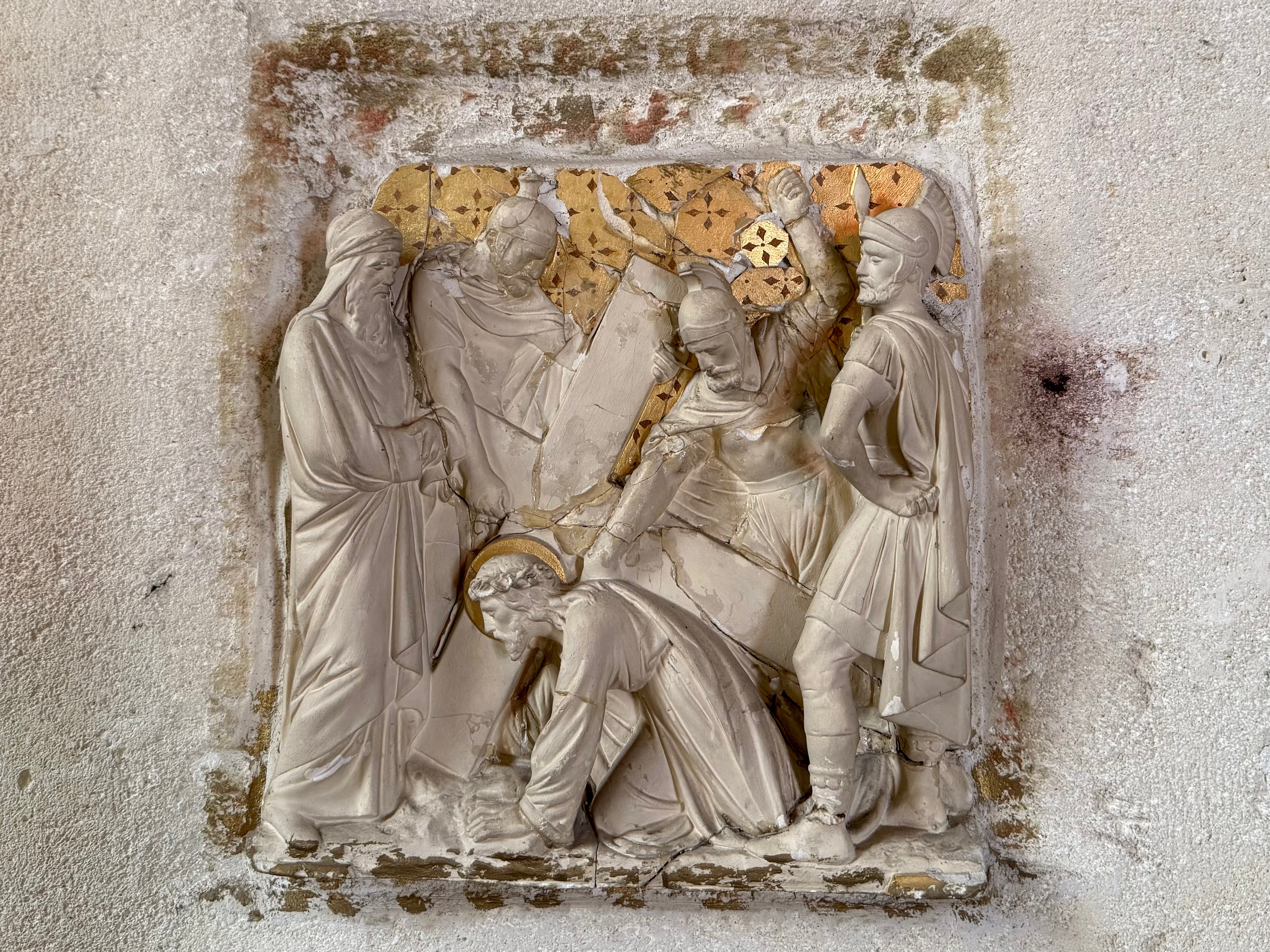
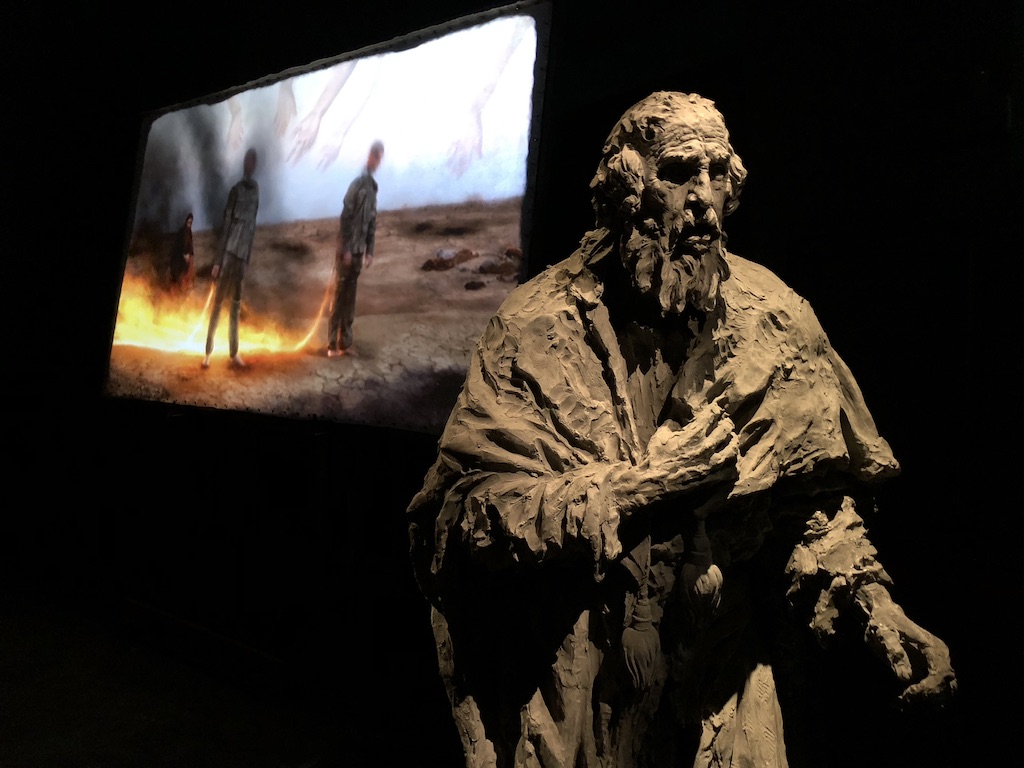
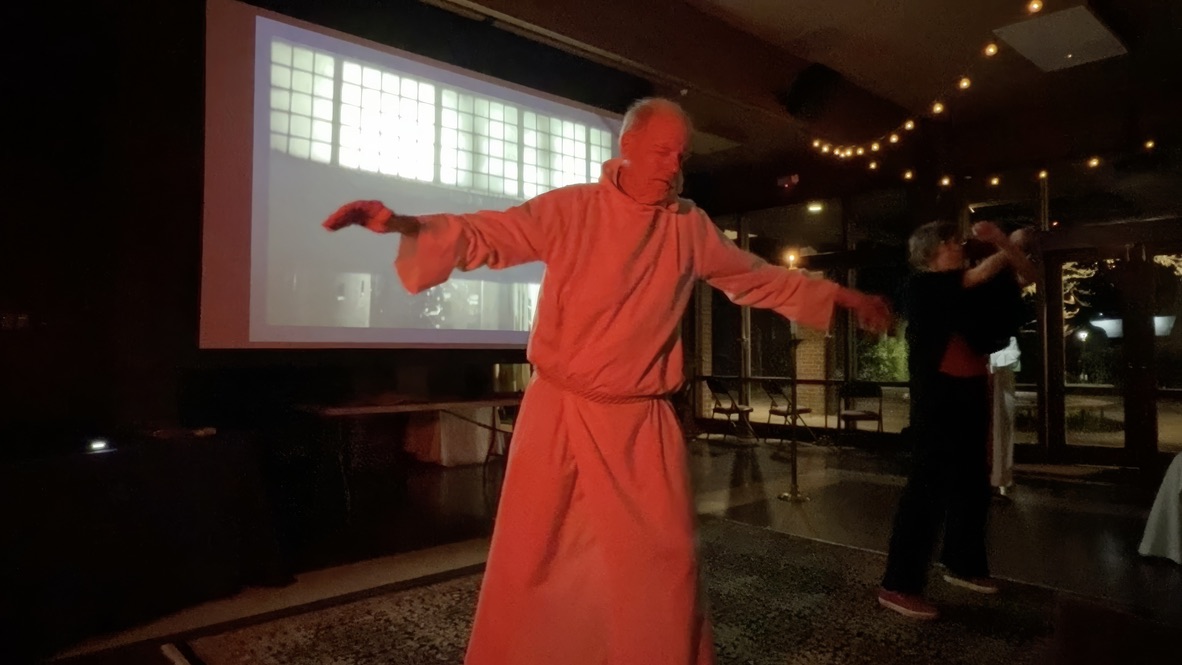
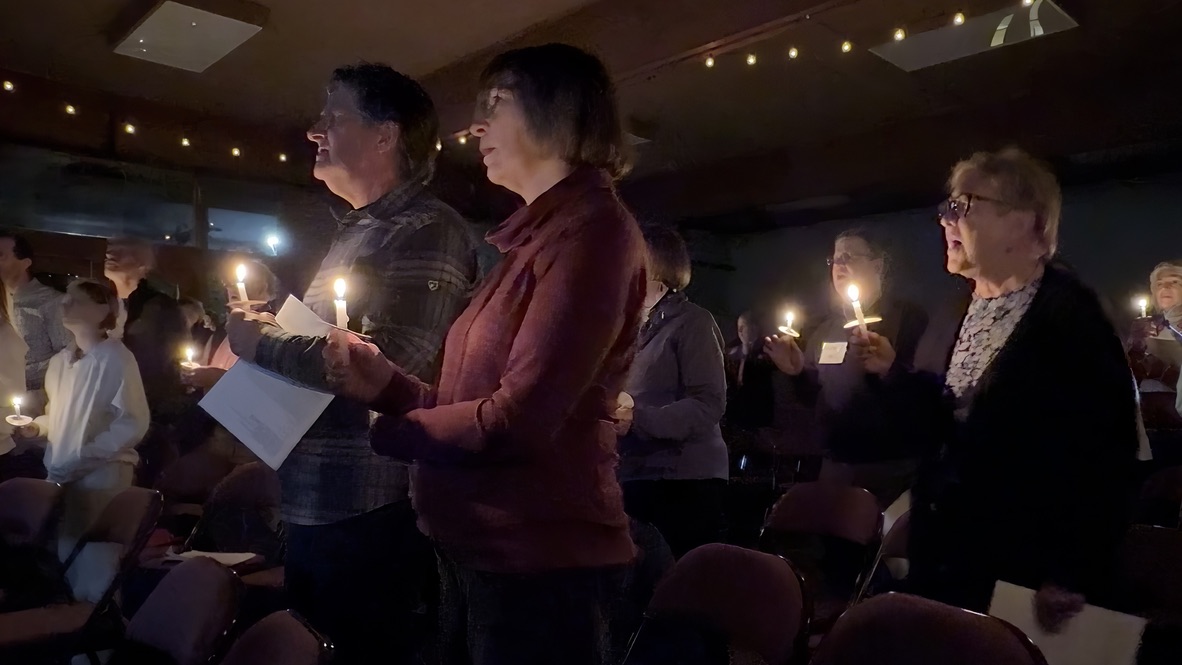

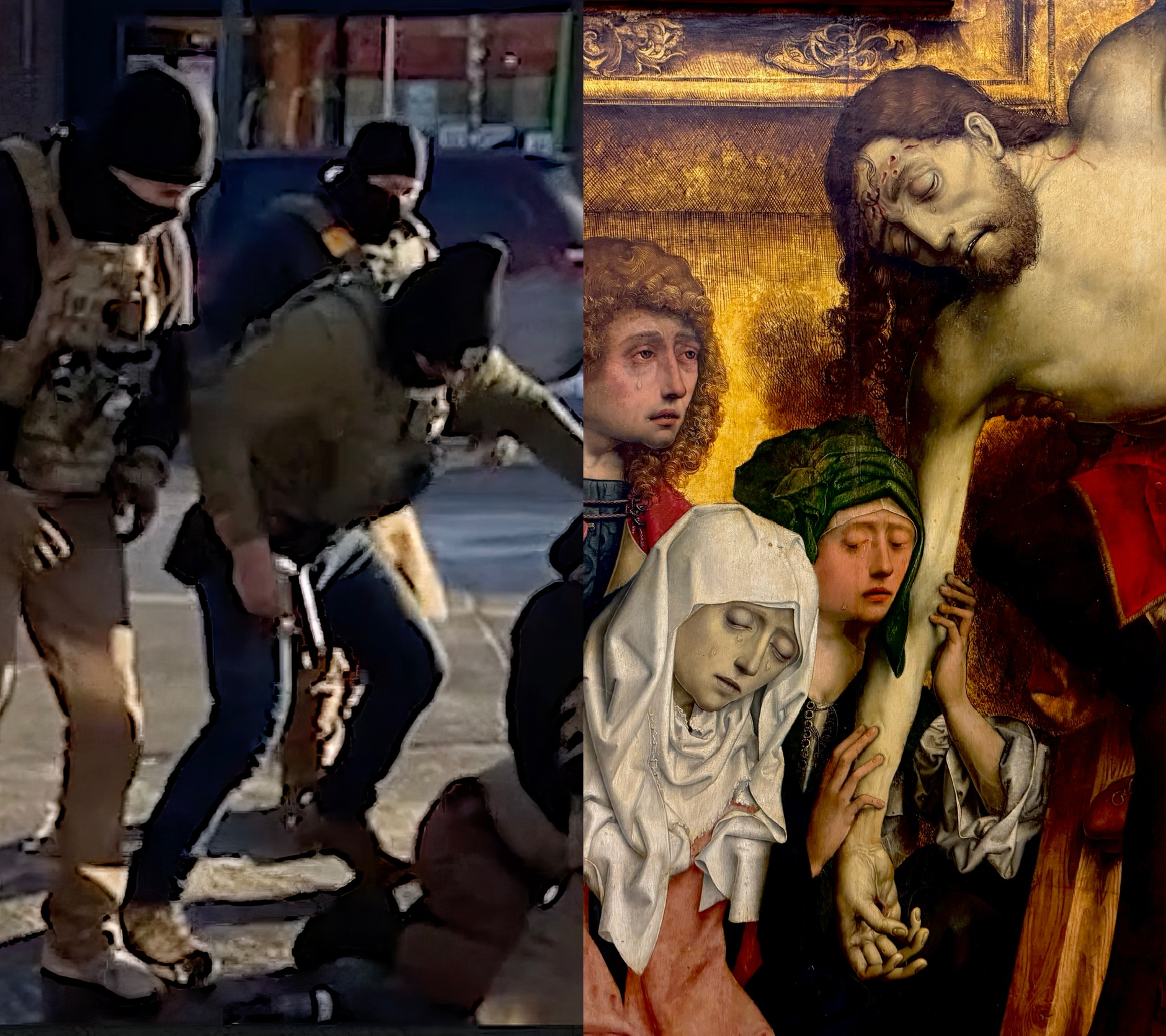
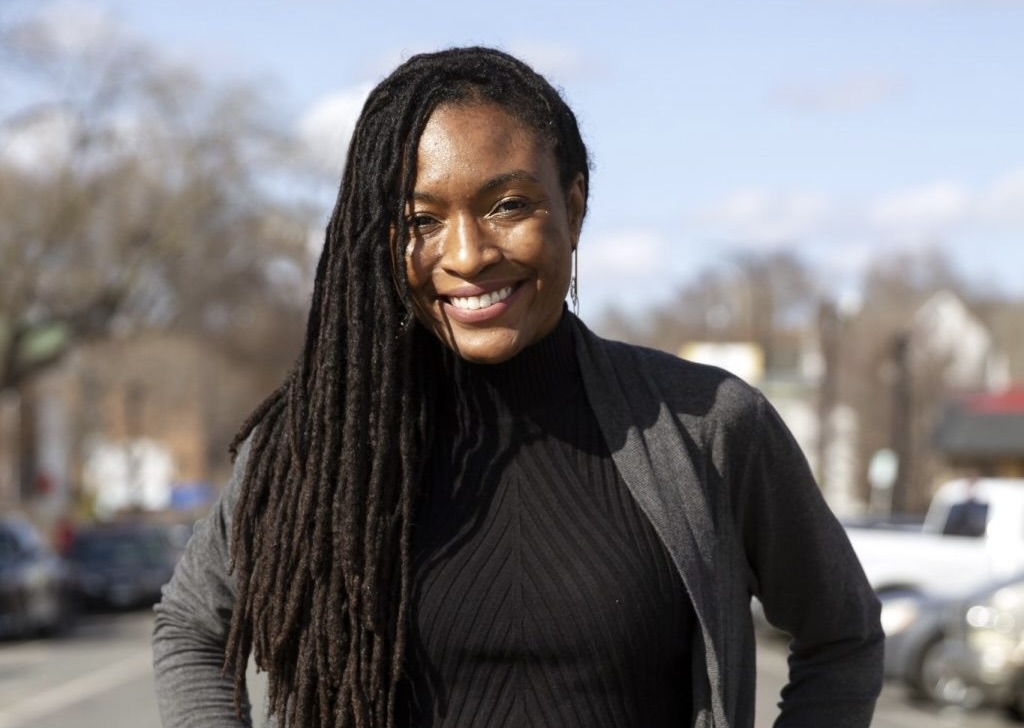
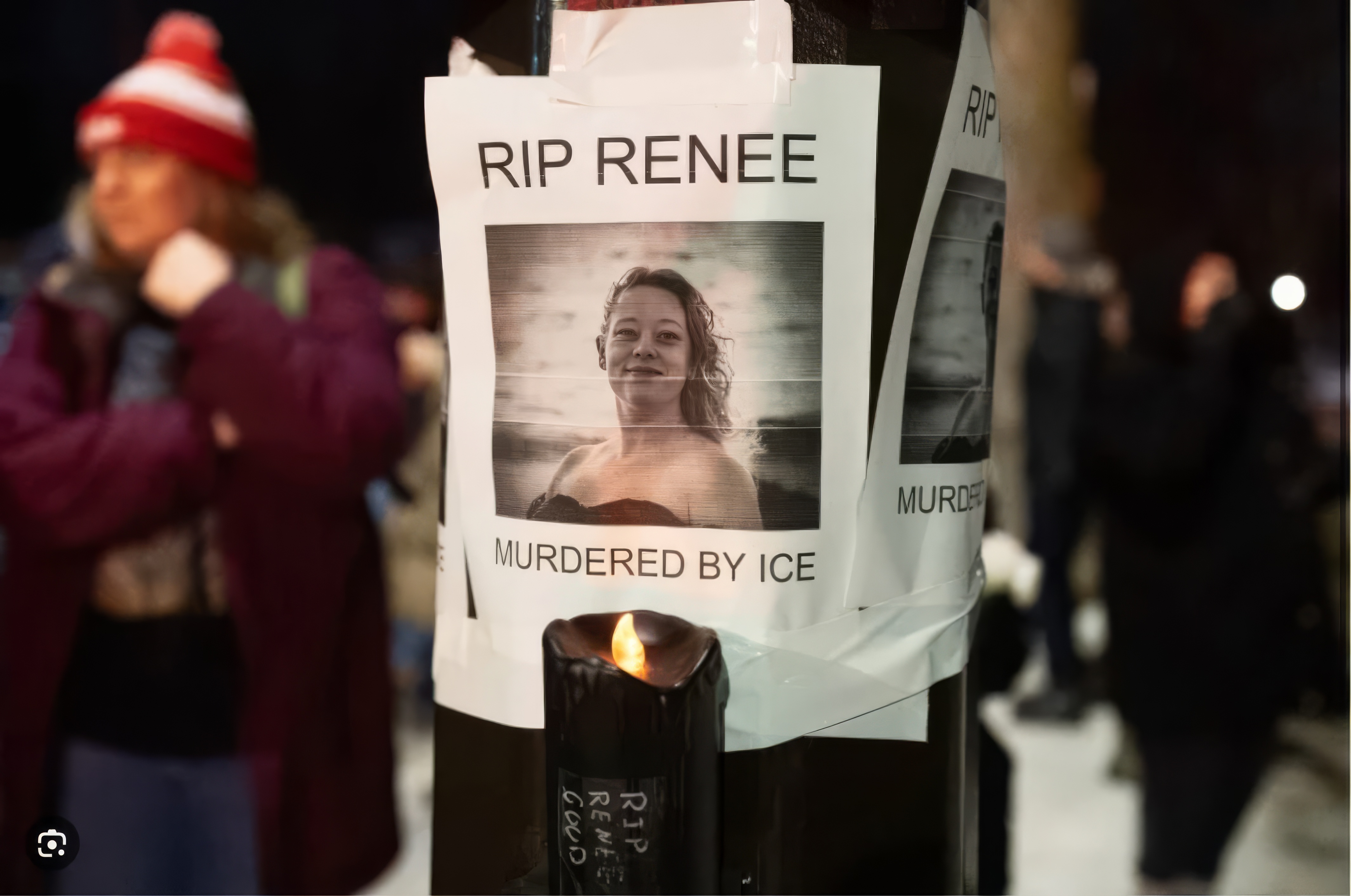
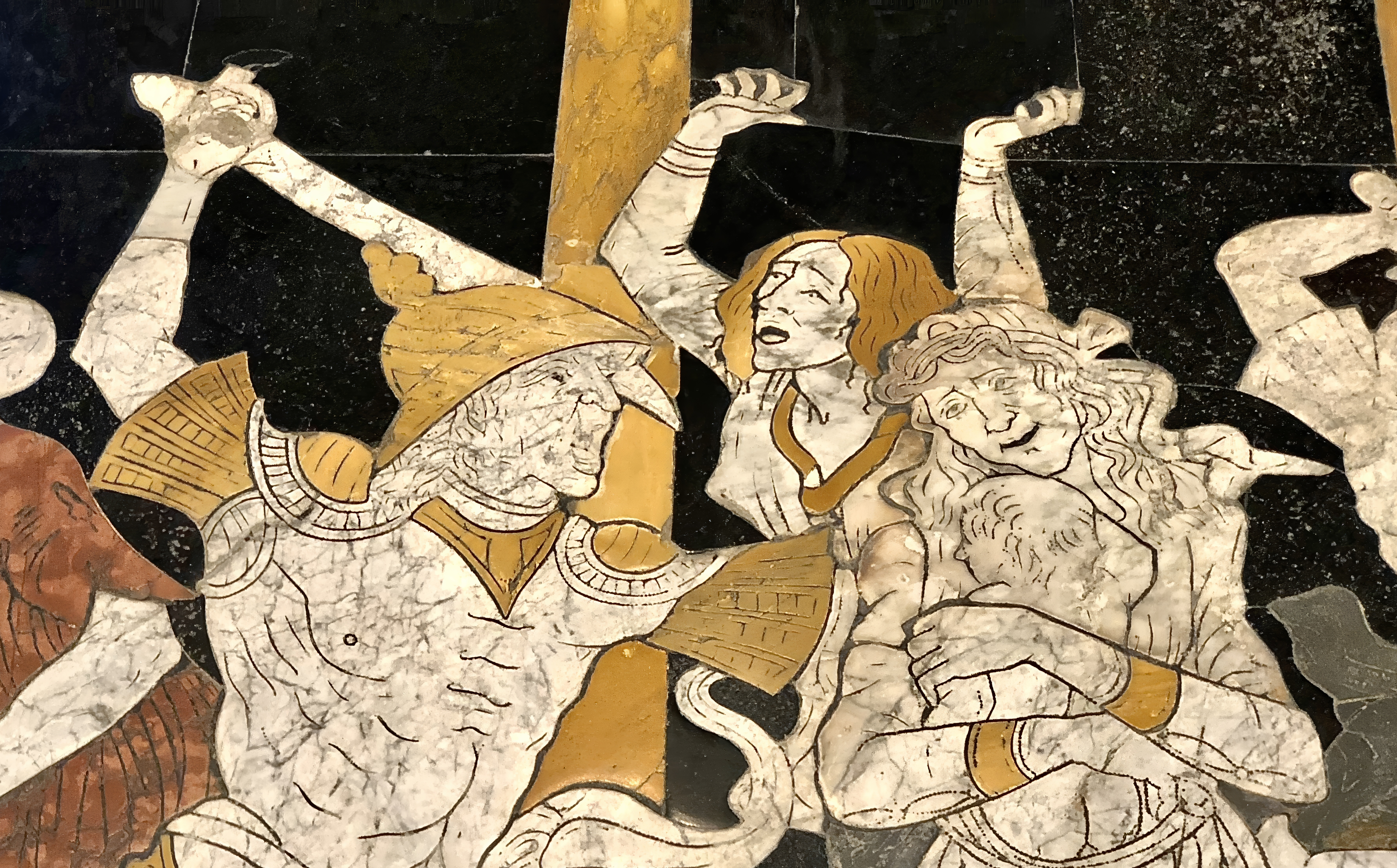

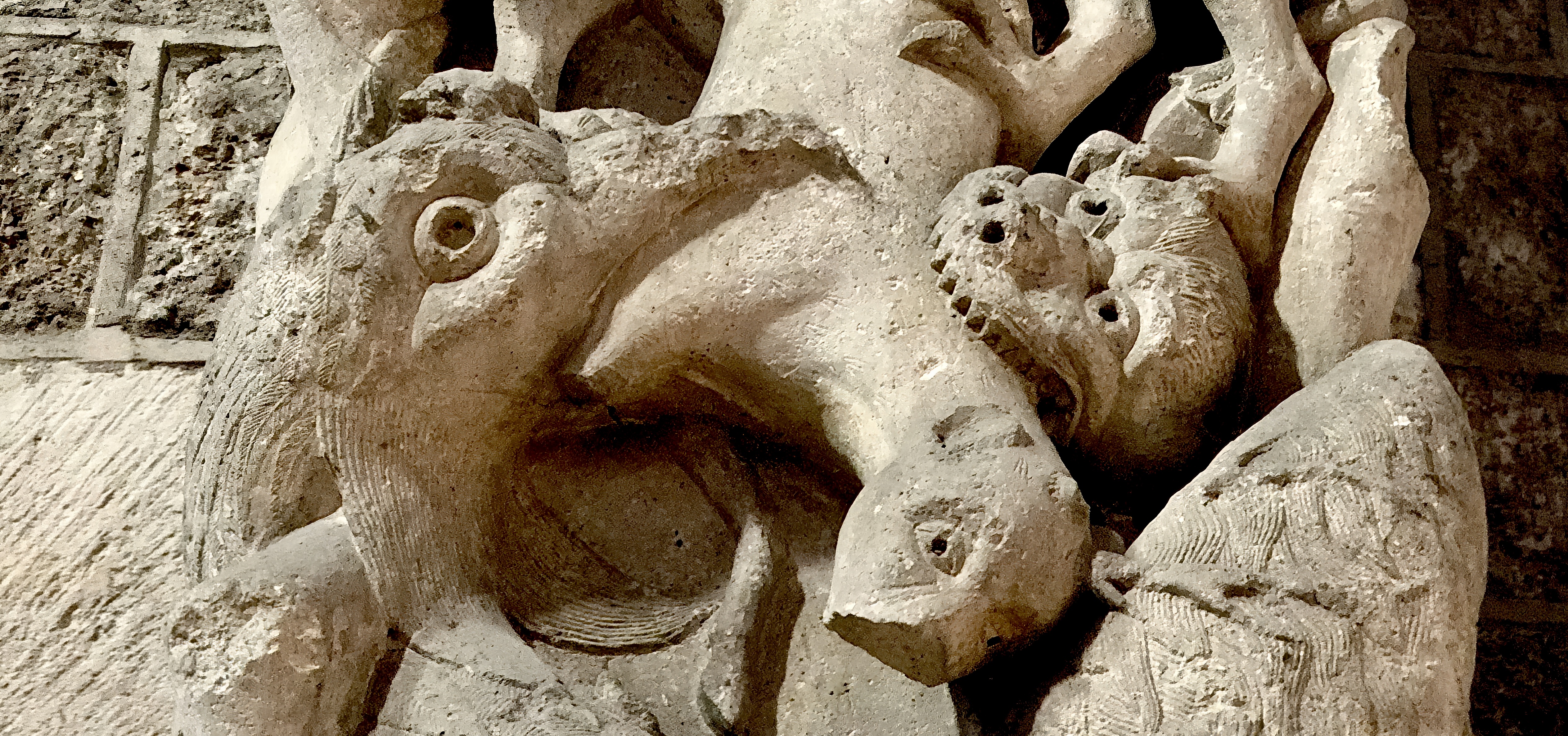
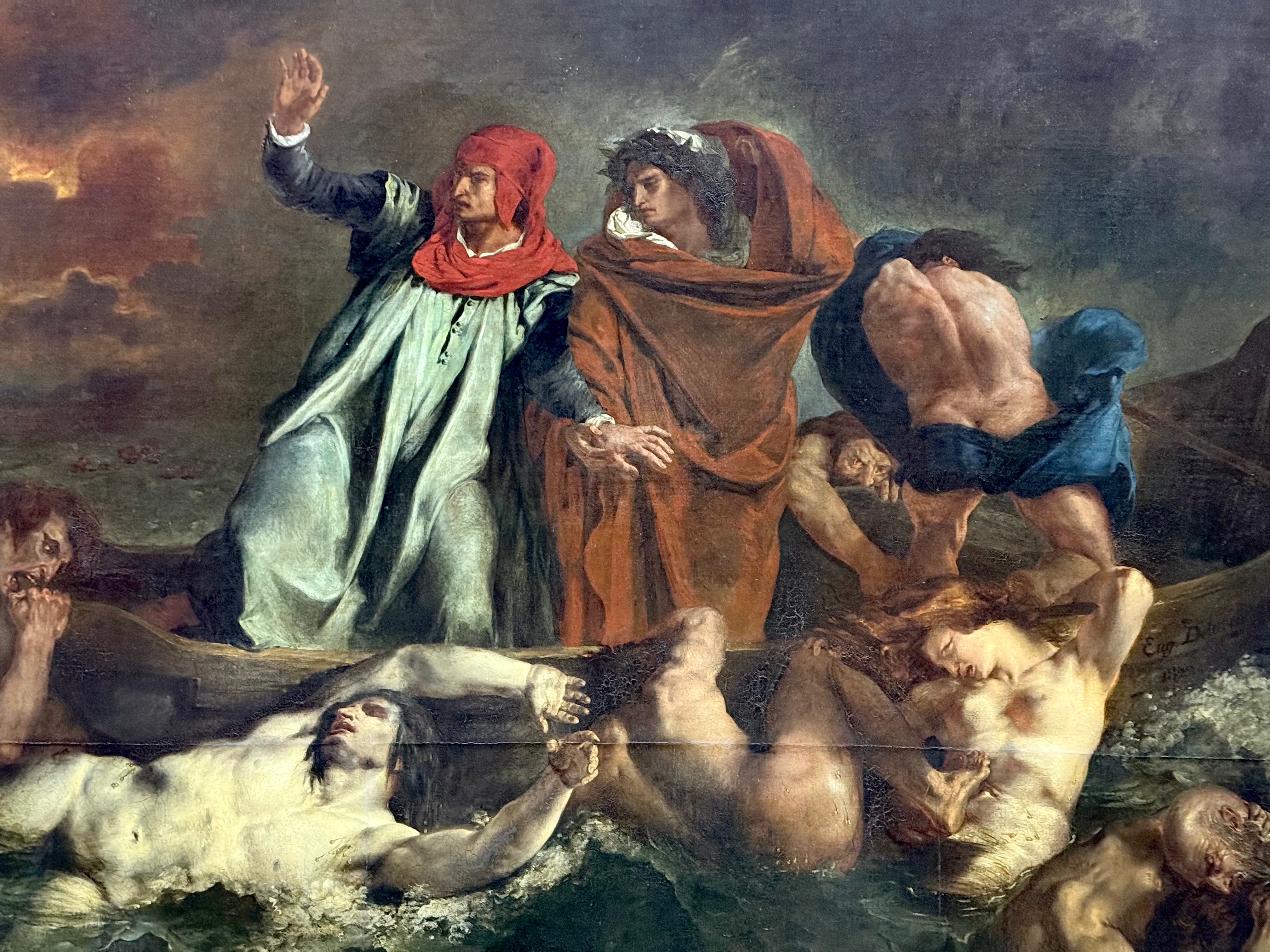
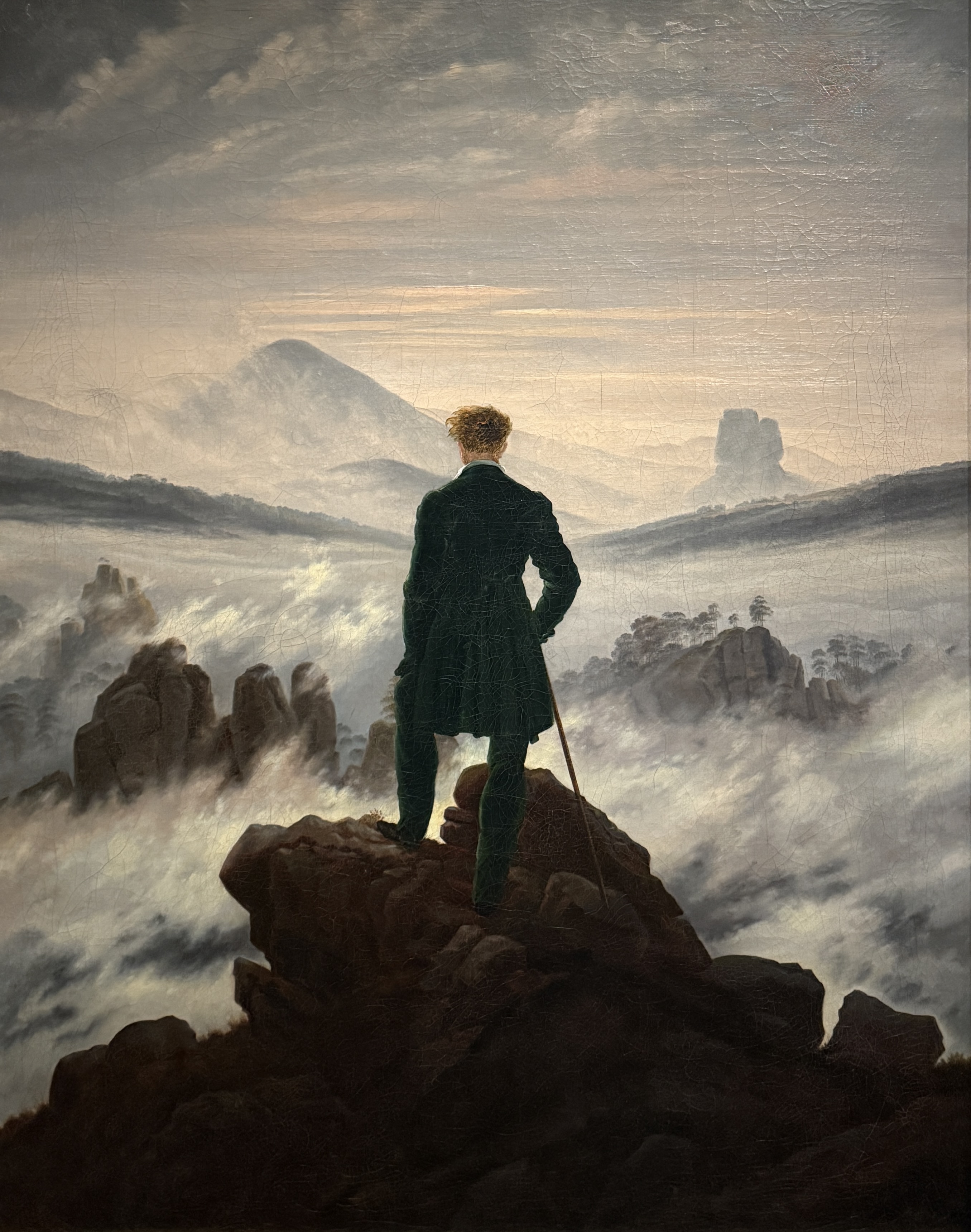





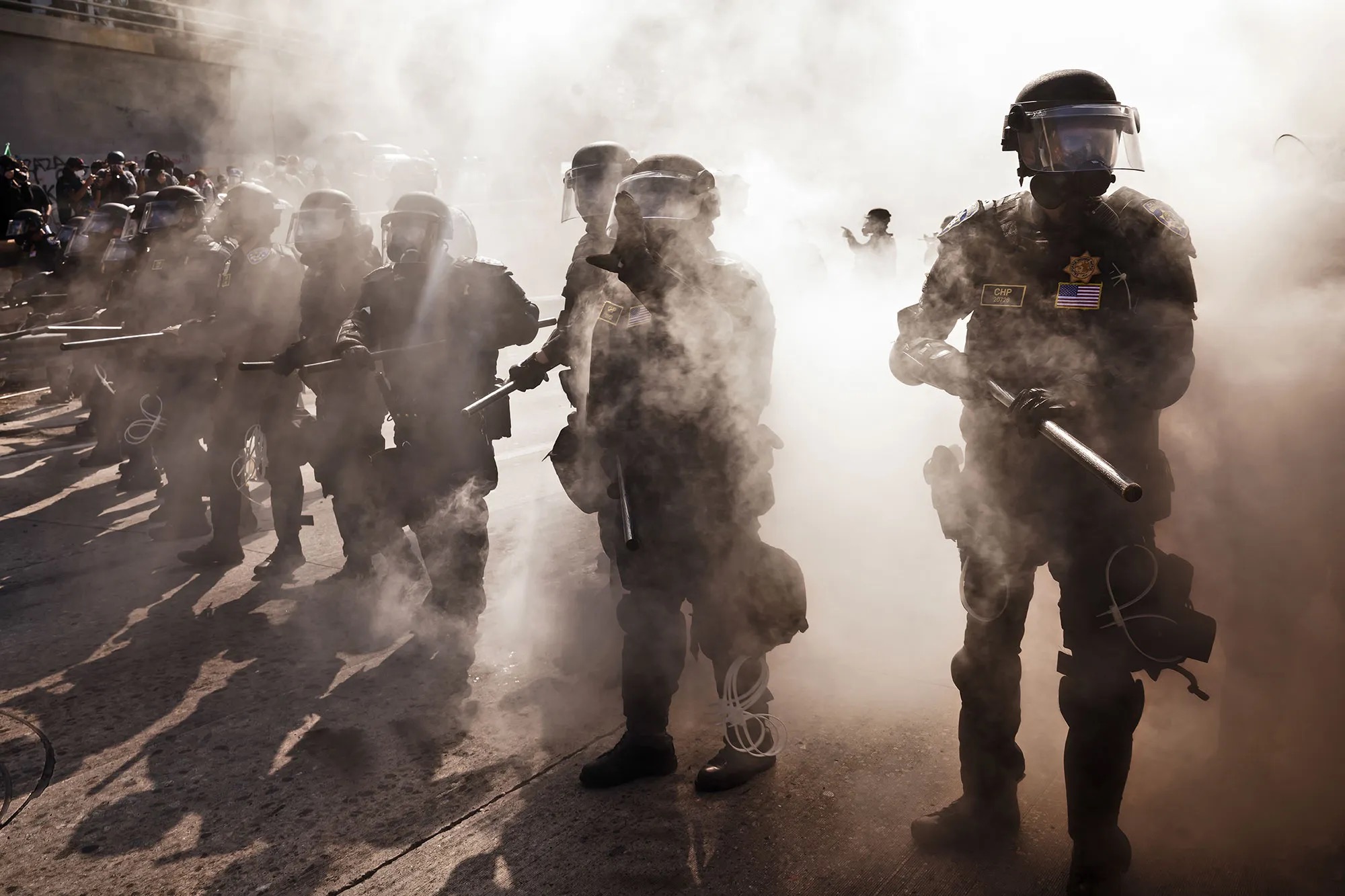
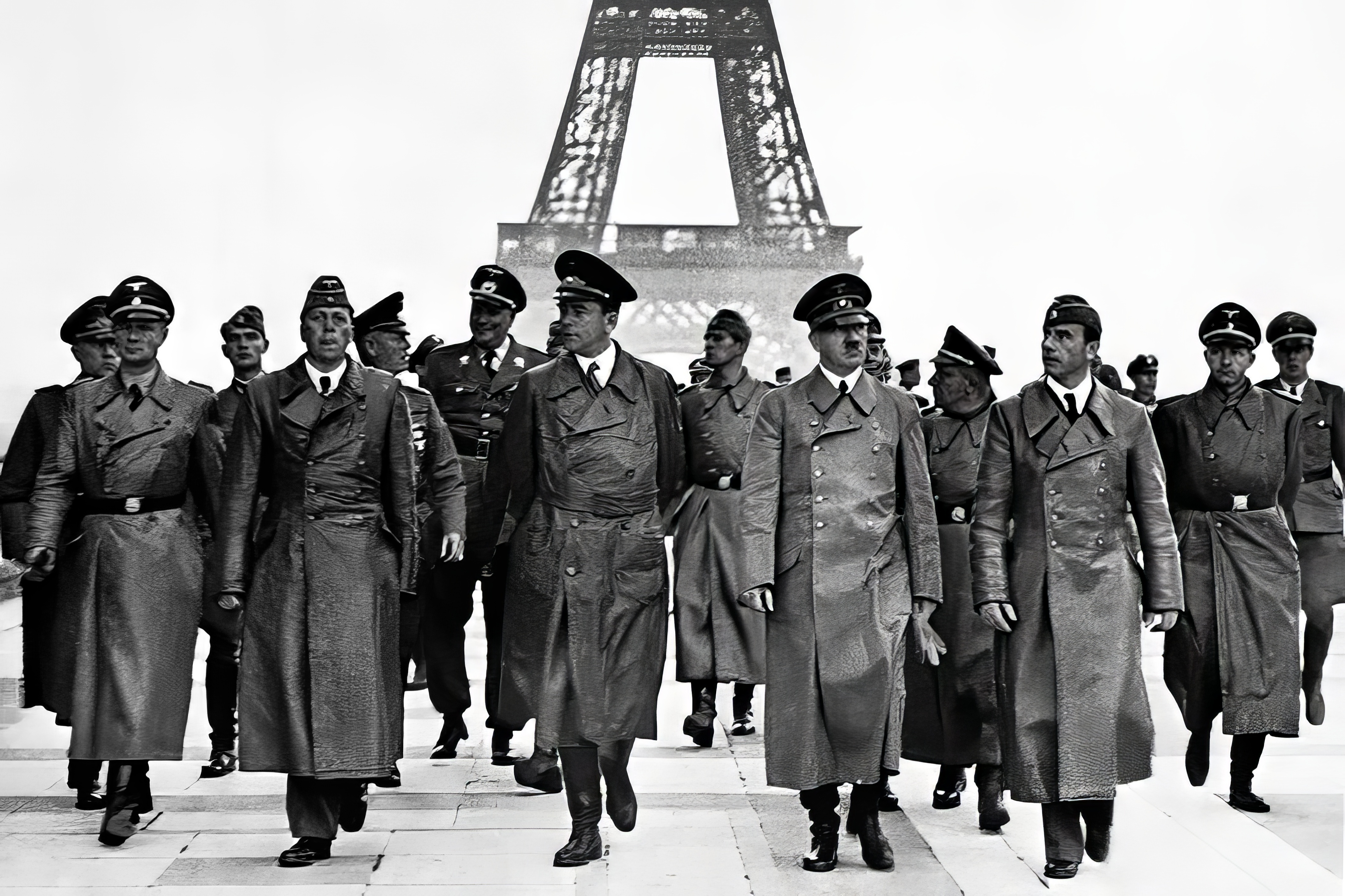

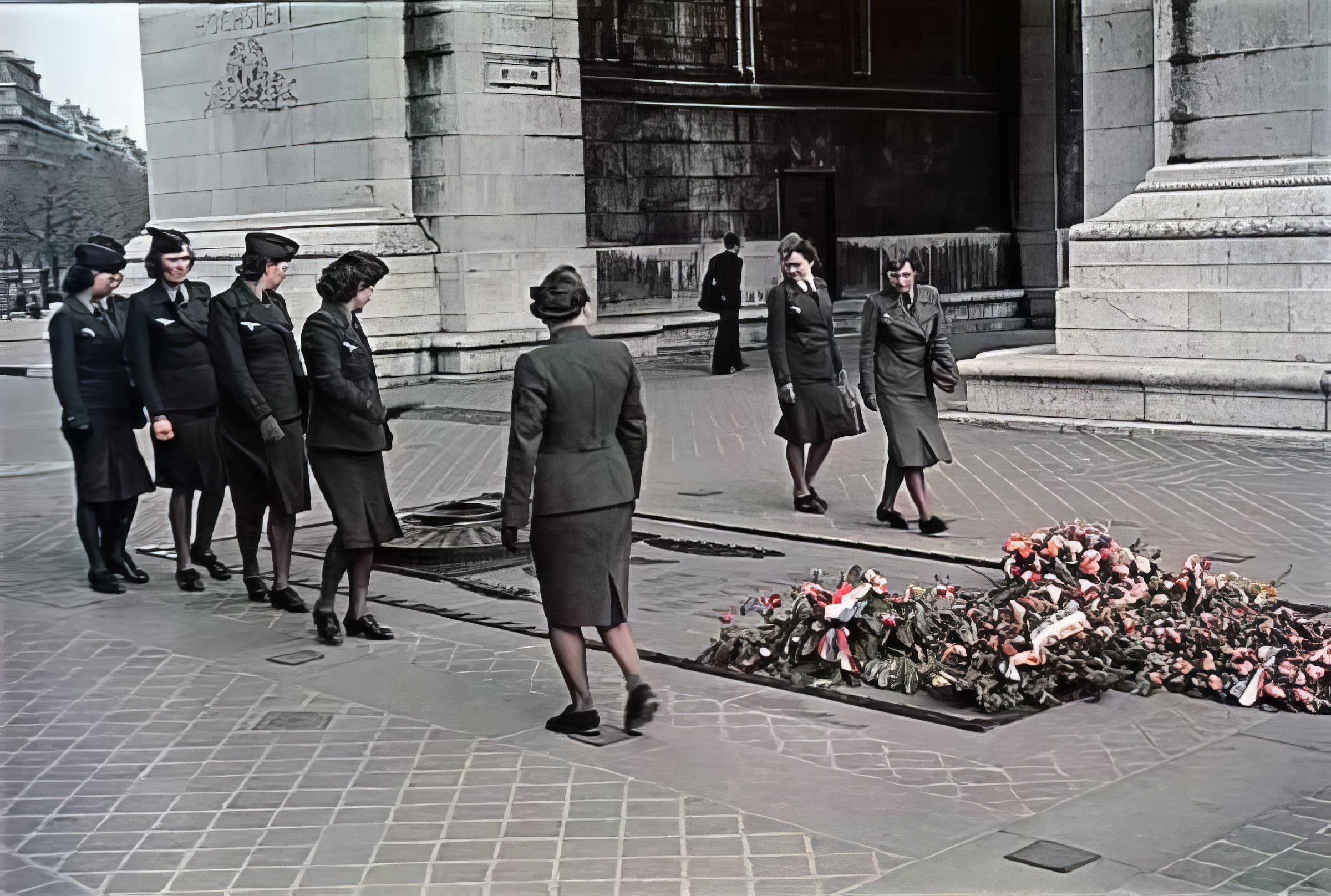

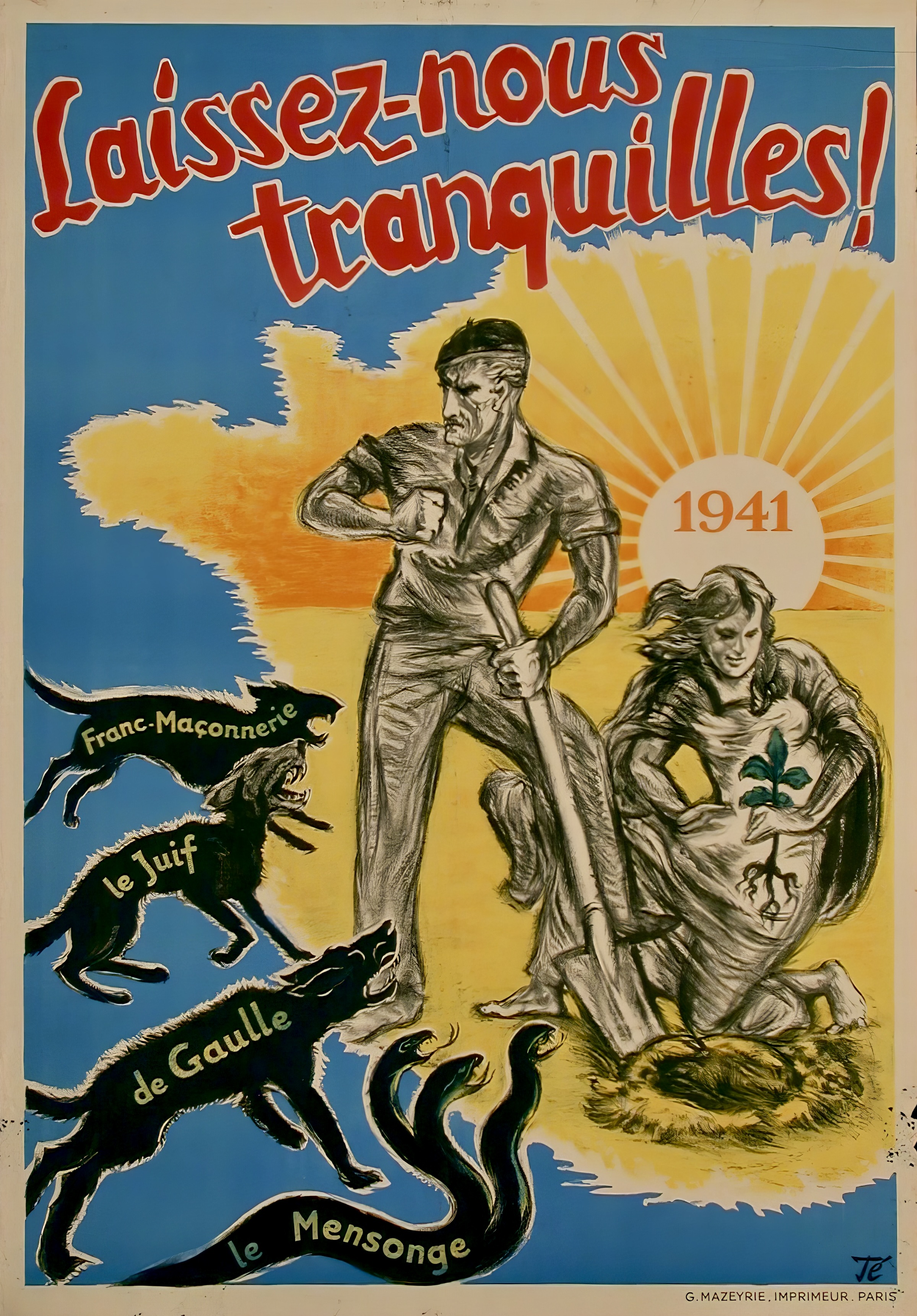

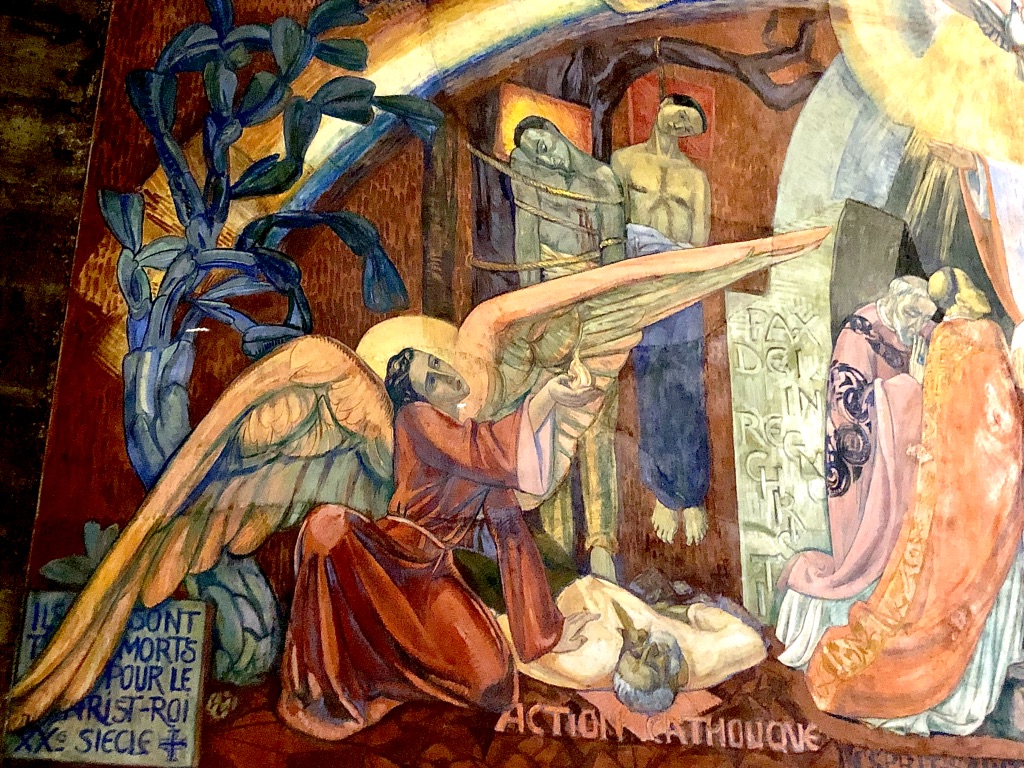


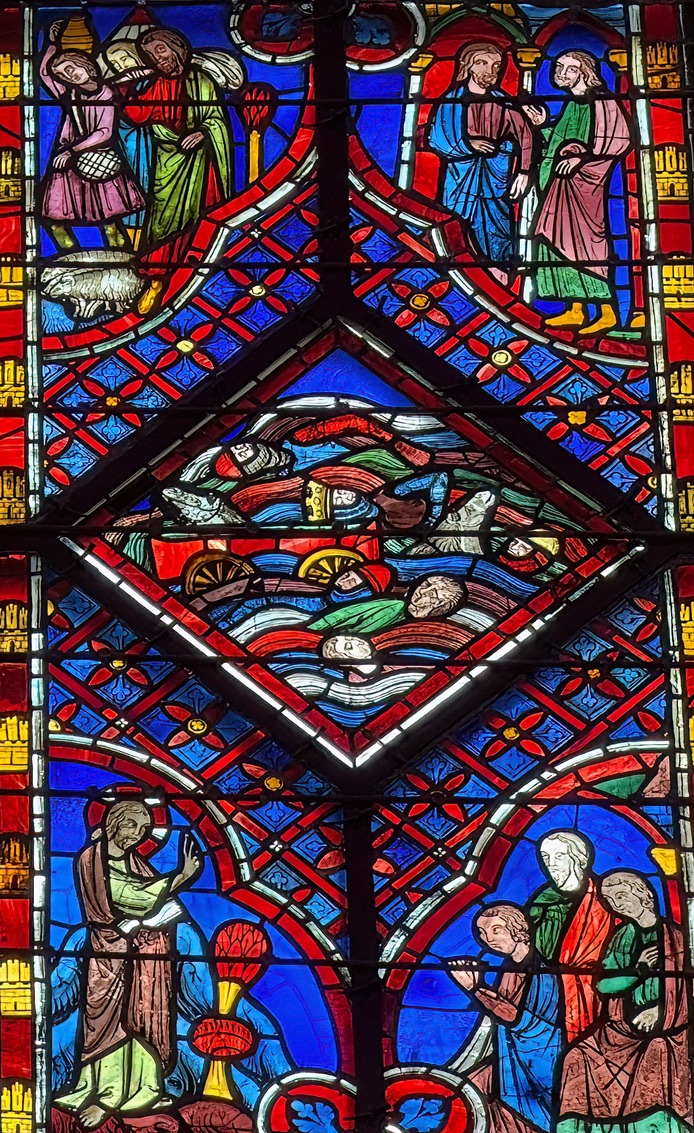
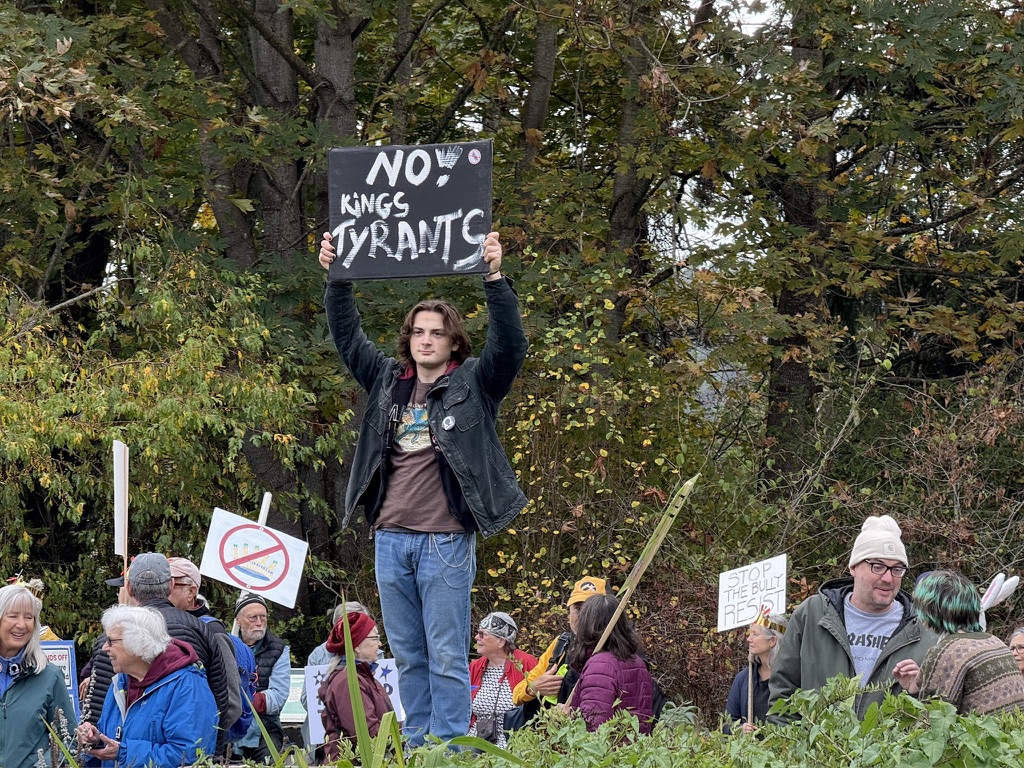
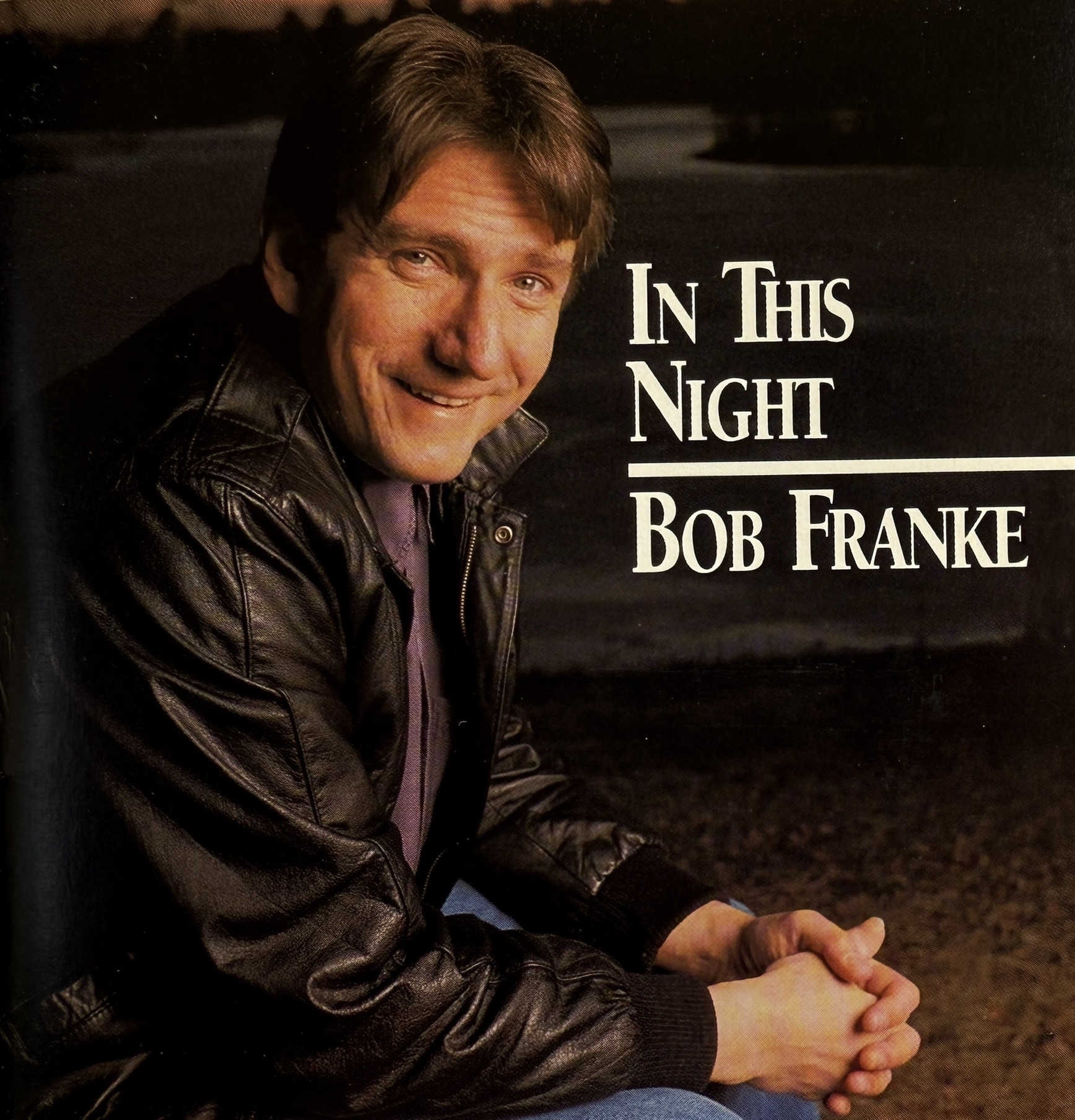
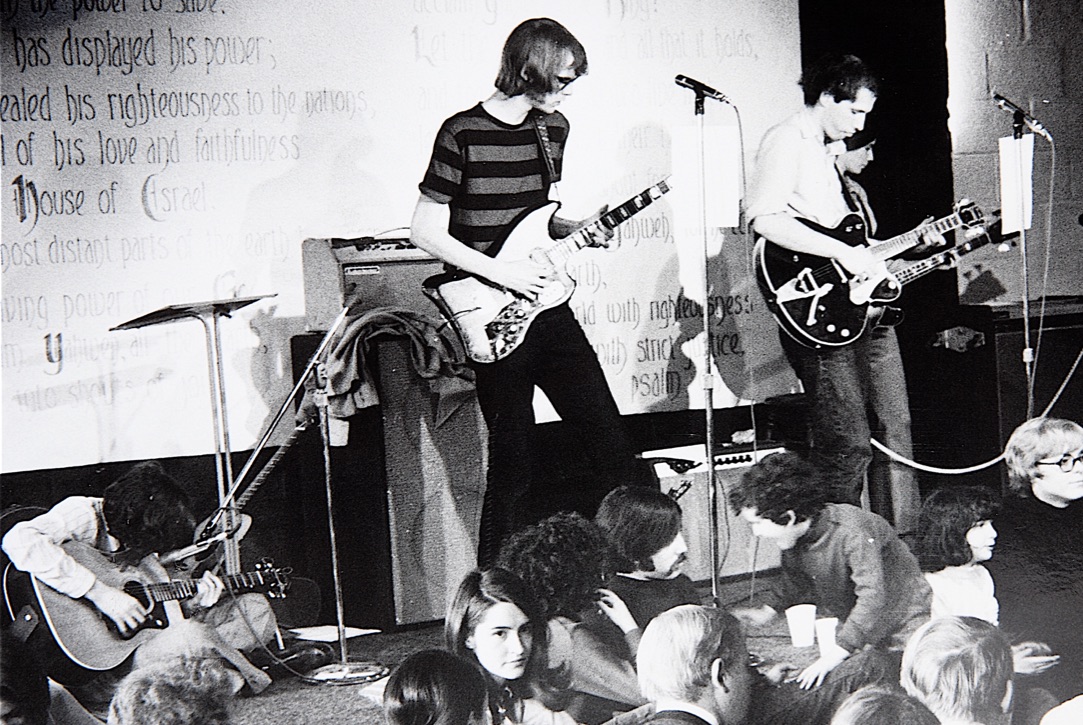
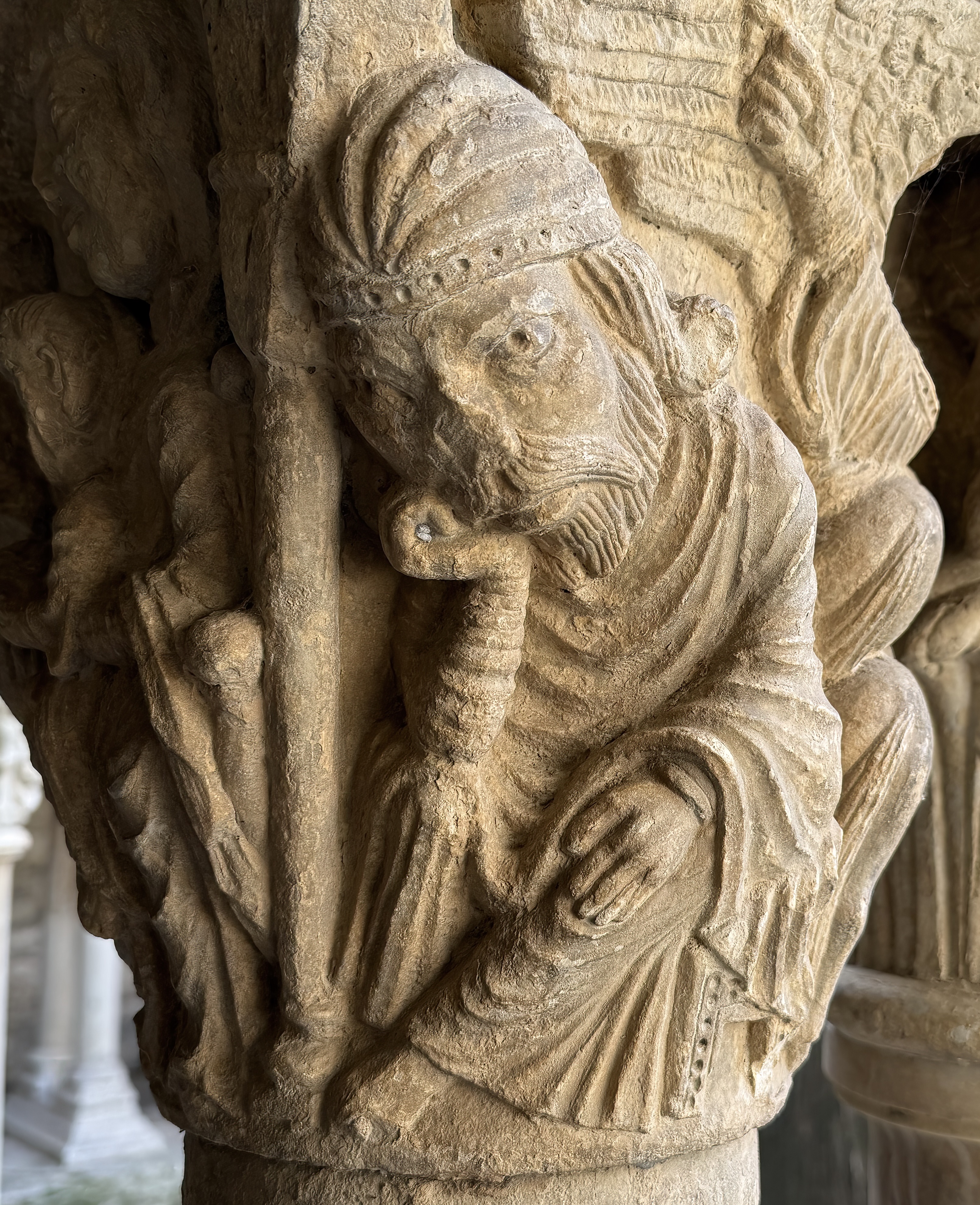



 The religious imagineer