William Blake, Oberon, Titania, Puck & Fairies Dancing (1786)
“The tables outside the cantina were full of beautiful laughing men and women. I didn’t like the cantina at night: it was hard to book a table, and everyone who sat there looked on display, the women in their lovely summer dresses, the men with their hair oiled back on their heads, their tanned bare feet resting proprietorially on top of their Gucci loafers. One wanted to applaud them for presenting such a successful vision of life: you could almost believe they had lived their whole lives, had been reared and groomed from birth, for this one particular night: that this was the pinnacle, this golden summer evening they had all reached simultaneously.
“Yet it made me a little sad to see them there, laughing and drinking champagne, for you knew it was all downhill from here.”
The beautiful laughing men and women in Cameron’s cantina do not arouse our envy. Their self-display seems shallow, narcissistic and unreal. They appear ignorant of time. Golden summer evenings do not last forever. Having achieved the pinnacle, what Wallace Stevens called “the barrenness of the fertile thing that can attain no more,”[ii] they have nowhere to go but down.
The traditional lore of Midsummer Eve shares this suspicion. To mark the year’s longest day, bonfires were lit on British hilltops to assist and encourage the sun at the outset of its long inevitable decline into the winter dark. And “Midsummer Night”—blessedly short—was said to be a time of both mischief and danger, when chaotic pressures cracked open the stability of the world and wild spirits were abroad.
In A Midsummer Night’s Dream, Shakespeare explores these themes with a complicated plot in which the normal order of the world is unraveled for a night, and confusion rules until the dawn. Rulers find their commands thwarted. Lovers aim their desire at mistaken targets. The beautiful queen of the fairies falls madly in love with a low-born mortal who, by magic spell, has the monstrous head of an ass. Puck, the fairy trickster, multiplies the mischief by both design and error. And even words of dialogue take on altered and contradictory meanings.
All this takes place in an enchanted forest, a wild, liminal state outside the civilized order, where societal assumptions and rules are suspended or reversed, hierarchies are overturned, and identities become fluid and changeable. As Bottom says to Titania, “reason and love keep little company together these days.”
In Shakespeare, such liminal spaces serve a critical purpose. Their disorder offers a freedom to reshuffle and reconsider accepted realities, inviting transformation at both a personal and social level. Removed for a time from the customary rules and roles, characters discover new possibilities for themselves and society before returning to “reality.”
However, once you leave your given world for a time, you can never again accept its reality as absolute. You realize that there is more than one way to do both the self and the world. Any single version of reality is but an alternative. In this sense, life itself is but a dream. This refusal to absolutize the given world is the foundation of social justice: we can live better lives and make a better world. It also, however, can open the door to irrationality and madness, exemplified by the millions who live, happily and hatefully, in the fact-free world of American fascism..
At the end of Shakespeare’s play, Puck delivers an epilogue to the audience, those “who have slumbered here, / While these visions did appear.” It’s all been a dream, he assures us, as if we had never really crossed the boundary into the transformative space of a visionary world.
But can we be so sure? Have we not ourselves been touched, perhaps even transformed? Within A Midsummer Night’s Dream, there is a play-within-a-play (the comically performed tragedy of Pyramus and Thisbe). The actors in Midsummer watch the actors playing actors in Pyramus, just as we the audience watch all these permutations from our safe position outside the “fourth wall” which separates the stage from reality. But are we so different from the players on the stage? As Shakespeare scholar Marjorie Garber writes,
“A play is a fiction, art is an illusion, ‘no more yielding but a dream.’ Can we be blamed if we wonder—now that we have been told that we are reality—when someone will wake and recognize that we are only a dream? Can we be blamed for looking over our shoulders, and wondering who is watching the play in which we are acting, while we watch, onstage, actors watching actors who play actors performing a play?” [iii]
Two weeks after Midsummer Eve, I saw a magical outdoor production of A Midsummer Night’s Dream at the Bloedel Reserve, an Arcadian refuge of woods and meadows on my island. Beginning before sunset, it utilized the fading of the day to intensify our immersion into the dreamworld. By play’s end, it was almost night. The narrow path across a rolling meadow to the exit prevented an immediate return to reality. For a few precious minutes more we lingered in the dream, making our ghostly procession of shadows in the twilight.
Every play comes to an end. Every actor must make an exit. I have no plans to do so any time soon (God willing). There are more lines to deliver! However, since I begin my ninth decade tomorrow, time may not be on my side—but it’s on my mind.
Medieval thinkers divided a human lifetime into “ages.” Some had just four: Childhood, Youth, Maturity, and Old Age. Isadore of Seville (c. 560-636) expanded that to six: infancy (up to 7), childhood (7-14), adolescence (14-28), youth (28-50), gravitas (50-70), and, for anything beyond 70, senectum (the same root as senior and senility).
[Of course, senectum is a hot topic in this election year. Is the President too old to govern? Perhaps a better question would be: Why can’t the other guy act his age? As the Bible says, “Woe to you, land, if your king is a child!” (Ecclesiastes 10:16). But I digress.]
Bartholomaeus Anglicus, The Four Ages (1467-1475)
In this fifteenth-century illumination by Bartholomaeus Anglicus, the four ages of the human life-cycle stand in the same room, as if each of us is all the ages we have ever been. Childhood is clothed in red, the color of sanguinity (eager hopefulness). Youth is into fashion and sports, while Maturity dresses for battle. Old Age, warmly attired for the wintry years, glances back at all his past selves, hopefully with gratitude rather than regret.
Bartholomaeus Anglicus, The Seven Ages (1482)
A later image by the same artist depicts seven ages standing in two groups. On the right, Childhood plays with a stick and ball, Adolescence clasps his schoolbooks, and Youth carries a spear, perhaps dreaming of competitive glory. The first three stages of Maturity are not radically distinct from one another, but Old Age, shorter and bearded, is starting to separate his body from the group. Yet he still keeps an eye on the Child he once was.
Idleness, Dunois Book of Hours (c. 1439-50)
Time is a gift, and I am truly grateful for my years so far—the dreams as well as the realities. Je ne regrette rien. As for the road ahead (even if it’s all downhill), I wish not to be the man on the donkey, idly dozing along the pilgrim way. Like the figure gazing at the view from the bridge, I want to keep taking it all in. As an old man advised a younger friend in Henry James’ The Ambassadors:
“Live all you can; it’s a mistake not to.”
[i] Peter Cameron, Andorra (New York: Farrar Strauss Giroux, 1997), 149-150.
“Opulent Ascension,” an installation by Sean Scully in San Giorgio Maggiore (Venice Biennale, 2019).
Inspired by Jacob’s dream of a ladder to heaven (Genesis 28:12), Scully’s stack of colored felt slabs rises more than ten meters toward the luminous dome of San Giorgio Maggiore, Palladio’s splendid Renaissance church in Venice. Amid the subdued grays and whites of the interior, the miraculous colors exude the vitality of spiritual aspiration, like spring flowers refuting winter’s drab.
On this Ascension Day, let me offer another image, a 36-second “video icon” of a cloud disappearing into the blue. Consider it a brief meditation on Luke’s text, “As they were watching, he was lifted up, and a cloud took him out of their sight” (Acts 1:9).
The Ascension of Christ takes us into an ineffable realm, far above the literalism of earthly life. What are we to make of such a strange story? The following video of an Ascension Day homily was streamed during the pandemic a few years ago, when we were not able to gather in person to celebrate the mystery. Fittingly, it was recorded mostly outside, under the open sky.
What is your most precious possession? This was the question posed by two British artists in their random encounters with strangers at the Venice Biennale. For three days in April, Neil Musson and Jono Retallick wandered about the art festival venues literally clothed in the question, printed in various languages on their white smocks. Whenever a curious glance at their outfits prompted conversational engagement, the artists recorded whatever answers people chose to give. From more than fifty responses, the artists will edit the results to post on their website, M+R, in the near future.
Jono Retallick and Neil Musso wearing The Question in Venice. (Photo by Neil Lambert)
It’s a great question! In my monthly Zoom converation with longtime clergy friends, Jono made a guest appearance from the Venice apartment of one of our members.[i] When he invited each of us to name our most precious possession, no one selected a material object. David, a gifted writer and preacher, chose the stories he’s lived—and lived by—over a lifetime. Richard cited his sense of humor, which has never deserted him even when laughter was scarce. Mark, who in his eighties finds himself, as he put it, “in the process of disappearing” as time grows ever shorter, said that what he values most is “now”—the savored fullness of the present moment.
I’m still working on my own answer. The first thing I told Jono was that since everything we are and everything we have is a gift—from the Creator of all as well as the secondary causes of heredity, culture, and the labor of others—it could be said that we in fact possess nothing. But that seems a bit of a cheat, a way to avoid the work of values clarification. The question wants me to think: Where does my greatest treasure lie? What would be the hardest thing to lose?
I’ve known people who had only a few minutes to flee their homes in the path of racing wildfires. And I’ve wondered: If I were in that situation, what irreplaceable items would I grab before running out the door? The box with 50 years of journals? An album of family photographs? The Theotokos icon painted for us on a Greek island? The wooden moon carved by a First Nation artist in Canada? A guitar once played by the legendary Ramblin’ Jack Elliott? It’s only stuff of course, but the things we love best are saturated with stories. They are outward and visible signs of inward and beloved memories. I would feel the poverty of their loss. But I would not call them “most precious.”[ii]
Moon mask (1991) carved on Vancouver Island from alder wood by Richard Menard duing a lunar eclipse. Theotokos icon (2015) by Dimitris Koliousis, Santorini, Greece.
All of us, of course, would reserve “most precious” for our deepest relationships—with God, lovers and friends. But it would violate the integrity of their otherness to deem any of these to be possessions. So I must look elsewhere for my answer to the question.
Good health comes to mind, or even life itself. These are certainly very highly treasured—but as gifts to enjoy, impossible to possess. As the Psalmist reminds us, we are “but flesh, a breath that goes forth and does not return” (Psalm 78:39). We all must learn to loosen our grip in this transitory life.
He who binds to himself a joy Does the winged life destroy He who kisses the joy as it flies Lives in eternity’s sunrise
— William Blake. “Eternity”
I could call faith my most precious possession, for without it I would be hopelessly adrift in a sea of unmeaning. But faith is a communal possession. It is not distinctively mine. Faith is plural, shared and nourished within the collectivity of God’s friends. If I am to speak in the singular, to name what is uniquely mine, I would say that my most precious possession is my imagination—the particular way I see the givenness of the world, processing it within my own heart and intellect, then reflecting my perception back into the world in some fresh way, whether that be in the form of conversation, writing, art, or simply as praise and thanks for a world of beauty and blessing (or lament and protest in the case of suffering and evil).
Calligraphy of Robert Bresson text by Br. Roy Parker OHC.
“Make visible what, without you, might never be seen,” said Robert Bresson, who made films unlike any other. As one critic put it, “Bresson’s films are not merely the most lucid; they are, in essence, lucidity itself.”[iii] Perhaps only the saints attain “lucidity itself,” but each of us has our own unique way of seeing and being. And I imagine that God finds equal delight in what each of us has to report from our respective locations in a universe of infinite possibility.
Dante and Beatrice each adore the heavenly light from their own location Venetian woodcut by Francesco Marcolini (1544).
Light the first light of evening, as in a room In which we rest and, for small reason, think The world imagined is the ultimate good.
This is, therefore, the intensest rendezvous. It is in that thought that we collect ourselves, Out of all the indifferences, into one thing:
Within a single thing, a single shawl Wrapped tightly round us, since we are poor, a warmth, A light, a power, the miraculous influence.
Here, now, we forget each other and ourselves. We feel the obscurity of an order, a whole, A knowledge, that which arranged the rendezvous.
Within its vital boundary, in the mind. We say God and the imagination are one… How high that highest candle lights the dark.
Out of this same light, out of the central mind, We make a dwelling in the evening air, In which being there together is enough.
— Wallace Stevens, “Final Soliloquy of the Interior Paramour”
[i] The Rev. Neil Lambert, an Anglican artist/priest at St. Mary’s, Ash Vale, UK, has collaborated on some previous projects with Musson and Retallick. For more on Lambert and Venice, see Dreaming the Church That Wants to Be.
[ii] In a time when the people of Gaza, Ukraine and many other places are being dispossessed of nearly everything, I am not entirely comfortable talking about the things I have due to my privilege. Situations where the most precious possession might be a loaf of bread, a bottle of water, or a bomb shelter shatter all complacency.
M+R, the webstie of artists Neil Musso and Jono Retallick, is well worth a visit. They are exploring creative ways to transform the way we experience public spaces and social interaction.
Jarret and Aida were among a dozen pilgrims who converged from four states and a Canadian province to view the 2017 eclipse in Oregon ranch country.
When I experienced my first total solar eclipse seven years ago, it was so overwhelmingly awesome that I resolved to make it to the next one in North America, due on April 8, 2024. Its path across the U.S. will run from the sourthwest border of Texas to the eastern edge of Maine, so my plan was to start driving from the Pacific Northwest a week in advance, adjusting my course daily toward whatever region promised clear skies. I thought I might end up somewhere in Texas, but a high probability of cloudy skies ruled that out, along with most of the other states except perhaps northern New England (too far) and some stretches from southern Missouri to central Indiana (too unspecific). So I abandoned my quest. Why drive 2000 miles to watch a cloud get dark? I can do that at home.
I was relieved in a way. The idea of a demainding road trip right after the exhausting rigors of Holy Week did verge on madness. And I have thoroughly enjoyed catching up on sleep and reading this Easter Week. But come Monday, I’m sure I will be visited by the demons of regret and envy. I do hate missing out.
In the instant of the sun’s vanishing in 2017, my first thought was, “Why did it take me so many decades to see this breathtaking phenomenon?” A few minutes later, when the light began to return, I thought, “When’s the next one?” And even if I never see another eclipse, the two minutes of pure wonder in between those thoughts will live in me forever.
To all of you fortunate enought to be in the path under a cloudless sky on Monday. I wish you a totality of amazement. There is nothing else in Nature so uniquely sublime. After seeing the 2017 eclipse, I wrote a piece about its effect on the senses and the soul, with the help of Dante, John Donne, Henry Vaughan, and Michelangelo Antonioni. In a decade of blogging (yesterday marked the tenth anniversary of The Religious Imagineer), it has been my most popular post. You can read it at the following link:
This is the fifth time in ten years of blogging that I have observed the feast day of poet-priest George Herbert—”the greatest devotional poet in the English language”[i]—with a reflection on his poetic “heart work and heaven work.”[ii] For me, in our spiritually impoverished secular age, he remains an indispensable guide for a life of prayer. As I wrote in a previous post,
“Herbert’s passionate engagement with the Transcendent––among us, within us, over-against us––was not theoretical or abstract, but intimate and experiential, employing the first-person form of lyric poetry to open a clearing where his inmost feelings could show themselves to both the speaker and his readers. In his striking play of words, images and sounds, a consort of meanings both public and private, we overhear Herbert’s prayers, and witness the argument of his soul. The brilliance of his poetic invention is never for its own sake. He seeks not to show off his skill, but to surrender his will.”
You can find more general information about Herbert’s life and works in the links at the end of this post. Today I want to look at two poems about the inescapable mortality of the human condition. In the first, “Time,” the poet meets up with the Grim Reaper, wielding his scythe used to harvest the ripe field of human souls. He is, of course, the personification of the temporal flow that sweeps us all toward death. Instead of cowering in fear, the poet initiates a playful bantering, as if Time were his equal. Courteously, Time calls the poet “Sir,” and lets him do most of the talking.
Meeting with Time, slack thing, said I,
Thy sithe is dull; whet it for shame.
No marvell Sir, he did replie,
If it at length deserve some blame:
     But where one man would have me grinde it,
     Twentie for one too sharp do finde it.

Perhaps some such of old did passe,
Who above all things lov’d this life:
To whom thy sithe a hatchet was,
Which now is but a pruning knife.
     Christs coming hath made man thy debter,
     Since by thy cutting he grows better.

And in his blessing thou art blest:
For where thou onely wert before
An executioner at best;
Thou art a gard’ner now, and more,
     An usher to convey our souls
     Beyond the utmost starres and poles.

And this is that makes life so long,
While it detains us from our God.
Ev’n pleasures here increase the wrong,
And length of dayes lengthen the rod.
     Who wants the place, where God doth dwell,
     Partakes already half of hell.

Of what strange length must that needs be,
Which ev’n eternitie excludes!
Thus farre Time heard me patiently:
Then chafing said, This man deludes:
     What do I here before his doore?
     He doth not crave lesse time, but more.
From the first moment, the poet disses Time—none other than Mr. Death—calling him “slack” (meaning lazy and slow), and mocking his scythe as shamefully dull. Herbert’s health was poor when this was written (he would die at 40), and his jibe may have been the black humor of a dying man: With such a failing body, how come I’m still here? You need to sharpen your blade, Mr. Death!
But the poet’s surprisingly light tone here is a form not of denial, but of faith. For the believer, Time’s fatal blade brings not annihilation, but new growth: “By thy cutting he grows better.” We’re not sure what Time makes of this argument, but when the poet begins a more speculative discourse about time and eternity, wondering whether they intersect or remain totally separate, Time loses his patience. Why is he standing here listening to this mortal prattle on, wasting Time’s time?
What do I here before his doore? / He doth not crave lesse time, but more. Mr. Death thinks the poet is stalling, trying to gain a little more time with his philosophical filibuster. But knowing the poet’s faith, we may assume that Time is mistaken. What the poet craves is not more time, but eternity: freedom from temporality itself, in “the place where God doth dwell” beyond the binaries of here and there, then and now, presence and absence.
When the 20th-century poet and critic Paul Zweig was diagnosed with lymphoma in his forties, he wrote about his oncologist’s assurances that he might still have a “long time” left.
“Listening to my doctor was delicate. I took in every shrug, every rise and fall of his voice. I weighed his words on a fine scale, to detect hope or despair. Then I called up another doctor, to hear how the words sounded in his voice. I triangulated and compared all to find something that would shut off the terror for a while.” [iii]
Zweig’s “terror” feels searingly authentic. Can we say the same about Herbert’s tranquility? And what happens next, when Time finally loses its patience with us? Herbert does not say. Cannot say, in fact. No one can. Does the silence after the final line signify emptiness (nothing at all), or absolute wholeness (God all in all)? Your answer will shape your religious practice.
Our second poem, “Life,” surprises us when we discover it’s really about death. But isn’t that how life is?—surprising us by coming to an end. Whether it be bitter or sweet, our continued existence seems so convincing. Until it’s not.
The poem’s imagery is very simple. A small bundle of cut flowers, already starting to wither by midday, becomes, through the poet’s act of sustained attention, a metaphor for his own mortality. The materiality of the flowers—which the reader is enabled by the text to see, smell, and touch—is a striking example of Herbert’s “sacramental poetics.” The 16th-century Reformation debates about real Presence haunted the religious poetry of the 17th century. What is the relationship between matter and spirit? Can bread and wine be God, and still remain their material selves? Or as Herbert put it, “how shall I know / Whether in these gifts thou bee so …” [iv]
The inseparability of sign and signified, visible and invisible, matter and spirit was foundational for Herbert. The sacramental bread and wine are capable of “Leaping the wall that parts / Our souls and fleshly hearts.”[v] (The HC 1633) But the sacred elements never vanish into abstractions, mere ideas. They remain material objects we can taste and see with our own material bodies. As Kimberly Johnson explains in Made Flesh: Sacrament and Poetics in Post-Reformation England:
“Just as in the Incarnation the Word was made flesh, such that material and spiritual ontologies might be maintained simultaneously, Herbert’s poetics endorses a representational system wherein the material is not supplanted by spiritual significance but persists as a site of sensory participation … Poetry, as Herbert recognizes, is an embodied art. It activates the flesh as a perceptual instrument and preserves in its nonreferential features the incarnational properties of language, and it is because of these qualities that poetry serves, for Herbert, a sacramental function.” [vi]
In “Life,” the words that engage our senses are not disposable means for grasping abstractions; the flowers remain outward and visible objects in the world (heard, seen, smelled, felt) which are at the same time inseparable from the inward and spiritual meanings they signify. As you read the next poem, notice how the text takes hold of your senses.
I Made a posie, while the day ran by:
Here will I smell my remnant out, and tie
                      My life within this band.
But Time did becken to the flowers, and they
By noon most cunningly did steal away,
                      And wither'd in my hand.

My hand was next to them, and then my heart:
I took, without more thinking, in good part
                      Times gentle admonition:
Who did so sweetly deaths sad taste convey,
Making my minde to smell my fatall day;
                      Yet sugring the suspicion.

Farewell deare flowers, sweetly your time ye spent,
Fit, while ye liv'd, for smell or ornament,
                      And after death for cures.
I follow straight without complaints or grief,
Since if my sent be good, I care not if
                      It be as short as yours.
Following the structural pattern of the 17th-century “poetry of meditation,” whose sensuous imagery was strongly influenced by the Ignatian “application of the senses” to biblical visualizations, “Life” begins by declaring its topic. The speaker has made a “posie” (meaning both a posy of flowers and the “poesy” of Herbert’s verse, adroitly binding those flowers to the written text which offers them to our senses). Next comes a statement of the meditation’s purpose: by comparing his life to the flowers, the poet will “smell my remnant out.” Using the verb’s secondary meaning—to discern as if by smell (think of “sniff out”)—the poet proposes to reflect on the remainder of his life. The rest of the poem moves through a series of sensations and feelings to reach its conclusion of acceptance and resolution in the face of death.[vii]
Before the first stanza ends, the flowers have already withered, though the day is but half done. In the second stanza, the poet absorbs the flowers’ fate with his senses, his feelings, and his thought. He can’t help but “smell” his “fatall day.” This time, however, the sense of smell seems less metaphorical: even the reader cannot miss the whiff of decay.
And yet, Time’s admonition is “gentle.” The flowers are not mowed down by a sharpened scythe, but softly “beckened” to “steal away.” The idea of death is so “sweetly” conveyed by this natural process that it feels sugar-coated and easy to swallow. And like the flowers which have spent their allotted time pouring out their sweet fragrance, the poet resolves to follow their example “without complaints or grief.” As long as his “sent” (scent) is fragrant with goodness, then whatever the actual date on which he is sent to God, all is well. How long we live doesn’t matter nearly so much as how well we live.
In our own violent and dispirited age, we may wonder over the lack of anguish, or fear, or rage, or grief in these poems. Where is “the terror?” How gently—and confidently—do Herbert’s speakers go into death’s good night. Many will find such tranquil surrender to be false, naïve, archaic, unrealistic, incomprehensible, or simply impossible. Nevertheless, Herbert’s poetry remains to pose the vital question: Are we still capable of imagining “Such a Way, as gives us breath … Such a Life, as killeth death?” [viii]
Going gently: The Starry Mountain Singers perform Sam & Peter Amidon’s exquisite arrangement of “All Is Well.”
[i] Helen Wilcox, The English Poems of George Herbert (Cambridge, UK/NY: Cambridge University Press, 2007), xxi. This extensively footnoted collection is indispensable for navigating Herbert’s 17th-century idioms and discovering the wide variety of interpretive strategies applied to his deeply-layered texts over the years.
[ii] This term was applied to Herbert by his contemporary Richard Baxter, a Puritan divine. Herbert’s feast day is February 27.
[iii] Paul Zweig, Departures (New York: Penguin Books, 1988), q. in Death (Lapham’s Quarterly, Vol. VI, No. 4, Fall 2013, p. 210). Zweig wrote this c. 1981, and died in 1984.
[vi] Kimberly Johnson, Made Flesh: Sacrament and Poetics in Post-Reformation England (Philadelphia, PA: University of Pennsylvania Press, 2014), 60-61.
[vii] Louis L. Martz, The Poetry of Meditation (New Haven, CT: Yale University Press, 1962), 58-59. This classic study covers the poets who applied the spiritual exercises of the Counter-Reformation to their poetry and compositional practice: John Donne, George Herbert, Henry Vaughan, Richard Crashaw, Richard Baxter, and Robert Southwell.
[viii] George Herbert, “The Call.” This beautiful poem, set to a memorable tune by Ralph Vaughan Williams, is #487 in the Episcopal Hymnal 1982.
Fra Angelico, Transfiguration fresco on the wall of a monastic cell, San Marco, Florence (c. 1440).
O voi ch’ avete li ‘ntelletti sani, Marate la dottrina cha s’asconde Sotto ‘l velame de li versi strani.
O you whose minds are sound and full of sense, consider the deeper meaning hidden here behind the veil of these strange verses.
— Dante Alighieri, Inferno IX.61-63
Epiphany is a visual season. The mystery of God among us is shown to the world. And this showing culminates with the visionary experience of the Transfiguration: the veil covering Christ’s divinity is pulled aside, and three of his friends are dazzled by the radiance. The stark clarity of this revelation lasts only a moment. Epiphanies are brief by nature. When Jesus and the disciples descend from the mountaintop, the gospel narrative returns us to a more “normal” reality.
What did the disciples actually see in that moment on the mountain? Gregory of Palamas, a 14th-century theologian, believed that they glimpsed something actual and substantial, which he called the “uncreated light.”
“Christ is transfigured,” he said, “not by putting on some quality he did not possess previously, nor by changing into something he never was before, but by revealing to his disciples what he truly was, in opening their eyes and in giving sight to those who were blind. For while remaining identical to what he had been before, he appeared to the disciples in his splendor; he is indeed the true light, the radiance of glory.” [i]
Whatever we make of Gregory’s metaphysical claims, which were disputed by many of his contemporaries, the spiritual resonance of light is undeniable and universal. It ialways seems to be about something more than physics. It seems inevitably imbued with Spirit.
Where does such light come from? Is it something that happens to our eyes but is not really in the world? Or is it somehow there, within the heart of things, “born of the one light Eden saw play?” Is it not just a simulacrum of divinity, but a direct manifestation? Opinion is divided on this question, but I myself side with the visionaries who say there is more to reality than meets the eye. At the very least, this makes for a more interesting—and radiant—universe. Thoreau put the alternative as well as any when he said, “I perceive that we inhabitants of New England live this mean life that we do because our vision does not penetrate the surface of things.” [ii]
In the 17th century, when the science of optics was expanding to match developments in the telescope, the microscope, and the camera obscura, Jesuit thinkers took a keen interest in both the science and the theology of light. Observable facts and theological metaphors were for them compatible and complementary ways of knowing reality.
In Ars magna lucis et umbrae (“The great art of light and shadow”), published in 1646, Athanasius Kircher, S.J., described Christ as the Light of the World who contains divine glory and manifests it to the visible realm. “For Kircher, the infinite and eternal light is God the Father, thus the Son is the light from the light. The divine light first became visible as a result of his incarnation.” [iii] It became common for his fellow Jesuits to employ optical phenomena in their devotional literature. The light from above, the light from within, the light which pierces the dark, the light which creates the visible world, and the light which illumines the mind of the receptive perceiver—all have their source in the eternal energies of God.
Theodore Galle, “Speculum urens,” from Jan David, S.J., Duodecim specula (1610).
Last year I had the good fortune to see the exhibition of a lifetime: 28 paintings by Johannes Vermeer at Amsterdam’s Rijksmuseum. It was the largest number of his works ever assembled in one place, an historic event which may never be repeated. To be in the presence of those miracles of brush and pigment was an epiphany of the heart—three precious hours I will never forget.
According to art scholar Gregor J. M. Weber, Vermeer’s art was strongly influenced by the optical theology of the Jesuits. Light itself, simultaneously natural and transcendent, could be seen as the true subject of his pictures. Many of his images feature light pouring into an otherwise shadowy interior from a window on the left edge of the canvas. And even the defining lines of persons and objects, softened and blurred by subtle gradations of color and tone, seem on the verge of dematerializing into pure luminosity.
Johannes Vermeer, Woman with a Pearl Necklace (1662-1664).
A striking example of this is Woman with a Pearl Necklace (c. 1662-1664). Its explicit content employs a common visual trope for worldly vanity. A fashionably dressed woman, clutching a pearl necklace, admires herself in a mirror. Similar images can be found in the engravings of Jesuit devotional books. This illustration from a 1682 Jesuit publication contrasts vanity before a mirror with piety before a crucifix.
Frederick Bouttats, “Different Ways of Life,” from Adriaen Poirters, S.J., Den spieghel van Philagie (1682).
While the mirror and the pearls in Vermeer’s painting were certainly “customary symbols of transience and vanity,” art historian Arthur K. Wheelock, Jr., argues that the woman’s priestly posture and the chaste beauty of the visual elements represent self-knowledge and truth. Perhaps. But Weber, making his case for Jesuit influence, focuses on the empty wall behind the preoccupied figure. In his original composition, Vermeer had darkened much of that wall with a large map. But then he painted out the map, leaving that wondrously glowing surface. “One must therefore ask,” writes Weber, “if the strikingly empty but bright white wall in Vermeer’s painting does not refer to God, invisible to the woman, fixated on her vain reflection—a metaphor for someone entangled in worldly things only.” [iv]
God is there all the time, in the form of light, but the woman is oblivious! I find that an attractive reading of the painting, because it educates my own spiritual vision. “Find God in all things,” said Jesuit founder Ignatius Loyola—even in a glowing wall. While riding the ferry to Seattle the other day, I did just that when I became absorbed by light reflected from Puget Sound onto the ceiling of the passenger cabin.
LIght on a ferry ceiling, Puget Sound, Washington (Last weekend of Epiphany)
I knew factually that this light had traveled 93 million miles to be deflected upward by rippling water so it could dance upon the white ceiling above me. Still, it seemed charged with significance beyond the basic prose of solar optics: the miracle of light itself, without which nothing would be seen; the miracle of perception, enabling our own inwardness to connect with a reality beyond us; the inescapable sense of gift bestowed by luminosity and warmth; the ineffable poetics of glory, without which there would be neither beauty nor art nor religion.
I’m putting this badly, of course. I don’t have the right words. There may be no right words whatsoever. But as I sat transfixed by the bright pulsations, they felt like a semaphore from a transcendent source, delivering a message for which I simply lacked the code. Was it saying “I am with you always,” or “All shall be well”? For a moment as brief as the Transfiguration, the sense of something shown and something received was at the very least an inner truth, what faith calls the light of God shining in my heart. In a time of so much darkness, that’s no small thing.
Alleluias burned to ashes on the Last Sunday after the Epiphany.
Just three days after beholding the light of Transfiguration on the Last Sunday of Epiphany, we step through the gateway to Lent on Ash Wednesday. It’s quite a shift. For a brief moment, we see the divine light right in front of us—so close we can almost touch it. Then, just like that, we find ourselves back at the bottom of the mountain, where the only way to return to the light is the long and winding road through the desert of unknowing and unmaking.
That’s exactly how Dante’s Divine Comedy begins. Lost in a dark wood, alone and afraid, the pilgrim poet looks up. A steep hill rises before him, and behind its summit a tentative glow suggests an end to the dreadful night. The lively translation by Sandow Birk and Marcus Sanders conveys the hope awakened in the poet by this glimpse of dawning:
Just when / I was feeling completely lost and was ready to give up, / I looked up and saw a faint light in the distance. / I figured that meant there must be a way out up ahead / somewhere. When I saw that light, I felt better, and the / fear I’d been holding inside me that whole time started / to lift a little bit, because I figured I’d be outta there soon.[v]
So Dante starts to climb toward the saving Light. As Helen Luke put it in her Jungian study of the poem, “He wanted, as we all want, to go the shortest and the quickest way to his goal.” [vi] But his way was suddenly blocked by three fierce beasts—the leopard, the lion, and the wolf—representing all the malformed and misdirected energies and aggressions of the ego.
William Blake, Dante Running from the Three Beasts (1824-1827).
Realizing there could be no easy way out of his darkness, no direct path to the Light, Dante surrenders his ambition to conquer the luminous summit by his own strength. He stops climbing, turns around, and begins the initially downward course along the arduous road of purgation and rebirth. Helen Luke sees in this radical change of itinerary an archetype for every spiritual journey:
“So indeed do we learn, struggling out of the dark wood, that we cannot hope to find wholeness by repressing the shadow sides of ourselves, or by the most heroic efforts of the ego to climb up, to achieve goodness. The leopard, the lion, and the wolf will not allow it, we may thank God. It is when we admit our powerlessness that the guide appears.” [vii]
For Dante, the guide is Virgil, the long-dead poet who has been his greatest literary inspiration. In William Blake’s dramatic illustration, the beasts as well as Dante’s red garment signify turbulent emotion, while the soothing blue of Virgil’s gown suggests the transcendent imagination which nourishes hope and peace even in the abyss.
“I entreat you,” Dante tells his guide, “take me to the places I must go, that I may escape this evil and much worse.” [viii] And so they descend together, into the existential abyss of pain and woundedness, on a journey which will, by God’s grace, lead upward in the end, to the Light that cleaves every darkness.
In the Transfiguration story, the disciples are also looking for a shortcut to wholeness. If only they could stay on the summit, clinging to the vision of Love’s brilliance. But Jesus, their own wise guide, takes them down the slope to resume the Way of the Cross: the long but necessary path of negation and affirmation, losing and finding, dying and rising.
Perhaps we ourselves would rather skip Lent, or at least Holy Week, and go straight to the cheering New Fire of the Easter Vigil. But there are no shortcuts. Still, even in the desert time of trial, the vision on the mountain can be rekindled and sustained by the burning bushes along the way—if only we turn aside to see them!
Icon of Moses before the Burning Bush (early 13th century, Mt. Sinai).
[i] St. Gregory Palamas, The Triads, in Richard Harries, Art and the Beauty of God: A Christian Understanding (London: Mowbray, 1993), 85
Peering into the unknown in Jónsi’s FLÓÐ, a multi-sensory installation in Seattle’s Nordic Museum.
I have been writings this blog since 2014, and the turning of time at the New Year has always provoked an annual reflection on our temporal existence. If, as 2023 slips away, you’re in the mood for one of those essays, here are some links:
Hope has been my recurring theme at year’s end. On the eve of 2024, it’s a precious commodity. Two years ago, I wrote Tending Hope’s Flame on an Anxious New Year’s Eve. With the flag of hope tattered and torn by endless battles, I drew inspiration from Thoreau, who continued his quiet work of studying the natural world even as the Civil War ravaged the American consciousness. We must, he argued, refuse the hypnotic spell of the chaos which seeks to seduce our gaze. The refusal to take our eye from the transcendent goodness and beauty at the heart of things is “the only fatal weapon you can direct against evil.”
As midnight fast approaches, I don’t have much to add, except a few lines from W. H. Auden’s New Year Letter (January 1940). Written in search of a foundation for living amid amid the chaos of war and the collapse of the known order nearly a century ago, some of it speaks directly to our own present moment:
The situation of our time Surrounds us like a baffling crime …
We find ourselves in Purgatory, Back on the same old mountain side With only guessing for a guide …
The New Year brings an earth afraid …
But then Auden addresses a particular friend who has been for him a shelter from the storm:
We fall down in the dance, we make The old ridiculous mistake, But always there are such as you, Forgiving, helping what we do …
Tonight let’s raise a glass to the ones who forgive, and the ones who help. And that brings me to the photograph I took last summer while immersed in FLÓÐ (Flood), a multi-sensory simulation of oceanic depths by Icelandic artist Jónsi. The two figures gazing into the mist remind me of old illustrations of Dante and Virgil in the Inferno. No matter how unsettling the sights along the way, the companions of the Divine Comedy are usually seen side by side, slightly apart from the next horror, retaining enough detachment from the chaos and pain to analyze and learn from it, without getting sucked into it themselves. And whenever the pilgrim Dante misunderstands what he sees, or succumbs to fear, his guide is there to help.
Virgil leads Dante out of Hell (14c MS).
One of my favorite Divine Comedy illustrations is in a 14th-century manuscript of Dante’s poem. Having traversed the dark way to stand once more beneath the stars, Virgil reaches back to pull Dante out of the pit as well. It’s like that beautiful line in “Auld Lang Syne”:
And here’s a hand, my trusty friend, And gie’s a hand o’ thine.
As we make our own way through the peril and promise of the coming year, may the helpers be there when we need them. And God willing, may we all “take a cup o’ kindness yet.”
Happy New Year, dear Reader. May peace and wisdom abound in the days to come! Thank you for your thoughtful attention in 2023. I’ll see you again on the other side.
Yet saints their watch are keeping, their cry goes up, “How long?” and soon the night of weeping shall be the morn of song.
–– Samuel John Stone
Of all the seasons, Advent is the one I love the best. Its flavors are so richly complex: prophetic shouts and angelic whispers, deepest dark and magical light, wintry cold and warming hearts, the end of the world and the birth of the new. And its symphonic progression, from the eschatological thunder of its opening movement to the midnight hush in the shepherds’ field, sounds the profoundest depths of the cosmos and the soul.
I fell in love with Advent as a child, when I knew no distinction between sacred and profane. The glow of colored lights on almost every house, our family prayers around the Advent wreath, the search for the perfect tree, the interminable wait for presents to be opened, the smell of baking cookies shaped like stars and Santas, the glorious texts of Isaiah and Luke on Sunday mornings, and hearty renditions of “O come, O come, Emmanuel” and “Come, thou long-expected Jesus”––they were all about the same thing: the wonder of a world where magic is afoot and Love’s gifts are never exhausted.
Over the years, as I have grown more acquainted with the sorrow, pain and injustice of mortal life and human history, the meanings of Advent have only deepened. And in today’s evil times, the practice of hope is more necessary than ever.
I have written more posts about Advent than any other season, and I gather all the links together here. Wander through them as you will. Try the practices. Share whatever you like. And may your own Advent bring you blessing, joy, and the nearness of holy Presence.
Practices
Ten Ways to Keep a Holy Advent –– This has been my most popular Advent post, with simple practices to deepen our experience of the season. “In a month that is already far too busy and rushed, these are not offered as one more to-do list to work through, but as ways to slow down, take a breath, pay attention, and make room in our lives for the birth of the Holy.” The 10 ways are: Interrupting, Silencing, Waiting, Listening, Watching, Praying, Reflecting, Loving, Giving, Receiving. (Dec. 6, 2014)
Praying the O Antiphons –– These sublime antiphons (best known in the hymn, “O come, O come, Emmanuel”) are a beautiful way to pray during Advent. This post includes my contemporary variations on the ancient texts. On each of the seven days before Christmas, put the appropriate antiphon on your mirror or refrigerator, and pray without ceasing. (Dec. 17, 2014)
The O Antiphons: Drenched in the Speech of God –– Further reflections on what the antiphons have to tell us. “God is not a hypothesis to be tested or a puzzle to be solved by detached observers, but an experience to be encountered by receptive participants, those who know how to say ‘O!’” (Dec. 17, 2015)
Dancing with Time: An Advent Prelude –– A meditation on time, a major preoccupation of the season. As W. H. Auden said, “Time is our choice of How to love and Why.” (Dec. 1, 2017)
The World’s End (An Advent Manifesto) –– Worlds end all the time. Neither personal worlds nor public worlds last forever. That may bring sadness, but it is also the foundation of hope’s possiblities. “Yes, all the inadequate, incomplete versions of world will come to an end (some of them kicking and screaming!), but creation as it was intended will be restored, not discarded. Like a poet who creates a new language out of old words, Love will remake the ruins and recover the lost. And the Holy One who is the mystery of the world will be its light and its life forever.” (Nov. 25, 2016)
Blinded by the Light: An Advent Meditation — The mystery we call God is always beyond us. Beyond our grasp, beyond our language, beyond our sight. The mystics and great spiritual teachers sometime use the word darkness to convey their experience in close encounters with the divine. But what they call the darkness of God is not so much a matter of cognitive deprivation, where divinity simply hides its incommunicable essence from finite minds and hearts unprepared to receive it. No, they say, the darkness of God is not deprivation, but saturation. It is not an absence of light, but an excess of glory, that makes our eyes become so dim to divine presence. (Dec. 2, 2019)
“Hopes that pointed to the clouds”: A Sermon for Advent 1 — How do we sustain hope in apocalyptic times, when the “signs of ending” are all around us and we are discouraged by failed expectations? Jesus and the poets—William Wordsworth, W. H. Auden, and Anne Sexton—help us to take heart in challenging times. (Nov. 28, 2020)
“God Isn’t Fixing This” –– For an Advent liturgy, I constructed an enormous wall, made of newspapers with distressing headlines, and set it as a veil between the congregation and the beauty of the sanctuary. In the course of the liturgy, the wall was torn down, symbolizing God’s grace breaking into our troubled history. As I wrote in this post (after yet another American gun massacre): “What if an unexpected future is breaking through the walls of our self-made prison? The Advent message is to embrace this hope, as we take off the garments of sorrow and affliction to welcome the God of joy into our midst.” (Dec. 15, 2015)
“God is alive, surprising us everywhere” –– “God is alive, surprising us everywhere. The message of a dream, intimating something more real than language. But what? Not an idea in my mind. A feeling in my body. I tried briefly to give it words. Nearness. Urgency. Strength. Presence. Then I let the words go, and rested in whatever it was. In times so dark and dangerous, it felt––consoling. Heaven and earth may pass away, but this Presence will not. We are not alone. Perhaps, even loved.” In the deep gloom after the presidential election, I was given the grace of three small revelations. One came during a concert, one in a dream, and one from the mouth of a homeless woman. (Dec. 13, 2016)
I Say Rejoice: A Homily for Advent 3 (Year C) —People of faith abide in a different story, a story where death does not have the last word, a story where Love wins. To say that God will save us is to belong to that story, and to live accordingly. And what are the fruits of faith’s life-shaping story?––trust, confidence, hope, and the kind of invincible joy which St. Paul proclaims with such passion. “Rejoice! Again I say, rejoice!” (Dec. 15, 2018)
Gaudete! — The Advent Dance of Honesty and Hope — The 3rd Sunday of Advent sounds a note of rejoicing to dispute the wintry gloom. It doesn’t deny the darkness, but it also refuses to accept the black hole of unredeemed history as an inescapable fate. “Stir up your power,” we pray, “and with great might come among us.” God’s power will never compel us to rejoice, or to hope, or to love, but it will always seek to persuade us, until the end of time. (Dec. 10, 2022)
Say Yes: A Homily for Advent 4 (Year C) — When Mary said “Yes” to the angel of the Annunciation, it was neither the first nor the last time she would do so. Her whole life up to that point had been a series of consents that would prepare her to receive the Holy One into herself. And in the years that followed, she never renounced her acceptance of the story that would one day take her weeping to the foot of the cross. It is no light thing to say Yes to such a story. (Dec. 18, 2021)
Worship
Advent Adventures in Worship (Part 1: The Electric Eschaton) –– “As the liturgical season when the old is judged and found wanting and the new is never quite what anyone expects, Advent seems particularly suited to a disruption of routine and the intrusion of novelty into the worship experience.” In the apocalyptic year of 1968, I curated a multi-media Advent mash-up of sounds and images from films, rock and roll, poetry, political documentaries and other diverse sources to evoke two Advent themes: “Break on through to the other side” and “Please don’t be long.” This post includes an unusual 20-minute audio collage which, 49 years later, remains a unique artifact in the history of preaching. Wear headphones and turn it up! (Dec. 13, 2014)
Advent Adventures in Worship (Part 2: Homecoming) –– In a pioneering example of a worship “installation,” people journeyed in small groups through a series of multi-sensory experiences. “The journey was a dying (baptismal figure, narrowing of space, sounds and images of a yearning world, an unknown way, darkness) and a rising (emergence into an open, “transcendent” space, and being gathered into the community of the eucharist). It was a losing (leaving the original assembly and the main space) and a finding (rediscovering the community and the original space).” (Dec. 20, 2014)
Unsilent Night: An Advent Revelation –– In an annual December art experience by musician Phil Kline in cities across America, participants collectively create a river of sound moving through the streets––a striking instance of Advent surprise and wonder. “If God is more of a situation than an object, then the community, relationality, mystery, beauty, wonder, delight, and communion produced by the event seemed apt expressions of divinity taking ‘place,’ or ‘being here now.’ You didn’t have to name it to live it.” (Dec. 21, 2015)
Palestinian Christian girl in Ramallah (May 1989). I photographed her on Easter Monday 34 years ago. Does she have children? Are they safe? If we could see every face as an icon of God, peace would come.
“[A] contemplative politics will be one that is capable (as seems so unthinkable in public life at the moment) of recognizing and naming our own failure, the hurt done as well as received, and the perpetual slippage toward violence.”
“It is not easy / To believe in unknowable justice / Or pray in the name of a love / Whose name one’s forgotten: / … spare / Us in the youngest day when all are / Shaken awake, facts are facts, / (And I shall know exactly what happened / Today between noon and three) …”
After the unspeakable savagery of October 7, how can anyone think? The violence is too visceral, the wound too deep. Dispassionate discourse on causes and solutions risks sounding cold and inhuman amid our “tears of rage, tears of grief.” Susan Sontag tried it after 9/11: “Let’s by all means grieve together,” she wrote in The New Yorker. “But let’s not be stupid together. A few shreds of historical awareness might help us understand what’s happened.” [iii] Sontag’s cool detachment was widely criticized for being tone deaf to the moment. I will try not to be; forgive me if I fail. I have wept and prayed over this violence, but here I want to reach toward lucidity. And hope.
I’m admittedly no expert on the complex region and its conflicts. I was in the “Holy Land” for 40 days and 40 nights in 1989 and for 3 weeks in 1991, primarily on pilgrimage. But I spent some memorable time with Palestinians, and had an illuminating day with human rights advocates in Gaza—it looked like a war zone even then, with overturned trucks and ruined buildings. The Anglican Al Ahli Arab Hospital had performed 79 surgeries in a single day that month. But the day I visited the number was only 4: two for gunshots, two for beatings. I still can’t imagine the effect of living with so much death and violence year after year.
My only personal intifada moment came when I was videotaping a burning tire in an empty square in Ramallah. Two armed soldiers appeared out of nowhere, demanding to see what I’d shot, in case I’d caught the protesters on tape. Fortunately, my footage only showed the tire. I did not want to be the cause of anyone’s arrest.
President Biden called Hamas’ sadistic violence “an act of sheer evil.” Only the heartless could disagree. The question now is: What do we—Israel, the United States, the Arab states, the whole human race—do about it? South Carolina Senator Lindsey Graham said, “Level the place” (meaning Gaza). He might as well have said, “Let’s be stupid together.” There are two million inhabitants in Gaza (half of them are children), and the indiscriminate mass slaughter of innocent and guilty alike would not eliminate terror, but only metastasize it. For terrorists, the blood of the “martyrs” is the seed of future violence.
Sabir was 12 years old when I photographed him in 1989 at the Anglican Al-Ahli Arab Hospital in Gaza. He had a plastic bullet in his chest, but his spirit was strong, perhaps defiant. He would be 46 now. Was he destined to become a warrior, or did he find another path?
Many of us think of terrorism as an interruption of a normally peaceful world. Terrorists see conflict as a perpetual condition, and insist that their violence, whatever its methods and goals, is in response to something they didn’t start. For a very long time, the Middle East has suffered a seemingly endless cycle of violence and vengeance. To call the attack of October 7 “unprovoked” or “out of the blue” is a case of willful ignorance. It is in fact a particularly monstrous continuation of the cycle. Recognizing historical context in no way justifies the sickening barbarism of specific cruelties, but if we want to find a way forward we need to do better than just point fingers. As the Bible warns, “If we say we have no sin we deceive ourselves” (I John 1:8).
The human rights consensus is that Netanyahu’s years-long blockade of Gaza has been a form of apartheid, an attempt to confine Hamas, whose declared aim is the destruction of Israel, within the Gaza Strip’s narrow boundaries. Tareq Baconi, president of the board of a Palestinian think-tank, believes that October 7 has undermined any illusions about the sustainability of that approach:
“The scale of the offensive and its success, from Hamas’s perspective, mean that we’re actually in a new paradigm, in which Hamas’s attacks are not restricted to renegotiating a new reality in the Gaza Strip, but, rather, are capable of fundamentally undermining Israel’s belief that it can maintain a regime of apartheid against Palestinians, interminably, with no cost to its population.” [iv]
Ruth Ben-Ghiat, an expert on authoritarianism, sees the malign ineptness of Netanyahu’s “strongman” regime as playing its own part in the crisis by oppressing Palestinians and weakening Israeli consensus. Many Israelis wish him gone. The Prime Minister, she writes,
“did not seem to care that empowering his far-right extremist partners (his Minister of National Security, Itamar Ben-Givr, has been convicted of supporting terrorism) to try and realize their fantasies of a Jewish ethno-state and West Bank annexation could have dangerous consequences for the nation.
“With a two-state solution off the table for Netanyahu, repression of Palestinian human and political rights has been the default solution, along with giving Palestinians some limited economic benefits. That this was not tenable did not interest him. That typical authoritarian rigidity and hubris is why former Shin Bet head Ami Ayalon told Le Figaro that Netanyahu’s government bears ‘a large part of the responsibility’ for creating a climate that Hamas judged propitious for an attack.” [v]
Rob Rogers, “Innocent Civilians” (TinyView.com, Oct. 12, 2023)
Israel, of course, is not alone in its need to reassess the policies and paradigms of power for the sake of justice and lasting peace. As former Archbishop of Canterbury Rowan Williams says, we all need to come to terms with“our own failure, the hurt done as well as received, and the perpetual slippage toward violence.” Or as Auden put it, we need to be “shaken awake” and forced to face facts. It is simply not possible to unremember “what happened between noon and three” (the Crucifixion) and what will happen again and again until we choose a better way.
During last week’s terror, the latest issue of the New York Review of Books arrived in my mailbox. The first article I saw, Suzy Hansen’s discussion of writer Phil Klay, opened with a paragraph that seemed made for the moment:
“The act of killing people was once taken so seriously, Phil Klay writes in Uncertain Ground: Citizenship in an Age of Endless, Invisible War, that after the Battle of Hastings in 1066, a Penitential Ordinance was imposed on Norman knights: ‘Anyone who knows that he killed a man in the great battle must do penance for one year for each man that he killed.’ Klay, a forty-year-old veteran of the war in Iraq, considers such rituals beneficial not only for the psychological health of soldiers but also for their communities, because after a war the traumatized perpetrators ‘must reconstruct a view of faith, society, and ethics that will not merely collapse into the emptiness of the evil they have faced.’ A nation left flailing in the emptiness of evil becomes one in which that evil never ends.”
Whether we are Israelis, Palestinians, Ukrainians, Russians, or citizens of the American empire, we are implicated, directly or by proxy, in perpetual global conflict, where the only true winner is the technology of violence—along with the few who profit by it. In Hansen’s words, the rest of us are “prisoners of that global technological warship that is always on the move.”
How do we say no? How do we jump that warship? As Hansen reminds us,
“The war on terror devastated entire countries, caused the deaths of millions of people, and turned tens of millions into refugees; countless more people were imprisoned, maimed, tortured, or impoverished.”
We might add to that distressing number the 30,177 American soldiers and veterans of the war on terror who have committed suicide over the last 20 years. A soldier quoted in Klay’s Uncertain Ground suggests a cause for such despair when he wonders, “Have I done an evil thing?” [vi]
Are the policy-makers and war-makers similarly troubled? Do they ever have PTSD after the harm they do? Auden’s “Epitaph on a Tyrant” is doubtful on this point. The poem’s last line exemplifies the fatal disconnect between the performative emotions of the powerful and the suffering they either cause or ignore. Whether or not the tyrant weeps, the children go on dying.
Perfection, of a kind, was what he was after, And the poetry he invented was easy to understand; He knew human folly like the back of his hand, And was greatly interested in armies and fleets; When he laughed, respectable senators burst with laughter, And when he cried the little children died in the streets. [vii]
Matteo di Giovanni, The Slaughter of the Innocents (Siena Cathedral floor,1481)
In recent days, thousands of bombs have been dropped on Gaza, which is under a state of siege. The severing of access to food, water and electricity is in itself a death sentence for many, especially those in hospitals. Al Ahli Arab Hospital, where I photographed 12-year-old Sabir in 1989, was struck by a bomb as I was writing this. It has been sheltering people displaced by the war, and the number of dead is thought to be around 500.
Israeli forces are preparing for a bloody invasion of Gaza, but there is a glimmer of hope in recent diplomatic moves to secure humanitarian aid and evacuation of civilians, and to win release for hostages. Even so, many more innocents are going to die, along with countless combatants. This war will win nothing but more rage and more tears.
Pete Seeger once said, “We must learn to forget revenge.” In a New York Times op-ed last Sunday, “What Does Destroying Gaza Solve?”, Nicholas Kristof told of meeting “a woman named Sumud Abu-Ajwa, whose home had been damaged by bombing in 2014 and whose husband had been injured and whose children were hungry.
“Do you want Israeli mothers to suffer like you?” I asked.
“Of course not,” she answered. “I hope God won’t let anyone taste our suffering.” [viii]
Jacopo Pontormo, The Deposition from the Cross (Santa Felicita, Florence, 1528). “The Christian’s response to the pain of another is as instinctive and non-negotiable as the mother’s involvement in the child’s suffering. And in this light, sin becomes a refusal to be touched by the pain of others.” — Rowan Williams
Nothing but evil can come from feasting on revenge. Any further slaughter of the innocents will only produce more rage, more retaliation. So what to do? In the short term, work to free the hostages and aid the desperate. For the long term, practice justice, renounce oppression, and work for peace. Make space for one another. Trade tribalism for human solidarity. See God in every face.
As we approach All Hallows (November 1), the creative folly of saints comes to mind. Keeping their eyes on the prize, they refused the well-worn schemes of a death-haunted world in favor of practices shaped by divine love: self-forgetting and self-offering. Take St. Francis, for example, who went to Palestine during the Crusades. Making his way to the war zone, he crossed the battle line, unarmed, to seek out the Muslim leader, Malek el-Kamil. The sultan received him courteously, they had a friendly conversation about God and, it is said, Francis took time to say prayers in a mosque. “God is everywhere,” he told the sultan.
I wish I could say that the example of St. Francis so moved the hearts of the adversaries that they laid down their swords and shields to live happily ever after. Alas, not so. But we still treasure that story for the day when the world might actually be ready for such holy wisdom.
During World War II, when the Christian intellectual and activist Simone Weil was working in the London office of the French Resistance, she proposed a plan to parachute hundreds of white-uniformed nurses onto battlefields, not only to tend to the wounded but also to provide an image of self-sacrificial goodness in the midst of cruelty and violence. She herself wanted to be in the first wave of this non-violent invasion. In submitting her plan to the Free French authorities, she made a visionary argument:
“There could be no better symbol of our inspiration than the corps of women suggested here. The mere persistence of a few humane services in the very center of the battle, the climax of inhumanity, would be a signal defiance of the inhumanity which the enemy has chosen for himself and which he compels us also to practice … A small group of women exerting day after day a courage of this kind would be a spectacle so new, so significant, and charged with such obvious meaning, that it would strike the imagination more than any of Hitler’s conceptions have done.” [ix]
Charles de Gaulle thought her quite mad, and her plan of course went nowhere. What would happen if we tried such a thing in Gaza? God only knows.
Yes, I can imagine what you’re thinking. But if I haven’t lost you by now, let me offer one final example of holy folly.
In the 1990s, a community of eight French Catholic monks lived in the mountains of Algeria in a time of civil war and terrorist violence. Their monastery was at the edge of a poor Muslim village, where they lived in harmony with their neighbors, providing the only accessible health care. As the surrounding political violence escalated, the monks were warned by the government to leave the country. But they felt called to remain among the people they served, despite the high probability of martyrdom. Despite their own fears.
Their abbot, Dom Christian, wrote a letter to his family in Advent, 1993, two years before he and his brother monks were beheaded by terrorists. Anticipating his own martyrdom, he insists to his loved ones that he is not exceptional, since so many others in that land were also at risk.
“My life,” he wrote, “is not worth more than any other — not less, not more. Nor am I an innocent child. I have lived long enough to know that I, too, am an accomplice of the evil that seems to prevail in the world around, even that which might lash out blindly at me. If the moment comes, I would hope to have the presence of mind, and the time, to ask for God’s pardon … and, at the same time, to pardon in all sincerity him who would attack me…”
What an extraordinary thing to say: Here is a good and humble and holy man confessing his own complicity in the evils of the world. And what does he hope for? He hopes for the presence of mind, in the very moment of being murdered, to ask forgiveness. Forgiveness not only for himself, but for his killer as well.
The end of his letter is addressed not to his family, his loved ones, but to the stranger who will one day kill him, the stranger whom he calls “my friend of the last moment.”
“And to you, too, my friend of the last moment, who will not know what you are doing. Yes, for you, too, I wish this thank-you, this “A-Dieu,” whose image is in you also, that we may meet in heaven, like happy thieves, if it pleases God, our common Father.” [x]
Dear reader, imagine that!
Palestinian Christian girl, Ramallah (May 1989). “The Lord is my light and my salvation; whom then shall I fear?” (Psalm 27:1)
[i] Rowan Williams, Looking East in Winter: Contemporary Thought and the Eastern Christian Tradition (London: Bloomsbury Publishing, 2021), 194. Williams, former Archbishop of Canterbury, goes on to say that “we can perhaps begin to understand why Evagrios can say that apatheia, our liberation from defensive and aggressive instinct, is the gateway to love—as well as to a justice that has some claim to be a little more transparent to the just vision that God has for the creation.”
[ii] From “Compline,” the penultimate poem of Auden’s Horae Canonicae (the Canonical Hours, which take us through successive portions of one particular day: Good Friday).
[iii] Susan Sontag, The New Yorker, September 24, 2001.
[iv] Bariq’s organization is Al-Shabaka, the Palestinian Policy Network. He was interviewed for The New Yorker by Isaac Chotiner: “Where the Palestinian Political Project Goes from Here” (Oct. 11, 2023):
[vi] Suzy Hansen, “Twenty Years of Outsourced War,” New York Review of Books (October 19, 2023), 26-28.
[vii] Auden’s “Epitaph on a Tyrant” is rendered in a plaintively sung version by Tom Rapp under the title “Footnote” (Pearls Before Swine, These Things Too). That’s where I first discovered it 50 years ago, and that last line still haunts me.
[viii] Nicholas Kristof, “What Does Destroying Gaza Solve?”, New York Times (Oct. 15, 2023)
[x] The full story and its texts may be found in Bernard Olivera, How Far to Follow? The Martyrs of Atlas (Petersham, MA: St. Bede’s Publications, 1997). The story is also beautifully and movingly told in the film, Of Gods and Men (2010), directed by Xavier Beauvois.
St. Cuthbert’s Cross (late 7th century). This pectoral cross of gold and garnet was found in St. Cuthbert’s coffin in 1827. It was hung around his neck, but whether he wore it in life is uncertain.
This is the third and final part of my pilgrimage account from St. Cuthbert’s Way and beyond. The previous installments can be found at these links:
The Journey, Fenwick Lawson (2008). The original wooden sculpture of the Lindisfarne monks carrying Cuthbert’s coffin to safety is in St. Mary the Virgin on Holy Island. This bronze version is in Durham’s Millennium Square, below the cathedral where Cuthbert’s long journey ended at last. It seems a bit lost in the bleak vacancy of the square’s secular space (an effort to move the 2.5 ton sculpture to the cathedral grounds failed), but that makes it a parable of the Church in an age of religious displacement, wandering in search of an abiding home. The change-ringing bells were sounding from a nearby church when I shot this video.
“By faith … he set out without knowing where he was going … He looked forward to a city with firm foundations, whose architect and builder is God.” (Hebrews 11:9-10)
After the peripatetic St. Cuthbert died in his island hermitage, his body continued to wander for nearly nine centuries: to the mainland for burial in the monastery church (687) … into a newly built sepulcher (698) … inland to various temporary hiding places during 8 years of Viking terror (875-883) … under the protection of a new regional king, to Cuncasestre (Chester-le-Street), where a new church held his shrine for 112 years (883-995) … fleeing new Norse threats, south to Ripon for 4 months (995) … north to Wrdelau, near the River Wear, where the coffin-bearing cart broke down, as if the saint himself were refusing to go any further (995, for 3 days of prayer for guidance) … spurred by a vision (or was it the assistance of a dairymaid searching for her cow?), the saint’s entourage moved his remains to the nearby Dunholme (“Hill Island”), a naturally protected peninsula rising above a loop in the river, where they built a rough shelter (995-999) … then into a succession of more permanent structures on Dunholme (999-1069) … after 70 years, under threat from William the Conqueror, the Norman king who was “harrying the north,” a brief return to his old monastery at Lindisfarne (1069-1070) … back to the church on Dunholme, where Durham was becoming a major English settlement (1070-1104) … translated into a shrine behind the high altar in the completed east end of the great Norman cathedral-in-progress (1104) … moved into a more richly embellished shrine set upon a raised floor (1280) … after the stripping and destruction of the shrine under Henry VIII, reburied in an unadorned vault in the same location (1542), where it remains to this day.
“The towers are the preachers and prelates: who are her wards and her defense.” — Hugh of St. Victor, The Mystical Mirror of the Church
How awesome is this place! Truly, this is none other than the house of God; it is the gate of heaven.
— Genesis 28:17
The cathedral raised to shelter Cuthbert’s shrine is one of the world’s most magnificent buildings. Set high on the rock of Dunholme, its dominant presence is softened by the lush foliage veiling its base. A Romantic might imagine it a miracle of stone, springing up supernaturally from the forest primeval. In fact, its monumental architecture was part of a dramatic upwelling of energy, intellect and confidence surging throughout Europe at the dawn of the twelfth century. Cities and universities, trade and travel, churches and cathedrals all burst into bloom in that sudden quickening of western civilization.
Durham Cathedral rises from a peninsula formed by a loop in the River Wear.“Who shall ascend the hill of the Lord? And who shall stand in God’s holy place?” — Psalm 24:3The western towers seen from the 218-foot crossing tower.
In England, the first cathedrals were begun in the Romanesque style imported from Normandy. Durham Cathedral is the only one to retain the purity of its original Norman craftsmanship and design, although the western towers reflect the emerging Gothic style, and the fifteenth-century crossing tower, replacing a previous tower damaged by lightning, is late Gothic.
In the nave, the alternating rhythm of round columns and compound piers divides the linear flow into bays.Each bay, marked on the ceiling by two x-shaped pairs of diagonal ribs, is bounded at its edges by pointed transverse arches springing from a pier on either side. The introduction of rib-vaulting in the nave was unprecedented.
Some large churches employ a repetition of identical columns, topped by horizontal bands of wall, windows or arches, sweeping us forward toward the altar. But Durham Cathedral created an alternating system of columns and piers, dividing the horizontal space into bays. This structural rhythm affects the way our bodies move through the space. As theologian J. G. Davies explains,
“The consequence is that equal strophes, following each other down the vista of the nave, have given way to alternating strong and weak stresses, i.e., of piers alternating with columns … The nave walls are now a linear sequence of individualized parts that retard any rapid flow towards the sanctuary.” [i]
The massive columns (27′ high, 7′ in diameter) are deeply grooved with geometric patterns, creating a striking ensemble of variations unique to Durham Cathedral. They leaven the brute monumentality of thickness and weight with an almost whimsical sense of play.The dense stone forest of columns and compound piers makes visible the symphonic array of colossal forces poised here in perfect balance. Being in their midst produces both humility and awe.
While later cathedrals would pursue the Gothic dematerialization of the built structure, with walls becoming thinner and transparent with glass, and ceilings reaching toward the sky, Durham exudes a sense of solidity and weight. Thick walls and massive pillars, supporting the heavy stone roof, signify permanence and strength. Although such features can feel oppressive in more primitive Romanesque churches, nothing here feels inert or stifling. The articulation of details, such as rib vaults, geometric patterns, variations in column design, blank arcades, and a recessed series of arch moldings, all serve to enliven and animate the whole without compromising the overall simplicity, austerity and calm befitting its origins as a monastic enclosure.
The skill and scale of the spiral grooving was a striking innovation in Romanesque architecture.
“The architect can work with the empty space—the cavity—between the solids, and consider the forming of that space as the real meaning of architecture.”
The cathedral is not simply a collection of solid parts. It is also the empty space shaped by its physical components. Length (horizontality) and height (verticality) are the fundamental dimensions of this space. The path between entrance and altar (or shrine) signifies life as a pilgrimage: there is a distance to be traversed, but the goal may yet be reached. At the same time, an interior that soars above our heads keeps us mindful of the Transcendent: it cannot be grasped or possessed, but it awakens our aspiration for a greater, higher reality. And throughout the whole, the interplay of light and shadow, immensity and intimacy, flow and obstacle, openness and containment, hiding and revealing lures us deeper into the Mystery beyond words.
View from the north transept into the north aisle and the nave beyond. The multiple intersections of solid shapes and empty spaces generate a continuous play of hiding and revealing. You can’t see it all from just one place. The whole must be experienced through movement.
“[When] work reaches a maximum of intensity, when it has been made with the best quality of execution, when it has reached perfection … When this happens, the places start to radiate. They radiate in a physical way and determine what I call ‘ineffable space,’ that is to say, a space that does not depend on dimensions but on the quality of its perfection. It belongs to the dimension of the ineffable, of that which cannot be said.” — Le Corbusier [iii]
“Walk about Zion, go all around it. count its towers, admire its walls, scale its heights, that you may tell generations to come that such is God.” (Psalm 48:12-14)
Some have argued that a church is not a place for a casual visitor to have a worship experience. It is not a shelter for an altar or holy object, but for an assembly, and it has no meaning or symbolic power apart from its liturgical function. At the other end of the spectrum is Joseph Campbell’s assertion that one can be “reborn spiritually by entering and leaving a church.”
For me, Durham Cathedral is both/and, not either/or. Many of its 700,000 annual visitors may not share the symbols, narratives, and rituals which have shaped its construction and history, but only the deadest of souls would remain unaffected by this sacred space. We all need “places which allure us with their beauty, which call us to a halt, which refresh us with their charm and are a positive ease and delight for the spirit.” [iv] We all need rooms that care.
Lighted candles remind us this is a house of prayer. The three elevations of arcade, gallery, and clerestory have balanced proportions rarely achieved in the Norman style. The predominant height of the arcades gives the vertical an edge—but not too much—over the horizontal. The recessed moldings of the arches enhance the sense of depth, while the zigzag detail enlivens the stone. The undecorated arch on the left predates the craze for zigzags.
G. K. Chesterton said that the Church is “the only thing which saves a man from the degrading slavery of being a child of his age.” [v] Cathedrals are no longer centers around which whole cities or cultures are organized, nor do they hold an exclusive copyright on the sacred, but they remain indispensable preserves of experiences and perspectives necessary for the health of our souls and the life of the world. When our medieval predecessors entered their cathedrals, “they were the enraptured witnesses of a new way of seeing.” [vi] And, I would add, participants in a new way of being. May it be ever so.
The physical act of wandering through Durham Cathedral exerts a formative effect on body, heart, and intellect, deepening the sense of life as pilgrimage and passage. As our eyes and our feet move through the cathedral along its system of paths and enclosures, we feel the pull toward a goal, be it altar or shrine. At the same time, the way is strewn with burning bushes, inviting us to turn aside for a moment—or pause to look up—that we may receive and ponder their wordless message of holy presence.
The star-shaped vaulting of the central tower above the crossing glows with the light of 8 clear windows. A 15th-century replacement for a damaged tower, it soars to a very un-Norman height. As you walk up the nave, the sudden expanse of luminous space overhead is thrilling.Transfiguration window, south choir aisle (Tom Denny, 2010). Christ and the disciples are in the two central panels. Cuthbert, praying with outstretched arms on an island, is in the middle of the left panel.Stained glass window light paints the south chancel aisle near the steps to St. Cuthbert’s tomb.The Sorrowful Mother, part of Fenwick Lawson’s Pieta (1974-1981), in the east end of Durham Cathedral. When the beech wood sculpture was on loan to York Minster in the 1980s, a fire in the transept rained molten lead upon Christ and Mary. The artist accepted that wounding of the figures as a deepening of the Passion image.
At the east end of the cathedral, behind the high altar, is the tomb of St. Cuthbert. Stripped of its once lavish adornments by the decline of medieval pilgrimage and the predatory greed of Henry VIII, its quiet simplicity seems much more suited to the spirit of the humble saint who preferred bare and wild places.
Cuthbert’s tomb, in a raised feretory behind the high altar. After his remains came to rest here in 1104, it became a great pilgirmage site and one of England’s most sumptuous shrines. By the 16th century, interest had dwindled, and after Henry VIII’s men plundered its riches, this simple slab replaced its elaborate predecessor. Cuthbert, known for his humility, would not have minded.
When I reached the feretory, I ascended the steps to the tomb. Here was my journey’s end. As T. S. Eliot said of another holy place,
You are not here to verify, Instruct yourself, or inform curiosity Or carry report. You are here to kneel Where prayer has been valid. [vii]
And so I did. I gave thanks to God and his saint for the beautiful pilgrimage, remembering the beauty of the people and the wonders all along the way from Melrose to Holy Island to Durham. I reflected on the stories of Cuthbert and his times, his warm spirit and faithful heart, feeling gratitude for the gift of saints who show us how. But I did not linger. What the angel said on Easter morning applies to every tomb: He is not here. Cuthbert still walks the paths of memory which I traced in homage. And he also goes before us—into the human future, deeper and deeper into God.
Happy from now on are those who die in the Lord. So it is, says the Spirit, for they rest from their labors. (Book of Common Prayer)
Much of what we know about St. Cuthbert is due to the eighth-century writings of the Venerable Bede, the great scholar-monk of the Early Middle Ages. A teenager when Cuthbert died, Bede remains linked to Cuthbert by more than his writing. His own remains, enclosed in a silk bag, were housed with Cuthbert’s at Durham for 348 years, until given their own separate shrine in 1370. After the English Reformation put an end to shrines, Bede’s remains were reburied in the floor of Durham’s Galilee Chapel, at the opposite end of the cathedral from Cuthbert’s tomb. To walk the length of the interior, from Bede in the west to Cuthbert in the east, felt like a recapitulation in miniature of my entire pilgrimage. Every step a prayer.
The Latin names of Bede and Cuthbert, inscribed on their tombs.
When I made my plans to visit Durham after St. Cuthbert’s Way, I neglected to check my liturgical calendar, so it was a wonderful surprise to learn I had arrived on the very eve of Bede’s feast day and—to my further amazement—in the thousandth year since the Translation of his Relics into Cuthbert’s tomb. What a glorious conclusion to my pilgrimage! It was pure gift, not something I had thought up in advance. That evening I joined a sung eucharist, celebrated at Bede’s final resting place in the Galilee Chapel. His simple stone tomb served as the altar. As incense drifted through the forest of stone columns, the choir sang William Byrd’s exquisite Mass for Four Voices, and the congregation added our own voices in exuberant hymnody.
The Galilee Chapel was added to the cathedral’s west end, taking the cathedral too close to the edge of the bluff to allow a traditional west front (the entrance is on the north side). Built later in the 12th century than the main church, it displays a lightness more akin to Gothic than the weighty structures of Romanesque. Its multiple rows of graceful arches on slender columns may have been influenced by Andalusian architecture such as the mosque at Cordoba.In the Middle Ages, murals were painted on the cathedral walls, but Reformation iconoclasts covered them with whitewash. Victorian restorers tried to scrape off the white, but destroyed most of the murals in the process. These surviving images in the Galilee Chapel show Christ crucified and a bishop in 12th-century vestments, possibly meant to be Cuthbert.The tomb of the Venerable Bede in the Galilee Chapel became the holy table for the eucharist on the eve of his feast day.
Recalling Bede’s significance as “the father of English learning,” we prayed for “all biblical scholars and writers and all who translate and interpret your word in every part of the world.” Praising God for Bede the historian, we prayed for “church historians and all who interpret the past to strengthen witness in the present.” And we sang,
For his example we give thanks, His zeal to learn, his skill to write; Like him we long to know God’s ways And in God’s word drink with delight …
Teach us, O Lord, like Bede to pray, To make the word of God our joy, Exult in music, song and art, in worship all your gifts employ. [viii]
The next evening, on the feast itself (May 25), a beautiful Evensong was held in the main church, followed by a procession of clergy, choir and people to the Galilee Chapel. Since I was sitting at the front of the nave, I was the first to leave my pew to trail the choir. For a moment I wondered if I had misunderstood the instructions in the bulletin. No one else seemed to be joining me. Uh-oh, I thought, worrying that this bumbling priest from the Colonies was violating liturgical decorum. Then, to my relief, others began to step into the aisle, and together we made our way to Bede’s tomb, singing a hymn to the glorious tune of Westminster Abbey:
Here in England, through the ages, While the Christian years went by, Saints, confessors, martyrs, sages, Strong to live and strong to die, Wrote their names upon the pages Of God’s blessèd company. [ix]
The Galilee Chapel was soon packed with worshippers. I was herded into a spot in front of the tomb, just three feet from the lead boy soprano. Though his body was small and willowy, it produced sounds of astonishing amplitude and soaring clarity in anthems by Palestrina, Tallis, and Edwin George Monk. I’ve never stood so near a voice so beautiful. The nineteenth-century Anglican cleric Sidney Smith said that his idea of heaven was eating pâté de foie gras to the sound of trumpets. For me, heaven would be standing three feet from the angel choir. I could skip the goose liver.
At one point in the liturgy, one of Bede’s most memorable stories was read aloud: the Anglo-Saxon parable of the sparrow in the banqueting hall, to my mind one of the best existential arguments for places like Durham Cathedral to exist—they nourish and perpetuate a way of knowing that is the alternative to despair. Here’s how Michael York tells the story in a video I made in 1988, The Story of Anglicanism.
Michael York tells Bede’s story of the sparrow in the banqueting hall.
The morning after Bede’s feast, I took a train to London. As a coda to my Cuthbert pilgrimage, I wanted to see the two books at the British Library with close connections to the saint. One was a pocket-size copy of John’s Gospel, discovered in Cuthbert’s coffin four centuries after his death. It may have been his personal copy, or a posthumous tribute placed near his body by a fellow monk. It is the oldest European book still in its original binding.
The St. Cuthbert Gospel of John (early 8th century) is the earliest intact European book, still in its original binding. It was kept in the coffin with his body for over 400 years. Passing into private hands during Henry VIII’s Dissolution of the monasteries, it was purchasd by the British Library in 2012.
Cuthbert loved the Fourth Gospel. When Boisil, his old monastic mentor, told him he expected to die within seven days, Cuthbert asked him, “Which book would it be best to read if we only have a week?” Boisil replied, “The Evangelist John.” And for the next seven days, until Boisil’s death, the two monks did Bible study together. Bede, who recorded this story for posterity, added a comment: “They dealt with only the simple things of the faith which worketh by love and not deep matters of argument.” [x]
The first page of St. Cuthbert’s Gospel: In principio erat verbum (In the beginning was the Word).
The other treasure I had to see was the Lindisfarne Gospels, one of the most beautiful books ever made. Thought to be the work of a single man, Eadfrith, third bishop of Lindisfarne after Cuthbert, it was laboriously produced a few decades after the saint’s death, “for God and St. Cuthbert and all the holy people who are on the island.” It was probably displayed for veneration at the saint’s shrine at Lindisfarne until the ninth-century Viking incursions. When Cuthbert’s remains and relics began the long exodus that ended in Durham, the Lindisfarne Gospels went with them.
The LIndisfarne Gospels (c. 720), now at the British Library. It took Bishop Eadfrith an estimated 5-10 years to produce by hand.
Alas, the two pages on view during my visit contained no images, only text. The Latin was written in the handsome “Insular half-uncial” script. Between the lines is a word-by-word translation into a Northumbrian dialect of Old English, added in the tenth century by a priest named Aldred. Although librarians may shudder at the thought of a book being defaced by a reader, Aldred, I presume, was trying to make the gospels more readable. In any case, his scribbles have the honor of being the earliest surviving translation of the gospels into English.
Latin text of the Lindisfarne Gospels, with Aldred’s Old English translation between the lines.
What I had most hoped to see was one of this book’s celebrated illuminations, particularly the “carpet pages,” a suite of four variations on the symbol of the Cross, embedded within mesmerizing patterns, both abstract and zoomorphic. Michelle P. Brown, a longtime curator of the Lindisfarne Gospels, calls these pages “[painted] labyrinths of prayer, prefiguring the devotional pavement-mazes of Chartres and other of the Gothic cathedrals by half a millennium or more.” [xi] Although my eyes had not seen the glory of those magic carpets of colored ink, I departed the British Library in peace. A glimpse of the book itself was enough—for now.
Each of the four carpet pages in the LIndisfarne Gospels has a distinctly different design (clockwise from upper left: Matthew, Mark, Luke, John). They may have been inspired by decorative 7th-century prayer rugs used in Rome and Constantinople for kneeling before the cross on Good Friday.
On my last day in Durham, there had been a splendid noonday choral concert in the cathedral by students from southern California’s Pomona College. That school is near a parish where I once served, and the connection delighted me—a taste of home in a faraway land. With St. Cuthbert’s Way behind me and God knows what before me, their final song spoke a word of grace and blessing to my pilgrim heart.
I’ll be on my way, I’ll be on my way; I’ll have laid my frown and all my burdens down, I’ll be putting on my crown, I’ll be on my way.
When I am gone, don’t you look for me in the places I have been; I’ll be alive but somewhere else, I’ll be on my way again! [xii]
To this temple, where we call thee, come, O Lord of Hosts today; With thy wonted loving-kindness hear thy servants as they pray, And thy fullest benediction shed within its walls alway.
Photographs and videos are by the author.
[i] J. G. Davies, Temples, Churches and Mosques: A Guide to the Appreciation of Religious Architecture (New York: The Pilgrim Press, 1982), 152-153.
[ii] Steen Eiler Rasmussen, quoted in Thomas Barrie, Spiritual Path, Sacred Place: Myth, Ritual, and Meaning in Architecture (Boston, MA: Shambhala Publications, 1996), 46.
[iii] Le Corbusier (1887-1965), designed one of the landmark examples of modern religious architecture, Notre Dame du Haut at Ronchamp, France. Though not a Christian believer, he believed in the power of architecture to create a spiritual environment. Quoted in James Pallister, Sacred Spaces: Contmporary Religious Architecture (New York: Phaidon Press, 2015), 9.
[iv] T. J. Gorringe, A Theology of the Built Environment: Justice, Empowerment, Redemption (Cambridge: Cambridge University Press, 2002), 258.
[v] G. K. Chesterton, quoted in Steven J. Schloeder, Architecture in Communion: Implementing the Second Vatican Council through Liturgy and Architecture (San Francisco: Ignatius Press, 1998), 227.
[vi] Michael Camille, quoted in Philip Sheldrake, Spaces for the Sacred: Place, Memory, Identity (Baltimore, MD: The Johns Hopkins University Press, 2001), 58.
[vii] T. S. Eliot, “Little Gidding” (1942) in Four Quartets.
[viii] “We sing to God in praise of Bede,” text by Rosalind Brown.
[ix] “God, whose city’s sure foundation,” text by C. A. Alington.
[x] From Bede’s Life of St. Cuthbert, quoted in Philip Nixon, St. Cuthbert of Durham (Gloucestershire, UK: Amberly Publishing, 2012), 28.
[xi] Michelle P. Brown, The Lindisfarne Gospels: Society, Spirituality & the Scribe (London: The British Library, 2003), 77-78. Brown curated a 2003 exhibition, “Painted Labyrinths: The World of the Lindisfarne Gospels,” so I added “painted” to the citation from her book.
[xii] Shawn Kirchner, “I’ll Be On My Way,” can be heard on his album, Meet Me on the Mountain (2006). The Pomona College Glee Club is under the direction of Donna M. Di Grazia. Their entire program was inspiring and beautifully sung—one of the highlights of my journey.
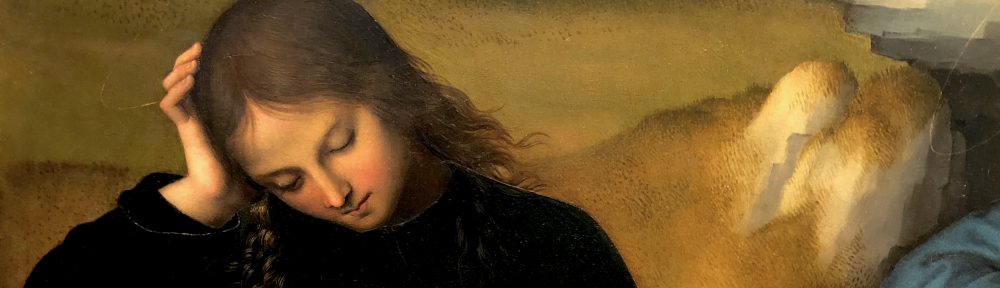

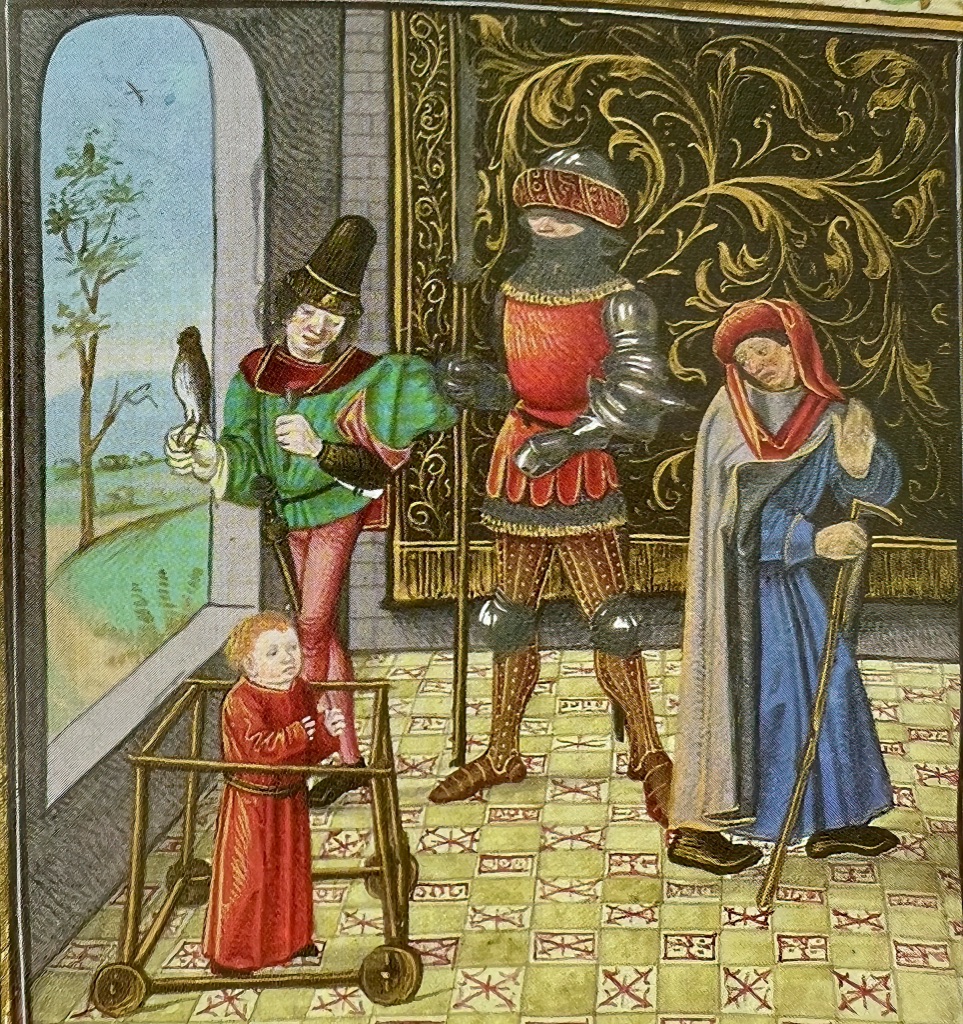


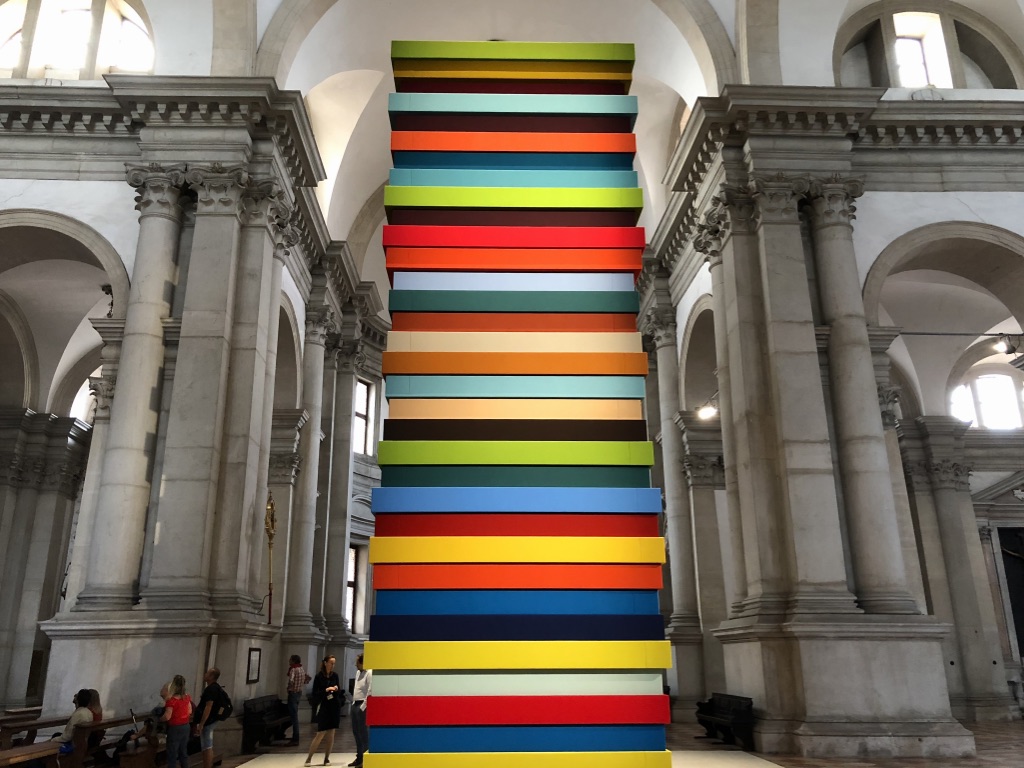
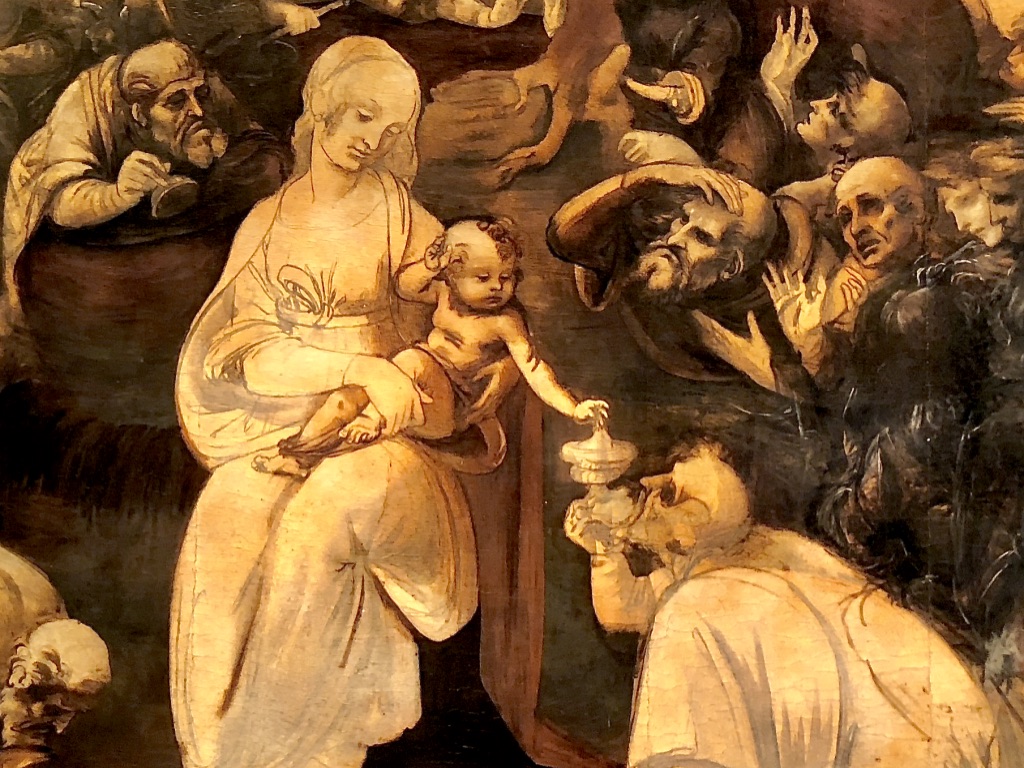

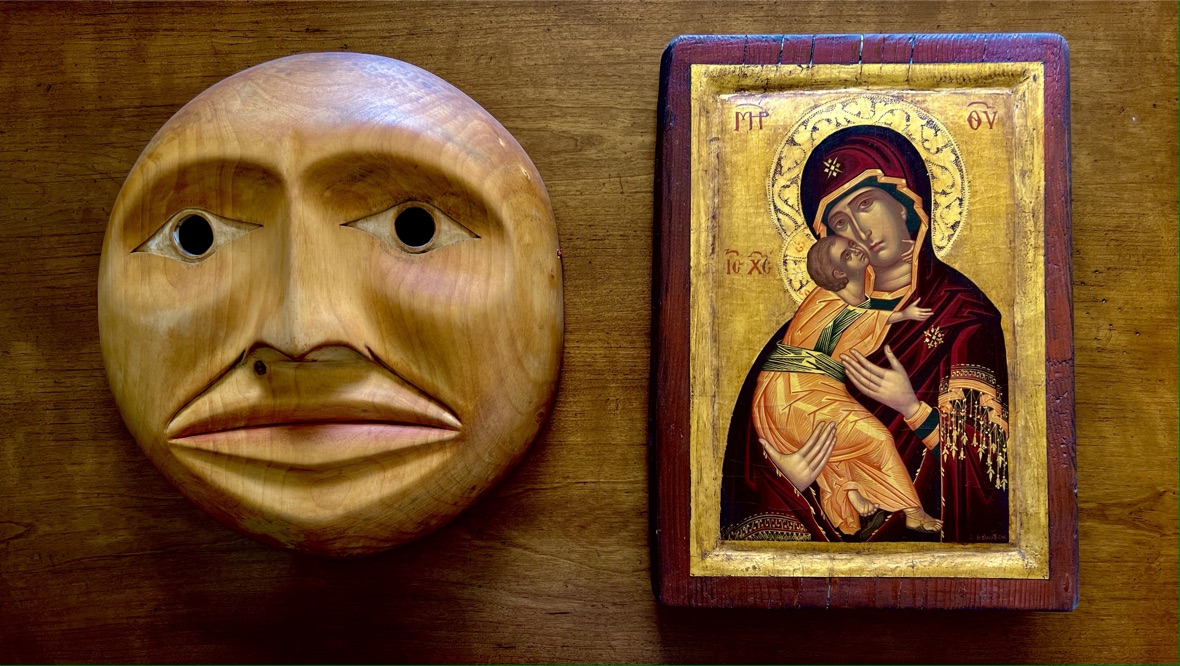


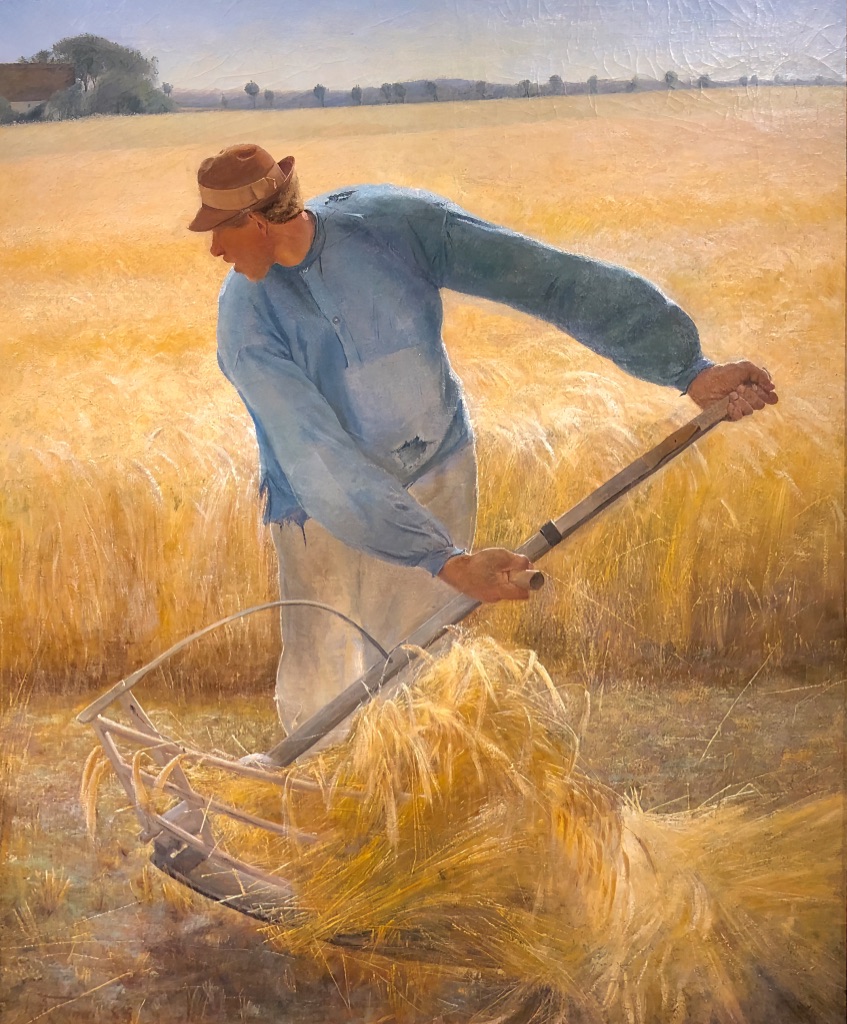
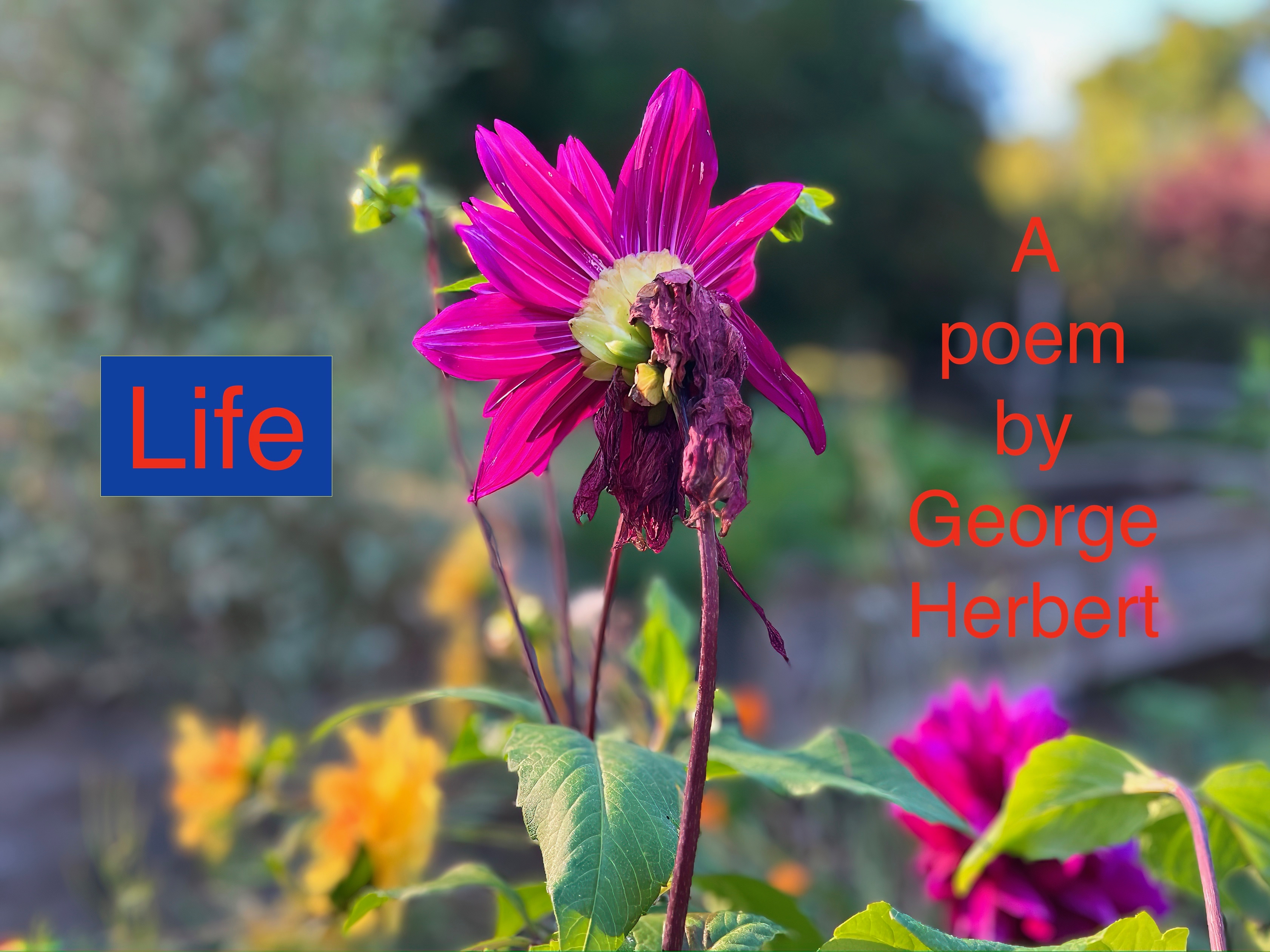


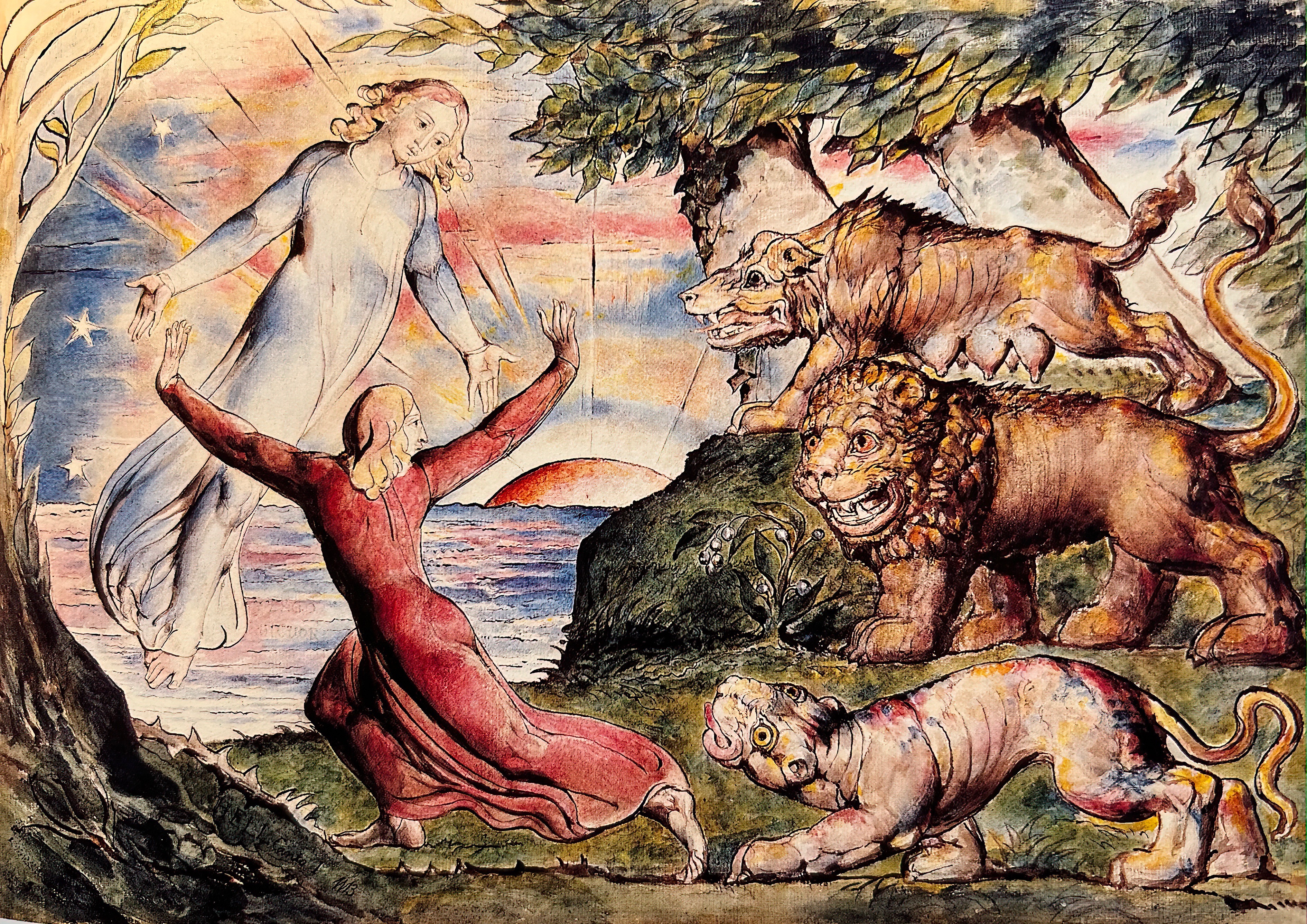





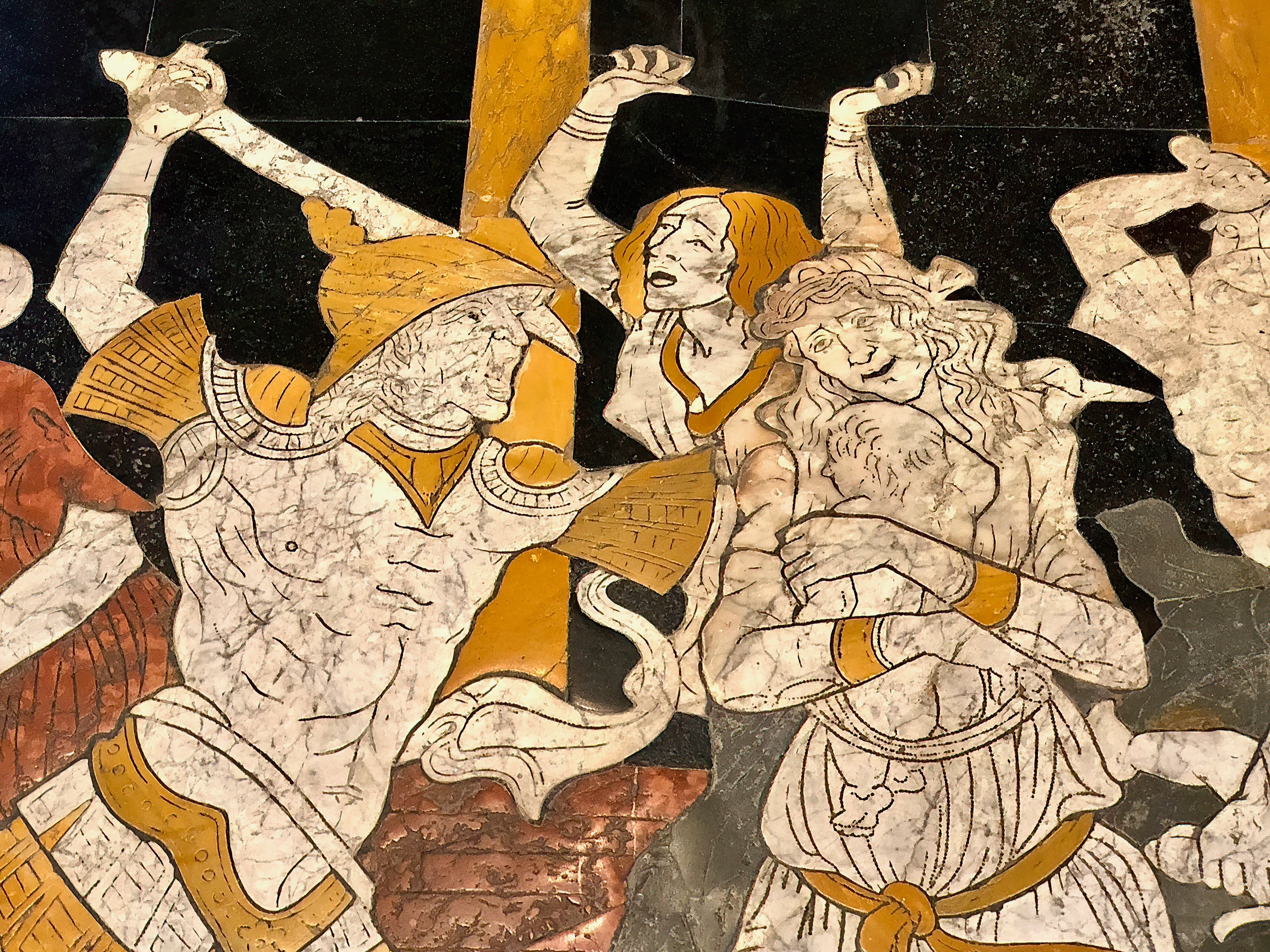


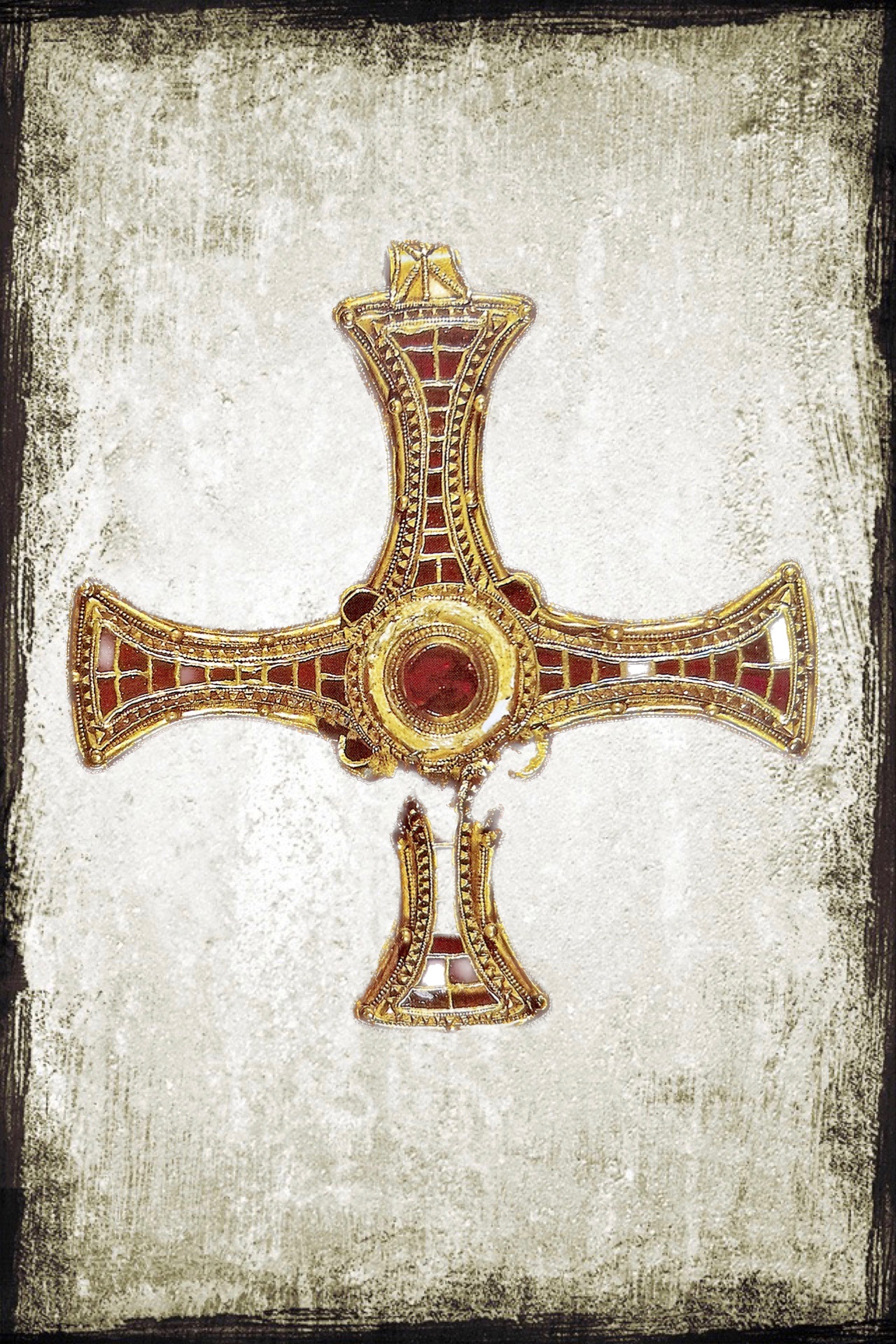
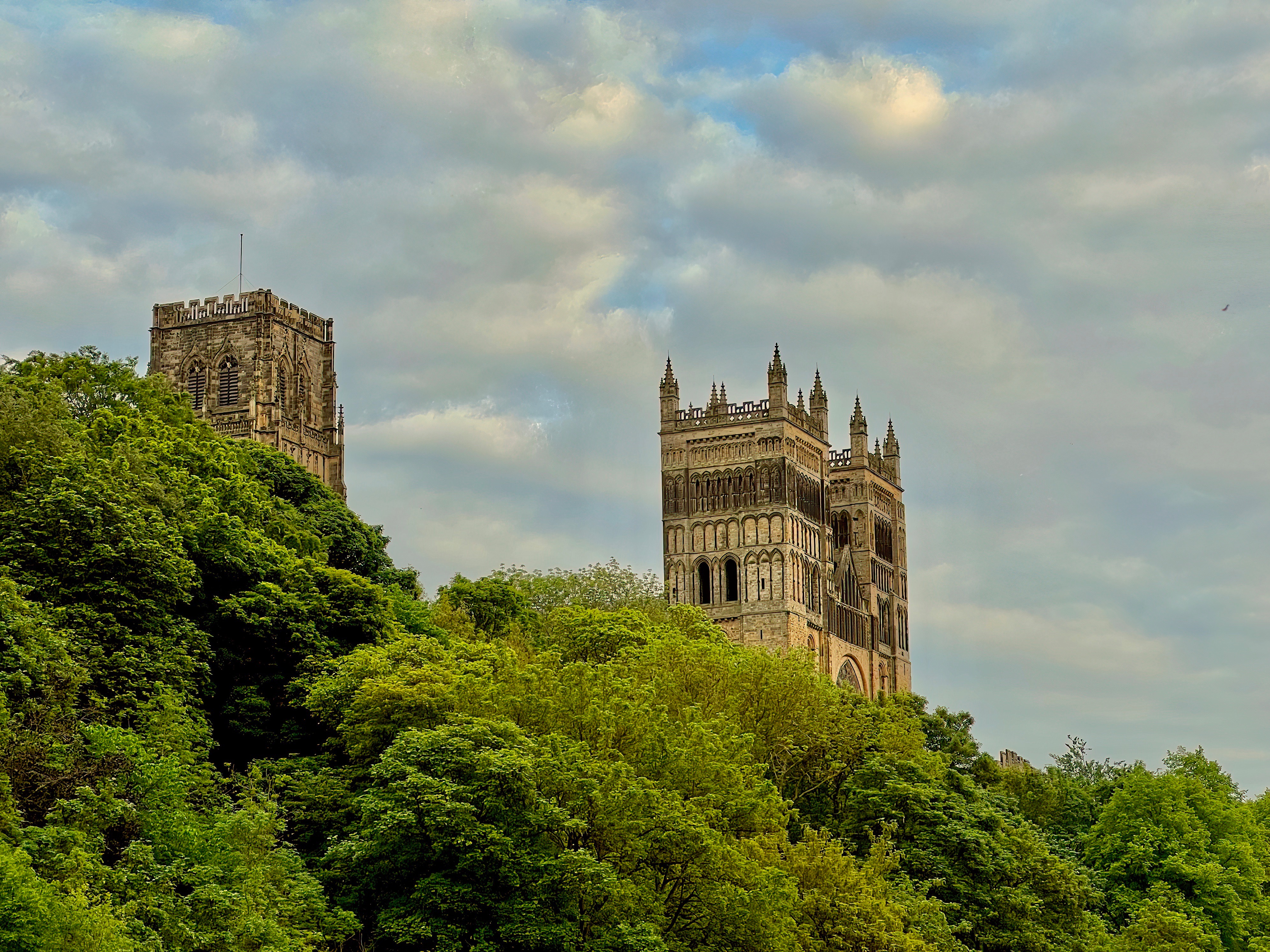
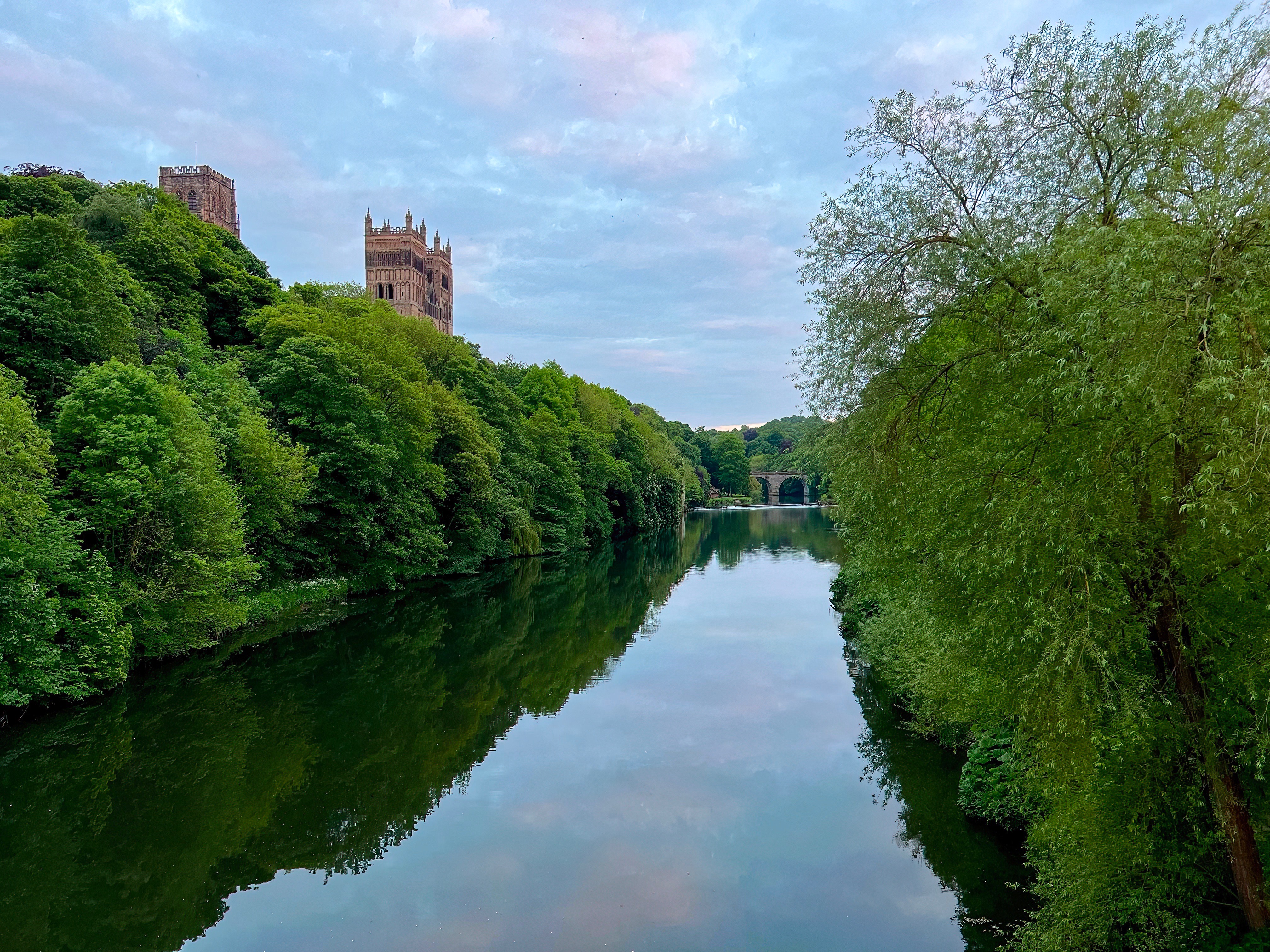
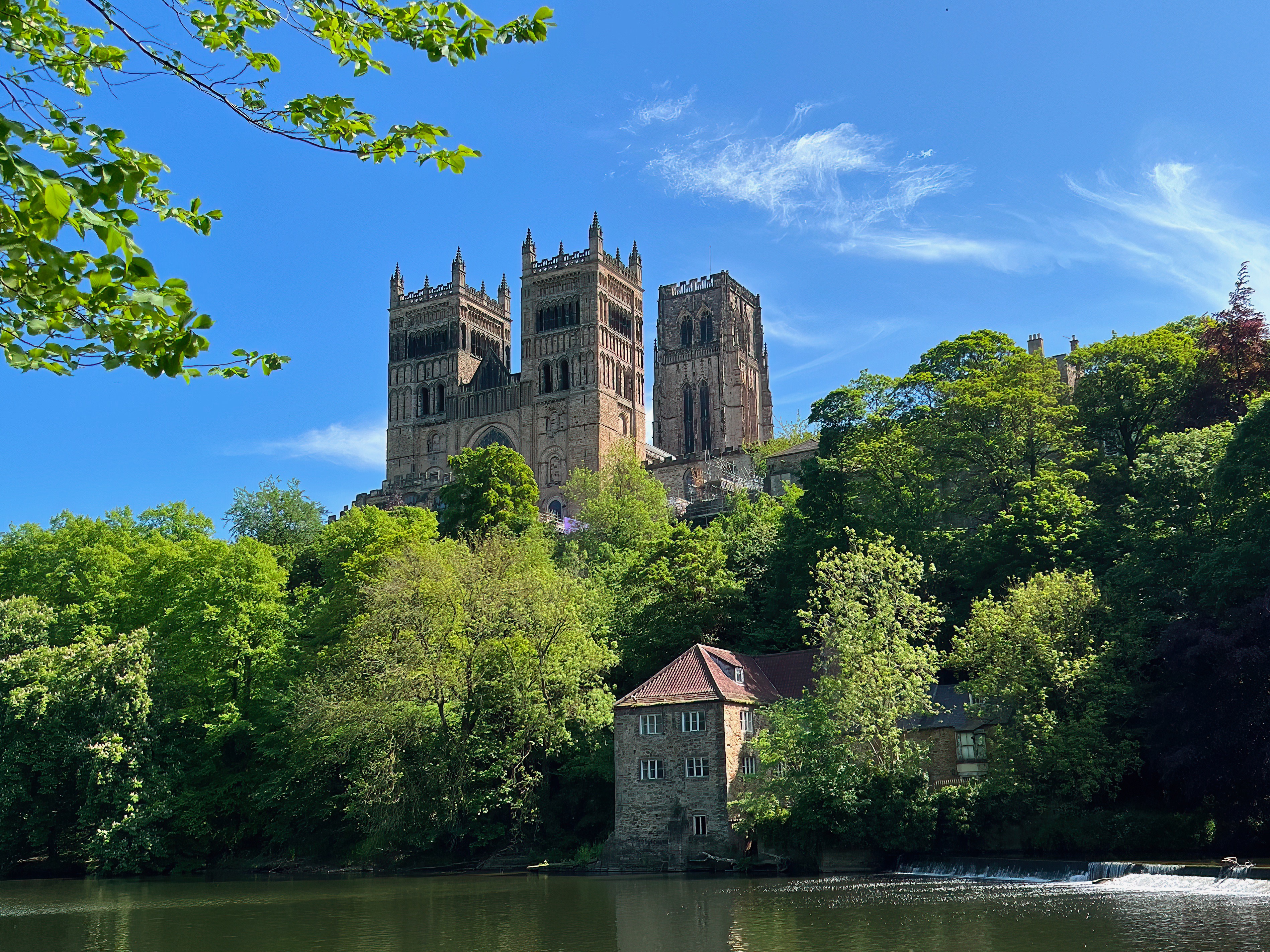
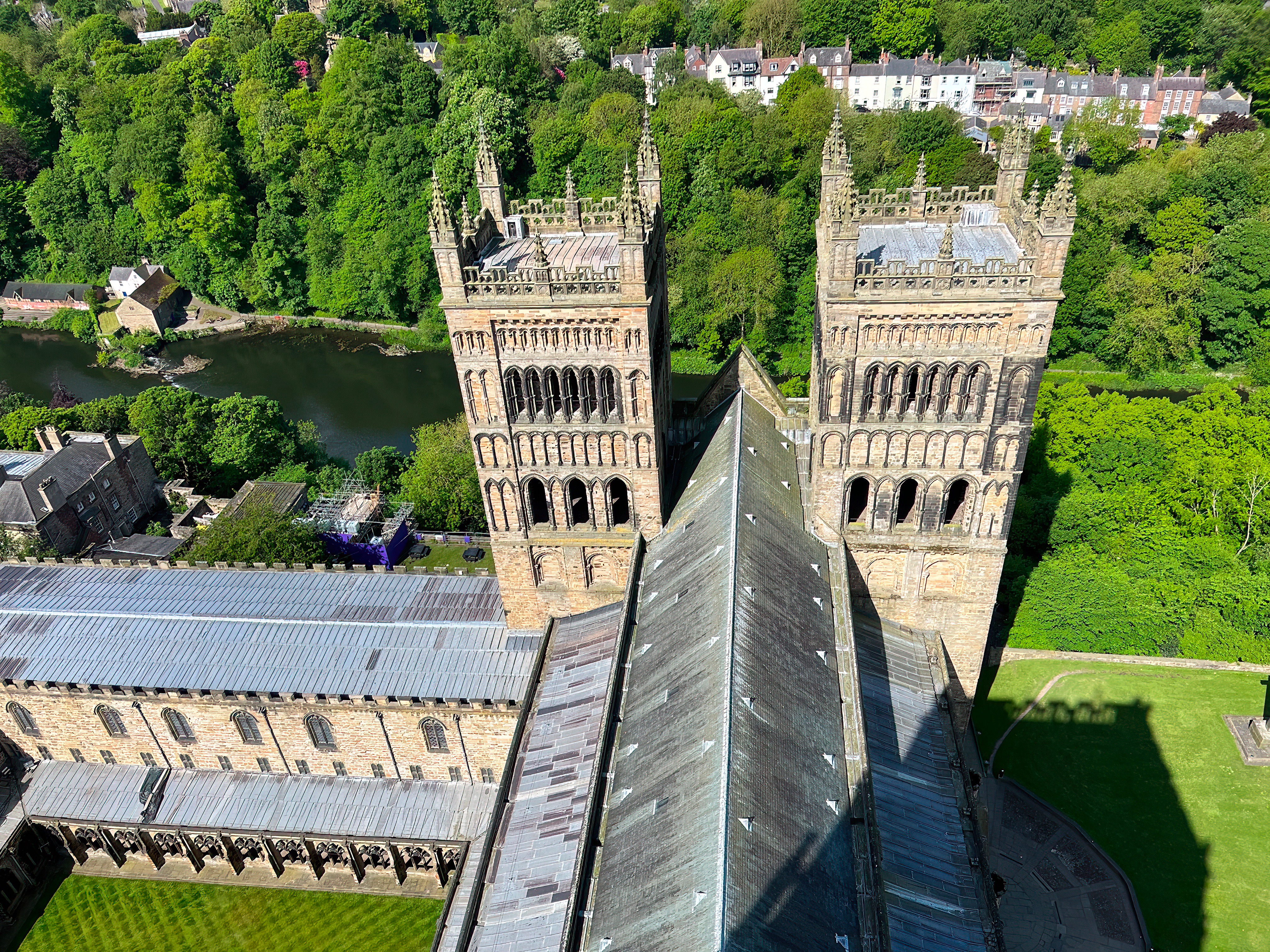
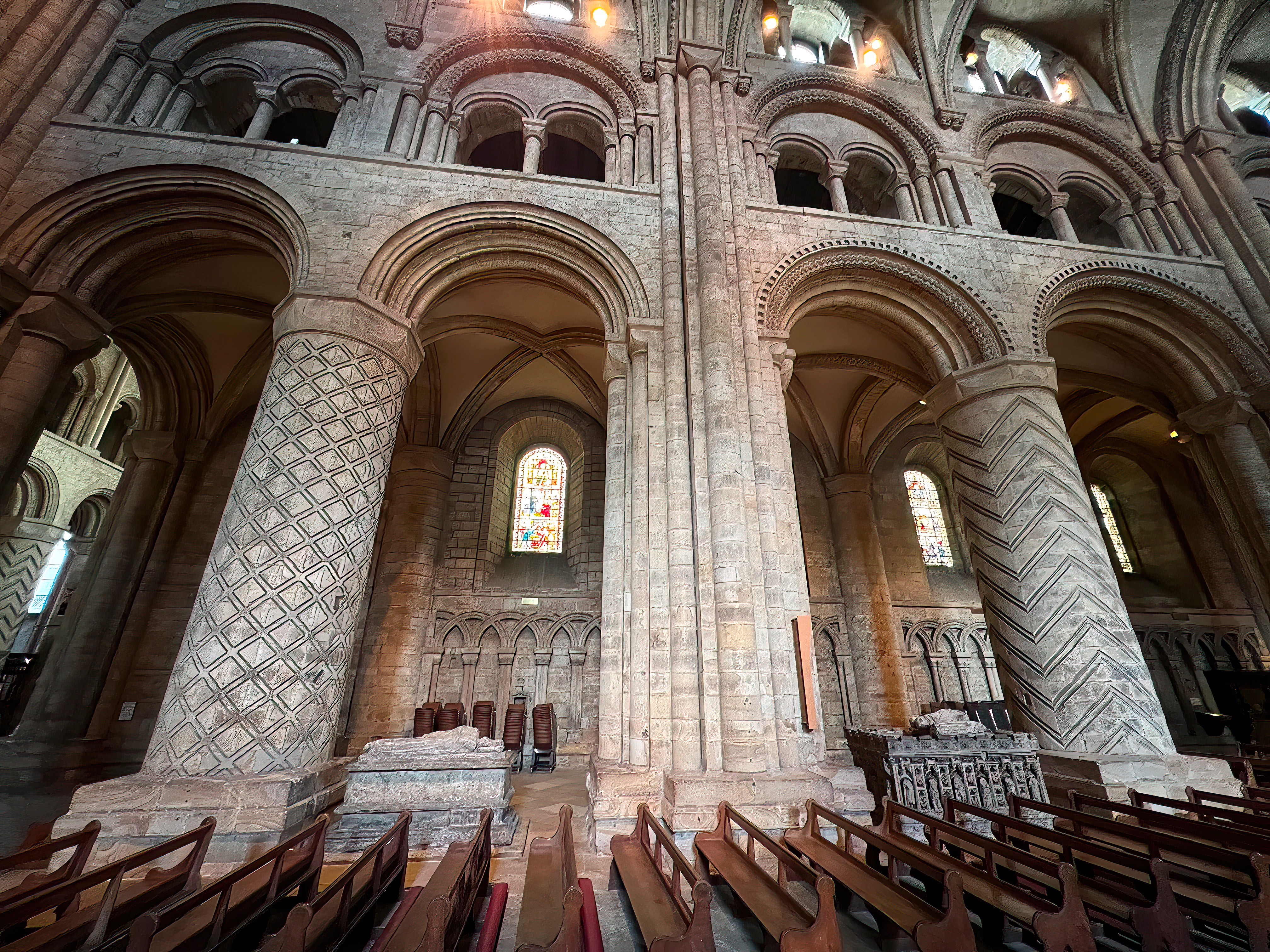
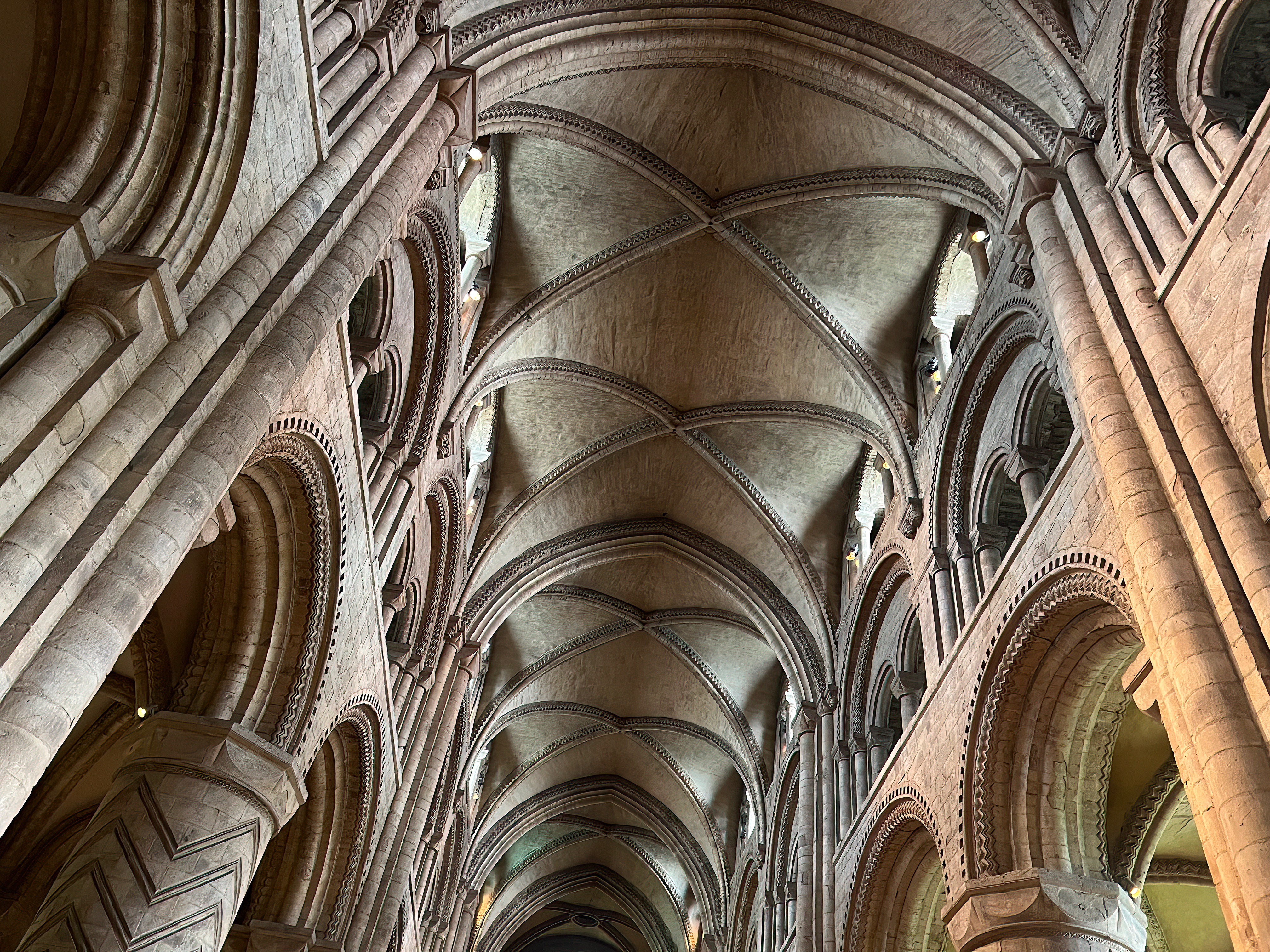
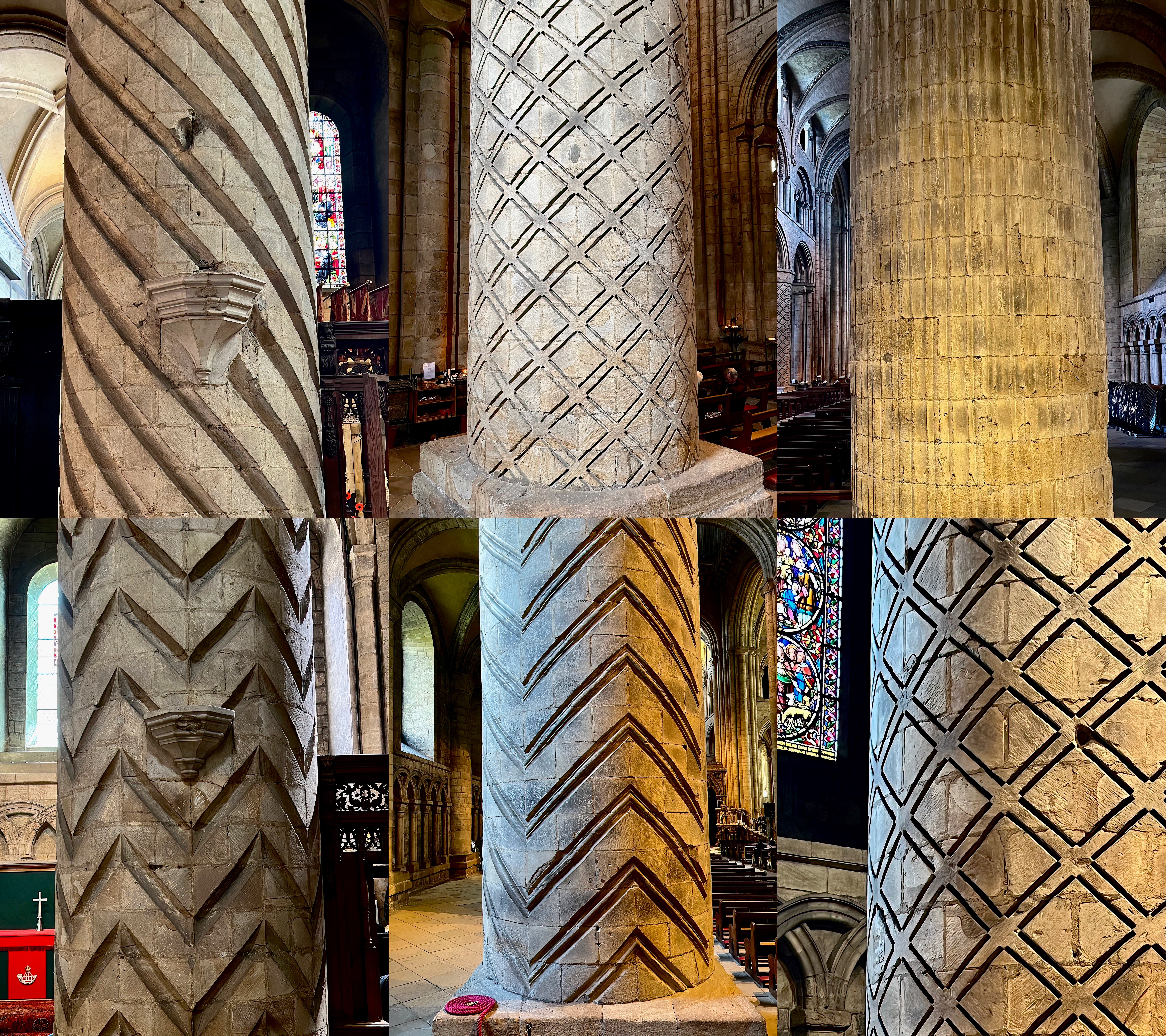
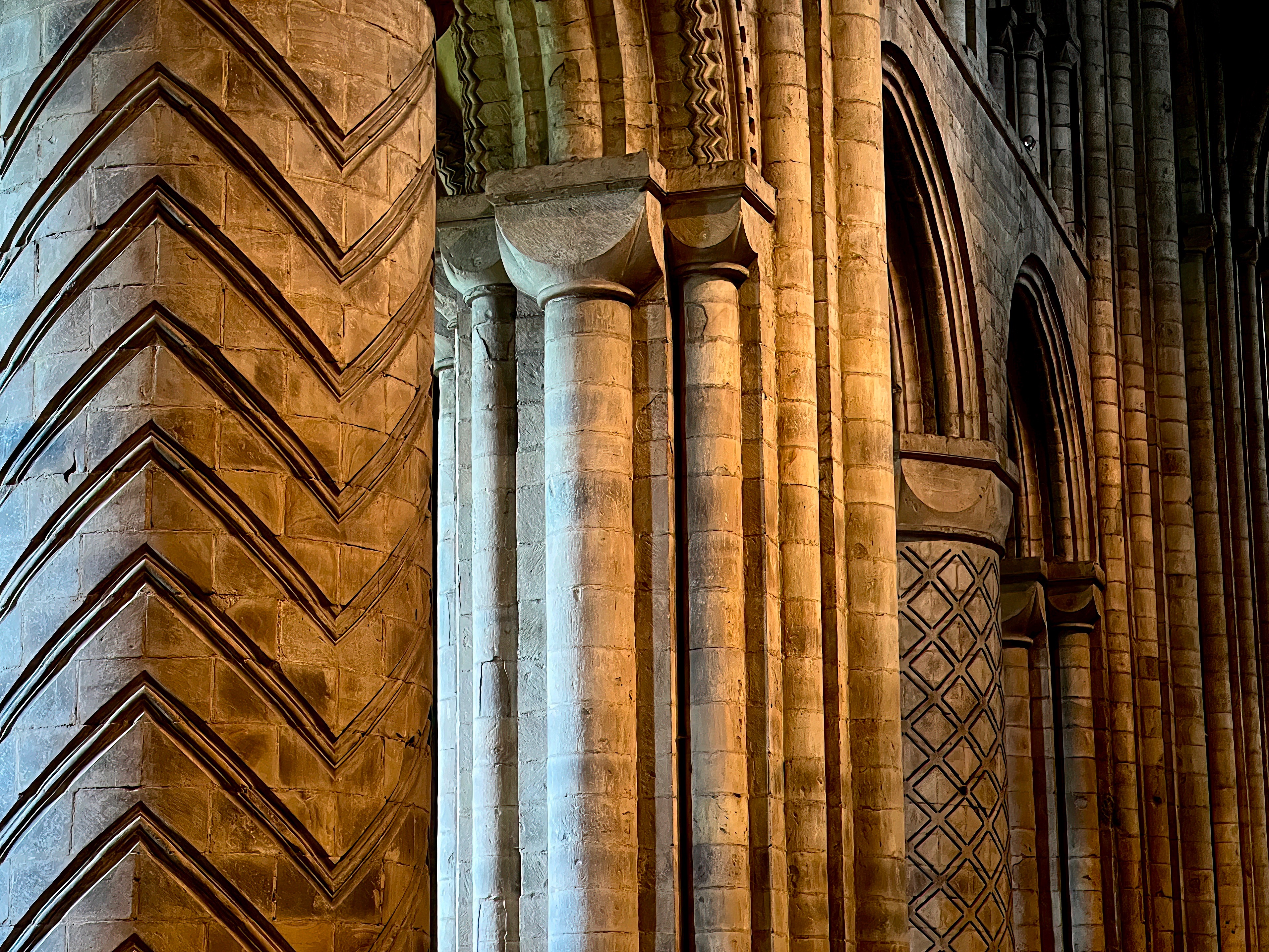
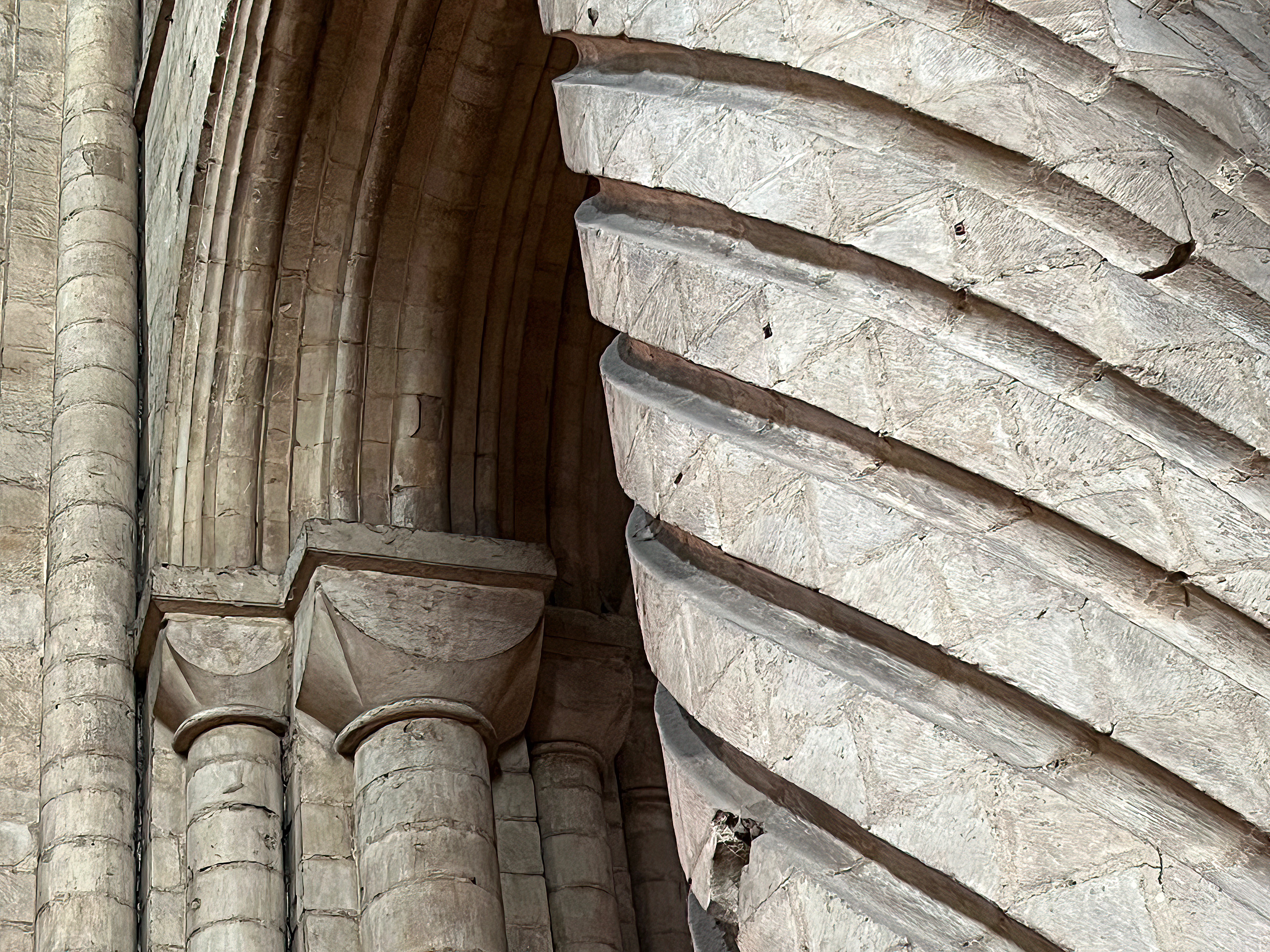
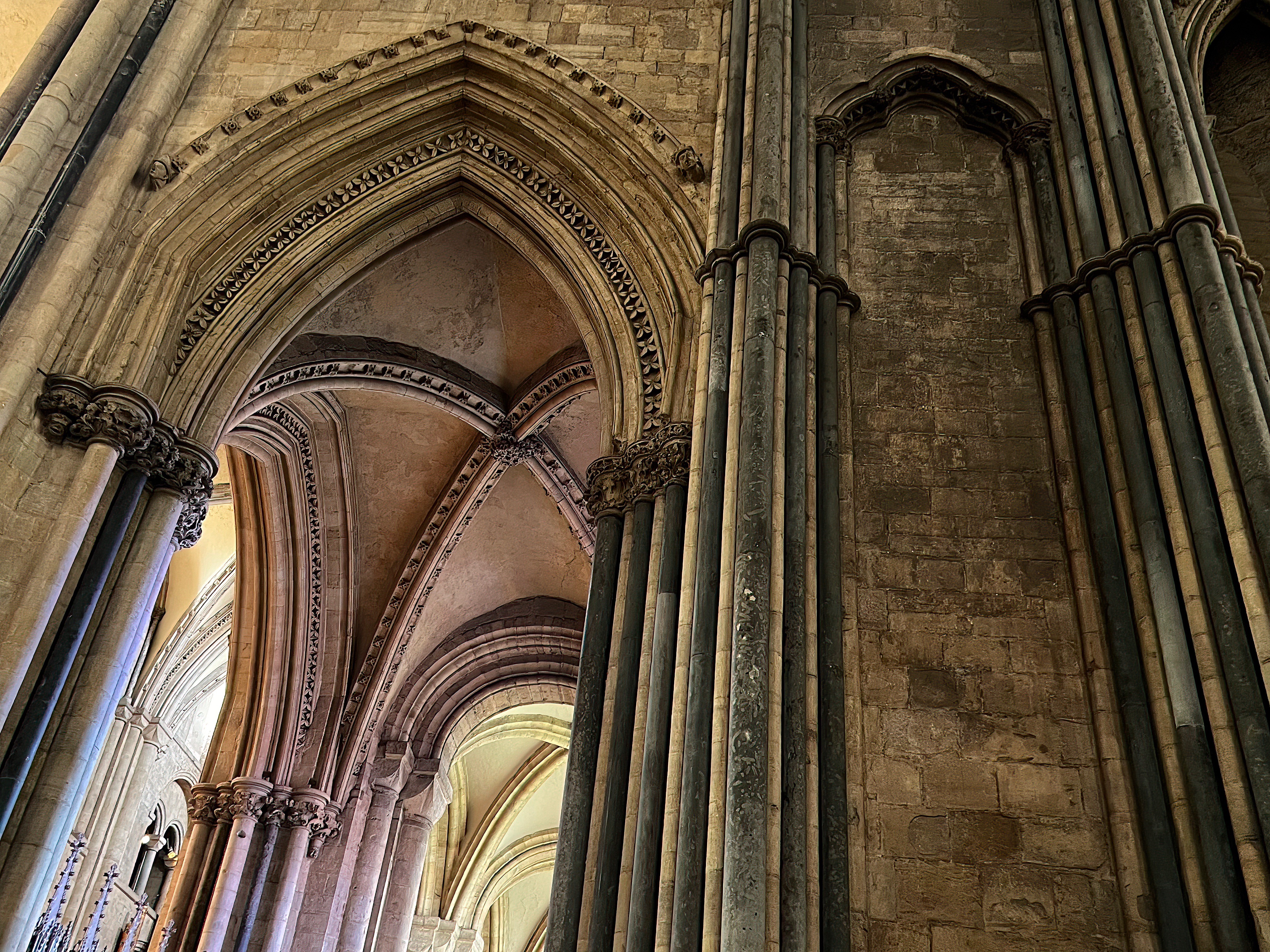
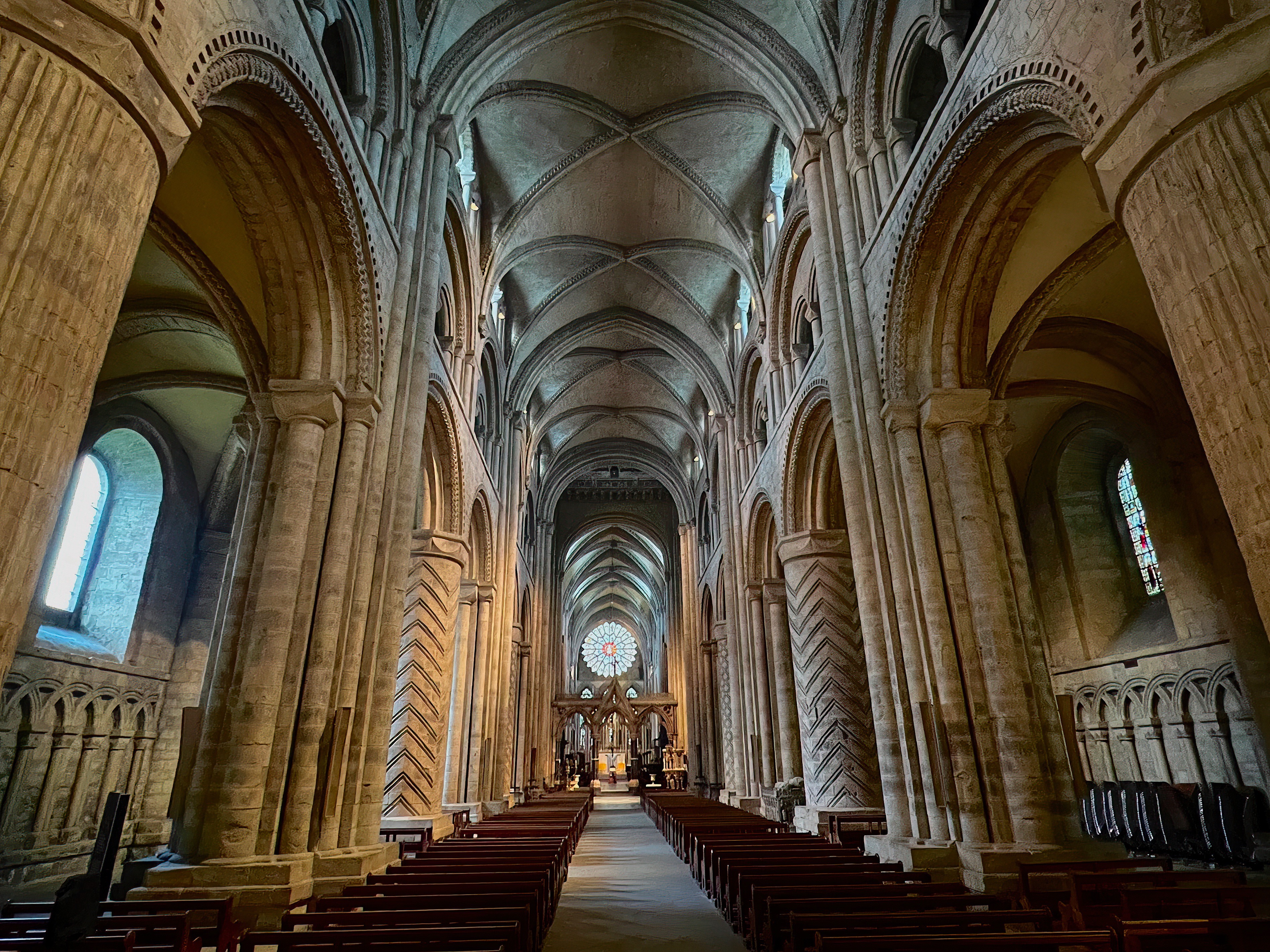
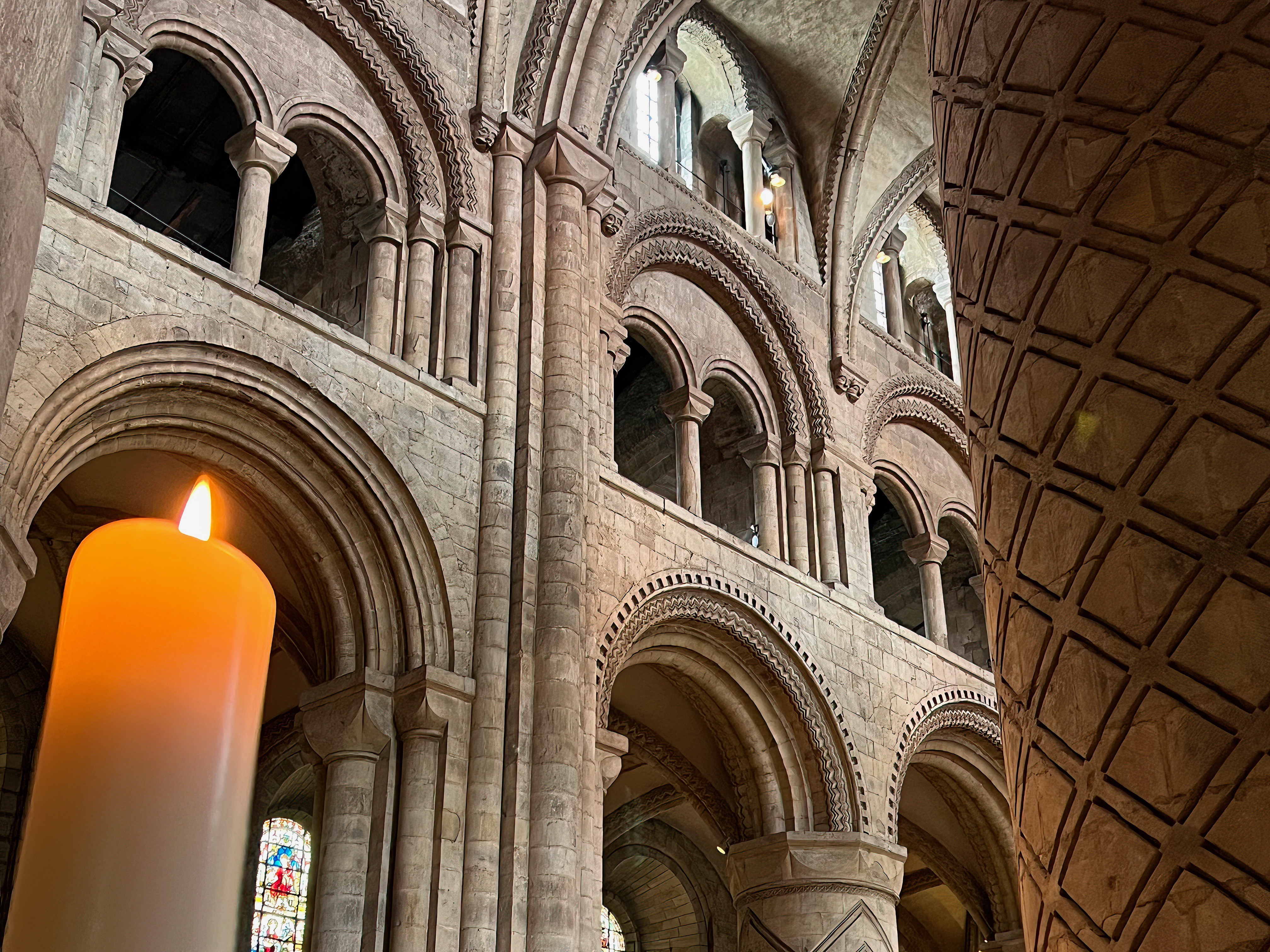
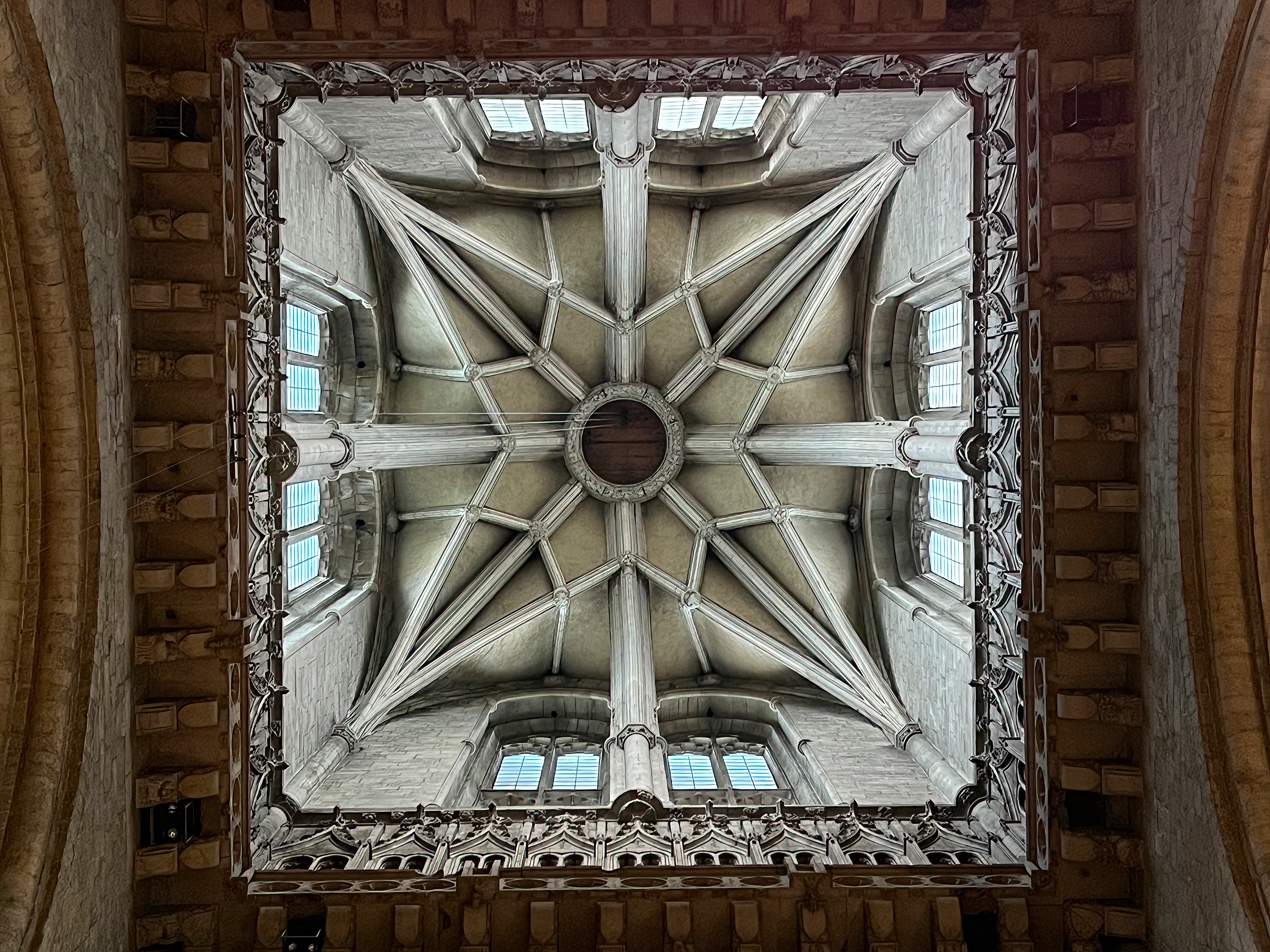
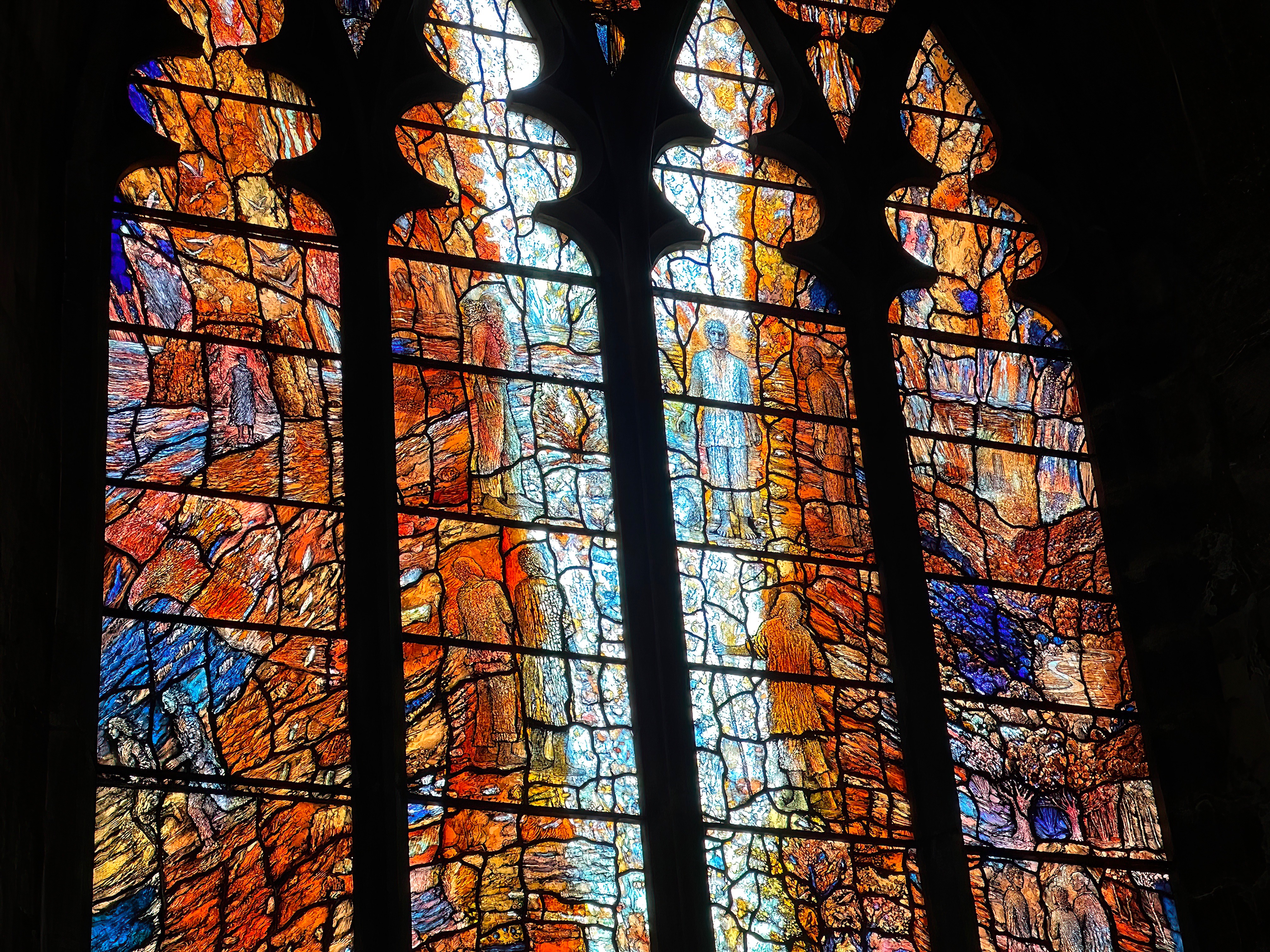
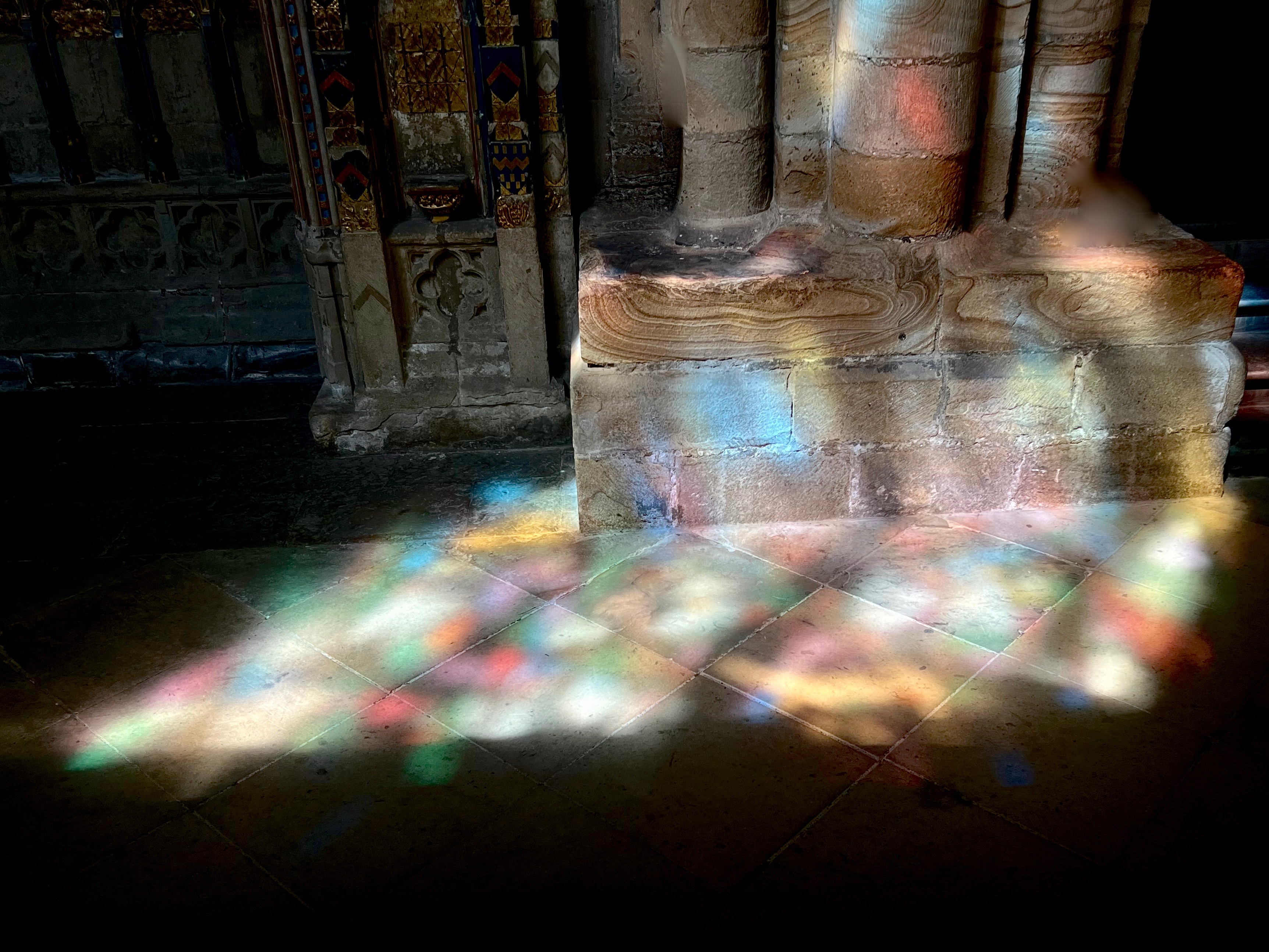
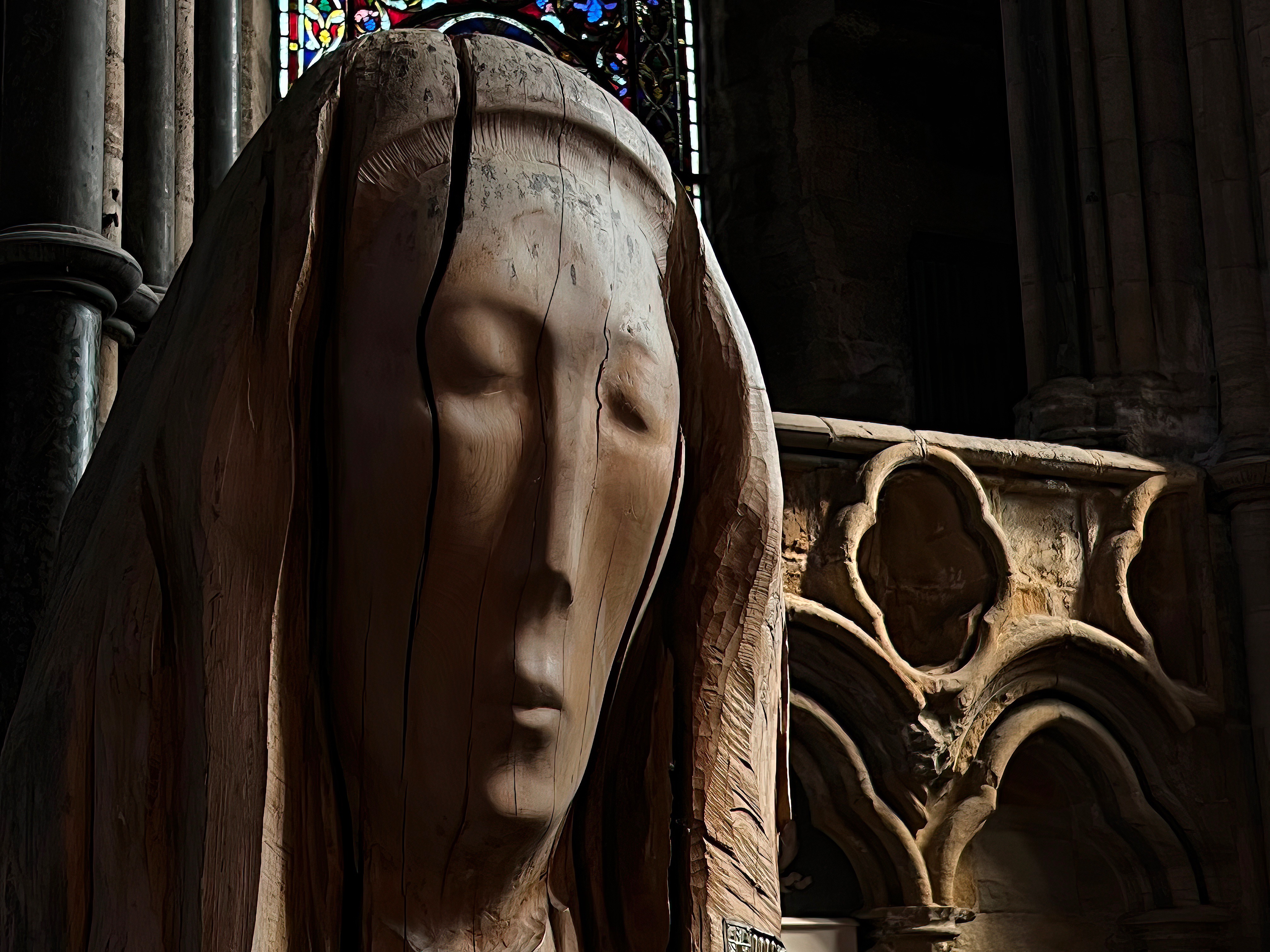
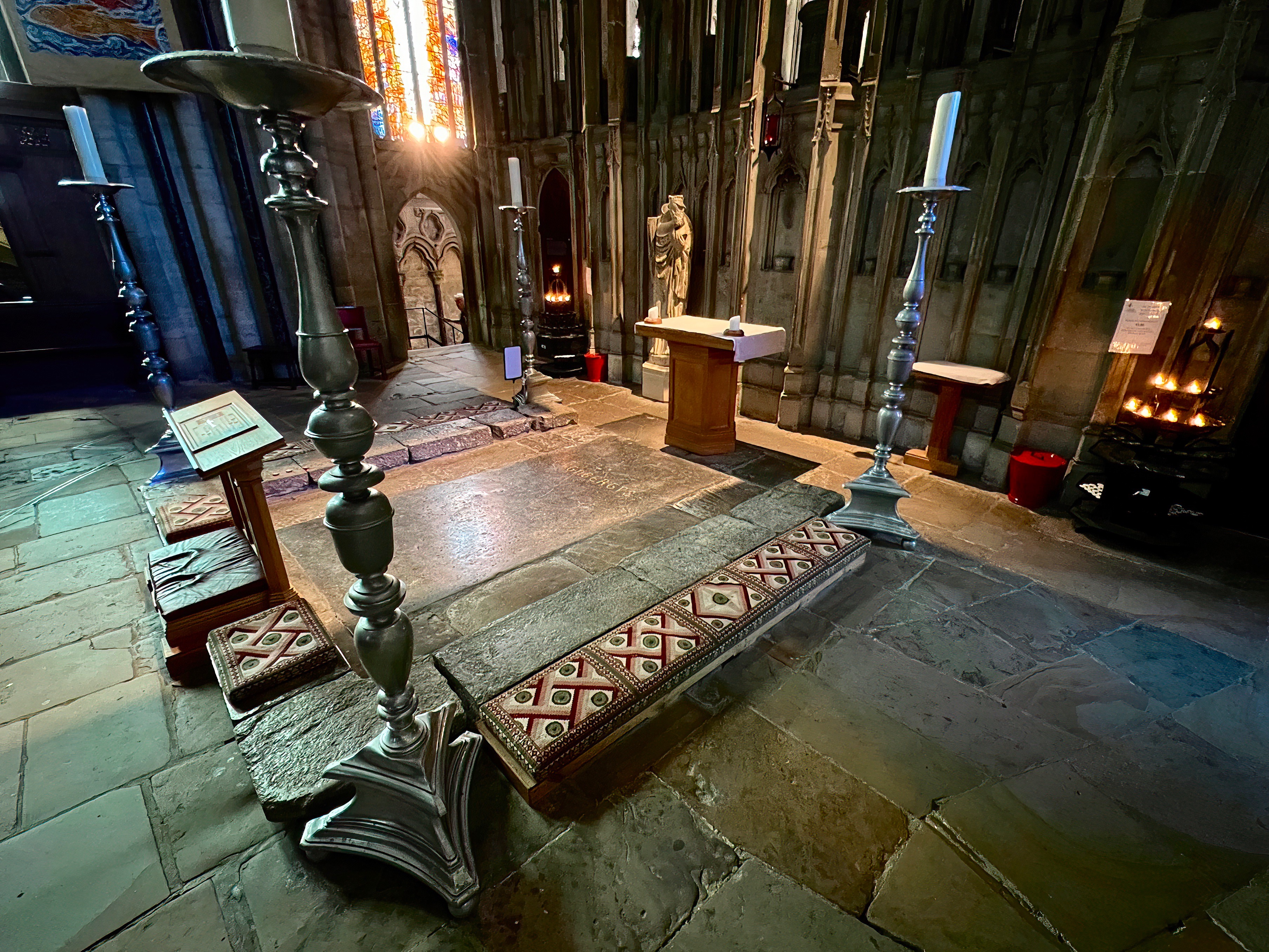
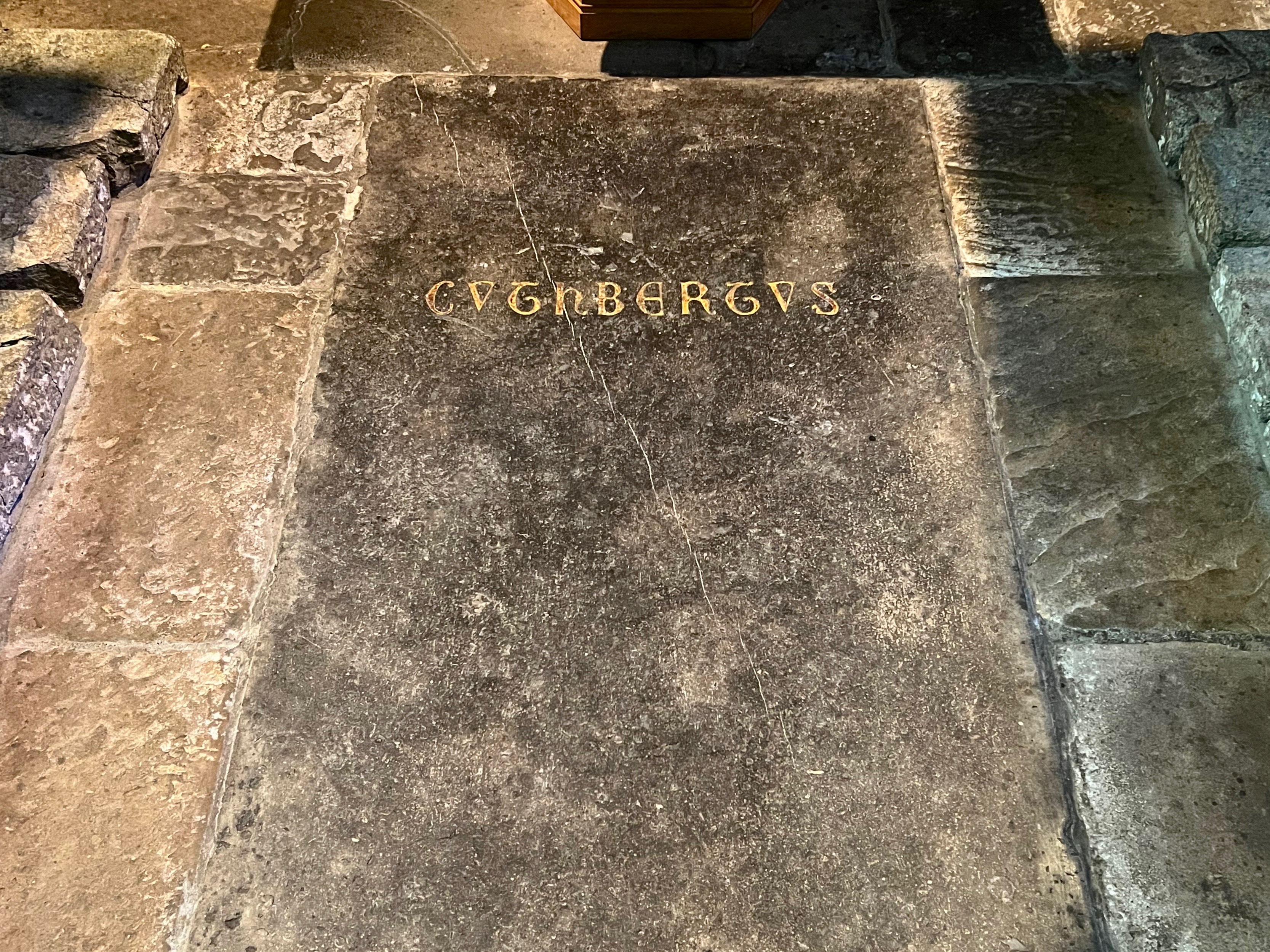
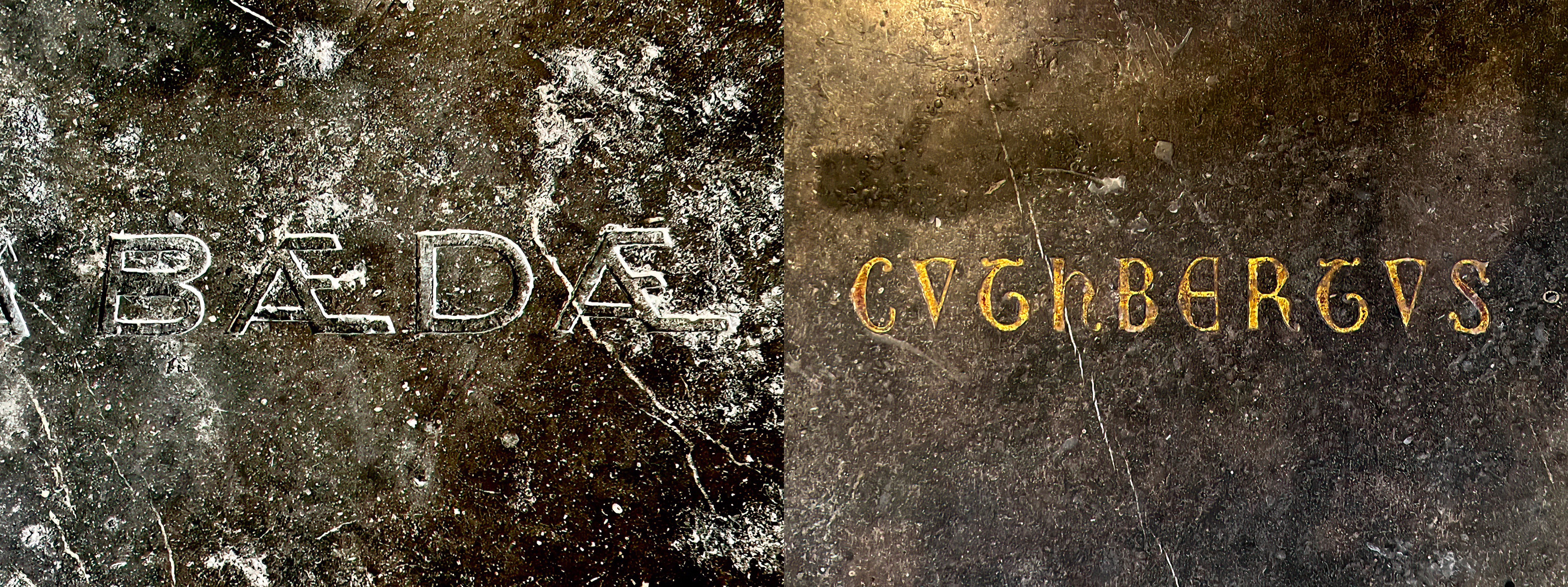
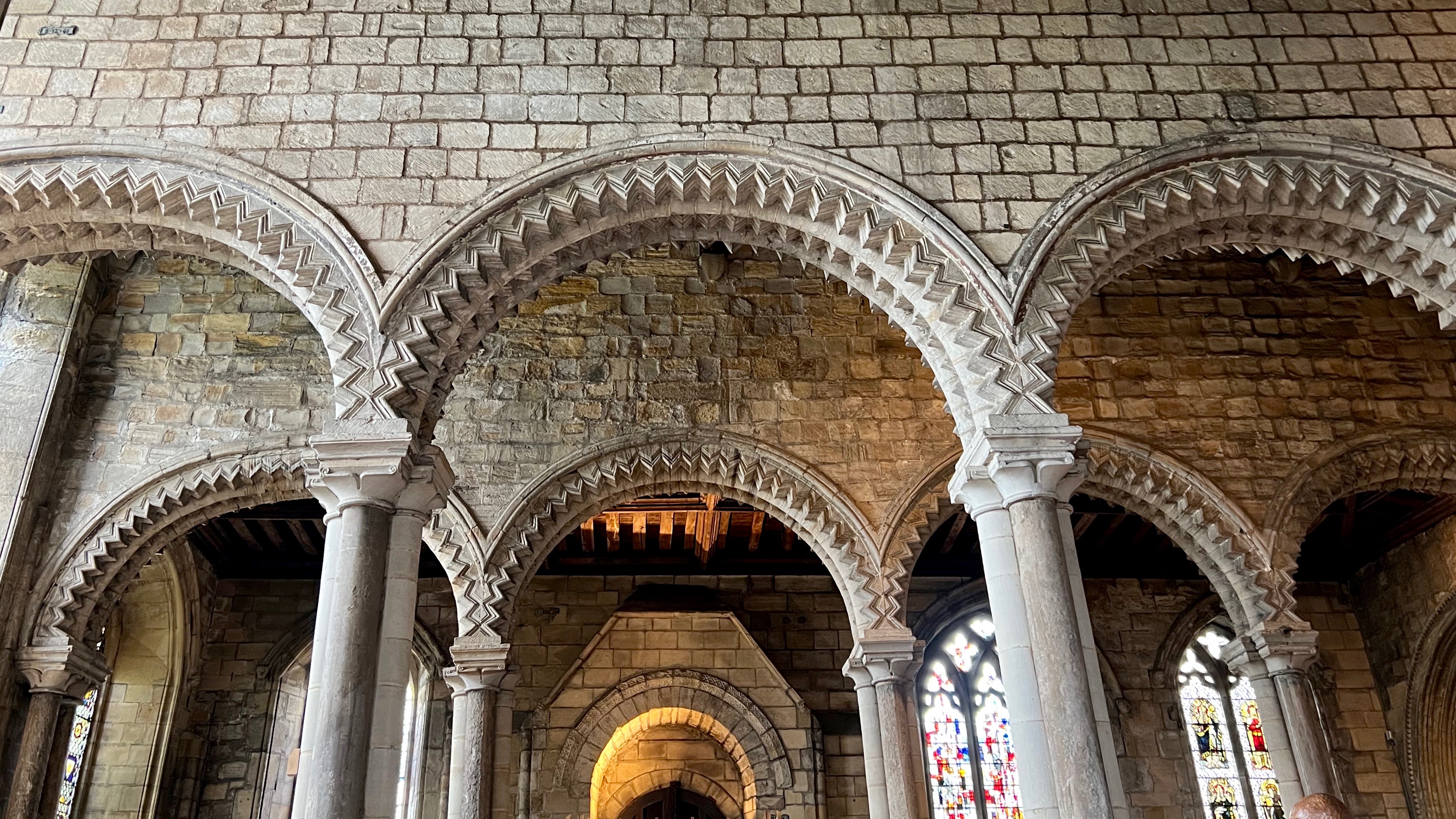
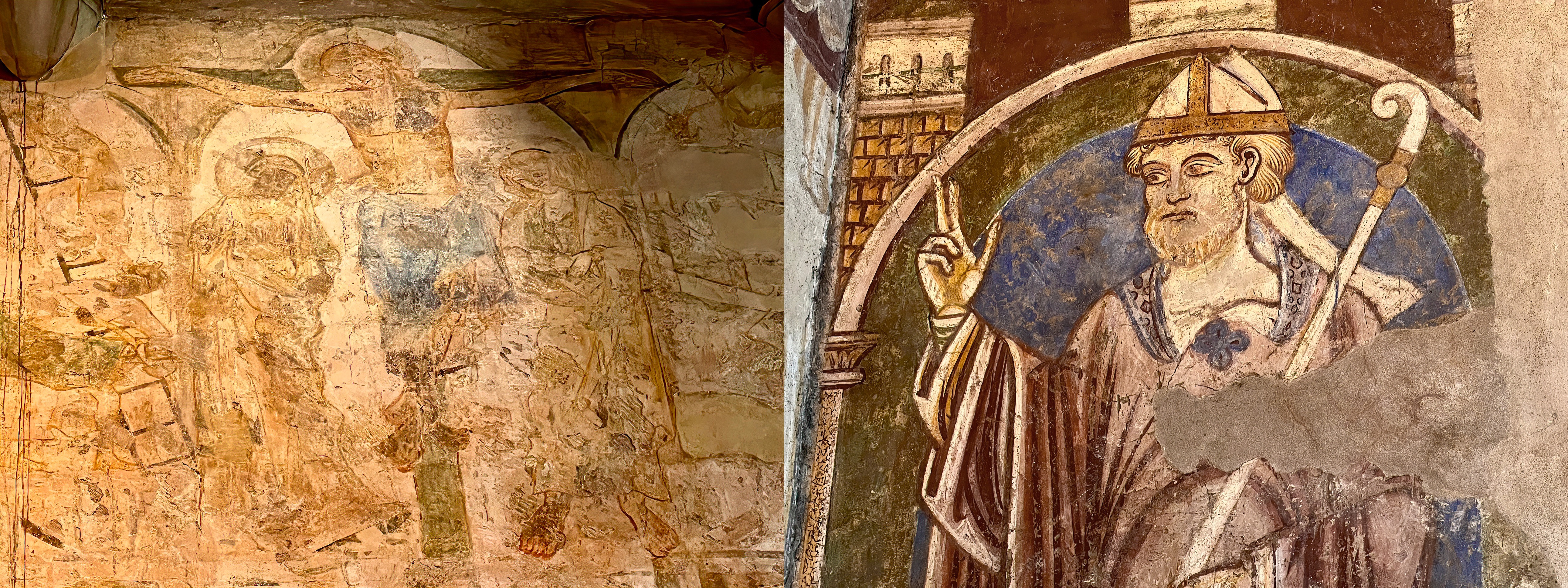
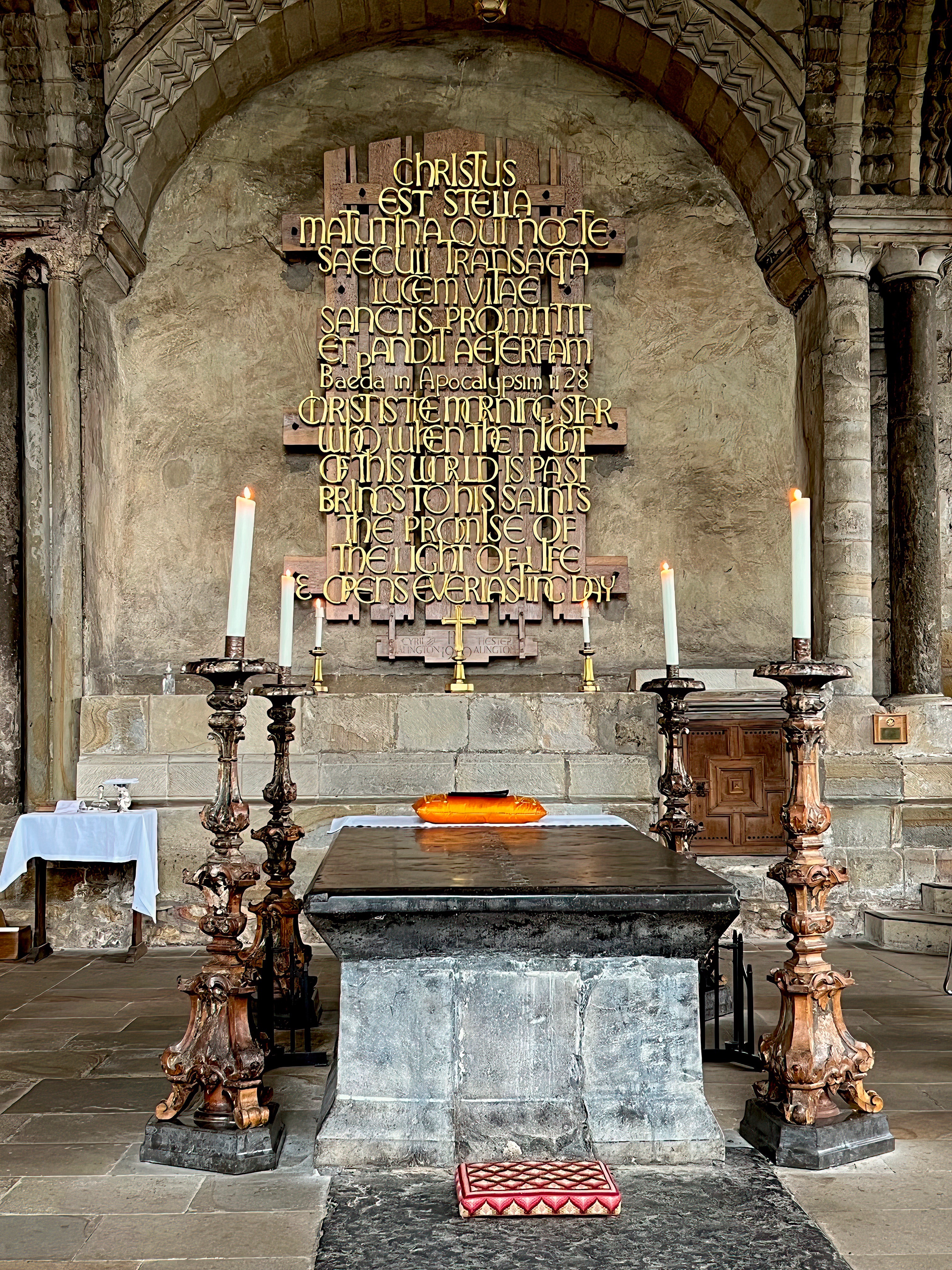
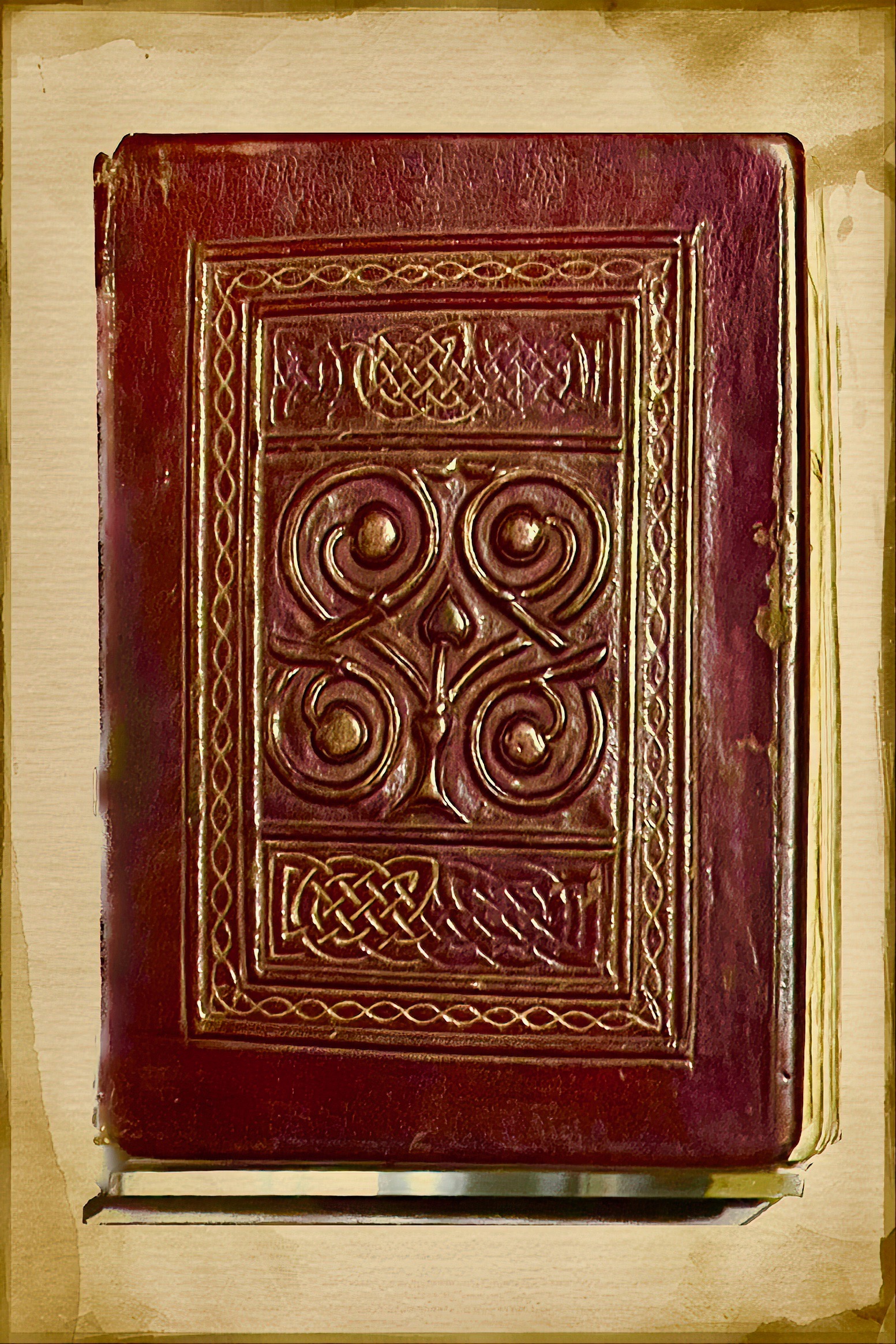
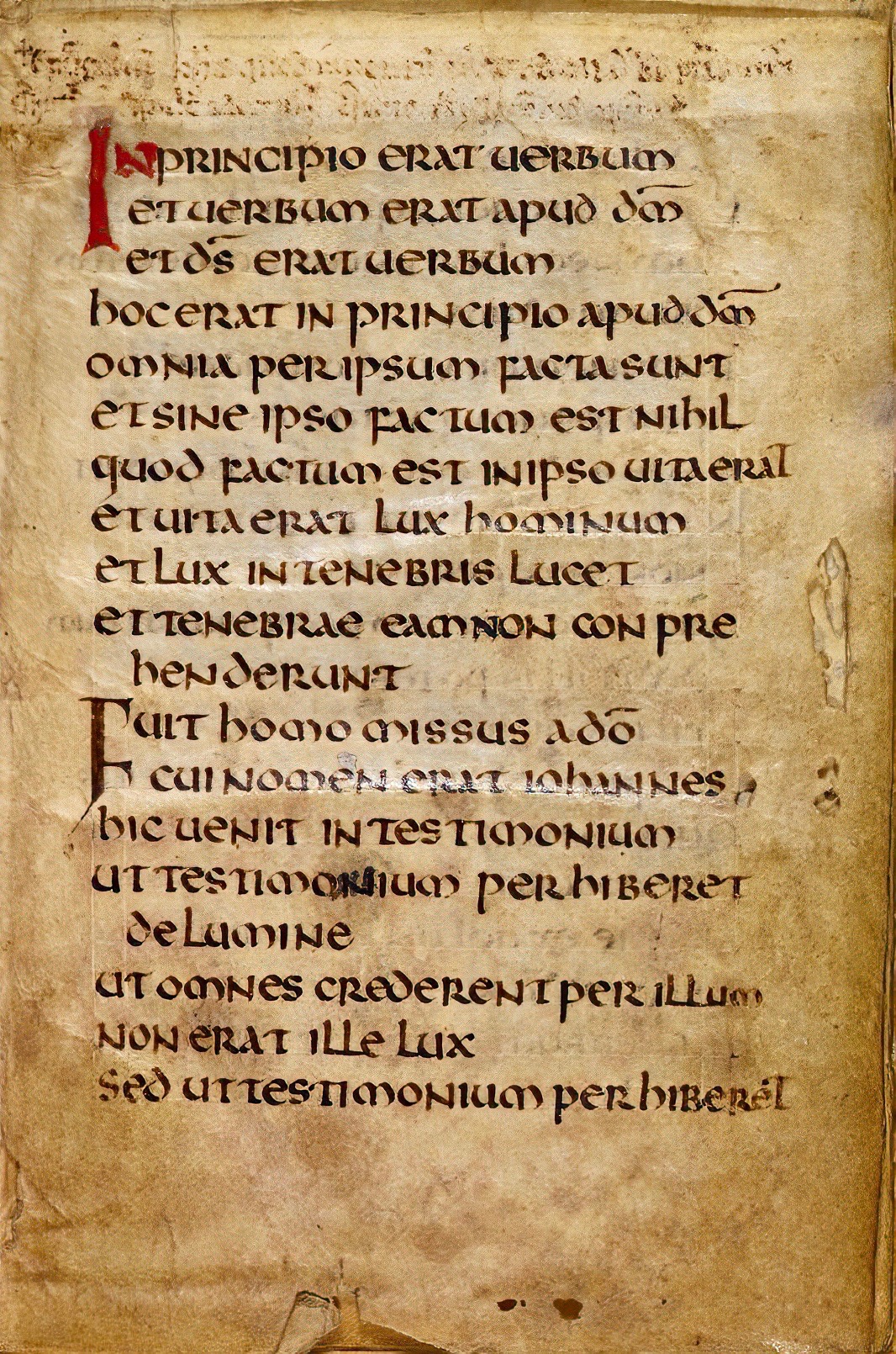
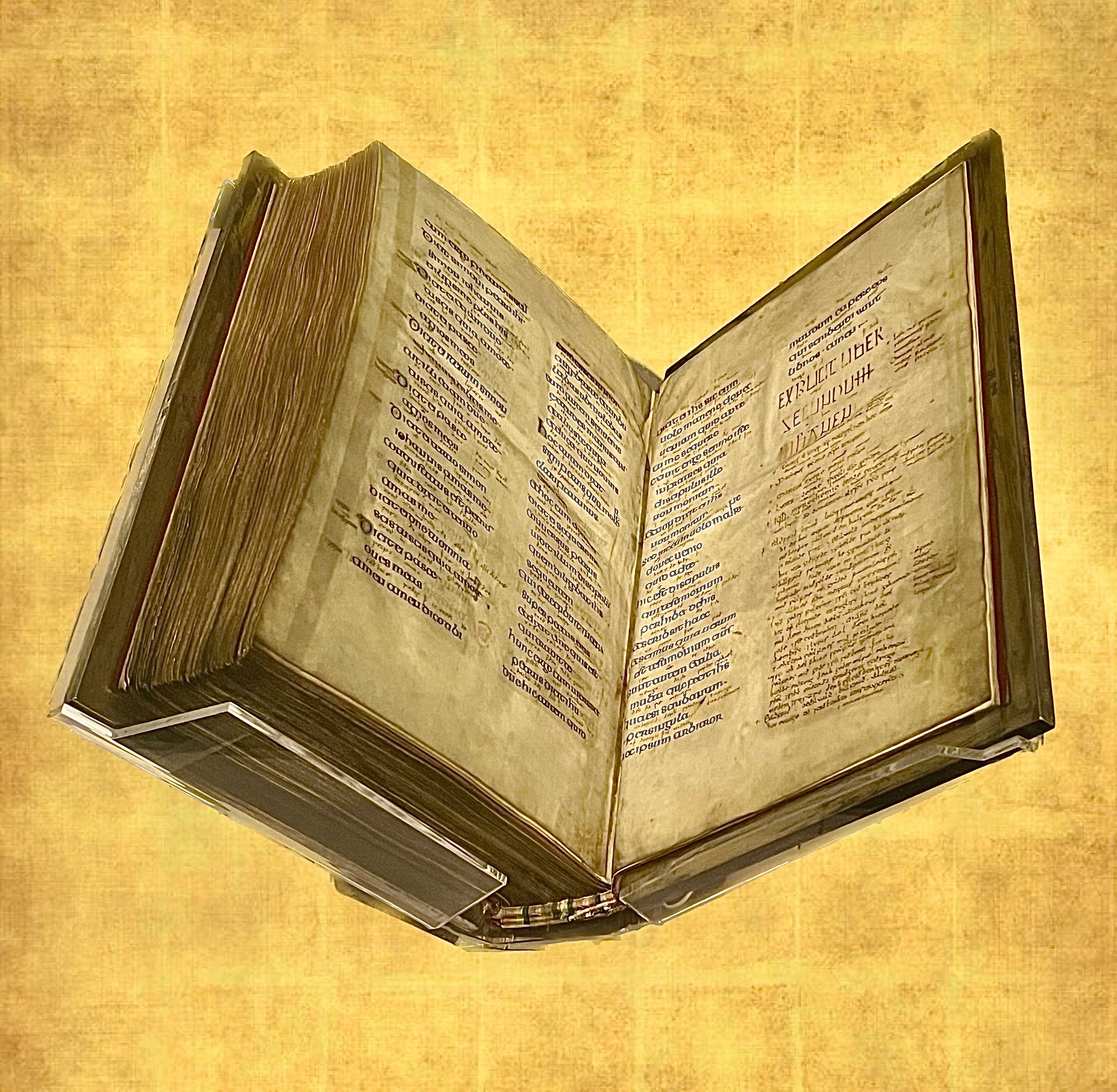

 The religious imagineer