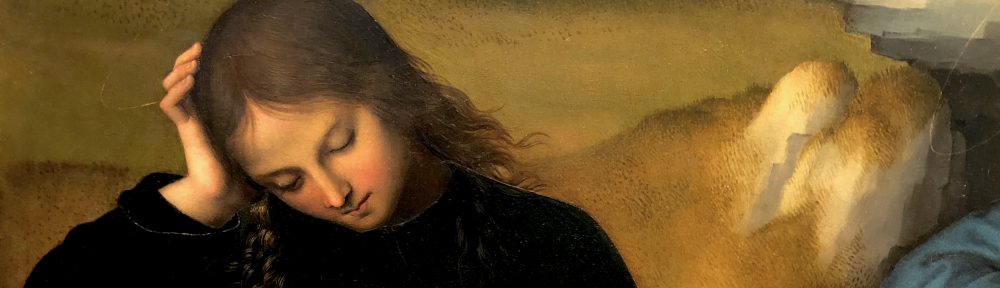
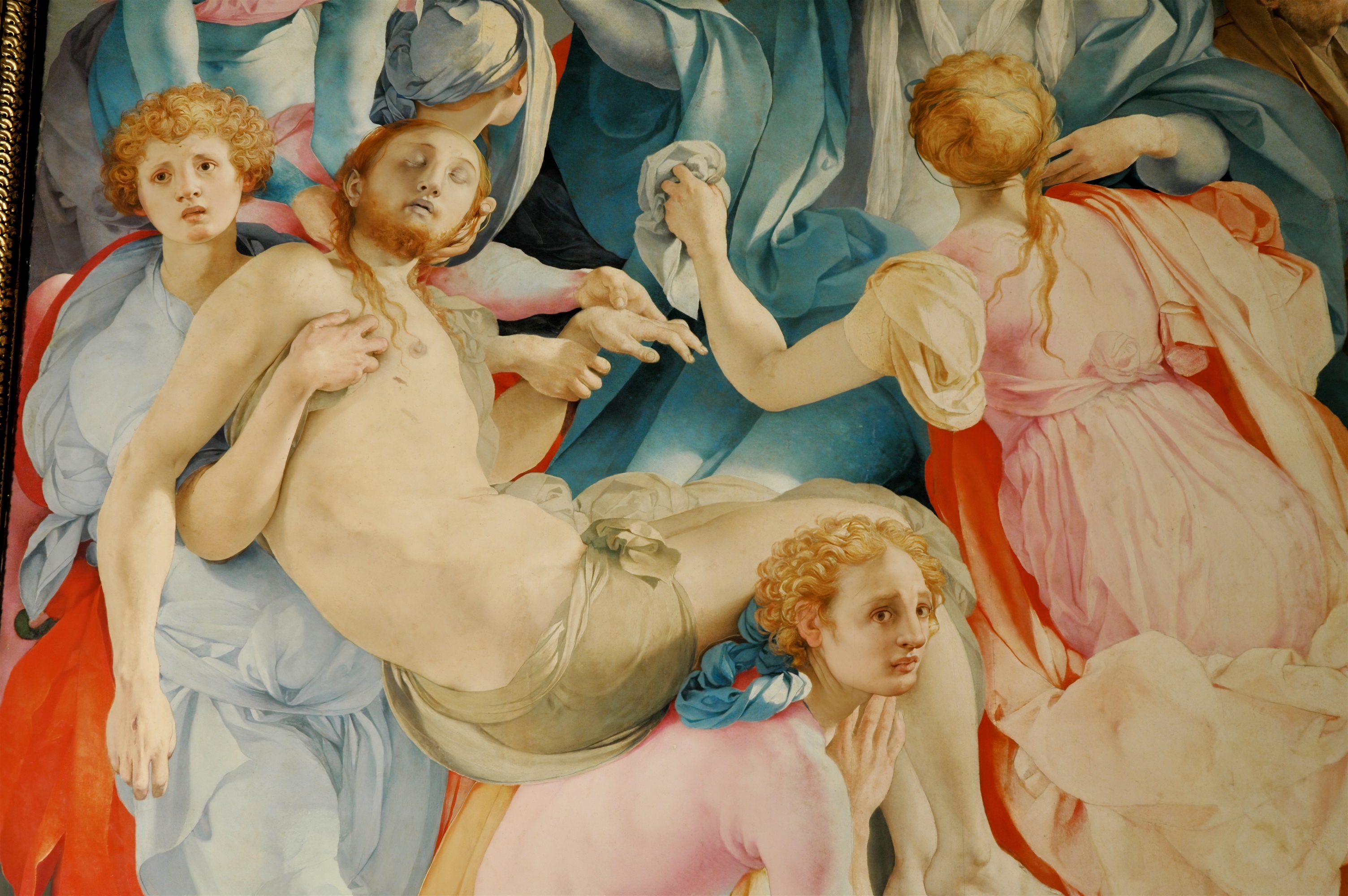
While my wife was studying for the priesthood in Berkeley, California, I often went for trail runs in the local hills. On one occasion, I tripped on a tree root and did a face plant. Using my hands to break my fall, I suffered minor cuts in both palms. When I returned to our apartment, I showed my bloody palms to Karen and said, “Look! I’ve got the wounds. Now all I need is the personality.”
When Donald Trump published an AI image of himself as Jesus, even his worshippers in the “Christian” right were taken aback. It was one thing to adore their dear leader as an instrument of divine will, but to equate or confuse him with Jesus Christ created some serious cognitive dissonance.
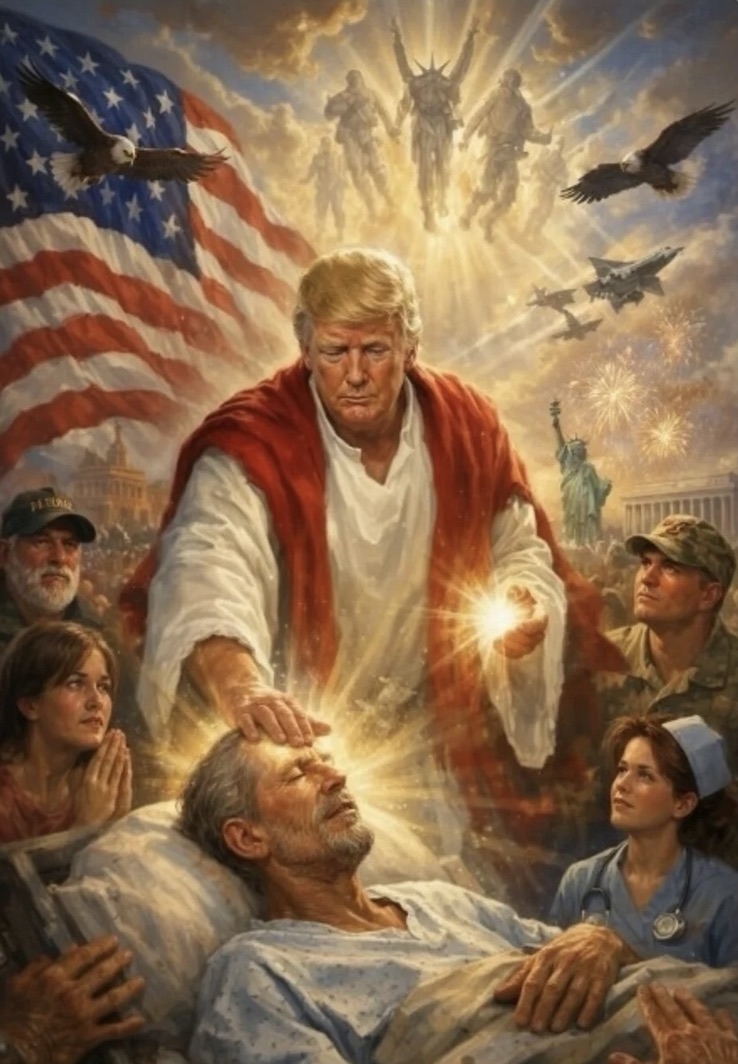
The uproar over the preposterous image forced him to delete it from his social media, but he was typically incapable of admitting any error on his part. The blame lay with the people who misinterpreted what they saw. “It’s supposed to be me as a doctor making people better,” he claimed. “And I do make people better.” Right. I feel better already!
Of course, whatever comes out of the president’s mouth defiles him, and is rarely worth our time, except for the work of countering or limiting the damage. But this tasteless piece of kitsch does raise a question of interest to many of us: What is an authentic image of Jesus?
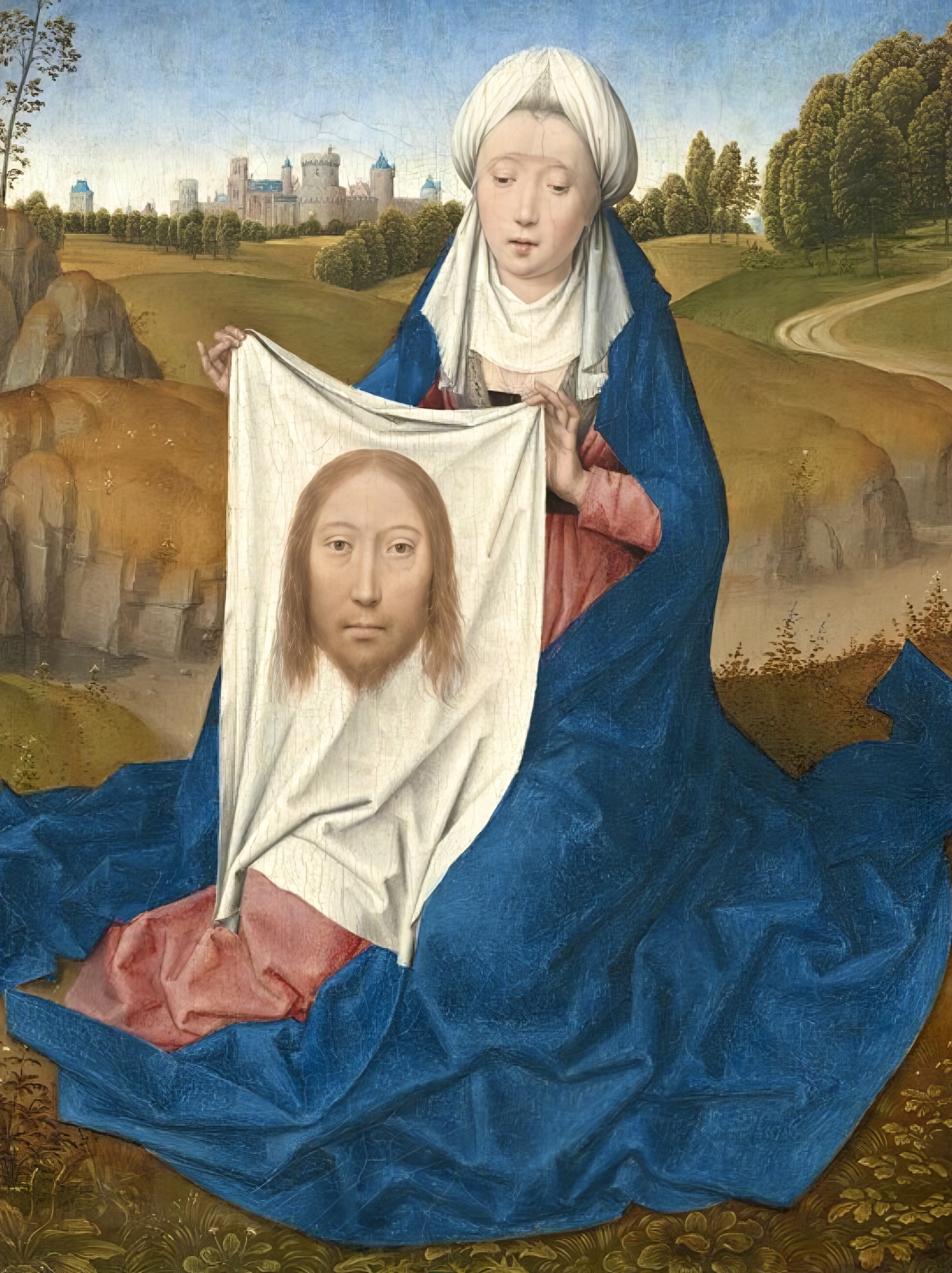
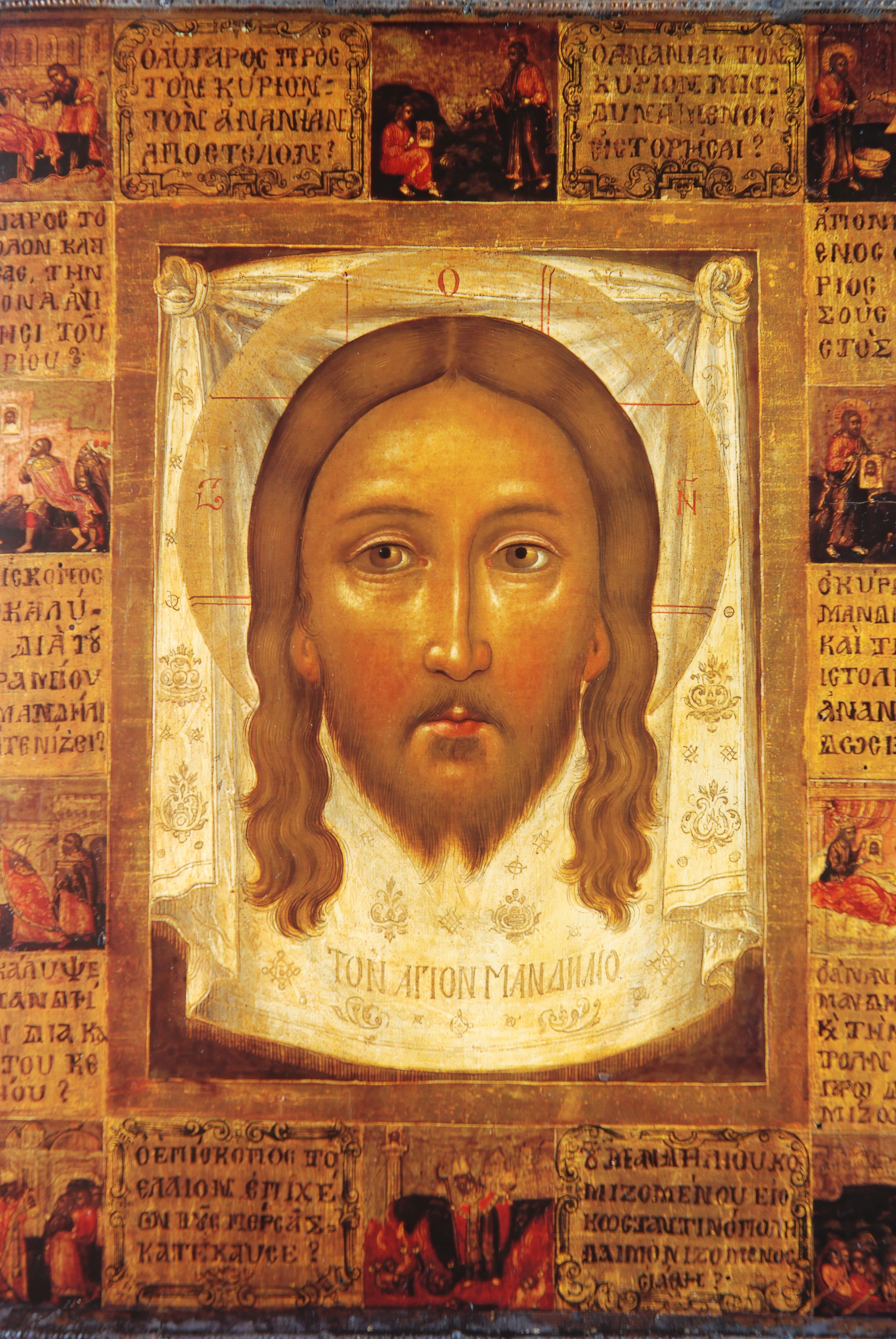
Jesus never took a selfie, but there are interesting ancient legends about photo-like images transferred onto cloth by contact with his face. In the Christian West, the apocryphal Saint Veronica (vera icon = true icon) was said to have wiped her Savior’s face with her veil as he lugged his cross to Calvary. In the eastern version of the legend, Jesus wiped his face with a towel sometime before his Passion. The towel—later known as the Mandylion—was sent to a king as a means of his healing. In both cases, an indelible image of the Christ was left on the cloth. Whatever we may make of these legends today, they were a way of authenticating subsequent images of the Word made flesh. Iconic images of Jesus were validated by the idea that they were copies of copies of copies, traceable all the way back to his original face.
The history and evolution of Christ images is a complicated one, with many deviations from what we regard as the traditional image of a white European with long hair and a beard. Early Christian images include a young man modeled on Apollo, whose youth symbolized eternal life, and a shepherd bearing a lost lamb on his shoulders. Both were beardless. Facial hair came later, to suggest both wisdom and authority. Africans, Asians and Pacific islanders have painted Jesuses who look like them. And contemporary artists continue to explore diverse visual means to represent the confusingly “unconfused” convergence of divine and human in a single face, a mortal body.
How can the artist do justice to both the humanity and the divinity of Jesus in a single image? The iconoclasts of the 8th and 9th centuries thought we should abandon the attempt altogether. The mixture of human and divine in a single person is unrepeatable, whether in life or in art. After the Ascension took him from human sight, the eucharist was the only valid Christ image that remained on earth.
A picture of Jesus simply cannot capture the mystery of divine presence, it was argued. As a product of artistic imagination, any painted or sculpted image of Jesus would be for the iconoclast an unworthy distortion of an unrepresentable reality. “If someone makes an image of Christ,” said the Byzantine emperor Constantine V, “he has not really penetrated the depths of the dogma of the inseparable union of the two natures of Christ.” In the end, the iconoclasts lost the argument, and the production of sacred images would remain an important part of Christian devotion, theology, and imagination.
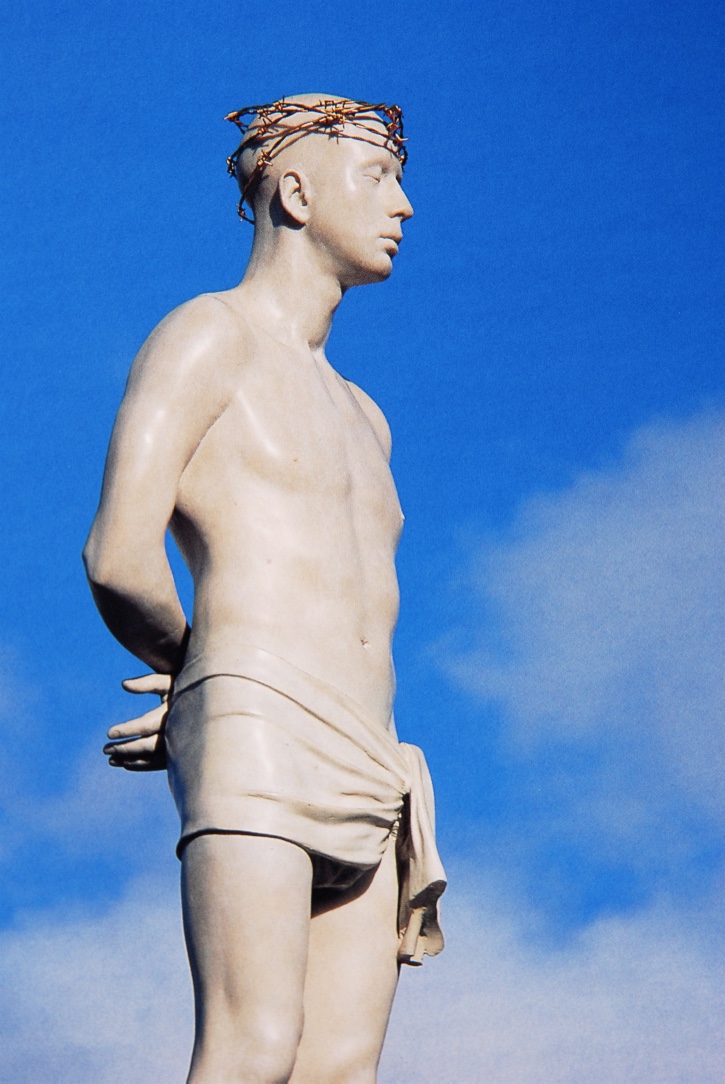
We like to think we’ll always know Jesus when we see him. But what if he doesn’t match the image in our minds? In 1999, a life-sized figure of Jesus was displayed on a high plinth in London’s Trafalgar Square. Cast from the clean-shaven body of an art student, Mark Wallinger’s Ecce Homo (“Behold the man.”) was made of synthetic resin mixed with marble dust. The figure of Jesus, arrested and bound by the powers-that-be, was bald and beardless. Only the thorns around his head invoked traditional Jesus iconography. The rest of him was anonymously modern. In their fine book on images of Christ, Neil MacGregor and Erika Langmuir report some of the public reactions:
If that’s Jesus Christ, it’s a bloody miracle,’ a man is reported to have said … ‘You couldn’t put your faith in someone like that, he’s as weak as a kitten.’ ‘You can’t have a Christ figure like this,’ said another. ‘Where is his robe? Where is his beard? Where is his cross?’ An ice cream seller pointed out, ‘He doesn’t have long hair.’ [i]
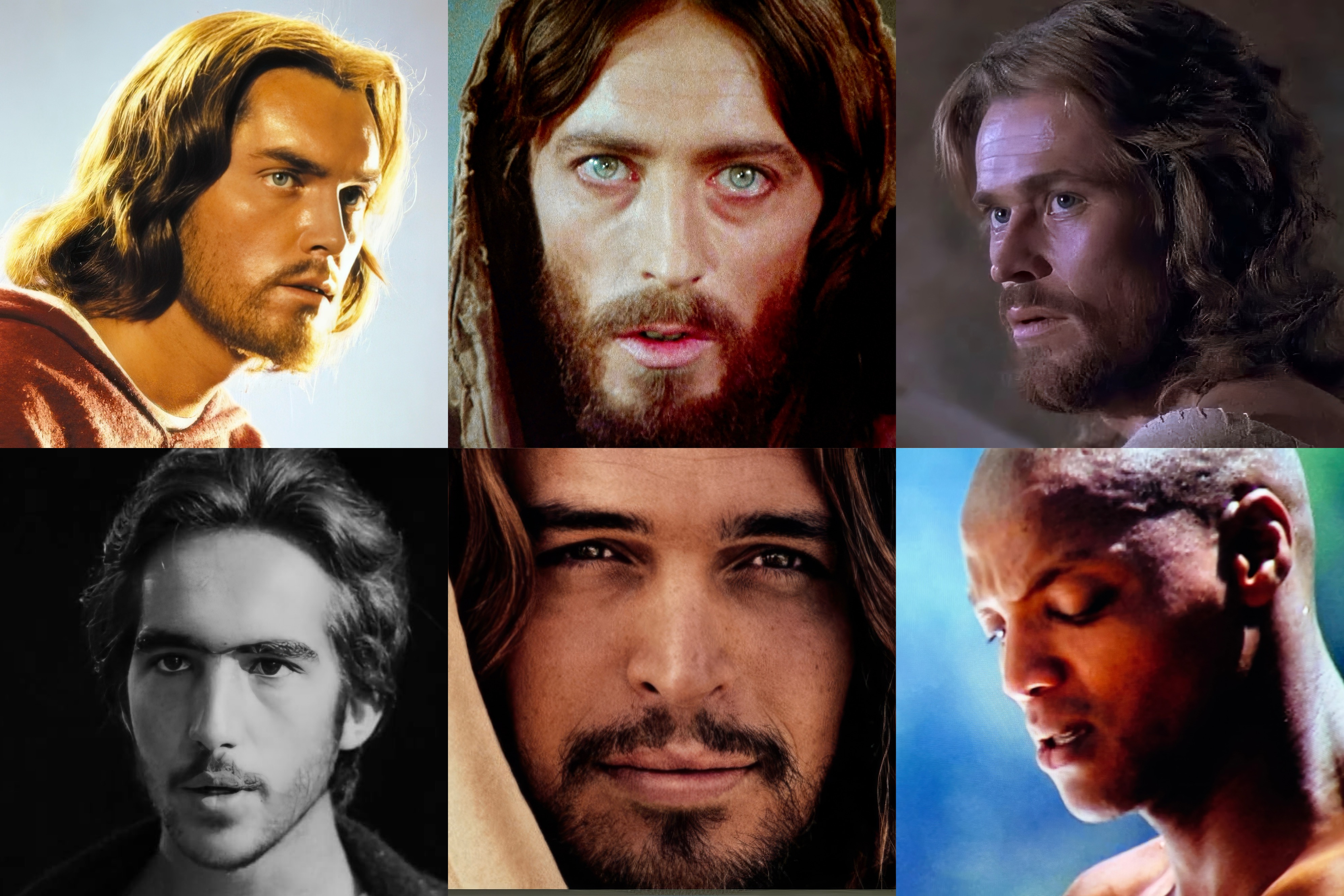
I used to teach a seminary course on “Jesus and the Movies,” drawing upon 16 different Jesuses in films made between 1912 and 2014. I’d begin by showing them a short clip of each “Jesus,” and then would ask:
Which one of them is the “real” Jesus?
All of them?
Some of them?
None of them?
The students’ answers were all over the map. Some shunned Robert Powell—his eyes were too blue for a Middle eastern character—while embracing the first Jewish actor in the genre (Irazoqui). Many loved the first African Jesus (Kosi) while rejecting teen idol Jeffrey Hunter as too “Hollywood.” Some found the Swedish accent of Max von Sydow (not pictured) and the New York accent of Willem Dafoe too jarring.
As the course progressed with dozens and dozens of scenes from Nativity to Resurrection, some of these objections faded away, as each film and each actor—at least in certain scenes—showed my students fresh dimensions of the Word made flesh. It’s the same process of recognition and illumination we go through when looking at a painting of Jesus. However, while we understand and accept the artificiality of a painted canvas, we tend to ascribe realism to the film image, at least in the course of watching it. We expect a film to match our ideas of what things look like, including Jesus.
Ironically, those ideas have themselves been shaped not by historical fact—the Bible offers few visual descriptions in its narratives—but by the imaginations of artists over the centuries. The films themselves owe a great deal to religious art. Pasolini, the first Jesus movie director to use unglamorous non-actors, said that “painting is the major element in the Christological tradition.” Of course, how could anyone live in Italy and not think that!
In any case, a visual representation of Jesus can engage you—sometimes profoundly—with the story of God among us, producing an immersive encounter that may change your life. It might even, in the case of Jesus icons which simply gaze back at you instead of showing a gospel narrative, become an authentic experience of real presence. And if you don’t meet Jesus in a particular image, be it a painting, a sculpture, or a film, you still come away thinking about him. Even to say “that’s not Jesus!” is a Christological statement.
Whether in painting, sculpture, or cinema, no image can be Veronica’s veil or the Mandylion. No image—even if it were a first-century photograph of the man himself—can claim to depict the real Jesus. That would be idolatry. It would also make the mistake of seeking the living among the dead. The risen and living Christ doesn’t come to us out of the past as a memory of what was, but out of the future. The first disciples—Jesus’ closest friends—had trouble seeing the person they remembered when the risen Christ first appeared to them. There was something different about him. Recognition required something more than a familiar face—a tender voice speaking their name, the breaking of the bread in Emmaus, a strange warming of the heart—before they could say for sure, “It’s you!”
No sane or honest person could ever find Jesus in the words or deeds of Donald Trump. But some have found echoes of the Antichrist. I don’t know about that, but pretty much everything he is and does is anti-love and anti-Jesus. And God help his enablers.

“Why, this is hell, nor am I out of it.”.
Images of Trump as Jesus, along with their inevitable parodies, may serve to weaken his support among the religious right. Hooray for that. But I wonder about the effect of such trivialization of the way we relate to sacred images. I fear the pollution of our visual imagination. Pope Leo’s recent criticism of cloaking despicable behavior with religious language seems applicable to images as well as actions.
“Woe to those who manipulate religion and the very name of God for their own military, economic and political gain, dragging that which is sacred into darkness and filth.” [ii]
Well, the visage of God-among-us has been spit upon before. And faith says that nothing we do to Jesus will make him stop loving us, or stop surprising us with the next form his appearing takes. If you want to find Jesus, don’t look among the evildoers, but among their victims. The Acts of Thomas, a third-century apocryphal gospel, makes this point perfectly when a Trumpian Satan bemoans his failure to appropriate Jesus for his own malicious designs:
“For when we thought that we could bring Jesus under our power, he turned and hurled us down into the abyss; for we did not know him, because he deceived us by his humble aspect, and by his need and his poverty.” [iii]
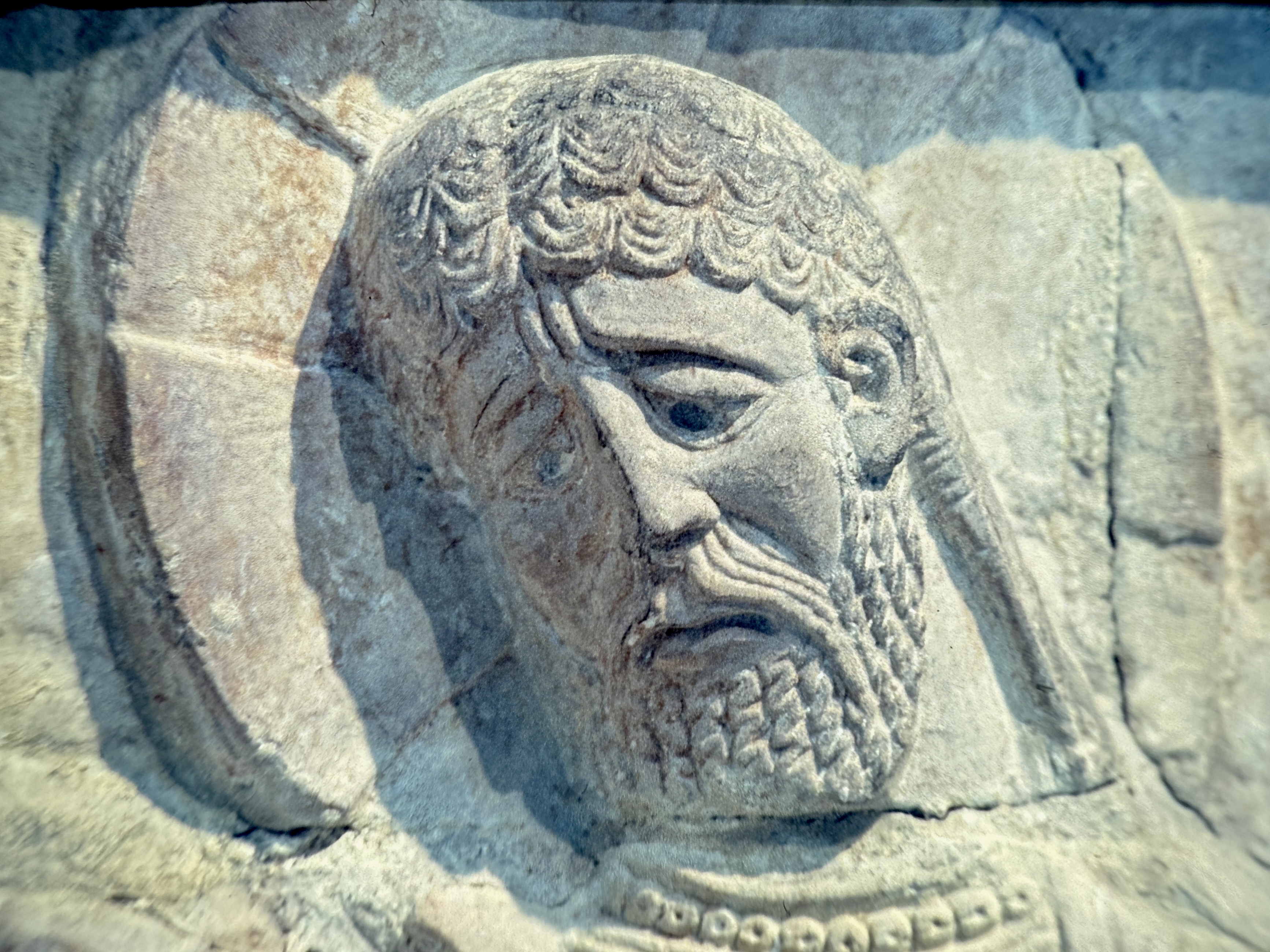
We may imagine his sorrow at being so poorly represented by so-called followers.
[i] Neil MacGregor & Erika Langmuir, Seeing Salvation: Images of Christ in Art (New Haven & London: Yale University Press, 2000), 115.
[ii] https://www.vaticannews.va/en/pope/news/2026-04/pope-bamenda-woe-to-those-who-manipulate-religion-military.html
[iii] Michele Bacci, The Many Faces of Christ: Portraying the Holy in the East and West, 300 to 1300 (London: Reaktion Books, 2014), 106.