Jesus Falls for the Third Time, Église Saint Laurent, Eygalières, France.
Ilia Malinin is by all accounts the best male figure skater in the world. The winner of the last two World Championships has broken new ground with his technical brilliance and exquisite artistry. He was the overwhelming favorite to win the gold medal last week at the Winter Olympics in Milan. But when he took the ice as the final skater, something went very wrong. In one of the biggest upsets in the history of the sport, Malinin grew hesitant, fell twice, and never regained the timing and composure he is known for. In a disastrous and heartbreaking four minutes, he tumbled from first to eighth.
In a post-race interview, Malinin said that “going into this competition, I felt really good this whole day. Feeling really solid. I just thought that all I needed to do was trust the process that I’ve always been doing.” But “the pressure and the nerves” hit hard. “So it was really just something that overwhelmed me and I just felt like I had no control.”
As the stunned spectators began to file out, the arena DJ put Coldplay’s “Viva la Vida” on the loudspeakers.
I used to rule the world Seas would rise when I gave the word Now in the morning, I sleep alone Sweep the streets I used to own
I used to roll the dice Feel the fear in my enemy’s eyes Listen as the crowd would sing
Now the old king is dead, long live the king One minute, I held the key Next the walls were closed on me And I discovered that my castles stand Upon pillars of salt and pillars of sand
That may have been a harsh choice for that particular moment, but it echoed the truthful reminder spoken to us every Ash Wednesday:
Remember that you are dust, and to dust you shall return.
The coincidence of Olympian failure and Ash Wednesday has happened before, and I believe that the falls touch us more deeply than the triumphs, summoning us to self-compassion in the dust and ashes of our own defeats. So in the light of this Olympics’ unfortunate example, I offer here the Ash Wednesday reflection I first posted ten years ago:
In the 1988 Winter Olympics, American speed skater Dan Jansen, the best in the world, was the consensus pick to win the 500 and 1000 meter events. On the morning of the 500 final, he learned his sister had just died from leukemia. With his focus clearly elsewhere, he fell on the first turn of his race and never finished. He would also fall and fail in the 1000 meters. At the 1992 Olympics, he again failed to win the medals expected of him. The 1994 Olympics offered him one last chance, and he came to the line of the 500 meter race as the clear favorite, the only skater ever to break 36 seconds, which he had done four times. But after one slight slip on the ice, he finished out of the medals yet again.
Ash Wednesday came just after that race, and during the liturgy I reflected on Jansen’s story in my homily. Although Jansen would finally win a gold medal a few days later (in the one race where he was an underdog), it was his “failures” that resonated with people. After the liturgy, a therapist in the congregation told me that many of her clients that week had talked with her about Jansen’s story, and how much it moved them. If the world’s greatest skater could fall, then maybe it was all right for them to fall as well. You don’t have to be a hero, only your own flawed and unfinished self.
In his youth, the poet David Whyte was hiking in the Himalayas when he came to a deep chasm. The only way across was a rickety old rope bridge with many missing slats. Although he was a confident, experienced mountaineer, he suddenly froze at the prospect of traversing the abyss on so treacherous a path. He sat down on the ground and stared at the bridge for hours, unable to proceed. “There are times when the hero has to sit down,” he said later. “At some bridges in life the part of you that always gets it done has to sit down.” Then an old Tibetan woman came along, gathering yak dung for fuel. She walked with a limp. “Namaste,” she said with a smile. Then she turned and limped across the bridge. Immediately, without thinking, he rose up and followed. Sometimes, he realized, it is “the old interior angel,” the unheroic, limping, unequipped part of ourselves, that gets us to the other side.
Remember that you are dust, and no hero. Whether your Lent will be a time of giving up, going deep, or reaching out, may it always be done with a generous measure of self-compassion.
Extra! Extra! Read all about it. SUN GOES OUT! STARS FALL FROM HEAVEN! THOUSANDS FAINT FROM FEAR!
On the first day of the Christian Year, do we break out the champagne and shout “Happy New Year.” No we do not. What we say is, “The end is near!”
We don’t get all Fundamentalist about it. We don’t walk around wearing signboard warnings. We don’t declare a fixed date for the end of history. We prefer to keep our end time theology more metaphorical than literal. Worlds end all the time. Personal worlds. Public worlds.
Still, this year, from Gaza and Ukraine to Washington, D.C., the end of the world feels closer to being literal than any other time in my 80 years on the planet. To borrow some lines from W. H. Auden’s Good Friday poems, lately it feels as if the world we know has been “wrecked, / Blown up, burnt down, cracked open, / Felled, sawn in two, hacked through, [and] torn apart.”
For Christians, the end of the world should not come as a total surprise. Every gospel on the First Sunday of Advent includes a forecast of the apocalypse—the end of the world as we know it. It’s not that uncommon, actually. Who has not experienced apocalypse on a personal level—the exit from childhood, the loss of a job or a loved one, a scary diagnosis? And throughout history, apocalyptic episodes have periodically disrupted the stability of humanity’s collective life: the fall of empires, economic crashes, military invasions, revolutions, authoritarian nightmares, environmental crises, and the like.
In the Humphrey Bogart movie, Beat the Devil, a ship is floundering on a stormy sea. In his typical wise-cracking manner, Bogie says to a panicky passenger, “What have you got to worry about? We’re only adrift on an open sea with a drunken captain and an engine that’s liable to explode at any moment!”
A crewman chimes in: “Perfectly ordinary situation. It happens every day.”
Like it or not, we’re all on board that sinking ship at the close of 2024, praying desperately with the Psalmist, “Save me, O God! The water has risen up to my neck; I’m sinking into the mire” (Psalm 69:1-2) Perfectly ordinary situation. It happens every day.
Angel blowing the 2nd trumpet as the sea swallows ships and sailors (Revelation 8:8). The Apocalypse Tapestry of Angers (1373-1382). Photograph by the author.
When I was younger, I had a crushing experience of my personal world coming undone. A spiritual director summed up my situation as being washed overboard into a wild sea, where I’m flailing to keep my head above water.” “Sounds about right,” I said mournfully. “Well, congratulations!” he told me. “You’re exactly where you need to be.” I had to laugh at the aptness of his metaphor. My apocalypse had indeed revealed the unsustainability of my former state, even as it hurled me into the formless chaos from which my new world would be born.
Saint Michael weighing souls (c. 1180), Saint-Trophime, Arles, France. Photograph by the author.
Apocalypse can be an unwelcome judgment on the way things are. It weighs the world in the scales of justice and finds it wanting. The judgment is not punitive, simply accurate. As a 14th-century English poem on the end of the world put it, the apocalypse judges “without revenge or pity.” It just tells it like it is. Still, it’s a hard thing to face the truth about our flawed condition. However, the end of an old reality can also be life-giving, freeing us to discover a better version of self and world.
But where can we put our feet when the ground is crumbling beneath us? We stand on God’s word, God’s promise, God’s hope. “Heaven and earth will pass away,” Jesus says, “but my words will not pass away.” Let the Savior’s words guide us. Let them encourage us. As he told his disciples,
“When the chaos comes, keep your heads high and stand your ground. Your liberation is on its way. Don’t be distracted by thoughtless living, or get weighed down with worry,” he says. “Be alert at all times, and pray that you’ll have the strength to get through all this craziness.” [i]
This is my 55th year of preaching in Advent. It’s my favorite season, so rich with resonant and stirring themes: endings and beginnings, light and darkness, waiting and preparing, watching and hoping, expectation and, in the end, marvelous birth. But this year Advent feels decidedly more urgent and more serious to me than ever before. We aren’t just reading about a people who sit in darkness. We are those people.
We could weep and moan about being stuck in this particular moment in history. But what if the Lord of history is telling us, “Congratulations! You are just where you need to be—in the wild baptismal sea of rebirth. Come, take up your cross. Following me is about to get really real and really intense. Costly? Yes. Suffering? Yes. Dying? Yes. Rising? Yes! Start to live the risen life like you mean it!
Okay, Lord. But what exactly is that going to entail? This question came up when I ran into friend from church on the ferry last week. “What are we supposed do if they begin to round up the most vulnerable in our midst?” she asked. “Join hands to block their way with our bodies?” The strangeness of such a hypothetical even being asked in our peaceful corner of the world prompted a helpless shrug.
Seeking some guidance from my library, I pulled out a book published a few years ago: The Year of Our Lord 1943: Christian Humanism in an Age of Crisis. The author, Alan Jacobs, examins the responses of Christian intellectuals to the violent chaos of the Second World War. What did some of the most articulate of God’s friends have to say about being faithful in a dark and dangerous time?
When the war broke out in 1939, Anglican poet W. H. Auden put the case bluntly: We must love one another or die. A year later, he wrote New Year Letter(January 1,1940), a long poem considering “what is possible and what is not” in such a time.
Most of the poem is addressed to Elizabeth Mayer, a supportive maternal figure who was a key source of peace and happiness in Auden’s life.
We fall down in the dance,” he wrote. “We make The old ridiculous mistake, But always there are such as you Forgiving, helping what we do. O every day in sleep and labour Our life and death are with our neighbor.
In other words, we are all in this together. The end of New Year Letter is addressed to God, asking for divine help in making a better world, since we humans are too muddled to do it on our own.
“Send strength sufficient for our day,” he wrote. “And point our knowledge on its way.”[ii]
His friend C. S. Lewis worried about the Church endorsing the violence in its prayers. On September 10, 1940, he wrote to his brother, “In the litany this morning we had some extra petitions, one of which was ‘Prosper, O Lord, our righteous cause.’ I ventured to protest against the audacity of informing God that our cause was righteous—a point on which He may have His own view.” [iii]
Lewis preferred the wartime collect of Thomas Cranmer, the Archbishop of Canterbury who made the first Book of Common Prayer. During hostilities with Scotland in 1548, Cranmer wrote this extraordinary collect:
“Most merciful God, the Granter of all peace and quietness, the Giver of all good gifts, the Defender of all nations, who hast willed all men to be accounted as our neighbours, and commanded us to love them as ourself, and not to hate our enemies, but rather to wish them, yea and also to do them good if we can: … Give to all us desire of peace, unity, and quietness, and a speedy wearisomeness of all war, hostility, and enmity to all them that be our enemies; that we and they may, in one heart and charitable agreement, praise thy most holy name, and reform our lives to thy godly commandments.” [iv]
In other words, in times of conflict, Christians must take care not to mirror the violence we oppose. We must find a way toward peace and reconciliation. But what if there are no good choices available?
The German theologian Dietrich Bonhoeffer knew how bitter conflict corrodes the human heart. In a 1942 letter to fellow members of the German resistance, he wrote:
“Unbearable conflicts have worn us down or even made us cynical. Are we still of any use? We will not need geniuses, cynics, people who have contempt for others, or cunning tacticians, but simple, uncomplicated and honest human beings.” [v]
In the desperate hope of derailing the Nazi horror, Bonhoeffer reluctantly joined a conspiracy to assassinate Hitler. The plot failed and he was executed for his role in it. A new film about him depicts him going to the gallows confident in his own purity of heart, but the fact is he never stopped feeling guilty for his participation the way of violence. He felt corrupted by the whole milieu of bloody conflict: shooting, wrecking, bombing—none of it is untainted by evil.
Simone Weil, French philosopher and activist, agreed that everyone is a victim of war. No one involved in the application of force escapes its toxicity. “To the same degree,” she said, “though in different fashions, those who use it and those who endure it are turned to stone.” When the Second World War started, Weil warned that
“We should not think that because we are less brutal, less violent, less inhuman than those we are confronting, we will prevail.” We must find a way, she insisted, to exercise the opposing virtues.
In late 1942, when Weil was working in the London office of the French Resistance, she proposed a plan to parachute hundreds of white-uniformed nurses onto battlefields, not only to tend to the wounded but also to provide an image of self-sacrificial goodness in the midst of cruelty and violence. She herself wanted to be in the first wave of this non-violent invasion. In submitting her plan to the Free French authorities, she made a visionary argument:
A small group of women exerting day after day a courage of this kind would be a spectacle so new, so significant, and charged with such obvious meaning, that it would strike the imagination more than any of Hitler’s conceptions have done.” [vi]
Charles de Gaulle thought her quite mad, and her plan of course went nowhere. But her saintly resistance to the application of force was a bright candle in the wind of war.
I am moved by all the stories of faithful people trying to follow the light in an age of shadows. Their wsdom can guide us. Their endurance can encourage us.
Now saintly virtues may not be the way of the world, but as Thomas Merton liked to say, we are not called to be successful. We are called to be faithful. “Perfect hope,” he wrote, “is achieved on the brink of despair when, instead of falling over the edge, we find ourselves walking on air.” [vii]
Remember those old Sherlock Holmes movies with Basil Rathbone> In 1942, when the outcome of the war was still uncertain, Universal Studios modernized Holmes, recruiting the Victorian detective for the war effort in Sherlock Holmes and the Voice of Terror. After a successful takedown of Nazi spies, Holmes and Watson walk to edge of Dover’s cliffs to gaze across the English Channel. Watson begins the conversation that concludes the film:
—“It’s a lovely morning, Holmes.” —“There’s an east wind coming, Watson.” —“Oh, I don’t think so. It looks like another warm day.” —“Good old Watson. The one fixed point in a changing age. There’s an east wind coming, all the same. Such a wind as never blew in England yet. It will be cold and bitter, Watson. And a good many of us may wither before its blast. But it’s God’s own wind, none the less. And a greener, better, stronger land will lie in the sunshine when the storm has cleared.”
That bit of wartime propaganda, pep talk for a battered nation, came to mind as I pondered on today’s apocalyptic theme. “A cold and bitter wind … many of us may wither before its blast.” An accurate forecast. But beyond that, a glorious spring, when a “greener, better, stronger land will lie in the sunshine.”
God, bring that day closer. In the meantime, we pray with Emily Dickinson (#131):
Grant me, O Lord, a sunny mind— Thy windy will to bear!
So—How exactly do we cultivate a sunny mind in a gloomy time? We’ve all been working that problem this fall. Over the past month, I’ve found myself focusing on three spiritual practices: Do not let your hearts be troubled … Don’t get lost in the dark … Remember beauty.
First thing:Do not let your hearts be troubled. Step away from the screen. Don’t obsess on worst case scenarios, fretting over every potential bad outcome. There are too many to count, and it will only discourage and exhaust you. Sufficient unto the day is the evil thereof.
As Palestinian-American poet Naomi Shihab Nye reminds us, we must “Break the Worry Cocoon”—
To live with what we are given— graciously, as if our windows open wide as our neighbors’, as if there weren’t insult at every turn. How did you do that? …
How did you survive so much hurt and remain gracious, … how did you believe, then and forever, breaking out of the endless worry cocoon, something better might come your people’s way? [viii]
Second thing: Don’t get lost in the dark. Don’t get mesmerized by the horror. Evil is like Medusa’s face. Gaze too long and you turn to stone. How do we hate hate without becoming hateful ourselves? The rage provoked by repugnant beliefs, bad behavior and delusional assertions can become addictive. It feels good to denounce the deplorable scoundrels. It’s even entertaining to watch others do it. We think we are resisting evil, but our hate only serves to feed the beast.
Third thing:Remember beauty.
During the American Civil War, landscape painting was very popular. It offered tranquil scenes of an American Eden, unspoiled by the tragedies of history. There wasn’t the slightest hint of the violence raging in the land. When I was looking through reproductions of those works the other day, I was particularly struck by Alfred Thompson Brecher’s “Up the Hudson.” The broad river is absolutely still. The misty atmosphere glows with amber light. One tiny figure drifts quietly in his canoe. It is a picture of absolute calm and peace. I was taken by its beauty, but what really hit me was the year it was painted: 1864, the same year the painter’s brother died in one of the war’s bloodiest battles.
Alfred Thompson Brecher, Up the Hudson (1864).
And I wondered: Did Brecher paint it before or after he got the terrible news? I’d like to think it was after, as if the artist were resisting despair by pledging his allegiance to the harmonizing beauty of God’s creation, a beauty that transcends every evil.
Remember beauty. In October, 1967, 100,000 people gathered at the Lincoln Memorial in the nation’s capital for the first national demonstration against the war in Vietnam. I was there with a number of fellow seminarians. There were speeches and songs during the day, but around sunset about half the crowd marched across the Potomac to the Pentagon, which was surrounded by soldiers in gas masks holding rifles with fixed bayonets. They stood frozen like statues when young women stuck flowers in their gun barrels. I had a camera, and took some dramatic closeups of the soldiers.
Paratroopers guard the Pentagon during the first national protest against the war in Vietnam (Octobver 21, 1967). Photograoph by the author.
As the evening progressed, tensions grew, and a riot broke out, with lots of tear gas and hundreds of arrests. But I missed all that violence, because I had left early in order see the full moonrise over the reflecting pool in the National Mall. It was absolutely beautiful. I still have the photograph.
The full moonrise at the National Mall in Washington, D.C., on October 21, 1967. Across the Potomac at this moment, demonstators are clashing with paratroopers at the Pentagon. Photograph by the author.
On that day I had done my part in a public witness for peace; but when night came, the very best thing I could do was to notice the beauty of the moonrise. I like to think that both those things got recorded in the Book of Life. Come, labor on; but don’t forget the Sabbath moments.
Dear friends in Christ, let us cast away the works of darkness and put on the armor of light. Keep the faith. Fear not. Embody hope. Love one another. Trust divine intention. This is the holy work God has given us to do.
A few hundred years ago, Turlough O’Carolan, the blind harper and last of the Irish bards, was sitting in a tavern with his friend, the poet Charles McCabe. McCabe said, “Your music, sir, is grand and lovely stuff, but too light-hearted. This is a dark time we live in, Mr. Carolan, and our songs should reflect that.”
And the harper replied, “Tell me something, McCabe. Tell me this: Which do you think is harder—to make dark songs in the darkness, or to make brilliant ones that shine through the gloom?” [ix]
Provencal moon. Photograph by the author.
A homily for the First Sunday of Adven at Saint Barnabas Episcopal Church, Bainbridge Island, Washington.
The images of the Apocalypse are from the Tapestry of the Apocalypse in Angers, France. Originally 140 meters long, over time it has been reduced by a third. Woven in the late 14th century, it offers spectacular illustrations of the Book of Revelation.
[v] Dietrich Bonhoeffer, “After Ten Years” in Letters and Papers from Prison (Minneapolis: Fortress Press, 2010). Translated by Barbara and Martin Rumscheidt.
[vi] Simone Weil, quoted in Robert Zaretsky, The Subversive Simone Weil: A Life in Five Ideas (Chicago: University of Chicago Press, 2021), 155.
[vii] Thomas Merton, No Man Is an Island (206), q. in The Thomas Merton Encyclopedia (Maryknoll, NY: Orbis Books, 2002), 213.
[viii] Naomi Shihab Nye, “Break the Worry Cocoon,” Voices in the Air: Poems for Listeners (New York: Greenwillow Books, 2022), 96-97.
[ix] From the play, O’Carolan’s Farewell to Music by Patrick Ball and Peter Glazer, on the California Revels CD, Christmas in an Irish Castle (2001).
Lorenzo Quinn, Building Bridges (Venice Biennale 2019)
Sermon for Trinity Sunday 2024 at St. Barnabas Episcopal Church, Bainbridge Island, Washington
From late autumn to late spring, Christian liturgy takes us on a ritual journey through the gospel narrative, from the Incarnation and Epiphany of Christ to the dramatic finale of Passion, Resurrection, Ascension and Pentecost.This great sequence concludes with Trinity Sunday, which serves as a kind of epilogue.
The abrupt shift from the engaging world of story to the tangled thicket of doctrine can be a bit of a shock. It’s like going directly from a seminar in English literature to a class in advanced calculus. Our hearts sink and our heads explode. But fear not. The Trinity is no dreary abstraction. Nor is it a matter, as Lewis Carroll might say, of believing three impossible things before breakfast. We are not here to solve once and for all the puzzle of Three-in-One and One-in-Three. We are here to adore the mystery.
The first Christians were not inventive theorists speculating about the divine nature of a generic God. They were the friends of Jesus trying to make sense of the concrete, experiential data of salvation, beginning with the dramatic biblical events they had lived through and continuing to unfold in the common life of their believing communities. Their profound experiences of Jesus and the Holy Spirit had shaken the foundations of their monotheistic faith, and they were trying to sort out the implications.
Jesus and the Spirit had done for them what only God can do: heal, save, sanctify—even vanquish the power of death. Did that make Jesus and Spirit divine? And if so, what did that multiplication of divine persons do to their belief that God was one? Jesus had told them, “I and the Father are one.” But it would take centuries to agree on what he meant.
Without losing the unity of God, how could the early Christian community account for the divine diversity revealed in the saving activities of Christ and the Spirit?
Once they began to call Jesus Kyrios (Lord), which happened very early in their worship and their storytelling, traditional monotheism was radically destabilized. The growing perception of the Holy Spirit as a guiding and empowering presence of deity in their communities only compounded the problem.
There were various attempts to solve the issue by downgrading Jesus and Spirit to subordinate, derivative, or semi-divine realities, by no means equal to the eternal and uncreated God. Such “heresies” were popular with those who wanted to keep God simple. But “orthodoxy” was unwilling to deny the fullness of divinity to either Christ or the Spirit. For them the bottom line was this:
Only God can save us. Christ and Spirit, in the biblical revelation and Christian experience, are integral and essential to salvation. Therefore, they must be “of one substance with the Father.” That is to say, the Persons are all equally integral to the divine reality: God above us, the source and ground of all being; God with us and among us, the companion who is our way, our truth, and our life; and God within us, the energy and vitality of our deepest self. As the theologians put it:
“The Trinity is an account of God that says these are [each] irreducible and indispensable dimensions of the same reality, not different ones, and yet each has its own irreducible integrity.” [i]
And so, a trinitarian faith became foundational for the Christian understanding of divinity: God in three persons, blessed Trinity. But the inherent tension between the one and the three remains to this day. Human thought and human language can’t quite manage to think both things at the same time. It’s like waves and particles. Gregory of Nazianzus, one of most influential shapers of the fourth-century trinitarian consensus, admitted the futility of trying to corral the mystery with concepts. He suggested that we just go with the divine flow:
“I cannot think of the One without immediately being surrounded by the radiance of the Three; nor can I discern the Three without at once being carried back into the One.” [ii]
In an amusing caricature of crudely literal images of the Three-in-One, British theologian Keith Ward imagines three omniscient individuals trying to have a conversation:
“I think I’ll create a universe,” says one. “I knew you were going to say that,” says the second. “I think I’ll create one as well,” says the third. “Well, it had better be the same as mine,” says number one. “You already know that it is,” says number two. “I knew you were going to say that,” says number three.[iii]
If we have difficulty with “God in three Persons,” it is because we think of a person as defined by his or her separateness. I’m me and you’re you! We may interact and even form deep connections, but my identity does not depend upon you. I am a self-contained unit. You can’t live in my skin and I can’t live in yours. That’s the cultural assumption, which goes back at least as far as Descartes in the seventeenth century and continues today in such debased forms as rampant consumerism and economic selfishness, where my needs and my desires take precedence over any wider sense of interdependence, community, or ecology.
But what we say about the Persons of the Trinity is quite different. Each Person is not an individual, separate subject who perceives the other Persons as objects. The Trinitarian persons experience one another not from the outside, but from the inside. They indwell each other in a mutual interiority.
But if the divine Persons are all inside each other, commingled, “of one being,” as the Creed says, what makes each Person distinct? To put it succinctly: the Persons are distinct because they are in relation with one another. No Father unless there is a Son. No Son without a Father. No Holy Spirit without Father and Son.
As Martin Buber observed, we are persons because we can say “Thou” to someone else. To be a person is to experience the difference – and the connection – that forms the space between two separate subjects. My consciousness is not alone in the universe. There are other centers of consciousness: Thou, I… Thou, I… The fact that you are not I is what creates self-consciousness, the awareness of my own difference from what is outside myself.
If we apply this to the Trinity, we say that there are Three Persons because there is relation within God, relation between the Source who begets, the Word who is begotten, and the Spirit who binds the two together and moves them outward in ever widening circles.
These relations are not occasional or accidental. They are eternal. There is an eternal sending within God, an eternal self-giving within God, an eternal exchange by which God is both Giver and Receiver simultaneously. God is Love giving itself away – self-emptying, self-diffusing, self-surrendering – and in so doing finds itself, receives itself, becomes itself. A French mystic put it this way: “it’s a case of un ‘je’ sansmoi” (an “I” without a me).
Wallace Stevens wrote a poem about the process of giving ourselves over to a larger whole. He called it “the intensest rendezvous,” where we find ourselves drawn out of isolation “into one thing.” He wasn’t writing about the Trinity, but his words come as close as any to describing the essential dynamic of the divine Persons:
Here, now, we forget each other and ourselves. We feel the obscurity of an order, a whole, A knowledge, that which arranged the rendezvous.[iv]
As Orthodox theologian John D. Zizioulas says in his influential text, Being as Communion, “To be and to be in relation are the same thing for the divine life … Therefore if Trinity is our guide, the most fundamental definition of being we can give is person-in-communion … The being of the one divine nature is the communion of the irreducibly different persons; the being of the individual persons is constituted by their relations with each other.” [v]
God is not a simple, static substance but an event of relationships. That’s why we say that God is love. “To be” has no ontological reality apart from “to be in relationship.” In the words of Anglican priest John Mbiti of Kenya, expressing the strongly communal mindset of African theology, “I am because we are, and since we are, therefore I am.” [vi]
Each Person contains the others and is contained by them in a shared communion of self-offering and self-surrender. But that continuous self-offering is never a one-way transaction, either one of self-emptying or one of being filled. It is always both at once – giving and receiving – as we ourselves know from our own mutual experience of love at its best.
Trinitarian faith describes a God who is not solitary and alone, a God who is not an object which we can stand apart from and observe. The Trinity is an event of relationships: not three separate entities in isolation and independence from one another, but a union of subjects who are eternally interweaving and interpenetrating
This divine relationality is not something which an originally solitary God decided to take up at some point. God is eternally relational. Before there was an external creation to relate to, God’s own essential self was and is an event of perpetual relation. There was never simply being, but always being-with, being-for, being-in. To be and to be in relation are eternally identical.
When the Bible says, “God is love” (I John 4:16), it means that love is not just something God has or something God does; love is what God is.
As John Zizioulas puts it, “Love as God’s mode of existence … constitutes [divine] being.”[vii] Feminist theologian Elizabeth Johnson echoes this when she says, “being in communion constitutes God’s very essence.” [viii] In other words, God is Love giving itself away—self-emptying, self-diffusing, self-surrendering—and in so doing finds itself, receives itself, becomes itself. The theologians of late antiquity borrowed a word from the arts to describe this process: perichoresis, which means to “dance around.”
Trinity is a dance, with Creator, Christ and Spirit in a continuous movement of giving and receiving, initiating and responding, weaving and mingling, going out and coming in. And while our attention may focus at times on a particular dancer, we must never lose sight of the larger choreography to which each dancer belongs: the eternal perichoresis of Three in One, One in Three.
As Jesus said, “losing” yourself and “finding” yourself are equivalent and simultaneous. In giving ourselves away, we receive ourselves back. This may be counterintuitive to the modernist mindset of autonomous individual self-possession, but it is the essence of communion: “a giving of oneself that can only come from the ongoing and endless reception of the other.” [ix]
If we had the space, I would invite you now to dance the divine perichoresis with your own bodies. We would join hands, circle round, spiral inward, weave in and out of the arches and tunnels of upraised arms, and manifest with our bodies the divine fullness of the Holy Trinity, which has been described as an “interdependence of equally present but diverse energies … in a state of circumvolving multiplicity.” [x] And thus we would, both symbolically and in fact, participate in the divine reality of “reciprocal delight” [xi] which transpires not only in heaven, but “on earth as it is in heaven.”
There are no spectators in the Trinitarian dance, which is always extending outward to draw us and all creation into its motions. As Jürgen Moltmann said, “to know God means to participate in the fullness of the divine life.” [xii]
It’s not a matter of our trying to imitate the relational being of the loving, dancing God, as if we were inferior knock-offs of the real thing. God wants us to become ourselves the real thing. God wants to gather us into the divine perechoresis as full participants in the endless offering and receiving, pouring out and being filled, which is the dance of God and the life of heaven.
And while our dance with God has its mystical, mysterious, transcendent dimensions, it is also very concrete and specific to our historical life on this earth. The divine life of communion and self-diffusive love is the only antidote for the poisonous hatreds of this fearful age.
We know the yoke of sin and death, Our necks have worn it smooth; Go tell the world of weight and woe That we are free to move. [xiii]
Because we ourselves are made in God’s image, who God is matters deeply, both for our own self-understanding and for our engagement with the world. The Trinity isn’t only God’s life. It is ours as well. It’s the shape of every story, the deep structure of the church, and the foundational pattern of reality.
Because God is communion, the eternal exchange of mutual giving and receiving, then God’s Church must live a life of communion as well. When Love’s perechoresis becomes our way of being in the world—as believers, as church—the Trinity is no longer just doctrine or idea. It is a practice, begetting justice, peace, joy, kindness, compassion, reconciliation, holiness, humility, wisdom, healing and countless other gifts. As theologian Miroslav Volf has said, “The Trinity is our social program.” [xiv]
The dance of Trinity is meant For human flesh and bone; When fear confines the dance in death, God rolls away the stone. [xv]
The Church exists to participate in the liberating life of God, and to enable others to do the same. We exist to make divine communion not just an inner experience but a public truth. We don’t just feel God’s perichoresis. We don’t just feel Love’s eternal dance. We embody it. We live it. We show it. We share it.
As the great Anglican preacher Austen Farrer put it so clearly a century ago:
“It is not required of us to think the Trinity. We can do better; we can live the Trinity.” [xvi]
Photographs by the author.
[i] S. Mark Helm, The Depth of the Riches: A Trinitarian Theology of Religious Ends (Grand Rapids, MI: Eerdmans, 2003), 132.
[ii] Gregory of Nazianzus, q. in Karen Armstrong, The Case for God (New York: Knopf, 2009). 116-117.
[iii] Keith Ward, God:A Guide for the Perplexed (Oxford: Oneworld Publications, 2003), 235.
[iv] Wallace Stevens, “Final Soliloquy of the Interior Paramour,” Collected Poetry and Prose (NY: Library of America, 1997), 444.
[v] John D. Zizioulas, Being as Communion: Studies in Personhood and the Church (Crestwood, NY: St. Vladimir’s Seminary Press, 1993), 46.
[vi] quoted in Veli-Matti Kärkkäinen, The Trinity: Global Perspectives (Louisville: Westminster John Knox Press, 2007), 352.
[viii] Elizabeth Johnson, She Who Is: The Mystery of God in Feminist Theological Discourse (NY: Crossroad, 1993), 227.
[ix] Graham Ward, “The Schizoid Christ,” in The Radical Orthodoxy Reader, ed. John Milbank and Simon Oliver (NY: Routledge, 2009), 241.
[x] David Bentley Hart, The Beauty of the Infinite: The Aesthetics of Christian Truth (Grand Rapids: Eerdmans 2003), 114.
[xi] St. Athanasius (c. 296-373), a bishop in Roman Egypt, was a key defender of Trinitarianism.
[xii] Jürgen Moltmann, The Trinity and the Kingdom: The Doctrine of God, trans. Margaret Kohl (San Francisco: Harper & Row, 1981), 152.
[xiii] Richard Leach, “Come Join the Dance of Trinity.”
[xiv] Miroslav Volf, “‘The Trinity is Our Social Program’: The Doctrine of the Trinity and the Shape of Social Engagement,” Modern Theology 14, no. 3 (July 1998).
“Opulent Ascension,” an installation by Sean Scully in San Giorgio Maggiore (Venice Biennale, 2019).
Inspired by Jacob’s dream of a ladder to heaven (Genesis 28:12), Scully’s stack of colored felt slabs rises more than ten meters toward the luminous dome of San Giorgio Maggiore, Palladio’s splendid Renaissance church in Venice. Amid the subdued grays and whites of the interior, the miraculous colors exude the vitality of spiritual aspiration, like spring flowers refuting winter’s drab.
On this Ascension Day, let me offer another image, a 36-second “video icon” of a cloud disappearing into the blue. Consider it a brief meditation on Luke’s text, “As they were watching, he was lifted up, and a cloud took him out of their sight” (Acts 1:9).
The Ascension of Christ takes us into an ineffable realm, far above the literalism of earthly life. What are we to make of such a strange story? The following video of an Ascension Day homily was streamed during the pandemic a few years ago, when we were not able to gather in person to celebrate the mystery. Fittingly, it was recorded mostly outside, under the open sky.
In the Garden, an icon by the hand of the artist, Angelica Sotiriou, 2009.
I’m writing this on Maundy Thursday, the night of Jesus’ tender farewell supper with his friends—and the night he was handed over to malevolent powers. The beautiful icon from the hand of California sacred artist Angelica Soteriou [i] captures the wrenching moment between the solidarity of his loving community and the fatal desolation of his Passion. He is alone. Neither friends nor enemies share his existential space. He’s kneeling in prayer, arms stretched out, beseeching his Father for whatever is needed to make it through the night. But his hands remain open, receptive to a will not his own. Not my will, but thine. And though an annihilating blackness surrounds him, his body is held safely within the warm color of the mountain of God. Even when we feel alone, even abandoned, we are still enfolded within divine love and mercy. Our divine milieu is not an exemption from trouble, but an assurance against trouble’s finality.
On this holy Thursday, many churches, including mine, do the eucharist in the context of an actual shared meal. It is is our custom to eat in silence, which monastics know is a profound way to be together. Our silence is punctuated by a series of meditative readings from the Farewell Discourses, the words of encouragement, comfort and challenge which, in John’s gospel, Jesus speaks to his friends on the night before his execution. It’s not a reenactment of a past event. Those words are spoken directly to us, in our own fraught time.
Tonight, however, we added a word from one of Jesus’ more recent friends, the theologian Dietrich Bonhoeffer, who was facing his own Gethsemane in a German prison. At Christmastide, 1944, a few months before he would be executed by the Nazis, he wrote a poem which was smuggled out of prison in a letter to his mother. Its expression of confidence and hope in the midst of an evil time not only echoes the spirit of Jesus’ Farewell Discourses, but it speaks strongly to our own latter days, when so many things are in peril.
Here is the versified translation of Bonhoeffer’s poem by the British hymn writer Fred Pratt Green:
By gracious powers so wonderfully sheltered, and confidently waiting come what may, we know that God is with us night and morning, and never fails to greet us each new day.
Yet is this heart by its old foe tormented; still evil days bring burdens hard to bear; O give our frightened souls the sure salvation for which, O Lord, you taught us to prepare.
And when this cup you give is filled to brimming with bitter suffering, hard to understand, we take it thankfully and without trembling, out of so good and so beloved a hand.
Yet when again in this same world you give us the joy we had, the brightness of your Sun, we shall remember all the days we lived through, and our whole life shall then be yours alone.[ii]
Yes, we too are living through “evil days” which weigh down “our frightened souls” with “burdens hard to bear.” But our brother Dietrich, like our brother Jesus, reminds us that there is an alternative to fear and despair, if we can find the courage to live into God’s future, come what may, and the Paschal wisdom to walk the Way of the Cross “thankfully and without trembling,” because we know that death doesn’t get the last word.
Now, as we move into Good Friday, listen to what Rowan Williams, former Archbishop of Canterbury, says about the cross:
Jesus crucified is God crucified; so we believe. Jesus is the total and final embodiment in history of God’s loving mercy; and so this cross is a unique, terrible, extreme act of violence—a summary of all sin. It represents the human rejection of love. And not even that can destroy God; with the wounds of the cross still disfiguring his body, he returns out of hell to his disciples and wishes them peace. There is our hope—the infinite resource of God’s love, the relationship with God’s creatures that no sin can finally unmake. God cares what we do because God suffers what we do. God is forever wounded, but forever loving. The possibilities of our relationship to God are indeed ‘new every morning.’” [iii]
In other words, says Williams, “we have a future because of God’s grace.” Bonhoeffer said the same thing, and he said it from death row. That’s what the Paschal Mystery of dying and rising is trying to tell us—not only in the rituals and narratives of Holy Week, but in the kind of lives we live when we fully embody the archetypal pattern of surrender and transformation. The way down is the way up. Lose your life to find it. Let go and let God.
There’s always more to say about this, of course, but it’s almost midnight, and tomorrow is the rigorous journey to the foot of the cross. And beyond that, there’s the Easter Vigil, a night of wonders when heaven and earth are joined and liturgical curators are left exhausted yet exultant in its wake. If you want to read more about the cross, try What Will the Cross Make of Us?, written in 2022 by my less tired self. For more on the Easter Vigil, try Just a Dream?—Reflections on the Easter Vigil.
I’m going to bed now, but let me leave you with a 3-minute trailer for the Triduum, pushing the point that the Triduum is not a la carte, but a 3-part connected sequence that wants to be experienced in full. The three-day Paschal passage from Passion to Resurrection isn’t just bingeing on liturgy. It’s a profound way of knowing that delivers you to a different place. As we say at my church every Holy Week, “The journey is how we know.”
[iii] Rowan Williams, from a sermon excerpted in A Time to Turn: Anglican Readings for Lent and Easter Week (Harrisburg, PA: Morehouse Publishing, 2004), 99.
Fra Angelico, Transfiguration fresco on the wall of a monastic cell, San Marco, Florence (c. 1440).
O voi ch’ avete li ‘ntelletti sani, Marate la dottrina cha s’asconde Sotto ‘l velame de li versi strani.
O you whose minds are sound and full of sense, consider the deeper meaning hidden here behind the veil of these strange verses.
— Dante Alighieri, Inferno IX.61-63
Epiphany is a visual season. The mystery of God among us is shown to the world. And this showing culminates with the visionary experience of the Transfiguration: the veil covering Christ’s divinity is pulled aside, and three of his friends are dazzled by the radiance. The stark clarity of this revelation lasts only a moment. Epiphanies are brief by nature. When Jesus and the disciples descend from the mountaintop, the gospel narrative returns us to a more “normal” reality.
What did the disciples actually see in that moment on the mountain? Gregory of Palamas, a 14th-century theologian, believed that they glimpsed something actual and substantial, which he called the “uncreated light.”
“Christ is transfigured,” he said, “not by putting on some quality he did not possess previously, nor by changing into something he never was before, but by revealing to his disciples what he truly was, in opening their eyes and in giving sight to those who were blind. For while remaining identical to what he had been before, he appeared to the disciples in his splendor; he is indeed the true light, the radiance of glory.” [i]
Whatever we make of Gregory’s metaphysical claims, which were disputed by many of his contemporaries, the spiritual resonance of light is undeniable and universal. It ialways seems to be about something more than physics. It seems inevitably imbued with Spirit.
Where does such light come from? Is it something that happens to our eyes but is not really in the world? Or is it somehow there, within the heart of things, “born of the one light Eden saw play?” Is it not just a simulacrum of divinity, but a direct manifestation? Opinion is divided on this question, but I myself side with the visionaries who say there is more to reality than meets the eye. At the very least, this makes for a more interesting—and radiant—universe. Thoreau put the alternative as well as any when he said, “I perceive that we inhabitants of New England live this mean life that we do because our vision does not penetrate the surface of things.” [ii]
In the 17th century, when the science of optics was expanding to match developments in the telescope, the microscope, and the camera obscura, Jesuit thinkers took a keen interest in both the science and the theology of light. Observable facts and theological metaphors were for them compatible and complementary ways of knowing reality.
In Ars magna lucis et umbrae (“The great art of light and shadow”), published in 1646, Athanasius Kircher, S.J., described Christ as the Light of the World who contains divine glory and manifests it to the visible realm. “For Kircher, the infinite and eternal light is God the Father, thus the Son is the light from the light. The divine light first became visible as a result of his incarnation.” [iii] It became common for his fellow Jesuits to employ optical phenomena in their devotional literature. The light from above, the light from within, the light which pierces the dark, the light which creates the visible world, and the light which illumines the mind of the receptive perceiver—all have their source in the eternal energies of God.
Theodore Galle, “Speculum urens,” from Jan David, S.J., Duodecim specula (1610).
Last year I had the good fortune to see the exhibition of a lifetime: 28 paintings by Johannes Vermeer at Amsterdam’s Rijksmuseum. It was the largest number of his works ever assembled in one place, an historic event which may never be repeated. To be in the presence of those miracles of brush and pigment was an epiphany of the heart—three precious hours I will never forget.
According to art scholar Gregor J. M. Weber, Vermeer’s art was strongly influenced by the optical theology of the Jesuits. Light itself, simultaneously natural and transcendent, could be seen as the true subject of his pictures. Many of his images feature light pouring into an otherwise shadowy interior from a window on the left edge of the canvas. And even the defining lines of persons and objects, softened and blurred by subtle gradations of color and tone, seem on the verge of dematerializing into pure luminosity.
Johannes Vermeer, Woman with a Pearl Necklace (1662-1664).
A striking example of this is Woman with a Pearl Necklace (c. 1662-1664). Its explicit content employs a common visual trope for worldly vanity. A fashionably dressed woman, clutching a pearl necklace, admires herself in a mirror. Similar images can be found in the engravings of Jesuit devotional books. This illustration from a 1682 Jesuit publication contrasts vanity before a mirror with piety before a crucifix.
Frederick Bouttats, “Different Ways of Life,” from Adriaen Poirters, S.J., Den spieghel van Philagie (1682).
While the mirror and the pearls in Vermeer’s painting were certainly “customary symbols of transience and vanity,” art historian Arthur K. Wheelock, Jr., argues that the woman’s priestly posture and the chaste beauty of the visual elements represent self-knowledge and truth. Perhaps. But Weber, making his case for Jesuit influence, focuses on the empty wall behind the preoccupied figure. In his original composition, Vermeer had darkened much of that wall with a large map. But then he painted out the map, leaving that wondrously glowing surface. “One must therefore ask,” writes Weber, “if the strikingly empty but bright white wall in Vermeer’s painting does not refer to God, invisible to the woman, fixated on her vain reflection—a metaphor for someone entangled in worldly things only.” [iv]
God is there all the time, in the form of light, but the woman is oblivious! I find that an attractive reading of the painting, because it educates my own spiritual vision. “Find God in all things,” said Jesuit founder Ignatius Loyola—even in a glowing wall. While riding the ferry to Seattle the other day, I did just that when I became absorbed by light reflected from Puget Sound onto the ceiling of the passenger cabin.
LIght on a ferry ceiling, Puget Sound, Washington (Last weekend of Epiphany)
I knew factually that this light had traveled 93 million miles to be deflected upward by rippling water so it could dance upon the white ceiling above me. Still, it seemed charged with significance beyond the basic prose of solar optics: the miracle of light itself, without which nothing would be seen; the miracle of perception, enabling our own inwardness to connect with a reality beyond us; the inescapable sense of gift bestowed by luminosity and warmth; the ineffable poetics of glory, without which there would be neither beauty nor art nor religion.
I’m putting this badly, of course. I don’t have the right words. There may be no right words whatsoever. But as I sat transfixed by the bright pulsations, they felt like a semaphore from a transcendent source, delivering a message for which I simply lacked the code. Was it saying “I am with you always,” or “All shall be well”? For a moment as brief as the Transfiguration, the sense of something shown and something received was at the very least an inner truth, what faith calls the light of God shining in my heart. In a time of so much darkness, that’s no small thing.
Alleluias burned to ashes on the Last Sunday after the Epiphany.
Just three days after beholding the light of Transfiguration on the Last Sunday of Epiphany, we step through the gateway to Lent on Ash Wednesday. It’s quite a shift. For a brief moment, we see the divine light right in front of us—so close we can almost touch it. Then, just like that, we find ourselves back at the bottom of the mountain, where the only way to return to the light is the long and winding road through the desert of unknowing and unmaking.
That’s exactly how Dante’s Divine Comedy begins. Lost in a dark wood, alone and afraid, the pilgrim poet looks up. A steep hill rises before him, and behind its summit a tentative glow suggests an end to the dreadful night. The lively translation by Sandow Birk and Marcus Sanders conveys the hope awakened in the poet by this glimpse of dawning:
Just when / I was feeling completely lost and was ready to give up, / I looked up and saw a faint light in the distance. / I figured that meant there must be a way out up ahead / somewhere. When I saw that light, I felt better, and the / fear I’d been holding inside me that whole time started / to lift a little bit, because I figured I’d be outta there soon.[v]
So Dante starts to climb toward the saving Light. As Helen Luke put it in her Jungian study of the poem, “He wanted, as we all want, to go the shortest and the quickest way to his goal.” [vi] But his way was suddenly blocked by three fierce beasts—the leopard, the lion, and the wolf—representing all the malformed and misdirected energies and aggressions of the ego.
William Blake, Dante Running from the Three Beasts (1824-1827).
Realizing there could be no easy way out of his darkness, no direct path to the Light, Dante surrenders his ambition to conquer the luminous summit by his own strength. He stops climbing, turns around, and begins the initially downward course along the arduous road of purgation and rebirth. Helen Luke sees in this radical change of itinerary an archetype for every spiritual journey:
“So indeed do we learn, struggling out of the dark wood, that we cannot hope to find wholeness by repressing the shadow sides of ourselves, or by the most heroic efforts of the ego to climb up, to achieve goodness. The leopard, the lion, and the wolf will not allow it, we may thank God. It is when we admit our powerlessness that the guide appears.” [vii]
For Dante, the guide is Virgil, the long-dead poet who has been his greatest literary inspiration. In William Blake’s dramatic illustration, the beasts as well as Dante’s red garment signify turbulent emotion, while the soothing blue of Virgil’s gown suggests the transcendent imagination which nourishes hope and peace even in the abyss.
“I entreat you,” Dante tells his guide, “take me to the places I must go, that I may escape this evil and much worse.” [viii] And so they descend together, into the existential abyss of pain and woundedness, on a journey which will, by God’s grace, lead upward in the end, to the Light that cleaves every darkness.
In the Transfiguration story, the disciples are also looking for a shortcut to wholeness. If only they could stay on the summit, clinging to the vision of Love’s brilliance. But Jesus, their own wise guide, takes them down the slope to resume the Way of the Cross: the long but necessary path of negation and affirmation, losing and finding, dying and rising.
Perhaps we ourselves would rather skip Lent, or at least Holy Week, and go straight to the cheering New Fire of the Easter Vigil. But there are no shortcuts. Still, even in the desert time of trial, the vision on the mountain can be rekindled and sustained by the burning bushes along the way—if only we turn aside to see them!
Icon of Moses before the Burning Bush (early 13th century, Mt. Sinai).
[i] St. Gregory Palamas, The Triads, in Richard Harries, Art and the Beauty of God: A Christian Understanding (London: Mowbray, 1993), 85
Stir up your power, O Lord, and with great might come among us; and, because we are sorely hindered by our sins, let your bountiful grace and mercy speedily help and deliver us …
The Collect-Prayer for the 3rd Sunday of Advent is one of the most exciting petitions in the Episcopal Book of Common Prayer. I mean that literally, because the Latin term translated as “stir up” is excita—from which we get our English word excite.
The Latin verb ciere means to cause something or someone to move. This was then given the prefix ex-, which means “out of.” The resulting verb, excitare, means to call or summon something out of its existing dormant state into more energetic mode of being, or to provoke or agitate someone to do something which might otherwise not happen—in other words, to rouse or stir them to action.
In English, the most common sense of excite is to arouse interest or strong emotion—to “stir up.” This can be a good thing, as when we are excited by a stimulating idea, a dramatic movie, or even a stirring sermon; or it can be a bad thing, as when an angry mob—or a weak heart—gets overexcited.
“Excite” has additional, more specific meanings. In biology and medicine, living matter can be excited to produce an increase of activity, as when a defibrillator shocks the heart back into action. In electrical engineering, an “exciter” produces an energizing current to start up a generator or motor. In physics, electrons can be excited into a higher energy state, and in the late Middle English of the 14th and 15th centuries, excite could mean to rouse from sleep or even awaken the dead.
All these different shades of meaning resonate with Advent’s urgent cry to “wake up!” Wake up to the reality of a broken, troubled and violent world. Wake up to our own participation and complicity in a human history that is radically out of sync with divine intention. Wake up to our inability to fix things without God’s help.
But also, wake up to the dawn of salvation. Wake up to the voice that cries in the wilderness, “Prepare the way of the Lord who is coming.” Wake up to God’s gift of new possibility.
In the old Latin mass, on 4 of the 5 Sundays before Christmas, the Collect began with the same word: Excita! Stir up.
On the Last Sunday after Pentecost, just before Advent, the people prayed: Excita!—Stir up, we beg you, the wills of your faithful people, that they more readily seek the fruit of divine work …
On the First Sunday of Advent, the people prayed: Excita!Stir up your power, Lord, we implore you, and come, that by your protection we may be rescued from the threatening perils of our sins, and by your deliverance be saved …
On the Second Sunday of Advent, the people prayed: Excita!Stir up our hearts, Lord, to make ready the way of your only-begotten Son, that we may be worthy to serve you with purified minds …
On the Third Sunday of Advent, there was a different opening: Aurem tuam, quaesumus, Domine (Incline your ear to our prayers, O Lord).
But on the Fourth and final Sunday of Advent, it was back to Excita!: Stir up your power, we implore you, Lord, and come. With great power assist us, that by the help of your grace, whatever has been impeded by our sins may be sped forward by your merciful kindness.
In the revision process which produced the Anglican Book of Common Prayer, the Fourth Sunday collect migrated to the Third Sunday, and non-Excita collects were adapted or composed for the other Sundays of Advent. The American Episcopal Prayer Book of 1979 did some further tinkering.
I do love our Episcopal Advent collects, which I have been praying for a very long time. But I also find something very compelling about the old sequence of the Excita collects. I love their sense of urgency and their imploring passion. They beg God for what we so desperately need.
There are a couple of things to notice about these collects. Most of the collects of the Christian year are addressed to God, or God the “Father,” but two of the four Excita collects are addressed to Christ, the God who comes. Veni, they say to Christ. Come, Lord. Come now, as you did back then. Come here, as you did at Bethlehem. Come into our world. Come into your Church. Come into our hearts. Maranatha! Lord come! Veni, veni, veni!
Another thing to notice is that Advent is not a spectator sport. We ourselves are participants in the coming of God’s future. Two of the Excita collects pray that God’s power and might be stirred into action. But the other two pray that our wills and our hearts be stirred as well, excited into a higher energy state. It’s spiritual physics, isn’t it? The energies of God trigger an excited state within us and among us. Would that it be so!
There’s a story about a fancy Episcopal church in New York City where a visitor sitting in one of the front pews started crying out “Praise the Lord!” at various points in the liturgy. This made the regular congregation a little nervous, and before long one of the ushers made his way discreetly up the aisle to slip into her pew. The next time she repeated her acclamation, “Praise the Lord!,” the usher whispered, “Not in the Episcopal Church, madam.”
Not everyone wants to be excited to a higher energy state. Not everyone wants to wake up. A dormant state seems a lot easier, at least until a repressed reality comes calling with a vengeance.
Look how scared some people get about the word “woke.” Sleepers, don’t wake! That’s what the broken world tries to tell us. Keep things the way they are. Don’t risk anything so new and challenging as the Kingdom of God.
But Advent people are not sleepers. Advent people want to be stirred up by a God who is eternally woke. It’s a risky business, of course.
Who shall abide the day of God’s coming? And who shall remain standing when God appears? (Malachi 3:2)
We all have some stake in the status quo. We are all mired in the inertia of history. We all have things to answer for. We are all apprehensive about what we might lose.
But like Mary before the angel of Annunciation, we are the people who say Yes! to God’s coming. Come what may.
Of course, as Annie Dillard warns us, “When we go to church we should be issued crash helmets, and be lashed to our pews, for the sleeping God may wake.” Neil Young said the same thing in his own vivid way. He was speaking to an earthly lover, but he could just as well have been talking to the God who always stirs up:
You are like a hurricane: there’s calm in your eye And I’m getting blown away … I want to love you, but I’m getting blown away.
Do we find this a little scary? God’s hurricane? Sure we do!. But that’s what makes it fun. At least that’s what the saints and mystics tell us. Risking life in God is, in the end, a rapturous destiny.
Yet saints their watch are keeping, their cry goes up, “How long?” and soon the night of weeping shall be the morn of song.
–– Samuel John Stone
Of all the seasons, Advent is the one I love the best. Its flavors are so richly complex: prophetic shouts and angelic whispers, deepest dark and magical light, wintry cold and warming hearts, the end of the world and the birth of the new. And its symphonic progression, from the eschatological thunder of its opening movement to the midnight hush in the shepherds’ field, sounds the profoundest depths of the cosmos and the soul.
I fell in love with Advent as a child, when I knew no distinction between sacred and profane. The glow of colored lights on almost every house, our family prayers around the Advent wreath, the search for the perfect tree, the interminable wait for presents to be opened, the smell of baking cookies shaped like stars and Santas, the glorious texts of Isaiah and Luke on Sunday mornings, and hearty renditions of “O come, O come, Emmanuel” and “Come, thou long-expected Jesus”––they were all about the same thing: the wonder of a world where magic is afoot and Love’s gifts are never exhausted.
Over the years, as I have grown more acquainted with the sorrow, pain and injustice of mortal life and human history, the meanings of Advent have only deepened. And in today’s evil times, the practice of hope is more necessary than ever.
I have written more posts about Advent than any other season, and I gather all the links together here. Wander through them as you will. Try the practices. Share whatever you like. And may your own Advent bring you blessing, joy, and the nearness of holy Presence.
Practices
Ten Ways to Keep a Holy Advent –– This has been my most popular Advent post, with simple practices to deepen our experience of the season. “In a month that is already far too busy and rushed, these are not offered as one more to-do list to work through, but as ways to slow down, take a breath, pay attention, and make room in our lives for the birth of the Holy.” The 10 ways are: Interrupting, Silencing, Waiting, Listening, Watching, Praying, Reflecting, Loving, Giving, Receiving. (Dec. 6, 2014)
Praying the O Antiphons –– These sublime antiphons (best known in the hymn, “O come, O come, Emmanuel”) are a beautiful way to pray during Advent. This post includes my contemporary variations on the ancient texts. On each of the seven days before Christmas, put the appropriate antiphon on your mirror or refrigerator, and pray without ceasing. (Dec. 17, 2014)
The O Antiphons: Drenched in the Speech of God –– Further reflections on what the antiphons have to tell us. “God is not a hypothesis to be tested or a puzzle to be solved by detached observers, but an experience to be encountered by receptive participants, those who know how to say ‘O!’” (Dec. 17, 2015)
Dancing with Time: An Advent Prelude –– A meditation on time, a major preoccupation of the season. As W. H. Auden said, “Time is our choice of How to love and Why.” (Dec. 1, 2017)
The World’s End (An Advent Manifesto) –– Worlds end all the time. Neither personal worlds nor public worlds last forever. That may bring sadness, but it is also the foundation of hope’s possiblities. “Yes, all the inadequate, incomplete versions of world will come to an end (some of them kicking and screaming!), but creation as it was intended will be restored, not discarded. Like a poet who creates a new language out of old words, Love will remake the ruins and recover the lost. And the Holy One who is the mystery of the world will be its light and its life forever.” (Nov. 25, 2016)
Blinded by the Light: An Advent Meditation — The mystery we call God is always beyond us. Beyond our grasp, beyond our language, beyond our sight. The mystics and great spiritual teachers sometime use the word darkness to convey their experience in close encounters with the divine. But what they call the darkness of God is not so much a matter of cognitive deprivation, where divinity simply hides its incommunicable essence from finite minds and hearts unprepared to receive it. No, they say, the darkness of God is not deprivation, but saturation. It is not an absence of light, but an excess of glory, that makes our eyes become so dim to divine presence. (Dec. 2, 2019)
“Hopes that pointed to the clouds”: A Sermon for Advent 1 — How do we sustain hope in apocalyptic times, when the “signs of ending” are all around us and we are discouraged by failed expectations? Jesus and the poets—William Wordsworth, W. H. Auden, and Anne Sexton—help us to take heart in challenging times. (Nov. 28, 2020)
“God Isn’t Fixing This” –– For an Advent liturgy, I constructed an enormous wall, made of newspapers with distressing headlines, and set it as a veil between the congregation and the beauty of the sanctuary. In the course of the liturgy, the wall was torn down, symbolizing God’s grace breaking into our troubled history. As I wrote in this post (after yet another American gun massacre): “What if an unexpected future is breaking through the walls of our self-made prison? The Advent message is to embrace this hope, as we take off the garments of sorrow and affliction to welcome the God of joy into our midst.” (Dec. 15, 2015)
“God is alive, surprising us everywhere” –– “God is alive, surprising us everywhere. The message of a dream, intimating something more real than language. But what? Not an idea in my mind. A feeling in my body. I tried briefly to give it words. Nearness. Urgency. Strength. Presence. Then I let the words go, and rested in whatever it was. In times so dark and dangerous, it felt––consoling. Heaven and earth may pass away, but this Presence will not. We are not alone. Perhaps, even loved.” In the deep gloom after the presidential election, I was given the grace of three small revelations. One came during a concert, one in a dream, and one from the mouth of a homeless woman. (Dec. 13, 2016)
I Say Rejoice: A Homily for Advent 3 (Year C) —People of faith abide in a different story, a story where death does not have the last word, a story where Love wins. To say that God will save us is to belong to that story, and to live accordingly. And what are the fruits of faith’s life-shaping story?––trust, confidence, hope, and the kind of invincible joy which St. Paul proclaims with such passion. “Rejoice! Again I say, rejoice!” (Dec. 15, 2018)
Gaudete! — The Advent Dance of Honesty and Hope — The 3rd Sunday of Advent sounds a note of rejoicing to dispute the wintry gloom. It doesn’t deny the darkness, but it also refuses to accept the black hole of unredeemed history as an inescapable fate. “Stir up your power,” we pray, “and with great might come among us.” God’s power will never compel us to rejoice, or to hope, or to love, but it will always seek to persuade us, until the end of time. (Dec. 10, 2022)
Say Yes: A Homily for Advent 4 (Year C) — When Mary said “Yes” to the angel of the Annunciation, it was neither the first nor the last time she would do so. Her whole life up to that point had been a series of consents that would prepare her to receive the Holy One into herself. And in the years that followed, she never renounced her acceptance of the story that would one day take her weeping to the foot of the cross. It is no light thing to say Yes to such a story. (Dec. 18, 2021)
Worship
Advent Adventures in Worship (Part 1: The Electric Eschaton) –– “As the liturgical season when the old is judged and found wanting and the new is never quite what anyone expects, Advent seems particularly suited to a disruption of routine and the intrusion of novelty into the worship experience.” In the apocalyptic year of 1968, I curated a multi-media Advent mash-up of sounds and images from films, rock and roll, poetry, political documentaries and other diverse sources to evoke two Advent themes: “Break on through to the other side” and “Please don’t be long.” This post includes an unusual 20-minute audio collage which, 49 years later, remains a unique artifact in the history of preaching. Wear headphones and turn it up! (Dec. 13, 2014)
Advent Adventures in Worship (Part 2: Homecoming) –– In a pioneering example of a worship “installation,” people journeyed in small groups through a series of multi-sensory experiences. “The journey was a dying (baptismal figure, narrowing of space, sounds and images of a yearning world, an unknown way, darkness) and a rising (emergence into an open, “transcendent” space, and being gathered into the community of the eucharist). It was a losing (leaving the original assembly and the main space) and a finding (rediscovering the community and the original space).” (Dec. 20, 2014)
Unsilent Night: An Advent Revelation –– In an annual December art experience by musician Phil Kline in cities across America, participants collectively create a river of sound moving through the streets––a striking instance of Advent surprise and wonder. “If God is more of a situation than an object, then the community, relationality, mystery, beauty, wonder, delight, and communion produced by the event seemed apt expressions of divinity taking ‘place,’ or ‘being here now.’ You didn’t have to name it to live it.” (Dec. 21, 2015)
The Presentation of Christ ( Luttrell Psalter, 14c) links the gospel story to the candle rituals of February 2.
[On Candlemas] we keep the feast of Mary, mother of the King, because she on that day brought Christ, the Ruler’s child, to the temple. Then after five nights winter is carried out of the dwellings.
The first day of February is Candlemas Eve, and the second is Candlemas Day. As the fortieth day after the Nativity, Candlemas marks the final event in the Infancy narratives, when, in accordance with Jewish custom, Mary and Joseph presented the baby Jesus to be blessed in the Jerusalem temple. You can find a reflection on that gospel story in my 2019 post, “Consumed by Love: The Flames of Candlemas.”
In medieval Europe, people would bring a candle to the church to be blessed on Candlemas. Then they would make a communal candlelight procession in honor of the Christ, whom Simeon, in the Presentation narrative, called “a light to enlighten the nations” (Luke 2:32). A Candlemas prayer beseeches the Light of the world “to pour into the hearts of your faithful people the brilliance of your eternal splendor, that we, who by these kindling flames light up this temple to your glory, may have the darkness of our souls dispelled.”
In the northern hemisphere, this celebration of light coincides with the lengthening of days. We’ve all begun to rejoice that the days are starting a little earlier, lasting a little longer. Sceptics who dismiss Christian festivals as hostile takeovers of pagan celebrations miss the point. The truth of the Incarnate Logos as the deep structure of creation does not compete with the patterns and rhythms of nature; it completes them. In Old English, sunne(“sun”) and sunu (“son”) are nearly identical, allowing a perfect theological pun: Christ is both sodfaesta sunnan leoma (“radiance of the true sun”) and sunu soþan fæder (“Son of the true Father”).
An early Anglo-Saxon poem on the winter solstice, beautifully translated by medieval scholar Eleanor Parker, celebrates the return of the light as Christological:
As you, God born of God long ago, Son of the true Father, eternally existed without beginning in the glory of heaven, so your own creation cries with confidence to you now for their needs, that you send that bright sun to us, and come yourself to lighten those who long have lived surrounded by shadows and darkness, here in everlasting night, who, shrouded by sins, have had to endure death’s dark shadow. [2]
Winter’s cold and dark are not quickly undone. Poised midway between winter solstice and vernal equinox, Candlemas is a transitional feast—the last of winter, the first of spring. It will take time for spring to come: now still contends with not yet. “How long the winter has lasted,” lamented New England poet Jane Kenyon, “—like a Mahler / symphony, or an hour in the dentist’s chair.”[3] My friends in Minnesota, Iowa and Nebraska echo this seasonal weariness in their Facebook posts. But for those who are faithful and alert, Candlemas marks the turning point, reawakening the hope that spring is on its way.
Long-term weather forecasts in early February have been going on for centuries, but they always hedge their bets. A sunny Candlemas is but a brief glimpse of future glory, more of a promise than a gift in hand. If the groundhog or the bear emerges from its burrow and sees its shadow, back it goes into hibernation, for spring is still six weeks away. Hope’s object will not be rushed, as traditional wisdom reminds us:
If Candlemas Day is fair and clear, There’ll be two winters in one year. (Scotland)
If Candlemas Day be sunny and warm, Ye may mend yer auld mittens and look for a storm. (Cumbria)[4]
In other words, as T. S. Eliot put it, “wait without hope / For hope would be hope for the wrong thing.”[5] But for Ukrainians shivering in the shadow of war; for the homeless huddled in our frigid cities; for the abused and the outcast suffering storms of violence; for African-Americans terrorized by a nation that walks in darkness—Spring can never come soon enough.
Let us keep the feast: Light a candle; Trust the radiance; Become the Spring.
[1]The Menologium, translated from Old English by Eleanor Parker in her fascinating and poetic book, Winters in the World: A Journey Through the Anglo-Saxon Year (London: Reaktion Books Ltd., 2022), 88-89. The “five nights” refers to the Anglo-Saxon reckoning of February 6 as the last day of winter before it is “carried out” to make room for spring.
[3] Jane Kenyon, “Walking Alone in Late Winter,” in Collected Poems (Saint Paul, MN: Graywolf Press, 2005), 77. Personally, I will take Mahler over the dentist every time.
[4] Charles Kightly, The Customs and Ceremonies of Britain: An Encyclopedia of Living Traditions (London: Thames and Hudson, 1986), 66.
[5] T.S. Eliot, “East Coker, III” in Four Quartets (1943). The poet goes on to say, “Wait without thought, for you are not yet ready for thought: / So the darkness shall be the light, and the stillness the dancing.” Until it fully arrives, God’s future exceeds adequate description and cannot be grasped. The reader will note that this essay’s title is a positive reversal of the opening line of Eliot’s “Ash Wednesday.”
To the Name that brings Salvation Honour, worship, laud we pay.
— John Mason Neale
Aelfric of Eynsham, an Anglo-Saxon monk around the turn of the first millennium, thought January 1 a poor choice for New Year’s Day because it lacked the inherent significance worthy of time’s annual renewal. The birthday of Jesus on December 25, or late March, when the land starts to wake from Winter’s sleep, seemed more propitious, and were each widely observed in the Middle Ages as the year’s true beginning. In the Church calendar, the year began in late autumn, on the First Sunday of Advent. In Britain, the First of January did not become the officially accepted New Year’s Day until 1752.
As Eleanor Parker explains in Winters in the World, her charming study of early English understandings of the seasons, monastic writers like Aelfric “wanted to read and interpret the natural world, to learn to recognize the meaning God had planted in it. They saw time and the seasons, from the very first day of the world, as carefully arranged by God with method and purpose—so they believed it should be possible to organize the calendar not according to the randomness of custom and inherited tradition, but in a way that reflected that divine plan.” [i]
But January 1 did mark a singular event in the life of Jesus. As the octave, or eighth day of Christmas, it was the date of the Christ Child’s circumcision, based on Luke’s description of the timing (“When the eighth day came …”— Luke 2:21). The Feast of the Circumcision was celebrated in Spain and Gaul as early as the 6thcentury, but Rome, reluctant to associate with the chaotic excess of popular New Year celebrations, waited until the 11th century to adopt the feast. While modernity has found the circumcision of Jesus a peculiar choice for liturgical celebration (it was finally suppressed in the Roman Catholic calendar revisions of 1969), the Middle Ages saw significance in the first shedding of the Savior’s sacred blood. It not only proved his fully vulnerable humanity; it also foreshadowed the sacrificial offering of Calvary.
St. Paul’s spiritualization of the physical ritual, making it an interior, metaphorical image of severing ourselves from the old body of death (“circumcision of the heart”—Romans 2:29), helped perpetuate the liturgical observance beyond the Middle Ages, but our own era has found more profitable meaning in the other thing that happened on the octave of the Nativity: Jesus got his name.
When the eighth day had come and the child was to be circumcised, they gave him the name Jesus, the name the angel had given him before his conception (Luke 2:21).
The Feast of the Holy Name of Jesus is celebrated on various dates in early January, but the Episcopal calendar, following Luke’s account, puts it properly on New Year’s Day. And while many of us usually spend January 1 watching the Rose Parade and bowl games instead of keeping the sacred feast, whenever the year begins on a Sunday, the secular traditions are transferred to January 2, leaving Episcopalians free to gather on January 1 to observe Holy Name.
Although the Hebrew name “Yeshua” (“Iesus” in the 4th-century Latin Bible, becoming “Jesus” in the 17th-century Geneva Bible) was fairly common in 1st-century Palestine, it was given special weight by divine authority (both Mary and Joseph were told by God’s messenger, “You must name him Jesus.”) And its literal meaning, “Yahweh is salvation,” became fully embodied and expressed in the life, death and resurrection of the son of Mary. Jesus is the one who saves.
St. Paul defined Christians as “those who in every place call upon the name of our Lord Jesus Christ” (I Cor. 1:2). The whole New Testament attributed great power to the name of Jesus. The first Christians prayed in his name (John 14:14), baptized in his name (Romans 6:3), and healed in his name (Acts 3:6). The Prologue to the Fourth Gospel declares that “to all that received him, who believed in his name, he gave power to become children of God” (John 1:12). And in Paul’s famous tribute in Philippians, no other name can compare:
Therefore God also highly exalted him and gave him a name that is above every name, so that at the name of Jesus every knee should bend, in heaven and on earth and under the earth, and every tongue should confess that Jesus Christ is Lord, to the glory of God the Father” (Philippians 2: 9-11),
Medieval theologians sang exuberant praises of the Holy Name. St. Bernard wrote: “The name Jesus is food. Are you not strengthened every time you recall it? What else builds up the spirit of the one pondering it as this name does? What so refreshed the tired heart, strengthens the virtues, fosters chaste loves?” Richard of St. Victor said that “Jesus is a sweet name, a name of delight, a name that comforts the sinner, a name of blessed hope. Therefore Jesus, be to me Jesus!” And Peter of Ravenna equated the name with the effects of salvation: “You shall call his name Jesus—the name that gave sight to the blind, hearing to the deaf, walking to the lame, speech to the mute, life to the dead; and the power of this name drove all the might of the devil from the bodies of the possessed.” [ii]
Eastern Christianity developed a repetitive recitation of the Holy Name into the transformative practice of centering prayer.[iii] And countless hymn writers have hailed “the power of Jesus’ name.”
John Newton (1725-1807), author of “Amazing Grace,” celebrated the Holy Name’s healing power:
How sweet the name of Jesus sounds In a believer’s ear! It soothes his sorrows, heals his wounds, And drives away his fear.[iv]
Even at our end, he believed, “the music of thy name” will “refresh my soul in death.” An expanded list of the Name’s effects was given by John Mason Neale (1818-1866):
Name of gladness, Name of pleasure, By the tongue ineffable, Name of sweetness passing measure, To the ear delectable.
‘Tis our safeguard and our treasure, ‘Tis our help ‘gainst sin and hell. ‘Tis the Name for adoration, ‘Tis the Name of victory;
‘Tis the Name for meditation In the vale of misery: ‘Tis the Name for veneration By the Citizens on high.
‘Tis the Name that whoso preaches Finds its music in his ear: ‘Tis the Name that whoso teaches Finds more sweet than honey’s cheer …[v]
Such praises of the Holy Name do not mistake its invocation as a magic charm detached from any concrete meaning. When we say “Jesus” with prayerful, sacred attention, we call up a vast array of transformative forces, from the salvific events of the gospels to the abiding energies of divine presence. As a young Palestinian woman put it to me once, in her imperfect but brilliantly accurate English:
“Jesus is a big word. You can never come to the end of it.”
Episcopal theologian William Porcher Dubose (1836-1918) made the same point this way:
“Jesus Christ is to me, not a name, or a memory or tradition, nor an idea or sentiment, nor a personification, but a living and personal reality, presence, and power. He is God for me, to me, in me, and myself in God … And ‘in His name’ means ‘in Him,’ and ‘in Him’ means ‘in his death and resurrection.’” [vi]
The attempt to grasp the reality represented by the Holy Name is vividly imagined by Charles Wesley (1707-1788) in the figure of Jacob wrestling with the Divine stranger whose name he struggles to know:
Come, O thou Traveller unknown, Whom still I hold, but cannot see! …
I need not tell thee who I am, My misery or sin declare; Thyself hast called me by my name, Look on thy hands, and read it there.
But who, I ask thee, who art thou? Tell me thy name, and tell me now.…
Art thou the Man that died for me? The secret of thy love unfold: Wrestling, I will not let thee go Till I thy name, thy nature know.…
The wrestling with the nameless Transcendent continues, and even though its ungraspable essence departs with the dawn, there is a personal, relatable presence that remains, and can be named.
I know thee, Savior, who thou art— Jesus, the feeble sinner’s friend. Nor wilt thou with the night depart, But stay, and love me to the end …
And in this abiding, enfolding presence, the poet discovers yet another name behind (within?) the name of Jesus. It is the Holy Name above all others:
[i] Eleanor Parker, Winters in the World: A Journey Through the Anglo-Saxon Year (London: Reaktion Books, 2022), 76.
[ii] The quotations are cited in the 13th-century collection by Jacobus de Voragine, The Golden Legend, Volume 1, trans. William Granger Ryan (Princeton, NJ: Princeton University Press, 1993), 73.
[iii] The “Jesus Prayer” (Lord Jesus Christ, Son of God, have mercy on me) is often synchronized in its repetitions with a pattern of slow, deep breathing.
[vi] Wiliam Porcher Dubose, The Reason of Life (London 1911), cited in Love’s Redeeming Work: The Anglican Quest for Holiness, eds. Geoffrey Rowell, Kenneth Stevenson, & Rowan Williams (Oxford: Oxford University Press, 2001), 493.
[vii] Charles Wesley, “Wrestling Jacob.” The original biblical story is in Genesis 32:24-33.
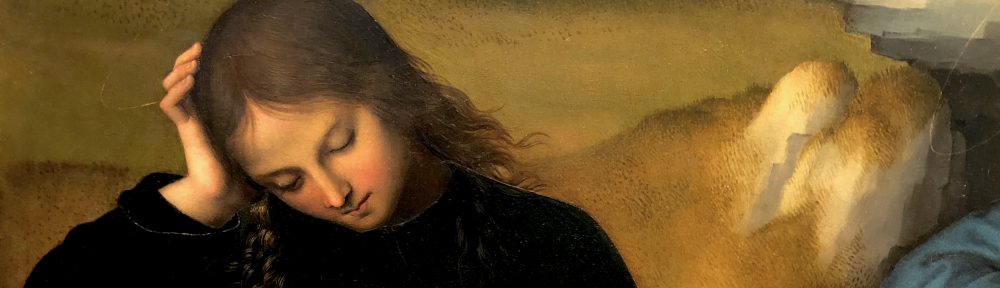
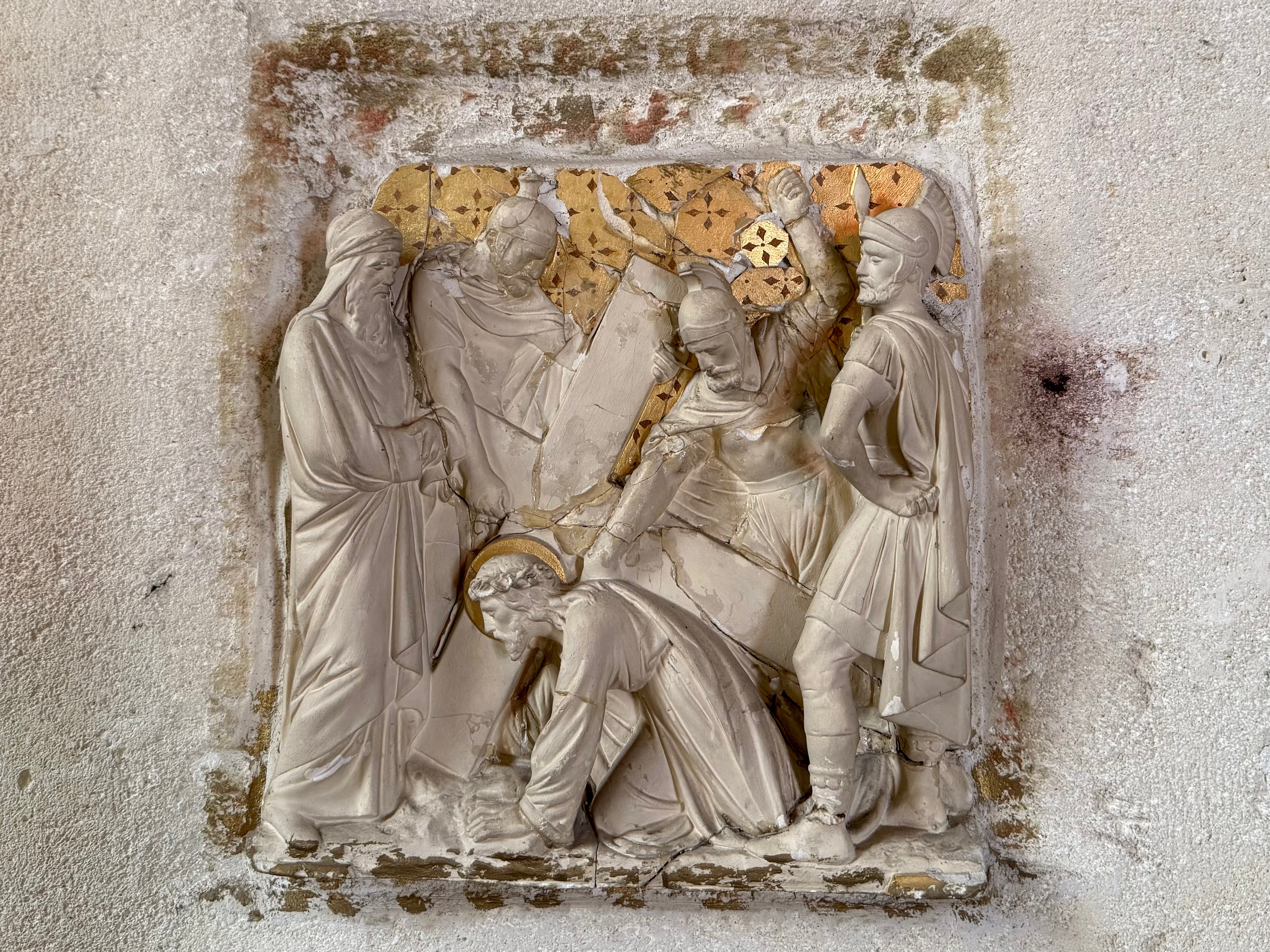



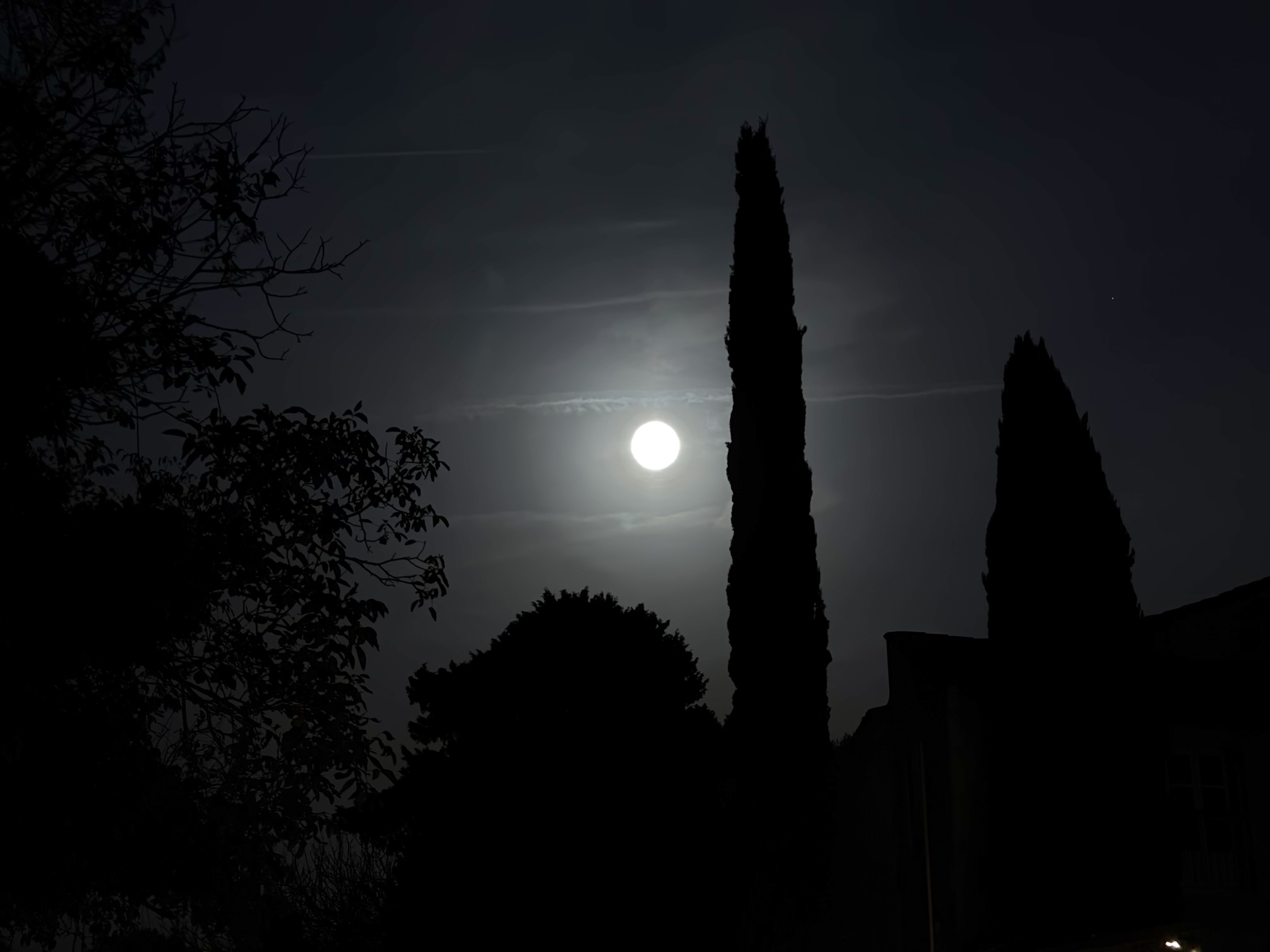
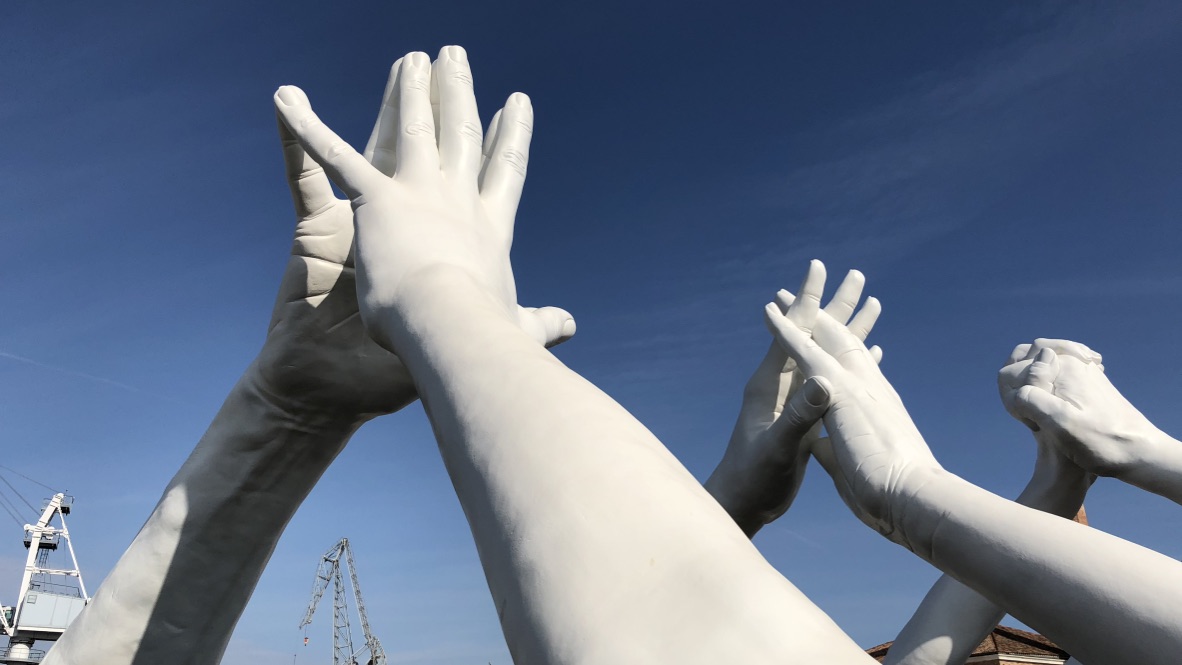


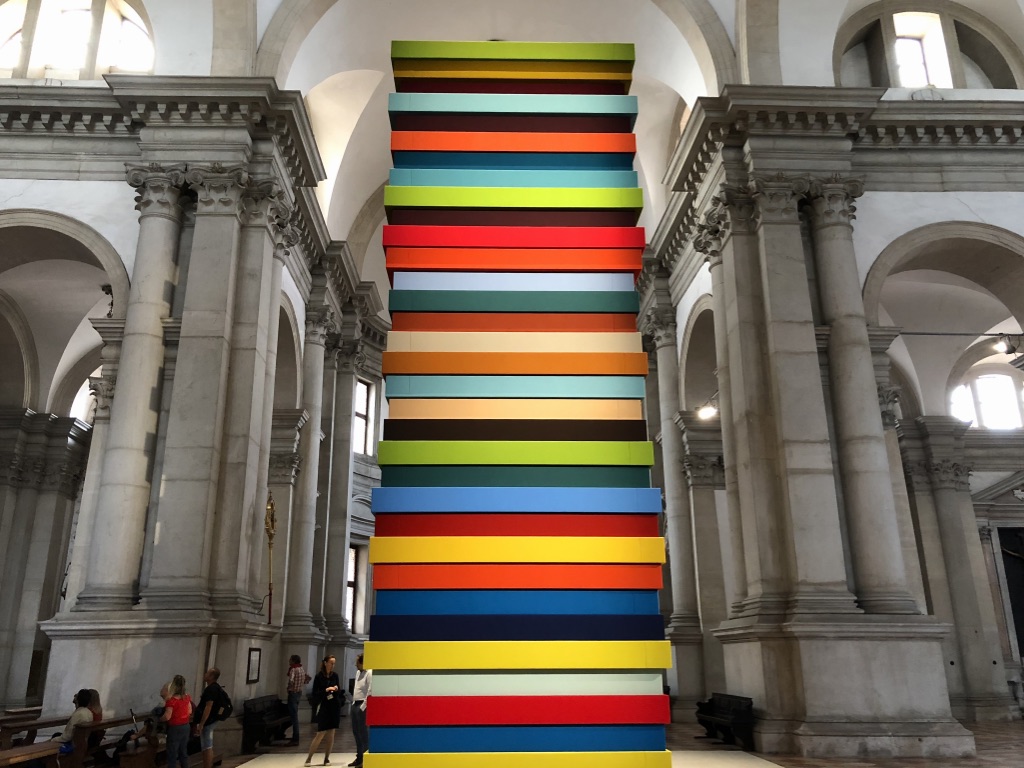


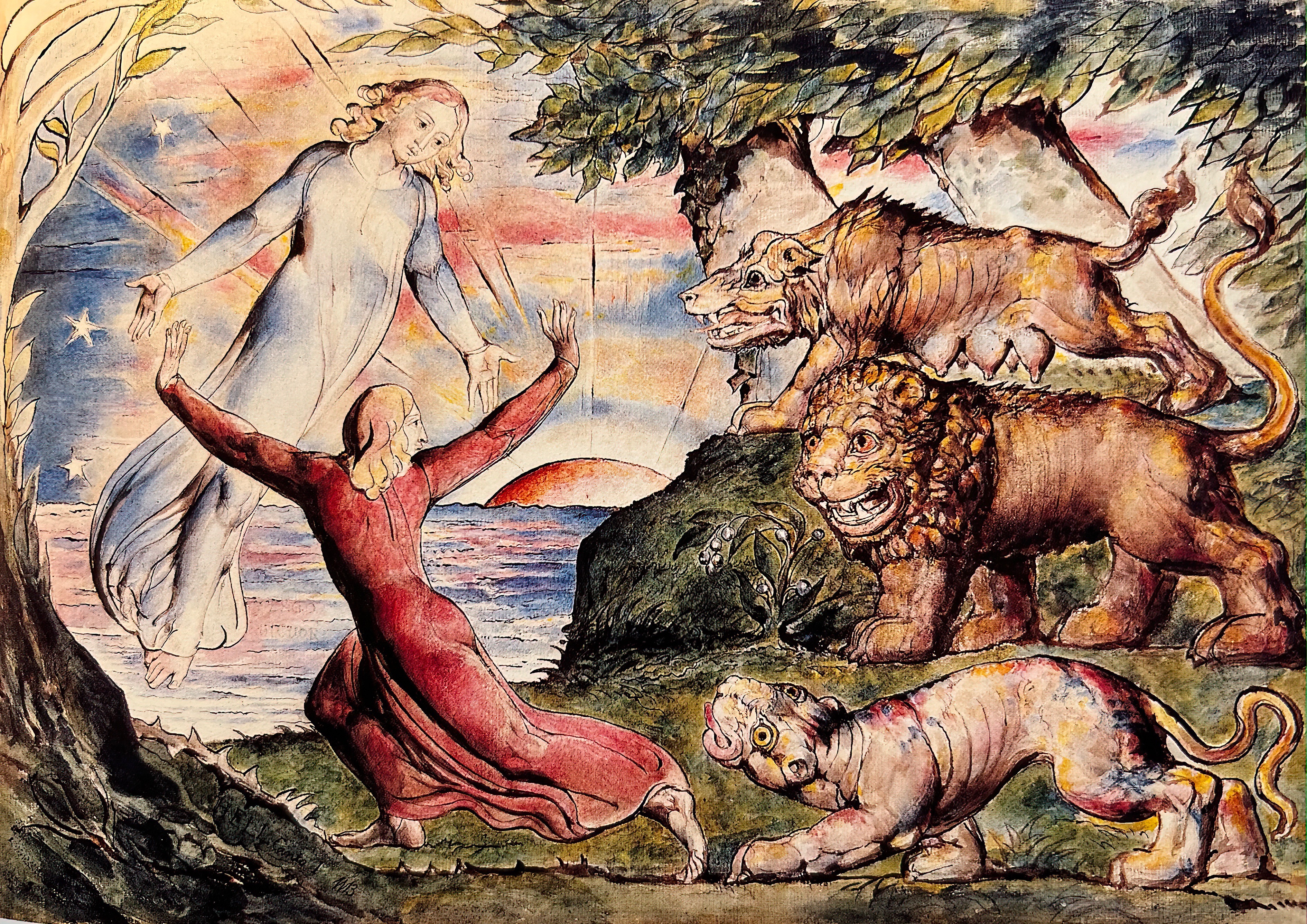




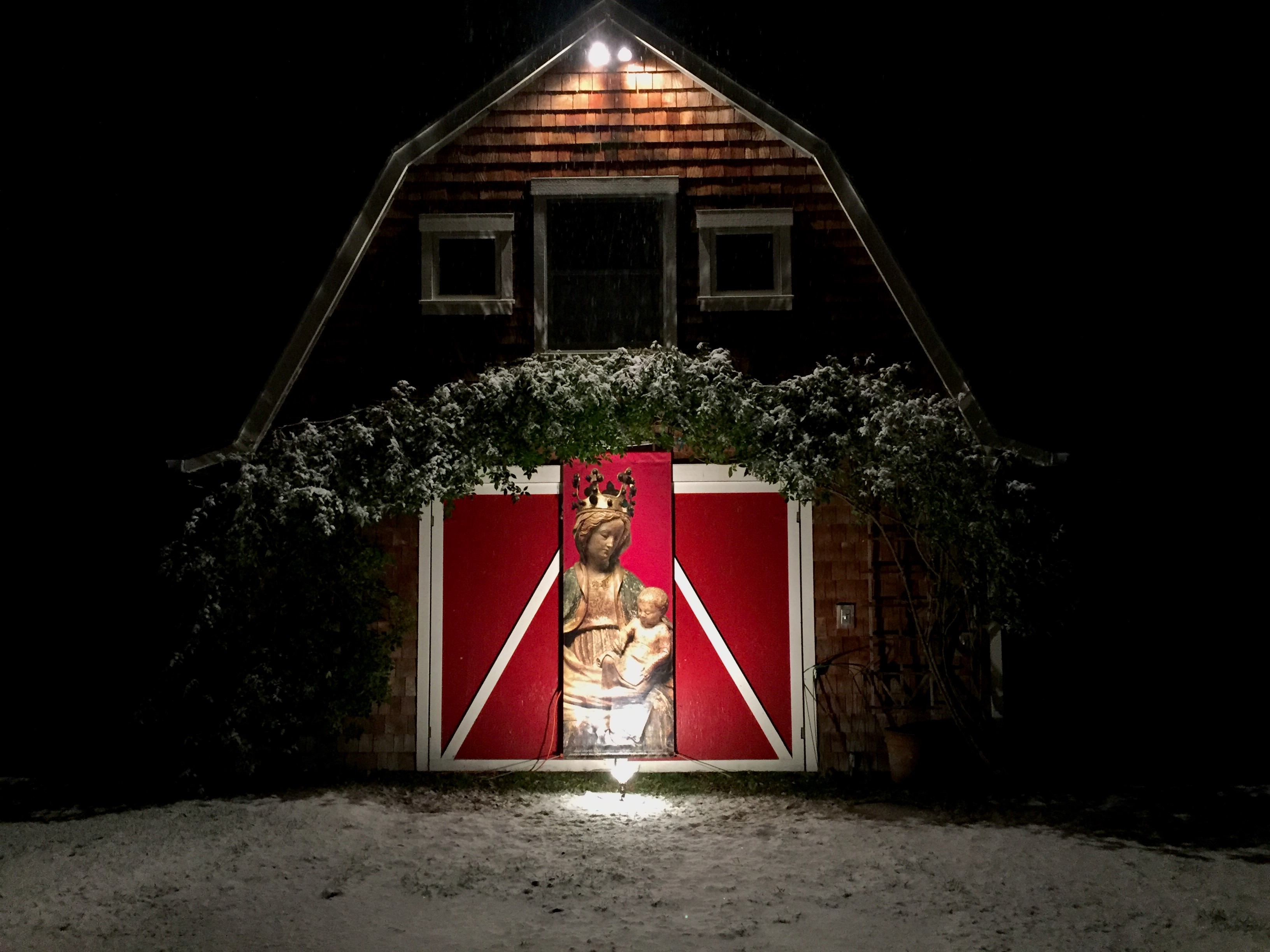
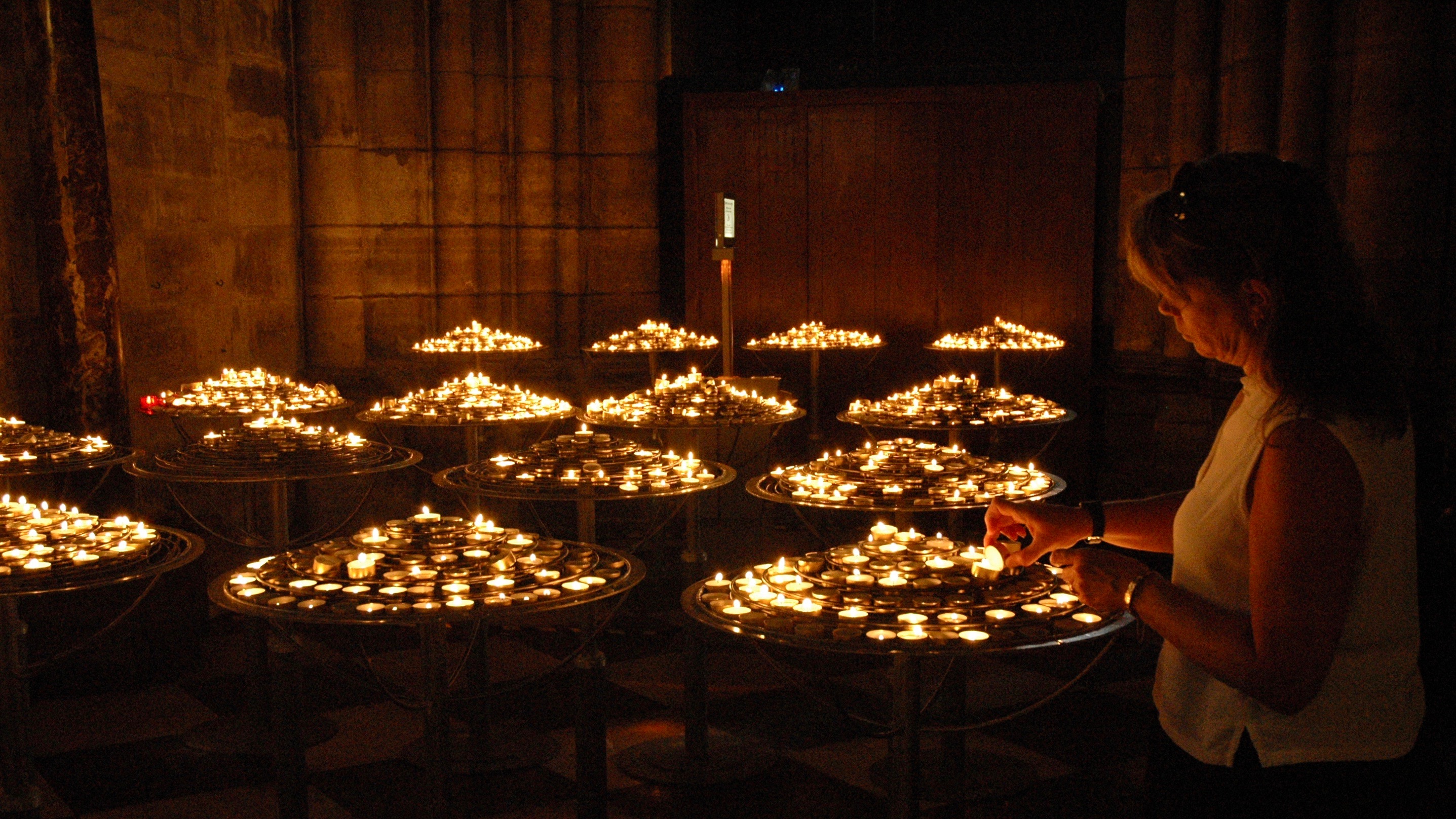

 The religious imagineer