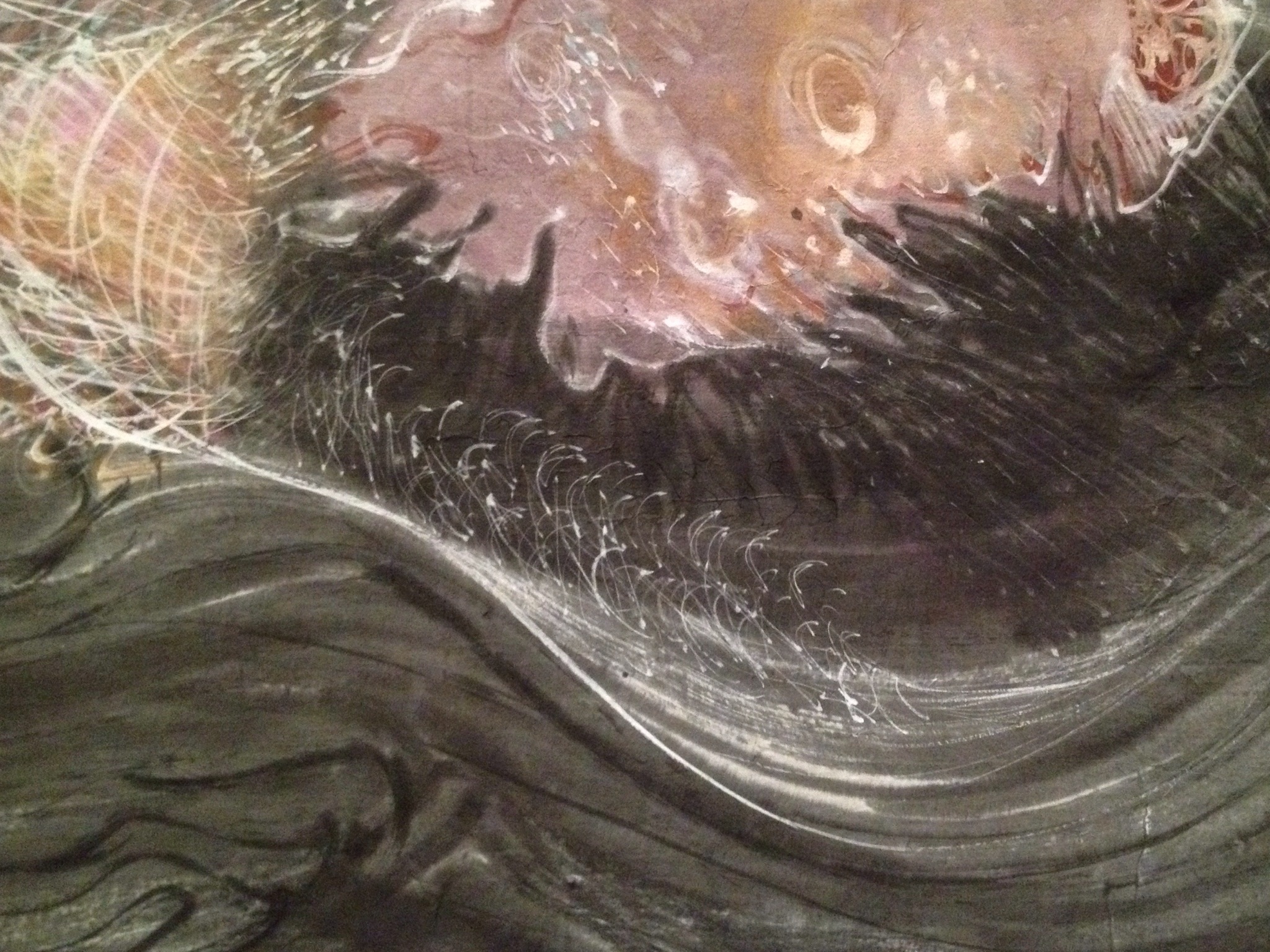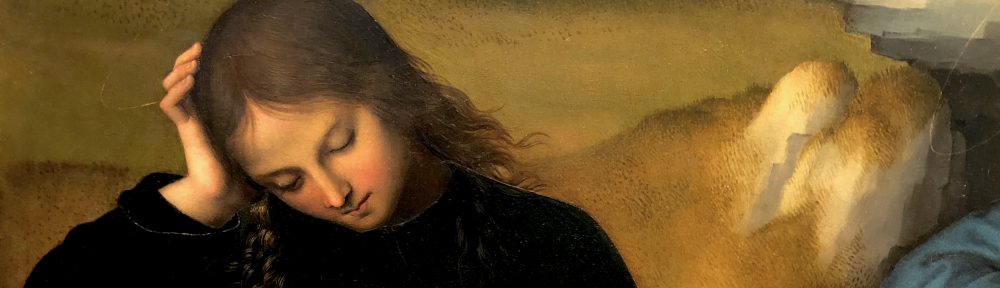
A feather on the breath of God

Hildegard at desk

When I was 42 years and 7 months old, a burning light of tremendous brightness coming from heaven poured into my entire mind. Like a flame that does not burn but enkindles, it inflamed my entire heart … just like the sun that warms an object with its rays.

So wrote Hildegard of Bingen, a twelfth-century abbess, artist and activist whose feast is celebrated today. In a society where women were more seen than heard, it took her a long time to find an outlet for her voice. She had experienced visions ever since her childhood, but she kept them mostly to herself until she was in her forties. Her reticence wasn’t just due to social pressure. She also shared the self-doubting anxiety of every artist. Did her visions matter? Would the world understand or care? But as every artist knows, if you have a gift and don’t make it visible, it will sicken and die within you, and your own body will suffer the effects.

And Hildegard in fact became a sickly woman: “Not in stubbornness but in humility, I refused to write for so long that I felt pressed down under the whip of God into a bed of sickness.” But at last she overcame her inhibitions. Her call was too strong to resist. She began to write, and compose, and produce paintings of her visions. Her body was restored to health, and from then on, she tried to live the life only she could live.

In one of her visions, God told her: O how beautiful your eyes are when you tell the divine story!

Tell the divine story: That was the work she had been given to do. In addition to the normal duties of a medieval abbess in the Rhineland, Hildegard became a storyteller, a musician, an artist, a writer; and through all these media she obeyed the command given to every artist, to “make visible what, without you, might never be seen.” She was also an activist, reminding the powerful to show compassion to the poor, and railing against clergy who failed to blow “the trumpets of divine justice.”

Hildegard was always mindful of the source of her creativity:

The marvels of God are not brought forth from one’s self.
Rather, it is more like a chord, a sound that is played.
The tone does not come out of the chord itself,
but rather, through the touch of the musician.
I am, of course, the lyre and harp of God’s kindness.

She put this even more succinctly when she called herself “a feather on the breath of God”

The bright-colored enigmas of her illustrated visions, painted by others under her supervision, are unlike anything else in western medieval art. Figures embedded within circles or mandalas express her experience of God as being “like a wheel, a circle, a whole, that can neither be understood, nor divided, nor begun nor ended … just as a circle embraces all that is within it, so does the Godhead embrace all …. You are encircled by the arms of the mystery of God.”

Hildegard’s music was as original as her images. Her compositions resemble the Gregorian chant of her time in their liturgical form and musical modes. They also conform to plainchant’s suppression of extroverted individuality for the sake of devotional calm. At the same time, they go beyond traditional chant in several ways: her melodies have an exotically wide range, often spanning two octaves, with sudden leaps from low notes to high notes; her texts are rhapsodic outpourings of strikingly original imagery; and her songs possess a freedom and exuberance that reflect an artist on the loose.

Her music wasn’t primarily a form of personal expression. It was a manifestation of deepest reality. “O Trinity, you are music, you are life,” she prayed. For Hildegard, “all of creation is a song of praise to God.”

She didn’t make up her songs; she listened in to the music of heaven:

Then I saw the lucent sky, in which I heard different kinds of music, marvelously embodying all the meanings I had heard before. I heard the praises of the joyous citizens of heaven, steadfastly persevering in the ways of Truth; and laments calling people back to those praises and joys; and the exhortations of the virtues.

This was more than metaphor, as her writings make clear. Her compositions came to her whole, given by God, much like the auditory mysticism of St. John the Divine, who wrote in the Book of Revelation: “And I heard a voice from heaven like the sound of many waters and like the sound of loud thunder; the voice I heard was like the sound of harpists playing on their harps, and they sang a new song before the throne.”

Hildegard believed that the music of heaven is in us and all around us. We have been created to harmonize with it. “The soul is symphonic,” she said.

She conceived a charming image of Adam before the Fall: he sang with a voice of pure honey, and the devil knew that as long as Adam managed to remember the sweetness of the heavenly songs, he could never be tempted. So with Adam, as with all of us who have come after, the devil set out “to trouble or destroy the affirmation and beauty and sweetness of divine praise and of the hymns of the spirit.”

In Hildegard’s opera, Ordo Virtutum, an allegory of the virtues, all the characters sing – except the devil, who can only heckle and shout. The devil’s work is dissonance, the shattering of harmony.

Hildegard once had a dispute with the bishops of her diocese, who tried to force her submission on a matter of principle by forbidding her nuns to take communion or to sing the liturgy. It was a terrible ordeal for her community to live without music. Hildegard remarked at the time that those who choose to silence music in their lifetime will go to a place where they will be “without the company of the angelic songs of praises in heaven.” It was her discreet way of telling the prelates to go to hell.

Every artist has to deal with philistines, but we can be thankful that Hildegard’s enormous gifts were for the most part supported by her contemporaries. She fell into obscurity for centuries after her death, but she returns anew to our own time with a voice we long to hear, a voice resonant with compassion, a voice aflame with justice, a voice attuned to the divine harmony for which all of us are made.

Sometimes Hildegard seems to live in a different universe than we do, a universe alive with multi-sensory evidence that God is “burning everywhere,” that everything in the world is dense with meaning and liveliness.

All the senses, in her universe, deliver this message to the receptive soul. Unlike the purely material universe proposed by modernity, a happenstance of mute objects and dead space, Hildegard’s universe was sacramental, alive with significant presence.

In one of her visions, a human figure stands in the center of a cosmic wheel. This Christlike image of Divinity declares to her and to all the world:

I, the highest and fiery power,
have kindled every spark of life …
I, the fiery life of divine essence,
am aflame beyond the beauty of the meadows.
I gleam in the waters. I burn in the sun, moon and stars.
With every breeze, as with invisible life that contains everything,
I awaken everything to life.

Is this not the high calling of every saint – and every artist?
To awaken everything to life.
To set our imagination aflame.
To make visible the unsurpassable beauty of God.

As Simon Weil put it so well in our own era,

A sense of beauty, although mutilated, distorted, and soiled, remains rooted in the human heart as a powerful incentive… If it were made true and pure, it would sweep all secular life in a body to the feet of God.

Seventy times seven

Jacopo da Pontormo, Deposition (1525-26), Capponi Chapel, Santa Felicita, Florence

Jacopo da Pontormo, Deposition (1525-26), Capponi Chapel, Santa Felicita, Florence

A homily on Matthew 18:21-35 for the 14th Sunday after Pentecost (and 9/11)

So Peter comes up to Jesus and says, “Lord, forgiveness is really hard work. When do I get to quit?”

And Jesus says, “Peter, sometimes you’re as dumb as a rock. If you want to stay with me, you can never stop forgiving.”

“But Lord, you don’t expect me to forgive everyone, do you?”

“Yes, Peter. Everyone.”

          The Gospel of the Lord.

I once led a workshop exercise based on the Flood story. We all wrote on cards the types of people we thought the world would be better off without – drug dealers, terrorists, polluters, tax collectors and sinners, etc. – and we put our cards in a pile in the center of our circle. Each person had to pick a card, becoming the character they drew. Then they each had to make a case for themselves, to persuade us to let them come aboard the ark rather than be left to die in the flood. Most of us had at least one or two people we didn’t want to sail with, but some of the women – though none of the men – voted to forgive everyone.

How would you vote? Saved, or drowned?

The driver who cut you off on the freeway?
The neighbor who won’t quiet her barking dogs?
The priest who failed to visit you when you were sick?

How would you vote?

The colleague who stabbed you in the back?
The friend who let you down?
The spouse who betrayed you?

How would you vote?

The football player who knocked out his fiancé in an elevator?
The fanatics who flew the planes into the towers?
The lawyers and politicians who made torture a national policy?
The men who beheaded American journalists on YouTube?

Let’s be clear. Forgiveness doesn’t mean condoning or tolerating wicked acts. It doesn’t mean a wife should stay with an abusive husband, or that we can’t feel shock and outrage when we witness hateful instances of oppression or racism or brutality.

What forgiveness does mean is that
we don’t let those things have the last word.

We all know about this on a personal level. You may never forget a wounding encounter, but you know you can’t let it fester inside forever, you can’t give it power over you forever. At some point, you have to let it go.

Tell the truth about it, to the offender if possible, and to yourself. Don’t minimize the damage. But don’t hold on to the hurt. Don’t make your life about the hurt.

Forgiveness means leaving resentment behind. It means letting go of the reactive desire for punishment. There was a POW who said he could never forgive his captors. So a friend told him, “Then they’ve still got you in their prison.”

Rabbi Harold Kushner told a woman who was betrayed and abandoned by her husband: “I’m not asking you to forgive him because what he did was acceptable… I’m asking you to forgive because he doesn’t deserve the power to live in your head and turn you into a bitter angry woman…. you keep holding on to him. You’re not hurting him by holding on to that resentment. You’re hurting yourself.”

That’s all true as far as it goes. We can be bigger than our hurts. We can live in the present, not the past. But when Jesus told us to forgive, he wasn’t just talking about our personal well-being.

He was talking about a radical revolution in human relations.
He was telling us to exit the endless cycle of violence and retribution.
He was telling us to choose life, not death.

Those terrorists who committed atrocities on YouTube,
they want our rage, they welcome our hate,
because it means we are consenting to play their game of death,
adding our own tributaries of anger to their river of violence.

So we are presented with a clear choice:
Either forgive them,
or become them.

Jesus is asking something very hard of us.
Yes, maybe we can forgive the ordinary hurts of daily life.
But how can we forgive those monsters on YouTube?
That goes against human nature. That seems impossible.

Maybe it was impossible once. But Jesus, who died forgiving his own killers, has redefined what is possible. Jesus has opened the door to redemption for even the worst of sinners.

They may not always go through that door – some may choose to remain in the godless hell of their own self-will, but we are not allowed to close the door on them. We are not allowed to deny anyone the possibility of redemption, the possibility of reconciliation and healing.

God wants to do something new with this world, and as long as we perpetuate the cycle of violence and vengeance, that new thing cannot happen.

If we say that there are some people who cannot be saved, we are limiting the power and grace of God, and we are refusing our own vocation to be God’s agents of grace and forgiveness not only for the people we know, but for the stranger and the enemy as well.

We can do this, Jesus assures us. We can forgive – not because we are saints with extraordinary powers, but because we are sinners who have ourselves been forgiven.

Just ask St. Paul, who reminds us this morning not to judge one another, who asks us to remember that since we all belong to God, we also belong to one another. These are the words of the man who held the coats for Stephen’s murderers while they stoned the first Christian martyr.

If that stoning had been on YouTube, we might still be holding that horrifying image in our minds, still hating Paul as a monster instead of reading his words as Scripture. Paul knew what it meant to be forgiven, and that’s why he could be so eloquent about grace.

“We all stand before the judgment seat of God,” he says.
Lord have mercy. Christ have mercy.

When Peter asked his question about forgiveness, Jesus told him a story.

A slave who owes his master a gazillion dollars is forgiven this unpayable debt, but then he goes right out and finds a fellow slave who happens to owe him fifty cents. He grabs him by the throat.
“Pay me now!” he says.
“Have mercy!” the man cries. “I cannot pay you.”
“That’s not my problem,” he says, and throws the man into a dungeon until he can pay what he owes.

It’s one of Jesus’ craziest stories, and it’s meant to be. The absurdity of the parable puts a spotlight on our own absurdity when we who have been forgiven so much refuse to pass that forgiveness on to others.

If we say we have no sin, we are only deceiving ourselves. It’s not just a matter of how we act as individuals. We must also acknowledge our inescapable participation, conscious or unconscious, voluntary or involuntary, in all the systemic processes that negate the flourishing of life on earth. Just by functioning within the habitual realities and practices of a fallen and imperfect world, we become complicit in the things that fall short of God’s intention, the things that disappoint God’s hope for us.

And still, God loves us.
And still, God forgives us.
And still, God keeps heaven’s door open
and leaves the light on for us.

Perhaps you saw the extraordinary film, Of Gods and Men, which came out a few years ago. It tells the true story of eight French Catholic monks who lived in the mountains of Algeria during a time of civil war and terrorist violence in the 1990’s. Their monastery was at the edge of a poor Muslim village, where they lived in harmony with their neighbors, providing the village’s only accessible health care.

As the surrounding political violence escalated, the monks were warned by the government to leave the country. As Catholics in a Muslim country, they would be suspected of trying to make converts. Their very presence was an offense to the religious extremists. But the monks felt called to remain among the people they served, despite the high probability of martyrdom. Despite their own fears.

“If something happens to us, although I do not wish it to,” wrote Brother Michael, one of the monks, “we want to live it here in solidarity with all the Algerians, men and women, who have already paid with their lives, and in union with all unknown innocent victims.”

As for the armed rebels and the armed soldiers who were fighting all around them, the monks called them “our brothers of the mountains and our brothers of the plains.”

Their abbot, Dom Christian, wrote a letter to his family in Advent, 1993, two and a half years before he and his brother monks were beheaded by terrorists. Anticipating his own martyrdom, he insists that he is not exceptional, since so many others in that land were also at risk.

“My life,” he wrote, “is not worth more than any other — not less, not more. Nor am I an innocent child. I have lived long enough to know that I, too, am an accomplice of the evil that seems to prevail in the world around, even that which might lash out blindly at me. If the moment comes, I would hope to have the presence of mind, and the time, to ask for God’s pardon … and, at the same time, to pardon in all sincerity him who would attack me…”

What an extraordinary thing to say: Here is a good and humble and holy man confessing his own complicity in the evils of the world. And what does he hope for? He hopes for the presence of mind, in the very moment of being murdered, to ask forgiveness. Forgiveness not only for himself, but for his killer as well. As he had once said of his monastic community, “we should openly be on the side of love, forgiveness and communion, against hate, vengeance and violence.”

The last part of Christian’s letter is addressed not to his family, his loved ones, but to the unknown violent stranger who will one day kill him, the stranger whom he calls “my friend of the last moment.”

He calls his killer friend, refusing the way of violence and vengeance and hate, and by so doing he plants the kingdom of forgiveness in the very place where his own blood would be spilled by his assassin’s sword.

He commends that assassin not to hell, not to eternal punishment, but to God. A-dieu, he tells him. A-dieu: “to God.” And then he imagines a future that may seem impossible to us, but is the only future which God desires.

Listen to what he says. This is how Christian ends his letter; this is what he wants to tell the stranger who will one day cut off his head:

“And to you, too, my friend of the last moment, who will not know what you are doing. Yes, for you, too, I wish this Merci, this “A-Dieu,” because in God’s face I see yours. May we meet again as happy thieves in Paradise, if it please God, the Father of us both.”

You can never go fast enough

IMG_2839

Last Sunday I came across a classic car show in a Seattle suburb. The bright colors and streamlined shapes were impossible to resist. I stopped to join the crowd in rapt admiration of the immaculately restored Mustangs, GTO’s, T-Birds, Corvettes and other beauties dating as far back as the 1920’s. As sculptural objects they offered the tangible pleasures of sweeping lines, voluptuous curves, and an exuberant array of intense colors. But there was more to it than the allure of shiny objects. The classic cars lining the streets were also saturated with nostalgia and myth.

Nostalgia longs for a time when nostalgia didn’t exist because everyone “then” was happily embedded in the present. As Svetlana Boym observes:

At first glance, nostalgia is a longing for a place, but actually it is a yearning for a different time – the time of our childhood, the slower rhythms of our dreams. In a broader sense, nostalgia is a rebellion against the modern idea of time, the time of history and progress. The nostalgic desires to obliterate history and turn it into private or collective mythology, to revisit time like space, refusing to surrender to the irreversibility of time that plagues the human condition. (The Future of Nostalgia, p. xv)

Those classic cars were time machines, transporting us into memories both real and imagined. They did not function the way ruins do to produce a melancholy awareness that all things pass away, for these were not dented, rusting hulks. They appeared flawless and bright, impervious to decay, inviting us to re-experience lost time as if we were still there.

The soundtrack of my youth played over loudspeakers. Drive-in trays held plastic replicas of burgers and shakes. A Howdy Doody doll gripped the steering wheel of a convertible. Nostalgia all around. But it wasn’t just personal associations that tugged at me. I also felt communion with a vanished golden age. Classic cars are tangible signs of a less anxious time before fossil fuels, air pollution and climate change became universal worries. A 1980 Tom T. Hall sums up that lost era with a haiku-like refrain:

Back when gas was 30¢ a gallon,
and love was only 60¢ away.

Of course cars are more than just present objects or past memories. They are vehicles designed to propel us ever forward, down the road to whatever Promised Land awaits us. Filippo Tommaso Marinetti, the Italian poet whose Futurist movement obsessed over novelty, assailed the snail’s pace of the “sleepy” culture prior to the automobile. “Time and Space died yesterday,” he declared in 1909. “We already live in the absolute, because we have created eternal, omnipresent speed.” For Marinetti, a racing roadster hurling the spirit of its driver across the earth in a headlong blur was “more beautiful than the Victory of Samothrace.”

Not everyone was equally thrilled by a culture of ever-increasing velocity. In 1910, the French writer Octave Mirbeau called “automobilism” a mental illness with “a pretty name: speed.” It makes us “impatient to get going once [we have] arrived somewhere, because it is not somewhere else, somewhere else, always somewhere else.”

But “somewhere else” is the American dream. Pilgrim ships and covered wagons were just the slow-motion precursors of the endless road movie that drives our culture. We are a people enamored of open highways, limitless horizons and liberating journeys to the distant places where we can reinvent ourselves.

Road imagery is abundant in American song. All the redemption I can offer, girl, is beneath this dirty hood … We’re riding out tonight to case the Promised Land (Bruce Springsteen) … When we come to the place where the road and the sky collide / Throw me over the edge and let my spirit glide (Jackson Browne).

And how many times have the movies put us behind the wheel of a classic car in the desperate search for self and meaning? In countless films protagonists flee an oppressive local situation at 70 miles per hour, whooshing toward Somewhere Else in an ecstasy of freedom. As Bob Dylan and Sam Shepard tell it, those drivers want to go “all the way, till the wheels fall off and burn.” Thelma and Louise were perhaps the only ones who ever made it that far. When, pursued by a posse of police cars, they run out of road at the edge of a deep canyon, they just keep going, leaving time and history behind as a freeze frame catches them in mid-air. Then they and their car dissolve into a screen of pure whiteness, where their fate remains eternally beyond our view.

It is one of the most exhilarating endings in cinema, an eschatological leap of liberation and transcendence. But many road movies detour into darker terrain, and the perpetual motion of aimless wandering can find no lasting place to dwell. Flight from culture and place constitute the classic quest for regeneration, but if you lose your way and never reconnect with something beyond yourself, you may just die in the wilderness. The American inability to dwell is part of our shadow side, with disastrous consequences for our psyches, communities and natural habitats. For more on that, read Wendell Berry.

The futility of purposeless mobility, of speed going nowhere, is perfectly expressed in the ending of Two-Lane Blacktop, Monte Hellman’s brilliant 1971 film about a couple of pals drifting around the country in their souped-up ’55 Chevy, picking up street races where they can. The minimal narrative structure has pretty much evaporated by the last scene, where the Driver (all the characters are nameless) revs up his engine for one more race. “You can never go fast enough” is his mantra.

The final shot shows him in silhouette from the back seat, his hair blowing wildly as the car picks up speed. This shot also freeze-frames, but instead of dissolving into the white transcendence that embraced Thelma and Louise, the image begins to burn and melt, as if jammed in the projector. Whether you see that burning frame as an image from Beckett or from Dante, it’s not a happy ending.

Those classic cars have brought me this far, but now I’ve run out of road. How do I end? FADE TO WHITE.

Messianic light

Morris Graves, The Genesis of Life Lay Deep and Anticipant under the Sky II (1944, detail)

Morris Graves, The Genesis of Life Lay Deep and Anticipant under the Sky II (1944, detail)

At the beginning of Moby Dick, Ishmael encounters a strange painting hanging in the entry of an old inn. Dimly lit and “thoroughly besmoked,” it was an indistinguishable mix of “shades and shadows” with a “long, limber, portentous black mass of something hovering in the center.” It seemed a picture of primal chaos, suffused with “a sort of indefinite, half-attained, unimaginable sublimity about it that fairly froze you to it,” prompting Ishmael to obsess about its meaning.

It’s the Black Sea in a midnight gale. – It’s the unnatural combat of the four primal elements. – It’s a blasted heath. – It’s a Hyperborean winter scene. – It’s the breaking up of the ice-bound stream of Time. – But at last all those fancies yielded to that one portentous something in the picture’s midst. That once found out, and all the rest were plain. But stop; does it not bear a faint resemblance to a gigantic fish? even the great Leviathan himself?

Ishmael might have been contemplating the inky monolith of a late Rothko, or one of Morris Graves’ dark wartime nocturnes of a restless and tormented life force. It was a classic experience of the Sublime, where the human and the known are overwhelmed by the transcendent and the unknowable. Whether you are Moses enveloped in Sinai’s stormy cloud or a tourist gawking at Niagara Falls, you feel a sense of shock and awe in the presence of a wild uncontrollable force. For a moment, at least, the stable coordinates of the humanly constructed world are blown away. The tourist may escape with merely a pleasant shudder, but the saint is swept into the divine abyss.

The Sublime is the annihilating negative which questions, disrupts, challenges a world too narrowly constructed in our own image. It is the vast unknowable desert that lies beyond our maps; the nameless voice that asks ‘Why?” and “Why not?”; the apocalypse that rejects the finality of empires. It is the dark night of the soul where language fails and silence speaks; the radically other, ungrasped by imagination; the formlessness prior to every making. It is the ending that births the beginning.

Artists have long attempted to convey the transcendent through sensuous means and materials, but only in the last century have some of them tried to do it without using recognizable images or narratives. Color, shape and texture in themselves would be sufficient to make visible the underlying essence of reality, according to pioneers of the abstract like Kandinsky. As Barnett Newman said in a 1948 manifesto, “We are freeing ourselves of the impediments of memory, association, nostalgia, legend, myth, or what have you, that have been the devices of Western European painting.” An abstract canvas could provide direct revelation through pure sensation, unmediated by stories or symbols or replications of the material world.

Whether the “abstract sublime” actually put the viewer in closer touch with the deepest reality, or was just another form of representation as “fictional” in form as a biblical scene or a landscape, has been widely debated. Can any image be identical to what it portrays? And is form only something that exists in the perceiving mind, and not a quality inherent to the universal flux? If deepest Reality, or God if you will, is unrepresentable, how can you make a picture of it? Can you stand before of the saturated hues of a Rothko and believe you are in the presence of the transcendent? Some have. I have.

Most artists today are reluctant to make overt claims for their work as spiritual events between viewer and the transcendent, as deep speaking to deep. In the postmodern play of signifiers, there is no divine Voice, no Reality trying to communicate with us from a realm beyond finite language. As atheist philosopher Richard Rorty reductively put it, “the world does not speak. Only we do.”

That is not my experience. Nature has spoken to me. Sacrament has spoken to me. Christ in my neighbor has spoken to me. And art, both figurative and abstract, has spoken to me, most recently in the paintings of Morris Graves in a revelatory exhibition at the Seattle Art Museum, Modernism in the Pacific Northwest: The Mythic and the Mystical.

The exhibition makes a case for Seattle as the birthplace of modernism in American art. Mark Tobey’s “white writing” paintings, where thin lines of white paint permeate scenes like an energy field binding all things together, have been credited with the invention of gestural painting, which Jackson Pollock would adapt and make famous. Both Tobey and Graves, imbued with the art and the spirituality of Asian and Northwest native cultures, approached their work with a mystical sensibility that impressed East coast critics and artists alike. Even when the New York School veered away from the spirituality of art into pure painting free of “meaning,” the Northwest painters continued to make substantial connections between art and spirit.

I was particularly moved by Graves’ World War II work. Jailed for refusing to fight, Graves was profoundly troubled by the madness and destruction of the conflict, what he called “the death of all reason.” When he was released in 1943, he began to paint feverish visions of a monochrome night world on the verge of ending, as darkness and deluge swirled all around. There were forms – a crow, a minnow, a waning moon – which resisted the devolution into utter chaos. These few were signs of resistance and grace. Graves wrote of the minnow:

Silvery minnow-moment of awareness flash-gleaming in the depths, now seen, now gone … when crisis occurs, the minnow voluntarily comes into view – to renew faith and give direction.

But Graves’ wartime paintings never showed more than brief glimmers of hope in a world of threat and horror. It was not until the war ended that Graves could fill a canvas with light, in his depiction of a brilliant lotus flower in bloom. This Buddhist symbol of meditation and enlightenment could be seen as a victory of light over darkness, but some have noted the bloom’s resemblance to a nuclear cloud. As with the August 6th coincidence of Hiroshima Day with the Feast of the Transfiguration, the struggle between life and death is far from done.

Graves believed that art has a profoundly meaningful task, and something Theodor Adorno said might well be applied to Graves’ own work:

Knowledge has no light but that shed on the world by redemption: all else is reconstruction, mere technique. Perspectives must be fashioned that displace and estrange the world, reveal it to be, with its rifts and crevices, as indigent and distorted as it will appear one day in the messianic light.

Art can reveal the poverties and distortions of the world.
Can it also enable us to stand in the “messianic light?”
Are there indeed showings of the divine in color, form and light?

On the day after the Feast of the Epiphany in 1956, Sylvia Plath wrote a postcard to her mother, describing her visit to the Matisse Chapel on the Riviera. The entrance was shut when she arrived. The chapel only opened twice a week, and on the other days not even rich tourists waving large sums of money could gain admittance. Plath was “desolate” at her bad timing. She wandered glumly around the walls enclosing the chapel, “feeling like Alice outside the garden.” Then she returned to the locked gate and stood quietly.

I began to cry. I knew it was so lovely inside, pure white with the sun through blue, yellow and green stained windows.
Then I heard a voice. ‘Ne pleurez plus, entrez,’ and the Mother Superior let me in, after denying all the wealthy people in cars.

I just knelt in the heart of the sun and the colors of sky, sea and sun, in the pure white heart of the chapel. ‘Vous êtes si gentille,’ I stammered. The nun smiled. ‘C’est la miséricorde de Dieu.’

It was.

The ministry of nature

IMG_2621

I am losing precious days… I am learning nothing in this trivial world.
I must break away and get out into the mountains to learn the news.   – John Muir

Every year I observe two holy weeks. One is the Christian Holy Week, the densely liturgical mimesis of Jesus’ last days of mortal life. The other is an annual solo backpack in the mountains of the American West. Both are total immersions into the sacred without which my year would be incomplete.

The sacredness of the American landscape has long been a powerful theme in American thought and feeling. To see the sacred in a Massachusetts pond, a Southwest canyon, or an old growth forest is not a denial of the physical in favor of a spiritual “elsewhere,” but a penetration to creation’s inherent depth. The material is not the opposite of spiritual, but its mediation, its container.

In the mid-nineteenth century, the American landscape painters known as “Luminists” made their canvases glow with a divine transparency, while the literary circle of Transcendentalists translated nature’s otherness into language. Emerson insisted that “the noblest ministry of nature is to stand as an apparition of God … A leaf, a drop, a crystal, a moment of time is related to the whole, and partakes of the perfection of the whole.” And when Thoreau withdrew from contemporary society to his Walden refuge, he found “something true and sublime,” where “the morning wind forever blows, the poem of creation is uninterrupted.” Is not everyone who ventures “outside” seeking a similar epiphany?

I keep my walking stick by the front entrance of our home, a daily reminder that the path to God-knows-where is always just on the other side of the door. Two weeks ago I tossed the stick in my car, along with my backpack, and headed for Montana. After a couple of days hiking into the Beartooth mountains north of Yellowstone, I reached a large alpine lake, set in a rocky bowl above treeline, with splendid views of several 12,000’ peaks. From there I made a joyous ramble into the high country beyond the lake, where cumulus shadows glided slowly across immense sunlit walls. Three bald eagles circled over a stream-watered basin. Lush gardens of paintbrush, bluebells, asters and buttercups occupied the hollows vacated by melting snowfields. I dangled my legs over a precipice for a better view of the world below. I lay back in the fragrant grass to consider the radiant sky. I knew again the plenitude of summer, that timeless contentment where one feels, as Wallace Stevens felt, “complete in an unexplained completion.”

That night around 1 a.m., I got out of my tent to see the stars, but clouds had gathered since sunset, so I secured the rain fly over my tent and crawled back inside. I had just drifted off when a couple of large animals entered my campsite, their heavy footsteps awakening me to full alert. The rain fly only allowed a narrow view directly forward from the tent, so I could not identify my visitors, who were off to the side. I could only listen as they explored the camp. I heard breathing just beyond the tent’s nylon wall, a snorting sound that put an image of a bear in my mind. Was it a black bear or the more dangerous grizzly?

Then one of the creatures jumped past the front of the tent. The moon had not yet risen, so I saw only a shadowy blur. It was the size of a large dog, probably a juvenile. And its coat seemed to reflect light, even in the gloom. Could it be the white of a mountain goat, or the light gray fur of a grizzly cub? I just wasn’t sure, and I decided to remain still and silent within my tent rather than provoke an encounter by sticking my head out for a look, especially since I was now situated between parent and child, never a good thing with wild animals.

Imagination and solitude are a potent combination in the middle of the night. I breathed. I prayed. I tried to remember what I had read years ago in Bear Attacks: Their Causes and Avoidance. I thought about St. Francis making peace with the wolf. I had enjoyed the wildness of the place as a spectator in the light of day. But now the wild had come to call on me directly. In the dark of night. What did it want to tell me: You don’t belong here? Your precious subjectivity is meaningless to the appetite of carnivores? What did you expect to find, so far from your human world?

Or: Be not afraid.

After a long hour and a half, the creatures departed. Just before they did so, I saw the silhouetted head of the juvenile, backlit by the rising quarter moon, pop up from behind a rock. It bleated, then vanished. No ursine growl, only a rather playful goodbye. When dawn finally came, I found tufts of fine white wool snagged on the branches of shrubs around my camp. Mountain goats indeed.

I drove out of the mountains through Yellowstone National Park, where wild animals are often visible along the paved roads – bison, bears, deer and elk. At every sighting, people abandon their cars, running toward a vantage point with their cameras and phones to collect a digital simulation of wilderness – something to keep and take back home. This commodification of the wild as consumable experience is a fascinating spectacle that only underlines our everyday alienation from nature. I can’t criticize. I did it too. I got a nice shot of a bull elk when the skittish tourists fled out of frame while I stood my ground.

But wildness can’t be adequately encountered a few feet from your car, or in short stops at viewpoints along an asphalt road. You need to go deeper, further, dwell in its otherness for a time, risk its strangeness, wait patiently until it is ready to deliver the news.


Call of the wild

Tomorrow I take a trail into the Beartooth Mountains, just north of Yellowstone, for a 6 day backpack, so my blog will be silent for a little while. Meanwhile, here is what I know about the high country, in the words of one of my favorite saints:

Oh, these vast, calm, measureless mountain days, inciting at once to work and rest ! Days in whose light every- thing seems equally divine, opening a thousand windows to show us God. Nevermore, however weary, should one faint by the way who gains the blessings of one mountain day ; whatever his fate, long life, short life, stormy or calm, he is rich forever.” – My First Summer in the Sierra”, John Muir (1911)

Experiments in worship

Sleepers Wakehttps://jimfriedrich.com/wp-content/uploads/2014/08/sleepers-wake.jpg
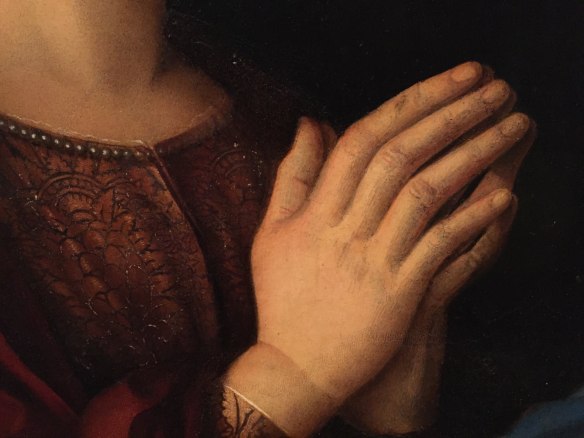
Last month’s 40th anniversary of the first Episcopal ordinations of women to the priesthood evoked a wide sharing of memories and stories about a church breaking from inherited ways to make a significant rewrite of its identity and practice. That break did not happen without resistance and struggle, but the shift was irreversible. A less complete priesthood is now unimaginable.

But there was also another revolution underway in 1974, a campaign for liturgical renewal being carried out on many fronts. Scholars had been making the case for change for decades, leading to such major revisions as Vatican II and the 1979 Book of Common Prayer. At the grassroots level, early experiments in “indigenous” youth culture masses laid the foundations for “alt.worship” and “fresh expressions.”

My first year of ordained ministry was at Canterbury House in Ann Arbor, a campus ministry known for its coffeehouse concerts (Neil Young and Joni Mitchell played there) and its innovative worship. At the end of the Sixties, our congregation of college youth valued meaning over form, allowing us the freedom to re-imagine the way we worshipped on a Sunday by Sunday basis. Sometimes the results were sublime and indelible, while there were also some abysmal flops. But that was okay. Everyone understood that our liturgical mission was to experiment: it was as important to know what didn’t work as what did.

In the Seventies, I became liturgical artist-in-residence at St. John’s, Los Angeles, a gorgeous cathedral-sized church with a progressive multi-cultural congregation. Under prophetic rectors Larry Carter and then Bill Persell, it had become a well-known site of conscientious witness against war, poverty and injustice (Cesar Chavez and the Berrigans thundered from St. John’s pulpit). Although the traditional Sunday morning liturgy was satisfyingly rich, we instituted a monthly Sunday evening series of alternative eucharists (“The Third Sunday”) to explore a wider range of themes and experiential models.

It wasn’t simply a matter of utilizing contemporary texts or plugging in unexpected kinds of music (although bagpipes and synthesizers each provided amazing sounds). We also explored different ways to structure the entire underlying form of the rite. Sometimes we employed worship templates drawn from mythic literary motifs like the Book of Revelation, the Divine Comedy, or the Harrowing of Hell. On Palm Sunday, two “carpenters” (one of whom is now the dean of the National Cathedral) built a cross near the altar throughout the liturgy, occasionally discussing the morality of capital punishment. During the Words of Institution (“This is my body … This is my blood”), their hammers pounded nails into the cross.

My favorite Third Sunday liturgy was a very early example of installation worship: an Advent journey, in groups of six, through a long enclosed corridor circling behind the chancel. The dark, narrow space was filled with projections and recorded poetry (“Inferno,” “Dover Beach,” “Four Quartets”). There was even a descent into a solipsistic hell (a dismal basement room with only live TV images of your own face). But in the end, you emerged into a candlelit chapel of shimmering gold mosaics and exquisite chant, taking your place with those who had made the journey before you, as if you were being welcomed into heaven.

The year 1974 began with the grandest alternative worship experience of my life, at a national gathering of 400 Episcopal college students, professors, and campus ministers during the first week of January. This was a few months after the Episcopal General Convention had once again rejected women’s ordination, and replaced the progressive Presiding Bishop with a southern conservative. It felt like a double slap in the face for progressives. The collegiate Episcopalians, restless and discontented, were having serious doubts about the institution. Some expressed their anger by questioning the value of the all-night liturgy planned for Epiphany. Wasn’t it being designed by three white males (Bill Teska, Mark Harris, and myself)? Down with elitism and sexism!

They had a point. We were just three friends with particular skills who had volunteered to design something memorable. We hadn’t really thought through inclusivity issues. All our attention was on the product, not the process, and we got called on it. There was talk of staging a protest to bring the liturgy to a halt, but artful negotiation transformed the proposed rupture into small group discussions that would be an official part of the liturgy.

The gathering was in Florida, where the temperature would remain comfortable through the hours of darkness. The “Great Liturgy” of Epiphany began at midnight beneath the full moon, with the congregation singing and processing three times around the worship space – a circus tent with its sides rolled up, in the middle of an empty field. When we finally entered the tent, people broke into small groups to share their hopes and fears for the church. Once these conversations were reported to the whole assembly, the liturgy began in earnest.

A simple Compline was followed by a cosmo-political Penitential Rite: a ninety-minute trip through Creation, History and Apocalypse, using 12 projectors, sampled sounds from the news, pop music, poetry, movie dialogue and Bach’s St. Matthew Passion. Then the Seven Seals in the Book of Revelation were opened by means of participatory theater games, climaxing with a ritual “dying” (falling to the ground) by the people, and then a rising up again, led by three Magi (one of them female). “We have come looking for the Holy One,” the Magi declared. And one by one we rose to our feet, crying “He is here!” and “She is here!” and “We are here!”

It was now about 3 am, time for a half hour pause of silent meditation, ending with a grand entrance procession of the eucharistic ministers preceded by six thurifers, filling the tent with incense. A jazz matins enlivened the Service of the Word, then a ninety-minute Offertory presented the gifts of the community before the altar – heartfelt testimonies, dance, a Navajo healing chant, a gospel quintet. By now the full moon, overhead when we began, was setting into the trees beyond the tent.

During the eucharistic prayer, a revolving mirror sphere painted the interior with kinetic light, and pulsing strobes flashed upon the bread and wine during the Words of Institution, making an almost hallucinatory intensification of the elements (definitely more Baroque than Cistercian!). After communion, we all processed out of the tent into the light of the rising sun, singing an Appalachian spiritual:

Bright morning stars are rising,
Day is a-breaking in my soul.”

Seven and a half hours from beginning to end,
moonlight to sunrise,
a Christian dreamtime.

It is the nature of liturgy – and language – to consist of mediating symbols. We aren’t allowed to see God face to face. As Isaiah realized in his Temple vision, such an encounter would obliterate us, swallow up our particularity, which is only made possible through the degree of separation we are given from the All. We don’t get to grasp “total presence” in this life, but only the words, images and sacraments that connect us with that (absent) presence. And yet there are times when the divine leaps across the gap, the bush burns bright before our eyes, and we hear the Voice calling our name. That Epiphany in a circus tent was one of those times.

So when I think of the church of 1974, I not only remember how we began to embrace a more inclusive priesthood, but also how free we were to explore both the means and the meaning of our deepest rituals. May it be so again.


“Have you heard the news?”

Bellini praying hands sm

Giovanni Bellini, Madonna and Child with Saints Catherine and Magdalene (detail), c. 1500, Accademia, Venice

“Have you heard the news?” That’s the first thing the driver said when a friend and I hitched a ride out of Yosemite’s Tuolumne Meadows after hiking 150 miles from Lake Tahoe. We’d been in the wilderness for 20 days, so pretty much anything would be news to us. We shook our heads. What had we missed? “Nixon’s going to resign tonight!” he said, clearly savoring the pleasure of bearing glad tidings to fresh ears. That was August 8, 1974 (the President made the announcement that night on national television; his official resignation took place the next morning).

The sealing of Nixon’s fate wasn’t the only news I had missed in the Sierra wilderness forty years ago. Ten days earlier, when I was about halfway to Yosemite, three Episcopal bishops sped up the grinding wheels of ecclesiastical change by ordaining eleven women to the priesthood in a Philadelphia church. The ordination of women had failed to secure majority approval when the Episcopal General Convention gathered in 1973, and the next vote wouldn’t be taken again until the next convention in1976. The Spirit and the institution were clearly on different timetables. So the Philadelphia Eleven, and the bishops who ordained them, did what prophets do: they imagined an alternative future, which would remain contested and uncertain until the whole church could embrace its implications.

When the General Convention convened in Minneapolis in the summer of 1976, the ordination of women, along with a radical revision of the Prayer Book, topped the agenda. On the day the deciding vote was taken in the House of Deputies, ten thousand observers packed the hall. I was among them, and as the session unfolded I was struck by its overriding liturgical quality. This was not just another meeting with the usual amount of tedious verbosity and soul-sucking detail, but a solemn performance of a drama reimagining our collective identity. As in every liturgy, larger realities had to be contained within the imperfect significations of human language and ritual. And somehow – miracle of miracles! – a church convention became a place of theophany. I saw the Holy Spirit at work, not in spite of parliamentary procedure, but within and through that procedure.

The crucial session seemed to follow the shape of the eucharist. Once the assembly had gathered, the stories that brought us together were told. This “reading of the lessons” consisted of a long succession of speakers who had two minutes each to make the case for or against women’s ordination. This 90-minute “debate” was itself a kind of ritual, summarizing the now familiar arguments which had led to this moment. No new insights were expected – certainly no conversions – but it seemed important, before the vote, to tell the story of who we were – including our conflictedness – and the nature of the larger story we belonged to. Some told that story in terms of dwelling (tradition), while others described it as pilgrimage (innovation). But there was a sense that the story itself always exceeded our understanding of it. Many viewpoints, but still one church.

In the eucharist, the lessons are followed by the Prayers of the People, and so it was here. The resolutions committee, which had earlier reported its recommendation in favor of the motion that “no one shall be denied access” to ordination on the basis of gender, had reserved the right to present the final portion of its report just before the vote was cast. And that portion, we discovered, consisted of five minutes of silent prayer – fifteen thousand people filling the hall with a profound stillness. A large convention was the last place I would expect to experience prayer so fervent or so intense, but there it was.

Next in the eucharistic rite is the Offertory, where the gifts of the people are brought forward to the altar along with bread and wine. In this case, the gifts were the ballots filled out by the deputies. While their votes were being collected and counted, there was a Passing of the Peace. The presiding chair of the House of Deputies, the Rev. John Coburn, thanked the voting members for the courtesy with which they had treated each other in this potentially divisive process. The throng of observers rose to applaud them. Then Coburn thanked the observers for their courteous demeanor. We had refrained from any partisan displays of cheering or booing. The deputies rose to give us a standing ovation. Finally, everyone gave a standing ovation to the chair, who had so graciously guided the assembly through uncharted waters. In that moment, at least, we loved one another more than we loved our causes.

Something of that spirit remained when the results were finally announced. There was no outburst of applause or cheering. There were some quiet hugs, heads bowed in thanks, eyes moist with emotion. But as the multitude began to make its way out of the hall, most of the faces I saw appeared thoughtful, solemn, even stunned, like communicants returning from the altar, or Moses descending the mountain, glowing like fire.

For my part, when I first heard the tally and realized the motion had carried, I felt an inward elation, for this was a great and necessary moment. But mixed inextricably with my joy was a deep sense of the burden assumed by the losers in this long struggle. I couldn’t just exult in victory. I had to make room in my heart for the pain and disappointment of the defeated as well. This was surprising to me, for I have been too much a man of principle in my life, finding it hard sometimes to sympathize with incompatible perspectives and practices. That is one reason I am convinced that the Holy Spirit was blowing where she will that day. I couldn’t have come up with such sympathetic breadth on my own. Many of those I talked to later reported a similar experience.

Sympathy. Dora Greenwell, a single Anglican woman in Victorian times, wondered whether women have more capacity for sympathy than men. She had perhaps seen too many male clergy not in touch with their feminine side. She wrote about sympathy as an essential form of knowledge, without which any ministry is incapacitated.

… it is this ability to feel with others, as well as for them, that takes all hardness or ostentation from instruction and counsel – all implied superiority from pity and consolation. The woman, or man, of true feeling does not come down upon the sinner or sufferer, from another region, but is always, for the time being, on a level with those that are addressed – even able to see things as they see them.

Whether in sympathy or anything else, the Episcopal Church has been made incomparably richer by the gifts of its women clergy. I might add that I am privileged to witness this richness firsthand as the husband of a parish priest, whose singular gifts teach me about priesthood – and discipleship – every day.

Faith’s endangered habitat

Teton presider

American Christianity is in numerical decline – no news to the inhabitants of graying churches. According to a recent survey by the Pew Research Center, 20% of the population has no religious affiliation. Just five years ago, that number was 15%. Among adults under thirty, 32% are unaffiliated, with little prospect that they will become more religious as they grow older. According to the study, affiliation does not increase as a particular generation advances through the life cycle. The younger generations will remain less affiliated even as they age. If each succeeding generation continues the trend of rejecting institutional religion, will churchgoers become an endangered species?

The habitat for practicing believers has certainly been compromised. The inanities and hypocrisies of media evangelists, the ignorant ravings of fundamentalists, the hatred and violence of religious extremists have all marred and polluted the public landscape of religion. But that in itself need not be fatal. Christianity has a venerable history of toxic clean-up campaigns, with saints and prophets leading the way. A far more serious threat is the steady shrinkage of habitable environments for faith communities, as individualism, materialism and secularization encroach steadily upon the perceptions and behaviors that make religion sustainable. How can the community of God’s friends persist when God has become, for so many, not just unnecessary but virtually unthinkable?

Modernity has, over the last 500 years, gradually detached western culture from transcendent necessities. God is no longer assumed to be the creator and sustainer of every moment, the all-encompassing reality in whom we live and move and have our being. While individuals might retain a strong personal connection with God, the social world is seen as a self-governing reality, not requiring reference to anything “higher” or “beyond” in order to function or develop. Once the sacred dimension was expunged from the world, and “the last king had been strangled with the entrails of the last priest,” human life could achieve full independence from the constraints of any sacred order or transcendent reality beyond itself.

With God demoted from the ever-present sustainer of life to its original but now absent designer, it was not long before God seemed no longer necessary at all for the construction of meaning or purpose. As Charles Taylor writes in The Secular Age, “The modern social imaginary no longer sees the greater trans-local entities as grounded in something other, something higher, than common action in secular time.” In other words, the inherited modern culture in which we live and move and have our being has no apparent or practical need of God to explain things or provide the sources of human flourishing.

When Christians worship or pray or converse among themselves, they radically contradict such premises of modernity, but in the largely unconscious, ingrained, or automatic behaviors of everyday living, it is hard not to find ourselves reverting to the default position of the culture: simply acting without God in mind. Or in our bones. In the words of German theologian Eberhard Jüngel, “It would appear, then, that God has no place in our thought and thus has no place in our language. [God] does not occur, has no topos (place, position).”

This “placelessness” of God is what I mean by the erosion of sustainable habitat for communities of faith. If God has no place in the behavior or even the thought of so many people, why would religion make any sense at all to them, except as a provider of purely human benefits such as community or charity? No wonder the churches dwindle.

Then what do we make of these statistics: 68% of the unaffiliated say they believe in God, 58% feel a deep connection with nature and the earth, 37% call themselves “spiritual but not religious,” 30% have had religious or mystical experience, and 21% say they pray every day. Evidently many are still trying to retain a connection with something deeper than the everyday, with a necessary mystery beyond themselves. However, only 10% of them are interested in seeking religious community. Most would rather be spiritual but not religious.

I’m not sure that’s really possible. We might wish to declare independence from the limitations and messiness of human institutions and opt for the purity of personal practice, but “bowling alone” (to cite Robert Putnam’s famous term for the erosion of civic and communal engagement in America) misses the point of engaging our deeper selves.

Christians say we are made in the image of a Trinitarian (= social and interdependent) God, and we best praise and contemplate and grapple with that communally complex divine reality in the company of others: not only joining with the local worship assembly or even the wider Church on earth, but with the friends of God in every age who cry “Holy!” for all eternity, dancing with the Triune Love Who Loves Us. You can’t worship by yourself anymore than you can be in love by yourself. Worship needs a choir.

Even in private prayer, you use words and images supplied by tradition, and reinforce deep connections with others now absent from you. Even beholding the beauty of a sunset, you do it in company with the poets and painters and photographers who have given you an eye for the beauty of things.

The difference between solo spirituality and religious belonging is like the difference between a lion in the zoo and a lion on the savannah. You need a broad and healthy habitat to flourish. Can the habitat of faith and worship survive and be restored? Will things which were cast down be raised up, and things which have grown old be made new?

God only knows.

Border crossing

An hour before the 1960’s ended, I left a noisy party in L.A. and headed for the ocean, craving some solitude where I could reflect on a memorable and formative decade before it passed. I drove into a large asphalt lot next to the beach, parking in a pool of light beneath a street lamp. There were no other cars around. The surf broke faintly in the blackness beyond the sand. Just before midnight I would walk out far enough to peer beyond the waves into the horizonless dark and wait for the future to roll on in. But for the moment, I propped my journal against the steering wheel and began to write.

I wasn’t alone for long. After about twenty minutes, a police car pulled up beside me. The patrolman got out and walked over to my window. He asked me whether I had heard of the Zodiac serial killer, who had been terrorizing northern California for the past year. Police were on statewide alert, and a single male, parked alone in a deserted spot around midnight, had aroused his suspicion. He wanted to know what I was doing there. I told him I was journaling. He asked, politely, if he could take a look. Instead of asserting my First Amendment rights, I was delighted to have found a reader! I handed over my notebook, and he began to murmur aloud from the first entry, written months earlier when the Clyde Beatty–Cole Brothers Circus came to Ann Arbor, Michigan.

The magic of that circus – a tent of wonders suddenly erected in an empty field, only to disappear and move on the next day – had been, for those of us doing campus ministry at an Episcopal coffeehouse, a vision of the Kingdom of God. It arrived with little advance warning, defied the dominant order of gravity, hierarchy and death, then moved on to somewhere else before we could possess it for ourselves.

And so it was that on a bare asphalt stage at the edge of the sea at the end of the Sixties, a policeman performed aloud my whimsical musings on a day at the circus:

And those still endowed with the gift of longing caught another glimpse of the darkness and the dance. But the kingdom is not yet … The circus priests of pain and laughter remain on the other side, though for a day and a night they seemed near enough to touch.

These were not, in his judgment, the ravings of a serial killer, so he wished me ‘Happy New Year’ and departed in peace.

That surreal night comes to mind because I now find myself at the end of another sixties – my own. Tomorrow I turn 70. That seems officially old in a way that 65 did not. Of course I don’t feel old in the way my younger self once imagined life’s third act to be. “Old age isn’t for sissies,” my mother and her friends would joke in their nineties, as they struggled bravely with failing bodies. But I’m not there yet. No one rises to give me their seat on a crowded bus. I can walk 500 miles in a month. My work isn’t done. I am not tired of life.

But “70” feels like a border crossing, though the change may not be immediately apparent. When you travel Highway 5 from California into Oregon, the rainy land of evergreens is still far up the road. The dark green oaks scattered across the arid grasslands of southern Oregon look just like the landscape in your rearview mirror. It’s easy to imagine that you haven’t really gone anywhere. But somewhere up the road it will finally hit you: you aren’t in California anymore.

It still seems premature to brood on mortality. The question posed by one’s seventies (at least while good health lasts) is not so much about death as it is about time. How much time do I have left? How shall I spend it?

“Have you lived here all your life?” asks the Arkansas traveler in the old folk song. “Not yet,” the farmer replies. Exactly. My story is not yet done. But the number of pages preceding “the bookmark of Now” are far greater than the ones remaining. As always happens when the unread portion of a novel shrinks to a fraction of an inch, I wonder how much incident can possibly be crammed into the remaining pages. How will the author tie up all the loose ends in so brief a space?

I could panic over the ceaseless erosion of future; I could rue my wasted past. Or I could just keep on walking (as in this video from my Camino), thankful for a refulgent sun and fruitful earth, mindful of the privilege, for a time, of casting one’s own shadow upon this sweet old world.